
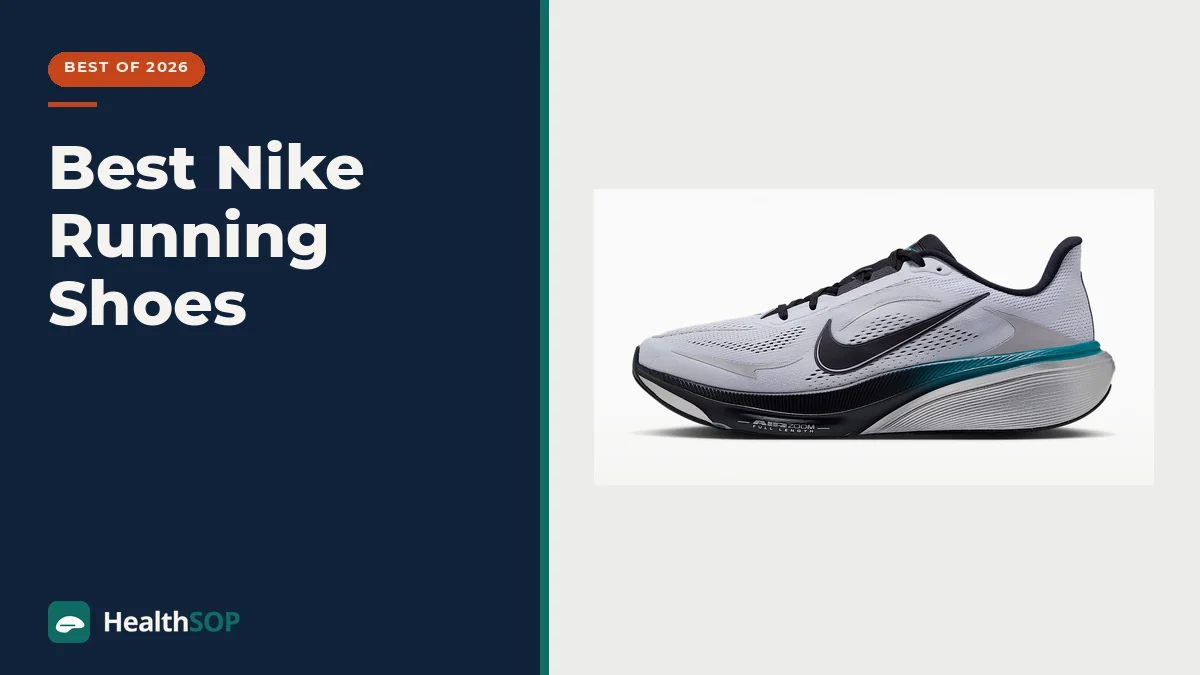
The Nike Pegasus 42 is the best Nike running shoe for most runners because it handles daily miles, long runs, and walking without a fuss. If you want softer landings, pick the Nike Vomero 18 instead. We picked these 8 shoes from Nike’s current lineup using brand specs, independent lab data from RunRepeat, and clinical guidance on fit and injury risk. We did not test them hands-on.
As an Amazon Associate I earn from qualifying purchases. Links marked with a button go to Amazon, and I may earn a commission if you buy. Links marked “Nike” go to Nike’s own site. The price you pay stays the same.
Save this guide to Pinterest
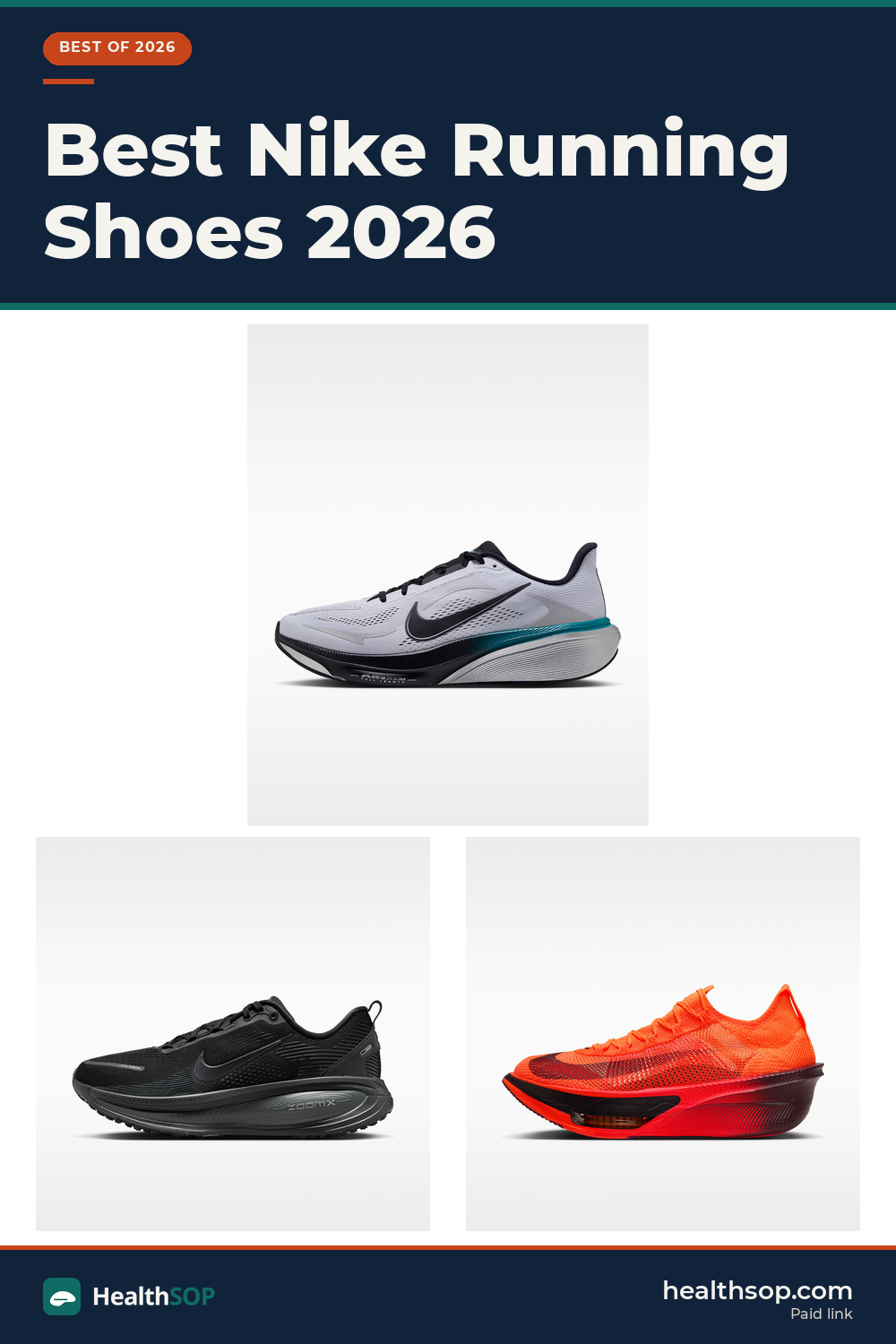
Table of Contents
Quick picks: the best Nike running shoes
| Award | Model | Why it wins |
|---|---|---|
| Best overall | Nike Pegasus 42 | The safest daily trainer in the lineup. Balanced cushion, wide toe box, durable outsole. |
| Best lighter Pegasus | Nike Pegasus Plus 2 | ZoomX foam plus a forefoot Air Zoom unit. Lighter and bouncier than the 42. |
| Best cushioned | Nike Vomero 18 | The tallest, softest Nike here. Full ZoomX over ReactX for long, easy runs. |
| Best stability | Nike Structure 26 | ReactX foam with a midfoot support system. Guidance without a hard post. |
| Best racer | Nike Vaporfly 4 | Carbon Flyplate and ZoomX at 5.9 oz. Nike’s fastest shoe for 10K and half marathons. |
| Best marathon max | Nike Alphafly 4 | New ZoomX LT foam, wider carbon plate, dual Air Zoom units. Built for the full marathon. |
| Best trail | Nike ACG Pegasus Trail | ReactX foam and ATC 2.0 grip. One shoe for pavement, gravel, and light trails. |
| Best value | Nike Winflo 12 | Max-cushion feel at the lowest price here. Cushlon 3.0 foam and a heel Air unit. |
Short on time? Buy the Pegasus 42. It fits most feet, handles most runs, and rarely disappoints.
The 8 best Nike running shoes, reviewed
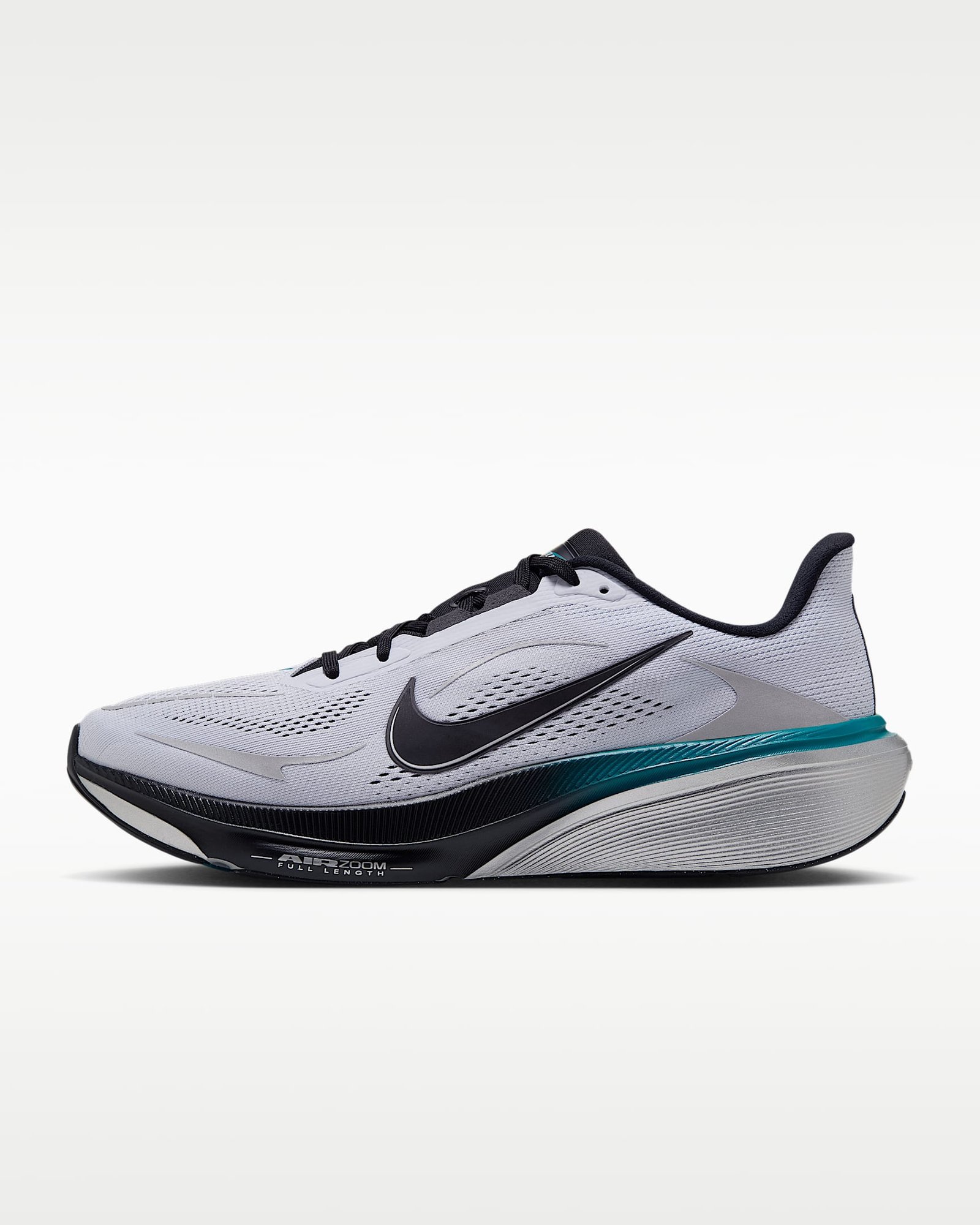
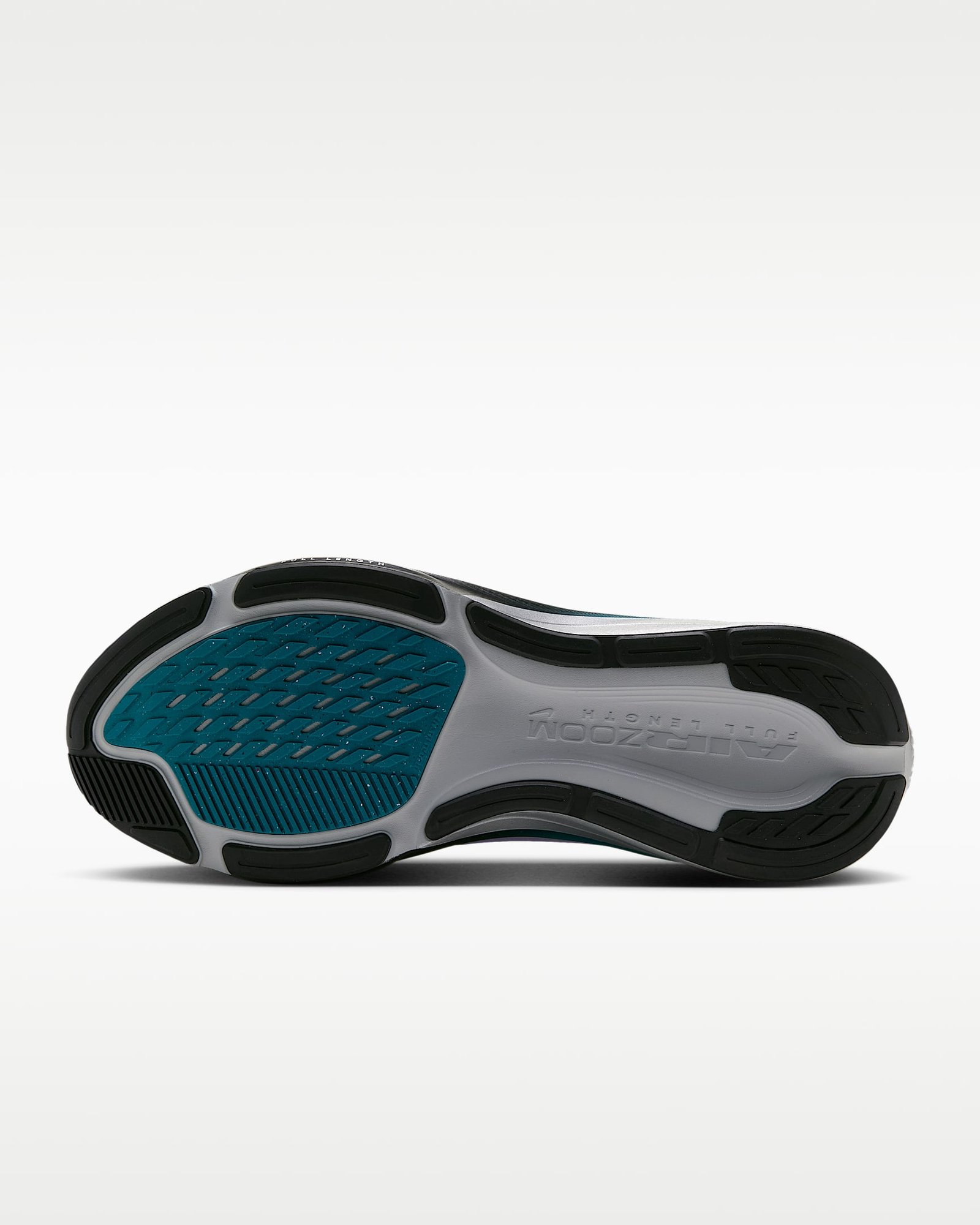
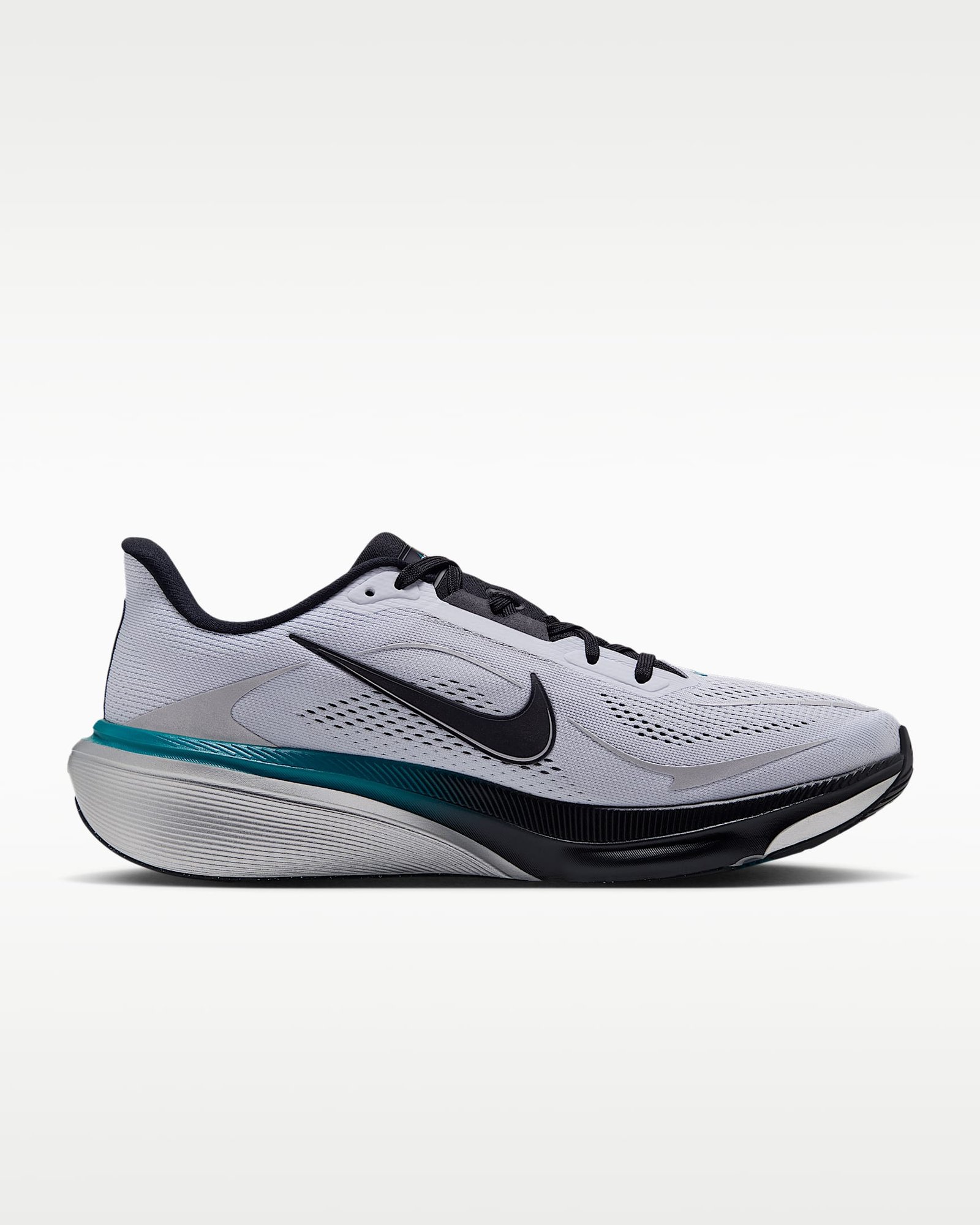
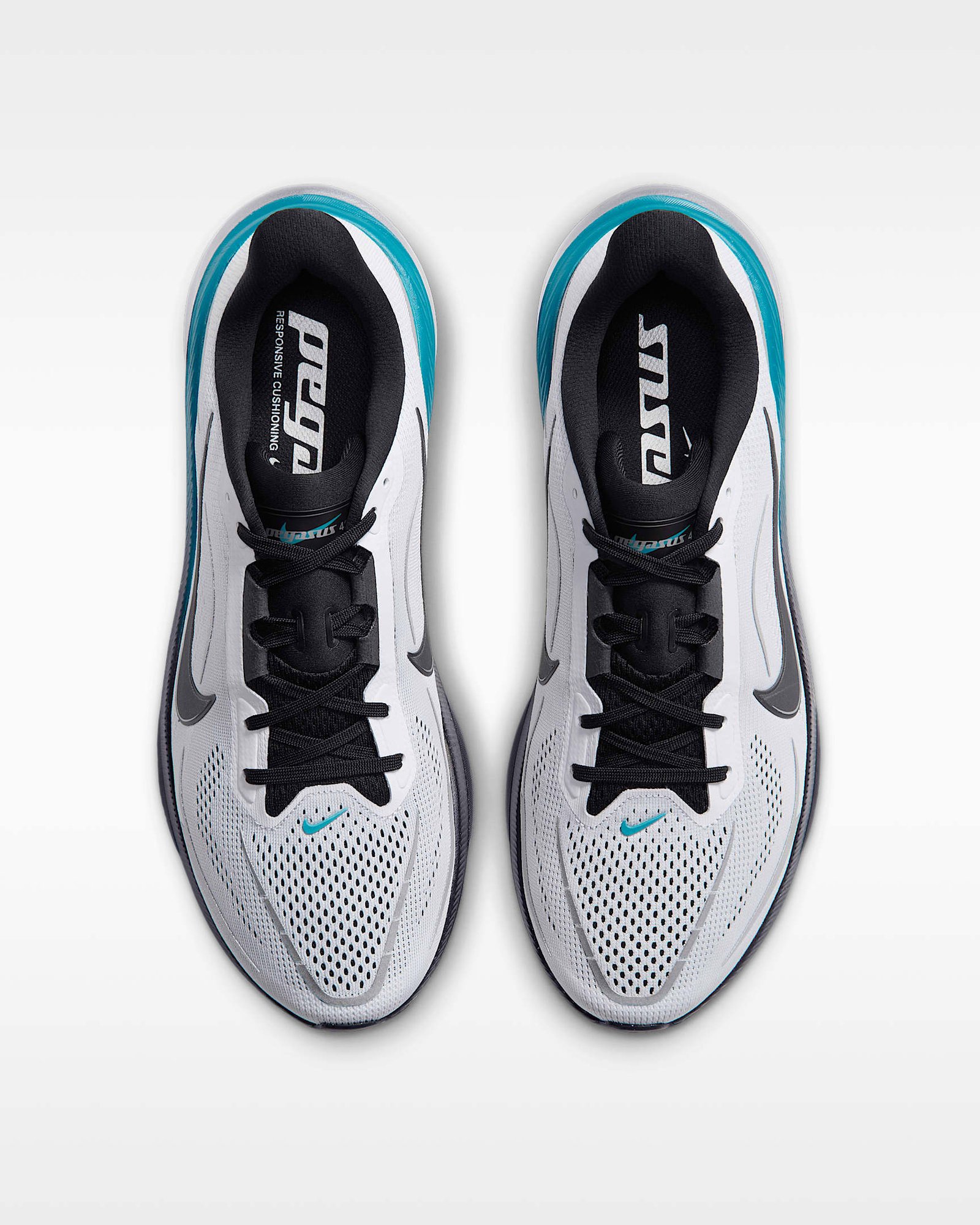
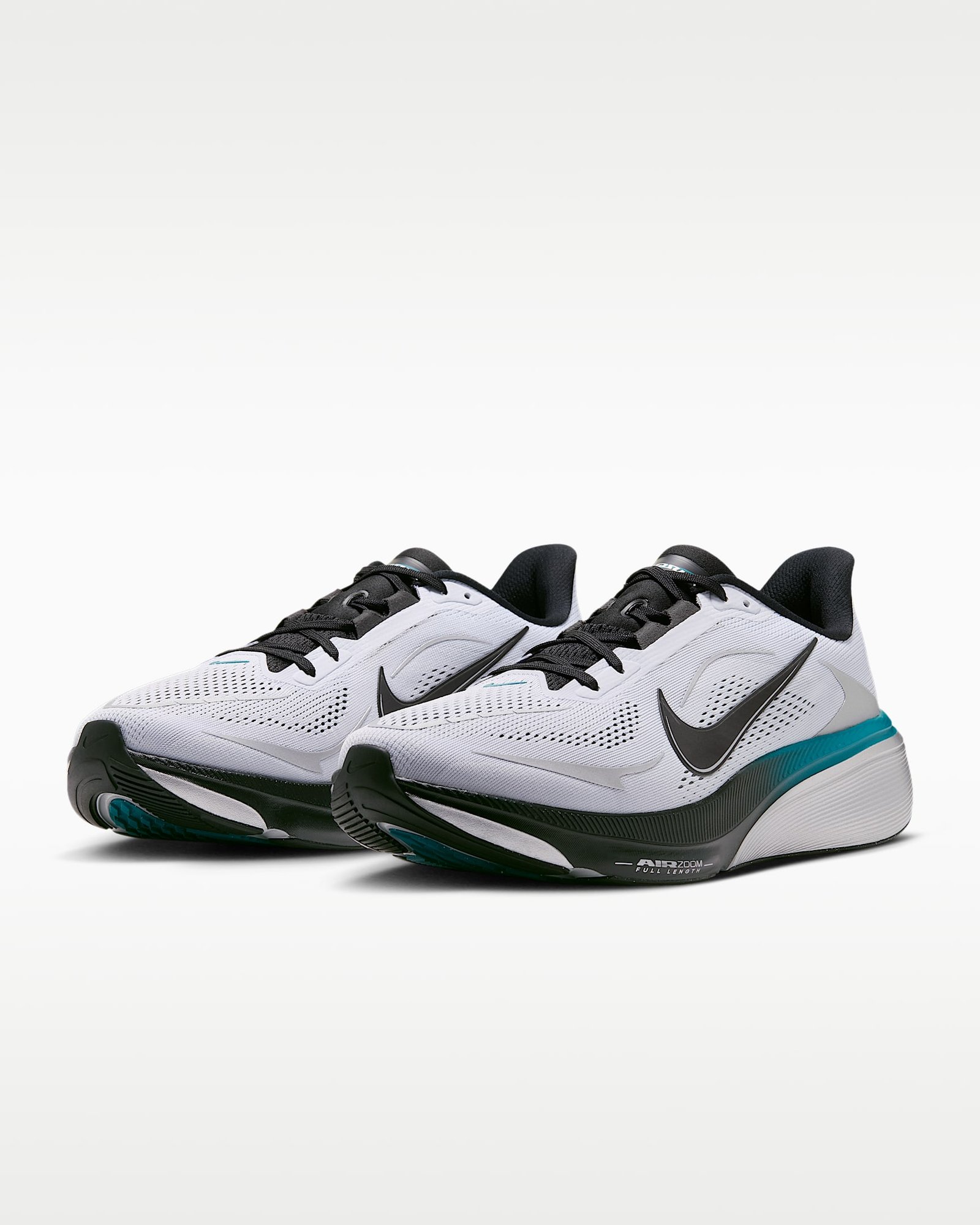
1. Nike Pegasus 42 — Best overall
Who it suits: neutral runners who want one shoe for easy runs, long runs, walking, and the gym.
- Support: Neutral
- Foam: ReactX with a full-length Air Zoom unit
- Stack: 36.0 mm heel / 22.0 mm forefoot (RunRepeat lab); 37 mm heel / 27 mm forefoot (Nike)
- Drop: 10 mm (Nike); 14.0 mm (RunRepeat lab)
- Weight: 10.1 oz / 286 g men’s (RunRepeat lab); 10.6 oz / 300 g (Nike, US 10)
- Widths: Regular, Wide
The Pegasus 42 is a small update, and that is the point. Nike kept the recipe that made the Pegasus the best-selling running shoe in the world: ReactX foam, a 10 mm drop, and a durable Waffle outsole. What changed is the Air Zoom unit. It now runs the full length of the shoe, instead of two separate pods, and Nike says it returns 15% more energy than the 41. The toe box is wider too, on a new MR-10 2.0 last.
RunRepeat’s lab cut the shoe in half. It measured a 36.0 mm heel stack and a 22.0 mm forefoot stack, both lower than Nike’s claims. The real drop came out at 14.0 mm, not 10 mm. That suits heel strikers. Shock absorption was 131 SA in the heel and 91 SA in the forefoot. Energy return was 61.2% in the forefoot, which is below average. So the Pegasus 42 protects your legs, but it does not give much back.
Pros:
- The most versatile Nike here. Daily miles, long runs, walking, gym work.
- Wide toe box at last. The 41 felt tight up front; the 42 does not.
- Full-length Air Zoom smooths the ride from heel to toe.
- Durable outsole. Expect 400–500 miles before the foam fades.
- Regular and Wide widths, and it often goes on sale.
Cons:
- Heavy at 10.1 oz for a daily trainer with a 36 mm stack.
- Firm, flat ride at fast paces. The Run Testers call it dull when you pick up speed.
Skip it if: you want bounce or a light shoe. The Pegasus Plus 2 is lighter and livelier. The Vomero 18 is softer. If you already own the Pegasus 41 and it fits, do not rush to upgrade — the ride is close, and the 41 is now cheaper.


2. Nike Pegasus Plus 2 — Best lighter Pegasus
Who it suits: runners who like the Pegasus fit but want a lighter, bouncier shoe for faster days.
- Support: Neutral
- Foam: Full-length ZoomX with a forefoot Air Zoom unit
- Stack: 37.7 mm heel / 27.3 mm forefoot (RunRepeat lab); 38 mm heel / 28 mm forefoot (Nike)
- Drop: 10 mm (Nike); 10.4 mm (RunRepeat lab)
- Weight: 8.7 oz / 247 g men’s (RunRepeat lab); 9.3 oz / 265 g (Nike, US 10)
- Widths: Standard only
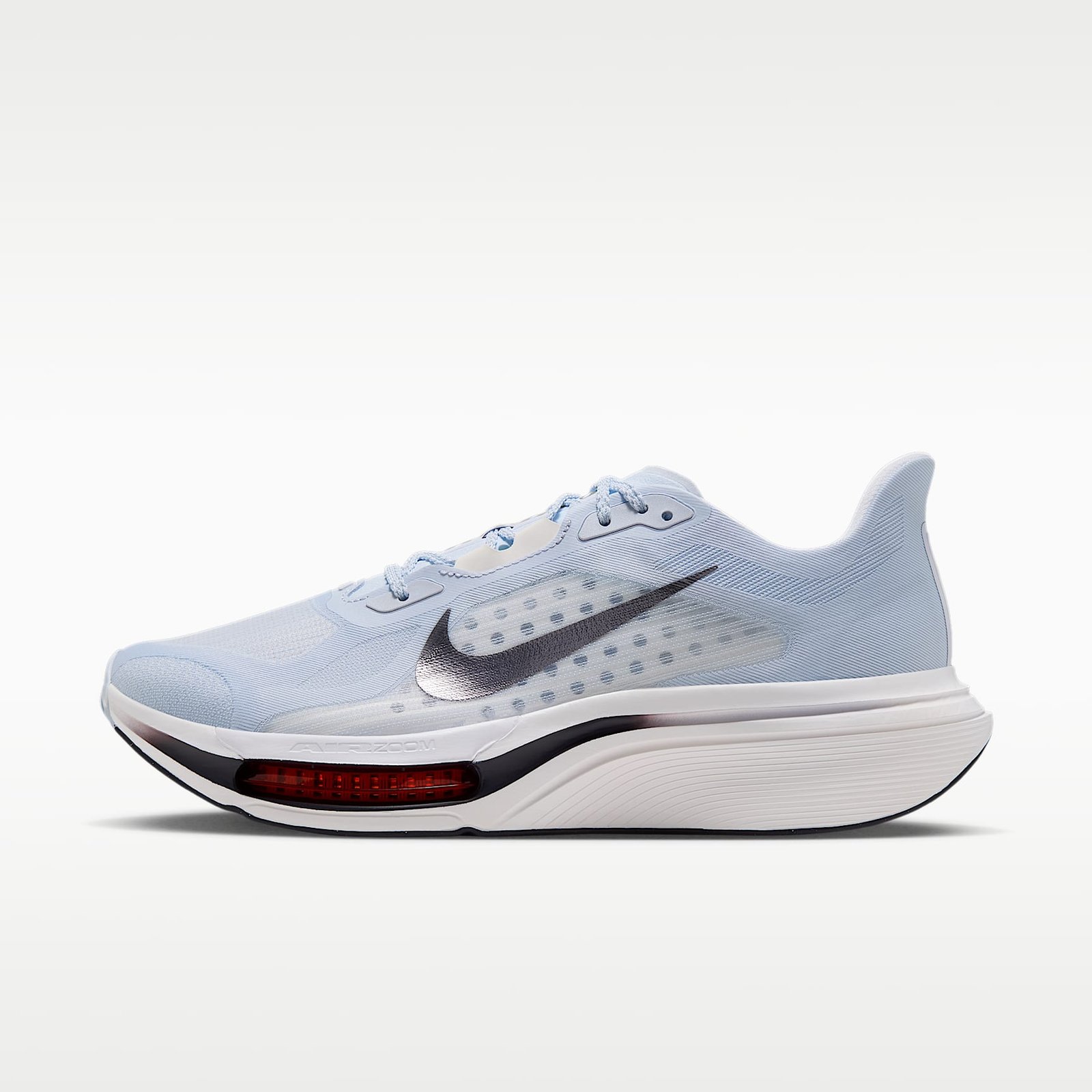
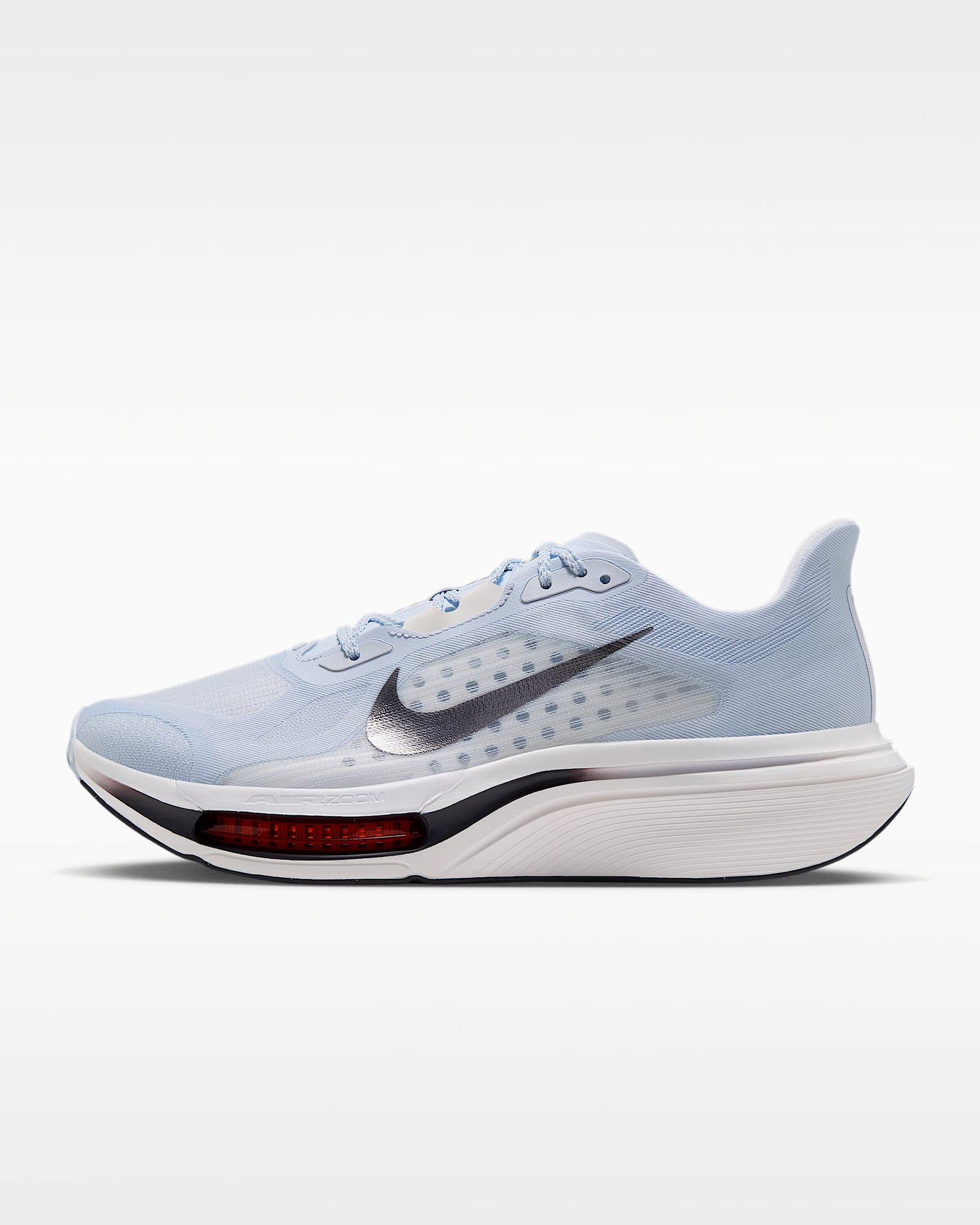
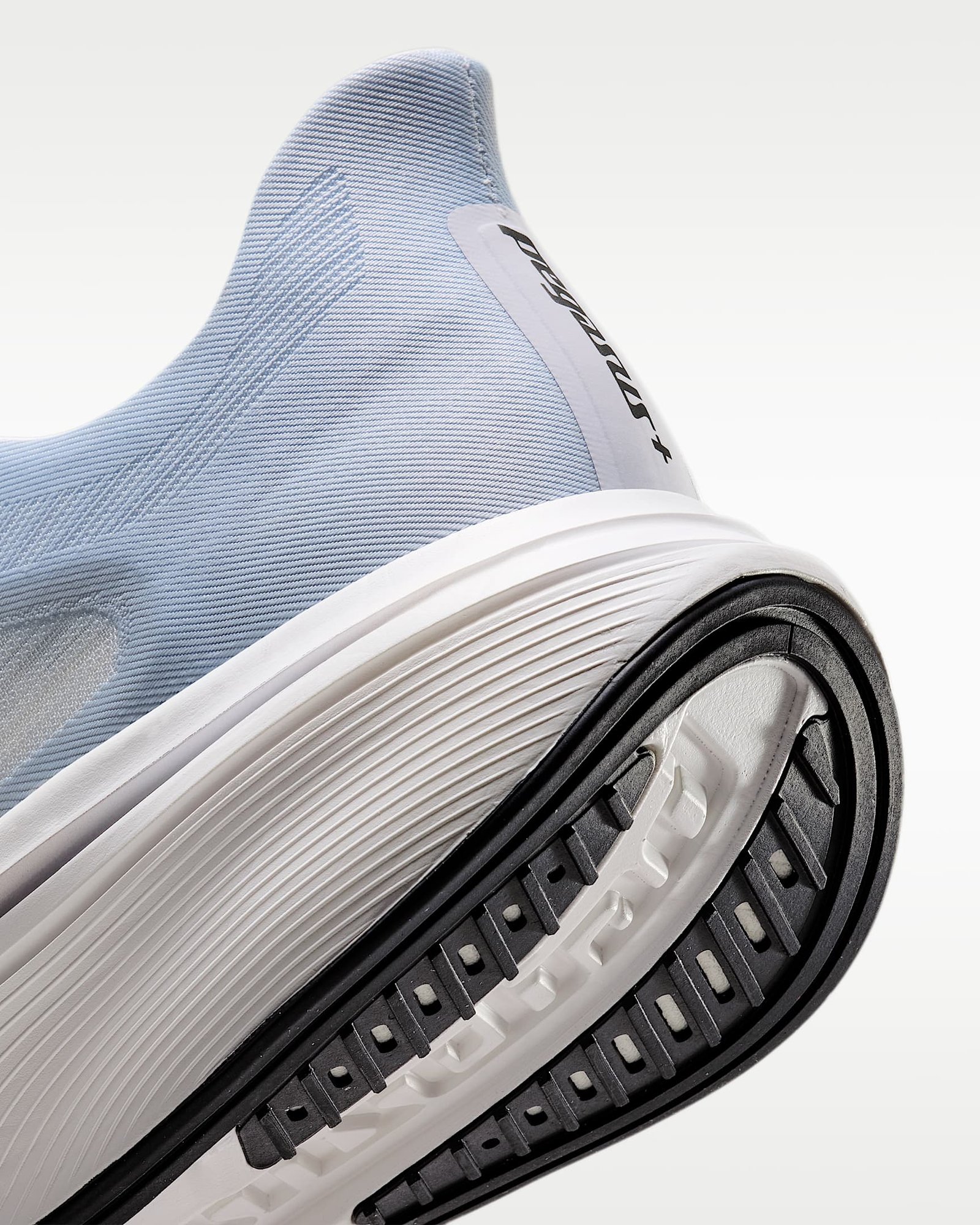
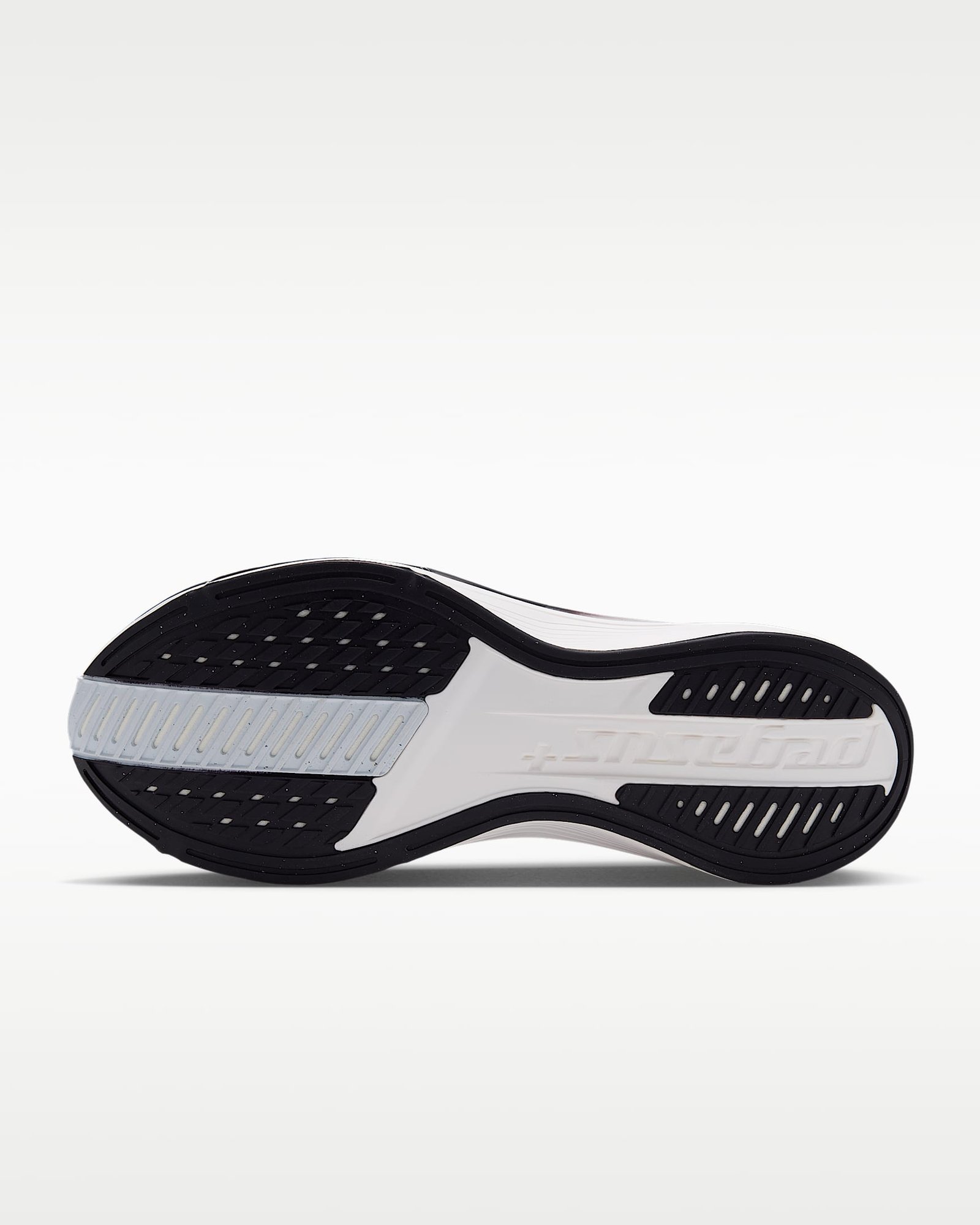
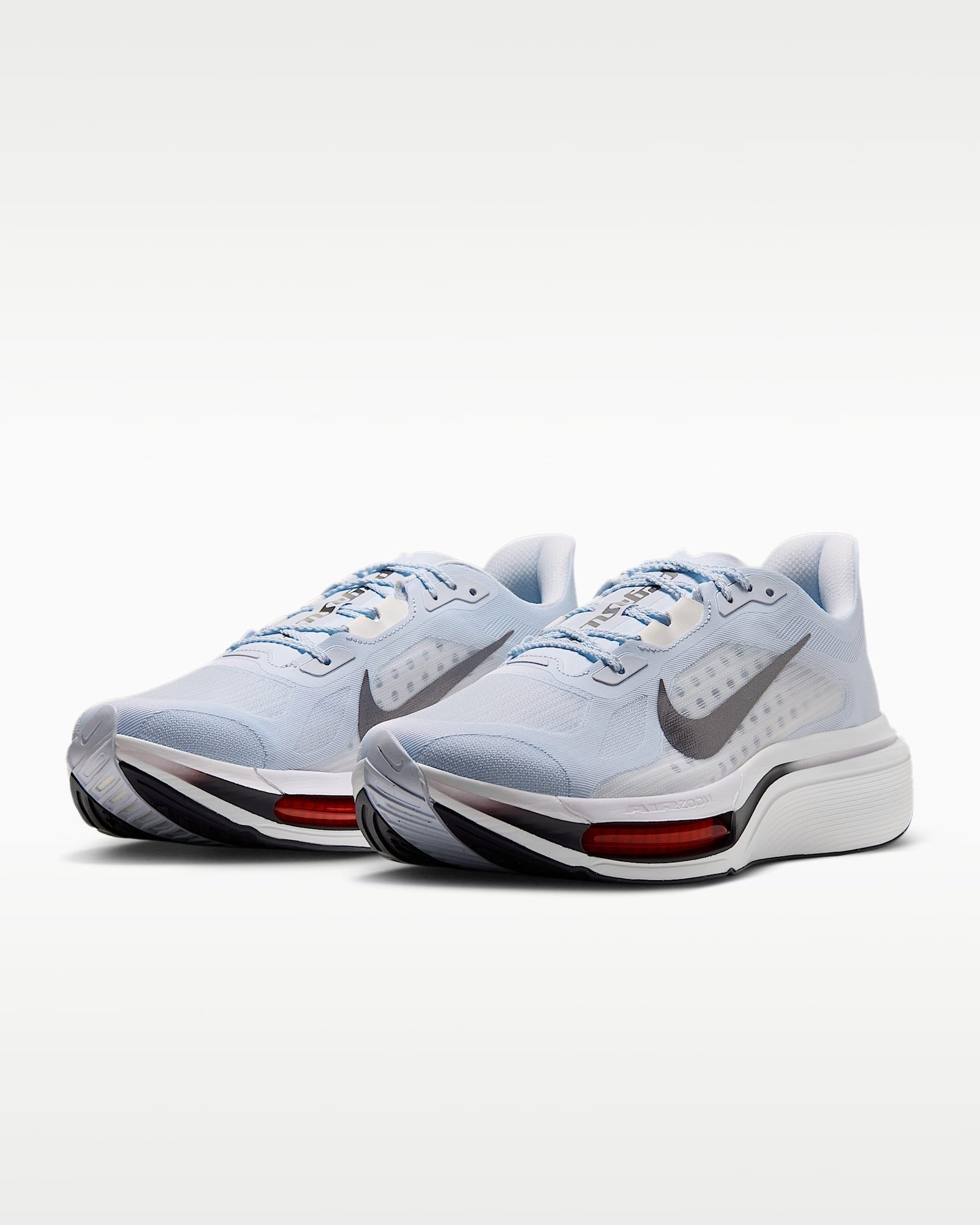
The Pegasus Plus 2 is a full rebuild of the first Pegasus Plus. Nike threw out the old shoe and started again. The midsole is now full-length ZoomX, the same foam as the race shoes, with a curved Air Zoom unit under the forefoot. Nike says it returns 18% more energy than the original Plus and weighs 10% less than the Pegasus 42.
RunRepeat’s lab measured a 37.7 mm heel stack and a 27.3 mm forefoot stack, with a 10.4 mm drop. Shock absorption was 147 SA in the heel, one of the best scores in this guide. Energy return was 69.0% in the forefoot, well above average. The Air Zoom unit works. It does not feel like a gimmick.
Pros:
- The lightest, liveliest daily trainer Nike makes. Real bounce from ZoomX.
- 147 SA shock absorption protects your legs on long runs.
- Wider forefoot and a new last fix the first Plus, which ran narrow.
- Handles easy miles and tempo days in one shoe.
- Same fit family as the Pegasus 42, so sizing is easy if you own one.
Cons:
- No wide version. Wide feet should try the Pegasus 42 in Wide instead.
- The Air Zoom unit makes a stiff spot under the forefoot that some runners feel.
Skip it if: you only run easy miles. The Plus 2 earns its keep when you pick up the pace. For slow days, the Pegasus 42 costs less and lasts longer. Also skip it if you need a wide fit.
See the Nike Pegasus Plus 2 at Nike
(Nike direct link — not an Amazon link)
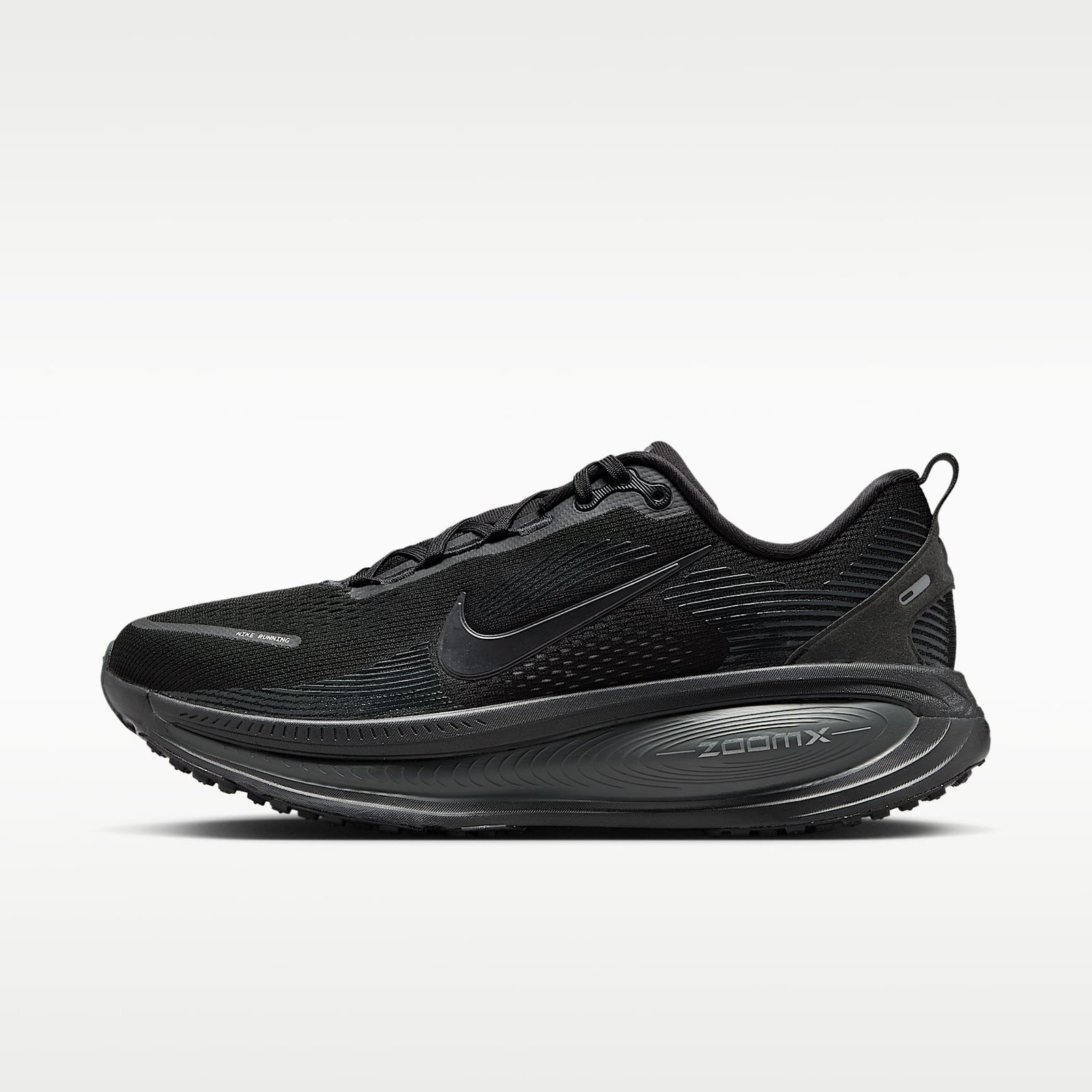
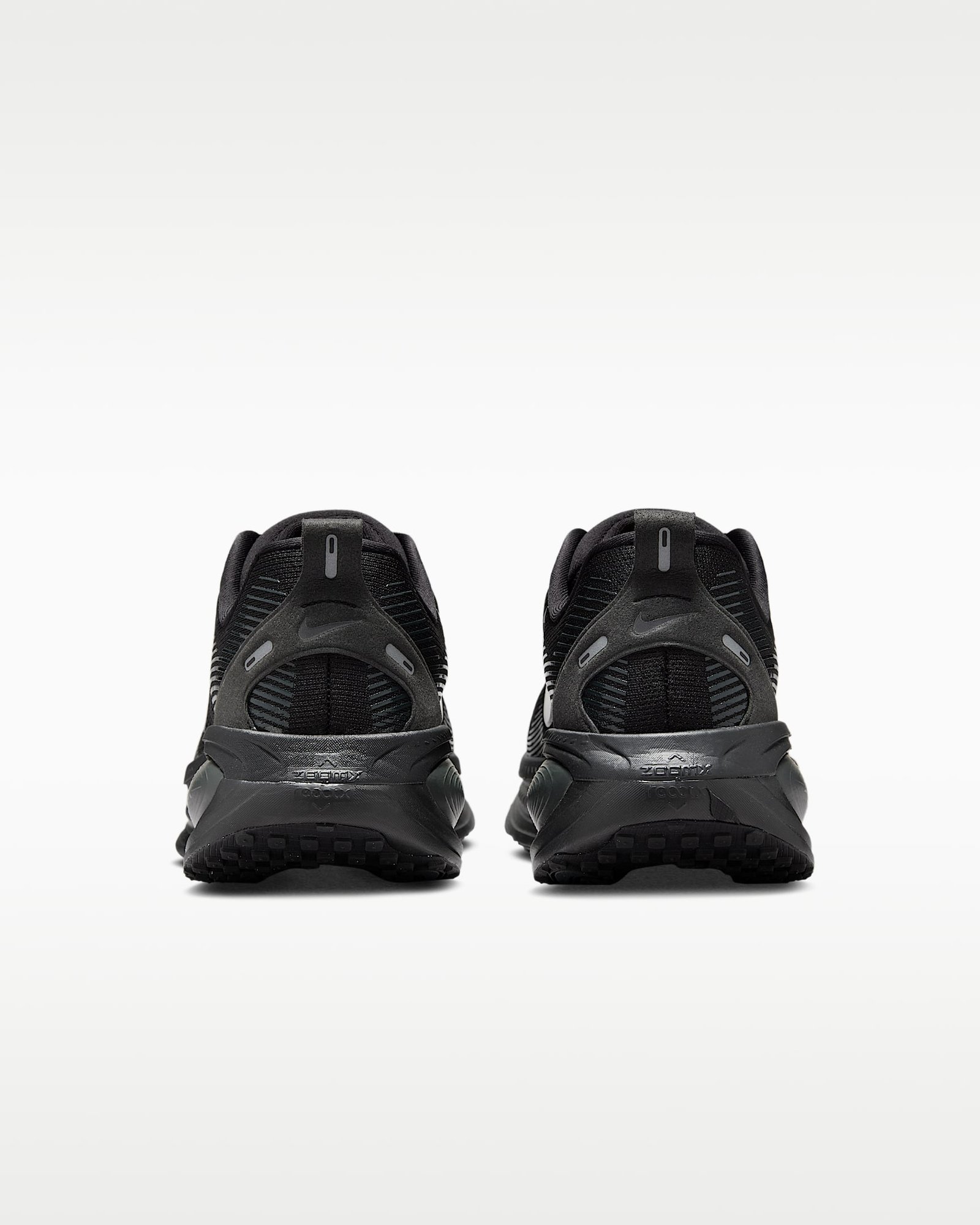
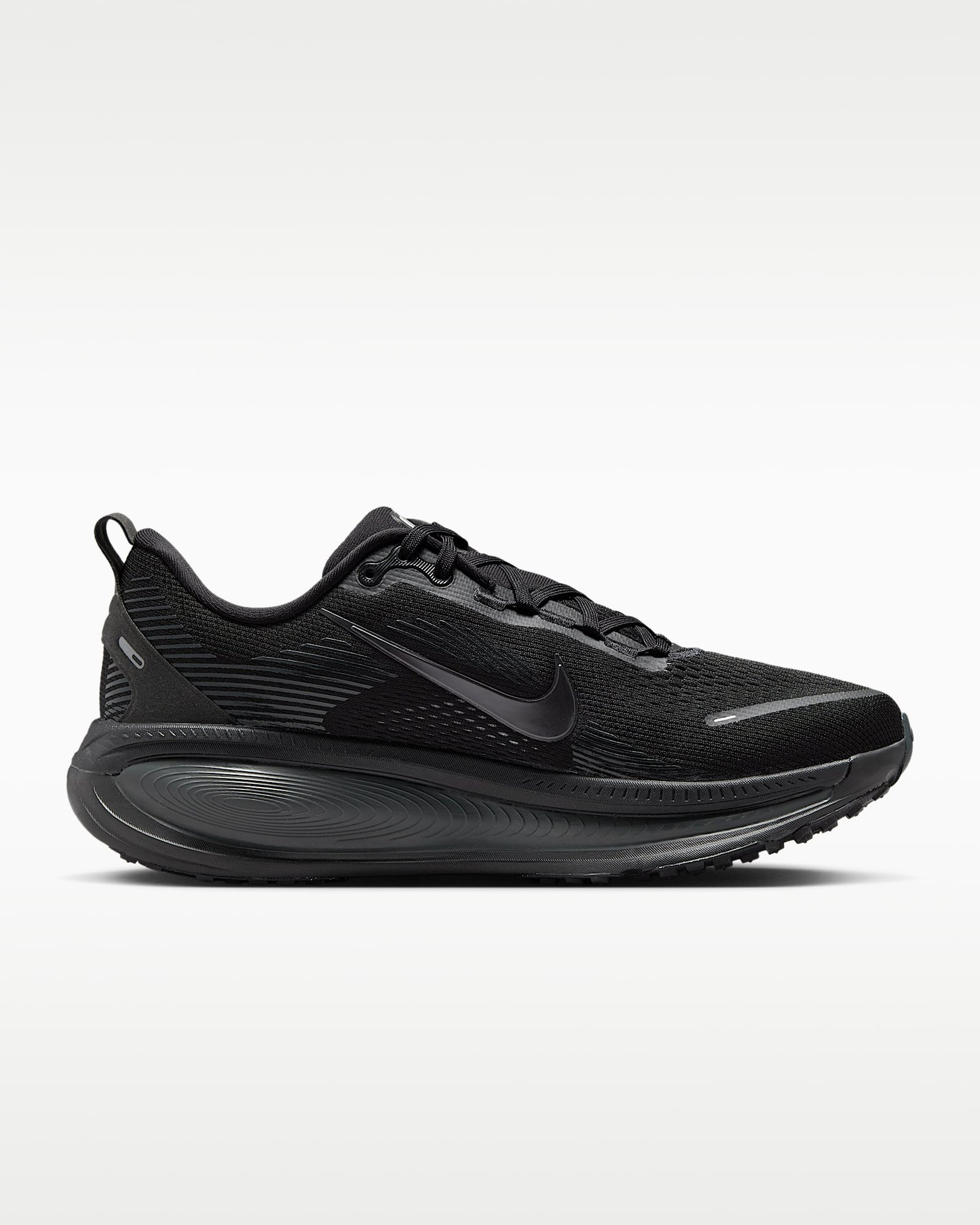
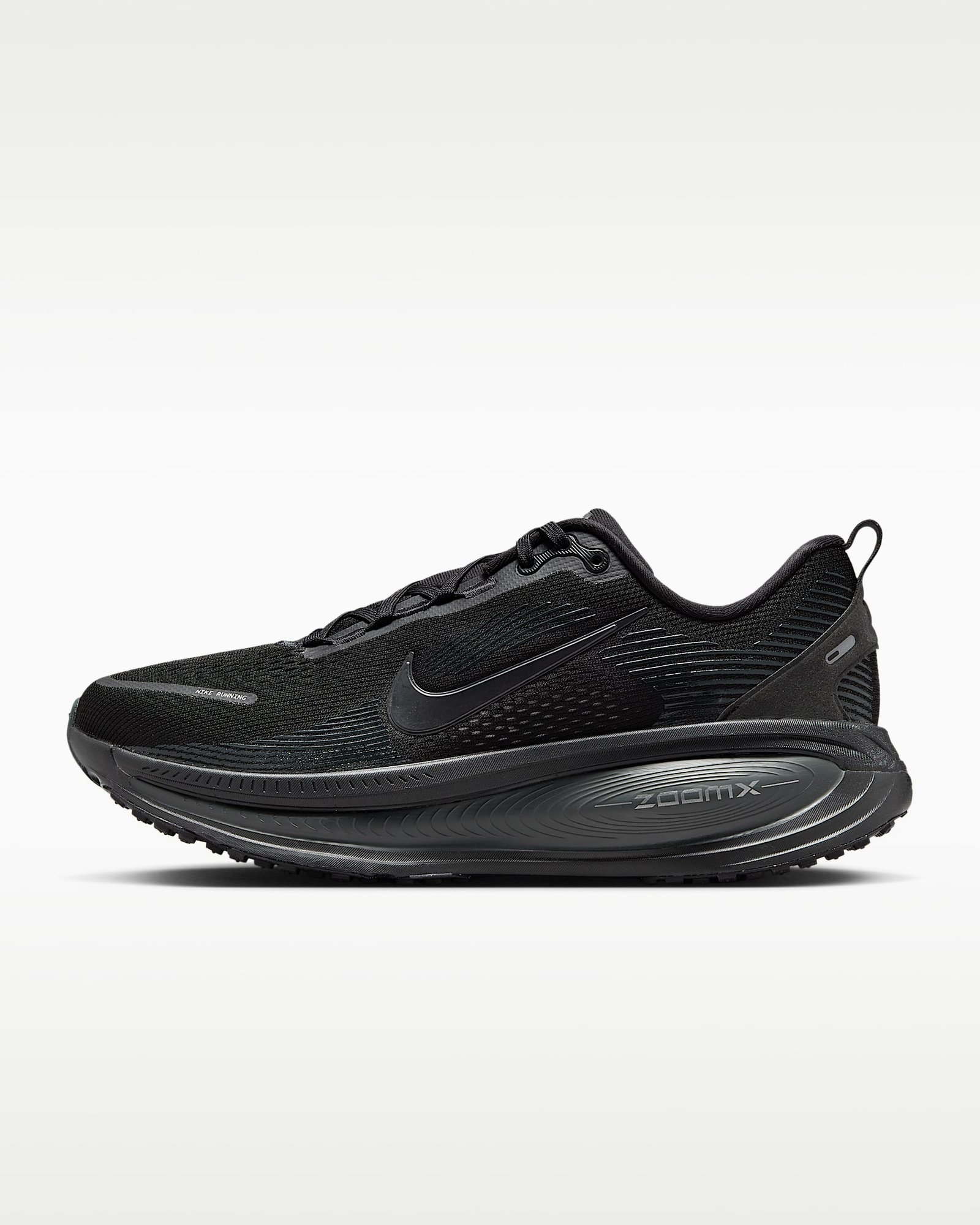
3. Nike Vomero 18 — Best cushioned
Who it suits: neutral runners who want the softest Nike for easy miles, long runs, and recovery days.
- Support: Neutral
- Foam: Full-length ZoomX over ReactX
- Stack: 42.5 mm heel / 28.6 mm forefoot (RunRepeat lab); 46 mm heel (Nike)
- Drop: 10 mm (Nike); 13.9 mm (RunRepeat lab)
- Weight: 10.5 oz / 298 g men’s (RunRepeat lab); 11.5 oz / 325 g (Nike, US 10)
- Widths: Regular, Wide
The Vomero 18 is Nike’s max-cushion daily trainer, and it feels like it. The full-length ZoomX layer sits on top of ReactX foam, so you land soft and roll through a stable base. The heel stack jumped from 33.9 mm in the Vomero 17 to 42.5 mm in the lab. That is one of the biggest one-year jumps RunRepeat has ever measured.
Two honest notes. First, the lab drop is 13.9 mm, not the listed 10 mm. Heel strikers will love it. Forefoot strikers may feel like they are running downhill. Second, energy return got worse than the Vomero 17: 58.9% in the forefoot. This shoe soaks up impact instead of giving it back. Shock absorption is 147 SA in the heel and 116 SA in the forefoot, both well above average.
Pros:
- The softest landing of any Nike daily trainer. Great for tired legs.
- 42.5 mm of heel foam protects knees and calves on long runs.
- Roomy upper with a secure heel and no hot spots.
- Regular and Wide widths.
- Works as well for walking and standing all day as it does for running.
Cons:
- Heavy at 10.5 oz, and the 13.9 mm lab drop is much higher than the box says.
- Low energy return. It will not help you run fast.
Skip it if: you race, do tempo work, or want a light shoe. The Vaporfly 4 is the fast option. If you want the same soft feel with even more bounce, the Vomero Plus is the step up — but it costs more.
See the Nike Vomero 18 at Nike
(Nike direct link — not an Amazon link)
4. Nike Structure 26 — Best stability
Who it suits: runners whose ankles roll inward (overpronation) and who want guidance that does not feel like a brick under the arch.
- Support: Stability (midfoot support system)
- Foam: Full-length ReactX
- Stack: 36.1 mm heel / 26.0 mm forefoot (RunRepeat lab)
- Drop: 10 mm (Nike); 10.1 mm (RunRepeat lab)
- Weight: 10.4 oz / 296 g men’s (RunRepeat lab); 10.5 oz / 298 g (Nike)
- Widths: Regular, Wide
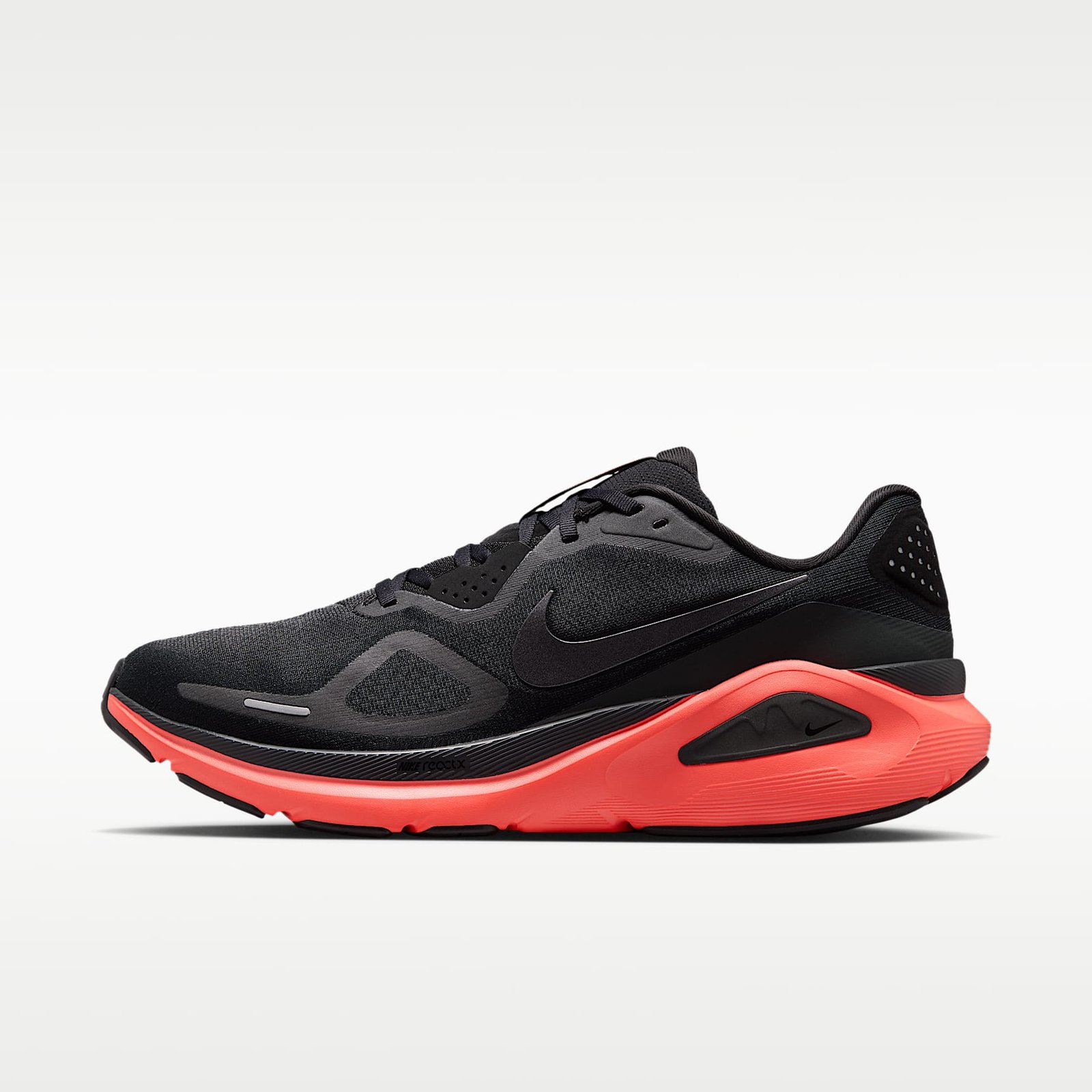
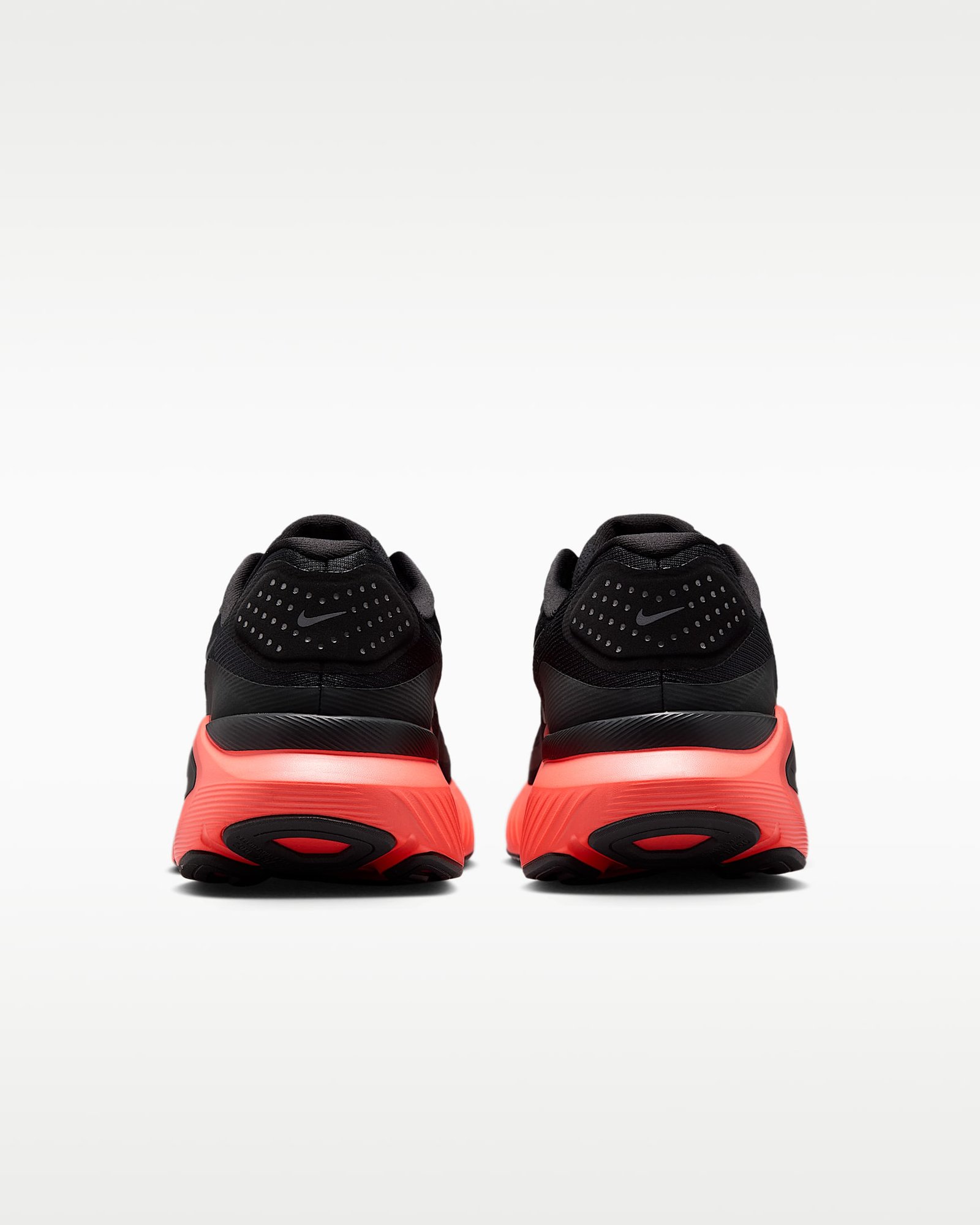
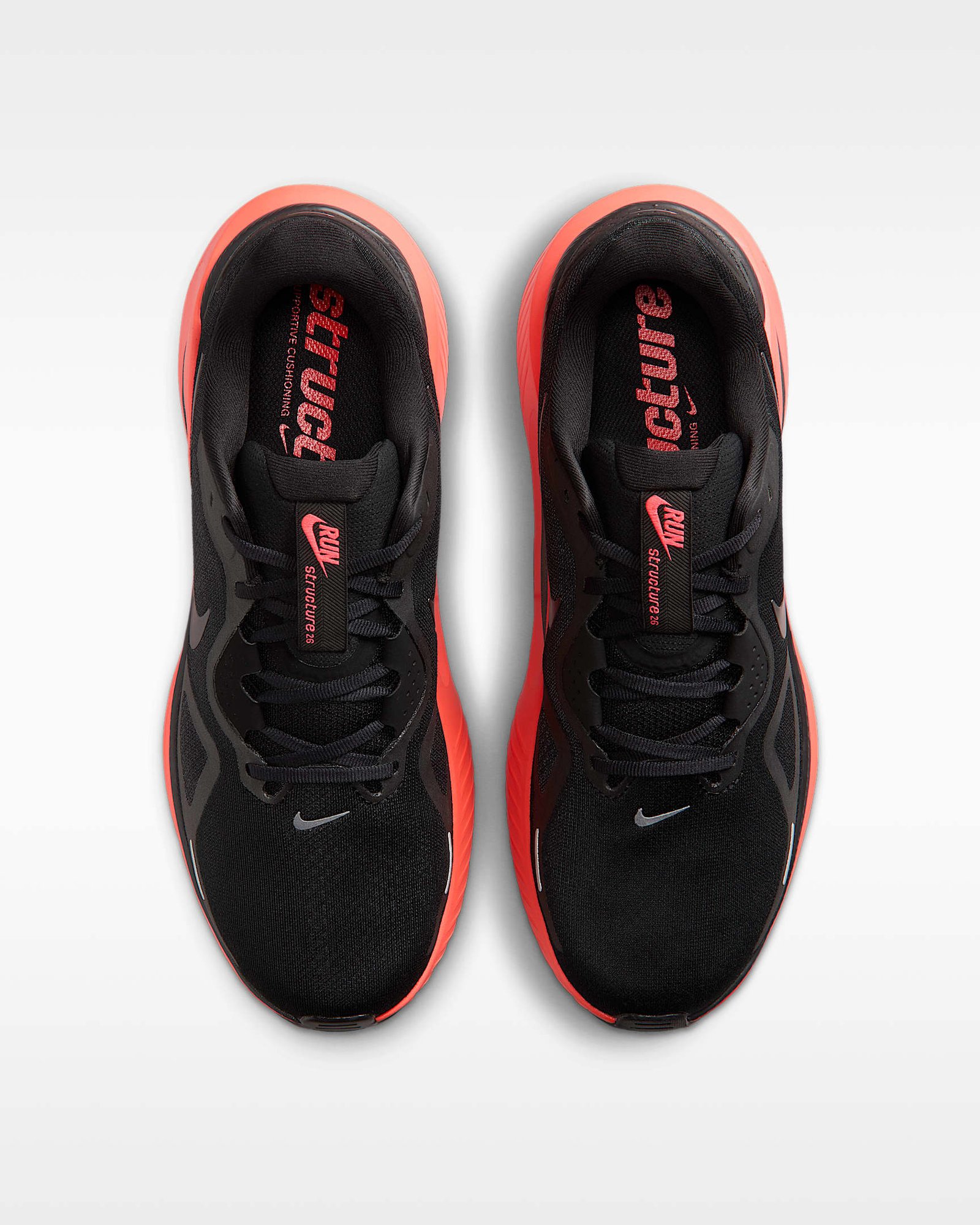
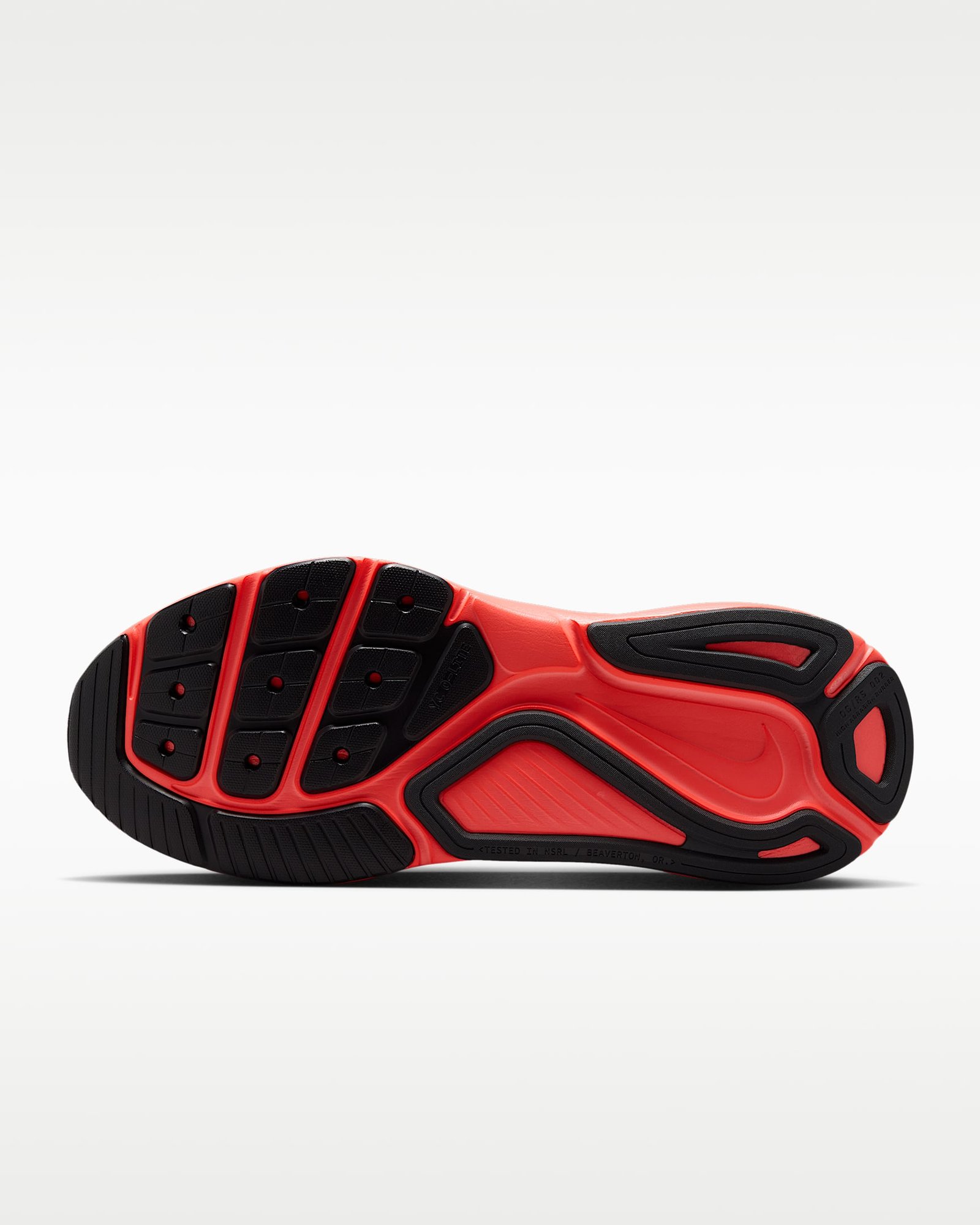
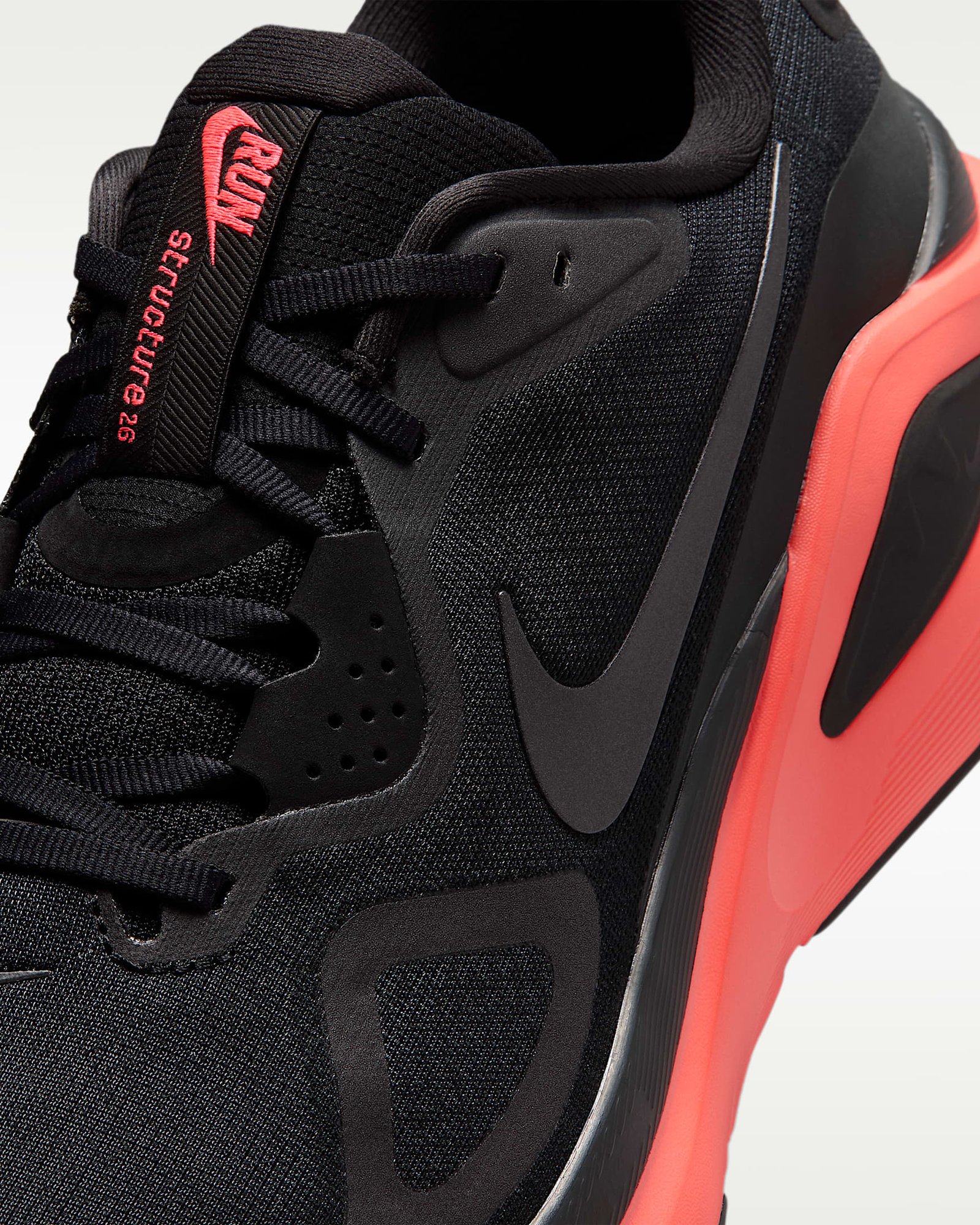
The Structure 26 is Nike’s only stability shoe in this guide, and the only one most runners need. Nike swapped the old Cushlon 3.0 foam for full-length ReactX, which is 13% more responsive than the old React foam. The support comes from a midfoot system that firms up the inside of the shoe. It does not push your arch up like an old medial post. That is why the Structure feels normal on easy days and only steps in when your form breaks down late in a run.
RunRepeat’s lab measured a 36.1 mm heel stack and a 26.0 mm forefoot stack, with a 10.1 mm drop — the closest match to the box in this guide. Shock absorption was 132 SA in the heel. Energy return was 59.4% in the forefoot, which is average. This shoe is built for steady miles, not speed.
Pros:
- The most trusted stability shoe Nike makes, now on ReactX foam.
- Guidance without a rigid post under the arch.
- True to the listed specs. What the box says is what you get.
- Durable build that holds its shape for 400–500 miles.
- Regular and Wide widths.
Cons:
- Average energy return. It will not excite you.
- Heavier than the Pegasus 42, and the ride is firm.
Skip it if: you are a neutral runner with no overpronation. You pay a weight penalty for support you do not need. Buy the Pegasus 42 instead. If your feet roll inward a lot, read our guide on the best running shoes for plantar fasciitis too — support and cushion matter more than brand.
See the Nike Structure 26 at Nike
(Nike direct link — not an Amazon link)
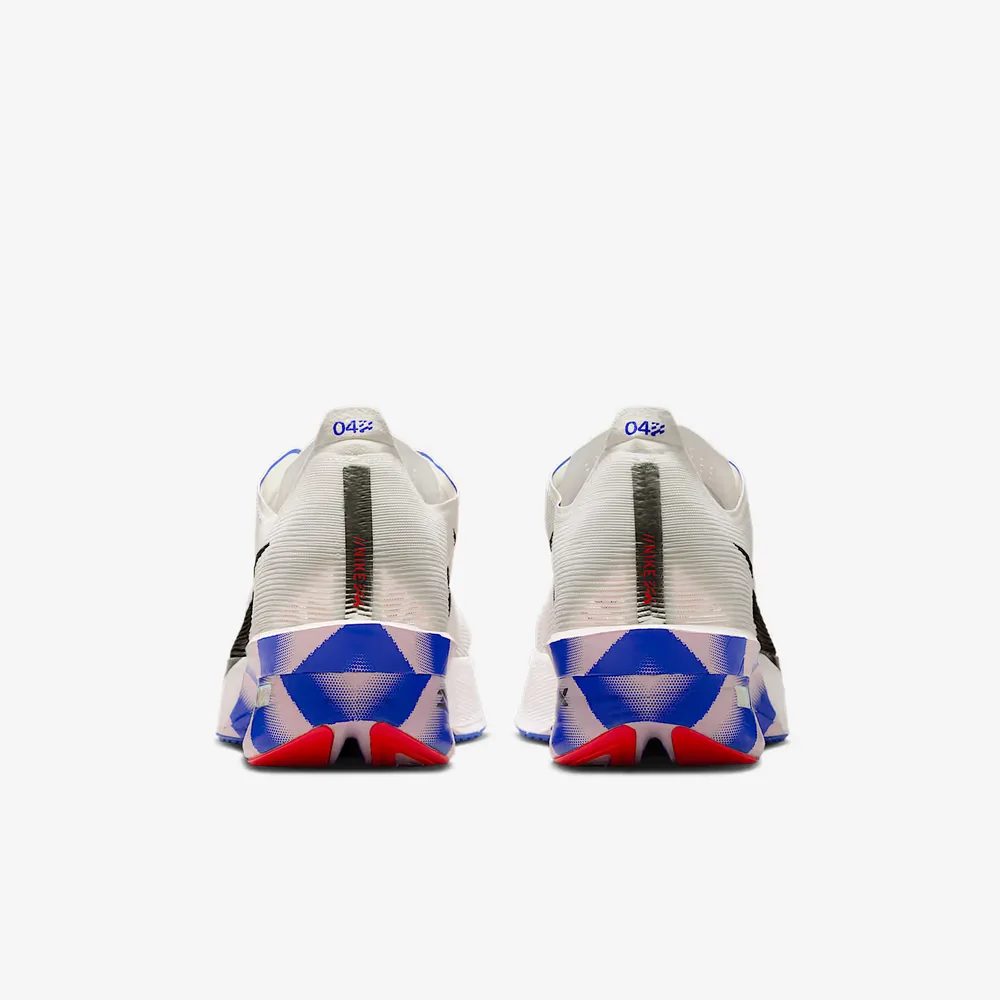
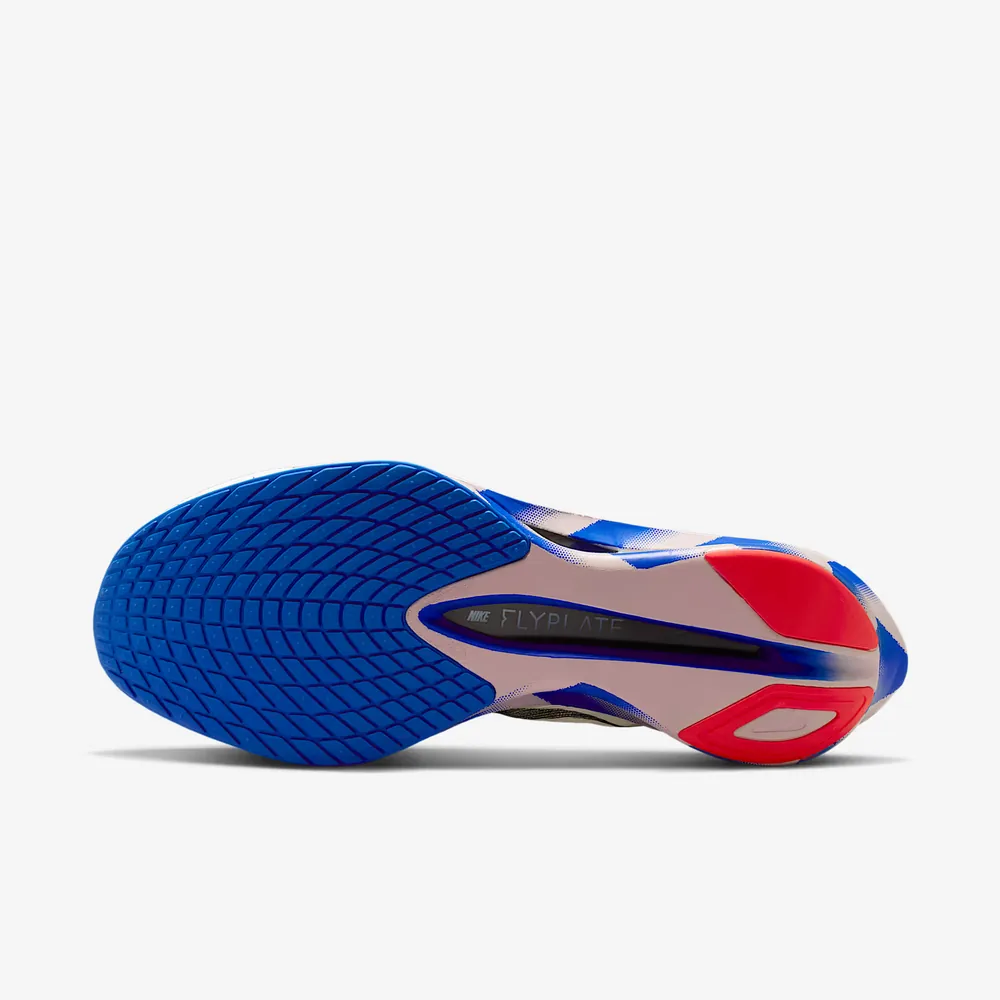
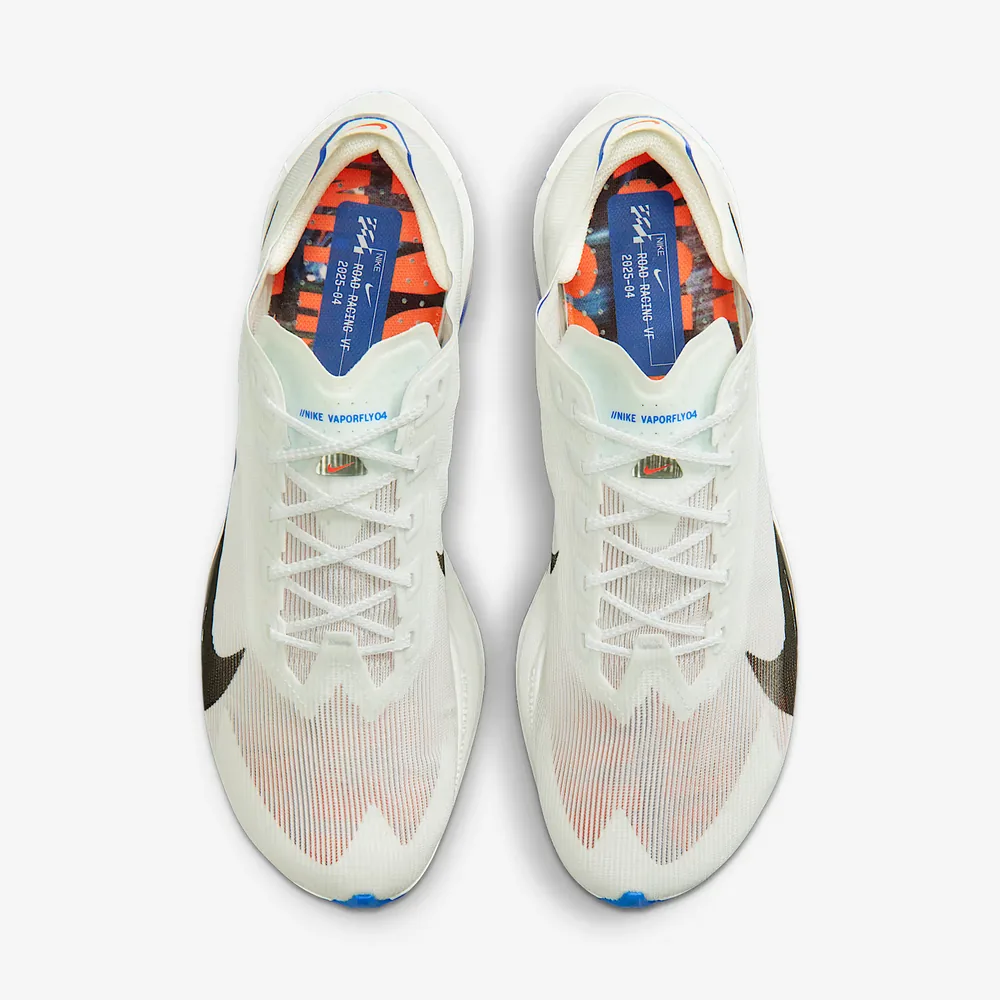
5. Nike Vaporfly 4 — Best racer
Who it suits: runners chasing a personal best in the 10K or half marathon who want a carbon-plated racer.
- Support: Neutral (race)
- Foam: ZoomX
- Plate: Full-length carbon Flyplate
- Stack: 34.1 mm heel / 25.5 mm forefoot (RunRepeat lab)
- Drop: 6 mm (Nike); 8.6 mm (RunRepeat lab)
- Weight: 5.9 oz / 166 g men’s (RunRepeat lab); 6.5 oz / 184 g (Nike)
- Widths: Regular, Wide
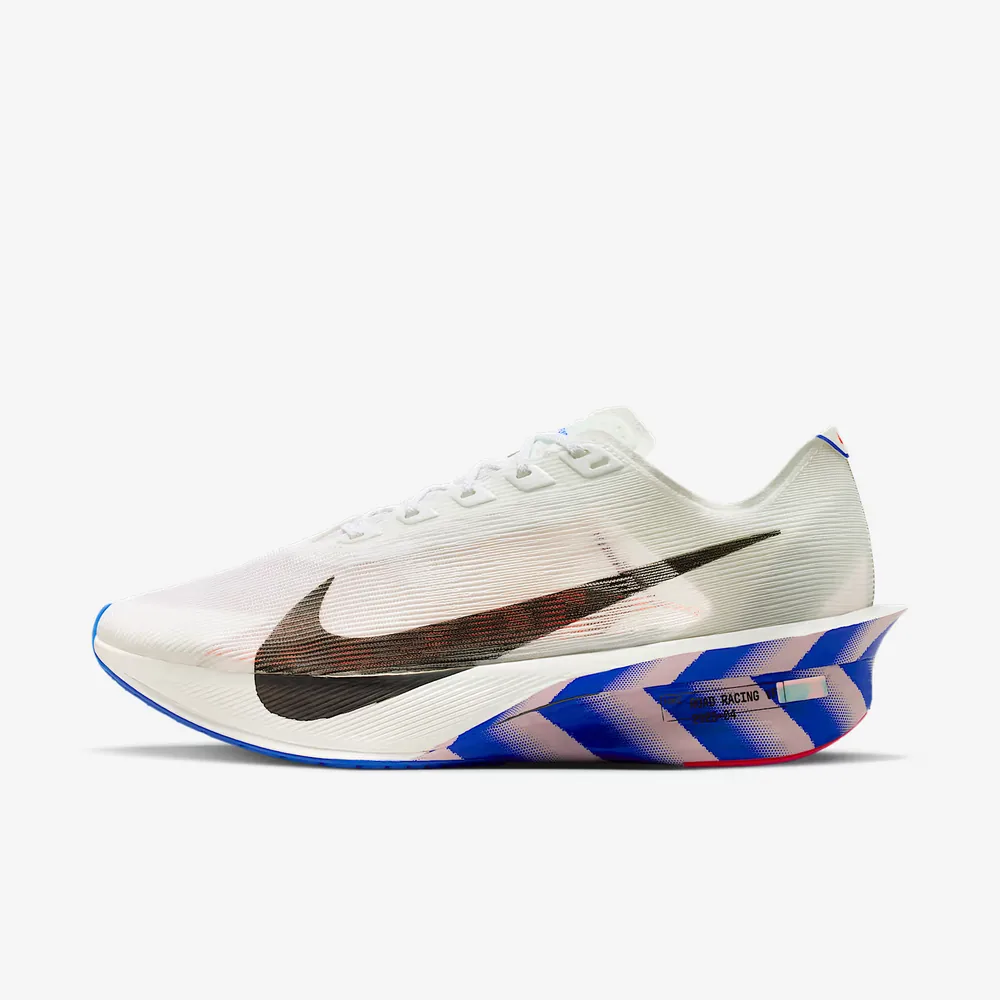
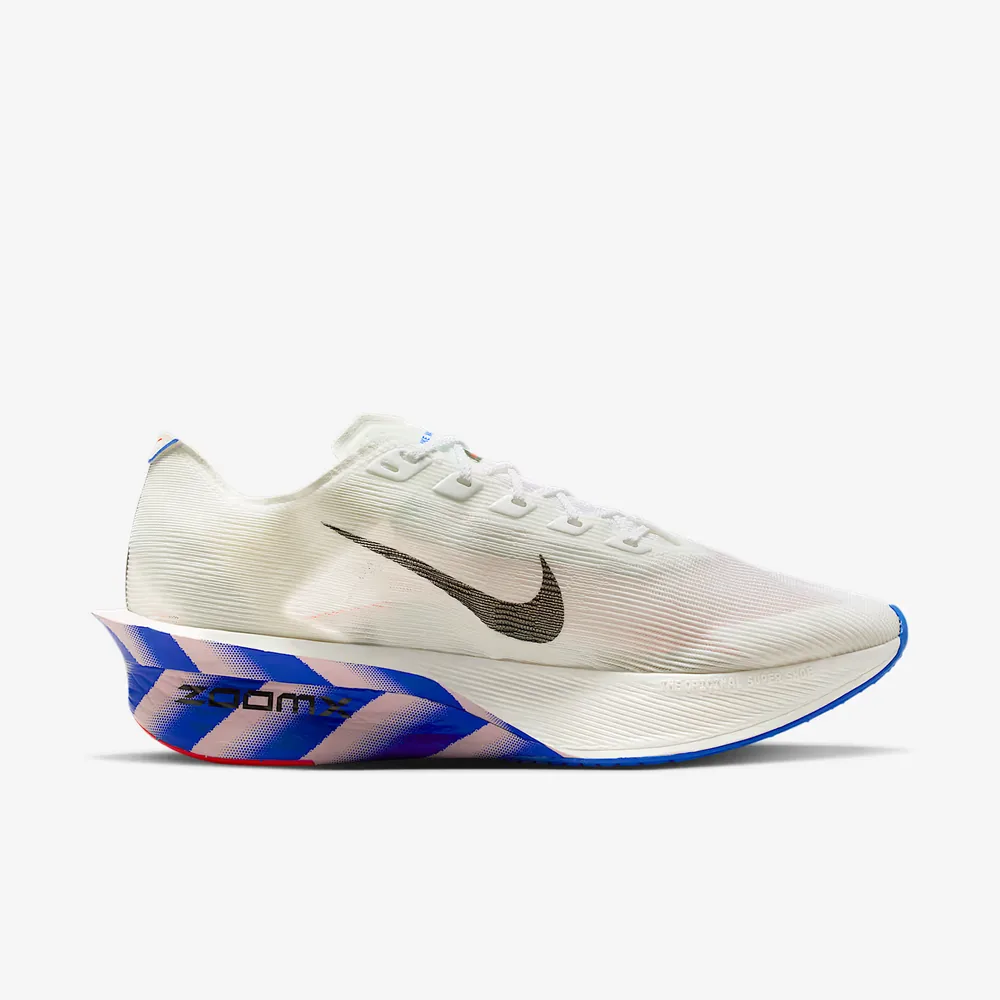
The Vaporfly 4 is Nike’s race-day weapon for shorter races. It pairs ZoomX foam with a full-length carbon Flyplate. The plate acts like a spring. It bends as you land and snaps back as you push off. The stack is lower than the Alphafly 4, which keeps the shoe nimble for 10K and half-marathon pace.
RunRepeat’s lab measured a 34.1 mm heel stack and a 25.5 mm forefoot stack, with an 8.6 mm drop — higher than the listed 6 mm. Shock absorption was 137 SA in the heel. Energy return was 74.5% in the forefoot, the second-best score in this guide. At 5.9 oz in the lab, it is the second-lightest shoe here.
Pros:
- The fastest Nike for 10K and half-marathon racing.
- 74.5% energy return. You feel the plate working.
- Light at 5.9 oz, with Regular and Wide widths.
- Stable enough for the full marathon if you prefer it over the Alphafly.
Cons:
- The lab drop (8.6 mm) is far higher than the listed 6 mm. Heel strikers will feel it.
- Harsh at easy paces. This is a race-day shoe, not a daily trainer.
- Wears out fast. Save it for races.
Skip it if: you are not racing. It is the wrong tool for daily miles. For fast training, buy the Pegasus Plus 2 instead. For the full marathon, the Alphafly 4 has more cushion.
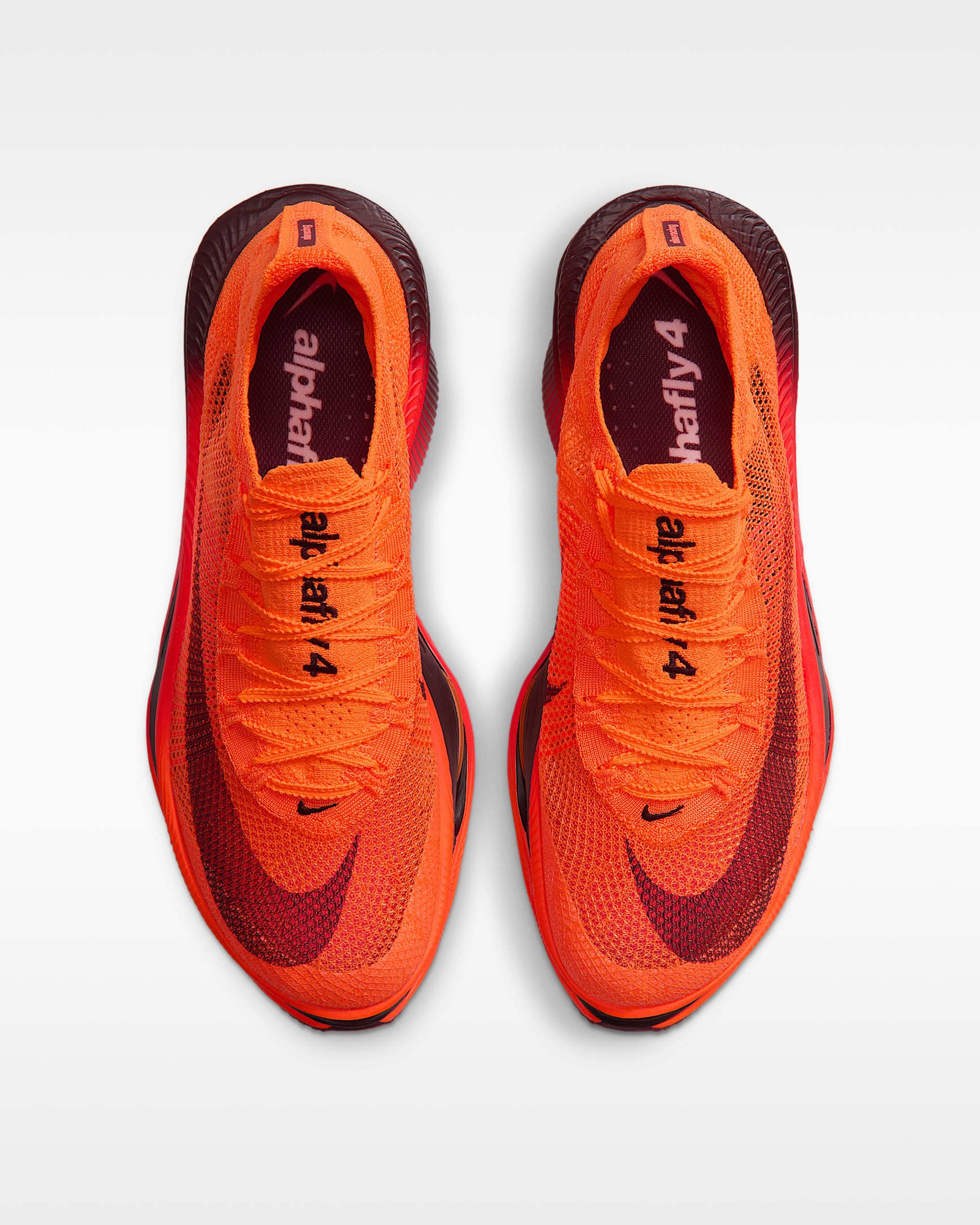
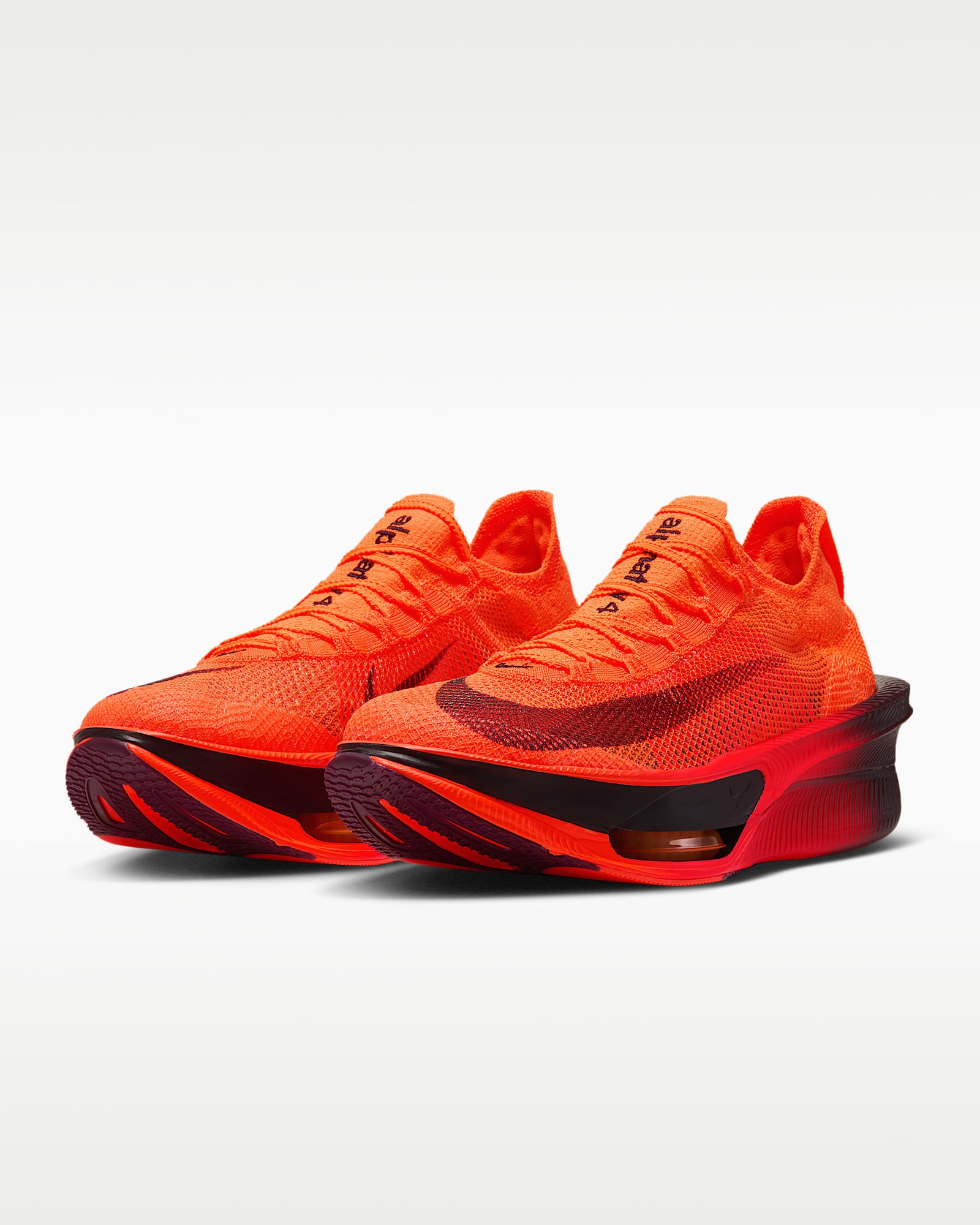
6. Nike Alphafly 4 — Best marathon max
Who it suits: runners chasing a personal best in the marathon who want Nike’s most advanced racer.
- Support: Neutral (race)
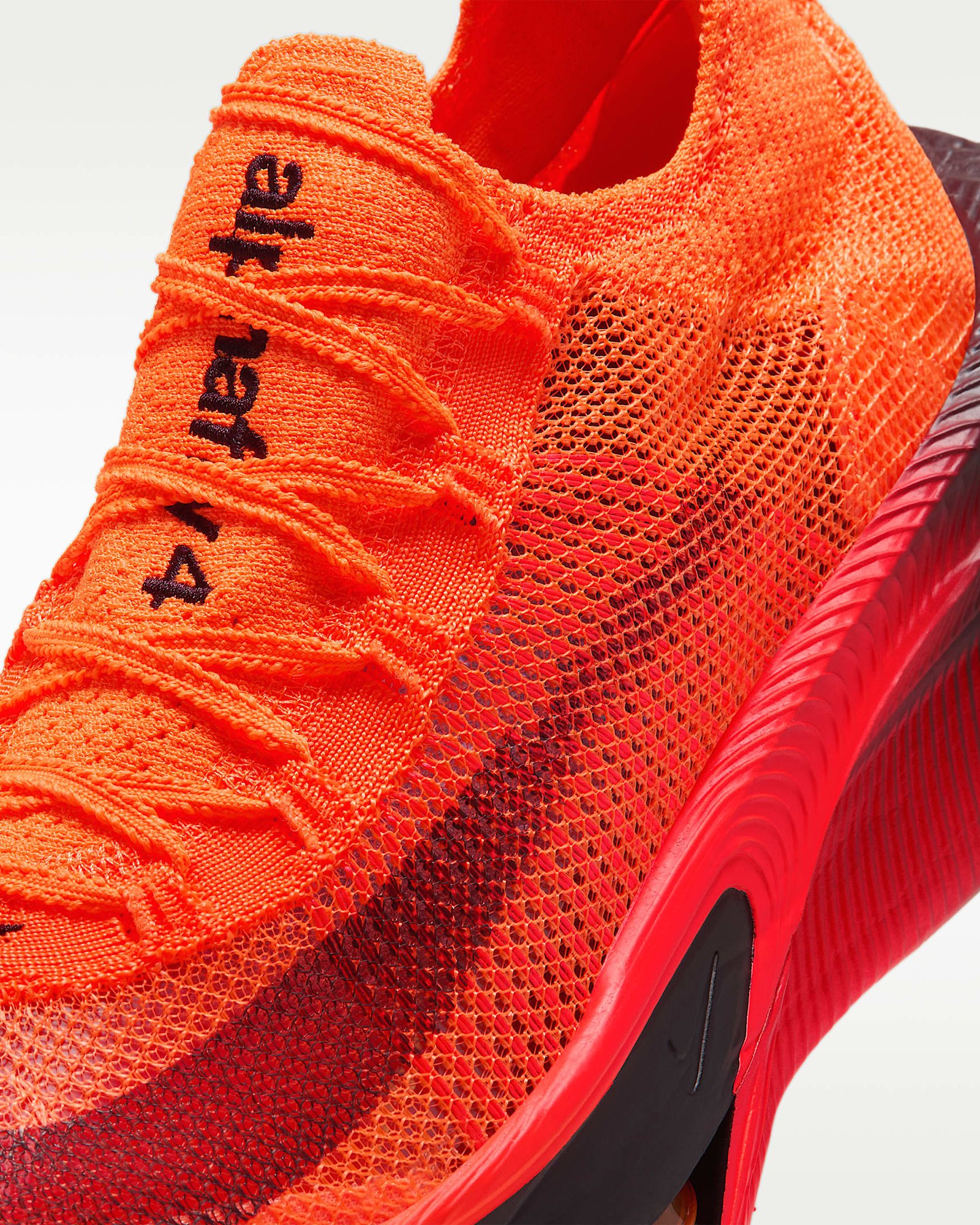
- Foam: ZoomX plus new ZoomX LT
- Plate: Full-length carbon Flyplate, wider than version 3
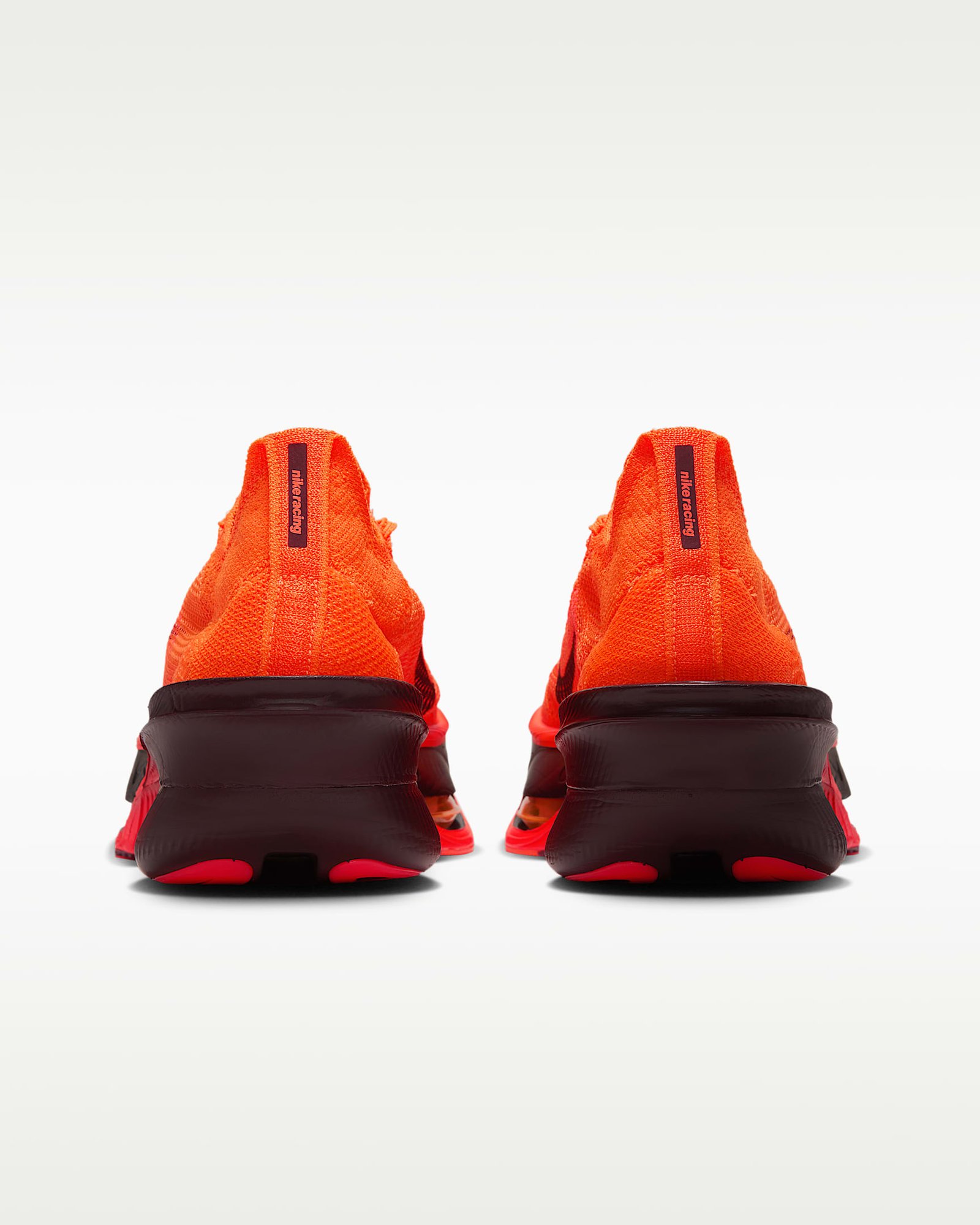
- Stack: 39.0 mm heel / 32.8 mm forefoot (RunRepeat lab); 39 mm heel / 31 mm forefoot (Nike)
- Drop: 8 mm (Nike); 6.2 mm (RunRepeat lab)
- Weight: 6.7 oz / 190 g men’s (RunRepeat lab); 6.7 oz / 191 g (Nike)
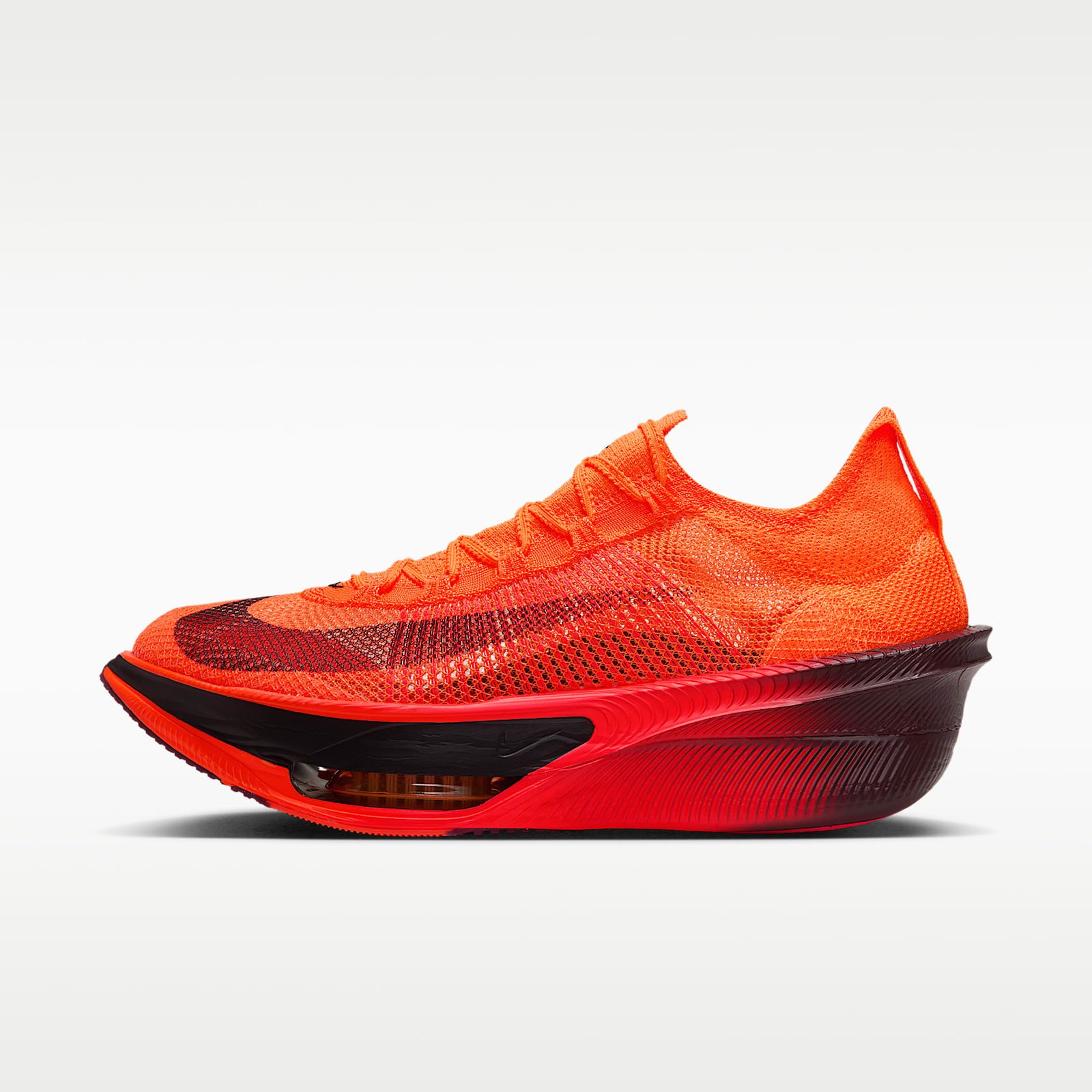
The Alphafly 4 is Nike’s newest racer. It reached a limited release on 17 September 2026 and went on wide sale on 29 October 2026. It is the first Alphafly with a second foam: ZoomX LT, a lighter PEBA foam, sits next to the standard ZoomX. The carbon Flyplate is wider, and the two Air Zoom units in the forefoot are redesigned. Nike says the shoe is 5% lighter than the Alphafly 3 and returns about 10% more energy.
RunRepeat’s lab already has the numbers. It measured a 39.0 mm heel stack, matching Nike’s claim, and a 32.8 mm forefoot stack, a touch taller than the listed 31 mm. The real drop is 6.2 mm, lower than the listed 8 mm. Shock absorption was 157 SA in the heel, the best score in this guide. Energy return was 79.9% in the forefoot, also the best here.
Pros:
- The highest energy return and the best shock absorption in this guide.
- 5% lighter than the Alphafly 3, with a wider, more stable plate.
- 39 mm stack sits just under the 40 mm World Athletics limit for road racing.
- New ZoomX LT foam is softer and bouncier than the old ZoomX.
Cons:
- New shoe, short track record. No long-term durability data yet.
- Harsh at easy paces, like all carbon racers. Save it for race day.
- No wide version, and it wears out fast.
Skip it if: you are not racing a marathon. It is the wrong tool for daily miles, and the price only makes sense on race morning. For the half marathon, the Vaporfly 4 is lighter and cheaper.
See the Nike Alphafly 4 at Nike
(Nike direct link — not an Amazon link)
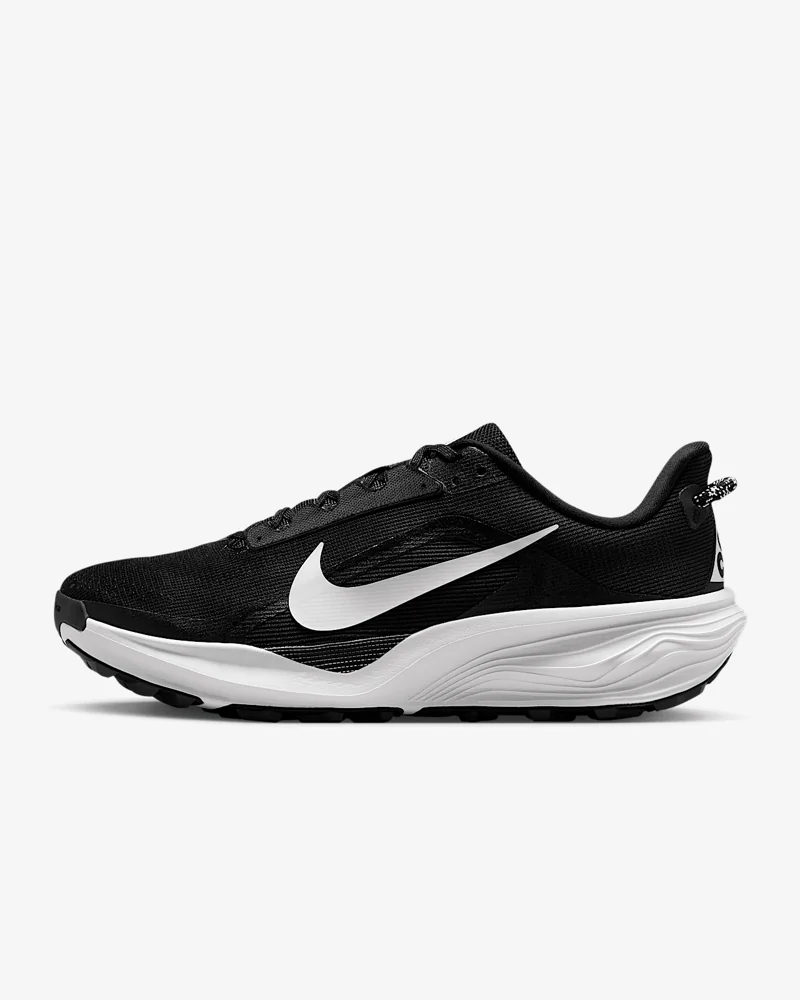
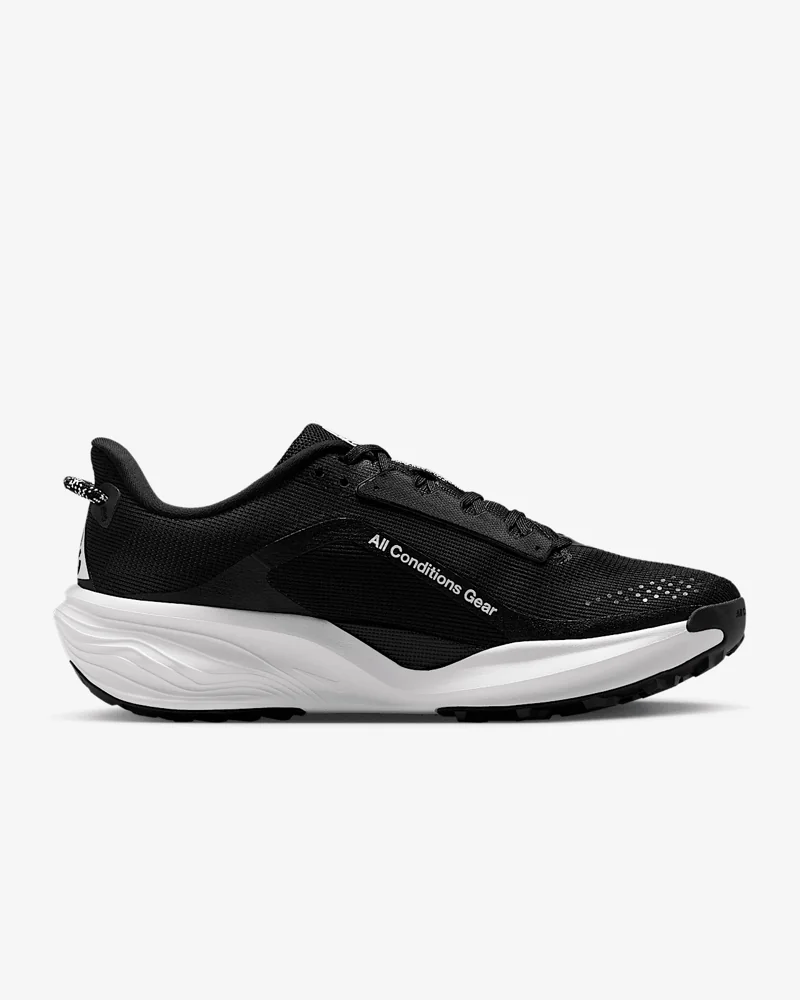
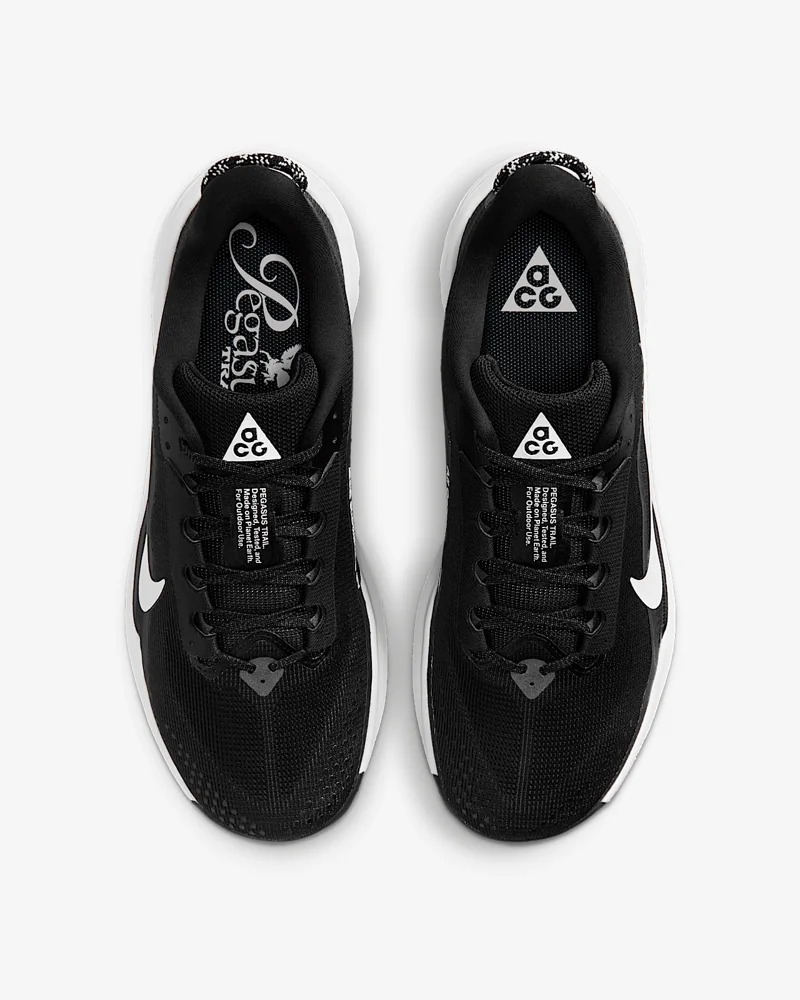
7. Nike ACG Pegasus Trail — Best trail
Who it suits: runners whose routes mix pavement, gravel, and light trails and who want one shoe for all of it.
- Support: Neutral (trail)
- Foam: ReactX
- Stack: 34.1 mm heel / 25.6 mm forefoot (RunRepeat lab); 35 mm heel (Nike)
- Drop: 8 mm (Nike); 8.5 mm (RunRepeat lab)
- Weight: 10.2 oz / 289 g men’s (RunRepeat lab); 10.8 oz / 305 g (Nike, US 10)
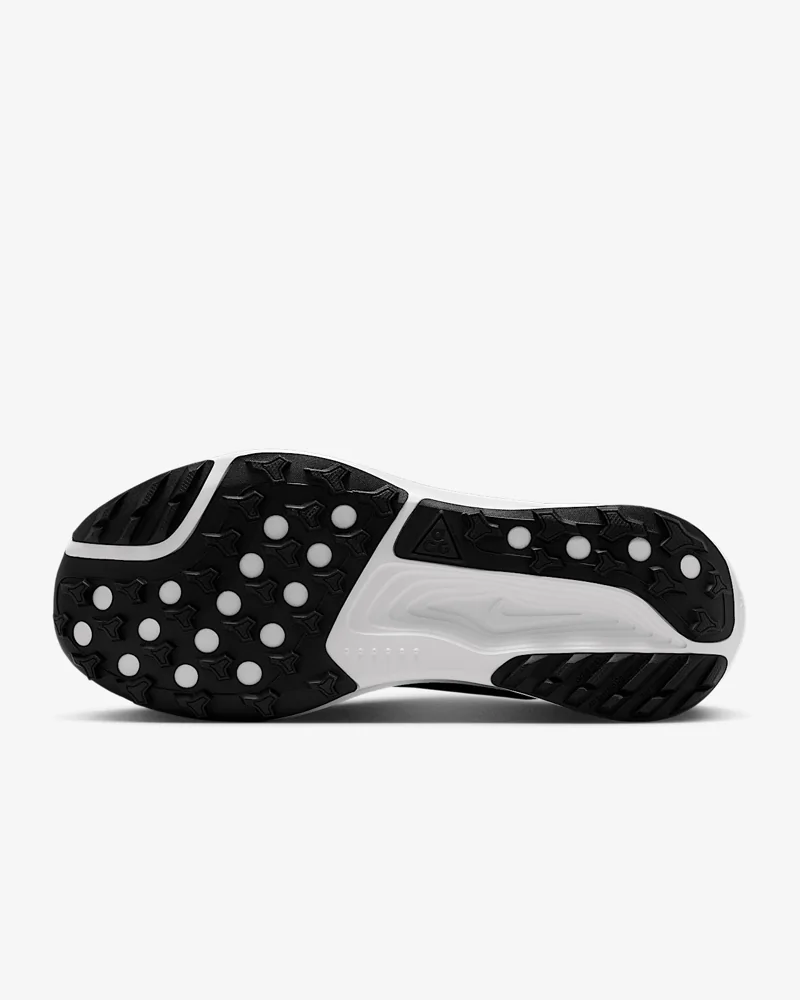
- Outsole: All Terrain Compound 2.0 (ATC 2.0) rubber
- Widths: Standard only
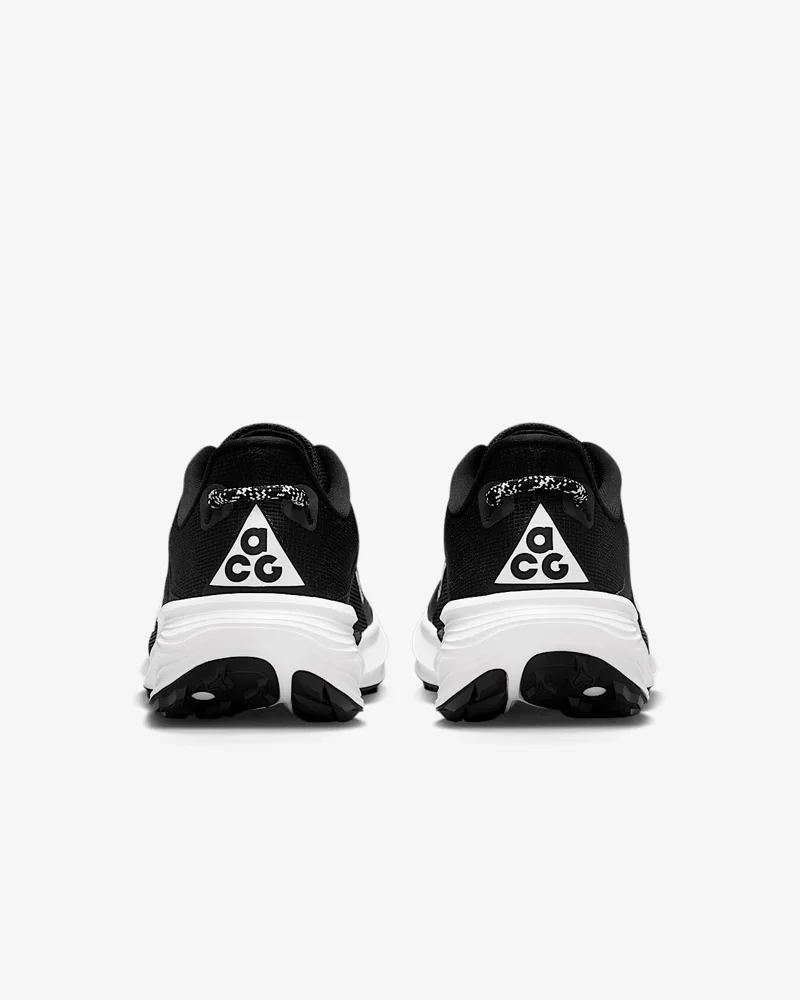
The ACG Pegasus Trail is the new name for the Pegasus Trail line. Nike moved the shoe into its ACG outdoor line in April 2026 and dropped the version number. There is no “Pegasus Trail 6”. This is the sixth generation, with more ReactX foam than the Trail 5, a wider forefoot, and a new ATC 2.0 outsole. The drop fell from 9.5 mm to 8 mm.
RunRepeat’s lab measured a 34.1 mm heel stack and a 25.6 mm forefoot stack, with an 8.5 mm drop. Shock absorption was 135 SA in the heel and 106 SA in the forefoot. Energy return was 56.3% in the forefoot, the lowest score in this guide. ReactX is a comfort foam, not a bouncy one. The shoe is built for grip and protection, not speed.
Pros:
- One shoe for pavement, gravel, and light trails. No need for two pairs.
- ATC 2.0 rubber grips well on wet and loose ground.
- Wider forefoot than the Trail 5, with a secure midfoot.
- A GORE-TEX version exists for wet weather.
- Tough enough for hiking too.
Cons:
- No wide version, and the lugs are shallow. It is not a technical trail shoe.
- Low energy return. It feels flat when you pick up the pace.
Skip it if: you run mostly on roads. The lugs wear fast on pavement and the shoe feels clumsy there. Buy the Pegasus 42 for roads. If you run rough, rocky trails, see our best trail running shoes guide for deeper-lug options.
See the Nike ACG Pegasus Trail at Nike
(Nike direct link — not an Amazon link)
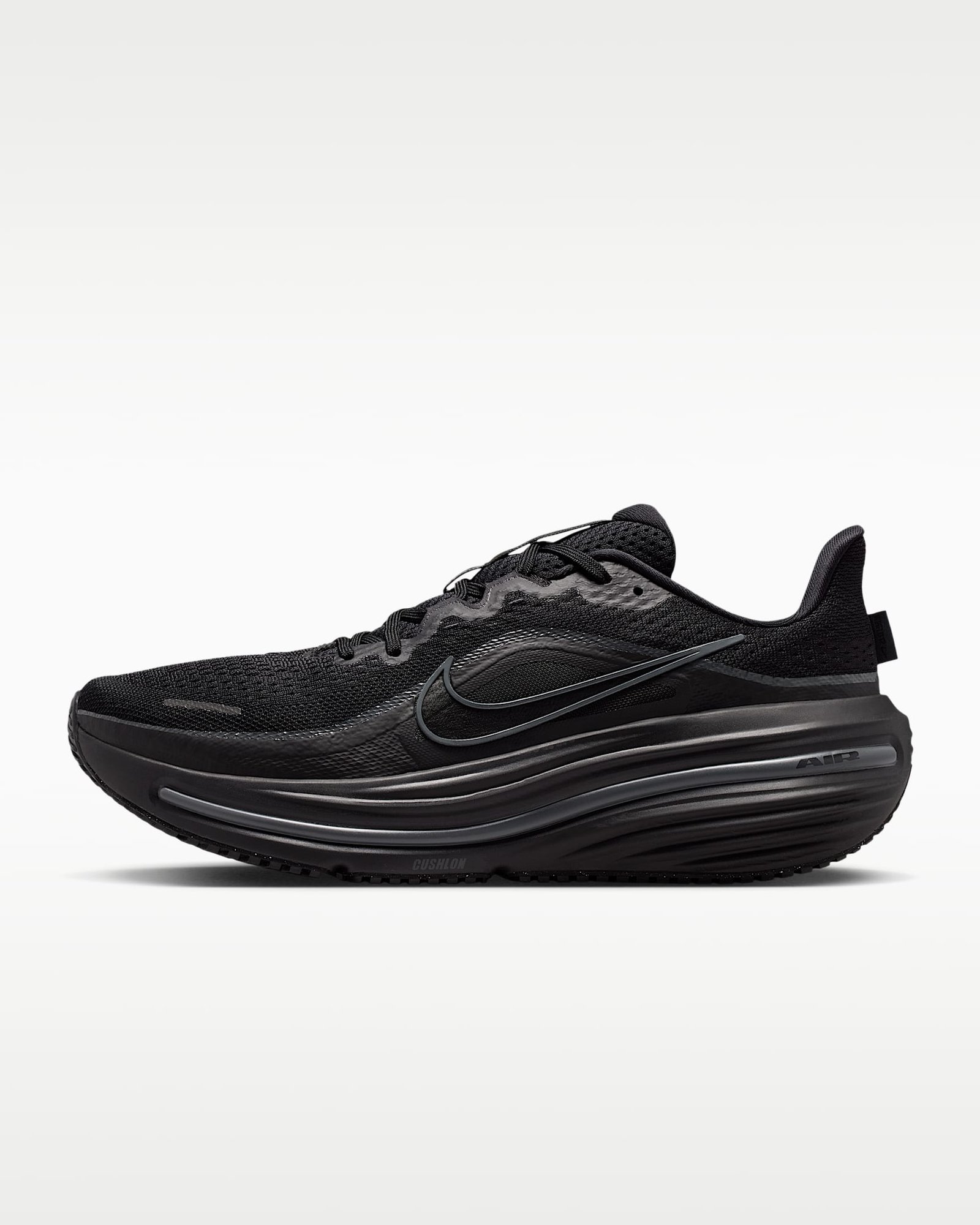
8. Nike Winflo 12 — Best value
Who it suits: runners who want a soft, cushioned Nike for easy miles without paying for ZoomX.
- Support: Neutral
- Foam: Cushlon 3.0 with a heel Air unit
- Stack: 40.9 mm heel / 30.3 mm forefoot (RunRepeat lab); 40 mm heel / 30 mm forefoot (retailer catalog)
- Drop: 10 mm (Nike); 10.6 mm (RunRepeat lab)
- Weight: 10.6 oz / 301 g men’s (RunRepeat lab); 11.4 oz / 322 g (Nike, US 10)
- Widths: Regular, Wide
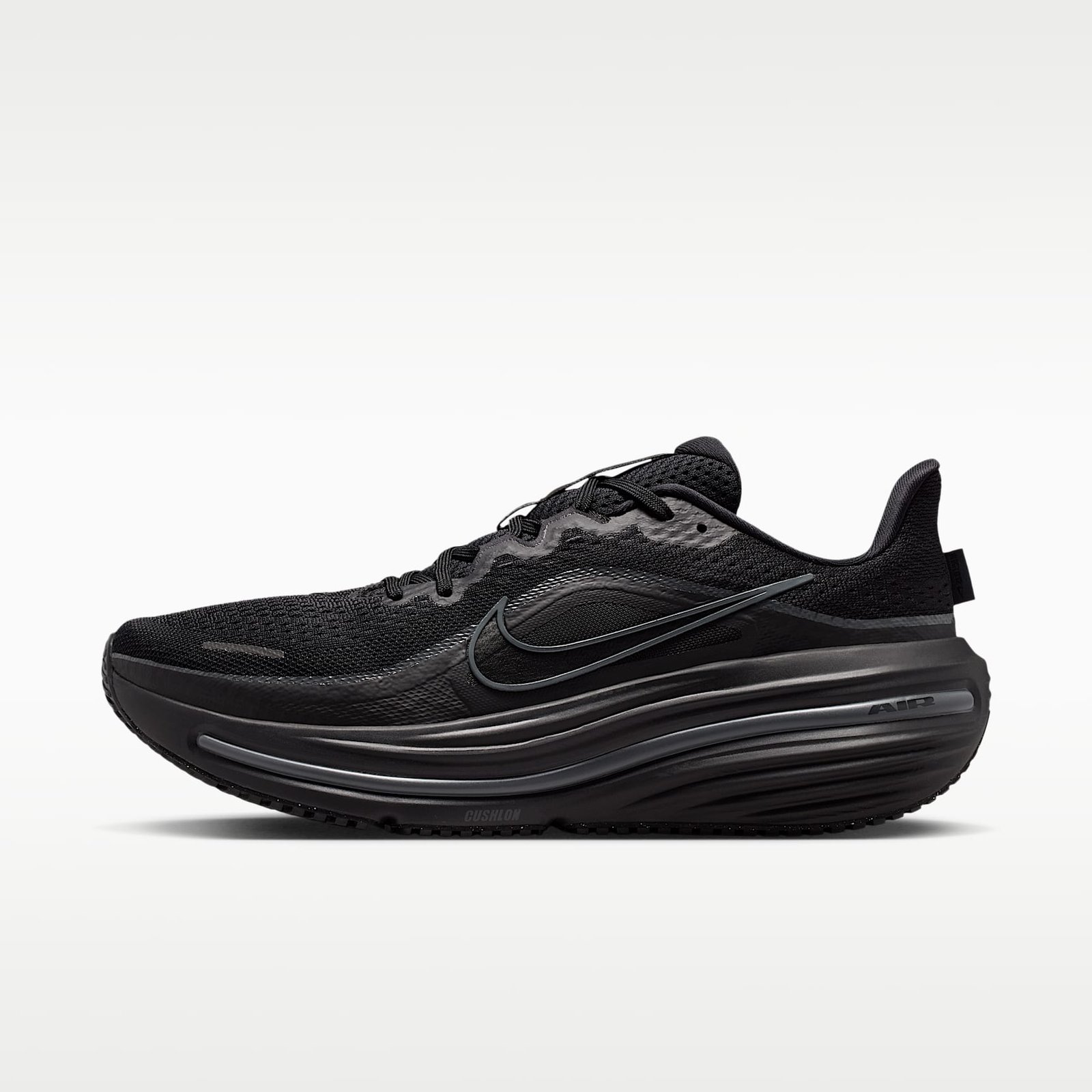
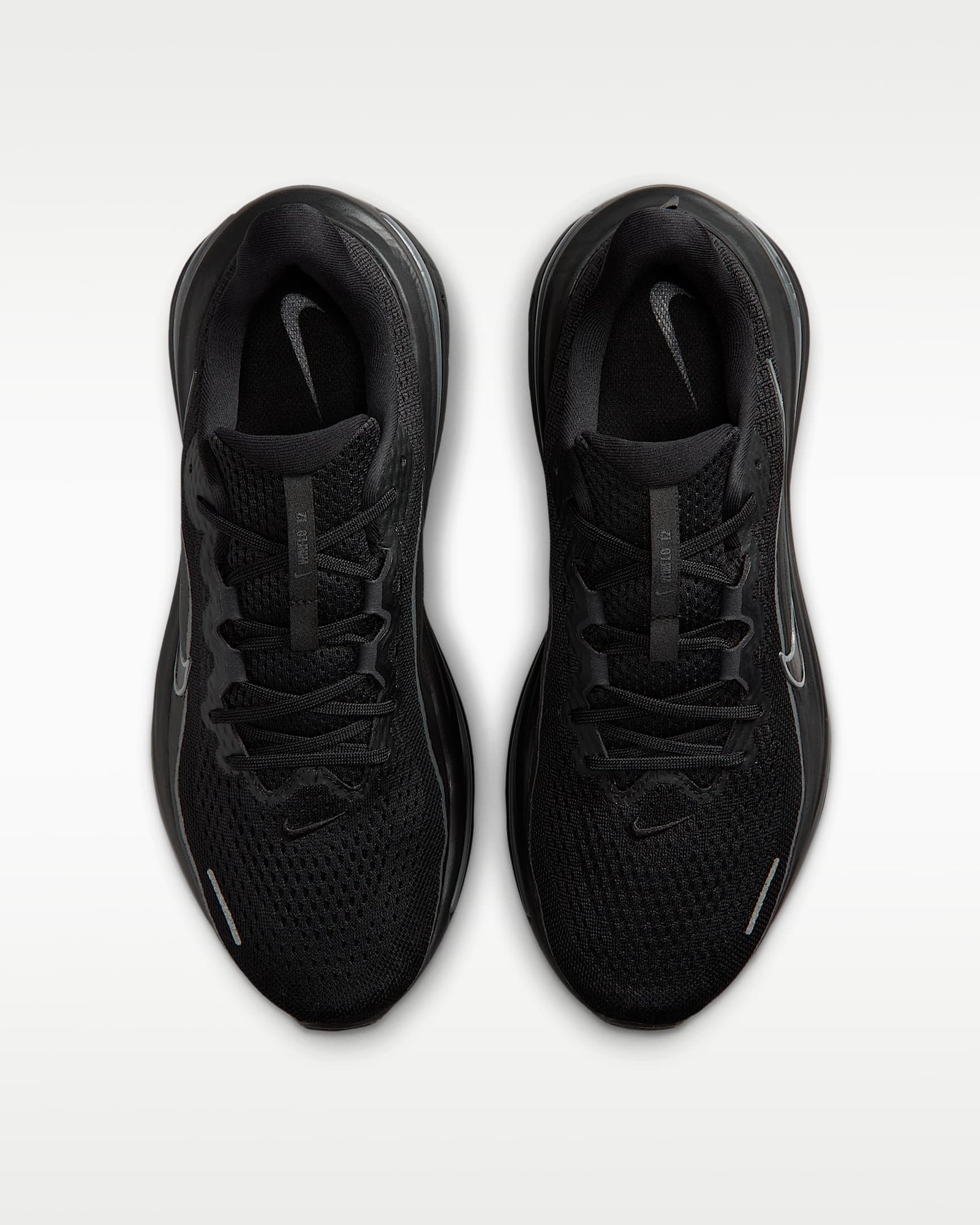
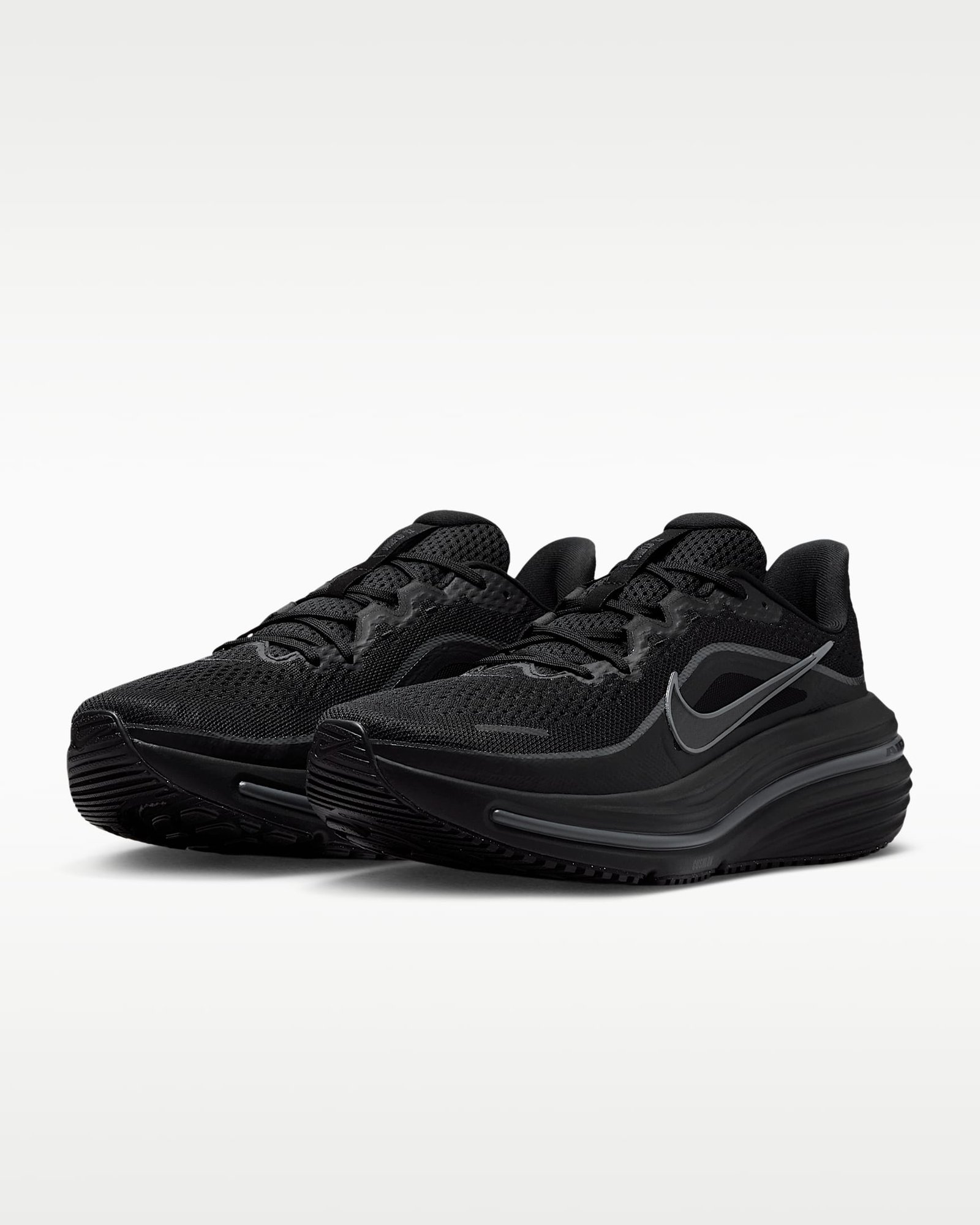
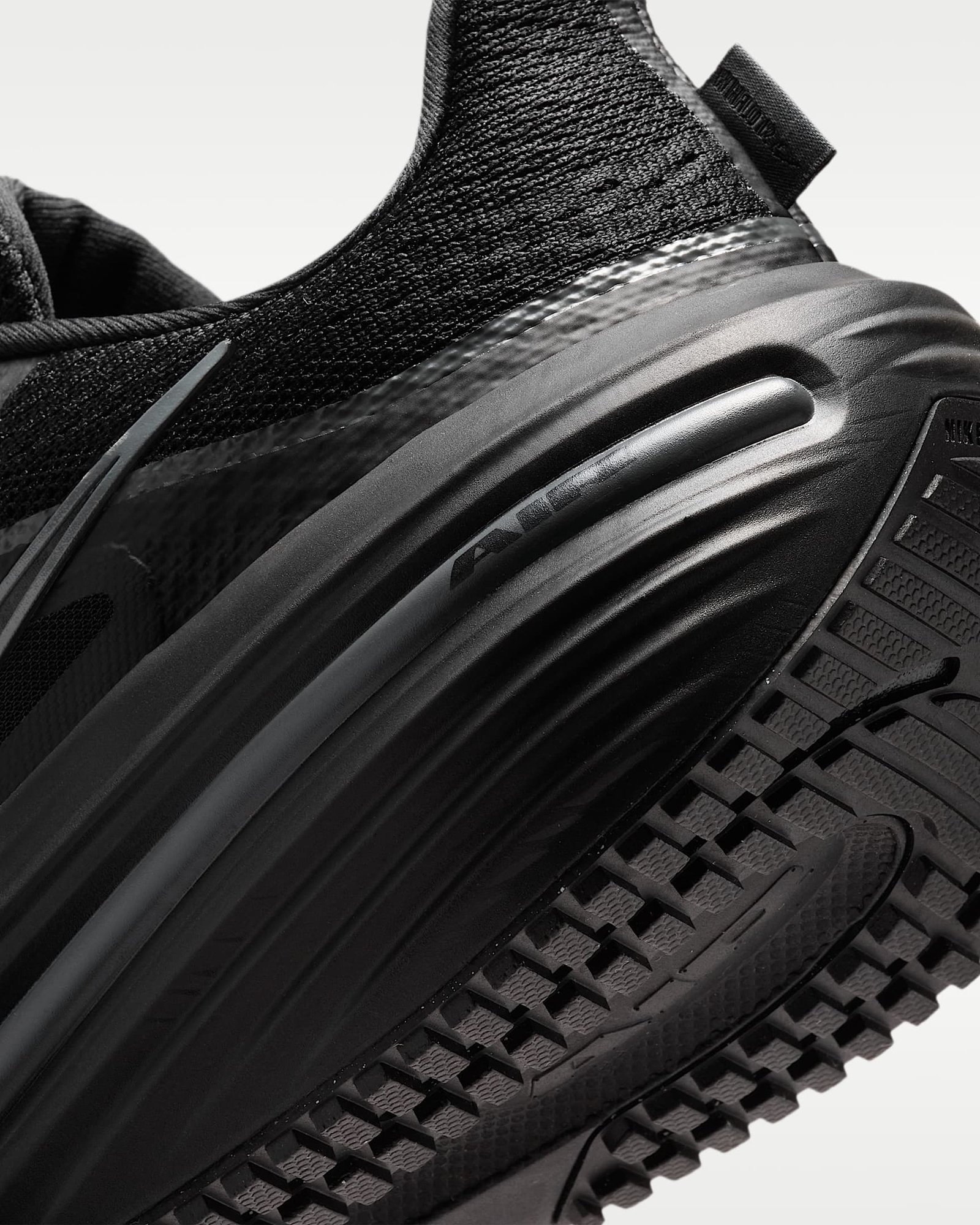
The Winflo 12 is the biggest redesign this budget line has ever had. Nike moved it into max-cushion territory. The heel stack jumped from 37.6 mm in the Winflo 11 to 40.9 mm in the lab. The foam is Cushlon 3.0, a softer EVA blend, with an Air unit in the heel only. The full-length Air unit from the 11 is gone.
RunRepeat’s lab measured 139 SA shock absorption in the heel and 112 SA in the forefoot, both well above average. Energy return was 61.5% in the forefoot, an 8% jump over the Winflo 11. The catch is weight. At 10.6 oz in the lab, and 11.4 oz on Nike’s spec sheet, it is one of the heaviest trainers you can buy. It feels sluggish when you try to run fast.
Pros:
- Max-cushion comfort at the lowest price in this guide.
- 139 SA shock absorption protects your legs on easy days.
- Regular and Wide widths and a roomy toe box.
- Durable outsole and a roomy toe box.
- Works well for walking and standing all day.
Cons:
- Heavy at 10.6 oz. You feel the weight on every step.
- Slow. The foam is soft, not bouncy, and the shoe does not want to go fast.
Skip it if: you want to run fast or race. The Pegasus 42 is lighter and more versatile for not much more money. But if your budget is tight and your runs are easy, the Winflo 12 is hard to beat.
See the Nike Winflo 12 at Nike
(Nike direct link — not an Amazon link)
Best Nike running shoes compared side by side
Nike does not publish stack heights on its US product pages, so the stack figures below are RunRepeat lab measurements (digital calipers, shoe cut in half). Drop and weight show Nike’s figure first, with the lab figure in brackets where they differ.
| Model | Category | Support | Heel stack (mm, lab) | Drop (mm) | Weight (g, men’s) | Best for |
|---|---|---|---|---|---|---|
| Pegasus 42 | Daily trainer | Neutral | 36.0 | 10 [14.0 lab] | 300 [286 lab] | Everyday miles |
| Pegasus Plus 2 | Light daily | Neutral | 37.7 | 10 [10.4 lab] | 265 [247 lab] | Faster daily miles |
| Vomero 18 | Max cushion | Neutral | 42.5 | 10 [13.9 lab] | 325 [298 lab] | Soft, long runs |
| Structure 26 | Stability daily | Stability | 36.1 | 10 [10.1 lab] | 298 [296 lab] | Overpronation |
| Vaporfly 4 | Racer | Neutral | 34.1 | 6 [8.6 lab] | 184 [166 lab] | 10K, half marathon |
| Alphafly 4 | Marathon racer | Neutral | 39.0 | 8 [6.2 lab] | 191 [190 lab] | Marathon race day |
| ACG Pegasus Trail | Trail | Neutral | 34.1 | 8 [8.5 lab] | 305 [289 lab] | Road to trail |
| Winflo 12 | Value daily | Neutral | 40.9 | 10 [10.6 lab] | 322 [301 lab] | Easy miles, budget |
Sources: Nike official product pages (drop, weight, widths); RunRepeat lab reviews (stack, drop, weight, shock absorption, energy return) for all 8 shoes, November 2026.
What makes a Nike running shoe good?
Nike technology explained
Nike builds its lineup on four foams. ReactX is the workhorse: an EVA foam that is 13% more responsive than the old React foam, in the Pegasus 42, Structure 26, and ACG Pegasus Trail. ZoomX is the race foam: PEBA-based, light and springy, in the Vaporfly 4, Alphafly 4, and the Vomero 18. ZoomX LT is the new, lighter PEBA foam in the Alphafly 4. Cushlon 3.0 is the value foam: a softer EVA blend in the Winflo 12.
Then come the air and plate systems. A full-length Air Zoom unit sits under the Pegasus 42. A forefoot Air Zoom unit sits under the Pegasus Plus 2. A heel-only Air unit sits under the Winflo 12. The carbon Flyplate is the stiff plate in the Vaporfly 4 and Alphafly 4. It bends as you land and snaps back as you push off. The Alphafly 4 also has two Air Zoom units in the forefoot for extra pop.
How Nike shoes fit
Nike shoes run true to size in length. The Pegasus 42 fits the same way, with more room in the toe box than the 41. If you are between sizes, stay with your normal size first. Nike’s weakness is width. The Pegasus 42, Vomero 18, and Winflo 12 come in Regular and Wide only — no Narrow, no Extra Wide. The Vaporfly 4 comes in Regular and Wide. The Pegasus Plus 2 and the ACG Pegasus Trail come in standard width only.
New shoes feel tight for the first few runs. The upper softens, and the foam settles. Give a pair 20–30 miles before you judge the fit. If your shoes feel tight across the toes, read our guide on are running shoes supposed to be tight before you size up.
Nike neutral vs stability lineup
Neutral shoes let your foot move as it wants. Stability shoes add guidance for feet that roll inward. In this guide, only the Structure 26 is a stability shoe; the other seven are neutral. Nike has no other current stability shoe in its road lineup. If you need support and want more cushion than the Structure 26 gives, there is no plush stability Nike to step up to. That is a real gap in the lineup.
How long do Nike shoes last?
Expect 400–500 miles from the Pegasus 42 and Structure 26, and 350–450 miles from the ZoomX shoes. The Vaporfly 4 and Alphafly 4 are race shoes — save them for races and they last a season of race days. The foam loses bounce before the outsole wears out, so judge by feel, not by looks. To clean them, read our guide on how to wash running shoes — most Nike road shoes can go in a washing machine on cold and gentle, then air-dry.
The Nike running shoe lineup at a glance
Nike’s naming is the part that confuses people most. Here is the decoder.
| Model | Role | Support | Cushion |
|---|---|---|---|
| Pegasus 42 | Daily trainer | Neutral | Balanced |
| Pegasus Plus 2 | Light daily trainer | Neutral | Balanced |
| Pegasus Premium | Max-tech daily | Neutral | Most |
| Vomero 18 | Max-cushion daily | Neutral | Most |
| Vomero Plus | Max-cushion daily | Neutral | Most |
| Vomero Premium | Plushest daily | Neutral | Most |
| Structure 26 | Stability daily | Stability | Balanced |
| Winflo 12 | Value daily | Neutral | Most |
| Downshifter 14 | Budget daily | Neutral | Standard |
| Zoom Fly 6 | Super trainer | Neutral | Most |
| Vaporfly 4 | Carbon racer | Neutral | Most |
| Alphafly 4 | Marathon racer | Neutral | Most |
| Streakfly 2 | Short-distance racer | Neutral | Standard |
| ACG Pegasus Trail | Road-to-trail | Neutral | Balanced |
| ACG Ultrafly Trail | Trail racer | Neutral | Most |
“Pegasus” means daily training. “Vomero” means plush. “Structure” means stability. “Winflo” means value. “Vaporfly” and “Alphafly” mean racing, with a carbon plate. “ACG” means outdoor and trail. “Plus” means a lighter, faster version of the shoe next to it. “Premium” means the most tech Nike can fit in a daily trainer.
Which Nike running shoes are best for women?
Women’s Nike shoes use the same foams and stack as the men’s versions, on a narrower women’s last. For most women, the Pegasus 42 is the best first Nike: true to size, Regular and Wide options, handles daily miles. For softer landings, pick the Vomero 18. For support, the Structure 26. For racing, the Vaporfly 4 (about 6 oz in a women’s 8) or the Alphafly 4 for the marathon.
Which Nike running shoes are best for men?
For most men, the answer is the same: Pegasus 42 for daily miles, Vomero 18 for plush comfort, Structure 26 for support. Men get the widest range of widths — the Winflo 12, Pegasus 42 and Vomero 18 all come in Wide. Heavy men over 200 lb should start with the max-cushion shoes, Vomero 18 or Winflo 12, because the extra foam protects knees and calves.
Which Nike shoe is best for flat feet?
The Nike Structure 26 is the best Nike shoe for flat feet. Its midfoot support system keeps your ankles from rolling inward without a hard post under your arch. But flat feet do not always need a stability shoe. A Cochrane Review found no strong proof that one shoe type prevents injuries, and a study by Nigg and colleagues found that runners pick shoes by comfort, and comfort predicts good movement. If your flat feet do not overpronate much, the Pegasus 42 also works — and it is lighter. If you have foot pain, see a clinician before you buy.
How we chose these shoes
We did not test these shoes hands-on, and we will not pretend we did. We chose them from three sources. First, Nike’s official product pages for specs: foam, drop, weight, and widths. Second, RunRepeat’s independent lab, which cuts each shoe in half and measures stack, drop, weight, shock absorption, and energy return. All eight shoes have a RunRepeat lab test, including the Alphafly 4, which only reached wide release on 29 October 2026. Third, clinical guidance on fit and injury: a Cochrane Review found no strong proof that one shoe type prevents injuries, and a study by Nigg and colleagues found that comfort predicts good movement.
We also re-checked the live search results for “best nike running shoes” on 19 November 2026. The top pages are Pace & Pavement, iRunFar, Esenbay, Best Walking Feet, RunnersCove, and RTINGS, listing 6–8 shoes each. Our 8 picks cover every shoe those pages agree on, with current-generation models only. One difference: most of those pages still list the Alphafly 3. We list the Alphafly 4, which replaced it on 29 October 2026.
Which shoe should you pick?
| Your run | Your foot | Pick |
|---|---|---|
| Daily miles, any distance | Neutral, any width | Pegasus 42 |
| Daily miles, faster days | Neutral, standard width | Pegasus Plus 2 |
| Easy miles, long runs, recovery | Neutral, wants soft | Vomero 18 |
| Daily miles with support | Overpronates, flat feet | Structure 26 |
| 10K or half marathon race | Neutral, narrow foot | Vaporfly 4 |
| Marathon race | Neutral, wants max cushion | Alphafly 4 |
| Pavement, gravel, light trails | Neutral, standard width | ACG Pegasus Trail |
| Daily miles, tight budget | Neutral, any width | Winflo 12 |
| Daily miles, tight budget, wide feet | Wide feet | Winflo 12 in Wide |
If you still cannot decide, buy the Pegasus 42. It is the shoe most runners end up with after trying the rest.
Frequently asked questions
What is the best Nike running shoe?
The Nike Pegasus 42 is the best Nike running shoe for most runners. It is a neutral daily trainer with balanced cushion, a wide toe box, and a durable outsole. It handles easy runs, long runs, and walking. For softer landings, buy the Vomero 18. If you overpronate, buy the Structure 26.
Which Nike shoe is best for beginners?
The Nike Pegasus 42 is the best Nike shoe for beginners. It fits true to size, needs no break-in, and forgives sloppy form. The 10 mm drop suits heel strikers, and the Regular and Wide widths mean most feet find a fit. It also works for walking and run-walk training.
Which Nike shoe is best for flat feet?
The Nike Structure 26 is the best Nike shoe for flat feet. Its midfoot support system keeps your ankles from rolling inward without a hard post under your arch. If your flat feet do not overpronate much, the Pegasus 42 also works — flat feet do not always need a stability shoe. See a clinician if you have pain.
Do Nike shoes run true to size?
Yes, Nike shoes run true to size in length. The Pegasus 42 fits true to size with more room in the toe box than the 41. The Vomero 18 and Structure 26 fit the same way. If you are between sizes, order your normal size first. Wide feet should order the Wide version instead of sizing up in length.
Are Nike shoes good for walking?
Yes, Nike shoes are good for walking. The Pegasus 42, Vomero 18, Winflo 12, and Structure 26 all work well for walking and all-day wear, with durable rubber outsoles and stable platforms. The Vaporfly 4 and Alphafly 4 are the exceptions — their carbon plates feel awkward at walking pace.
Is Nike a good running shoe brand?
Yes, Nike is a good running shoe brand. It makes the best-selling running shoe in the world in the Pegasus, and its race shoes have won marathons at the highest level. Its lineup covers daily training, stability, max cushion, trail, and racing. Its weak spot is width: most models come in Regular and Wide only, with no Narrow or Extra Wide.
Are Nike running shoes non-marking?
Most Nike road running shoes have non-marking rubber outsoles, so they will not leave black marks on gym floors or indoor courts. The Pegasus 42, Vomero 18, and Winflo 12 are safe for indoor use. Trail shoes are the exception: the ACG Pegasus Trail has a grippier rubber compound that can mark light floors, so wipe the soles before you go inside.
Which Nike shoe is best for wide feet?
The Nike Winflo 12 is the best Nike shoe for wide feet. It comes in Regular and Wide with a roomy toe box, at the lowest price in this guide. The Pegasus 42 and Vomero 18 also come in Wide. Avoid the Pegasus Plus 2 and the ACG Pegasus Trail: standard width only, and the Plus 2 fits snug.
Sources
- Nigg BM, Baltich J, Hoerzer S, Enders H. Running shoes and running injuries: mythbusting and a proposal for two new paradigms: ‘preferred movement path’ and ‘comfort filter’. Br J Sports Med. 2015. https://pubmed.ncbi.nlm.nih.gov/26221015/
- Relph N, Greaves H, Armstrong R, et al. Running shoes for preventing lower-limb running injuries in adults. Cochrane Database Syst Rev. 2022. https://pubmed.ncbi.nlm.nih.gov/35993829/
- Hoogkamer W, Kipp S, Frank JH, et al. A comparison of the energetic cost of running in marathon racing shoes. Sports Med. 2018. https://pubmed.ncbi.nlm.nih.gov/29143929/
- Ryan MB, Valiant GA, McDonald K, Taunton JE. The effect of three different levels of footwear stability on pain outcomes in women runners: a randomised control trial. Br J Sports Med. 2011. https://pubmed.ncbi.nlm.nih.gov/20584759/
- American Academy of Orthopaedic Surgeons. Athletic Shoes. OrthoInfo. https://www.orthoinfo.org/bodypart/foot-ankle/athletic-shoes/
- Nike — official product pages for Pegasus 42, Pegasus Plus 2, Vomero 18, Structure 26, Vaporfly 4, Alphafly 4, ACG Pegasus Trail, Winflo 12 (nike.com, accessed November 2026).
- RunRepeat lab reviews — Pegasus 42, Pegasus Plus 2, Vomero 18, Structure 26, Vaporfly 4, Alphafly 4, ACG Pegasus Trail, Winflo 12 (runrepeat.com, 2026).
Last updated: 19 November 2026. Author: Lora Nicolas. Medical note: this guide helps you pick a shoe. It is not medical advice. If you have foot pain, an injury, or a condition such as plantar fasciitis or Achilles tendonitis, see a clinician before you buy.
1 thought on “Best Nike Running Shoes (2026)”