
Table of Contents
15 Best Running Shoes for Women of 2026
If you want one pair that just works, buy the Brooks Ghost 18. It fits the most feet, it feels soft without feeling slow, and it handles easy runs, long runs and all-day wear. If your feet roll in, get the ASICS Gel-Kayano 33. If you want the lightest max-cushion ride, get the New Balance 1080 v15 (7.3 oz). Or get the HOKA Clifton 11 for a softer rocker feel. If you want speed on a budget, get the adidas Adizero Evo SL. The other eleven picks below cover plush comfort, bounce, speed days, max support, trails, premium cushion, recovery and value. Match the shoe to your run, not the other way round.
HealthSOP is reader-supported. As an Amazon Associate, we earn from qualifying purchases made through links on this page — at no extra cost to you.
Quick picks
| Pick | Best for | Weight (women’s) | Drop | Widths |
|---|---|---|---|---|
| Brooks Ghost 18 | Best overall | 9.0 oz / 255 g | 10 mm | 2A, B, D, 2E |
| HOKA Clifton 11 | Best lightweight cushion | 8.3 oz / 236 g | 8 mm | B, D, 2E |
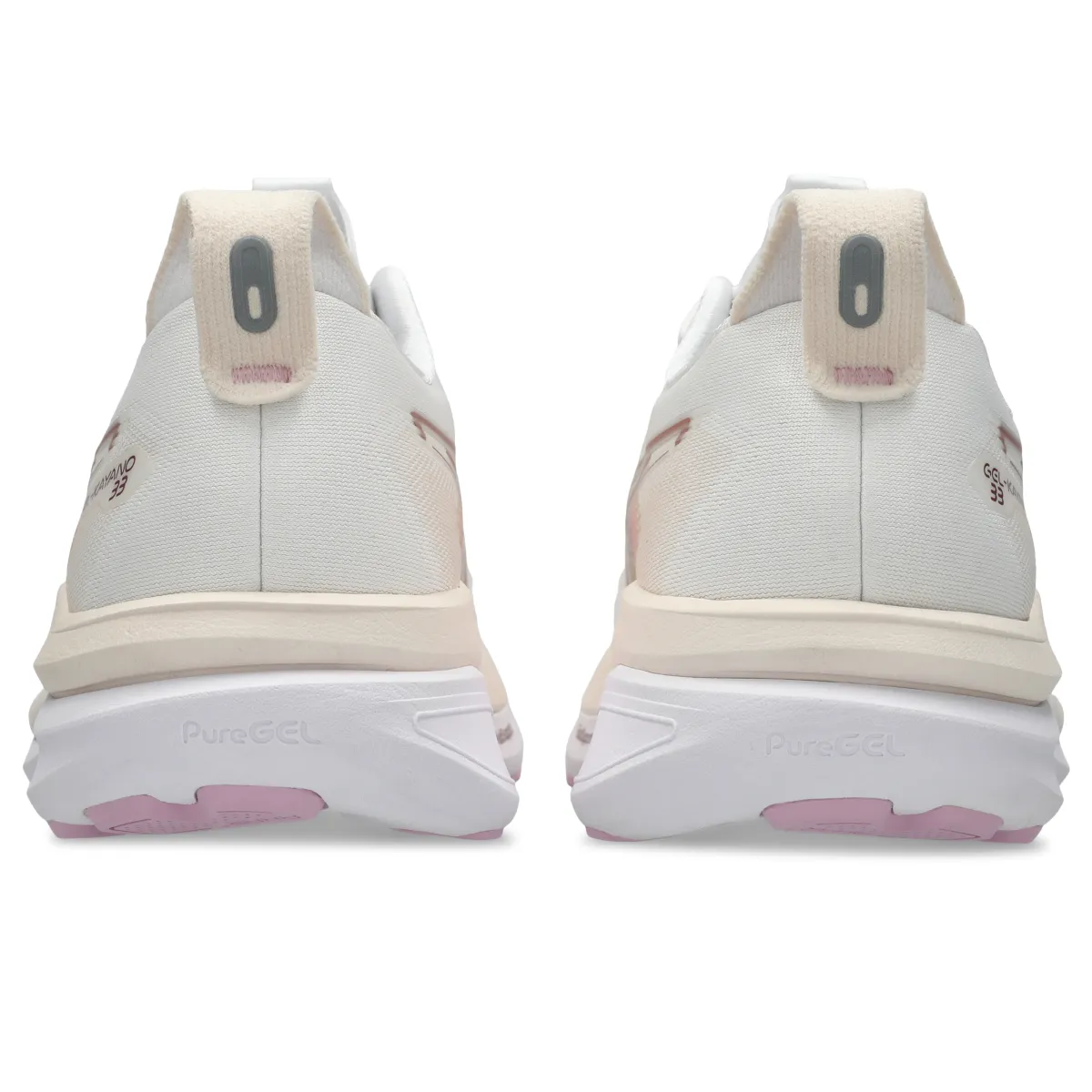
| ASICS Gel-Kayano 33 | Best stability | 9.1 oz / 259 g | 8 mm | 2A, B, D |
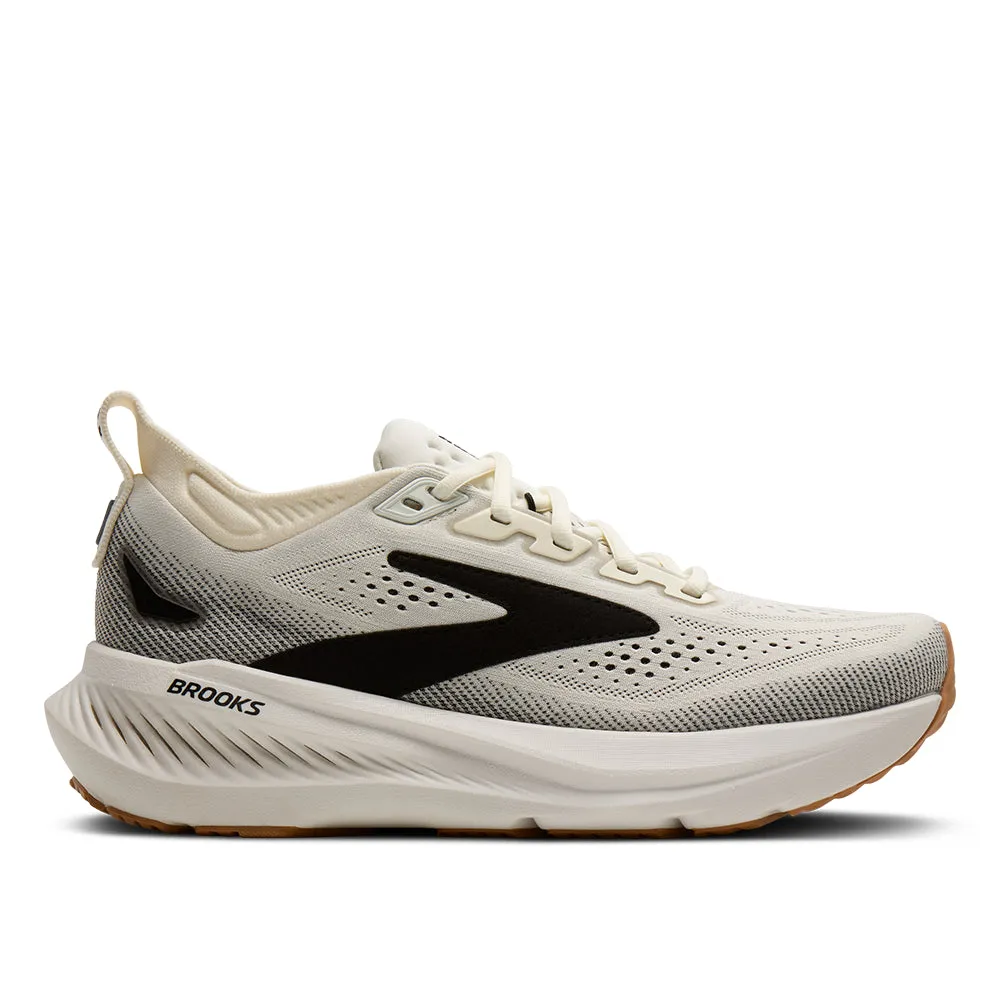
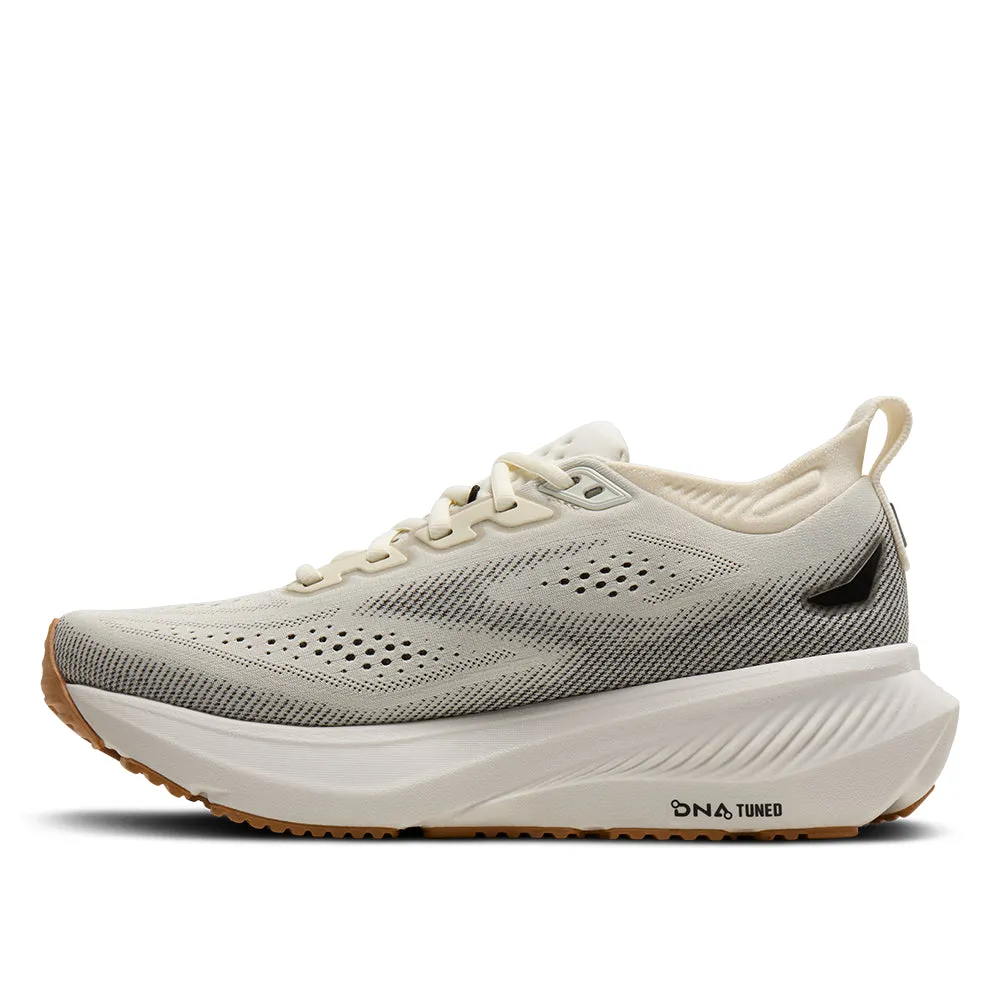
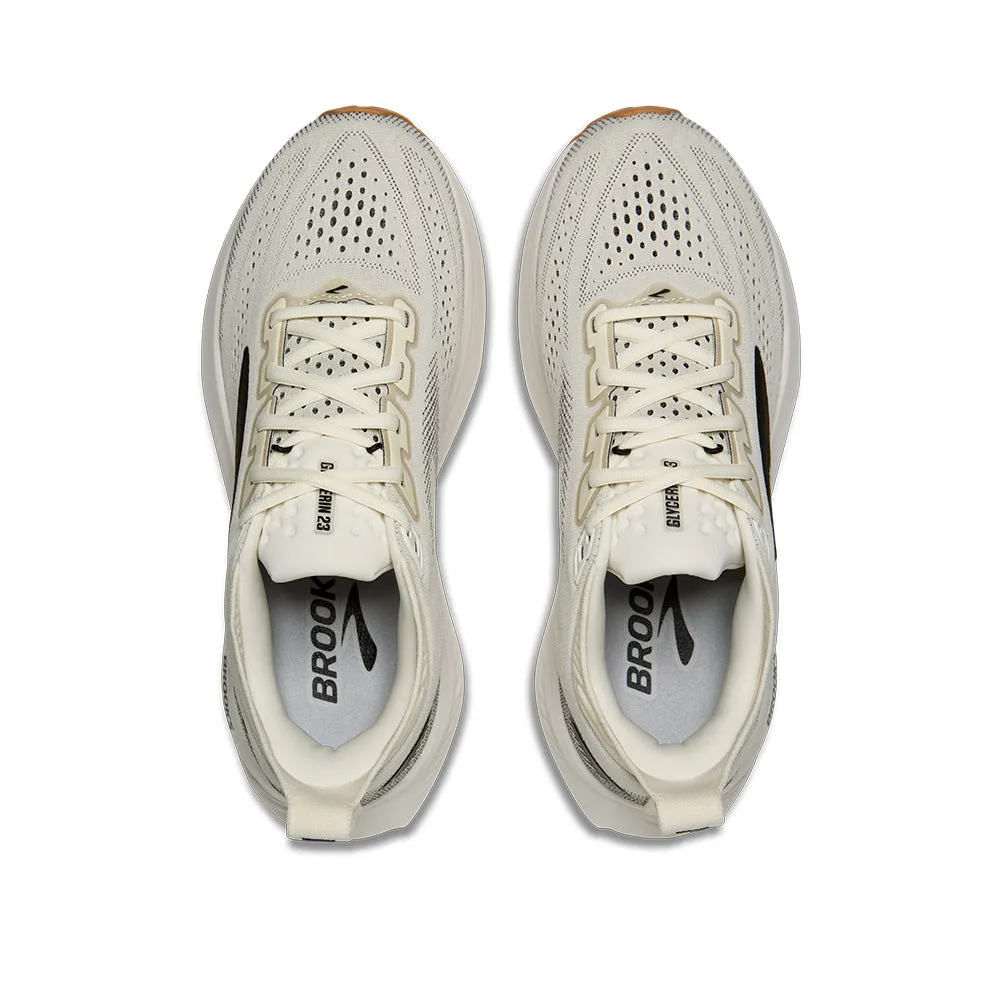
| Brooks Glycerin 23 | Best plush | 9.5 oz / 269 g | 8 mm | B, D |
| ASICS Novablast 6 | Best bouncy daily | 7.6 oz / 215 g | 8 mm | B, D |
| Saucony Endorphin Speed 5 | Best for speed days | 7.5 oz / 213 g | 8 mm | B, D |
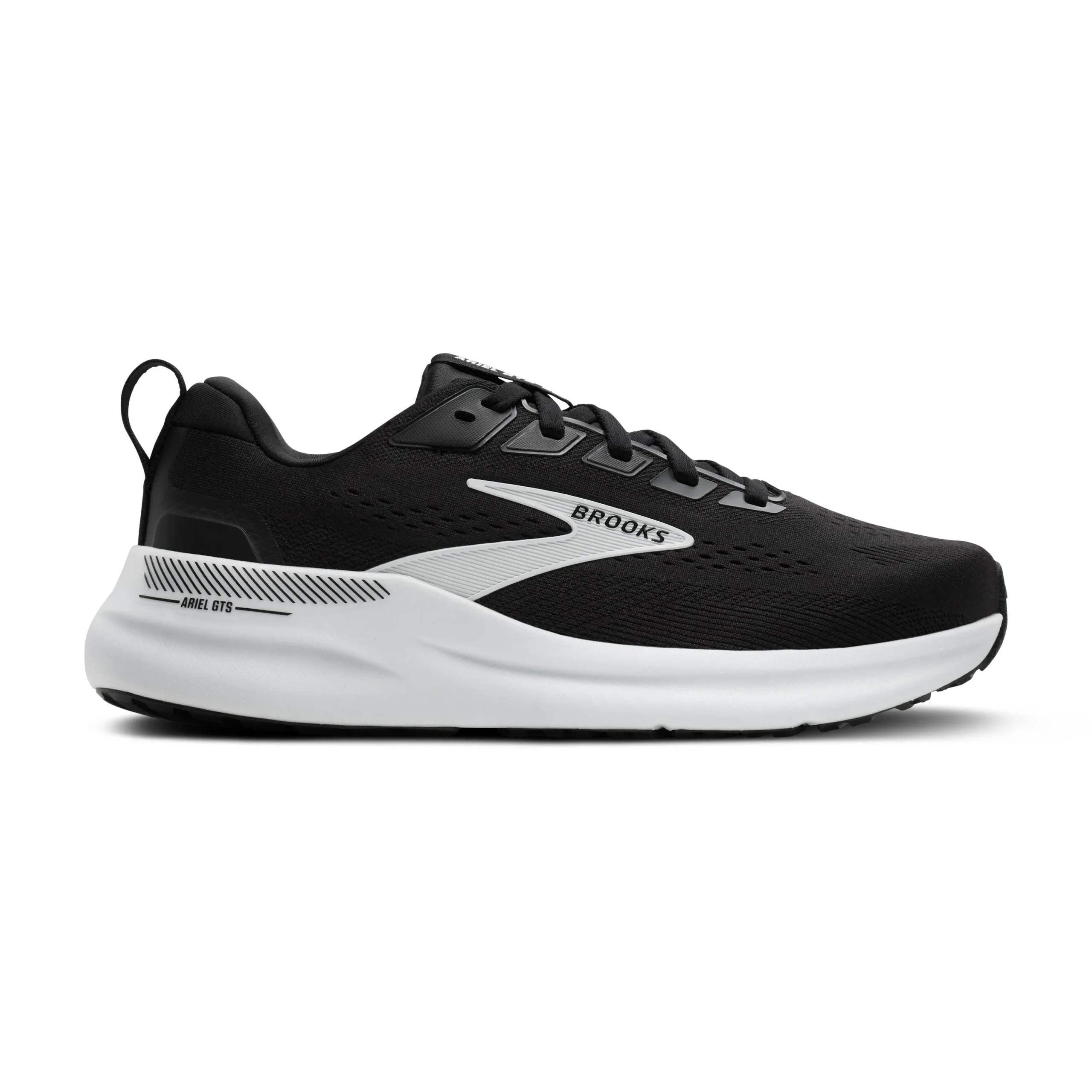
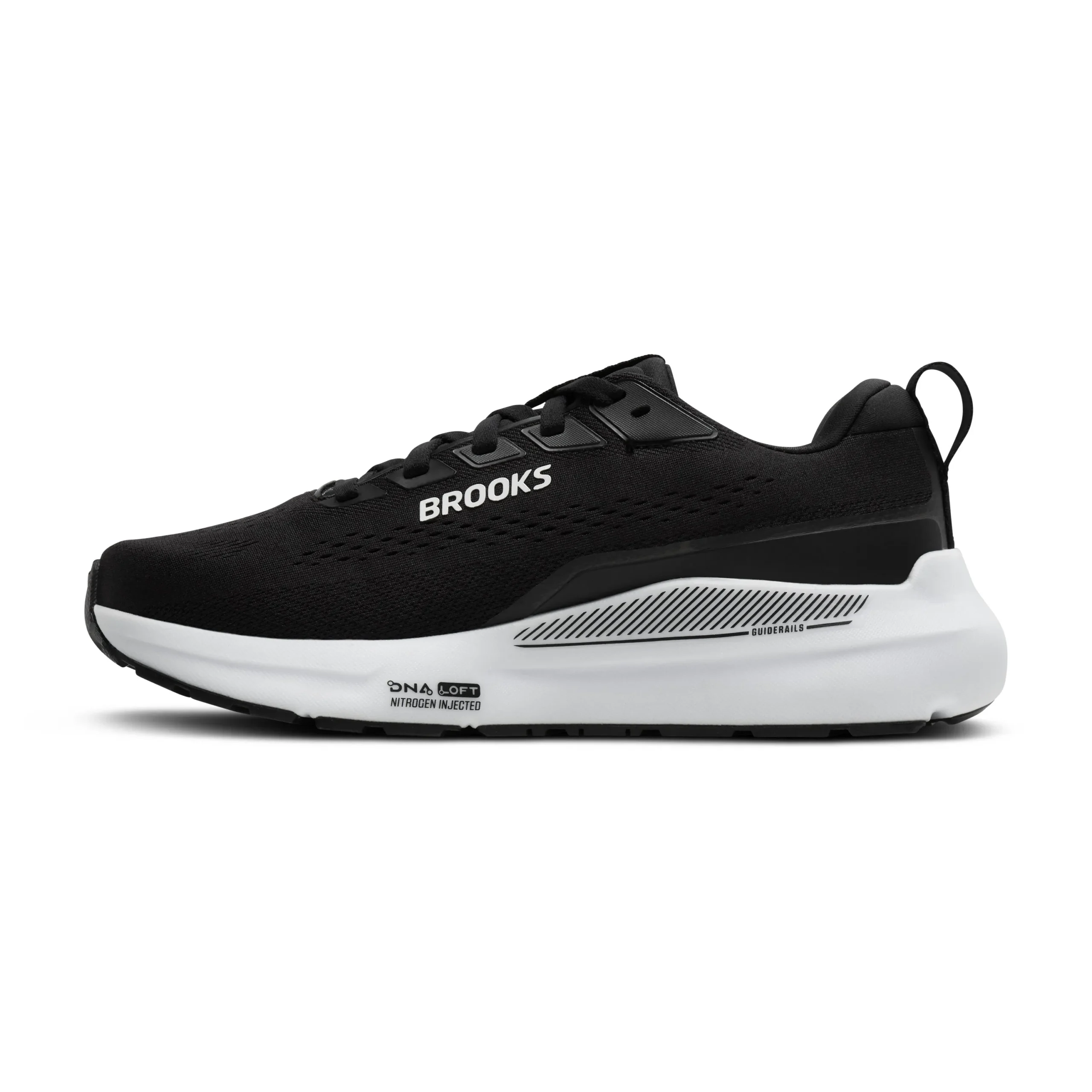
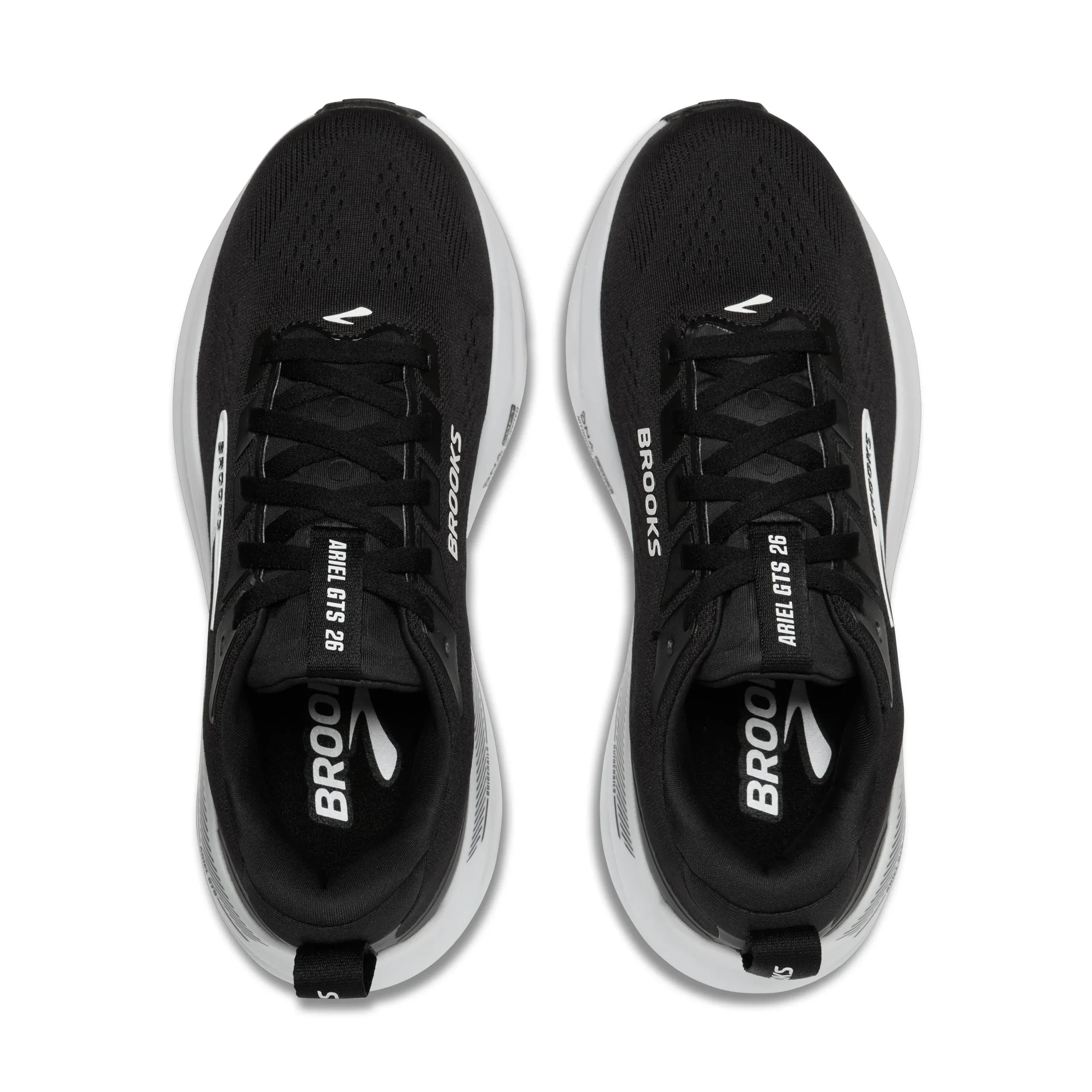
| Brooks Ariel GTS 26 | Best motion control | 11.2 oz / 317.5 g | 12 mm | 2A, B, D, 2E |
| HOKA Speedgoat 6 | Best trail | 8.2 oz / 232 g | 5 mm | Regular, Wide |
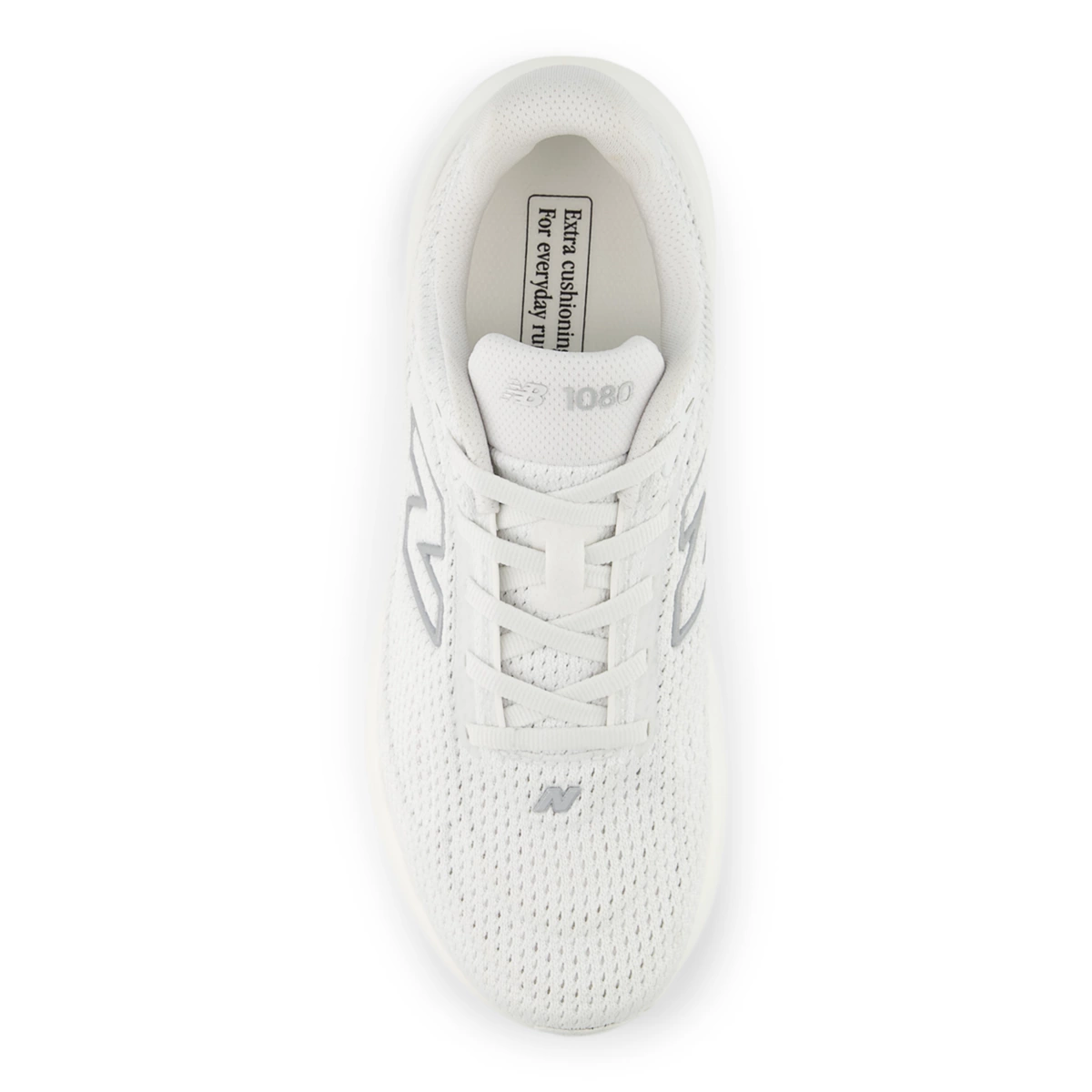
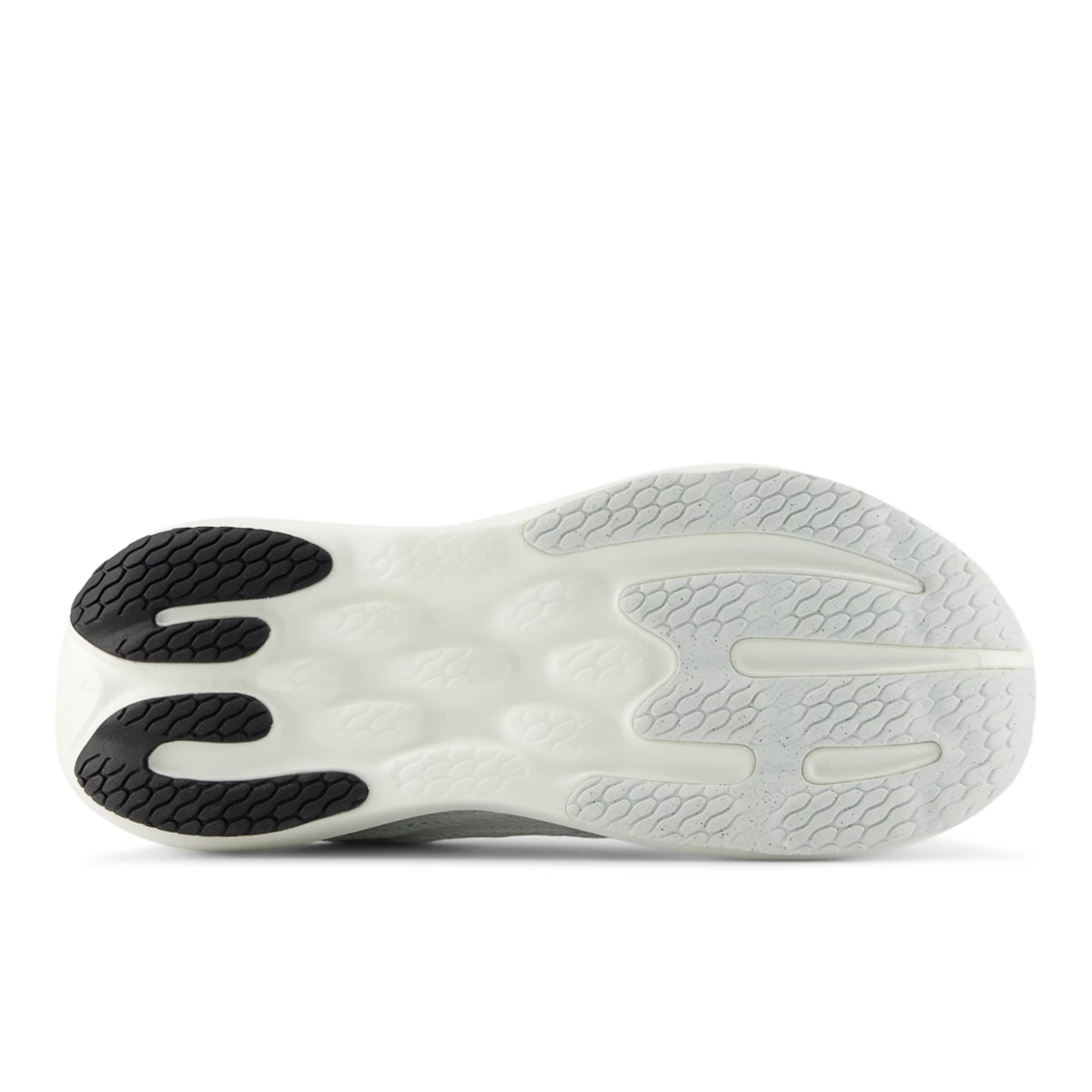
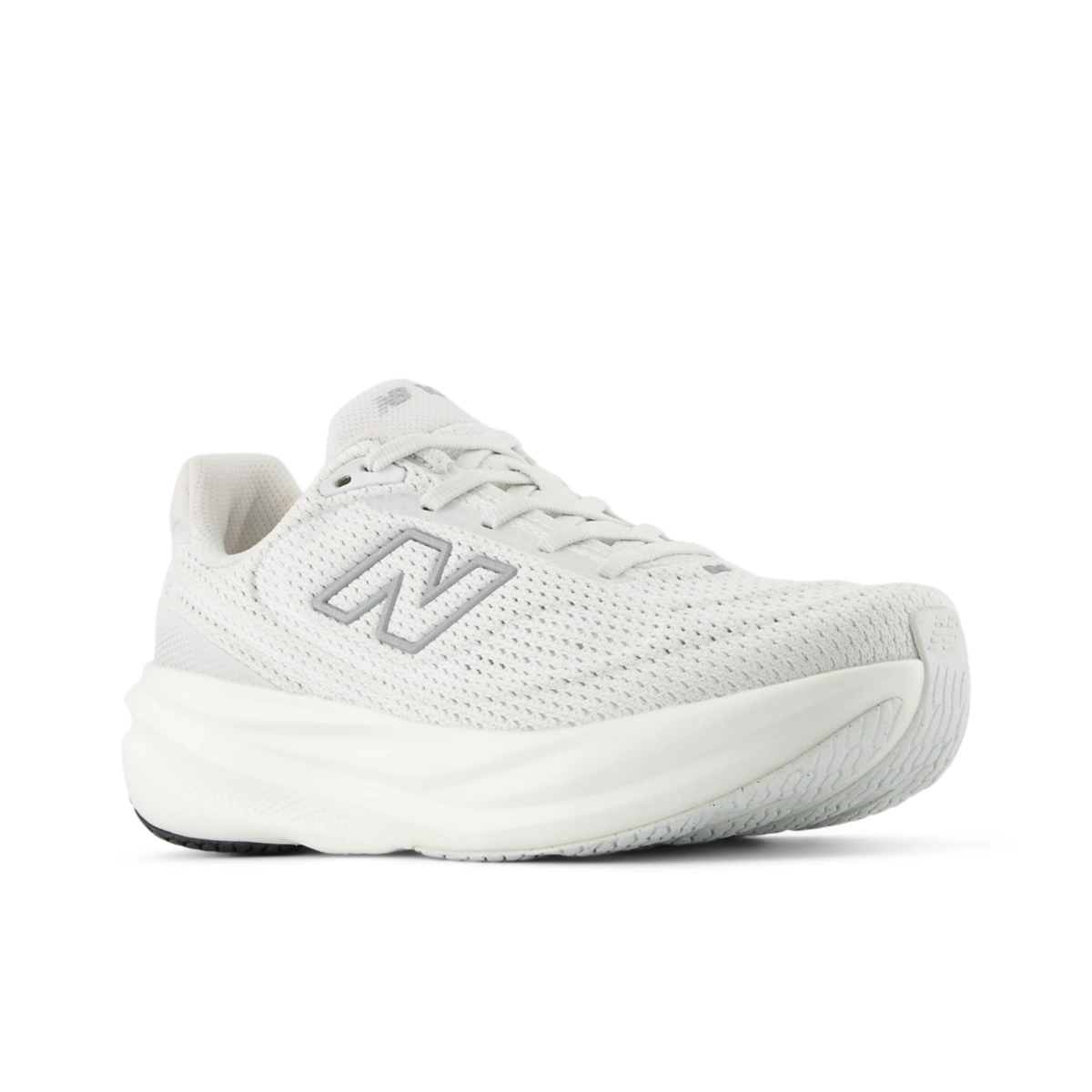
| New Balance Fresh Foam X 1080 v15 | Best max-cushion daily | 7.3 oz / 208 g | 6 mm | 2A, B, D, 2E |
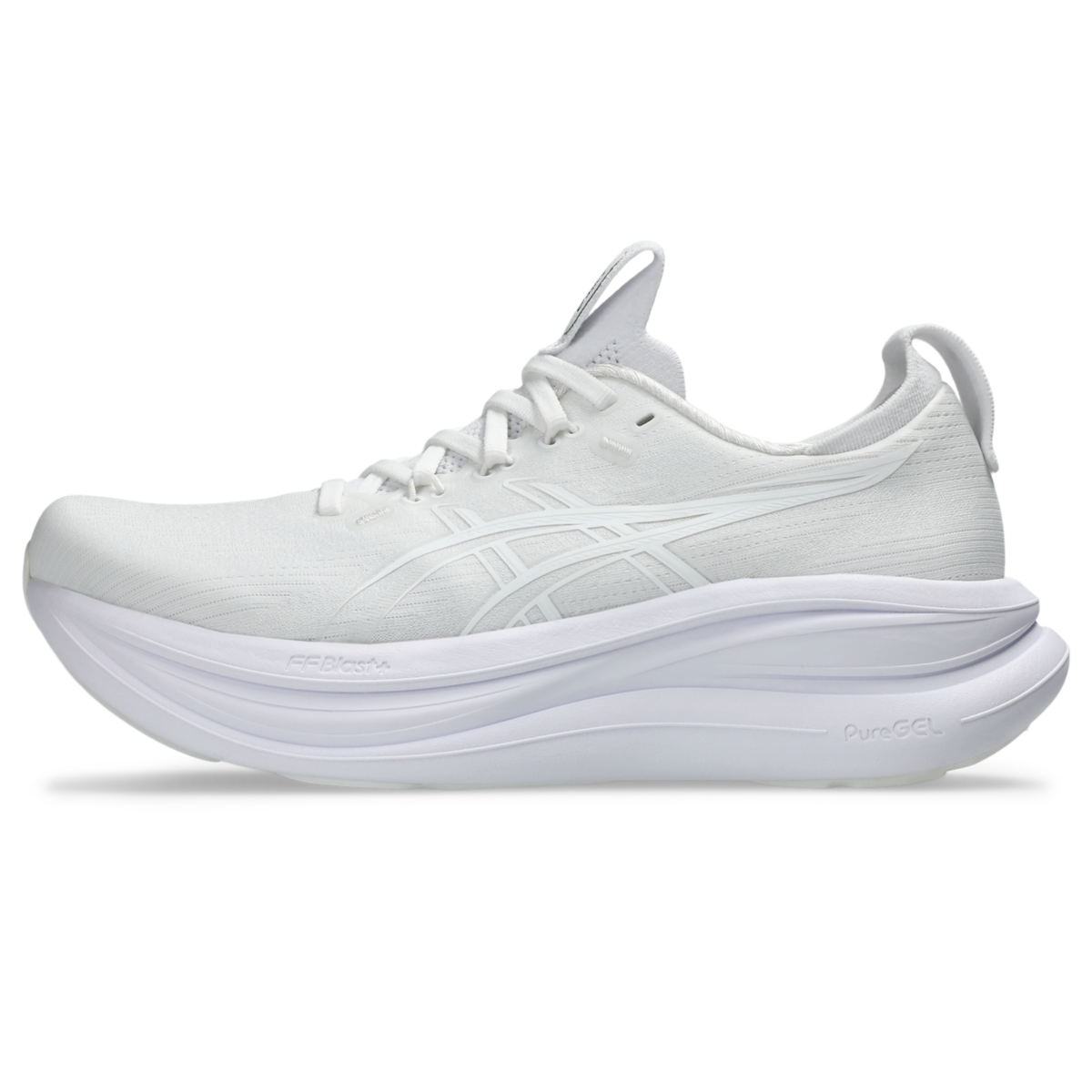
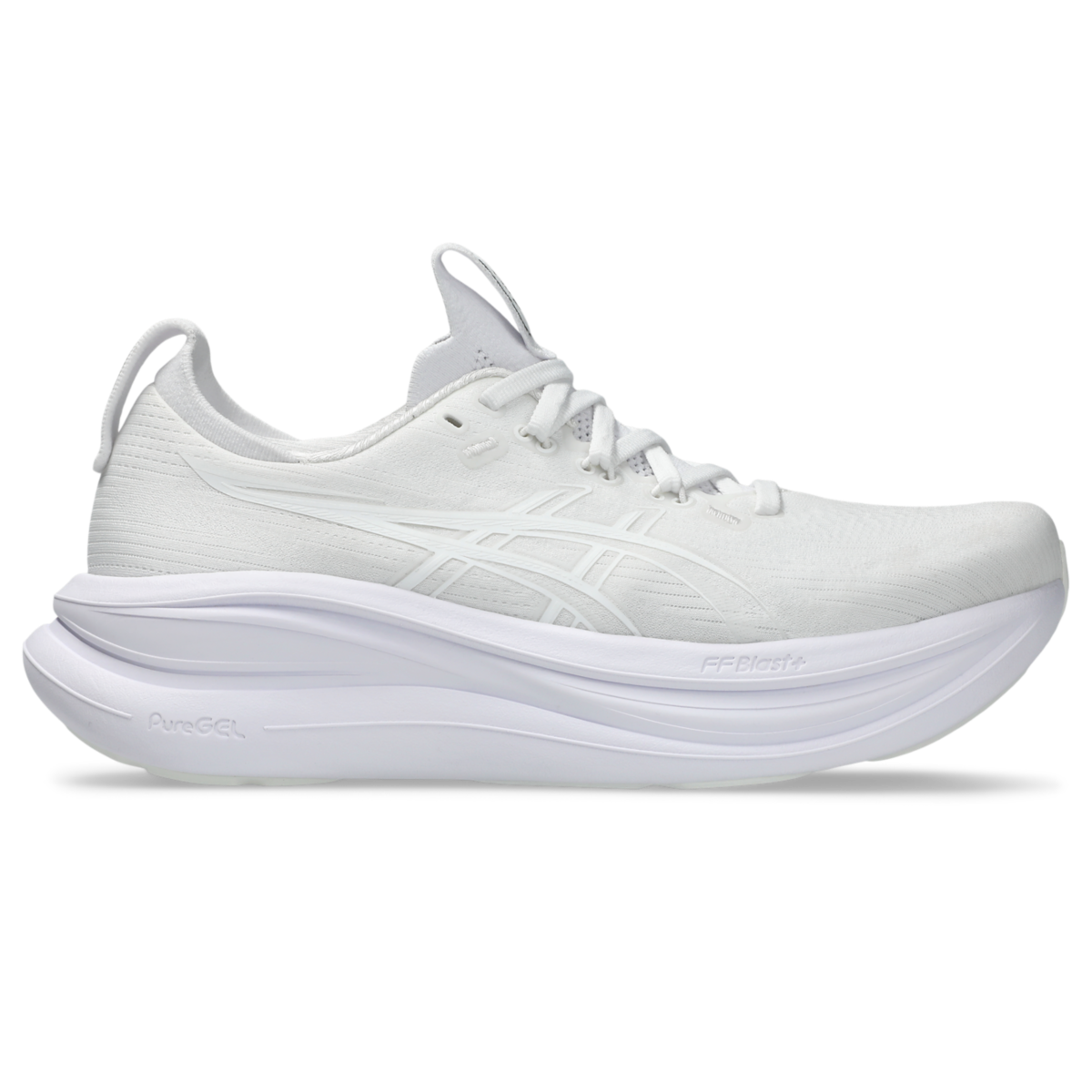
| ASICS Gel-Nimbus 28 | Best premium cushion | 8.5 oz / 242 g | 8 mm | B, D, 2E |
| Nike Pegasus 41 | Best versatile value | 8.7 oz / 247 g | 10 mm | Regular, Wide |
| adidas Adizero Evo SL | Best fast daily | 7.2 oz / 204 g | 6 mm | B |
| HOKA Bondi 9 | Best recovery shoe | 9.3 oz / 264 g | 5 mm | Regular, Wide, Extra Wide |
| Nike Vomero 18 | Best max-cushion value | 9.1 oz / 258 g | 10 mm | Standard |
| HOKA Clifton 10 | Best value lightweight cushion | 8.0 oz / 226 g | 8 mm | Regular, Wide, X-Wide |
Women’s weights are the brand’s women’s sample (usually US 8). Lab weights below come from RunRepeat’s men’s US 9 sample, so they read heavier. Use them to compare shoes against each other, not against the women’s number.
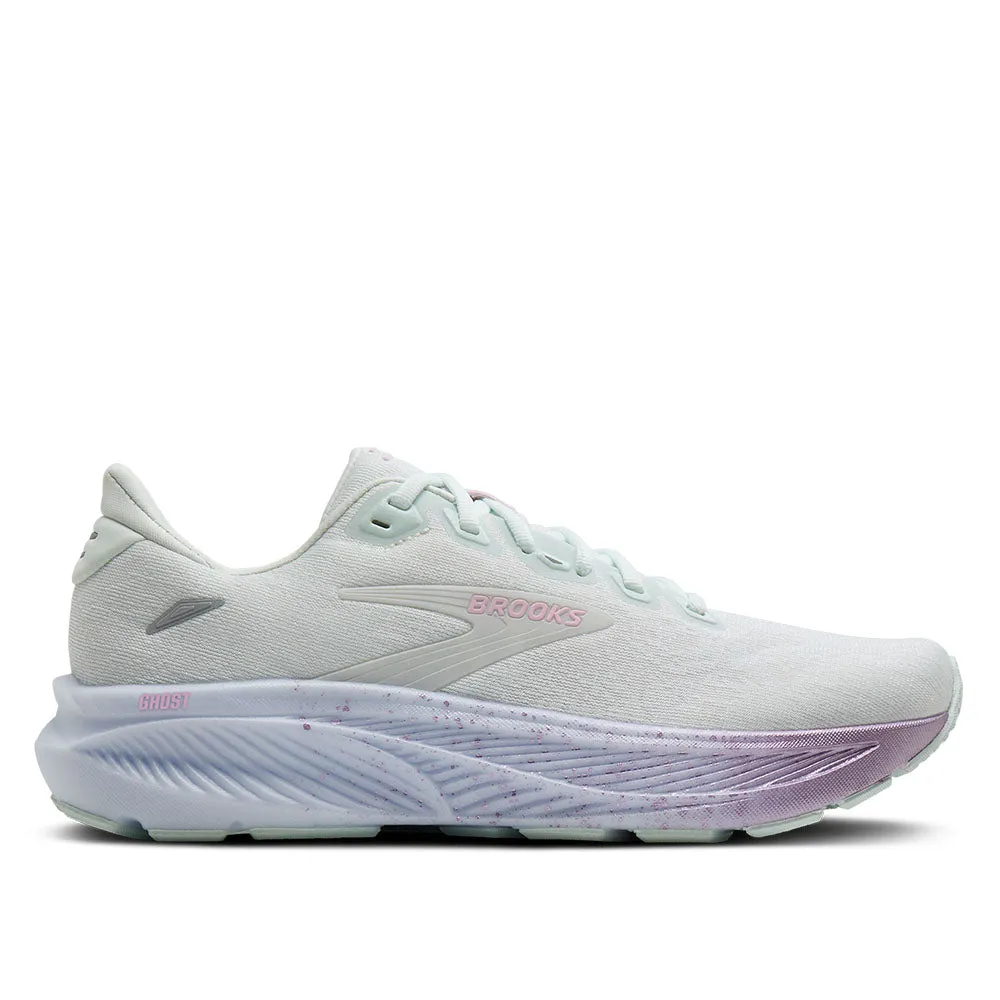
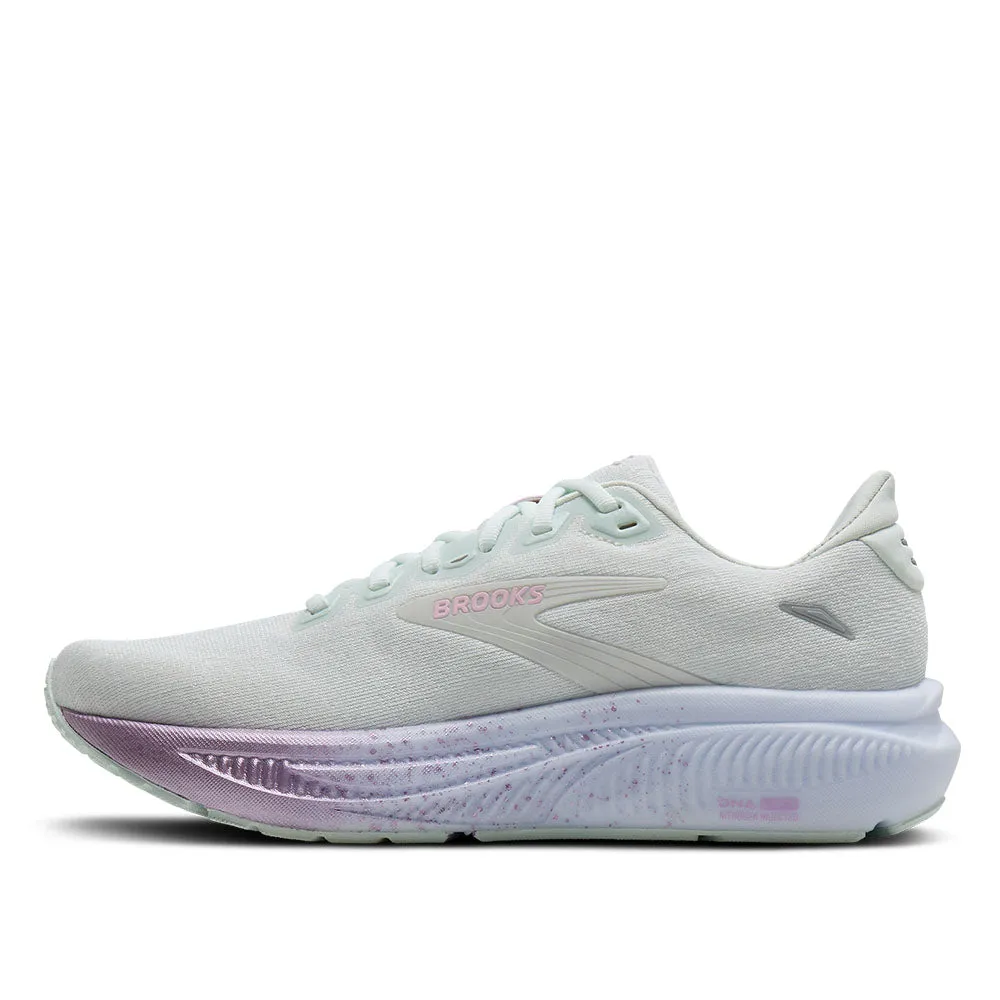
1. Brooks Ghost 18 — Best overall
- Support: Neutral
- Heel stack: 36 mm brand / 37.3 mm lab
- Forefoot stack: 26 mm brand / 25.1 mm lab
- Drop: 10 mm brand / 12.2 mm lab
- Weight: 9.0 oz / 255 g women’s / 289 g lab (men’s US 9)
- Rocker: Mild, smooth roll from heel to toe
- Removable insole: Yes — fits most orthotics
- Source: Brooks; RunRepeat lab test
The Ghost 18 is the safe pick. It does nothing flashy and almost nothing wrong. The nitrogen-infused DNA LOFT v3 foam feels soft on the first step, then firms up just enough when you pick up the pace. The new engineered air mesh upper breathes well, and the flat-knit tongue sits soft on the top of your foot instead of digging in. If you run three or four times a week and want one pair for all of it, start here.
RunRepeat’s lab numbers back up the feel. The shoe scores 135 for shock absorption at the heel and 101 at the forefoot — soft, but not so soft that it feels vague. Energy return sits at 52.4% at the heel and 58.1% at the forefoot, which is solid for a daily trainer. The lab measured a 12.2 mm drop against the brand’s 10 mm. So if you are sensitive to drop, know it runs a touch higher than the box says. The toe box measures 70.6 mm across, which is roomy for a standard B width. The outsole barely wore in testing (0.8 mm), so it should last.
Pros:
- Soft, balanced ride that suits easy days and long runs alike
- Four widths (2A narrow to 2E extra wide) — rare at this level
- Breathable mesh upper that stays cool in warm weather
- Removable insole works with most orthotics
- Durable outsole with very low wear in lab testing
Cons:
- Not the lightest shoe here — 9.0 oz is honest, not fast
- The ride is calm, not exciting — speed work feels plain
Skip it if: you want a shoe that pushes you to run fast, or you need real stability support for flat feet. Look at the Novablast 6 for bounce, or the Gel-Kayano 33 for support.
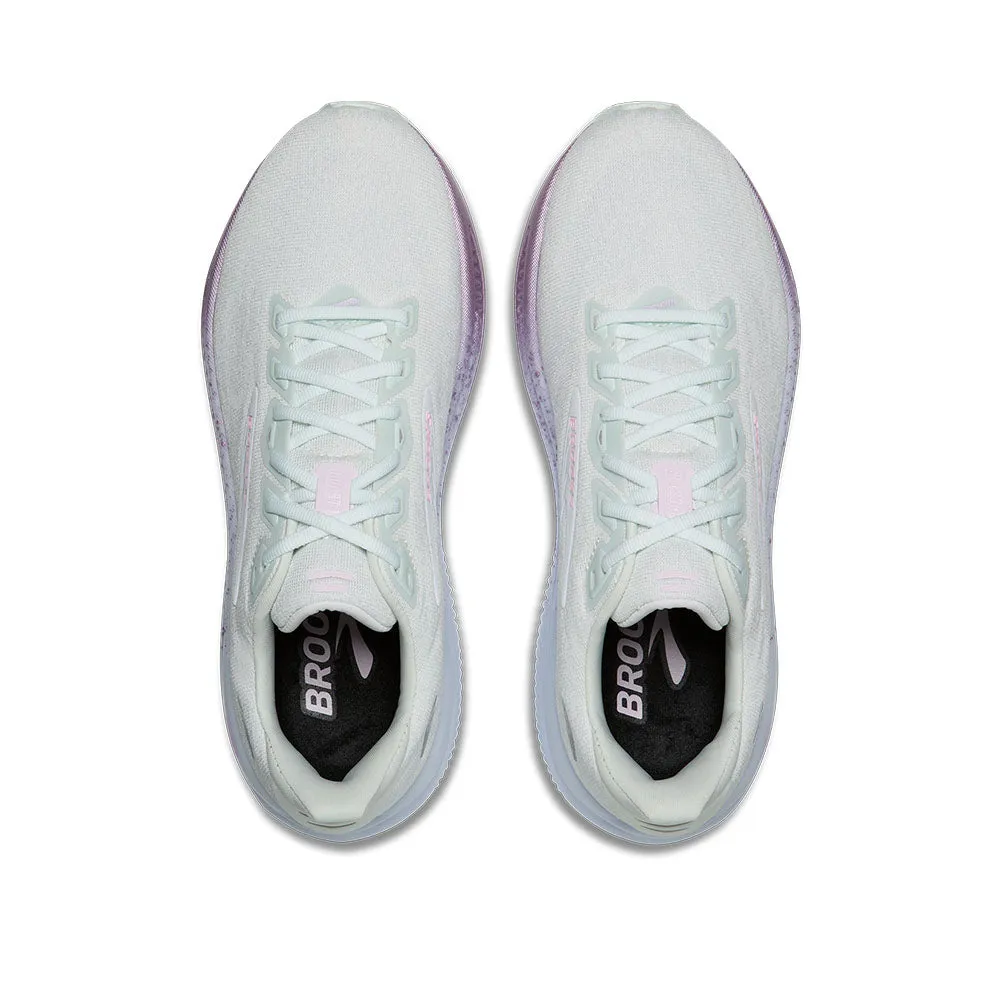
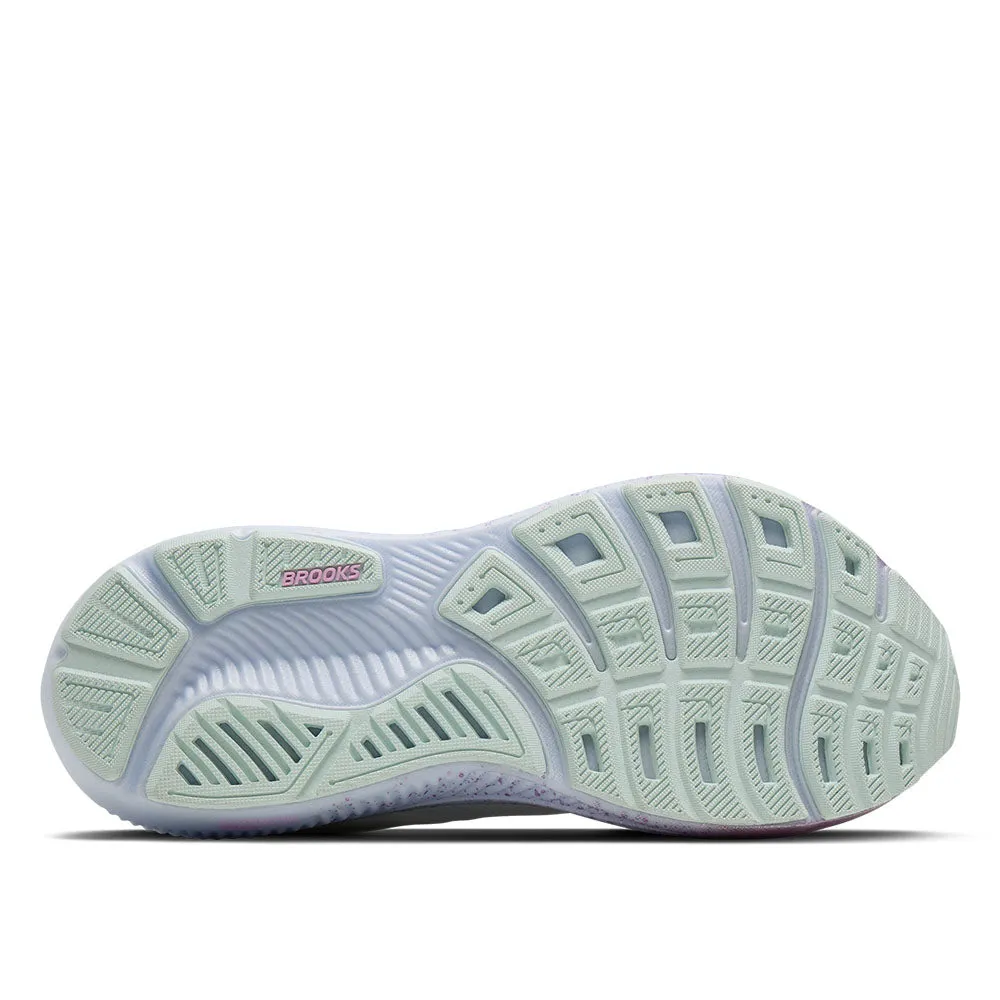
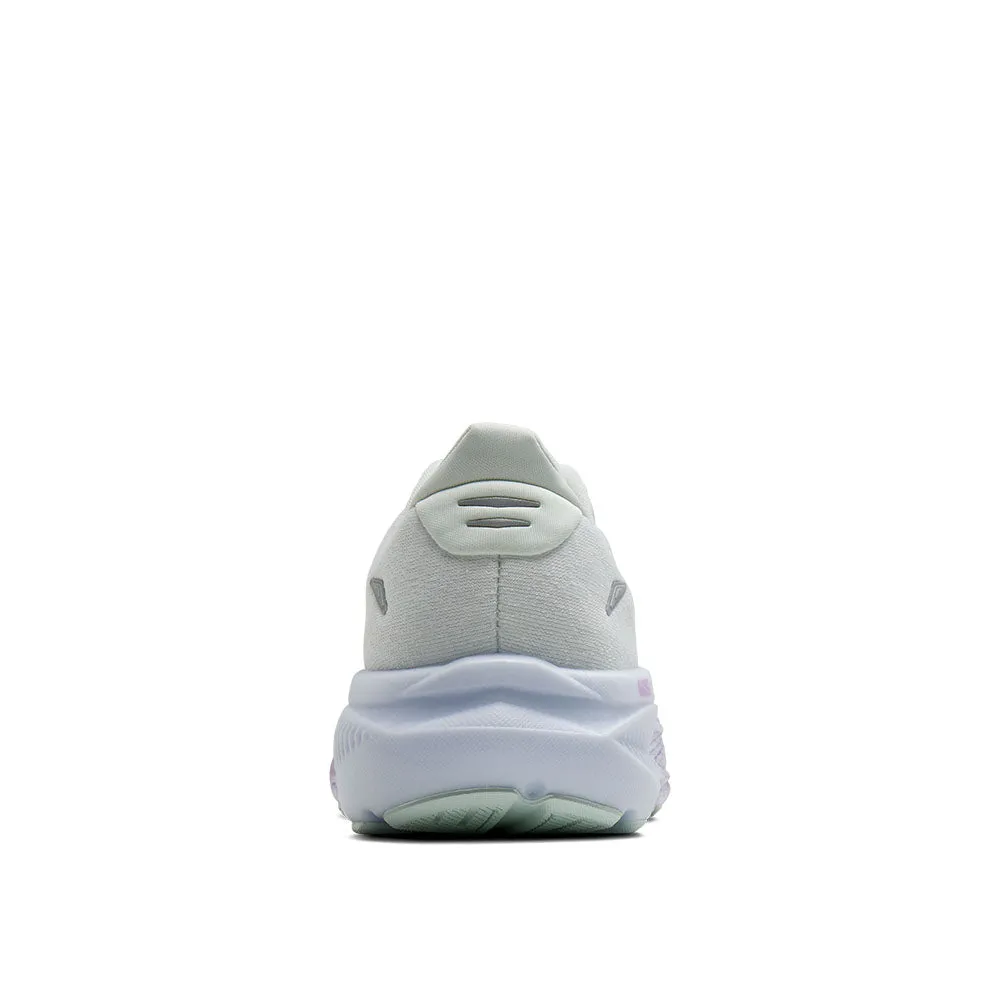


For the full Brooks story, see our best Brooks running shoes guide.
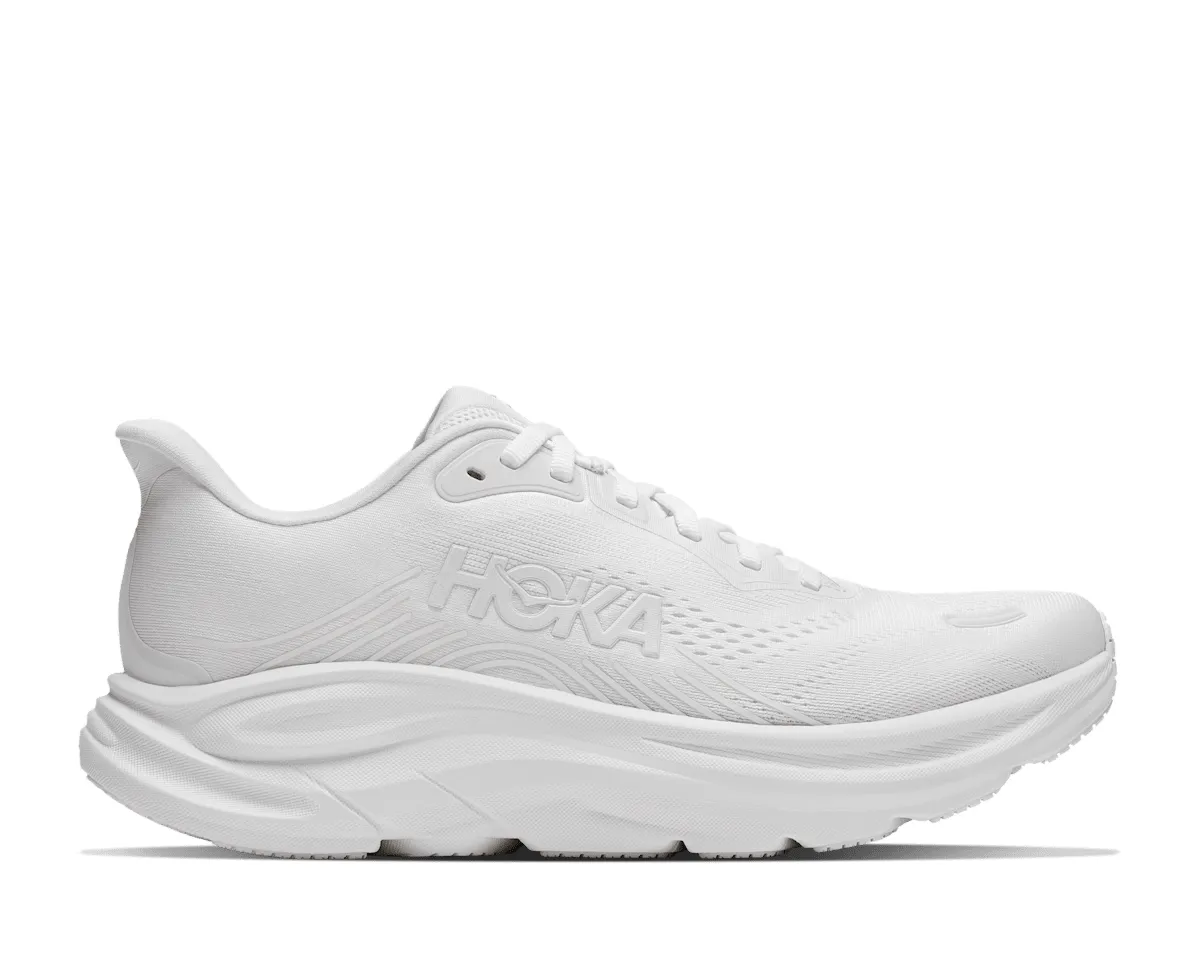
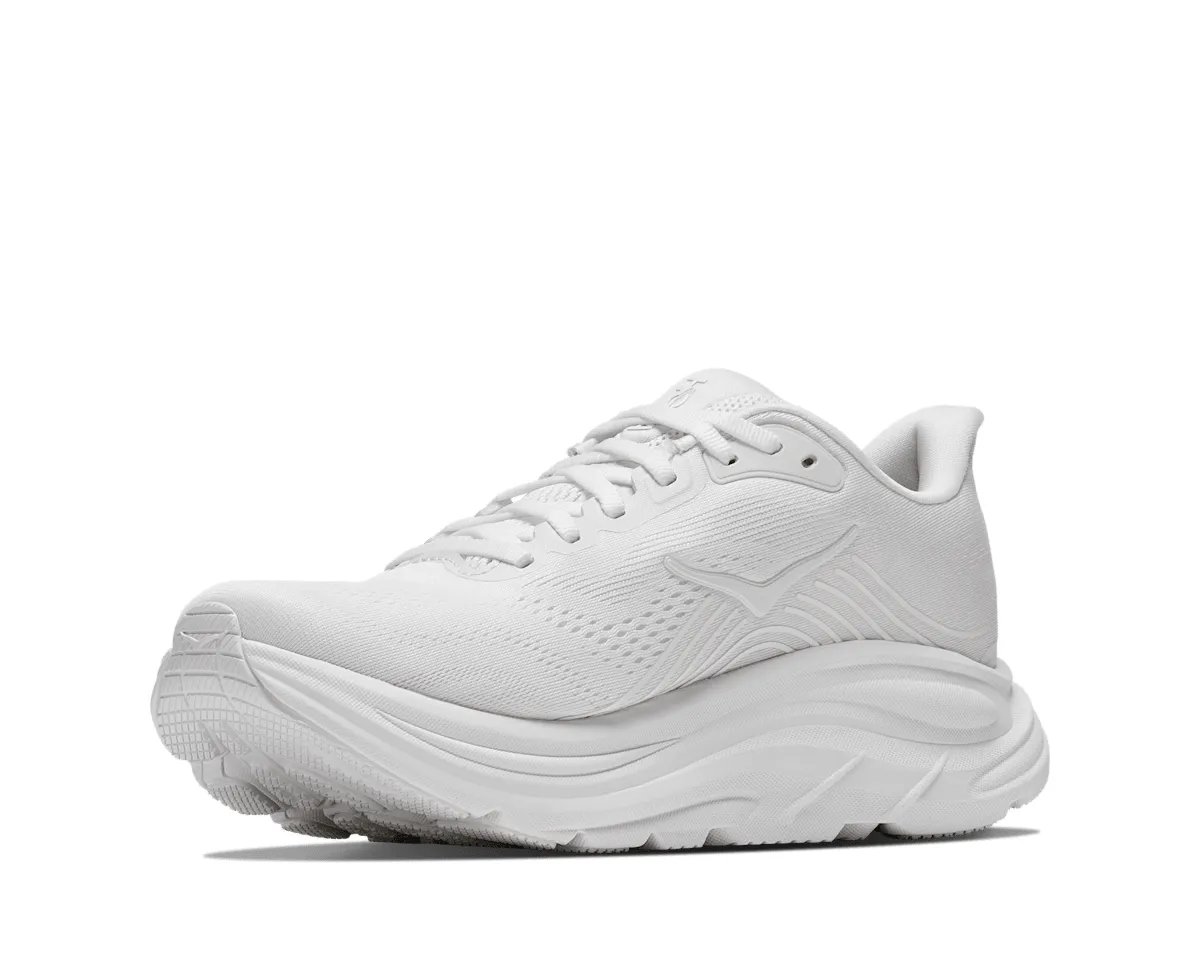
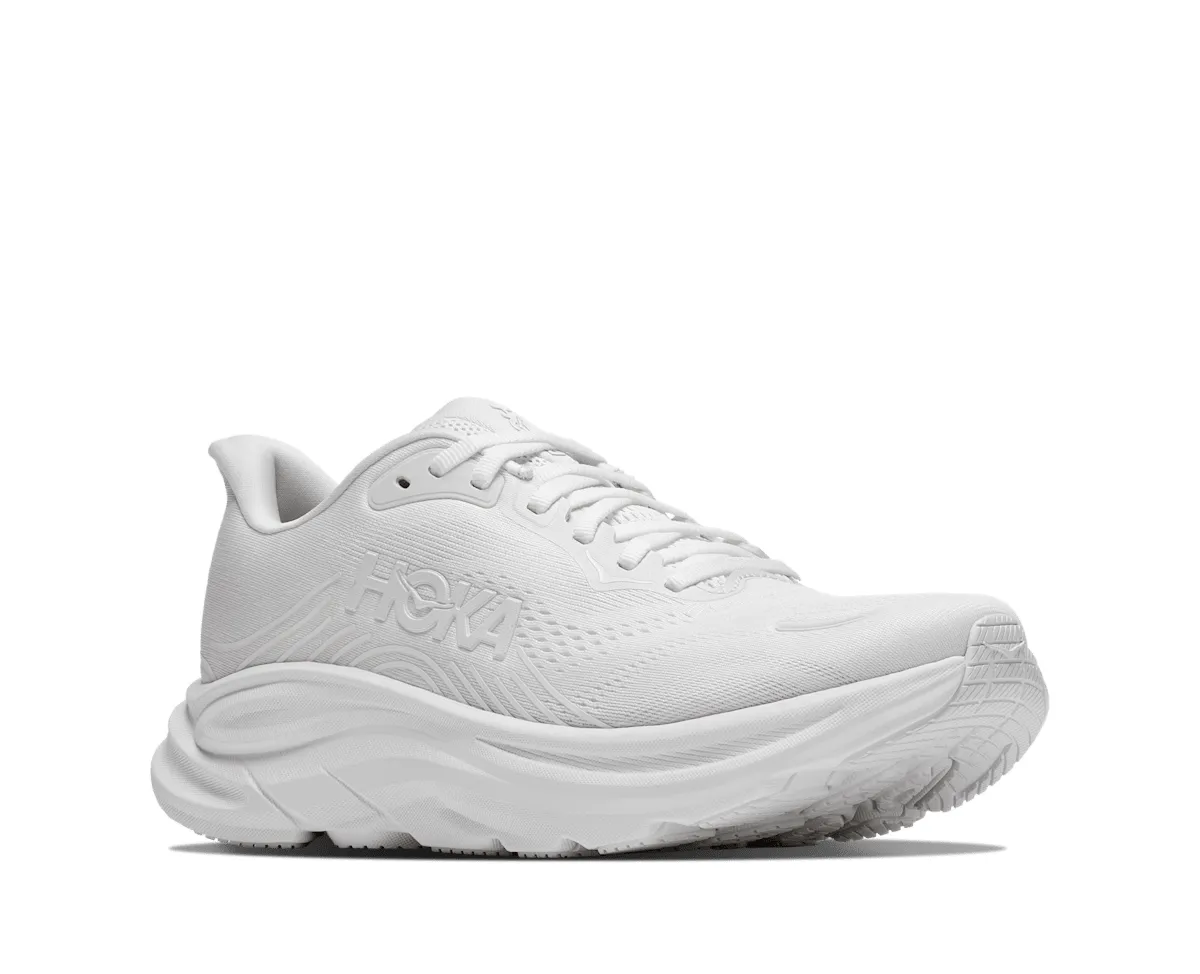
2. HOKA Clifton 11 — Best lightweight cushion
- Support: Neutral
- Heel stack: 38 mm brand / 41.4 mm lab
- Forefoot stack: 30 mm brand / 29.7 mm lab
- Drop: 8 mm brand / 11.7 mm lab
- Weight: 8.3 oz / 236 g women’s / 266 g lab (men’s US 9)
- Rocker: Strong early-stage Meta-Rocker — rolls you forward
- Removable insole: Yes
- Source: HOKA; RunRepeat lab test
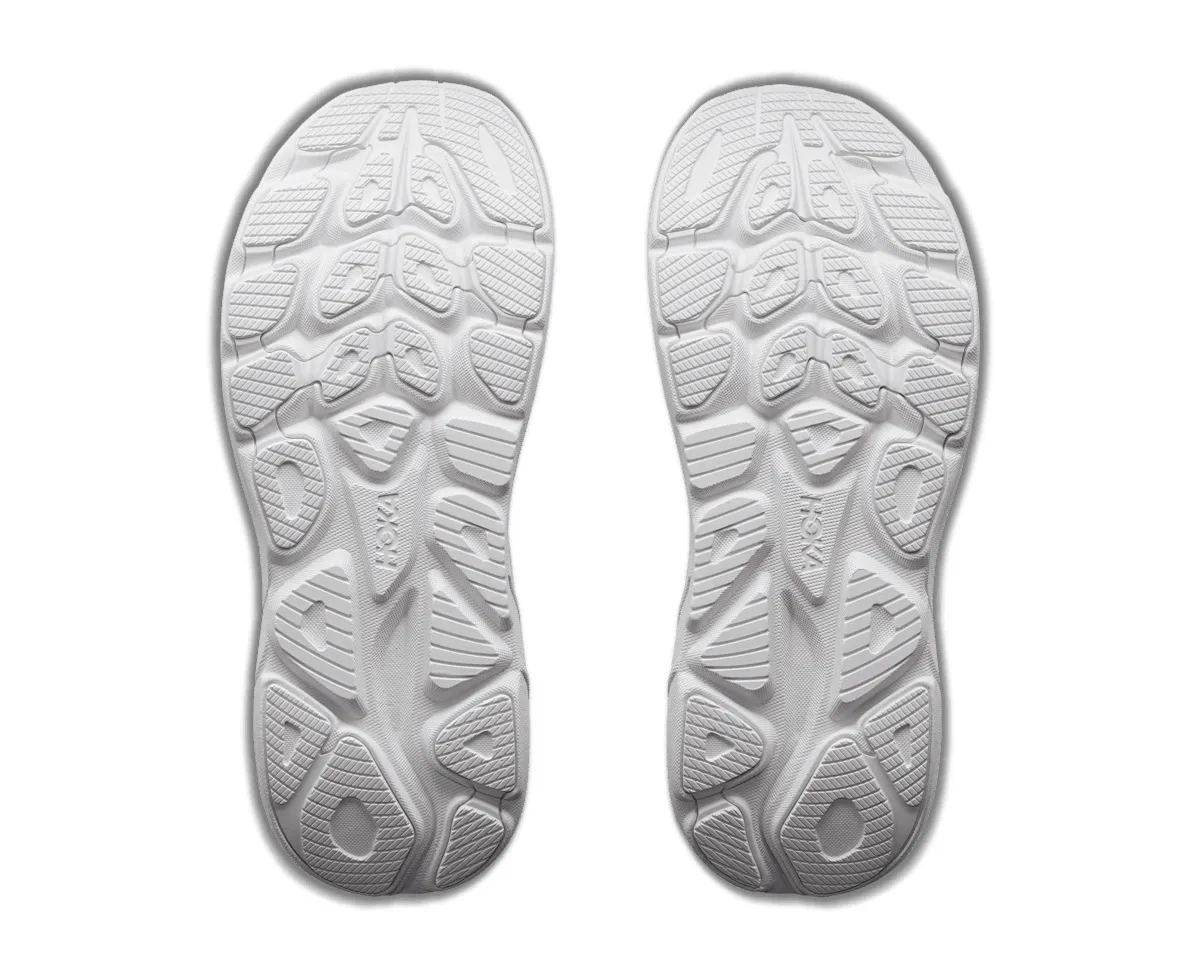
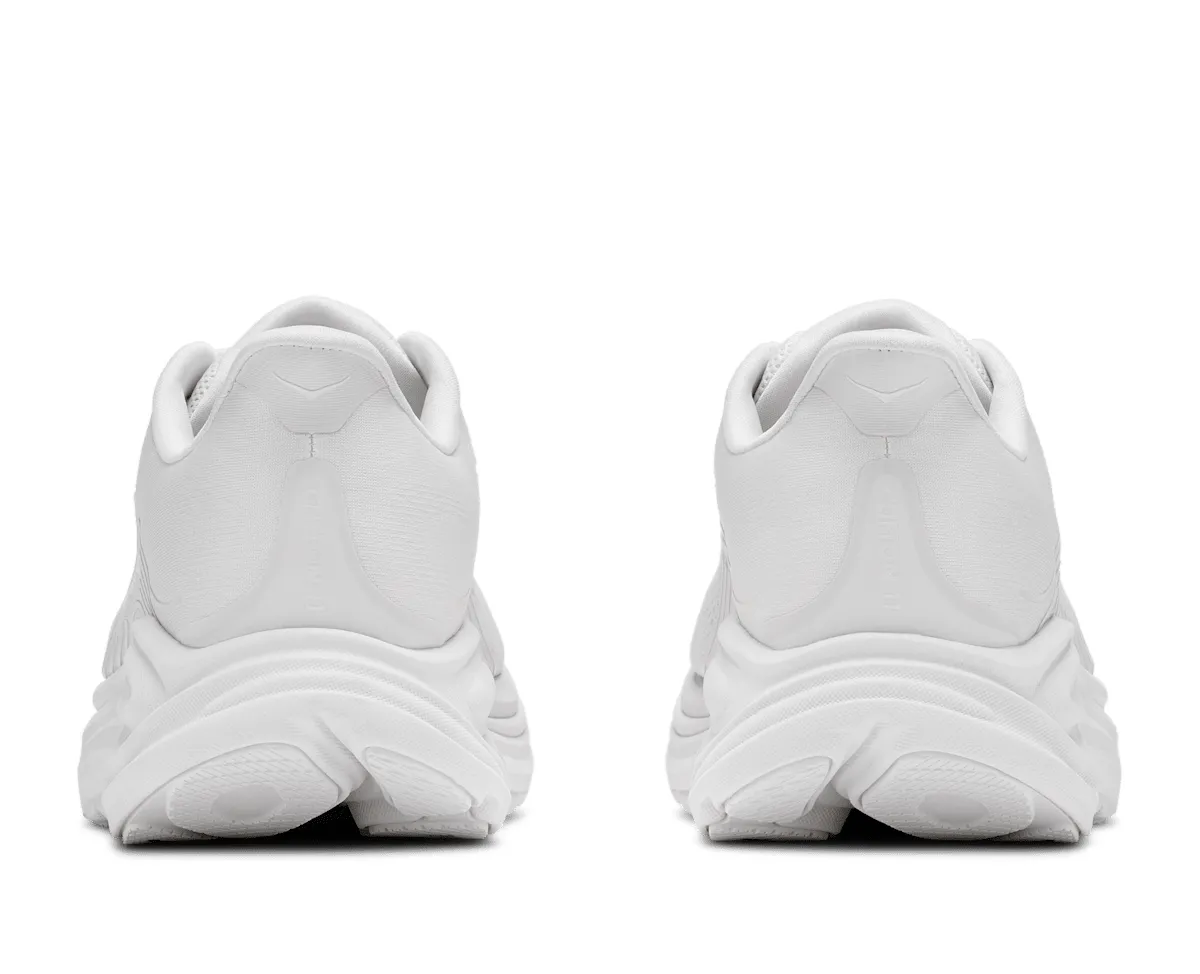
The Clifton 11 is one of the lightest cushioned shoes on this list, and you feel it from the first step. At 8.3 oz in a women’s size, it floats underfoot in a way most max-cushion shoes do not. The foam is soft. RunRepeat measured shock absorption at 146 at the heel, one of the highest scores here. Only the 1080 v15, Vomero 18 and Clifton 10 score higher, at 147. And the rocker shape keeps you moving forward instead of sinking in. If your knees or feet get tired on longer runs, this is the shoe that makes the miles feel shorter.
Two things to know before you buy. First, the lab measured an 11.7 mm drop against the brand’s 8 mm, so the heel sits higher than the spec sheet suggests. Second, the heel is wide (96.2 mm in the lab). That gives a stable base. But it can feel broad if you have a narrow heel. The Clifton comes in three widths (B, D, 2E), so wide feet are covered. For trail days, pair it with the Speedgoat 6 further down this list — or read our best trail running shoes guide.
Pros:
- Light cushioned ride at 8.3 oz — lighter than the Bondi 9 and Glycerin 23
- One of the highest shock-absorption scores on the list (146 SA)
- Strong rocker keeps easy pace feeling smooth
- Three widths, including extra wide
- Great for tired legs and long, slow runs
Cons:
- The lab drop (11.7 mm) runs higher than the stated 8 mm
- Wide heel base can feel broad on narrow feet
Skip it if: you overpronate and need guidance, or you want a firm, ground-feel ride. The Kayano 33 adds support, and the Novablast 6 adds bounce.
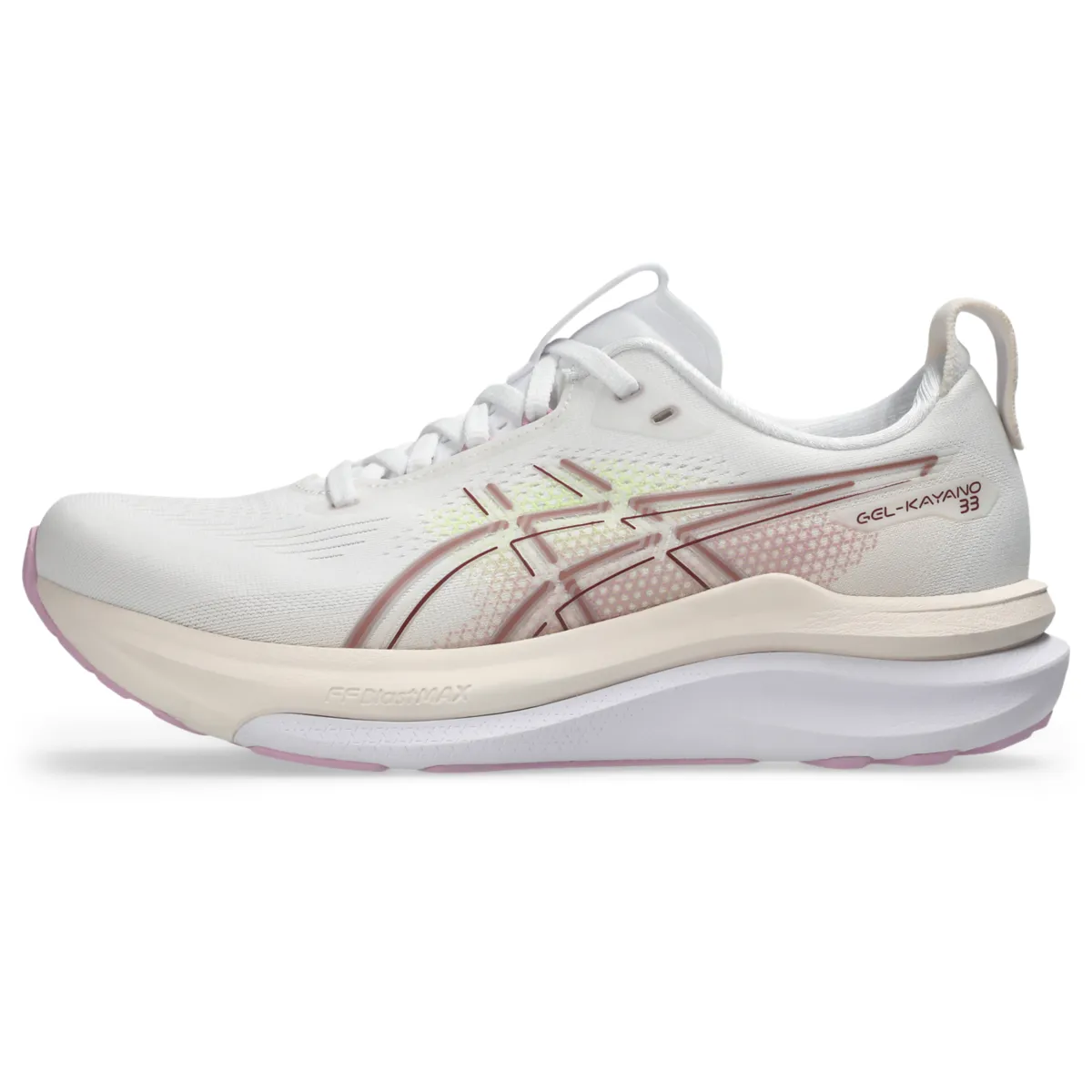
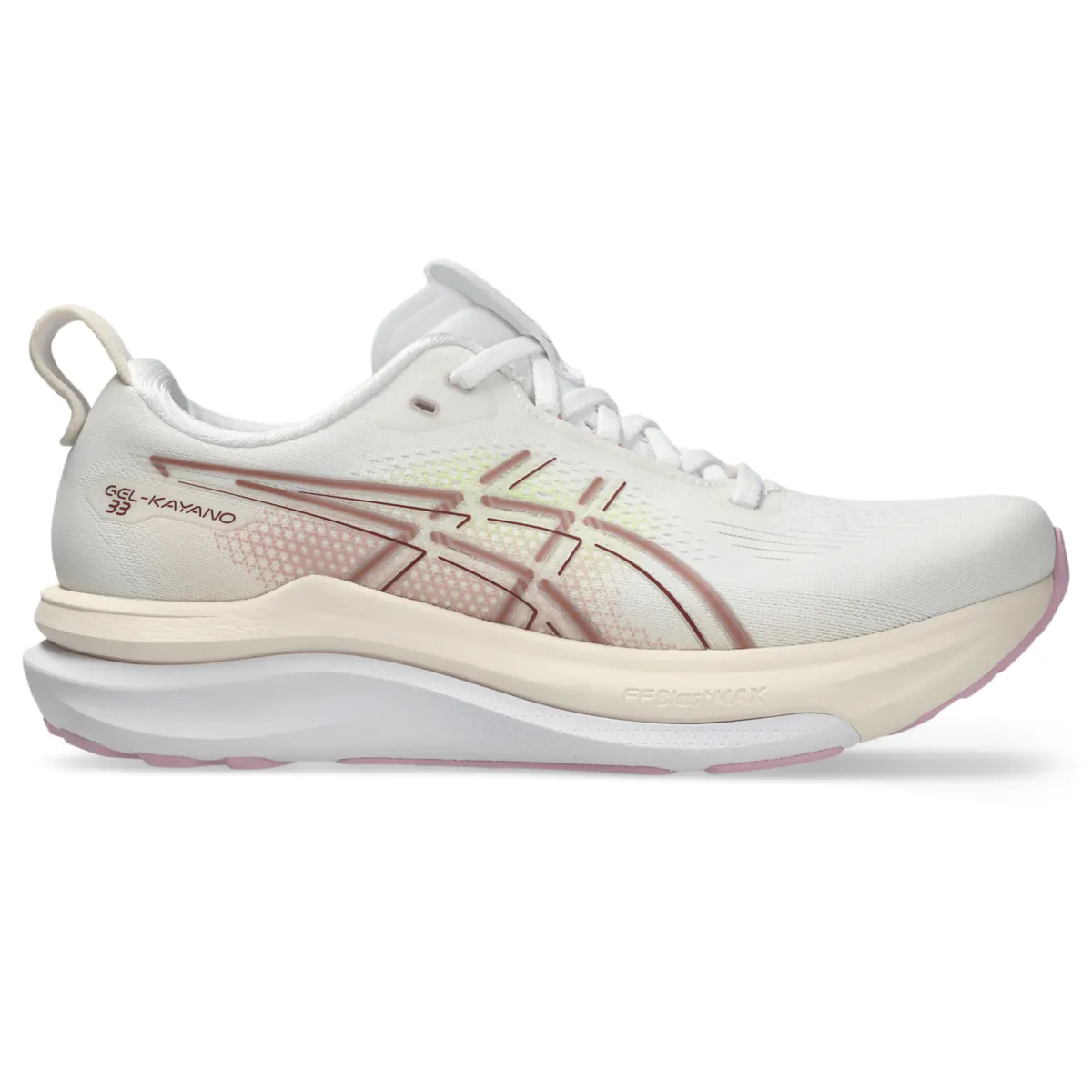
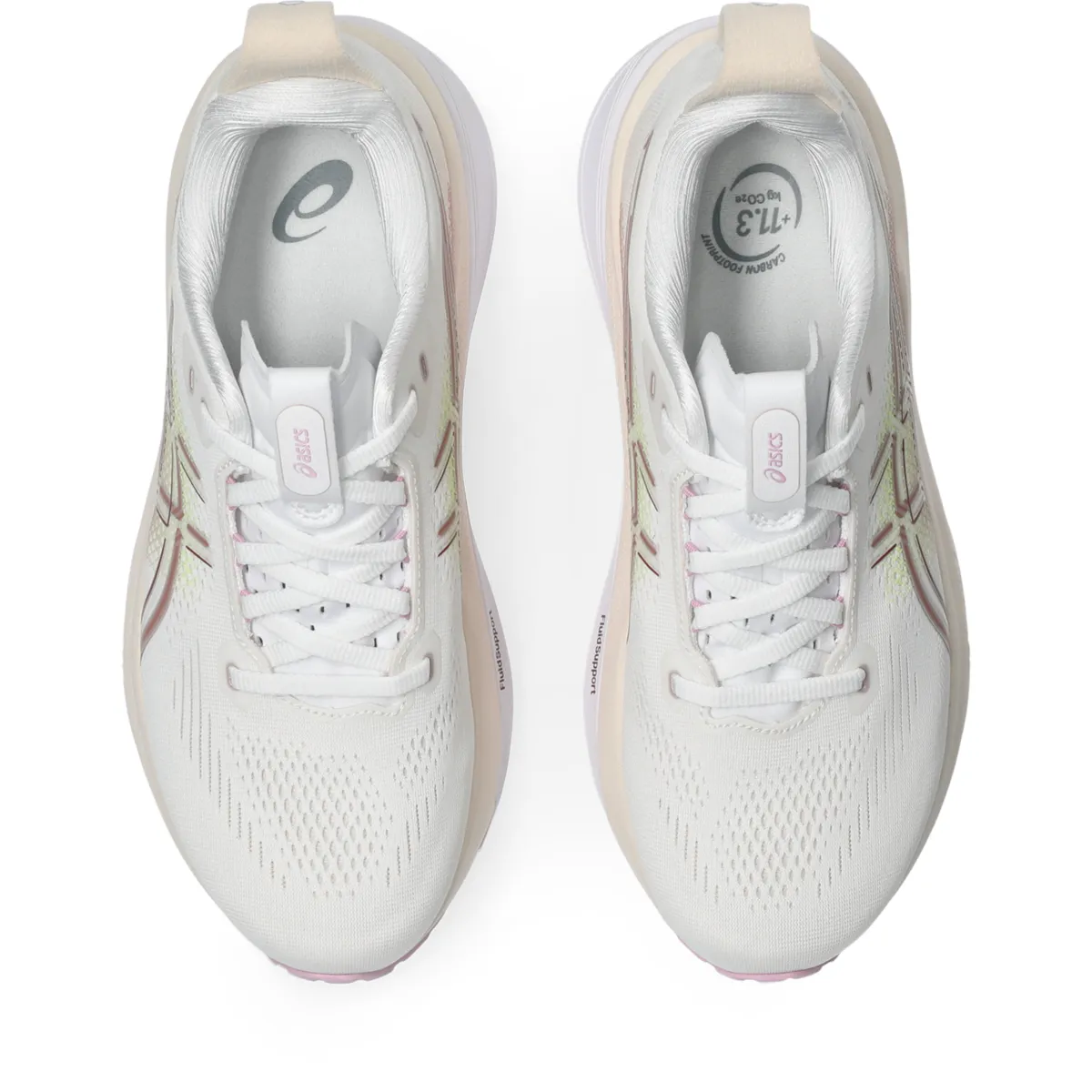
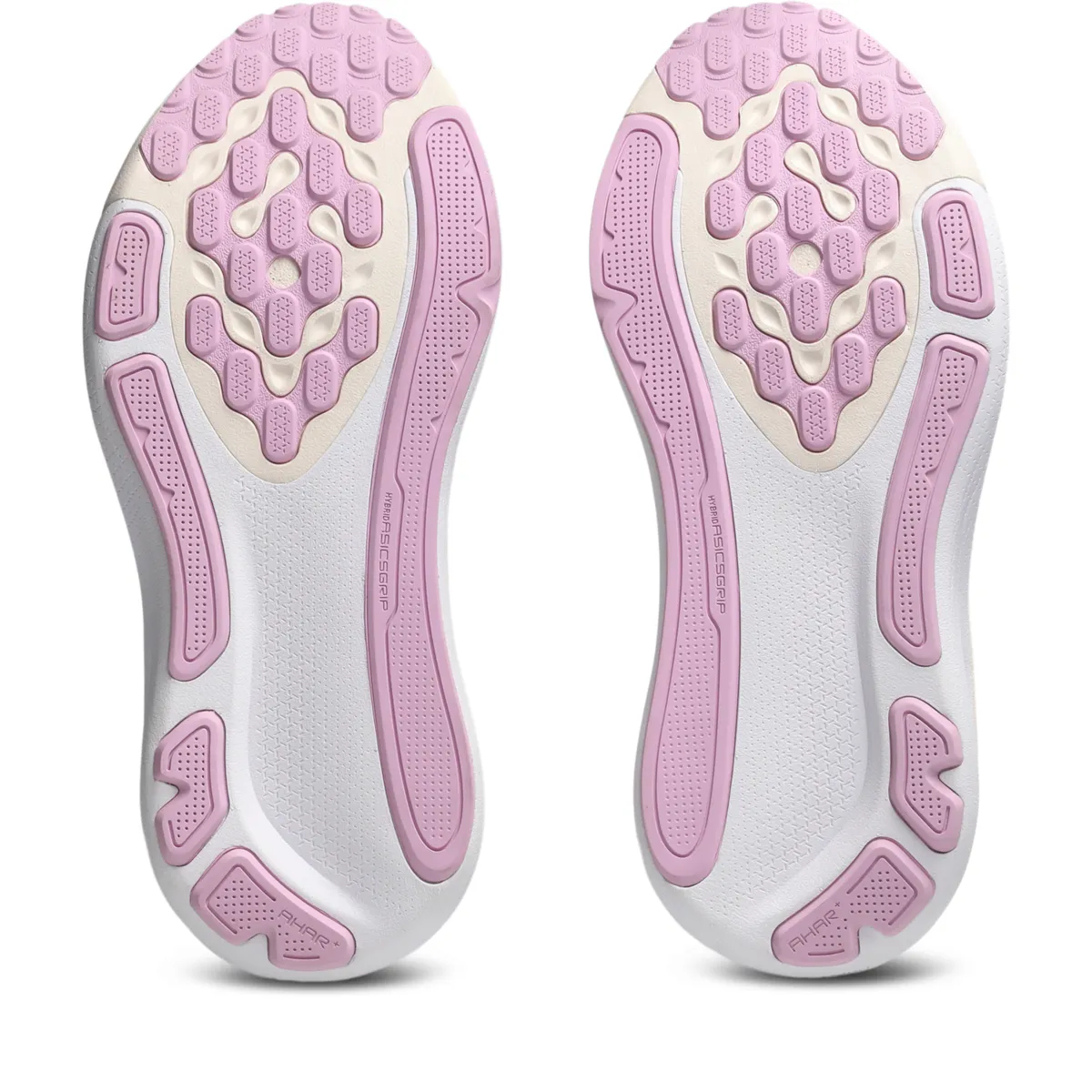
3. ASICS Gel-Kayano 33 — Best stability
- Support: Stability — FLUIDSUPPORT guidance system
- Heel stack: 38 mm brand / 36.8 mm lab
- Forefoot stack: 30 mm brand / 28.3 mm lab
- Drop: 8 mm brand / 8.5 mm lab
- Weight: 9.1 oz / 259 g women’s / 298 g lab (men’s US 9)
- Rocker: Mild
- Removable insole: Yes
- Source: ASICS; RunRepeat lab test
The Kayano 33 is the stability shoe for runners who want support without feeling steered. ASICS pairs two foams. FF BLAST MAX sits on top for softness, and FF BLAST PLUS sits below for structure. Its FLUIDSUPPORT system guides the foot instead of forcing it. The result is a shoe that feels stable on tired legs late in a long run, but never feels like a brace. If your feet roll in (overpronation) or your arches ache after a few miles, this is the first shoe to try.
The lab numbers are honest. Shock absorption measures 132 at the heel and 112 at the forefoot. That is cushioned, but firmer than the Clifton or Glycerin. And that is what you want from a stability shoe. Energy return is 50.0% at the heel. The midsole is wide (120.7 mm at the heel, 97.1 mm at the forefoot), which is part of why it feels so planted. The toe box is 73.9 mm across, and the shoe scores well for traction (0.93 in the lab). Three widths cover narrow (2A), standard (B) and wide (D) feet. If you want the full picture on support, read what is a stability running shoe and our best running shoes for flat feet guide.
Pros:
- Real stability that still feels natural, not forced
- Wide, planted base — very steady on long runs
- Dual-foam midsole balances softness and support
- Three widths including narrow
- Strong traction for wet roads
Cons:
- Heavier than the neutral picks at 9.1 oz
- The ride is firm next to the Glycerin 23 — less plush
Skip it if: you have a neutral gait and want the softest ride possible. The Ghost 18 or Glycerin 23 will feel better under a neutral foot.
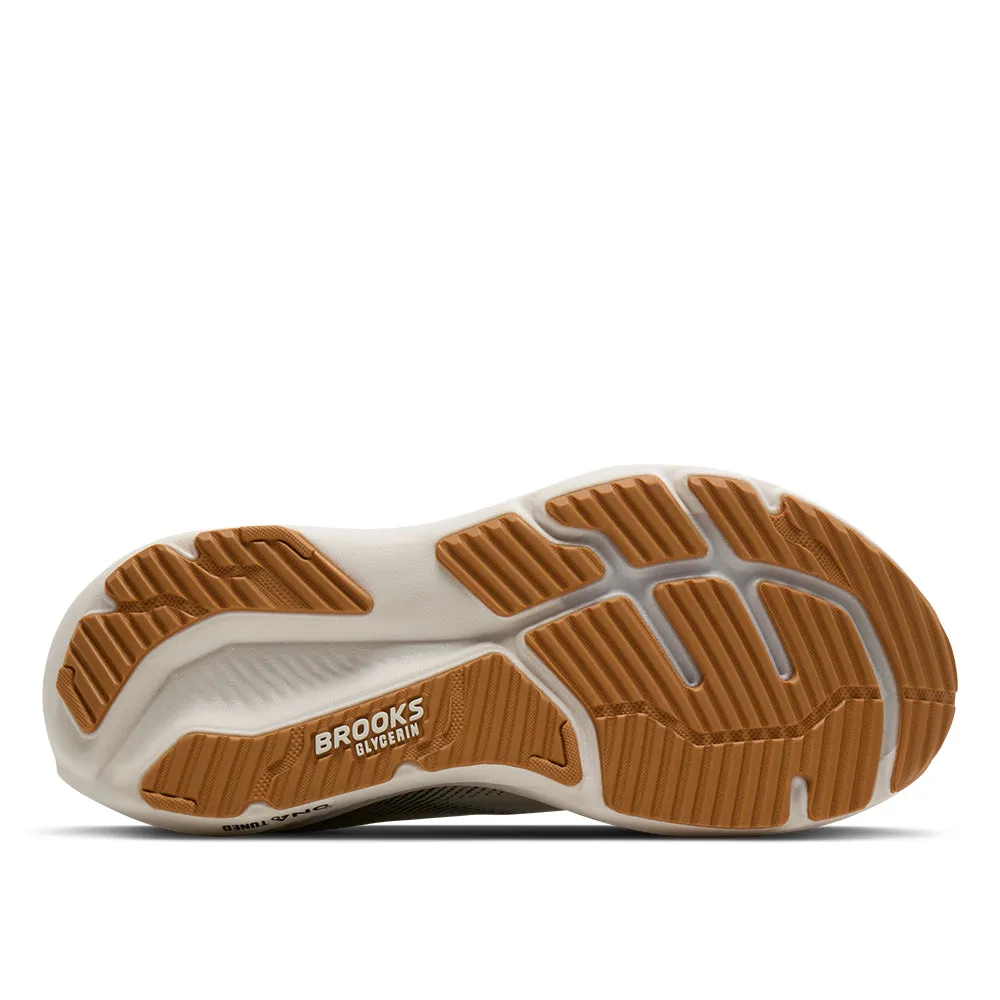
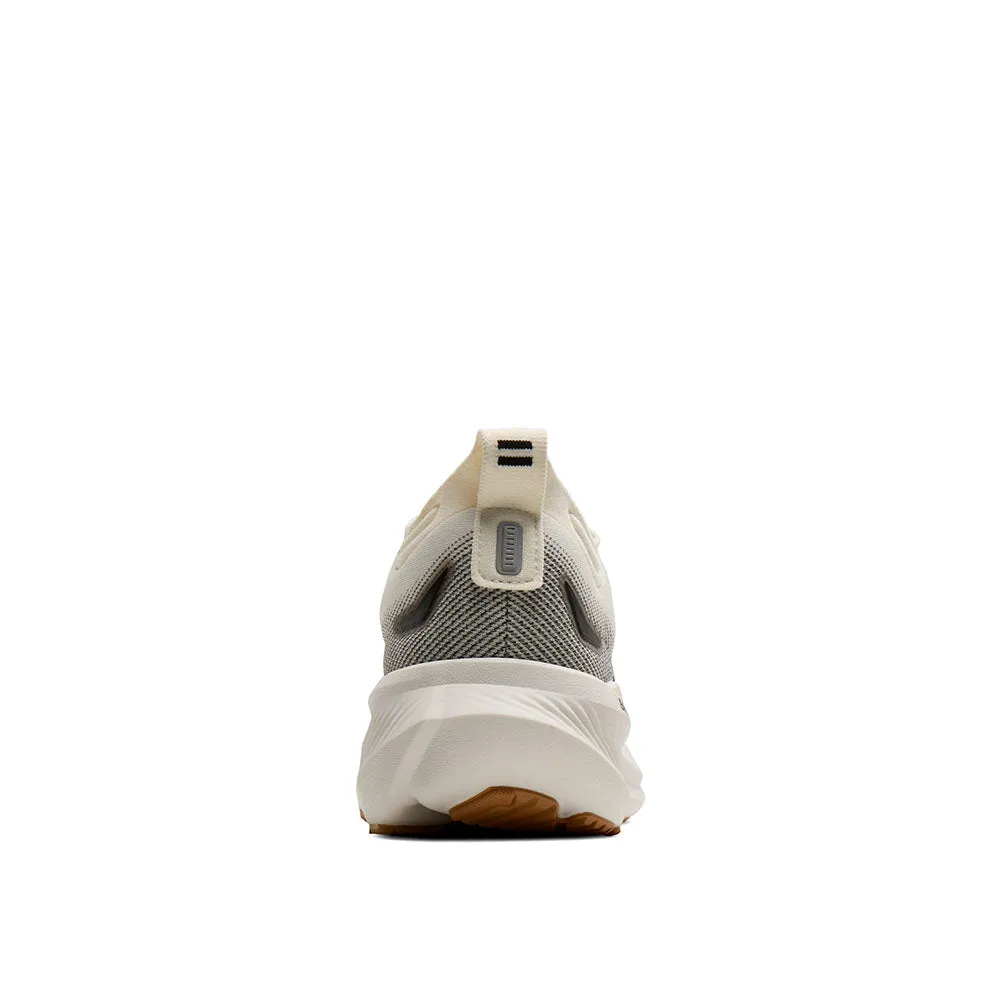
4. Brooks Glycerin 23 — Best plush
- Support: Neutral
- Heel stack: 38 mm brand / 37.2 mm lab
- Forefoot stack: 30 mm brand / 29.0 mm lab
- Drop: 8 mm brand / 8.2 mm lab
- Weight: 9.5 oz / 269 g women’s / 303 g lab (men’s US 9)
- Rocker: Mild
- Removable insole: Yes
- Source: Brooks; RunRepeat lab test
The Glycerin 23 is the softest-feeling neutral shoe Brooks makes. The DNA LOFT v3 foam is nitrogen-infused, and it gives a deep, pillowy step-in that stays comfortable for hours. If you run for the joy of it, this is the pick. It also works if you walk a lot in your running shoes or stand on your feet all day. One pair does both. It is the shoe on this list most likely to make you say “oh, that’s nice” on the first wear.
The lab agrees with your feet. Shock absorption scores 140 at the heel and 116 at the forefoot. Energy return is 54.1% at the heel and 57.7% at the forefoot. That is better return than the Ghost 18, so the softness does not feel dead. The lab drop (8.2 mm) matches the brand’s 8 mm, which is rare on this list. The trade-off is weight: 9.5 oz in women’s, the heaviest neutral shoe here. The outsole wear is low (0.7 mm), so it lasts. Two widths (B standard, D wide) cover most feet. For how the Glycerin line compares with the rest of the Brooks family, see our best Brooks running shoes guide.
Pros:
- Deep, plush step-in — one of the softest-feeling neutral shoes here
- Strong energy return for such a soft shoe
- Lab drop matches the stated drop — no surprises
- Very durable outsole in lab testing
- Great for running and all-day wear in one pair
Cons:
- Heaviest neutral shoe here at 9.5 oz
- Only two widths — no narrow or extra-wide option
Skip it if: you want a light, quick feel or you run tempo workouts. The Novablast 6 is lighter and bouncier, and the Endorphin Speed 5 is built for fast days.
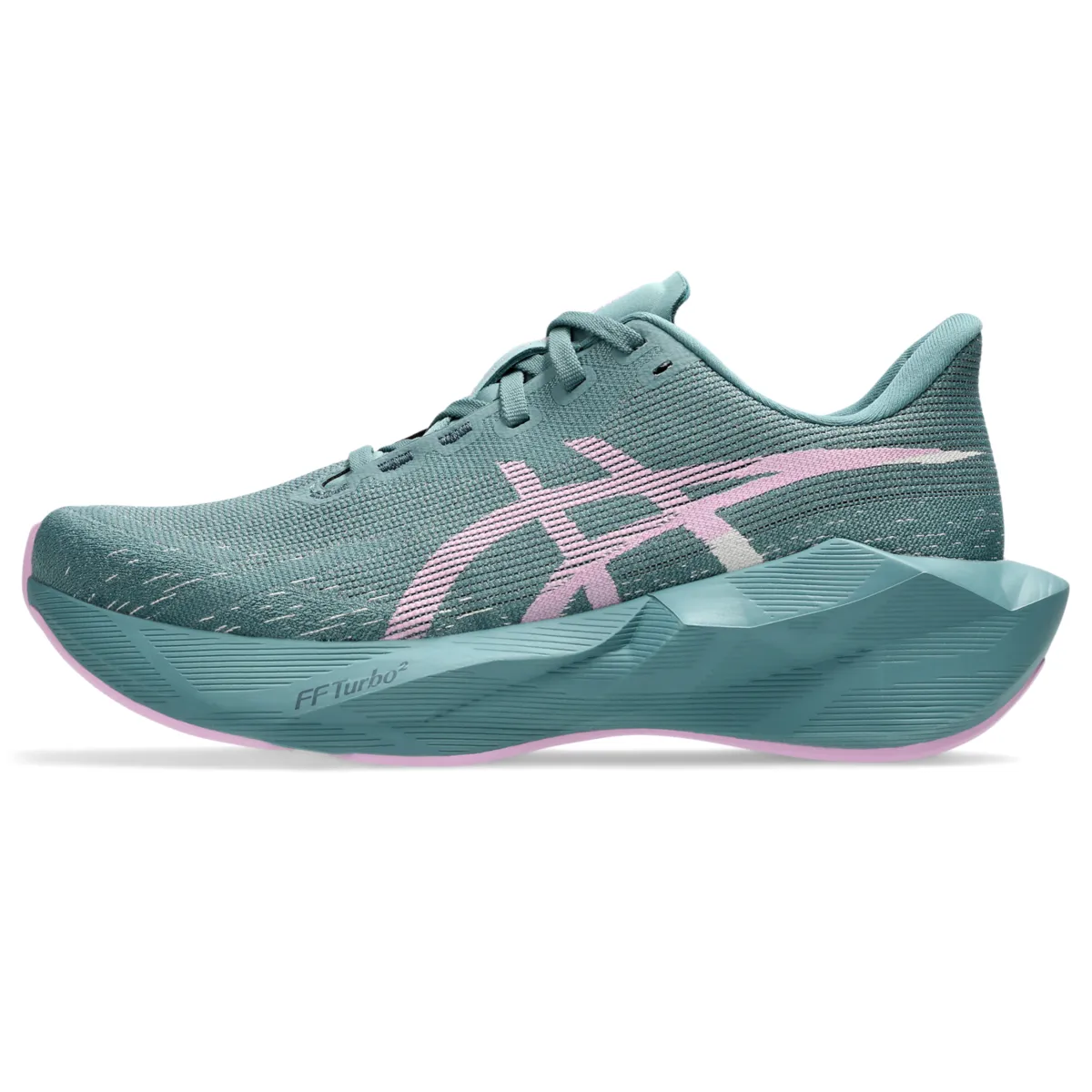
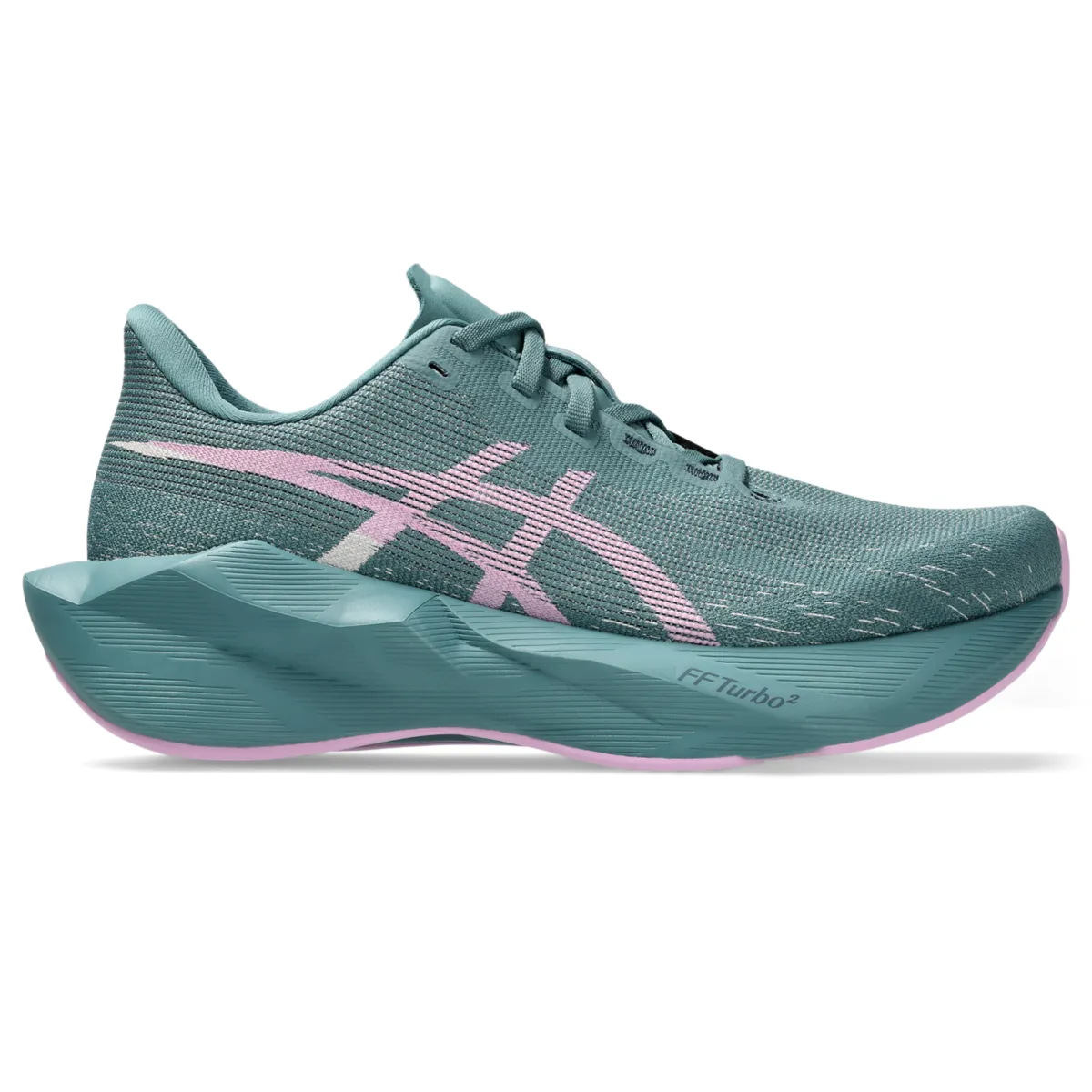
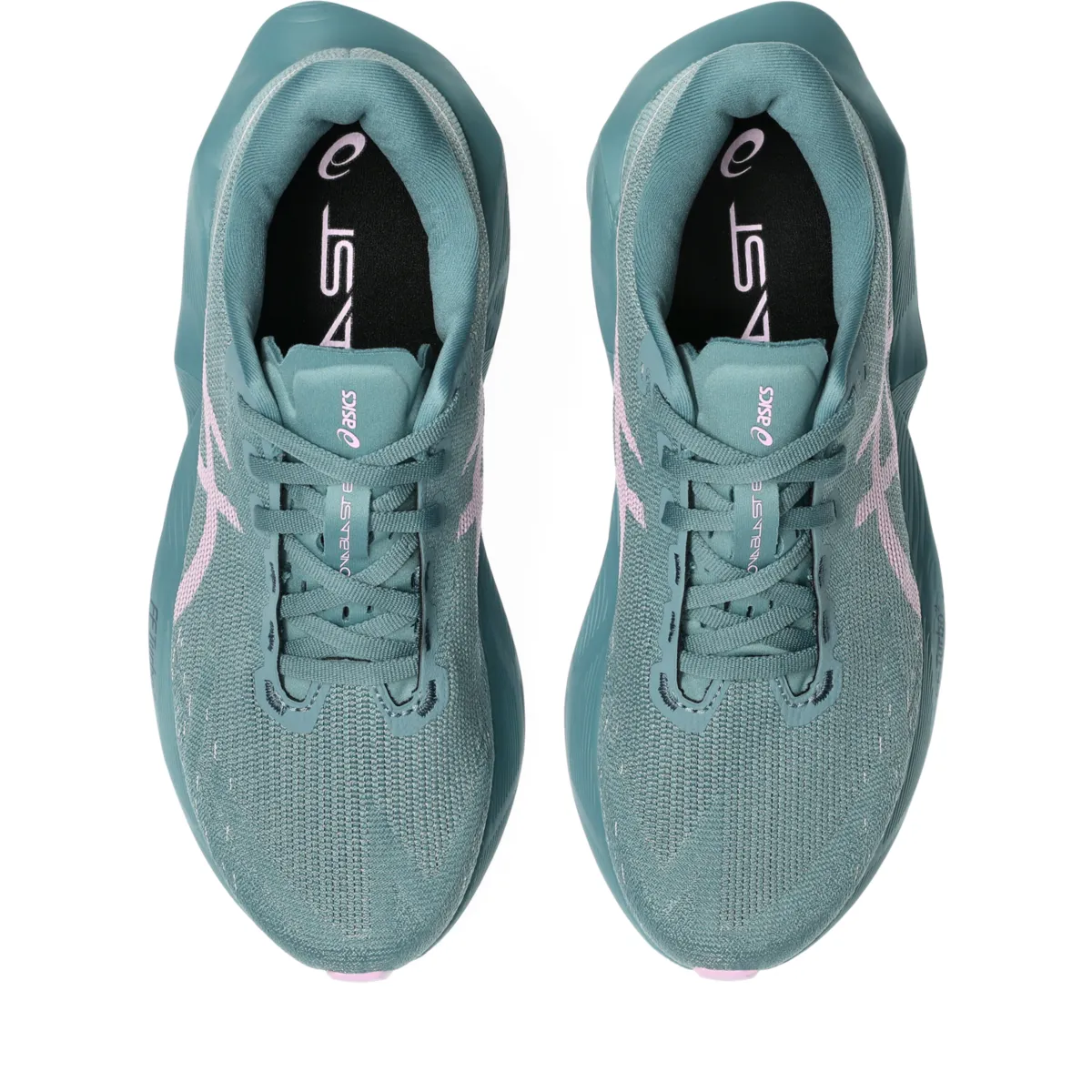
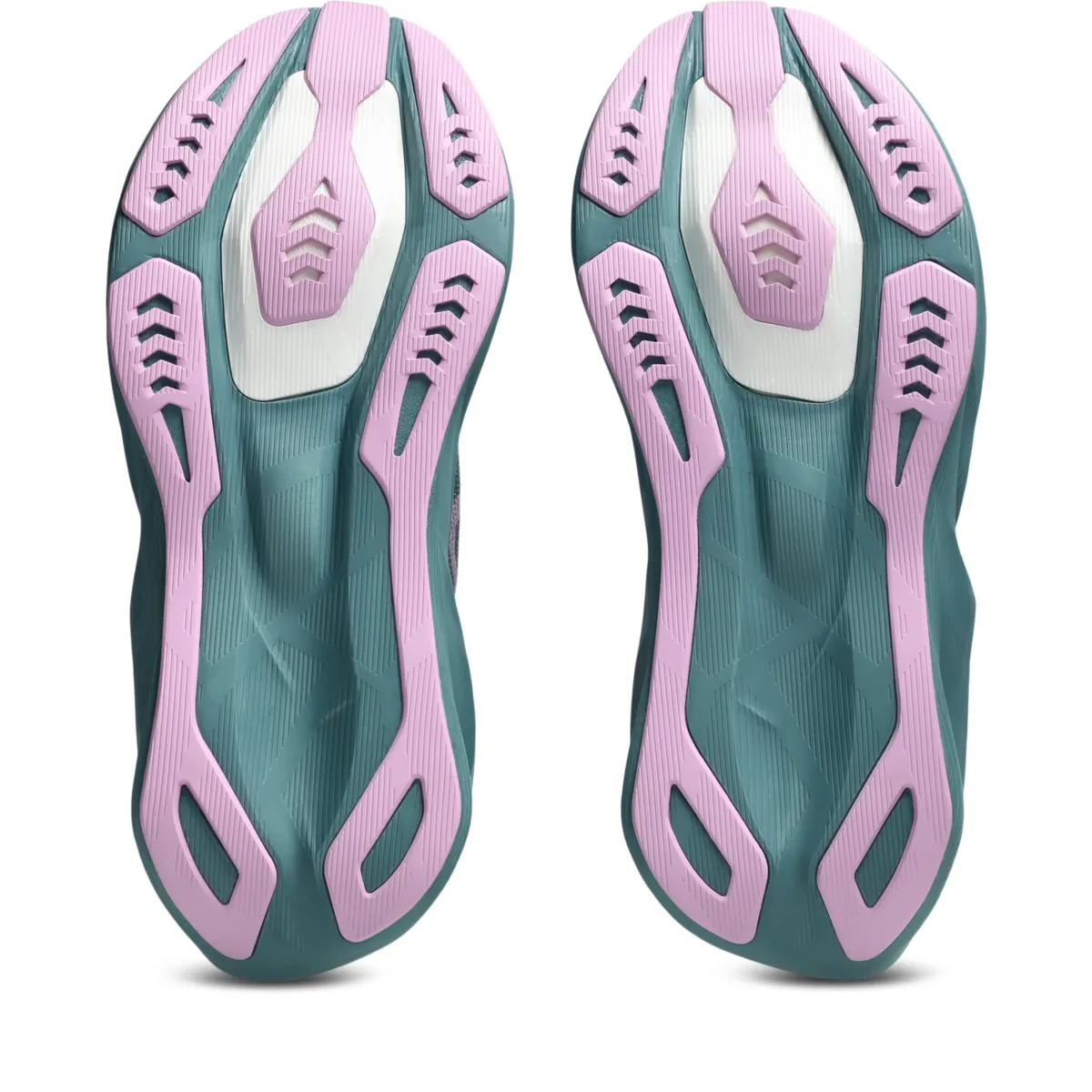
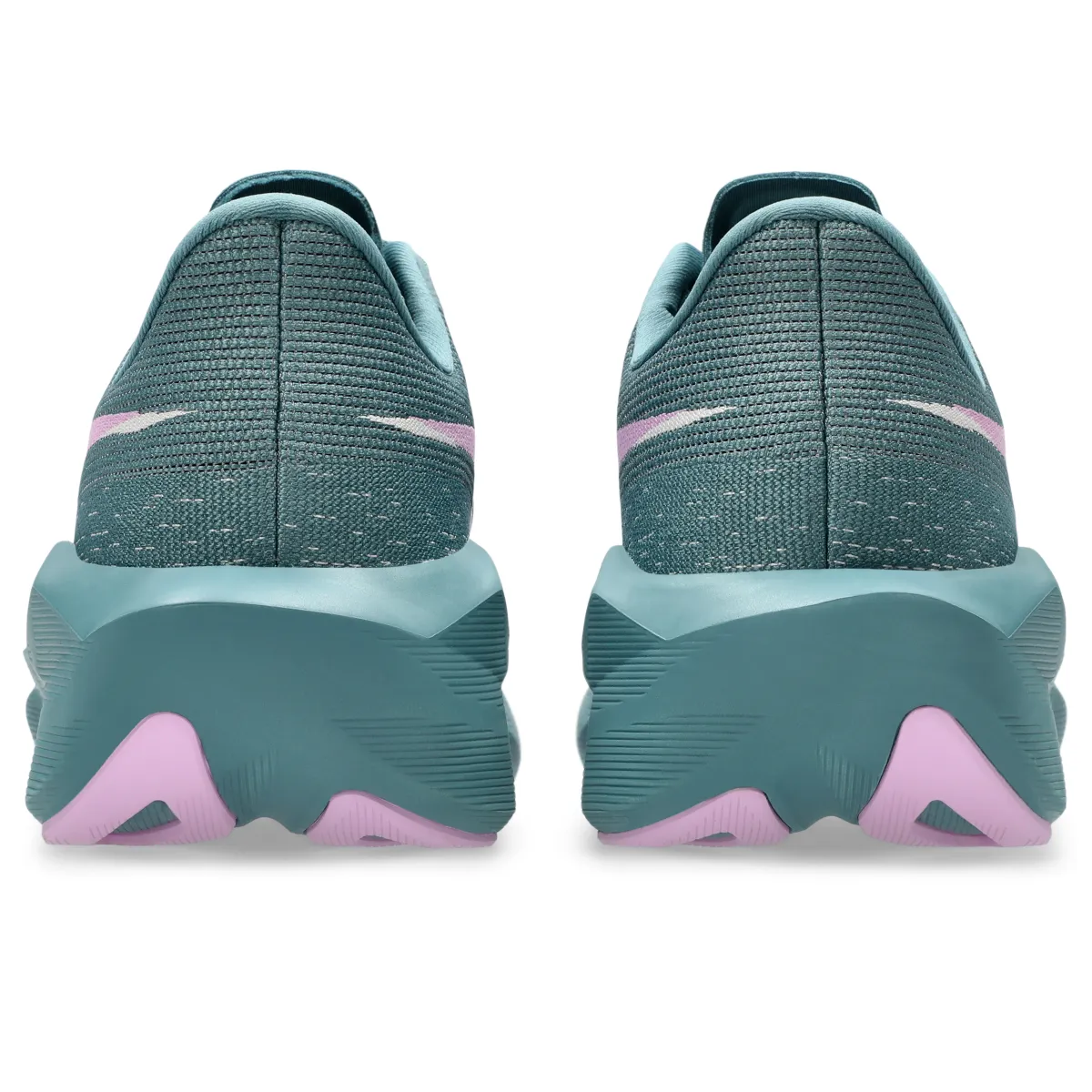
5. ASICS Novablast 6 — Best bouncy daily
- Support: Neutral
- Heel stack: 41.5 mm brand / 39.2 mm lab
- Forefoot stack: 33.5 mm brand / 32.1 mm lab
- Drop: 8 mm brand / 7.1 mm lab
- Weight: 7.6 oz / 215 g women’s / 249 g lab (men’s US 9)
- Rocker: Strong — FF TURBO SQUARED trampoline pod in the forefoot
- Removable insole: Yes
- Source: ASICS; RunRepeat lab test
The Novablast 6 is the fun shoe on this list. It has a tall 41.5 mm heel stack. That is fifth-tallest on this list by the brands’ own figures, after the Vomero 18, Bondi 9, Nimbus 28 and Clifton 10. And a trampoline-like pod in the forefoot snaps back with every step. At 7.6 oz in women’s, it is light for this much cushion. Only the Evo SL (7.2 oz) and Endorphin Speed 5 (7.5 oz) are lighter. So you get big cushion without the big weight. It handles easy runs, steady long runs and even tempo work. That is why it is the most versatile pick on the list after the Ghost 18.
The lab numbers explain the bounce. Energy return hits 69.1% at the forefoot — strong bounce for a daily trainer. And shock absorption at the heel scores 143. The lab drop (7.1 mm) runs a touch lower than the stated 8 mm. Two widths (B standard, D wide) are on offer. The trade-off for all that foam is a tall, soft platform, so if you want a low, firm feel, this is not it. The Run Testers call it one of the best shoes of 2026 so far, and the lab data agrees with them.
Pros:
- Strong bounce — 69.1% energy return at the forefoot
- Light at 7.6 oz despite the tall stack
- Tall 41.5 mm heel stack for max cushion
- Versatile — easy days, long runs and tempo work
- Lab drop close to stated drop
Cons:
- Tall, soft platform can feel tippy on uneven ground
- Only two widths — no narrow option
Skip it if: you need stability support or you run mostly on trails. The Kayano 33 adds guidance, and the Speedgoat 6 is built for dirt.
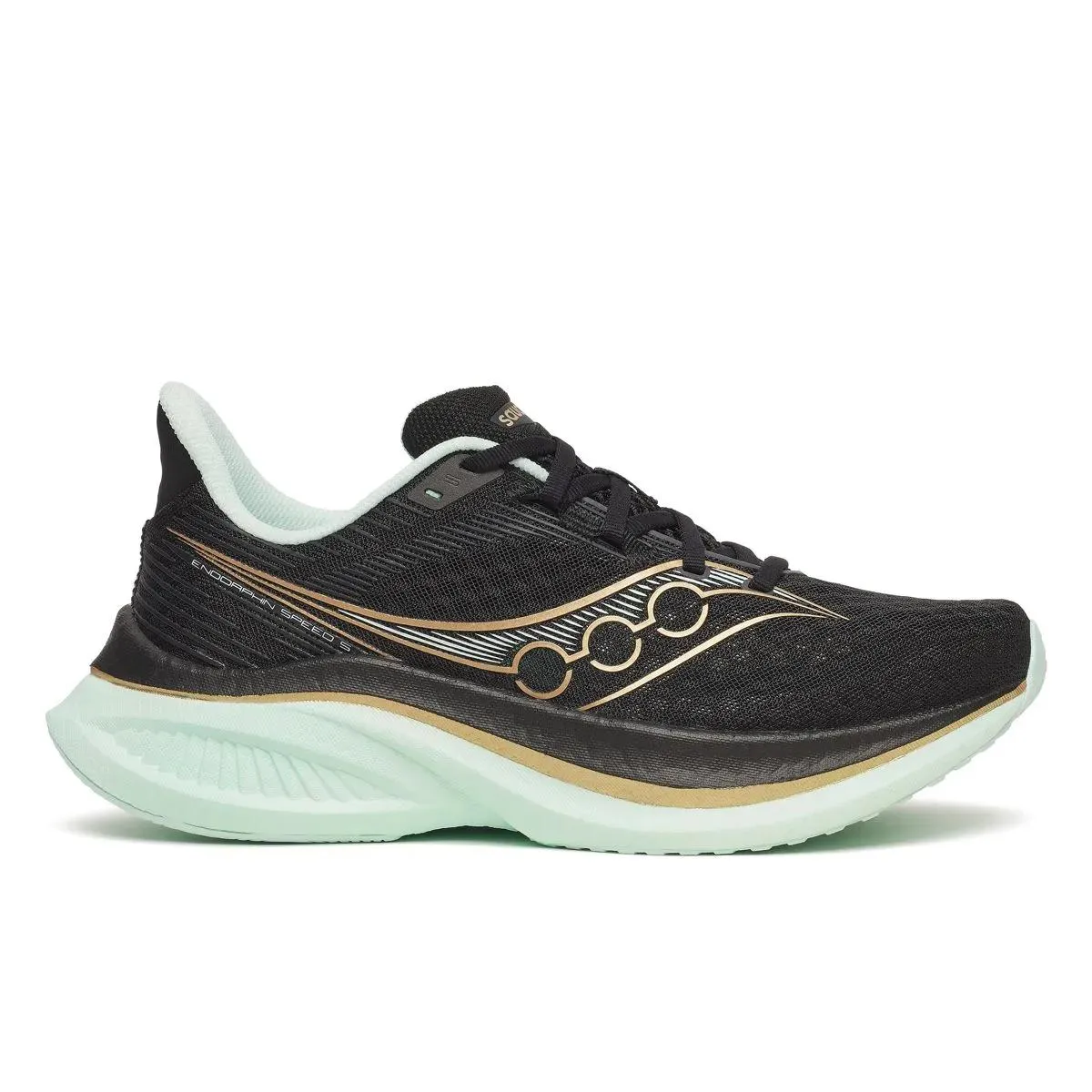
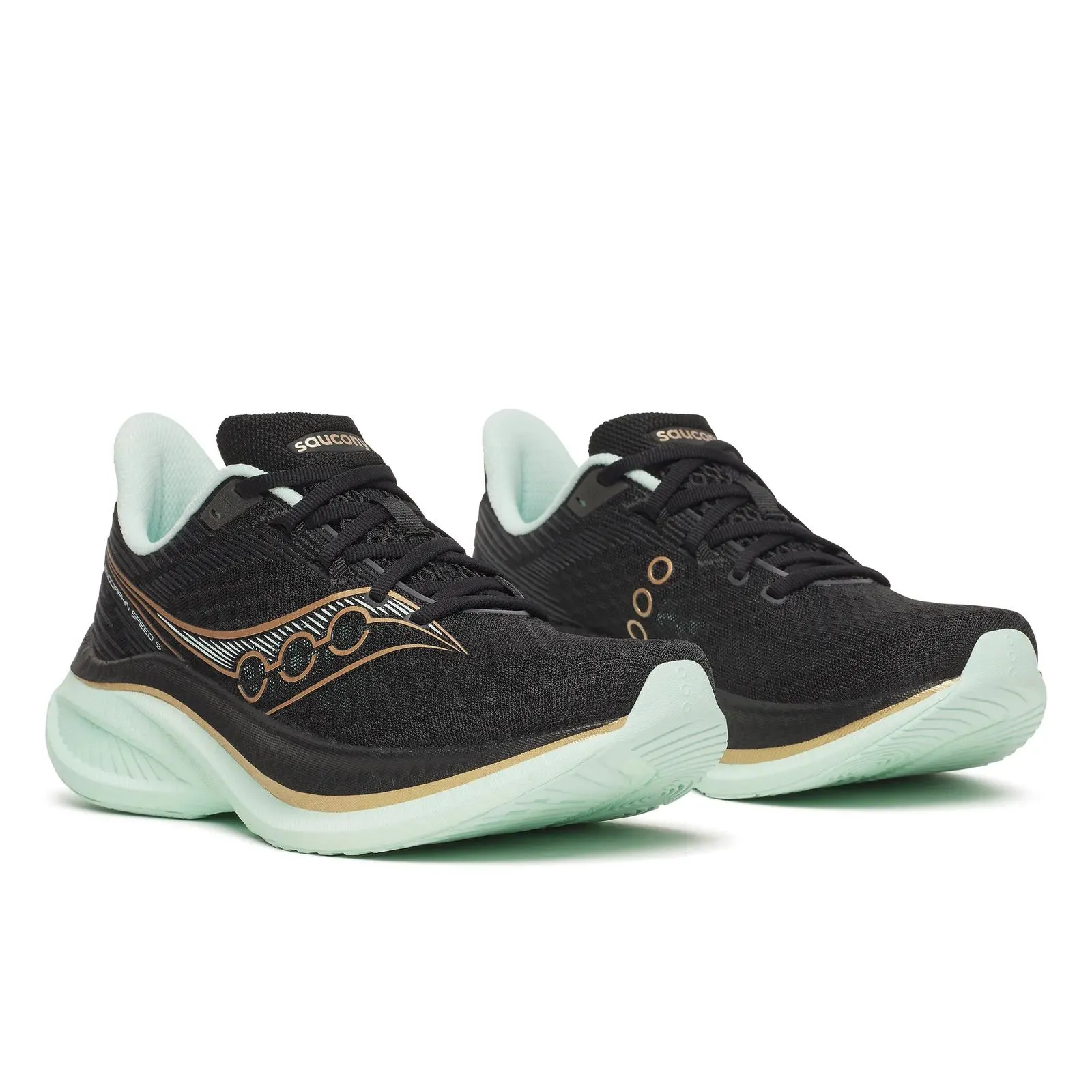
6. Saucony Endorphin Speed 5 — Best for speed days
- Support: Neutral
- Heel stack: 36 mm brand / 37.4 mm lab
- Forefoot stack: 28 mm brand / 26.8 mm lab
- Drop: 8 mm brand / 10.6 mm lab
- Weight: 7.5 oz / 213 g women’s / 241 g lab (men’s US 9)
- Rocker: Strong SPEEDROLL rocker + full-length nylon plate
- Removable insole: Yes
- Source: Saucony; RunRepeat lab test
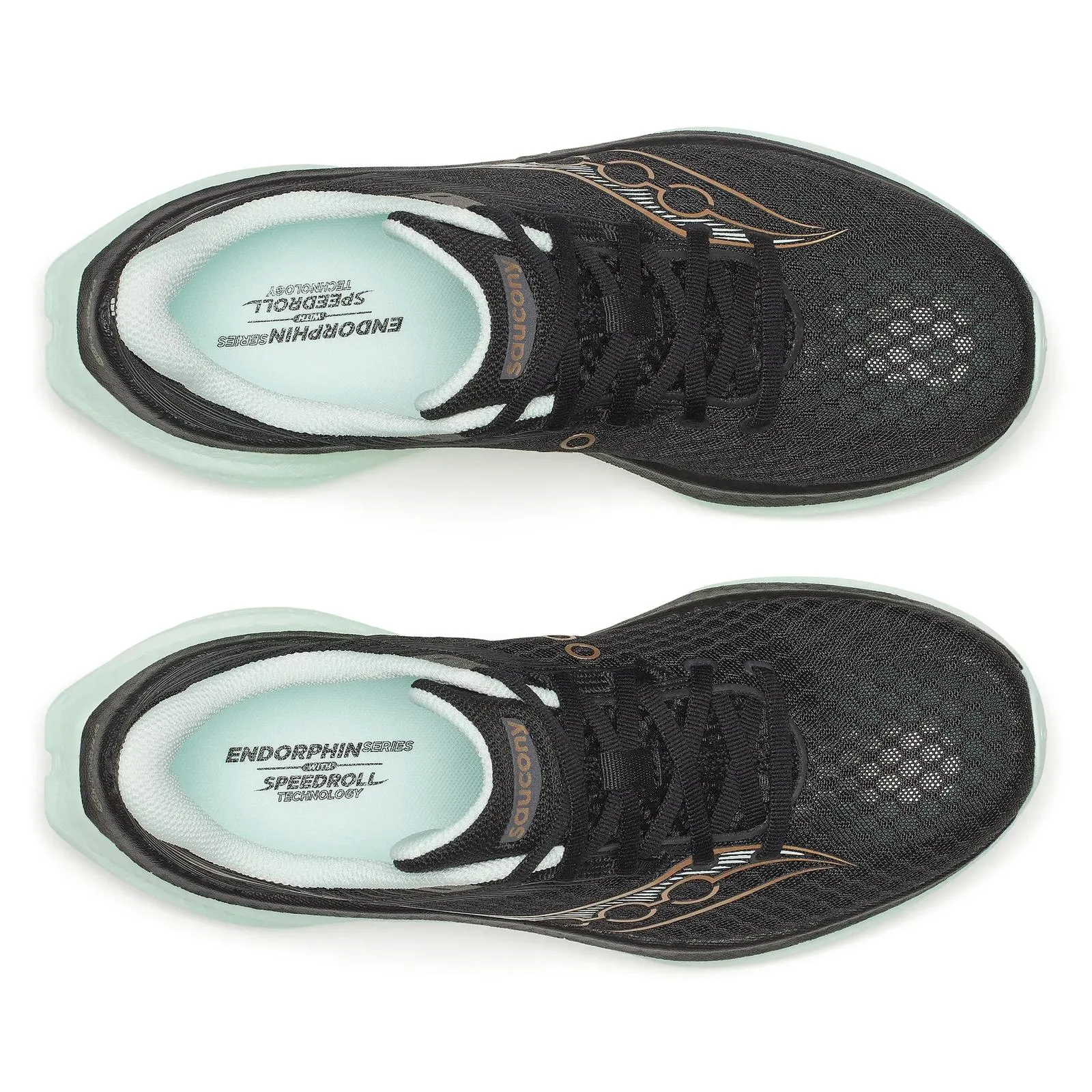
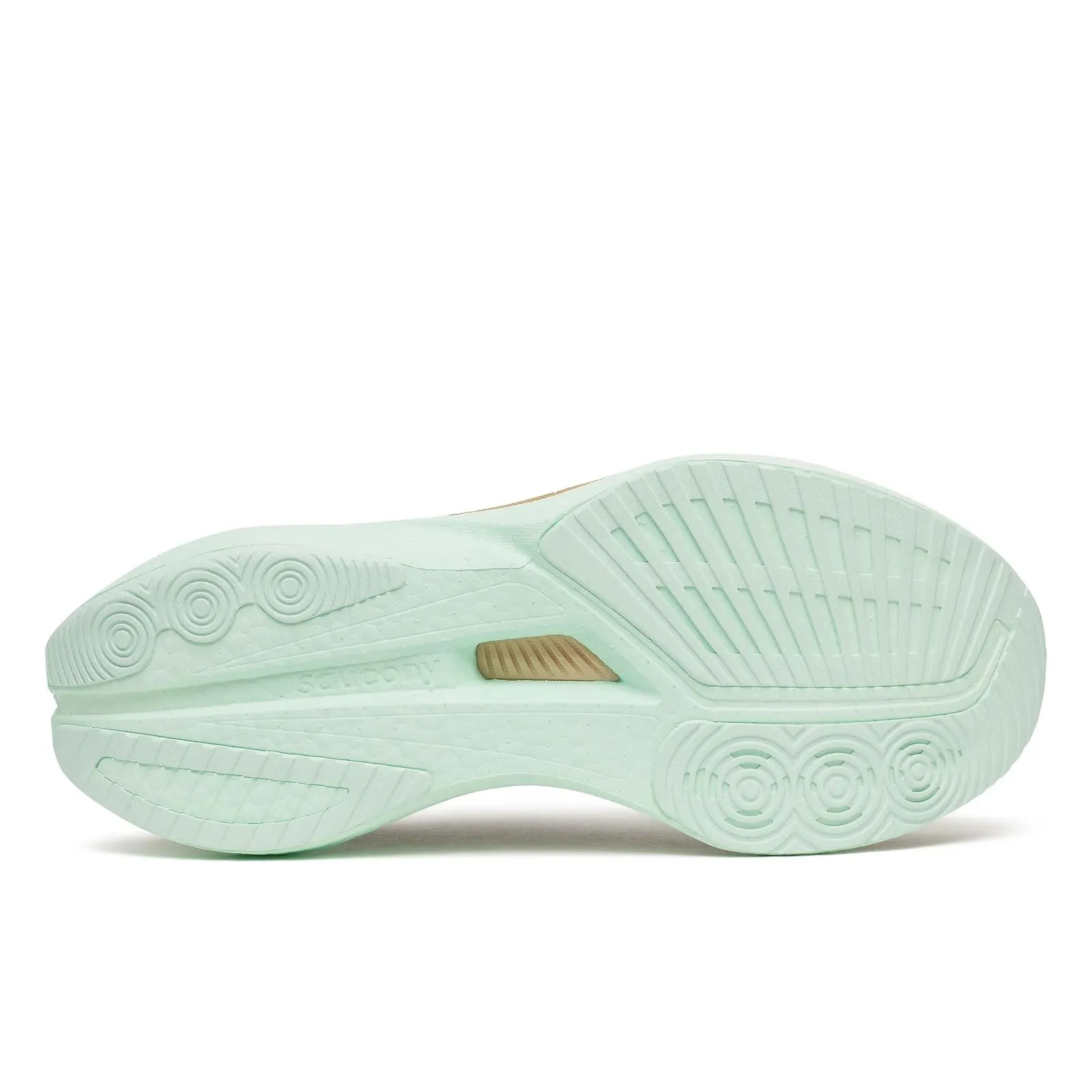
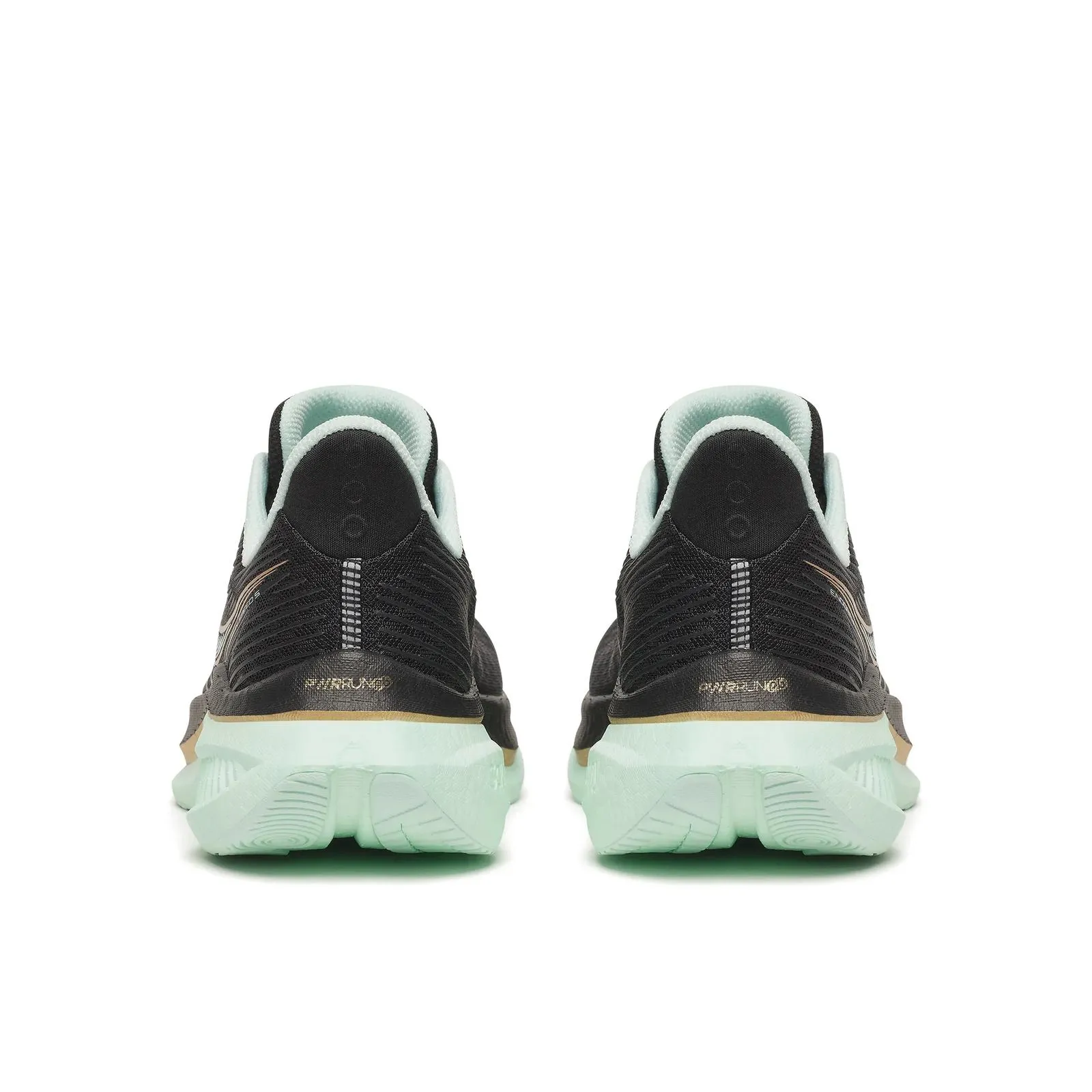
The Endorphin Speed 5 is the speed shoe on this list, and it earns the spot. A full-length nylon plate sits between two layers of PWRRUN PB foam, and the SPEEDROLL rocker tips you forward with every stride. It is the shoe for tempo runs, intervals and race day when you do not want a carbon plate. Note: this is the Speed 5, the previous model. The newer Speed 6 launched in late 2026. But no women’s listing for it could be confirmed on Amazon. So this guide picks the Speed 5, the same formula, now on sale.
The lab numbers are the best on this list for fast running. Energy return is 73.2% at the heel and 78.2% at the forefoot. That is the best forefoot return on this list. Only the Evo SL beats it at the heel (74.3%). Shock absorption is 132 at the heel and 108 at the forefoot. The lab drop (10.6 mm) runs higher than the stated 8 mm. So if you are used to low-drop shoes, give it a few runs. Fit runs slightly small, so try your usual size first and go up half a size if your toes touch the front. Two widths (B standard, D wide) are available. For a neutral daily trainer to pair with it, the Ghost 18 above is the natural partner.
Pros:
- Fastest ride here — best forefoot energy return on the list (78.2%)
- Nylon plate + SPEEDROLL rocker make tempo pace feel easy
- Light at 7.5 oz in women’s
- Works for tempo runs, intervals and race day
- Previous model, now on sale — same speed formula
Cons:
- Lab drop (10.6 mm) is higher than the stated 8 mm
- Fit runs slightly small — check the toe box first
Skip it if: you want one shoe for slow, easy miles. The plate and rocker feel wasted at a walk. The Ghost 18 or Clifton 11 suits easy days better.
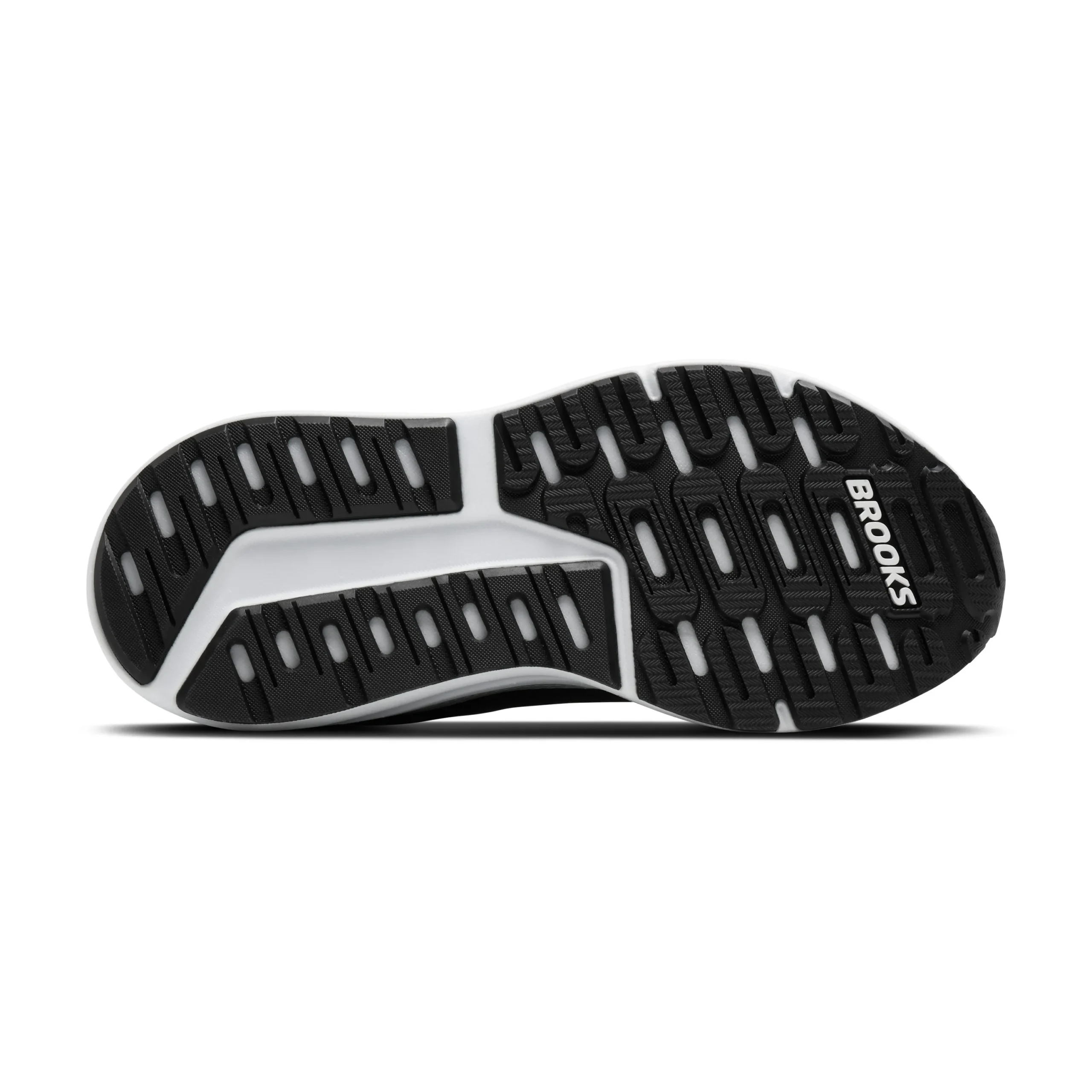
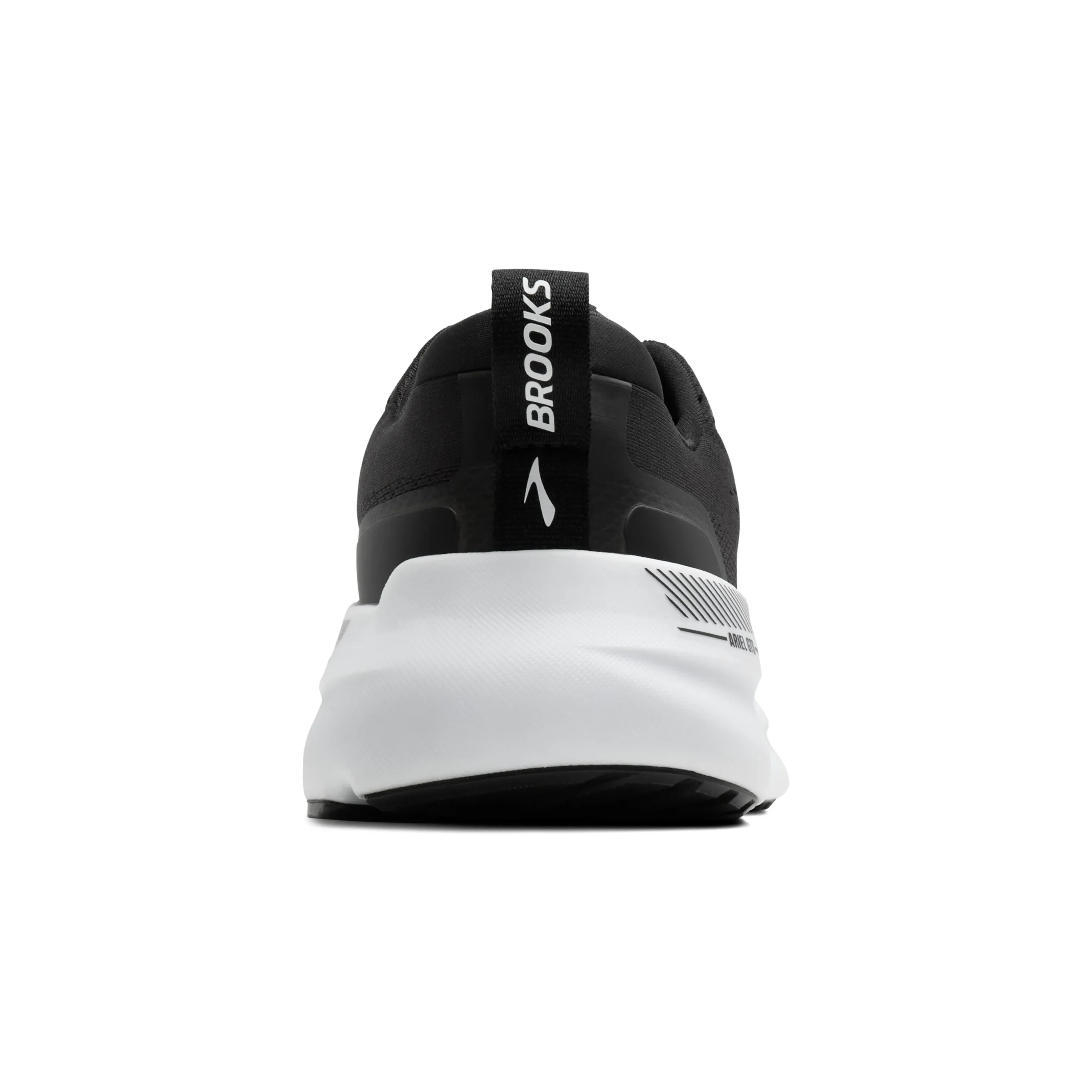
7. Brooks Ariel GTS 26 — Best motion control
- Support: Maximum stability — GuideRails support system
- Heel stack: 38 mm brand / no lab test found
- Forefoot stack: 28 mm brand / no lab test found
- Drop: 12 mm brand / no lab test found
- Weight: 11.2 oz / 317.5 g women’s / no lab test found
- Rocker: Mild
- Removable insole: Yes — roomy fit takes most orthotics
- Source: Brooks; Doctors of Running. No RunRepeat lab test exists for this shoe yet, so all numbers here are the brand’s own.
The Ariel GTS 26 is the max-support shoe on this list, and it is built for feet that need real help. The GuideRails system supports your body in its natural motion path. It keeps excess movement in check. That is Brooks’ way of saying it stops your foot rolling in without forcing it into a rigid shape. The DNA LOFT v3 foam is soft and durable, and the fit is roomy enough for orthotic inserts. If you have flat feet, overpronate heavily, or a running-shop gait check put you in a motion-control shoe, this is the pick.
Be honest with yourself about the trade-offs. At 11.2 oz, it is the heaviest shoe here by a clear margin — you feel the weight on every step. The 12 mm drop is also the highest stated drop on this list. It suits heel strikers and walkers. But it can feel steep if you are used to low-drop shoes. Four widths (2A narrow, B standard, D wide, 2E extra wide) make it the easiest max-support shoe to fit. And because there is no independent lab test yet, treat the brand numbers as the brand’s word, not a measured fact. For more on support, read our best running shoes for flat feet guide and what is a stability running shoe.
Pros:
- Strongest support on this list — built for heavy overpronation
- Roomy fit takes most orthotics with ease
- Four widths, the widest fit range here
- Soft, durable DNA LOFT v3 cushioning
- Good for running, walking and all-day wear
Cons:
- Heaviest shoe here at 11.2 oz — you feel it
- 12 mm drop is the steepest on this list
Skip it if: your gait is neutral. All that support will feel like too much shoe. The Ghost 18 gives you the same Brooks comfort without the control features.
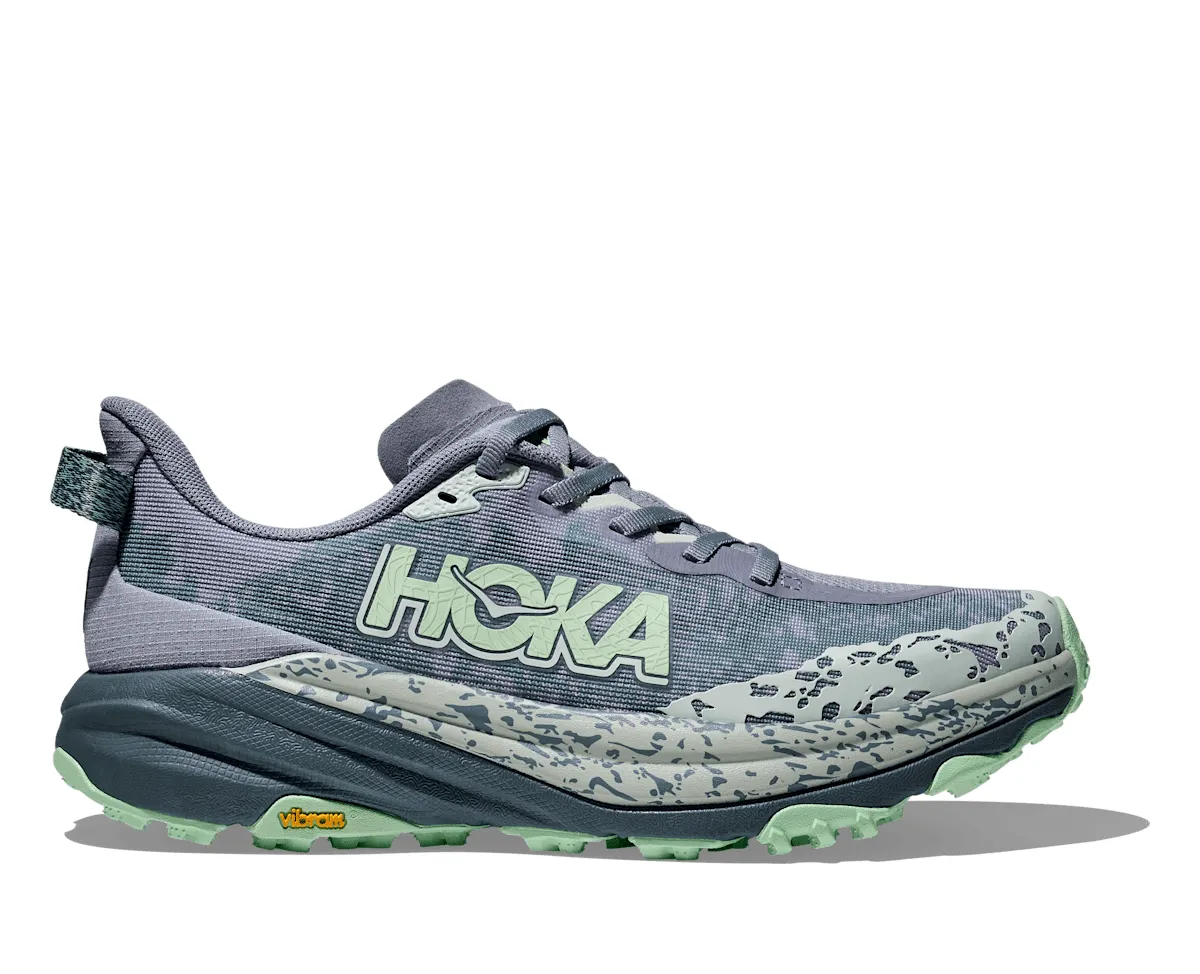
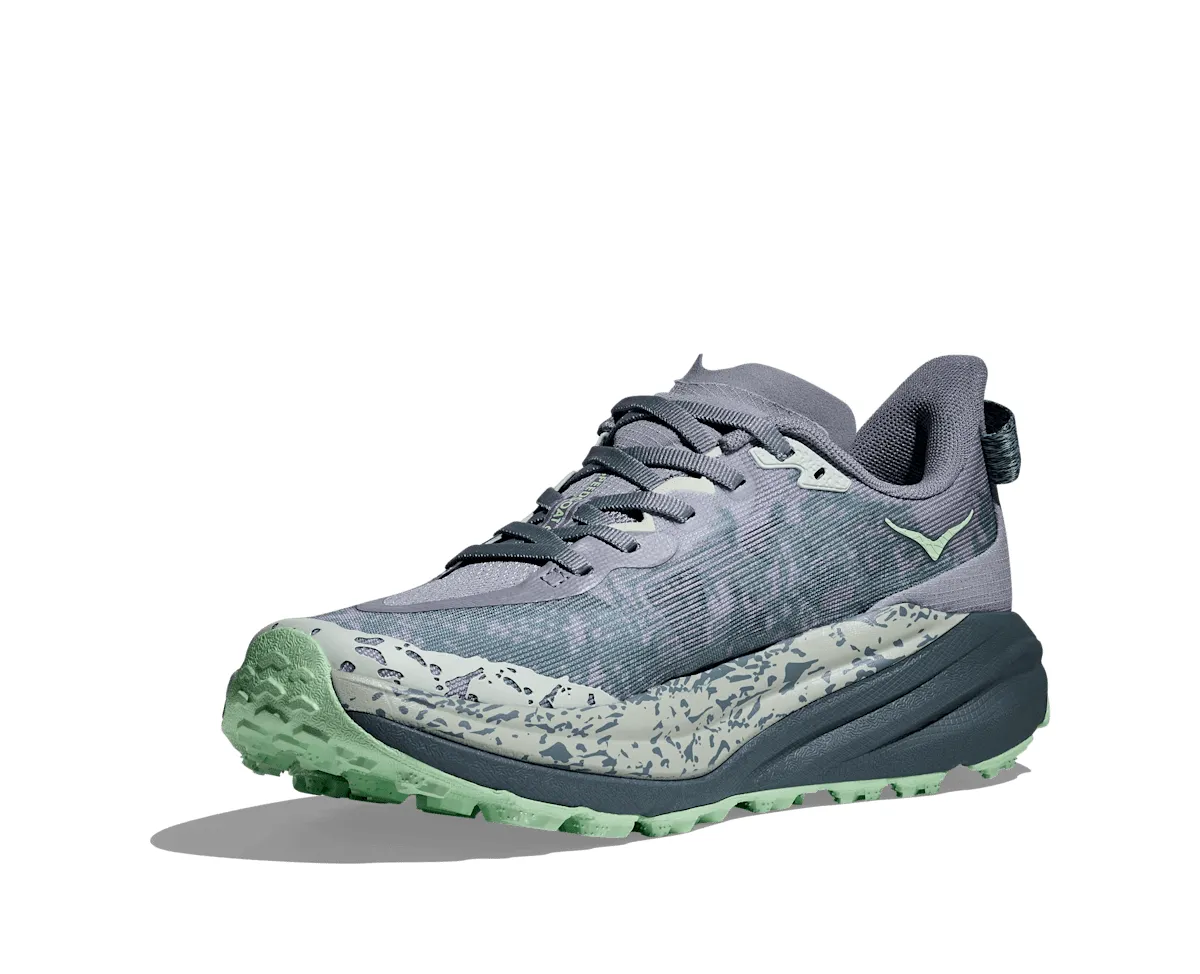
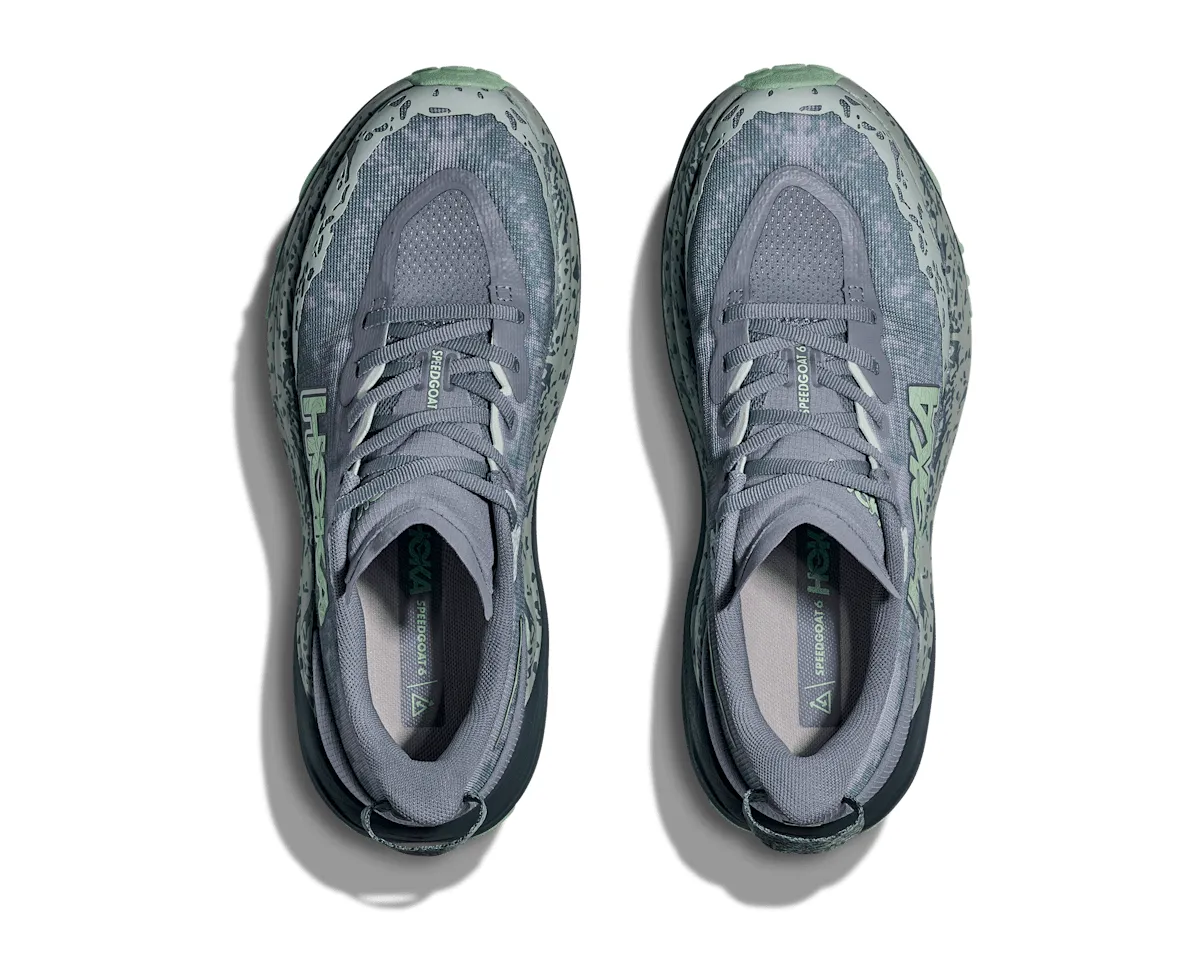
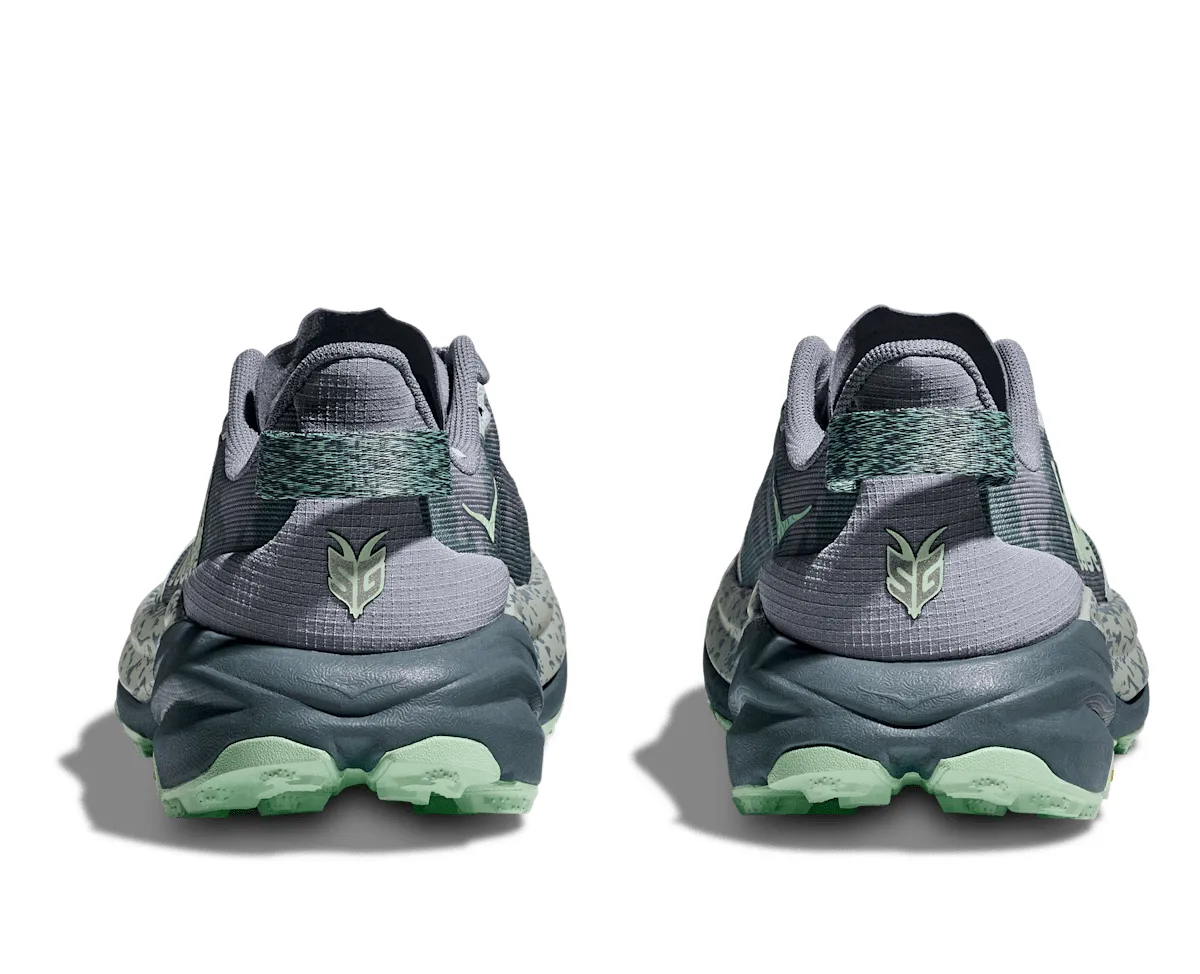
8. HOKA Speedgoat 6 — Best trail
- Support: Neutral
- Heel stack: 40 mm brand / 32.1 mm lab
- Forefoot stack: 35 mm brand / 27.2 mm lab
- Drop: 5 mm brand / 4.9 mm lab
- Weight: 8.2 oz / 232 g women’s / 278 g lab (men’s US 9)
- Rocker: Mild
- Removable insole: Yes
- Source: HOKA; RunRepeat lab test
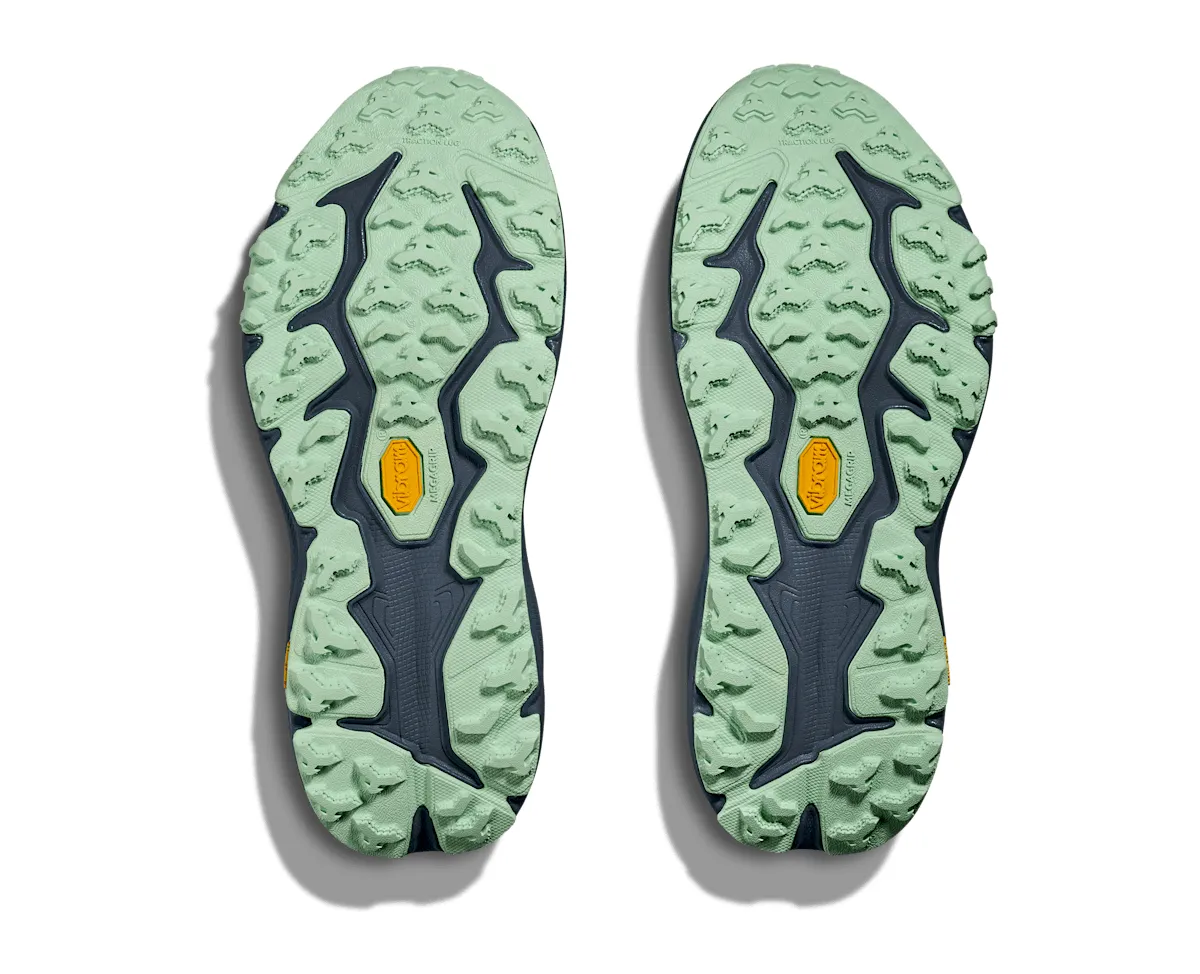
The Speedgoat 6 is the trail shoe on this list, and it is the one to buy if your runs leave the pavement. The Vibram Megagrip outsole has 5 mm lugs. They bite into mud, loose gravel and wet rock. And the CMEVA foam midsole cushions the hard hits without feeling dead. Note: this is the Speedgoat 6, the previous model. The current Speedgoat 7 is out. But no women’s listing for it could be confirmed on Amazon. So this guide picks the Speedgoat 6, the same trail formula, now on sale.
One honest flag: the brand and the lab disagree on stack height. HOKA lists 40/35 mm; RunRepeat measured 32.1/27.2 mm in the lab. The lab measures without the insole and with its own method. So the gap is a measurement difference, not a defect. But it means the shoe sits lower than the box suggests. The lab drop (4.9 mm) matches the brand’s 5 mm almost exactly. Shock absorption is 124 at the heel and 107 at the forefoot. Energy return is 48.0% at the heel and 53.5% at the forefoot. That is solid for a trail shoe. Fit runs slightly small. Two widths (Regular, Wide) are available. For the full trail picture, see our best trail running shoes guide.
Pros:
- Best grip here — Vibram Megagrip with 5 mm lugs
- Light for a trail shoe at 8.2 oz
- Lab drop matches the stated drop (4.9 vs 5 mm)
- Cushioned enough for long trail days
- Previous model, now on sale — same trail formula
Cons:
- Brand stack (40/35 mm) reads much higher than the lab measured (32.1/27.2 mm)
- Fit runs slightly small — check the toe box first
Skip it if: you run only on roads. The lugs wear fast on pavement and the grip is wasted. The Clifton 11 is the road version of this comfort.
9. New Balance Fresh Foam X 1080 v15 — Best max-cushion daily
- Support: Neutral
- Heel stack: 40 mm brand / 37.0 mm lab
- Forefoot stack: 34 mm brand / 30.6 mm lab
- Drop: 6 mm brand / 6.4 mm lab
- Weight: 7.3 oz / 208 g women’s (New Balance) / 255 g lab (men’s US 9)
- Rocker: Mild
- Removable insole: Yes
- Source: New Balance; RunRepeat lab test
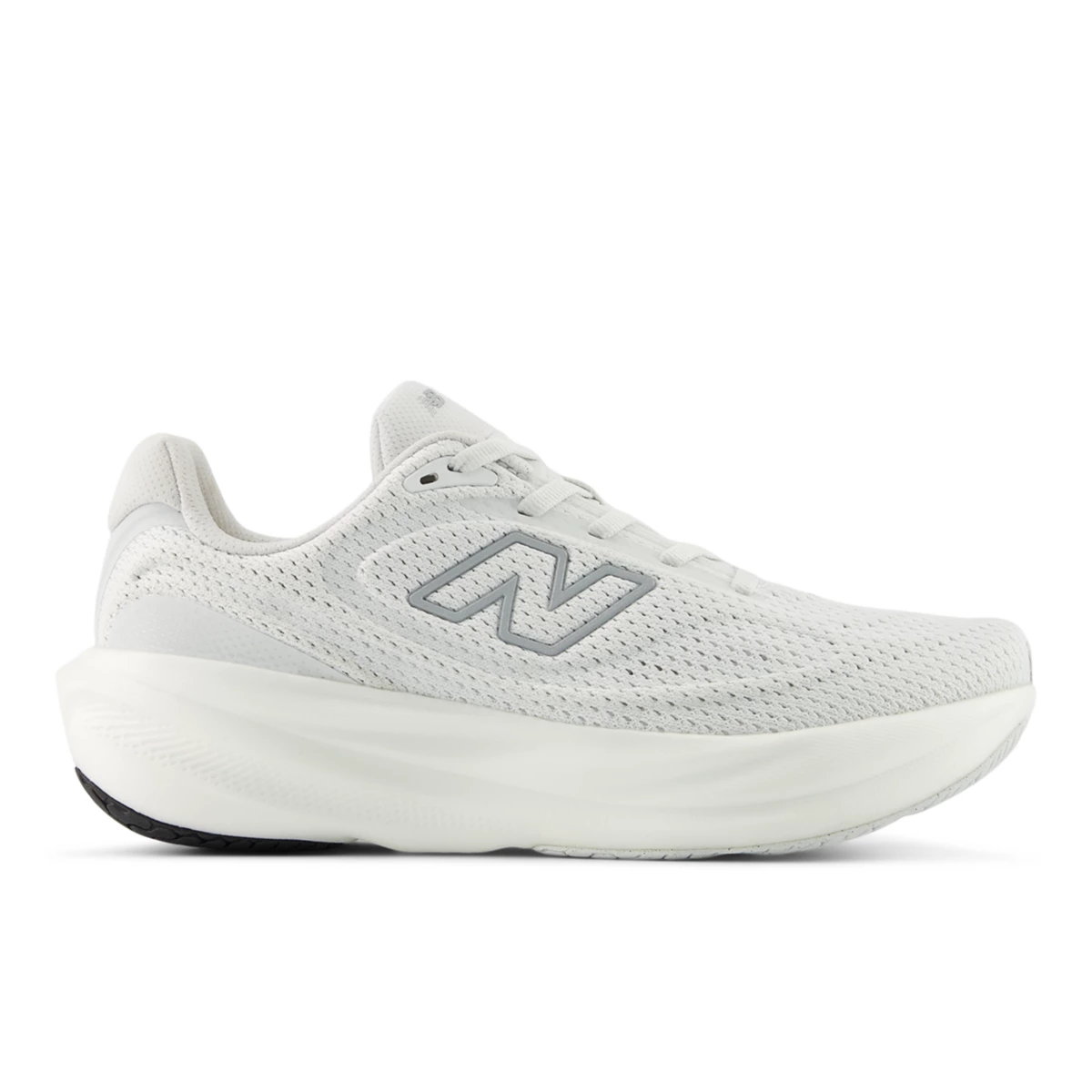
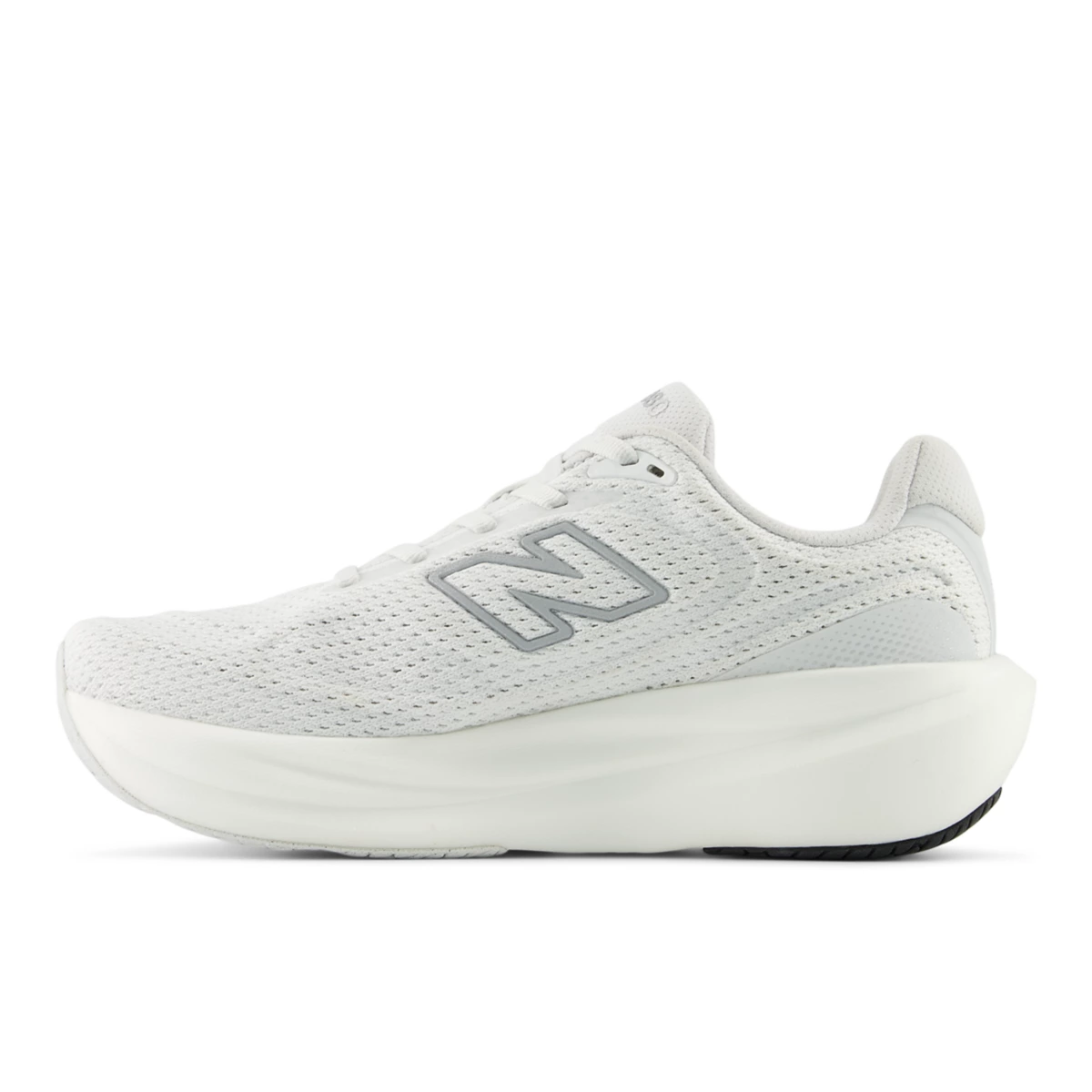
The 1080 v15 is the softest shoe in this guide by the lab’s own measure — and it is also the lightest of the big-cushion shoes. New Balance dropped “Fresh Foam X” from the name this year. It is now just the 1080 v15, and the foam is called Infinion. But the idea is the same: maximum cushion for daily miles, long slow runs and tired legs. If you are a heavier runner, coming back from a break, or you just want the kindest landing you can buy, start here.
The lab numbers are the best softness story on this list. The foam measures 21.5 AC. That is the softest reading here by a clear margin. The category average is 35.5 AC, and the Nimbus 28 below measures 38.8 AC. Shock absorption scores 147 at the heel, joint-highest on this list alongside the Vomero 18 and Clifton 10. Energy return is 65.9% at the heel and 69.1% at the forefoot, so the softness does not feel dead — it gives back. At 255 g in the lab it is the lightest of the big-cushion shoes, a full 34 g under the Ghost 18. Four widths (2A narrow, B standard, D wide, 2E extra wide) make it the easiest max-cushion shoe to fit, and the toe box is roomy. The 6 mm drop is low, so if your calves are tight, give it a week before you judge it.
Pros:
- Softest foam in the lab (21.5 AC) — the kindest landing here
- Joint-highest shock absorption at the heel (147 SA)
- Lightest big-cushion shoe in the lab at 255 g
- Four widths, the widest fit range of any max-cushion pick here
- Strong energy return for such a soft shoe (69.1% forefoot)
Cons:
- Soft foam can feel vague at faster paces
- The 6 mm drop needs a short adjustment if you come from a 10 mm shoe
Skip it if: you want a firm, fast feel or a shoe for tempo days. The Evo SL below is the fast pick, and the Ghost 18 is firmer underfoot.
10. ASICS Gel-Nimbus 28 — Best premium cushion
- Support: Neutral
- Heel stack: 42.5 mm brand (ASICS women’s) / 43.0 mm lab (men’s US 9)
- Forefoot stack: 34.5 mm brand / 34.9 mm lab
- Drop: 8 mm brand / 8.1 mm lab
- Weight: 8.5 oz / 242 g women’s (ASICS) / 278 g lab (men’s US 9)
- Rocker: Mild
- Removable insole: Yes
- Source: ASICS; RunRepeat lab test
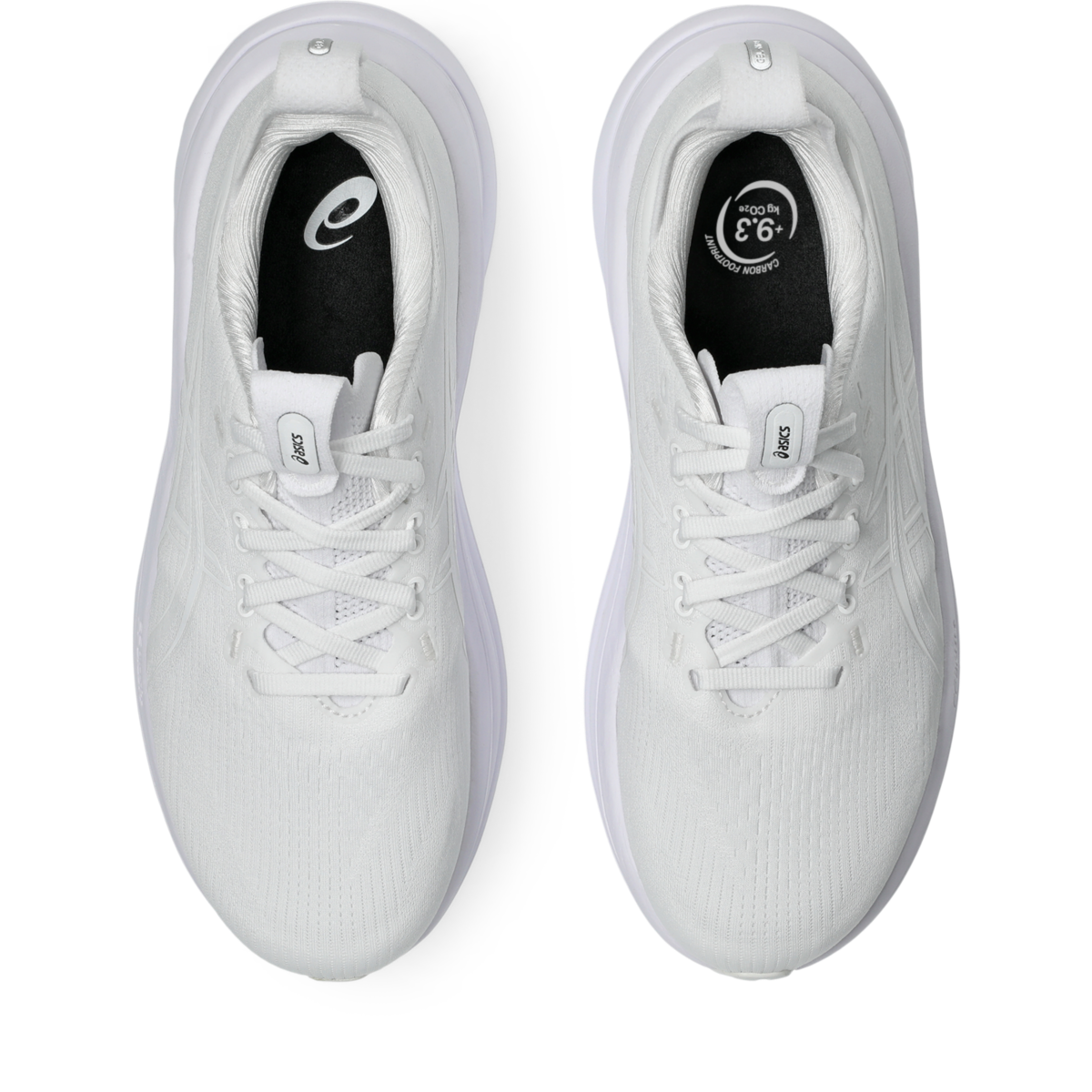
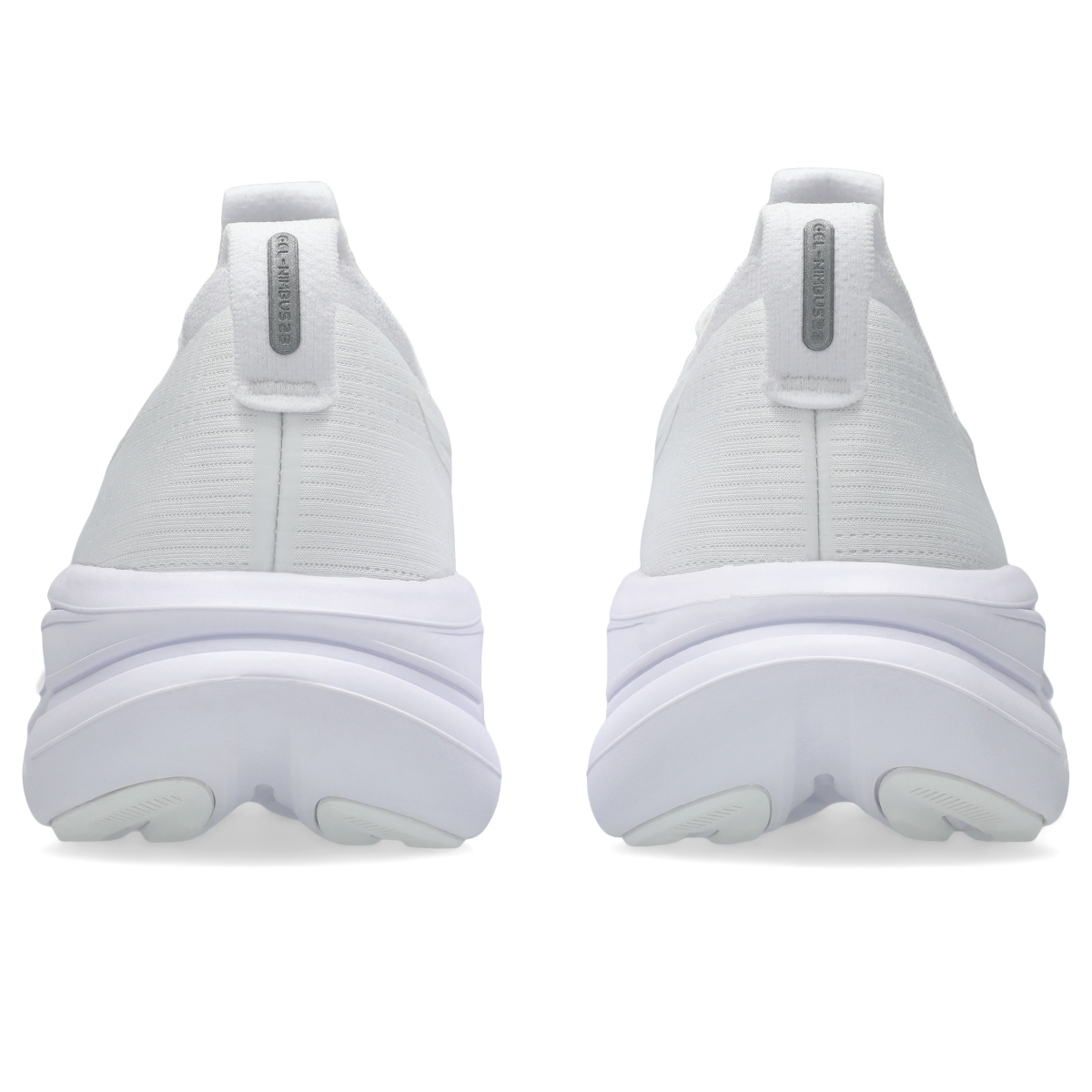
The Nimbus 28 wins on step-in comfort. RunRepeat lists “excellent step-in comfort” as its first strength. And the reason is simple: a PureGEL insert under the heel plus generous foam padding around the ankle. The shoe feels soft the second your foot goes in. It is the premium cushion pick — the one for runners who want the plushest first step and do not mind paying for it.
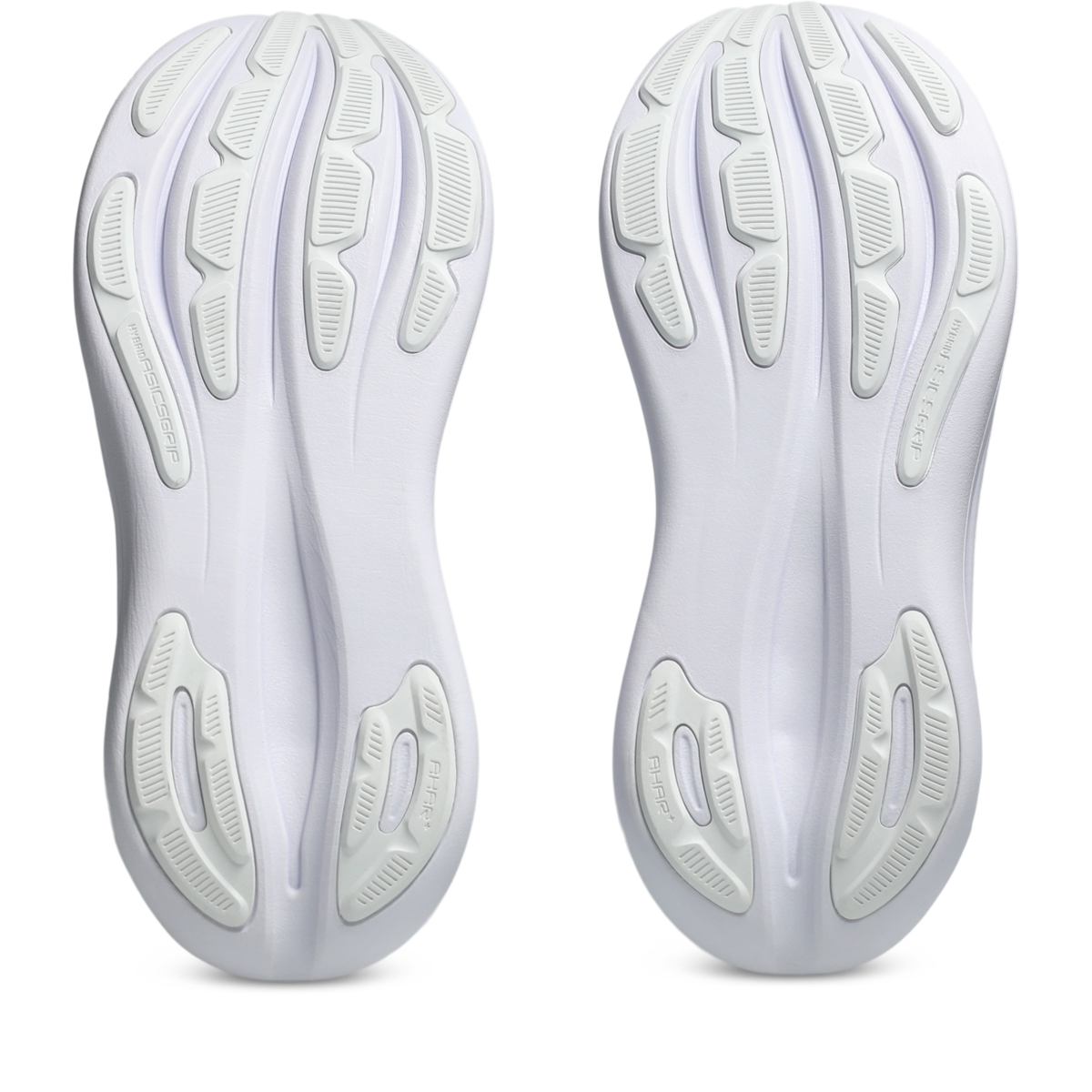
One honest note: the foam itself measures 38.8 AC in the lab, which is firmer than the 1080 v15 above at 21.5 AC. The Nimbus feels softest on first wear, while the 1080 measures softest in the lab. Both are true. The trade is bounce: energy return came in at 44.2% at the heel and 45.9% at the forefoot, the lowest on this list. The Nimbus absorbs impact and gives almost nothing back. It is also stiff. The lab measured 20.5 Nm of torsional rigidity, which keeps the tall stack stable. And the heel counter scores 4 out of 5 for support. The Hybrid ASICSGRIP outsole grips well on wet roads. Three widths (B standard, D wide, 2E extra wide) are on offer. Note: the Nimbus 29 is due in December 2026, so re-check the current model at publish time.
Note: Doctors of Running’s test sample measured 43.5/35.5 mm and 8.5 oz — the weight matches ASICS’ own figure; the stack runs 1 mm higher, a normal difference between test samples.
Pros:
- Best step-in comfort on this list, thanks to PureGEL and a padded upper
- High shock absorption from a true max-stack midsole
- Stable despite its height, with a stiff platform underfoot
- Grippy Hybrid ASICSGRIP outsole for wet roads
- Removable insole, so it takes an orthotic
Cons:
- Lowest energy return here (44.2% heel) — it feels flat when you try to go fast
- Breathability is only moderate — feet run warm on hot days
Skip it if: you want bounce or a breathable summer shoe. The Novablast 6 above is bouncier, and the 1080 v15 measures softer in the lab.
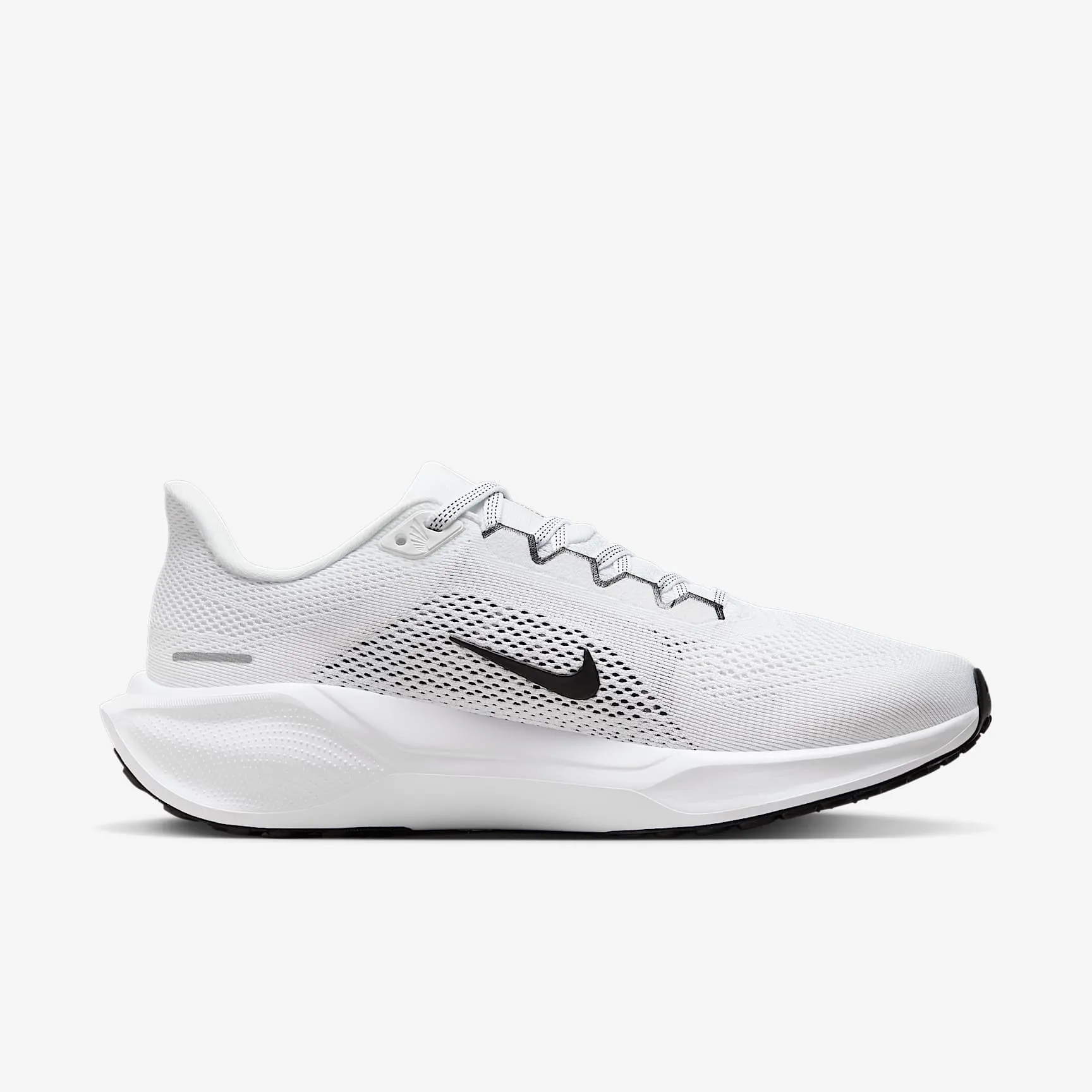
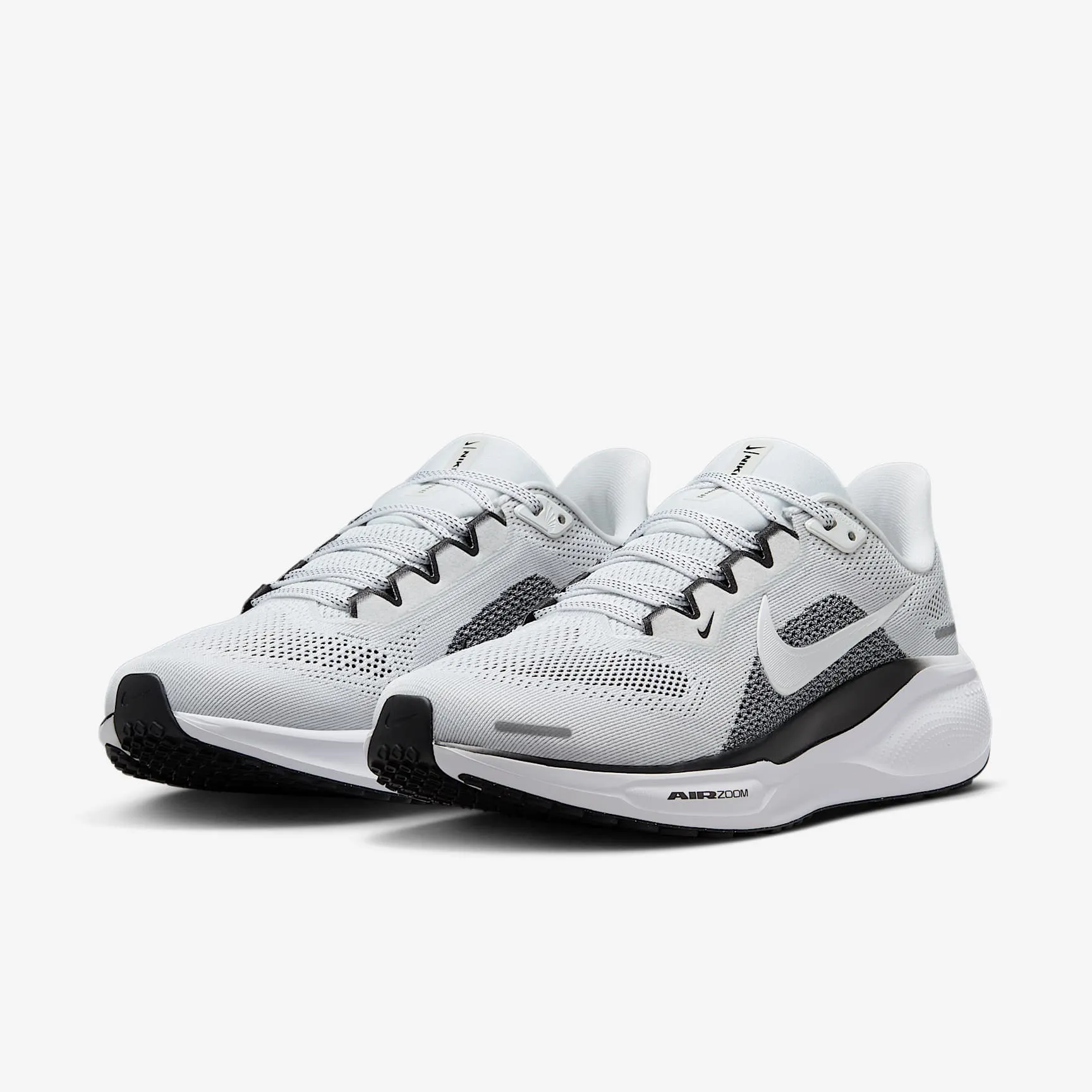
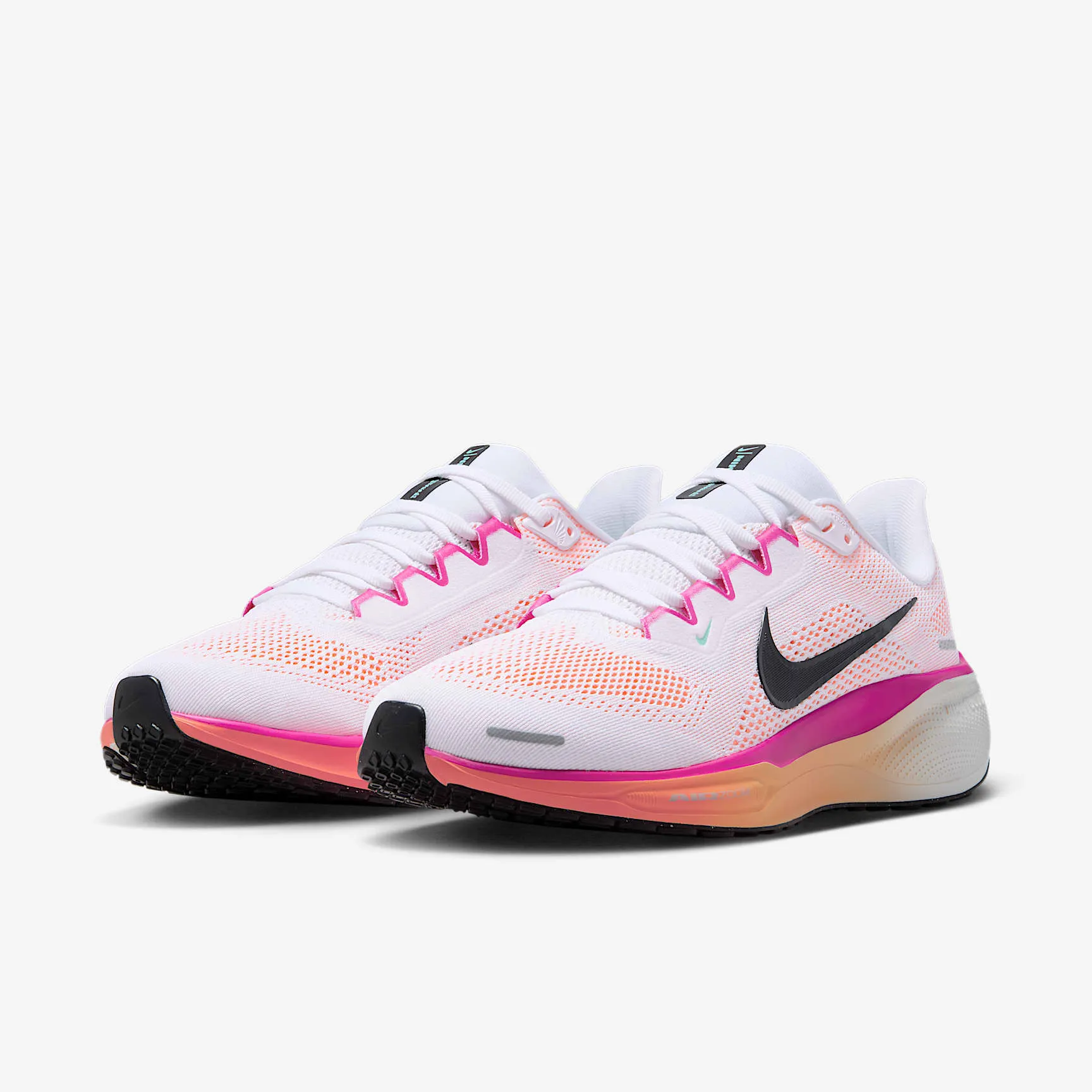
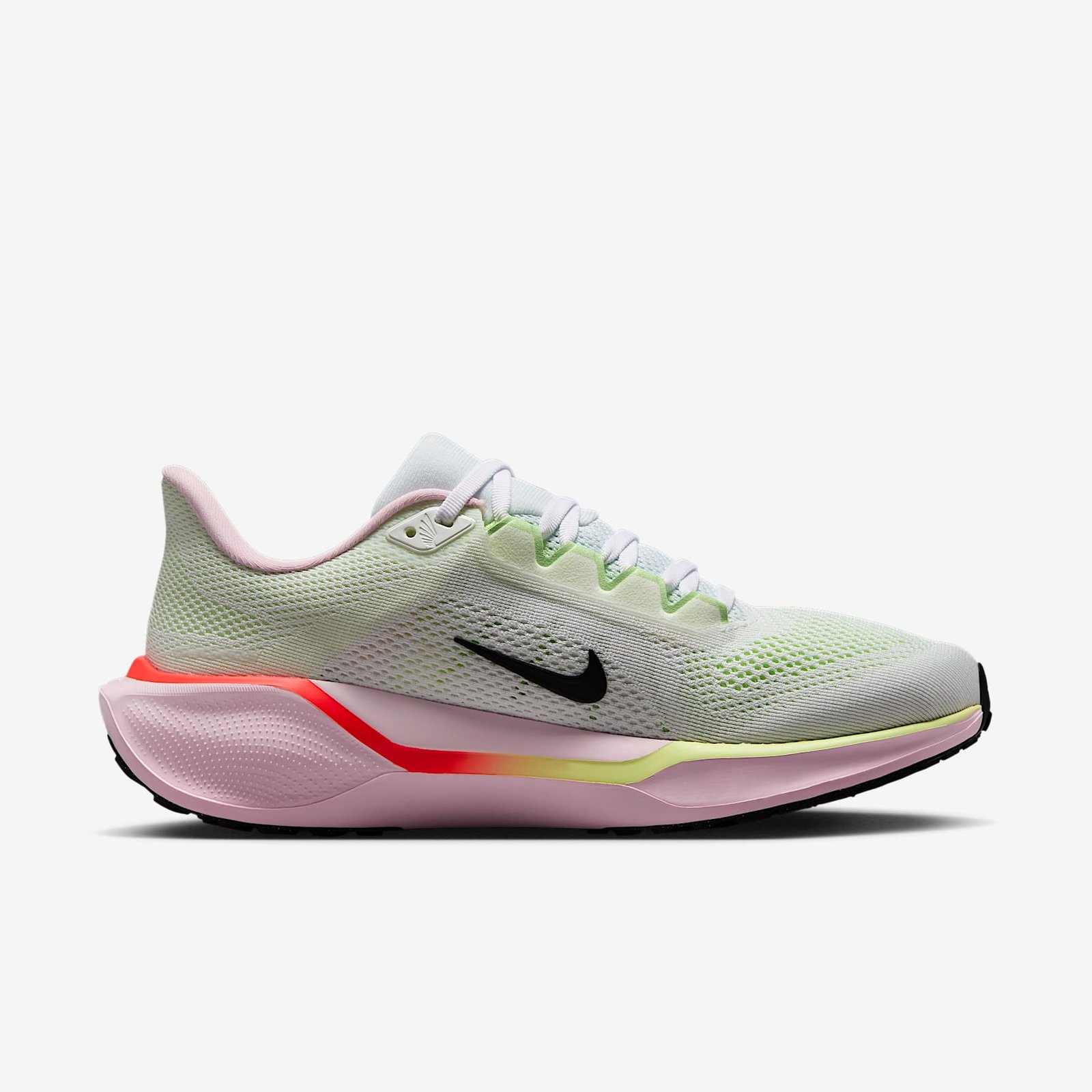
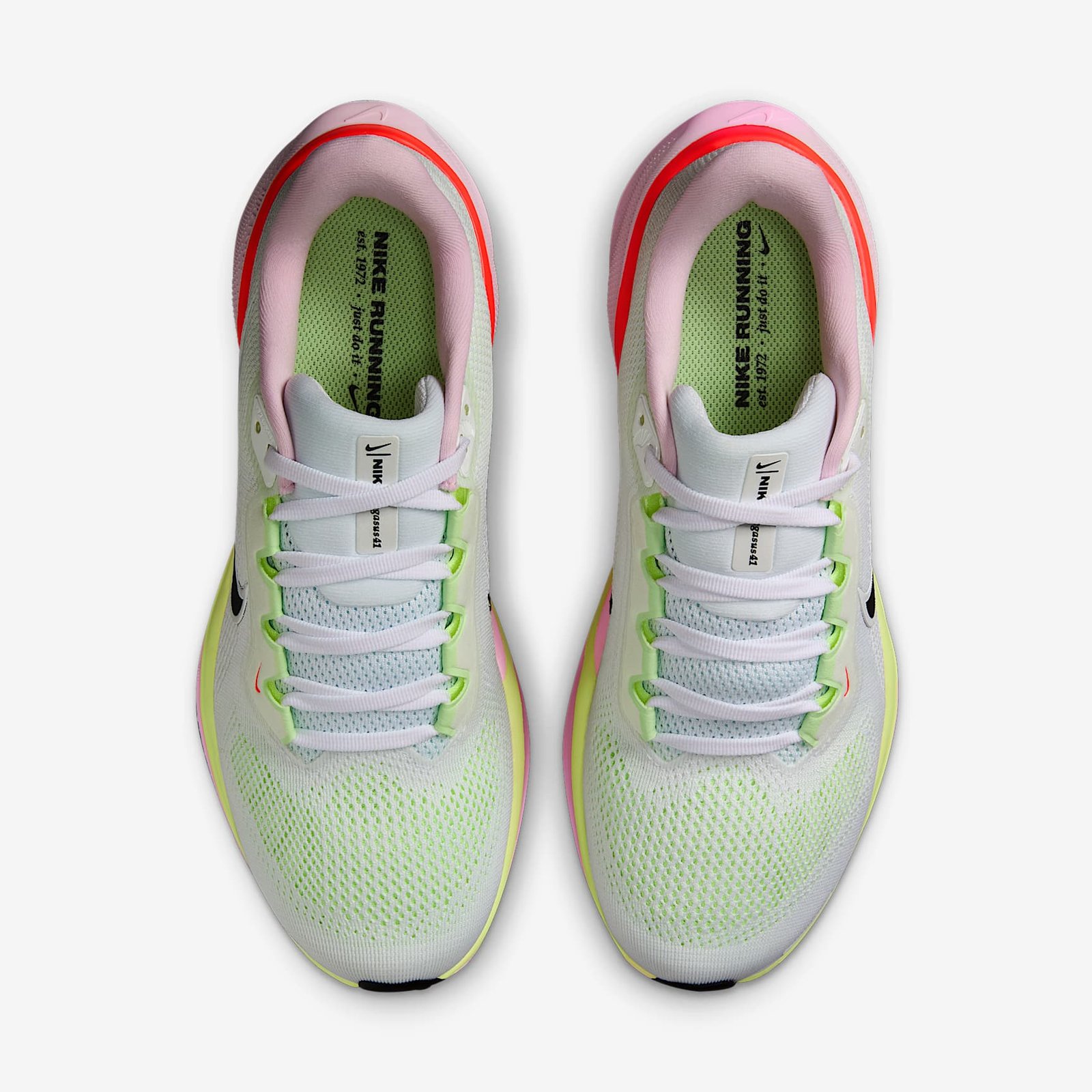
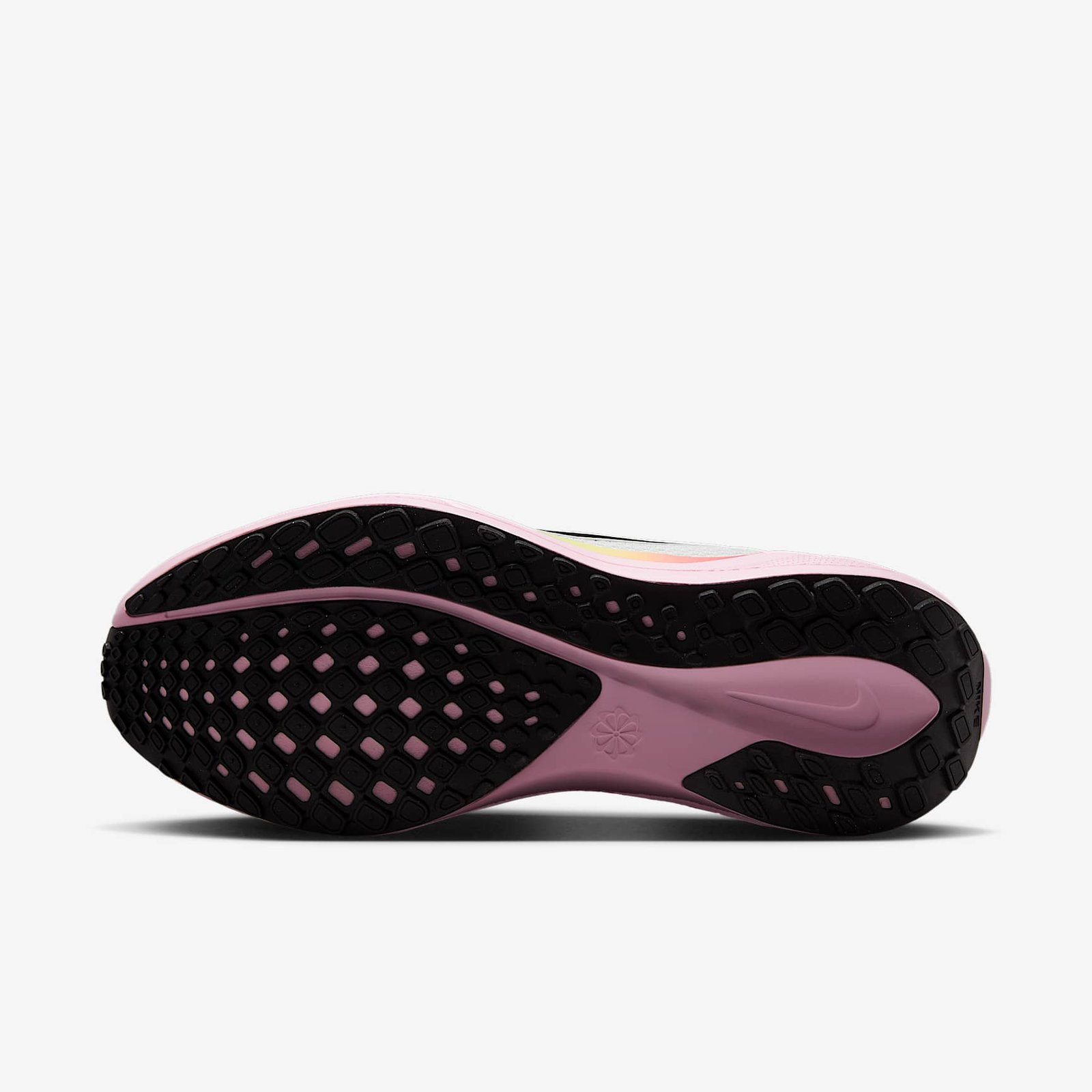
11. Nike Pegasus 41 — Best versatile value
- Support: Neutral
- Heel stack: 37 mm brand / 33.6 mm lab
- Forefoot stack: 27 mm brand / 22.2 mm lab
- Drop: 10 mm brand / 11.4 mm lab
- Weight: 8.7 oz / 247 g women’s (Running Warehouse) / ~283 g lab (men’s US 9)
- Rocker: Mild, two Air Zoom units (forefoot + heel)
- Removable insole: Yes
- Source: Nike; RunRepeat lab test
The Pegasus 41 is the do-everything trainer on this list, and it is here as a value pick. Note: this is the previous model. The current Pegasus 42 is out. But no women’s listing for it could be confirmed on Amazon. So this guide picks the 41, the same Pegasus formula, now on sale. Two Air Zoom units (one in the forefoot, one in the heel) give a responsive ride without a plate. And the ReactX foam keeps it light for a daily trainer. If you want one pair for daily miles, long runs and a bit of speed, this is the cheapest proven shoe. It handles all of it without fuss.
The lab numbers are steady rather than flashy. Shock absorption is 125 at the heel and 92 at the forefoot. Energy return is 55.5% at the heel and 61.4% at the forefoot. And softness measures 35.2 AC, right around the category average. The lab drop (11.4 mm) runs higher than the stated 10 mm. So if you are sensitive to drop, know it sits a touch higher than the box says. Nike lists a women’s Wide version alongside the standard width, which is rare for Nike. The trade-off for the value is that it is neither the softest nor the bounciest shoe here. It is the one that does everything well enough.
Pros:
- The most versatile value pick here — daily miles, long runs and a bit of speed, for less
- Proven Pegasus fit, with a women’s Wide version available
- Two Air Zoom units give a responsive ride without a plate
- Previous model, now on sale — the cheapest proven pick here
- Durable outsole built for high mileage
Cons:
- Lab drop (11.4 mm) runs higher than the stated 10 mm
- Heavier than the Evo SL and Novablast 6
- Neither the softest nor the bounciest — a jack of all trades
Skip it if: you want max cushion or a race-day feel. The 1080 v15 gives more cushion, and the Evo SL below is faster.
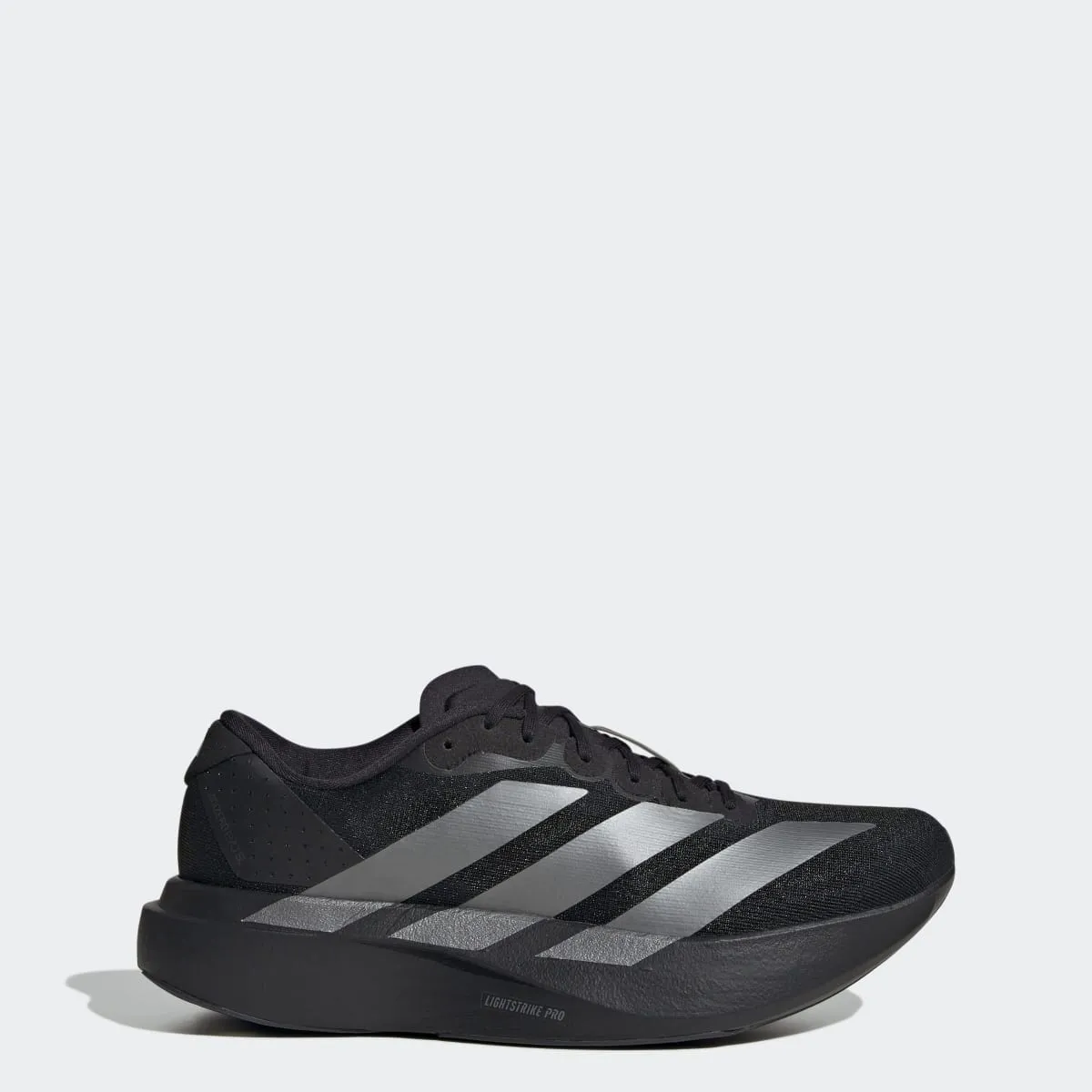
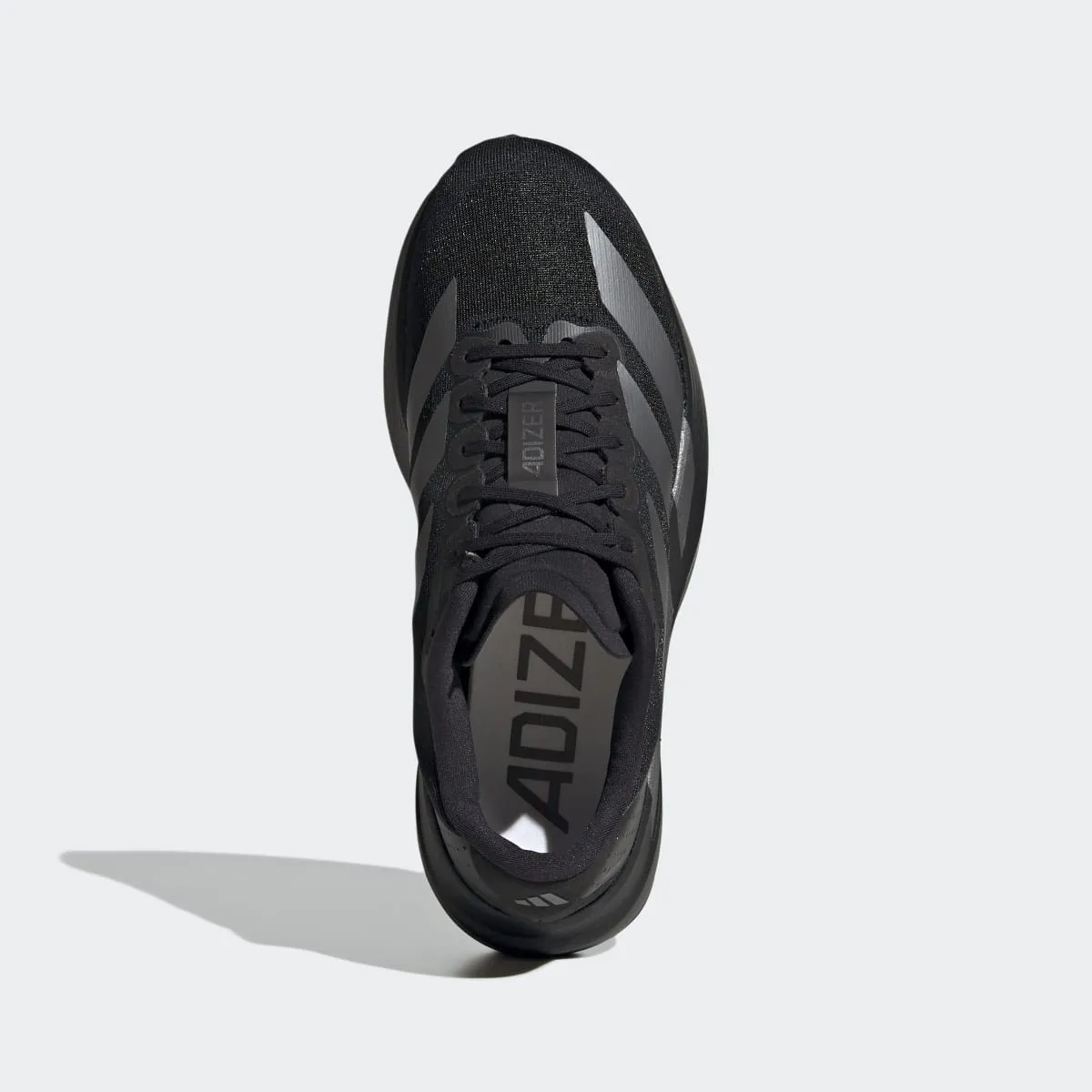
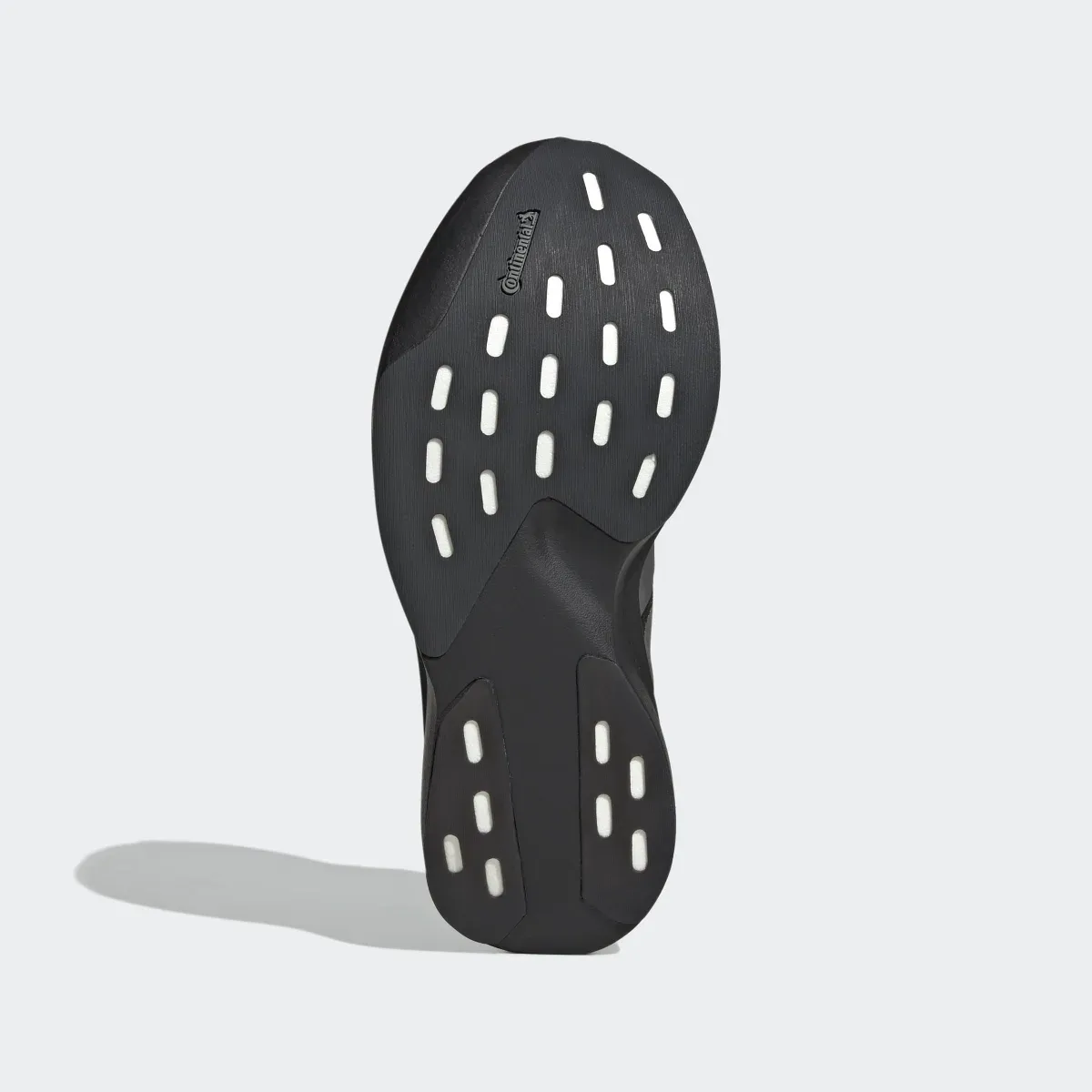
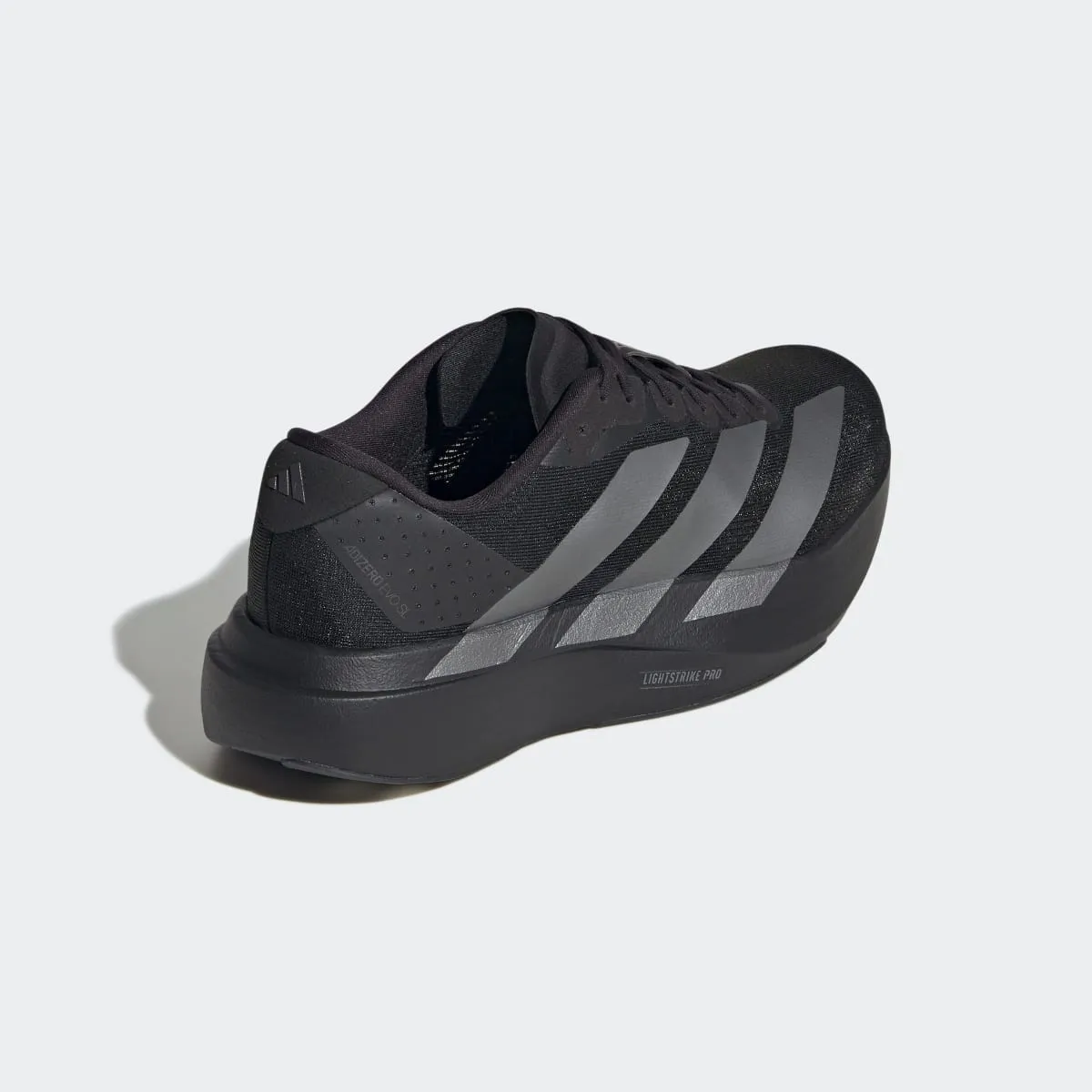
12. adidas Adizero Evo SL — Best fast daily
- Support: Neutral
- Heel stack: 36 mm brand (adidas women’s) / 36.1 mm lab
- Forefoot stack: 30 mm brand / 28.1 mm lab
- Drop: 6 mm brand / 8.0 mm lab
- Weight: 7.2 oz / 204 g women’s (Running Warehouse) / 223 g lab (men’s US 9)
- Rocker: Strong — full-length Lightstrike Pro, no plate
- Removable insole: Yes
- Source: adidas; RunRepeat lab test
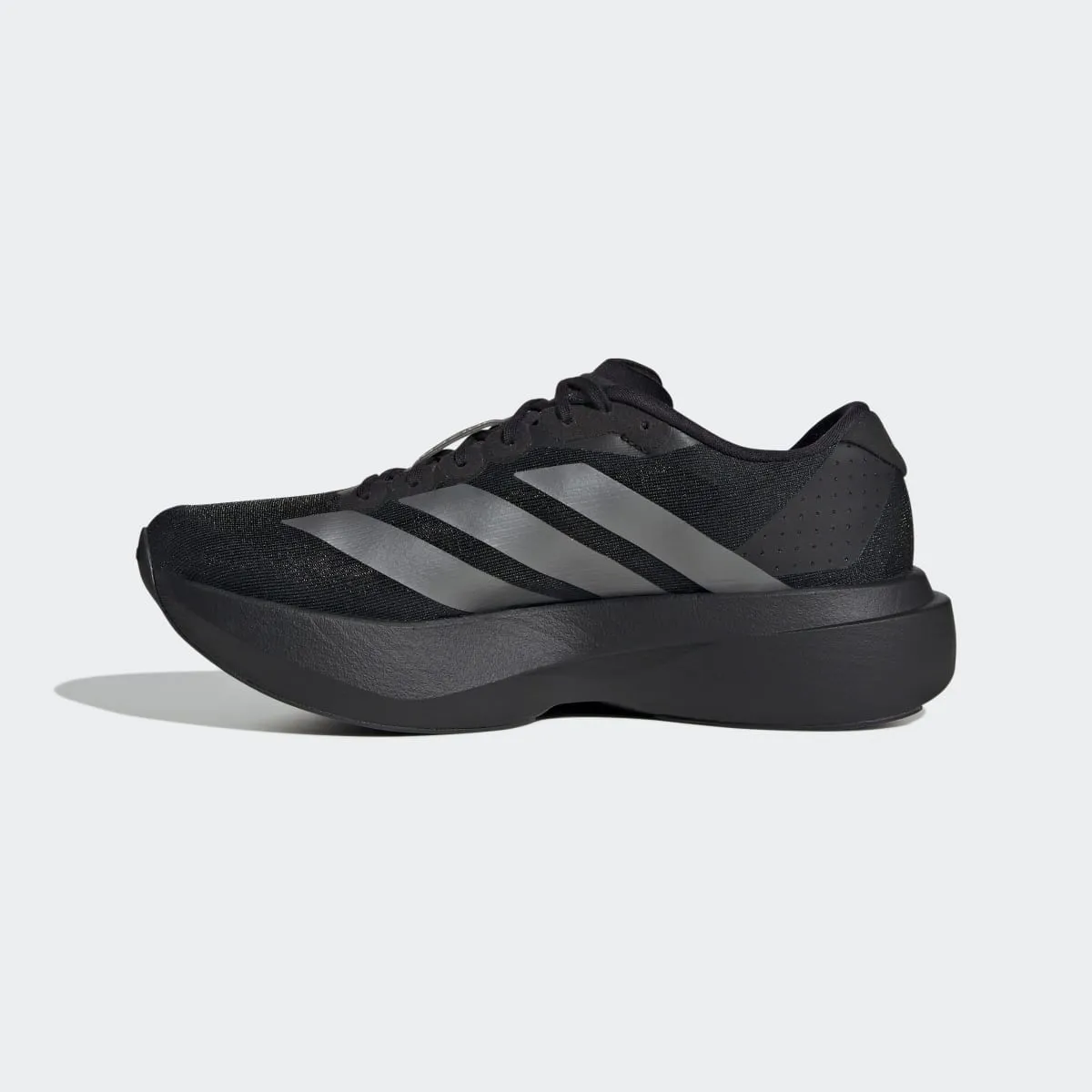
The Evo SL is the surprise of this list. It has no carbon plate and no plastic rods — just a full slab of Lightstrike Pro, the same foam adidas puts in its race shoes. The lab measured 74.3% energy return at the heel and 73.5% at the forefoot. That is the best heel return on this list. The Endorphin Speed 5 keeps the best forefoot return at 78.2%. And the lab gave the shoe a 94/100 score, the highest lab score of any shoe here. At 7.2 oz in women’s, it is the lightest shoe on this list.
What you get is a trainer that feels fast on tempo days and still cushions enough for long runs. What you do not get is a plate, so it does not have the snap of a race shoe. And it comes in standard width only. So wide feet should look at the Ghost 18 or 1080 v15 instead. The lab drop (8.0 mm) runs higher than the 6 mm adidas prints. And the outsole is thin, so it wears faster than the Pegasus or Ghost. But for the money, no shoe on this list gives you more speed per dollar.
Pros:
- Best heel energy return here (74.3%) — and a 94/100 lab score
- Lightest shoe on this list at 7.2 oz in women’s
- Race-shoe foam without a race-shoe price
- Works for tempo runs, long runs and race day for slower runners
Cons:
- Standard width only — no wide option, and adidas runs narrow
- Thin outsole wears faster than the Ghost 18 or Pegasus 41
- Lab drop is 8.0 mm, not the 6 mm adidas prints
Skip it if: you have wide feet, or you want one shoe to last 500 miles. The Evo SL trades durability for speed.
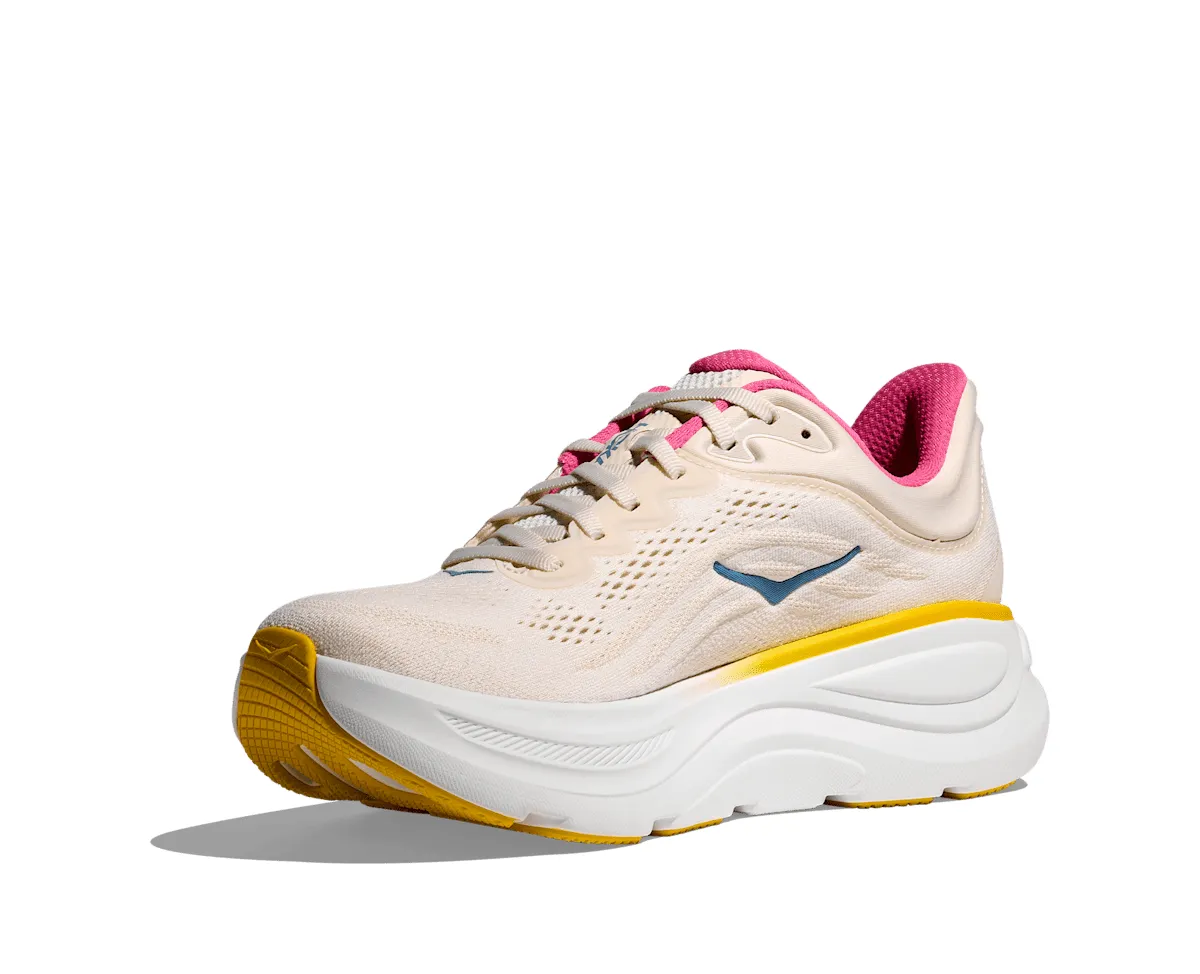
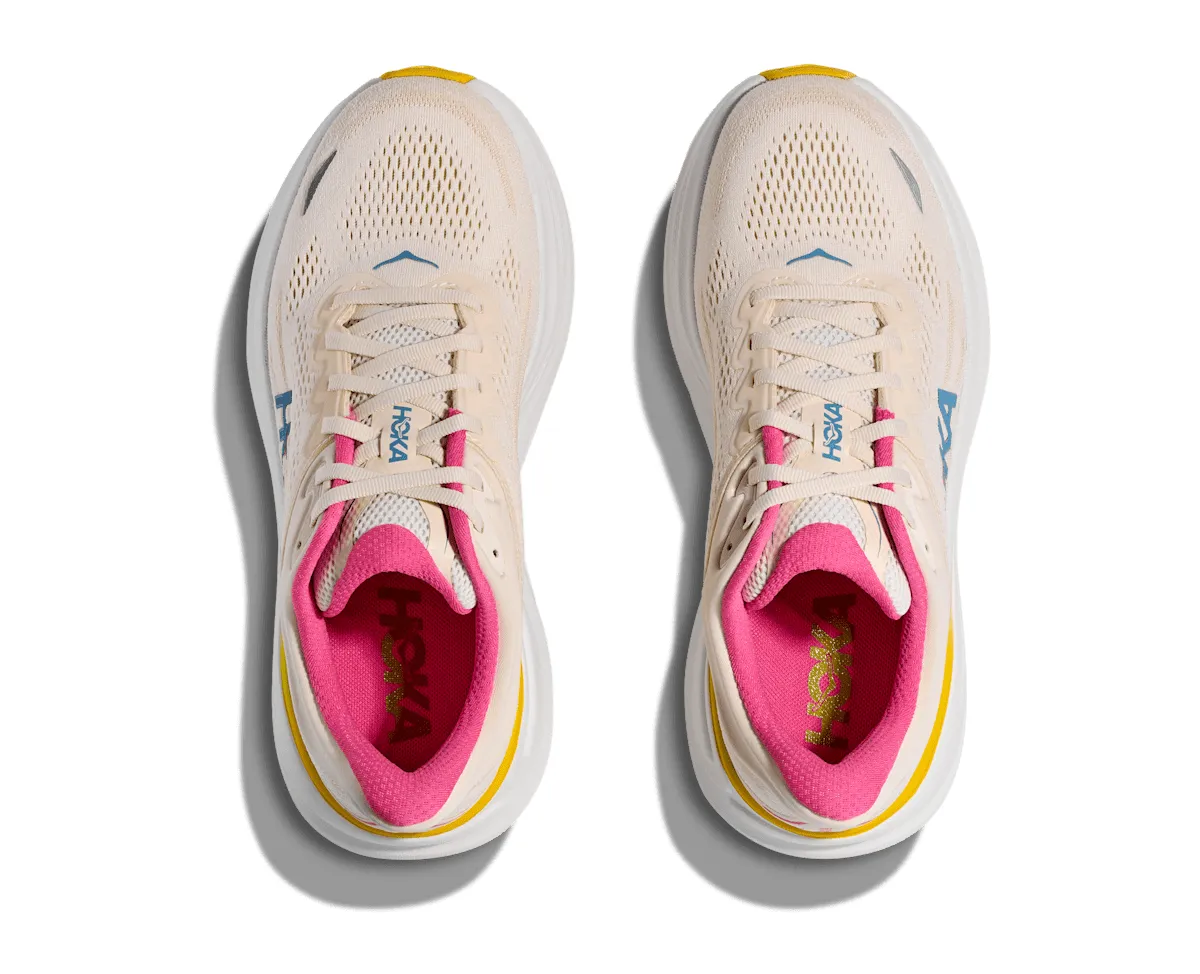
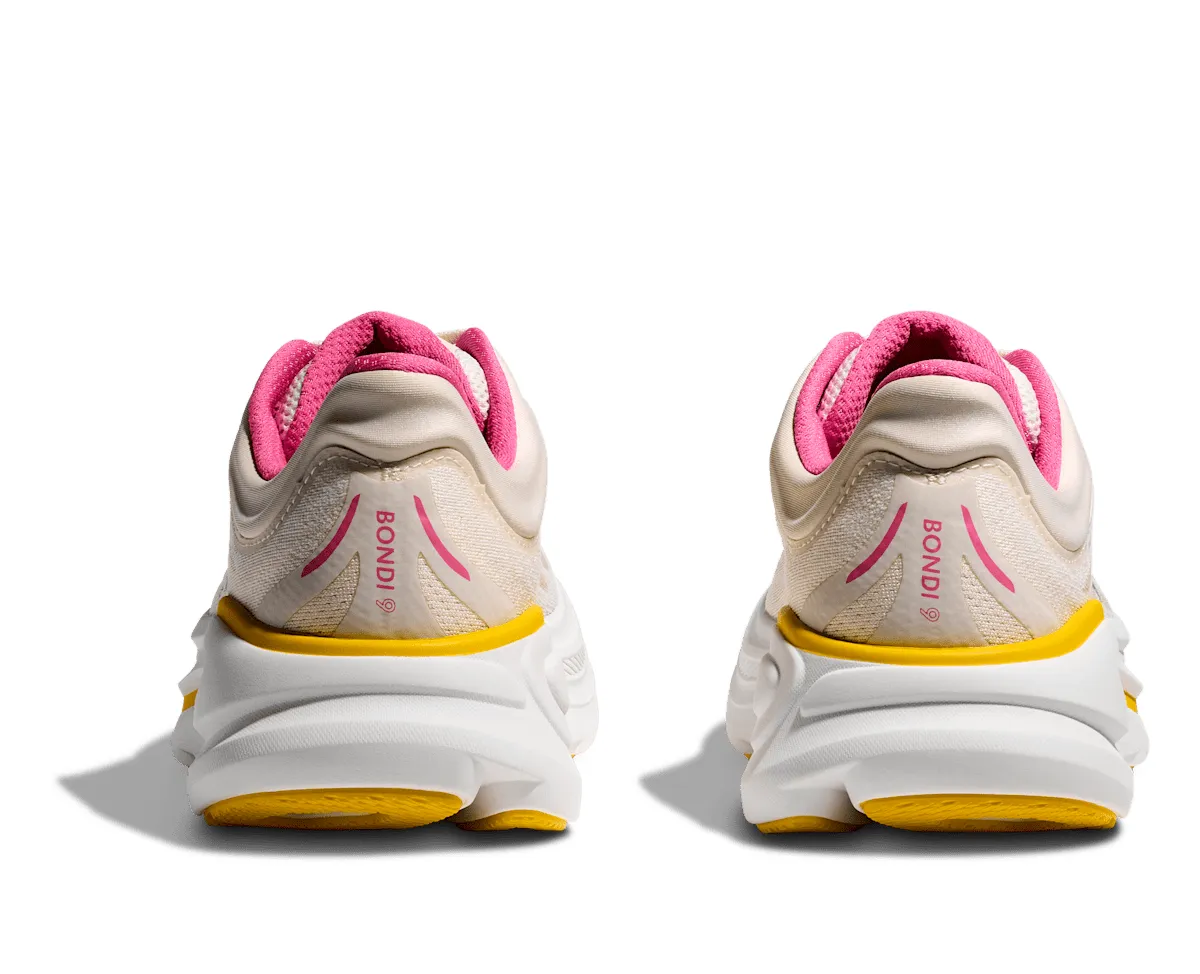
13. HOKA Bondi 9 — Best recovery shoe
- Support: Neutral
- Heel stack: 43 mm brand / 41.3 mm lab
- Forefoot stack: 38 mm brand / 32.2 mm lab
- Drop: 5 mm brand / 9.1 mm lab
- Weight: 9.3 oz / 264 g women’s / 303 g lab (men’s US 9)
- Rocker: Strong Meta-Rocker
- Removable insole: Yes
- Source: HOKA; RunRepeat lab test
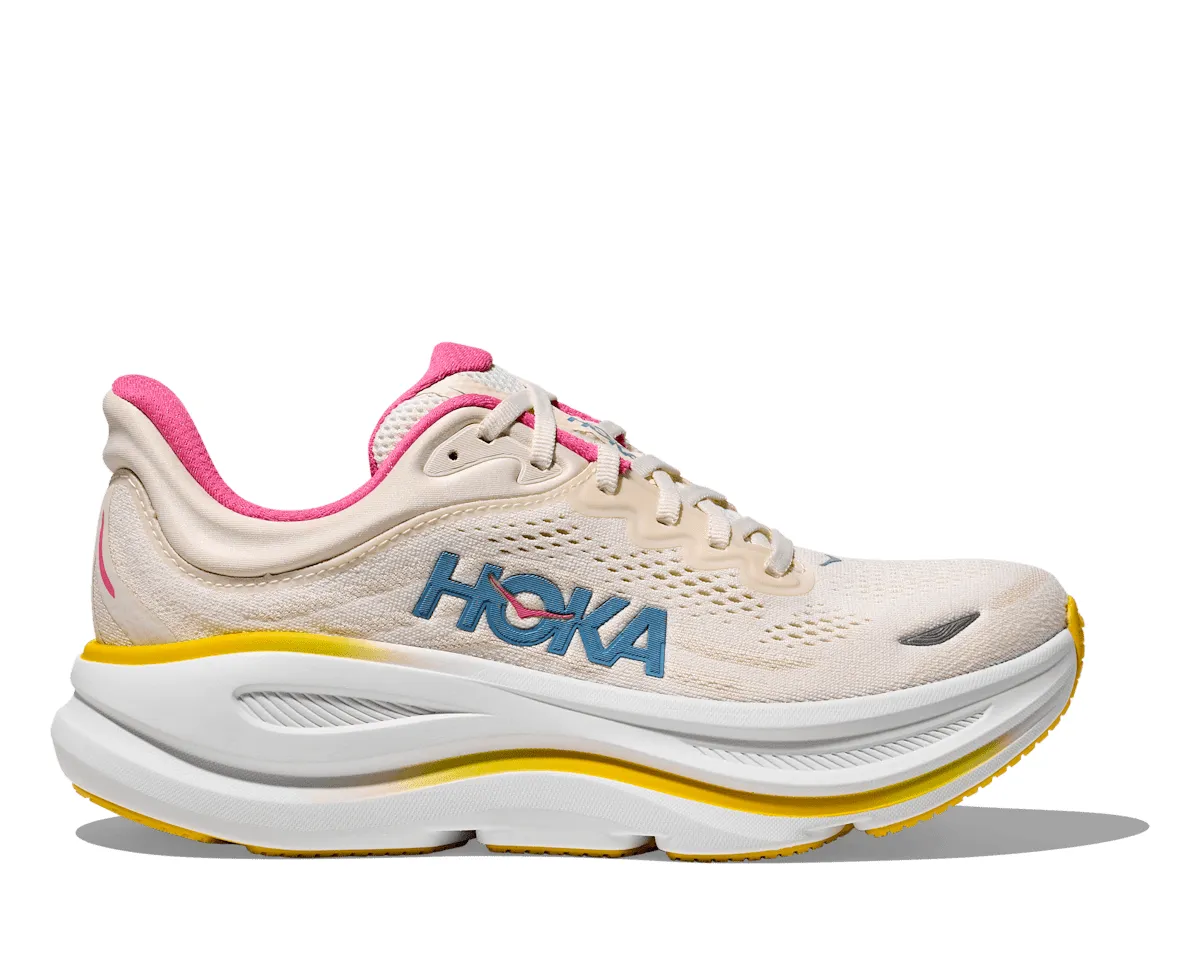
The Bondi 9 is the recovery shoe on this list — the one for slow miles, long walks and days on your feet. It has the second-tallest stack here by the brands’ own figures (43 mm, behind only the Vomero 18). And heel shock absorption of 146 SA, among the highest on this list. The Meta-Rocker rolls you forward with every step, so even at a walk the shoe does some of the work for you.
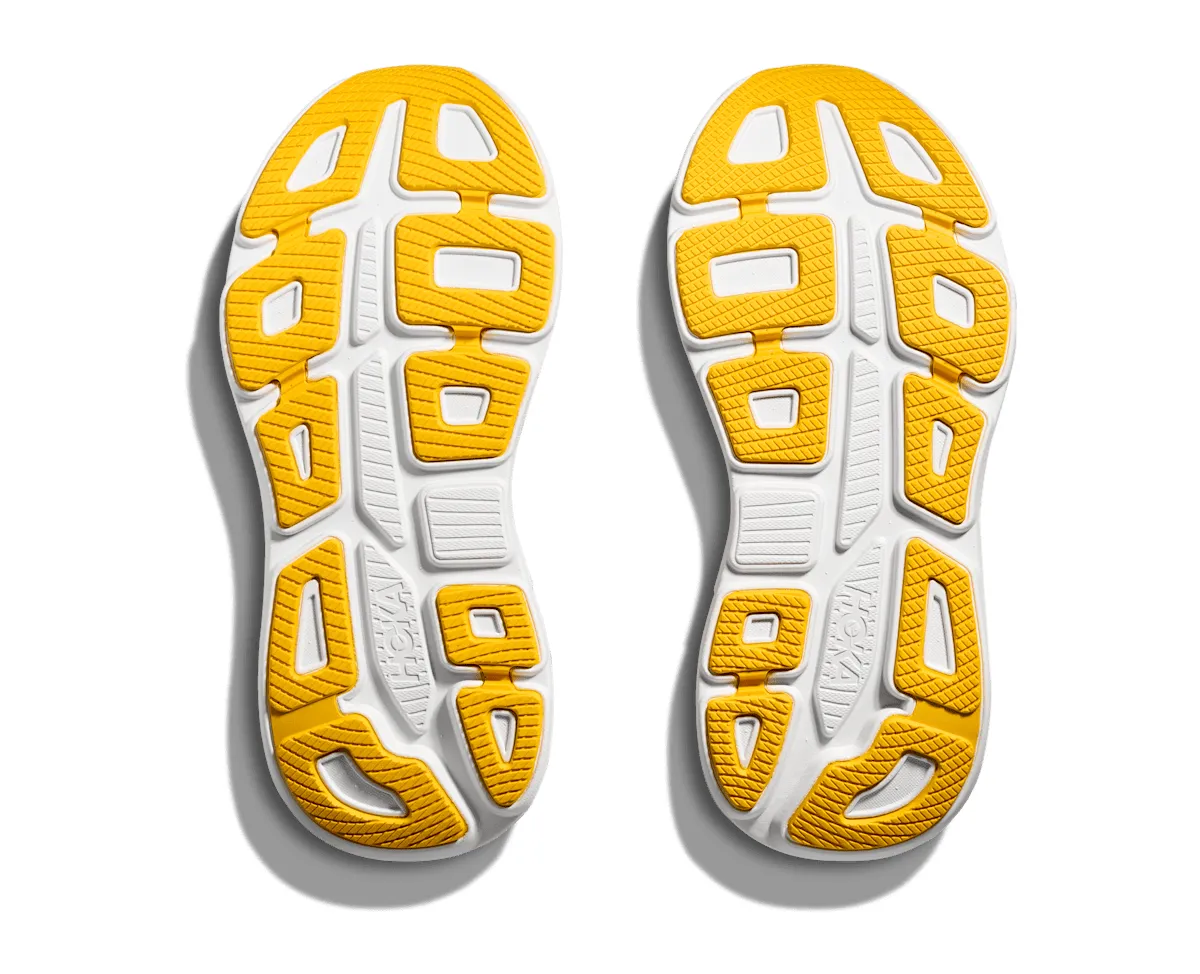
Here is the honest part: the foam is firm, not plush. RunRepeat measured it at 43.0 AC, well above the 35.5 AC average. And it called the Bondi one of those ultra-cushioned models that leans toward a firmer feel. The comfort here comes from protection and the rocker, not from softness — if you buy it expecting a marshmallow, you will be surprised. Two numbers need a note. HOKA lists a 5 mm drop, but the lab measured 9.1 mm, so the real drop is higher than the box says. And at 303 g in the lab it is one of the heaviest shoes here. None of that matters much for its job. For recovery runs, long walks and standing all day, the tall, firm platform is exactly what protects your legs. Three widths (Regular, Wide, Extra Wide) are on offer.
Pros:
- Huge cushion plus a rocker that does the work on tired legs
- Heel shock absorption of 146 SA — among the highest here
- Stable for its height, so the tall stack does not feel tippy
- Durable outsole built for high mileage
- Great for recovery days, long walks and standing all day
Cons:
- Firm foam surprises buyers who expect a plush ride (43.0 AC)
- Heavy at 303 g in the lab — it is not a fast-day shoe
- Lab drop (9.1 mm) is much higher than the stated 5 mm
Skip it if: you want a light, fast shoe or a soft, marshmallow feel. The Clifton 11 above is softer, and the Evo SL is faster.
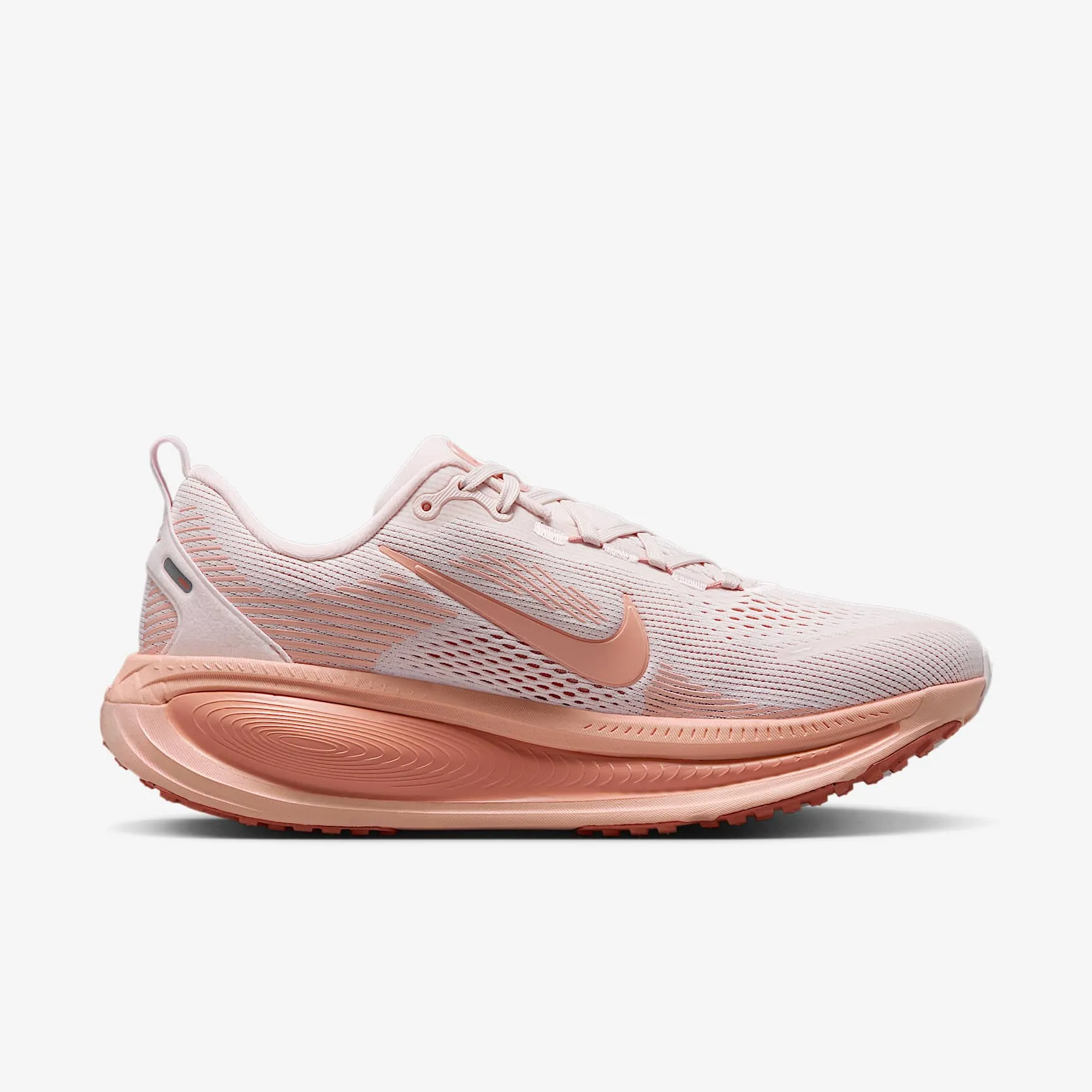
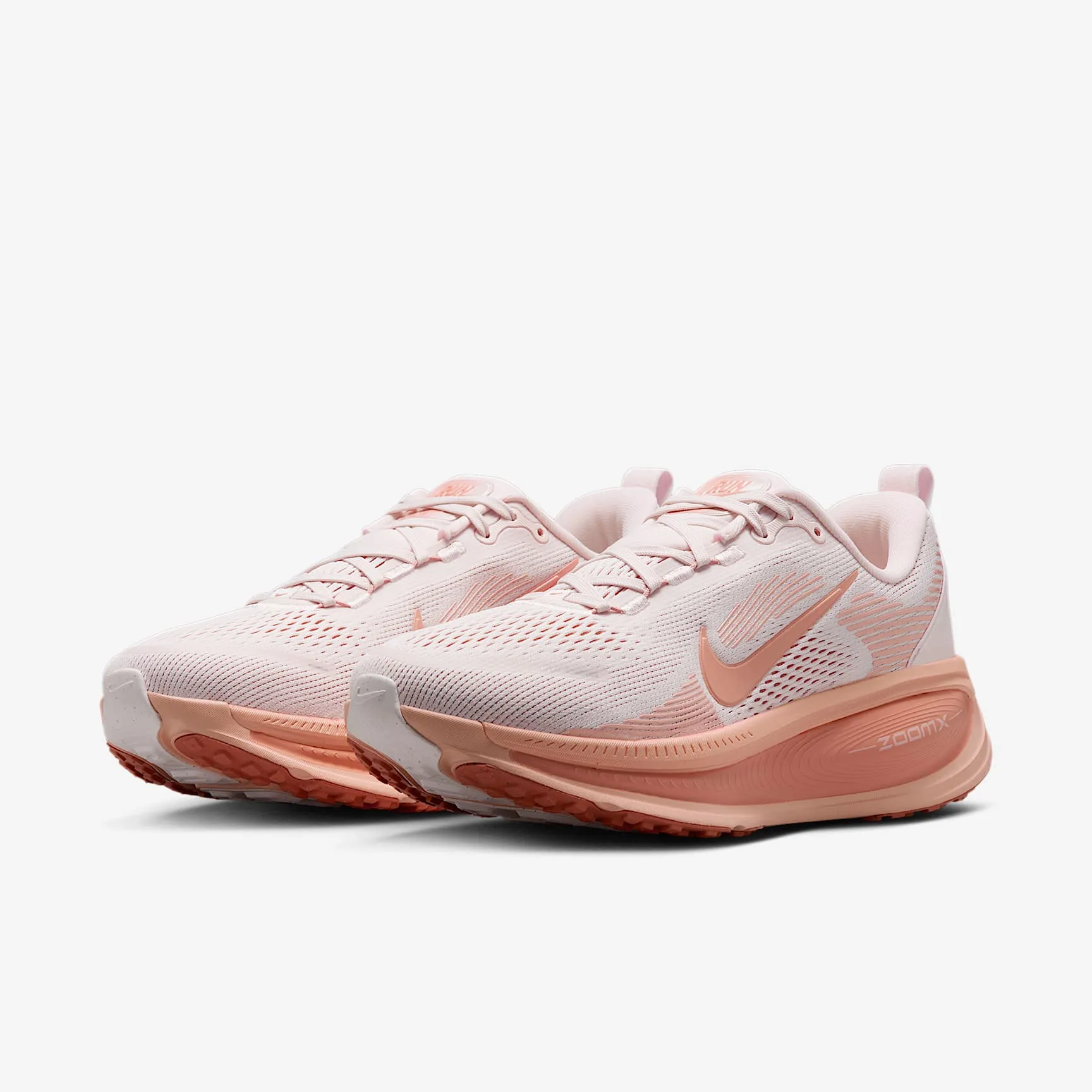
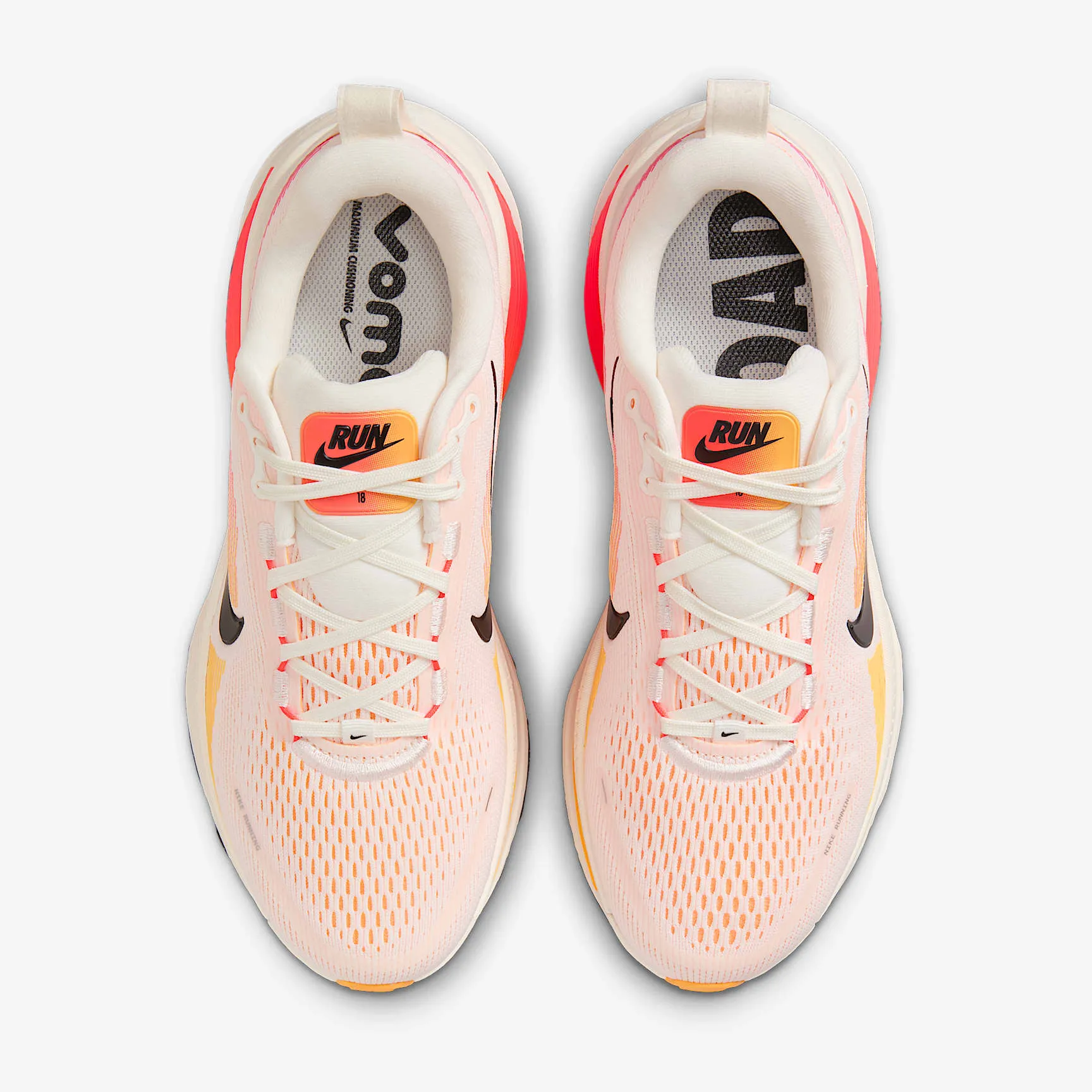
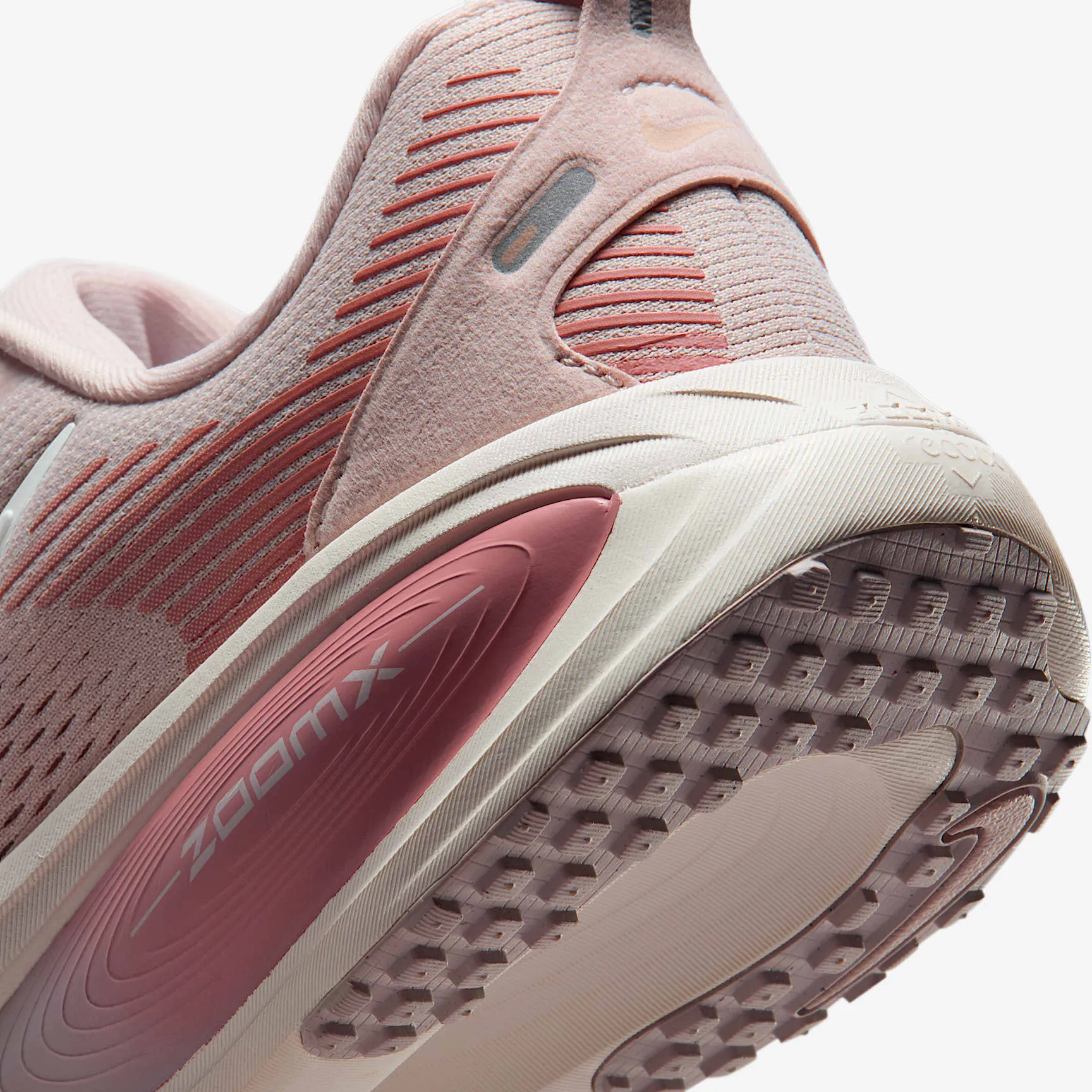
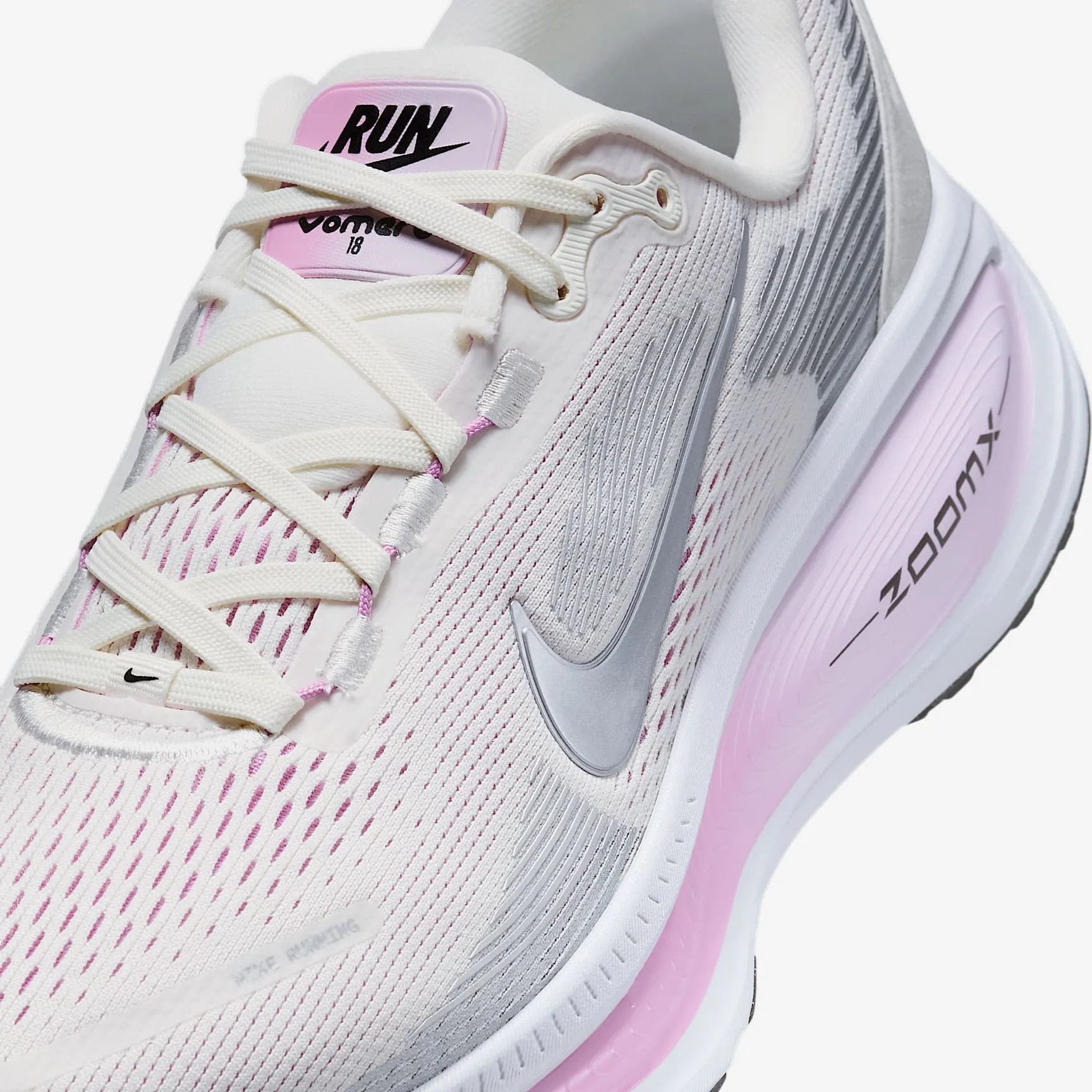
14. Nike Vomero 18 — Best max-cushion value
- Support: Neutral
- Heel stack: 46 mm brand / 42.5 mm lab
- Forefoot stack: 36 mm brand / 28.6 mm lab
- Drop: 10 mm brand / 13.9 mm lab
- Weight: 9.1 oz / 258 g women’s (Running Warehouse) / 298 g lab (men’s US 9)
- Rocker: Mild-moderate, full-length ZoomX + ReactX
- Removable insole: Yes
- Source: Nike; RunRepeat lab test
The Vomero 18 has the tallest heel stack on this list by the brands’ own figures (46 mm). And it has the joint-highest shock absorption: 147 SA at the heel, tied with the 1080 v15 and Clifton 10. Two foams share the work: ZoomX on top for softness and bounce, ReactX below for a stable base. The result is a big, protective ride that still feels lively. It is the most cushion Nike sells in a daily trainer, at a lower price than the brand’s race shoes.
Two things to know before you buy. First, the lab drop (13.9 mm) is the steepest measured drop on this list, well above the stated 10 mm. Heel strikers will like it; if you run in low-drop shoes, try it first. Second, it is heavy — 298 g in the lab — so it is a cruiser, not a tempo shoe. The platform is wide (116.6 mm at the heel, 96.5 mm at the forefoot in the lab). That keeps the tall stack stable. And softness measures 30.5 AC. Energy return is about 56% at the heel and 59% at the forefoot in the lab. One width only (Standard), so wide feet should look at the 1080 v15 or Ghost 18 instead.
Pros:
- Tallest stack on this list by the brands’ figures (46 mm) — the most cushion here
- Joint-highest shock absorption (147 SA at the heel)
- Wide, stable platform keeps the tall stack planted
- Dual-foam ride feels both soft and lively
- Great for long runs and tired legs
Cons:
- Lab drop (13.9 mm) is the steepest measured here — try before you buy if you run low-drop
- Heavy at 298 g in the lab
- Standard width only — no wide option
Skip it if: you run in low-drop shoes or need a wide fit. The 1080 v15 gives similar cushion in four widths, and the Clifton 11 is lighter.
15. HOKA Clifton 10 — Best value lightweight cushion
- Support: Neutral
- Heel stack: 42 mm brand / 44.4 mm lab
- Forefoot stack: 34 mm brand / 32.0 mm lab
- Drop: 8 mm brand / 12.4 mm lab
- Weight: 8.0 oz / 226 g women’s / ~275 g lab (men’s US 9)
- Rocker: Strong early-stage Meta-Rocker
- Removable insole: Yes
- Source: HOKA; RunRepeat lab test
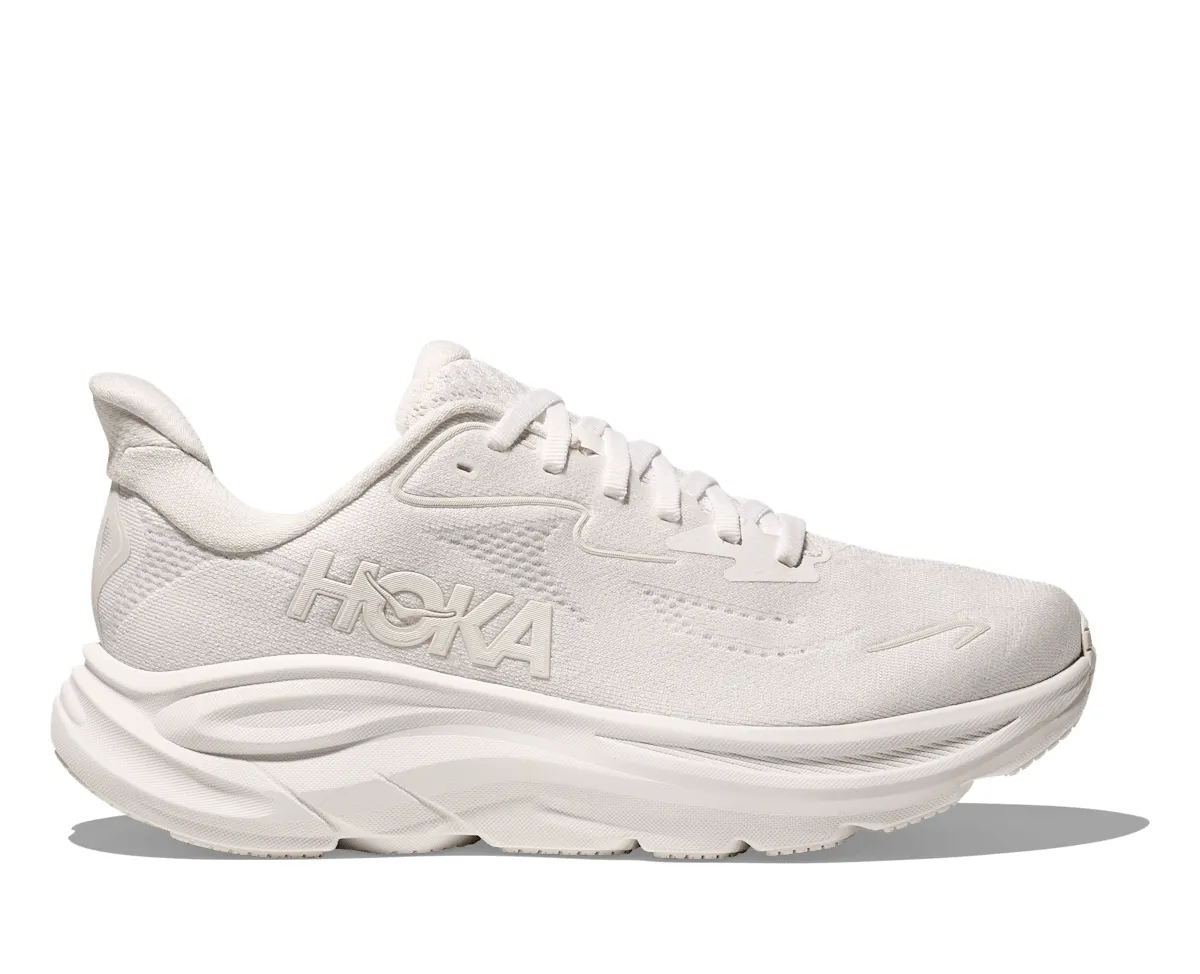
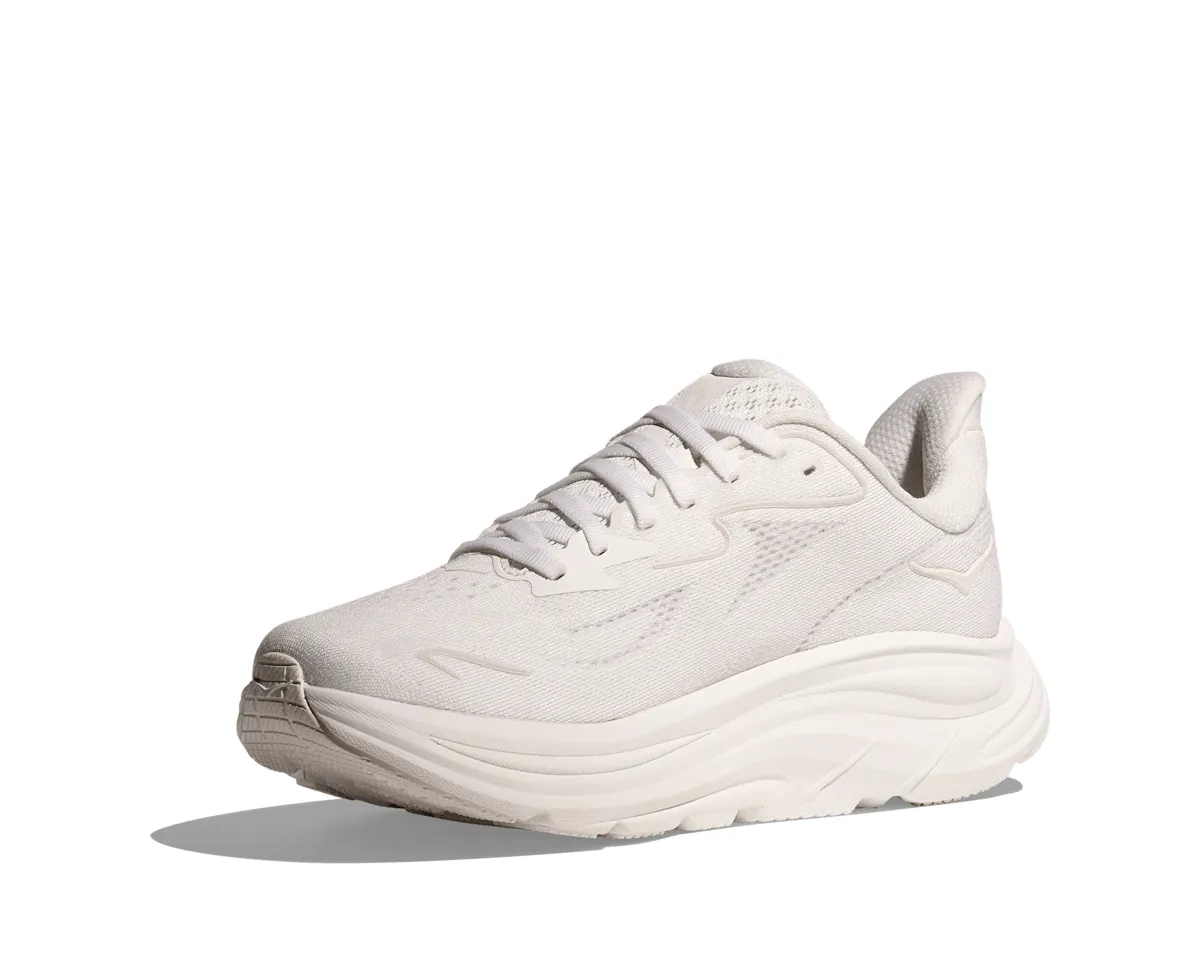
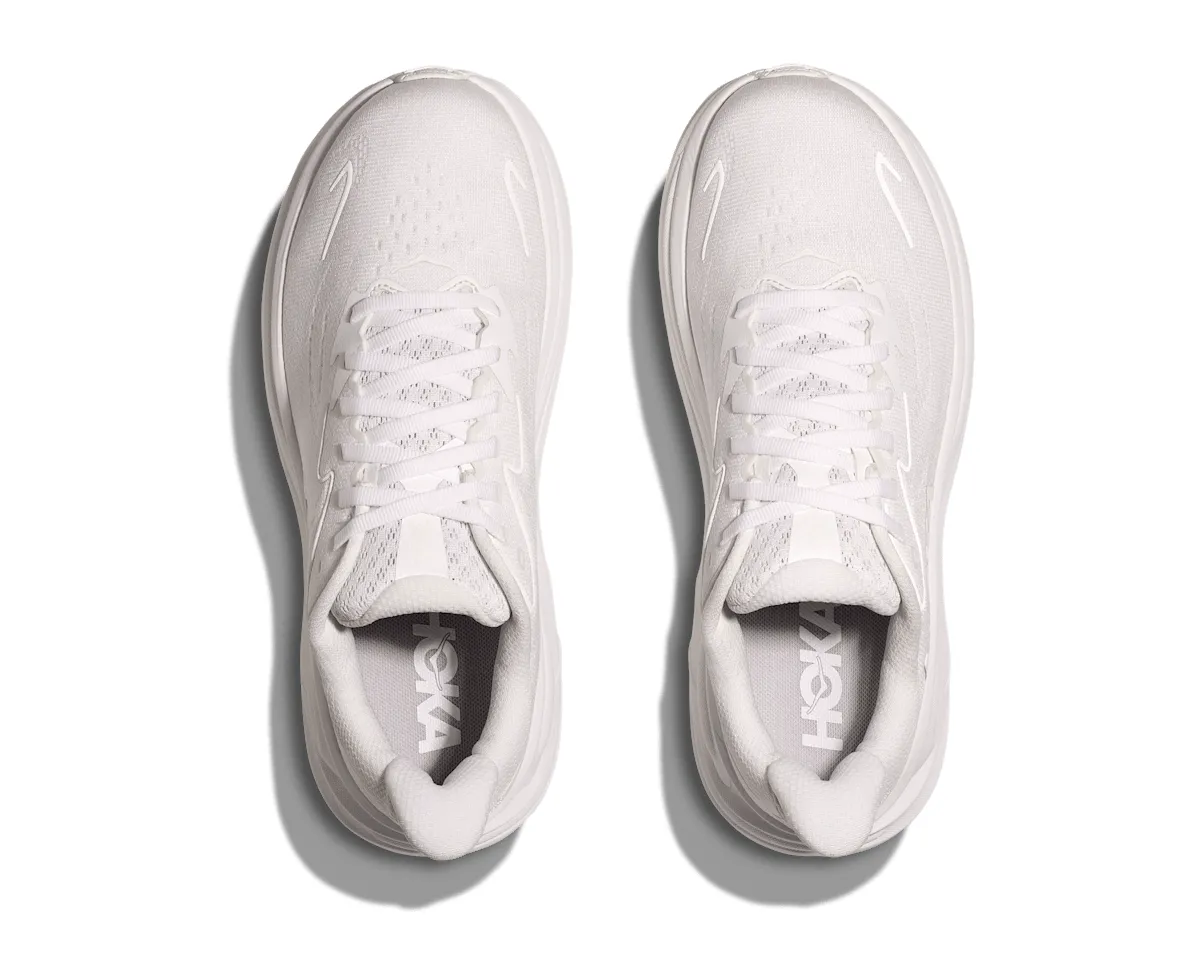
The Clifton 10 is the value version of the Clifton 11 above. Note: this is the previous model. The Clifton 11 is current, but the 10 is the same lightweight-cushion formula — soft foam, strong rocker, light build — now on sale. And it is lighter than the 11: 8.0 oz in women’s against 8.3 oz. If you liked the Clifton 11 but want the same ride for less, this is the pick.
The lab numbers match the 11’s character with a few twists. Shock absorption is 147 at the heel, joint-highest on this list. Energy return is 52.3% at the heel and 57.2% at the forefoot on RunRepeat’s own page. One round-up site prints 63.6%/66.5%. But that conflicts with RunRepeat’s own figures, so this guide uses RunRepeat’s. Softness measures 34.2 AC. The lab drop (12.4 mm) runs well above the stated 8 mm, just like the 11. Three widths (Regular, Wide, Extra Wide) are on offer.
Pros:
- Lighter than the Clifton 11 (8.0 vs 8.3 oz) at a lower price
- Joint-highest shock absorption (147 SA at the heel)
- Same rocker ride as the 11 — light, soft, smooth
- Three widths including extra wide
- Previous model, now on sale — the best value cushion here
Cons:
- Lab drop (12.4 mm) runs well above the stated 8 mm
- Tall, soft stack can feel tippy on uneven ground
Skip it if: you want the newest model or you overpronate. The Clifton 11 is current, and the Kayano 33 adds support.
How the 15 compare
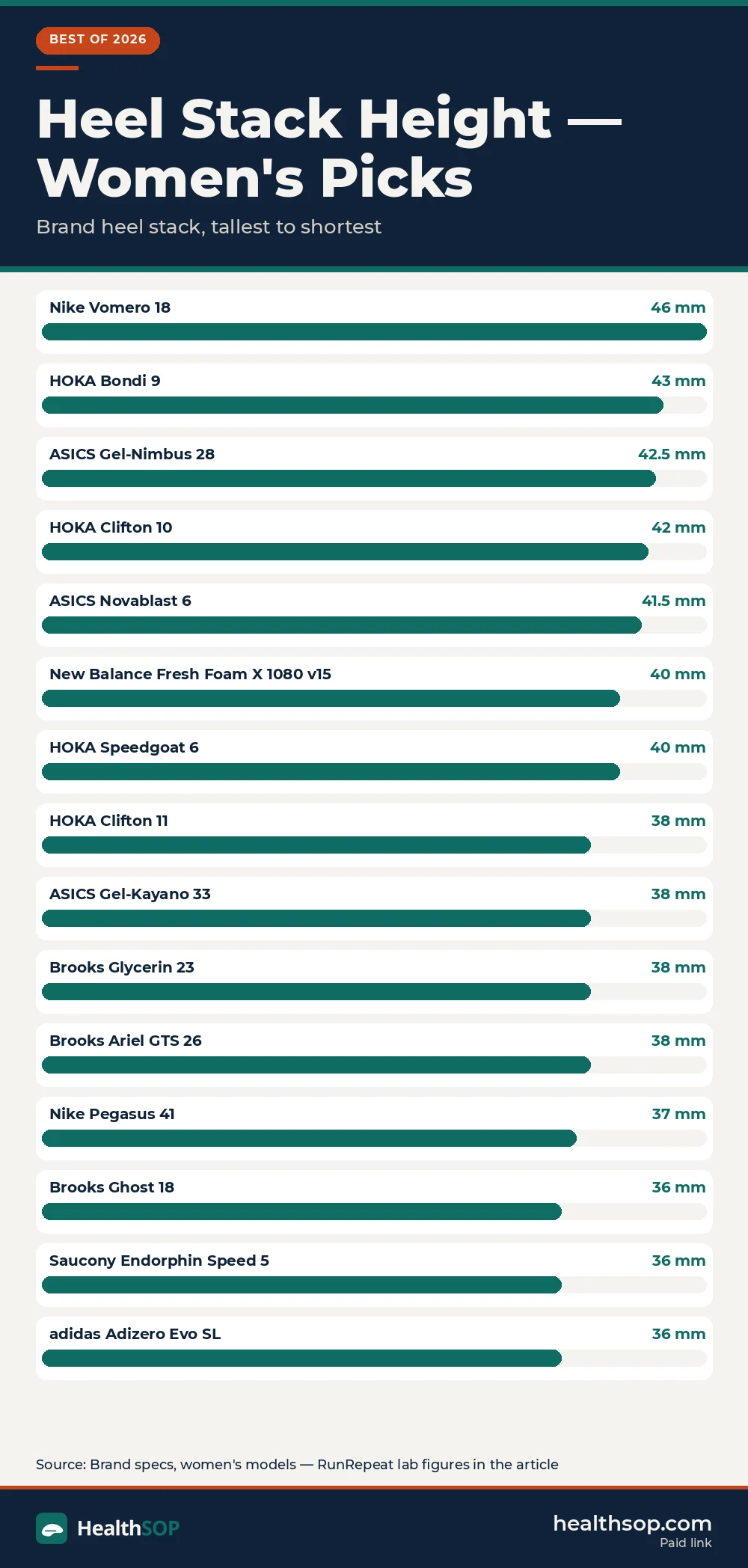
| Shoe | Stack brand (heel/fore) | Stack lab (heel/fore) | Drop brand / lab | Weight women’s | Weight lab | Best for |
|---|---|---|---|---|---|---|
| Ghost 18 | 36 / 26 mm | 37.3 / 25.1 mm | 10 / 12.2 mm | 9.0 oz | 289 g | Overall |
| Clifton 11 | 38 / 30 mm | 41.4 / 29.7 mm | 8 / 11.7 mm | 8.3 oz | 266 g | Lightweight cushion |
| Gel-Kayano 33 | 38 / 30 mm | 36.8 / 28.3 mm | 8 / 8.5 mm | 9.1 oz | 298 g | Stability |
| Glycerin 23 | 38 / 30 mm | 37.2 / 29.0 mm | 8 / 8.2 mm | 9.5 oz | 303 g | Plush |
| Novablast 6 | 41.5 / 33.5 mm | 39.2 / 32.1 mm | 8 / 7.1 mm | 7.6 oz | 249 g | Bouncy daily |
| Endorphin Speed 5 | 36 / 28 mm | 37.4 / 26.8 mm | 8 / 10.6 mm | 7.5 oz | 241 g | Speed days |
| Ariel GTS 26 | 38 / 28 mm | No lab test | 12 / — | 11.2 oz | — | Motion control |
| Speedgoat 6 | 40 / 35 mm | 32.1 / 27.2 mm | 5 / 4.9 mm | 8.2 oz | 278 g | Trail |
| 1080 v15 | 40 / 34 mm | 37.0 / 30.6 mm | 6 / 6.4 mm | 7.3 oz | 255 g | Max-cushion daily |
| Gel-Nimbus 28 | 42.5 / 34.5 mm | 43.0 / 34.9 mm | 8 / 8.1 mm | 8.5 oz | 278 g | Premium cushion |
| Pegasus 41 | 37 / 27 mm | 33.6 / 22.2 mm | 10 / 11.4 mm | 8.7 oz | ~283 g | Versatile value |
| Adizero Evo SL | 36 / 30 mm | 36.1 / 28.1 mm | 6 / 8.0 mm | 7.2 oz | 223 g | Fast daily |
| Bondi 9 | 43 / 38 mm | 41.3 / 32.2 mm | 5 / 9.1 mm | 9.3 oz | 303 g | Recovery |
| Vomero 18 | 46 / 36 mm | 42.5 / 28.6 mm | 10 / 13.9 mm | 9.1 oz | 298 g | Max-cushion value |
| Clifton 10 | 42 / 34 mm | 44.4 / 32.0 mm | 8 / 12.4 mm | 8.0 oz | ~275 g | Value lightweight cushion |
Lab weights are men’s US 9 samples from RunRepeat; women’s brand weights are the brand’s women’s sample (usually US 8).
What makes a running shoe good for women?
Women’s running shoes are not men’s shoes in a smaller size. They are built on women’s lasts — narrower at the heel, roomier across the forefoot — and they run lighter because there is less shoe to build. The foam is the same, the drop is the same, but the fit and the weight are not. That is why this guide uses women’s weights, women’s widths and women’s listings throughout. And why the lab numbers are flagged as men’s samples wherever they appear.
How should women’s running shoes fit?
Leave a thumb’s width between your longest toe and the front of the shoe. Your heel should sit snug without lifting, and the midfoot should feel held, not squeezed. Running shoes should not feel tight — if they pinch in the shop, they will hurt at mile three. Try them on at the end of the day, when your feet are at their largest, and wear your running socks. If you are between sizes, go up half a size. Running shoes that feel “just right” standing still often feel short once your feet swell on a run. For the full fit check, read are running shoes supposed to be tight.
Women’s sizes vs men’s sizes
Women’s and men’s US sizes run about 1.5 sizes apart. If you ever need to cross over — say a model only comes in men’s — use this table.
| Women’s US | Men’s US | UK | EU |
|---|---|---|---|
| 6 | 4.5 | 4 | 36.5 |
| 7 | 5.5 | 5 | 38 |
| 8 | 6.5 | 6 | 39.5 |
| 9 | 7.5 | 7 | 41 |
| 10 | 8.5 | 8 | 42.5 |
| 11 | 9.5 | 9 | 44 |
The size is only half the story. A women’s B width is the standard; a men’s D is the standard. So a women’s 8B and a men’s 6.5D are close in length but not the same shoe. The women’s last is narrower at the heel and wider at the forefoot. That is why our best running shoes for men guide is a different list, not this list in other sizes.
Which picks come in women’s wide (D)?
| Pick | Widths available |
|---|---|
| Brooks Ghost 18 | 2A narrow, B standard, D wide, 2E extra wide |
| HOKA Clifton 11 | B standard, D wide, 2E extra wide |
| ASICS Gel-Kayano 33 | 2A narrow, B standard, D wide |
| Brooks Glycerin 23 | B standard, D wide |
| ASICS Novablast 6 | B standard, D wide |
| Saucony Endorphin Speed 5 | B standard, D wide |
| Brooks Ariel GTS 26 | 2A narrow, B standard, D wide, 2E extra wide |
| HOKA Speedgoat 6 | Regular, Wide |
| New Balance Fresh Foam X 1080 v15 | 2A narrow, B standard, D wide, 2E extra wide |
| ASICS Gel-Nimbus 28 | B standard, D wide, 2E extra wide |
| Nike Pegasus 41 | Regular, Wide |
| adidas Adizero Evo SL | B standard only |
| HOKA Bondi 9 | Regular, Wide, Extra Wide |
| Nike Vomero 18 | Standard only |
| HOKA Clifton 10 | Regular, Wide, X-Wide |
If you have wide feet, start with the Ghost 18, the Ariel GTS 26 or the 1080 v15 — they offer the most widths. If you have bunions, a wide width plus a roomy toe box matters more than the brand name. The Ghost 18’s 70.6 mm toe box and the Kayano 33’s 73.9 mm toe box are the roomiest measured here. A dedicated wide-feet guide is now live.
What about metatarsalgia, treadmill runs and hip pain?
Metatarsalgia (pain in the ball of the foot). You want soft forefoot cushion and a rocker that spreads the load. The Clifton 11 and the Novablast 6 are the best fits here. The Clifton 11 has one of the highest shock-absorption scores here (146 SA) and a strong rocker. The Novablast 6 has a tall forefoot stack and 69.1% forefoot energy return. Avoid firm, low-stack shoes until the pain settles.
Treadmill runs. Any shoe on this list works on a treadmill, but the belt is kinder than the road, so you can go lighter. The Novablast 6 and the Endorphin Speed 5 are the best treadmill picks — light, bouncy, and the rocker keeps your stride quick. Trail lugs (Speedgoat 6) are wasted indoors and wear fast on the belt.
Hip pain. Hip pain often starts at the foot — overpronation twists the leg with every step. A stability shoe (Kayano 33) or a max-support shoe (Ariel GTS 26) can help by keeping the foot straight. But shoes alone do not fix hip pain. If it keeps coming back, see a clinician. Research on running shoes and injury prevention (Relph et al., 2022, Cochrane review) finds that the right shoe helps. But no shoe prevents injury on its own.
Which shoe for which run?
| Your run | First pick | Second pick |
|---|---|---|
| Daily miles, one pair for everything | Ghost 18 | Novablast 6 |
| Long, slow runs | Clifton 11 | Glycerin 23 |
| You overpronate | Gel-Kayano 33 | Ariel GTS 26 |
| You want soft and plush | Glycerin 23 | Clifton 11 |
| You want bounce and fun | Novablast 6 | Endorphin Speed 5 |
| Tempo runs and intervals | Endorphin Speed 5 | Novablast 6 |
| Trails and mud | Speedgoat 6 | — |
| Walking and all-day wear | Glycerin 23 | Ghost 18 |
| Max cushion, lightest | 1080 v15 | Nimbus 28 |
| Premium soft cushion | Nimbus 28 | 1080 v15 |
| One pair for everything, on a budget | Pegasus 41 | Ghost 18 |
| Fast daily trainer | Evo SL | Endorphin Speed 5 |
| Recovery and standing all day | Bondi 9 | Glycerin 23 |
| Max cushion for less | Vomero 18 | 1080 v15 |
| Light cushion at a lower price | Clifton 10 | Clifton 11 |
How we chose these 15
We started with the brief’s 8 picks, then checked each one against three rules. First, it had to be available on Amazon in a women’s listing. The brief listed 4 men’s ASINs, and none of them could be used for a women’s guide. So every ASIN here was found fresh by searching for the women’s listing. Second, it had to be the current model or the closest previous model with the same formula. Two picks changed on that rule: Endorphin Speed 6 → Speed 5 and Speedgoat 7 → Speedgoat 6. Both are flagged as previous models in their sections. Third, every number had to come from the brand or from a RunRepeat lab test. No invented figures. And where no lab test exists (Ariel GTS 26), the article says so in plain words.
Then we added 7 more picks so the guide covers what the best women’s lists cover. The biggest page-1 competitor list, marathonsports.com, names 15 shoes — so this guide names 15 too, and never lags a competitor on coverage. Every added pick passed the same three rules. Each one needed a women’s Amazon ASIN, the current model or the closest previous model, and numbers from the brand or a RunRepeat lab test. Two of the added picks are previous models (Pegasus 41, Clifton 10), both flagged in their sections.
The research behind the guide: Nigg et al. (2015) found that comfort is the best guide to a good running shoe. The shoe that feels best is usually the one that fits your body best. Ryan et al. (2011) showed that footwear changes how the foot loads, which is why support categories matter. Relph et al. (2022, Cochrane) reviewed running shoes for injury prevention and found modest effects — shoes help, but they are not a cure. The AAOS OrthoInfo guides on athletic shoes and bunions back up the fit advice in this article: fit first, brand second.
Keep your shoes clean and they last longer — see how to wash sneakers in the washing machine. And if you want the full running-shoe picture, start at our best running shoes pillar guide. For brand deep-dives, see our best Brooks running shoes and best Nike running shoes guides. Hoka and cushioned round-ups are in progress and will be linked here when they are live.
Decision table
| If you… | Buy |
|---|---|
| Want one pair that does everything | Brooks Ghost 18 |
| Want the lightest cushioned ride | New Balance Fresh Foam X 1080 v15 |
| Overpronate or have flat feet | ASICS Gel-Kayano 33 |
| Want the softest, plushest feel | Brooks Glycerin 23 |
| Want bounce and a light shoe | ASICS Novablast 6 |
| Run tempo, intervals or races | Saucony Endorphin Speed 5 |
| Need max support or wear orthotics | Brooks Ariel GTS 26 |
| Run trails | HOKA Speedgoat 6 |
| Want the lightest max-cushion shoe | New Balance Fresh Foam X 1080 v15 |
| Want the softest step-in | ASICS Gel-Nimbus 28 |
| Want one versatile pair for less | Nike Pegasus 41 |
| Want a fast daily trainer | adidas Adizero Evo SL |
| Need recovery cushion for tired legs | HOKA Bondi 9 |
| Want max cushion for less | Nike Vomero 18 |
| Want light cushion at a lower price | HOKA Clifton 10 |
Frequently asked questions
What is the best running shoe for women?
The Brooks Ghost 18. It fits the most feet, it comes in four widths, and it handles easy runs, long runs and all-day wear. If you overpronate, the ASICS Gel-Kayano 33 is the better pick. If you want the lightest max-cushion ride, get the New Balance 1080 v15. If you want high shock absorption with a soft rocker feel, get the HOKA Clifton 11.
Can women wear men’s running shoes?
Yes, but the fit is different. Women’s shoes are built on women’s lasts: narrower at the heel, roomier at the forefoot. And a women’s B width is not the same as a men’s D width. If you wear men’s shoes, go down about 1.5 sizes (a women’s 8 is roughly a men’s 6.5). And expect a wider heel and a snugger forefoot. For most runners, the women’s version fits better. See our best running shoes for men guide for the men’s list.
What is the best running shoe for women with flat feet?
The ASICS Gel-Kayano 33 for most flat feet, and the Brooks Ariel GTS 26 if your feet roll in heavily or you wear orthotics. Both guide the foot instead of forcing it. Our best running shoes for flat feet guide covers this in full. And our best running shoes for plantar fasciitis guide covers the heel-pain side of the same problem.
What is the best running shoe for women with wide feet?
The Brooks Ghost 18, the Brooks Ariel GTS 26 or the New Balance 1080 v15. All three come in 2A narrow, B standard, D wide and 2E extra wide. The Clifton 11 also comes in an extra-wide 2E. A dedicated wide-feet guide is now live.
How often should women replace running shoes?
Every 300 to 500 miles, or about every 6 months if you run three times a week. The foam wears out before the outside looks worn, so go by the miles, not the looks. If your knees or feet start aching in a shoe that used to feel fine, the foam is usually done.
Can running shoes be used for walking?
Yes. The Glycerin 23, the Ghost 18 and the Bondi 9 are the best walkers on this list — soft, stable and comfortable for hours. The Ariel GTS 26 is also a strong walking shoe if you need support. Avoid the Endorphin Speed 5 for walking; its plate and rocker are built for running pace, not strolling.
Do running shoes actually work for knee and hip pain?
They can help, but they do not fix pain on their own. The right shoe — stability for overpronation, cushion for tired joints — takes load off the knee and hip. The Cochrane review by Relph et al. (2022) found that running shoes have a modest effect on injury prevention. If pain keeps coming back, see a clinician rather than buying another pair.
Should running shoes feel tight?
No. Running shoes should feel snug at the heel and midfoot, with a thumb’s width of space in front of your longest toe. If they pinch in the shop, they will hurt on the run. Try them on late in the day, when your feet are at their largest. See are running shoes supposed to be tight for the full fit check.
Does New Balance make a good running shoe for women?
Yes. The Fresh Foam X 1080 v15 is in this guide (§9). It has the softest foam in our lab data and is the lightest big-cushion shoe here. And it is the best pick for wide feet, with four widths from 2A to 2E. New Balance is one of the best brands for wide feet — most of its models come in wide and extra-wide widths. If you have wide feet and the Ghost 18 does not fit, New Balance is the first brand to try next.
Does adidas make a good running shoe for women?
Yes. The Adizero Evo SL is in this guide (§12). It is the lightest shoe here at 7.2 oz and has the best heel energy return on the list (74.3%). Adidas runs a touch narrow, so wide feet should try before they buy.
Sources
- Nigg, B. M., Baltich, J., Hoerzer, S., & Enders, H. (2015). Running shoes and running injuries: mythbusting and a proposal for two new paradigms. British Journal of Sports Medicine, 49(20), 1290–1294. — Comfort is the best guide to a good running shoe.
- Ryan, M. B., Valiant, G. A., McDonald, K., & Taunton, J. E. (2011). The effect of three different levels of footwear stability on pain outcomes in women runners. British Journal of Sports Medicine, 45(9), 715–721. — Footwear stability changes how the foot loads.
- Relph, N., Greaves, H., Armstrong, R., et al. (2022). Running shoes for preventing lower limb running injuries in adults. Cochrane Database of Systematic Reviews, 2022(8). — Shoes help modestly with injury prevention; no shoe prevents injury alone.
- American Academy of Orthopaedic Surgeons — OrthoInfo. Athletic Shoes. — Fit guidance for athletic footwear.
- American Academy of Orthopaedic Surgeons — OrthoInfo. Bunions. — Why a roomy toe box matters for bunion pain.
- RunRepeat lab tests (men’s US 9 samples): Brooks Ghost 18, HOKA Clifton 11, ASICS Gel-Kayano 33, Brooks Glycerin 23, ASICS Novablast 6, Saucony Endorphin Speed 5, HOKA Speedgoat 6, New Balance Fresh Foam X 1080 v15, ASICS Gel-Nimbus 28, Nike Pegasus 41, adidas Adizero Evo SL, HOKA Bondi 9, Nike Vomero 18, HOKA Clifton 10. — Stack, drop, weight, softness and energy-return figures used in this guide.
- Brand spec pages (women’s models): Brooks Ghost 18, Brooks Glycerin 23, Brooks Ariel GTS 26 (brooksrunning.com); HOKA Clifton 11, HOKA Speedgoat 6, HOKA Bondi 9, HOKA Clifton 10 (hoka.com); ASICS Gel-Kayano 33, ASICS Novablast 6, ASICS Gel-Nimbus 28 (asics.com); Saucony Endorphin Speed 5 (saucony.com, Fleet Feet); New Balance Fresh Foam X 1080 v15 (newbalance.com); Nike Pegasus 41, Nike Vomero 18 (nike.com); adidas Adizero Evo SL (adidas.com). — Women’s weights, stack heights, drops and widths.
- The Run Testers. The Best Running Shoes 2026. YouTube, video ID rg6sg1jflcA. — Independent round-up covering the Novablast 6 and the 2026 field.
- Doctors of Running. Brooks Ariel GTS 26 review. — Ariel GTS 26 women’s specs (317.5 g, 38/28 mm stack, 12 mm drop) where no lab test exists.
- Running Warehouse (runningwarehouse.com) — women’s spec pages for the Gel-Nimbus 28, Pegasus 41, Adizero Evo SL and Vomero 18. — Women’s weights, stacks and drops where the brand page lists men’s figures only.
- Doctors of Running. ASICS Gel-Nimbus 28 review. — Women’s stack (43.5/35.5 mm) and weight (8.5 oz) cross-check against the ASICS NZ figures used here.
2 thoughts on “15 Best Running Shoes for Women of 2026”