
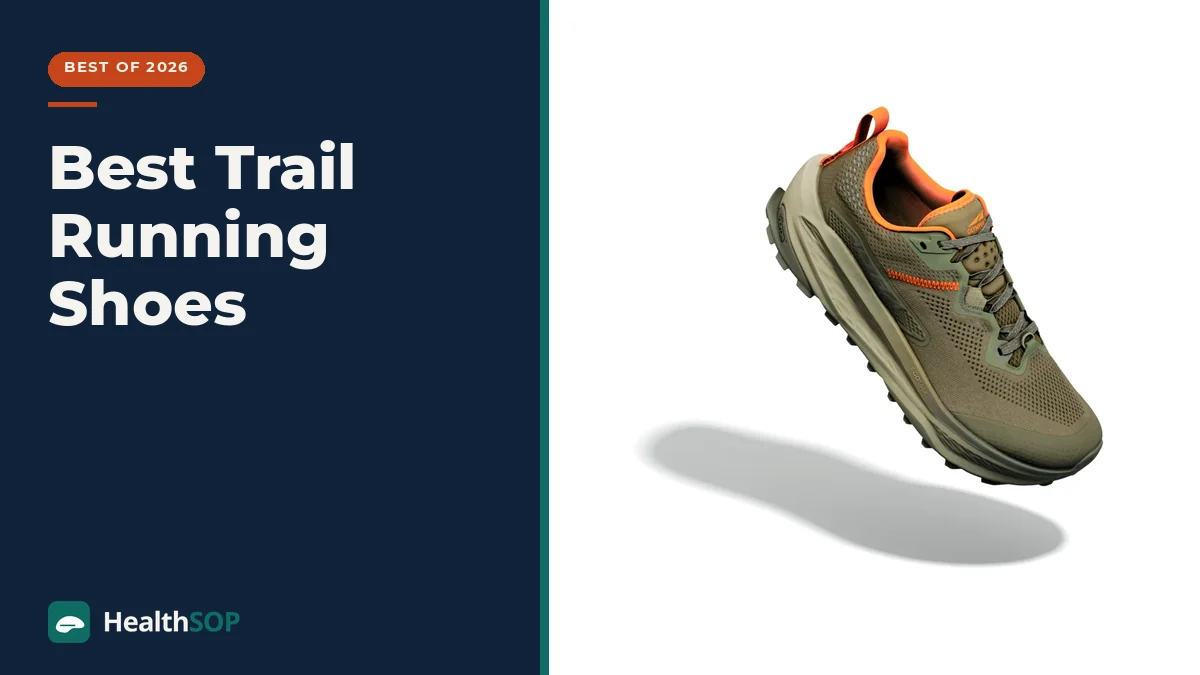
The HOKA Speedgoat 7 is our leading recommendation among current trail running shoes for most runners. It pairs a 40 mm cushioned heel with 5 mm Vibram Megagrip lugs that bite on mud and rock. If you need a steadier, more protective ride, choose the Brooks Cascadia 20. We selected all ten models using official brand specifications, independent laboratory data, and clinical guidance.
As an Amazon Associate I earn from qualifying purchases. HealthSOP may earn a commission if you buy through links on this page, at no extra cost to you. Prices and availability are set by Amazon and can change without notice.
By Lora Nicolas. Last updated: November 15, 2026. This page offers general information for trail runners rather than medical advice.
Table of Contents
Quick picks: the best trail running shoes
Here are ten current trail shoes, each matched to one job on mixed terrain. Tap a name to jump to its full review.
| Award | Model | Why it made the list | Shop |
|---|---|---|---|
| Best overall trail | HOKA Speedgoat 7 | 40 / 35 mm cushion with 5 mm Megagrip lugs | Check price on Amazon |
| Best stable trail | Brooks Cascadia 20 | Wide, stable base with a toe cap and mudguard | Check price on Amazon |
| Best versatile | Saucony Peregrine 16 | Full Megagrip outsole in a light 271 g shoe | Check price on Amazon |
| Best wide toe box | Altra Olympus 7 | Altra’s roomiest toe box with Megagrip and 33 mm of foam | Check price on Amazon |
| Best cushioned roomy | Topo Athletic Ultraventure 5 | 35 / 30 mm plush ride, roomy fit, wide sizes | Check price on Amazon |
| Best fast and light | HOKA Zinal 3 | 253 g racer with a precise, low ride | Check price on Amazon |
| Best mud grip | Salomon Speedcross 6 | 5 mm chevron lugs for deep mud and soft ground | Check price on Amazon |
| Best road-to-trail | Nike ACG Pegasus Trail | Road-like ReactX ride for door-to-trail runs | Check price on Amazon |
| Best zero-drop trail | Altra Lone Peak 9 | Roomiest trail toe box, with a StoneGuard and MaxTrac grip | Check price on Amazon |
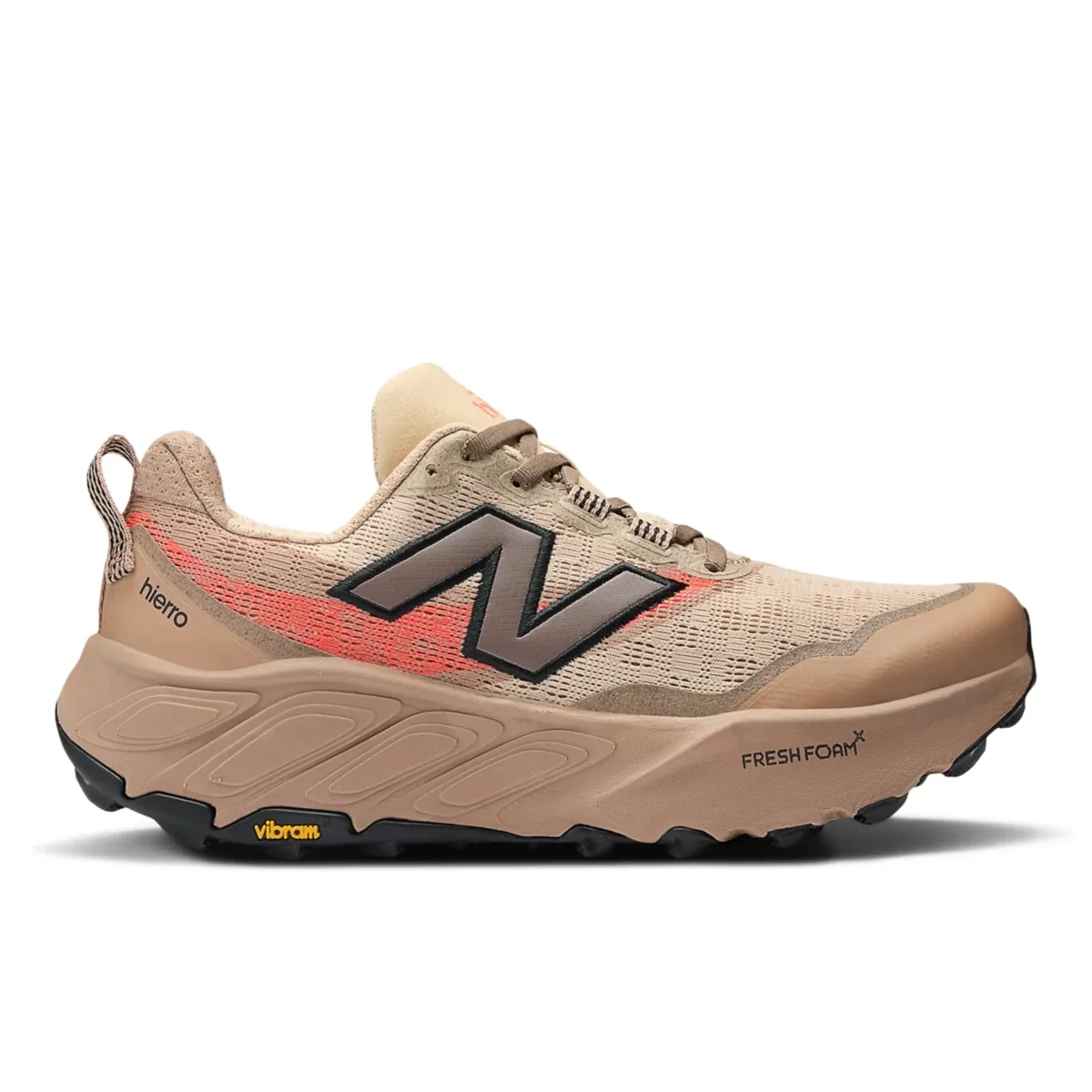
| Best cushioned trail in wide widths | New Balance Fresh Foam X Hierro v9 | Deep Fresh Foam X cushion, 6 mm Vibram lugs and 2E to 6E widths | Check price on Amazon |
If off-road running is new to you, start with what trail running shoes are and how they differ from road shoes.
The 10 best trail running shoes, reviewed
Each pick is the current version on sale. We opened every men’s Amazon listing on November 15, 2026 and confirmed the model and version against official brand specifications. Every review explains who the shoe suits, the key measurements, why it works on trail, the main advantages and drawbacks, and who should skip it.
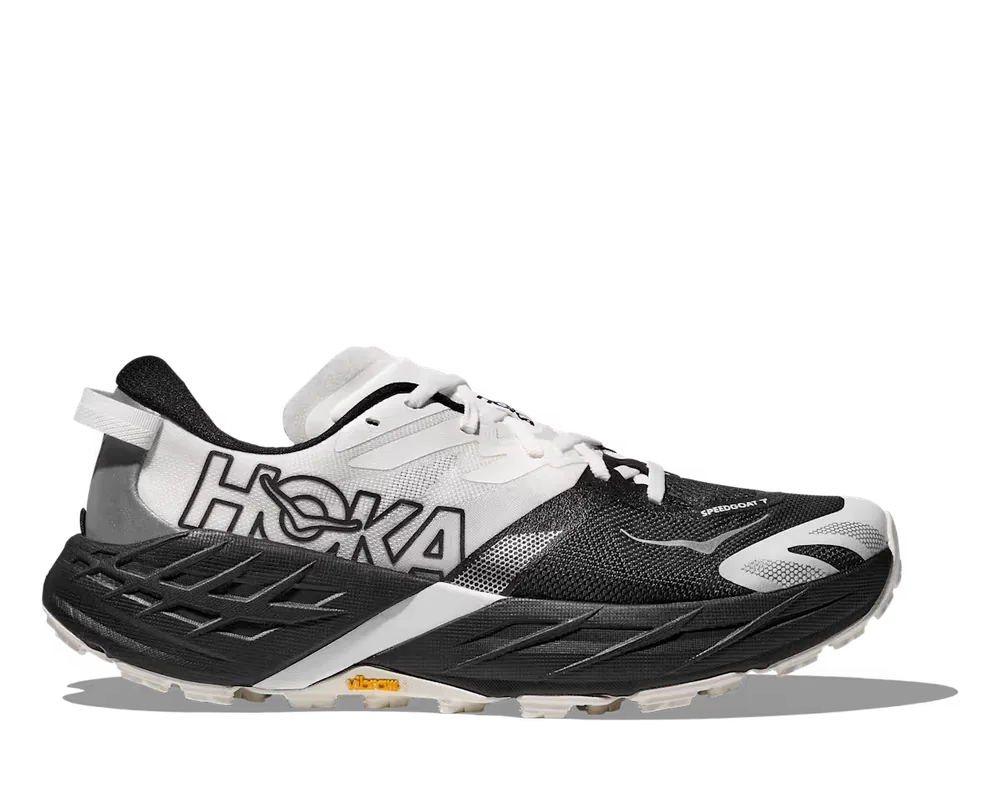
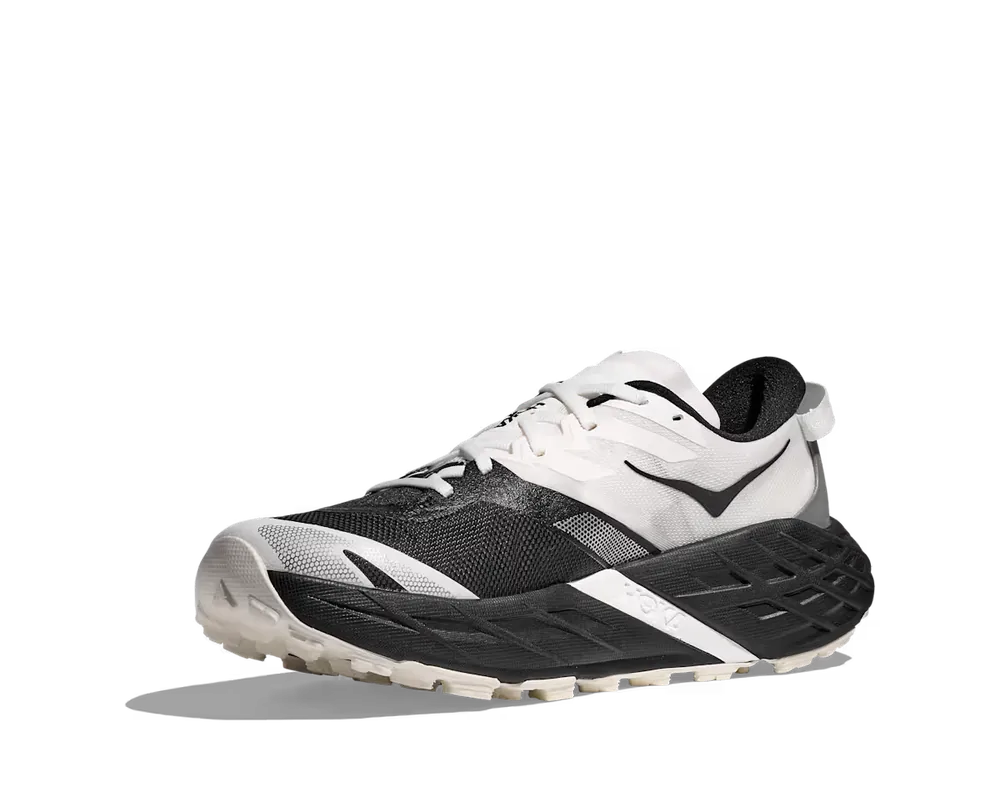
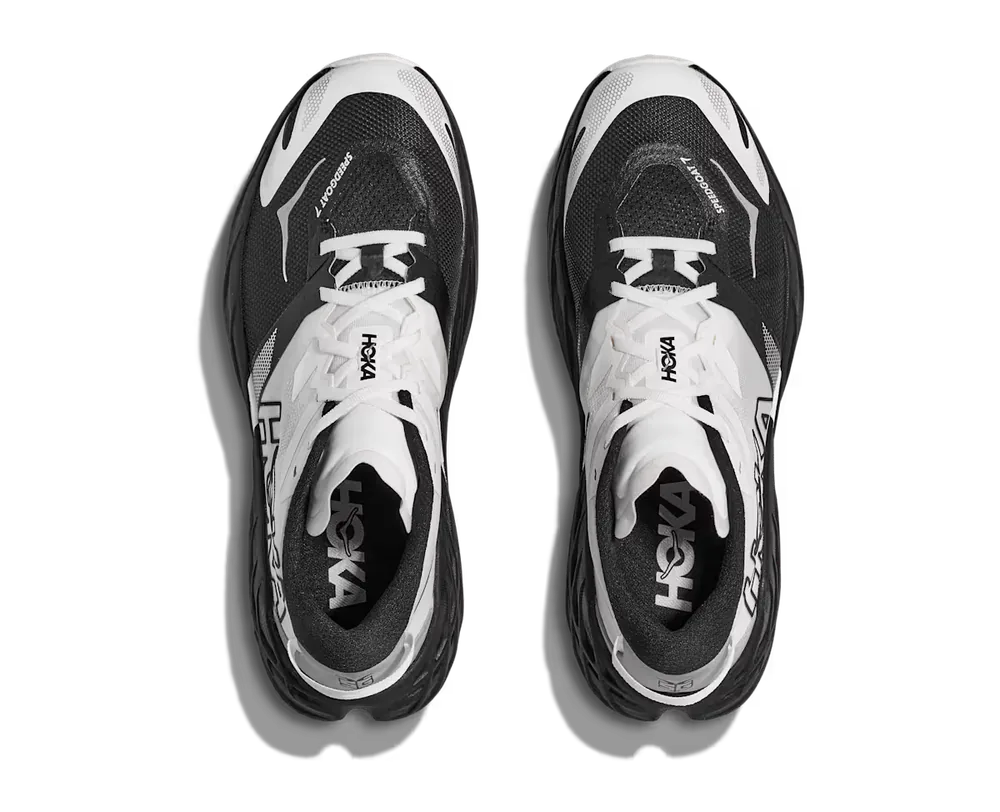
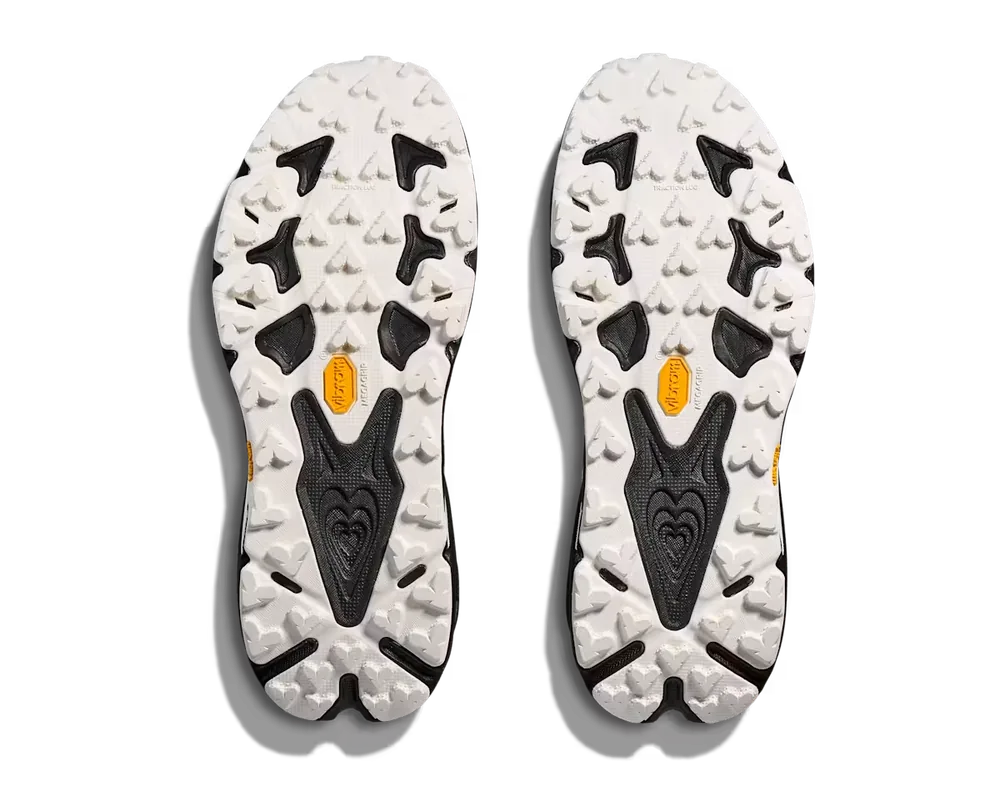
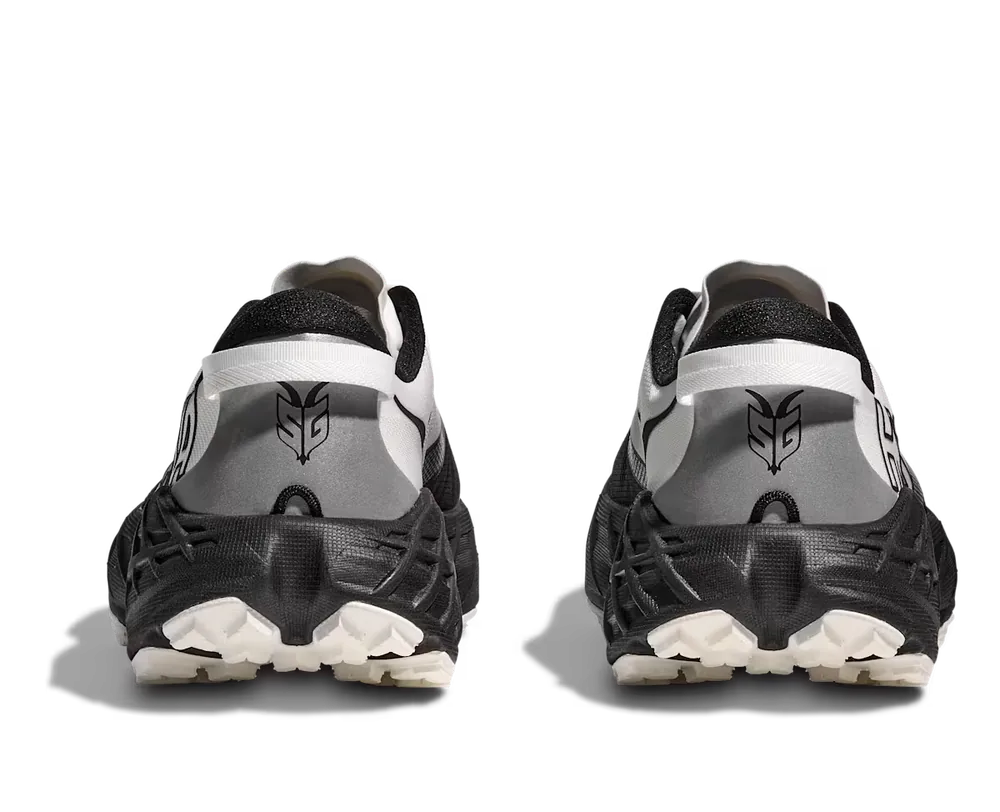
1. HOKA Speedgoat 7: Best overall trail
Best overall: pick the Speedgoat 7 if you want one cushioned trail shoe for long runs on mixed terrain.
- Lugs: 5 mm brand, 4.5 mm lab (RunRepeat)
- Outsole: Vibram Megagrip with Traction Lug
- Rock plate: no
- Stack: 40 mm heel / 35 mm forefoot, men’s 10 (HOKA)
- Drop: 5 mm
- Weight: 275 g, men’s 10 (HOKA)
- Widths: regular and wide
- Source: HOKA launch release and RunRepeat lab review
Is the HOKA Speedgoat 7 the best HOKA shoe for trail? For most runners, it remains the most balanced choice. HOKA moved it to a supercritical EVA midsole for a livelier ride. It kept the deep 5 mm Vibram Megagrip lugs that made the line famous on mud and wet rock.
The stack is tall, at 40 mm under the heel, but the base is broad. That gives you a soft landing on long descents without feeling tippy. It suits long runs and ultra marathons, where your legs need protection more than close ground feel.
Pros
- Deep 5 mm Megagrip lugs grip mud, loose dirt and wet rock
- Thick 40 / 35 mm cushion for long runs and ultras
- Supercritical EVA foam feels livelier than past versions
- Light for its stack at 275 g
- Wide sizes available
Cons
- The toe box tapers (71.4 mm in the lab). Wide feet should order the wide version or pick the Olympus 7.
Who it’s for: most trail runners, from first trail races through 100-mile events. Skip it if: you want close ground feel on technical rock.
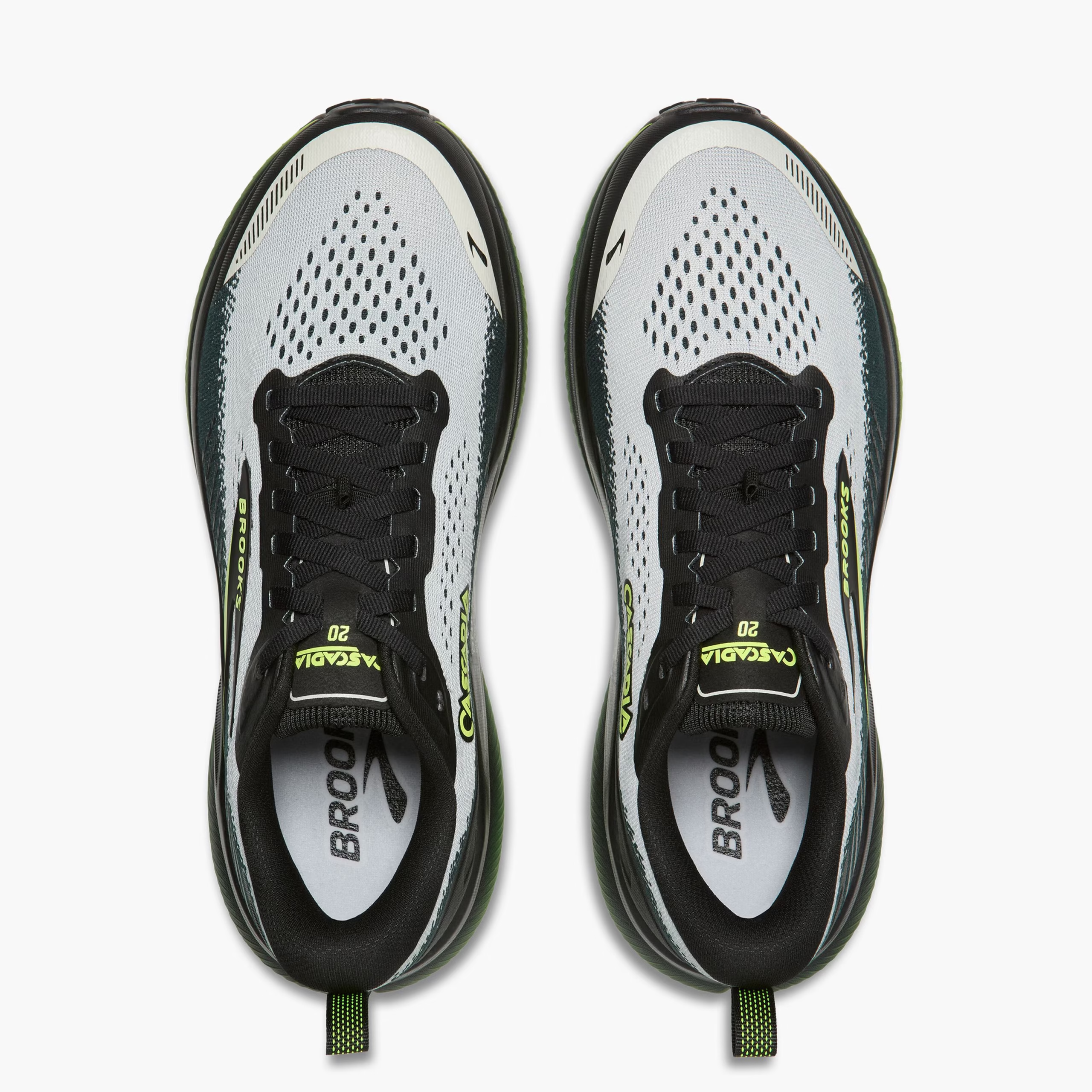
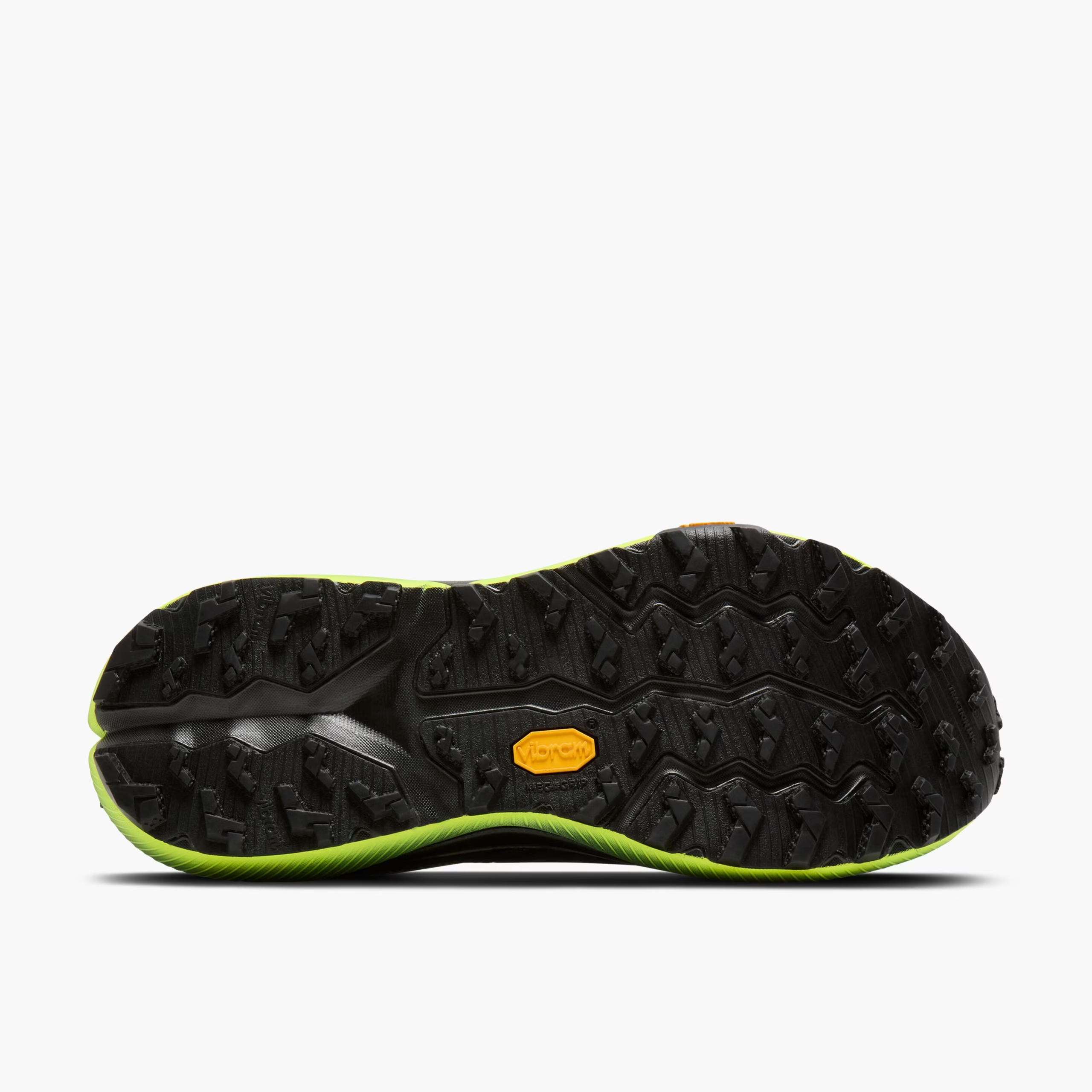
2. Brooks Cascadia 20: Best stable trail
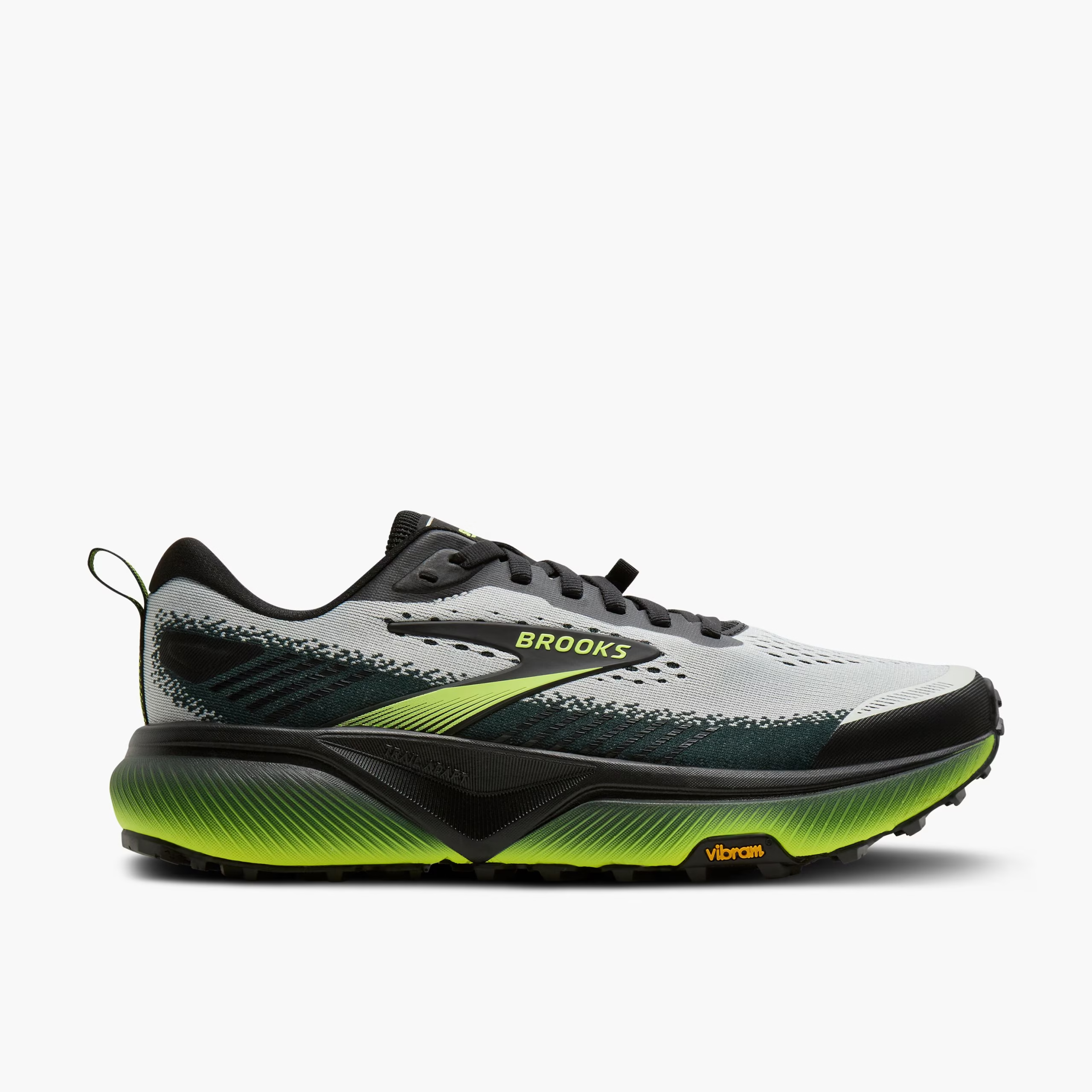
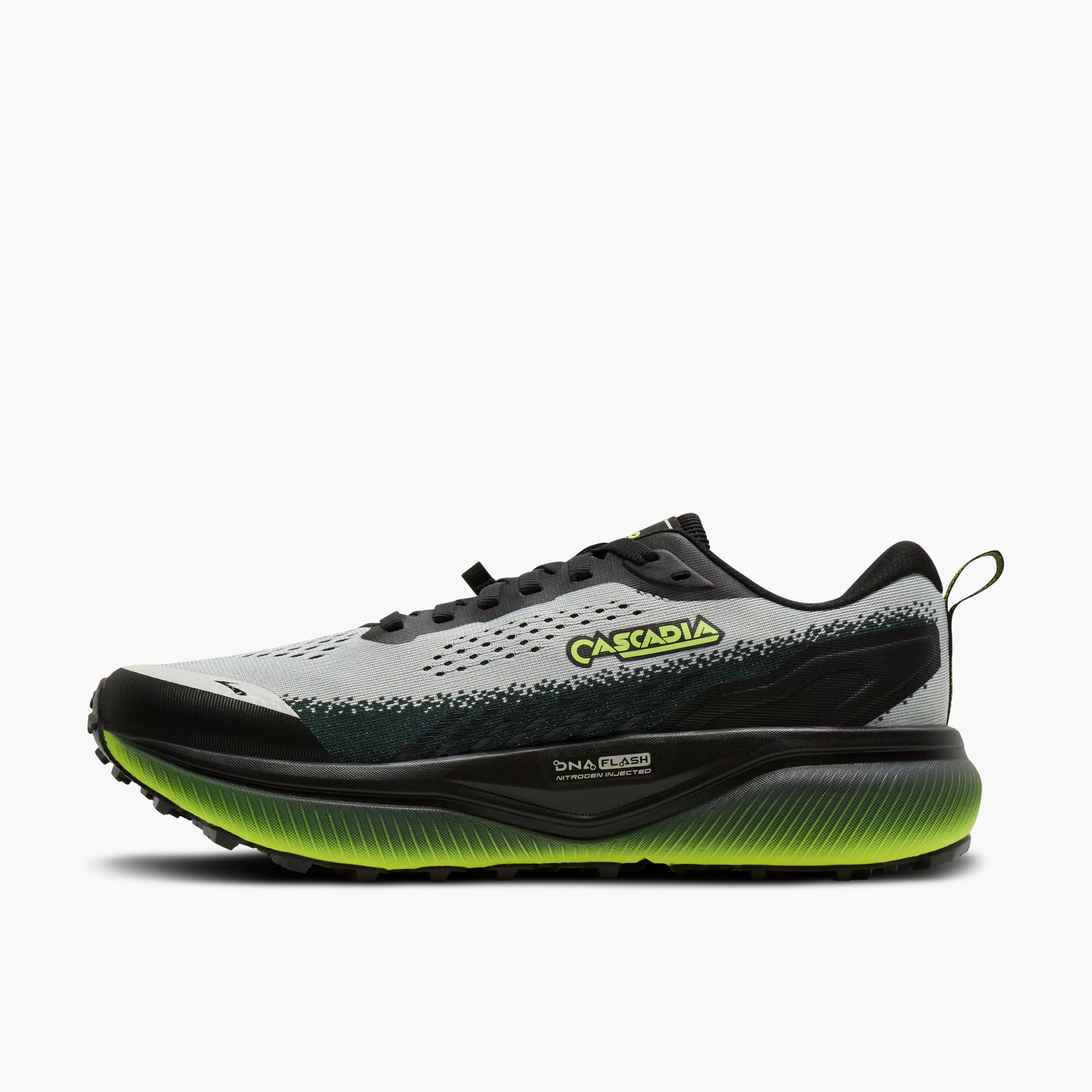
Best stable trail: pick the Cascadia 20 if rocky, rooty trails make your ankles feel unstable.
- Lugs: 4 mm brand, 3.4 mm lab (RunRepeat)
- Outsole: Vibram Megagrip
- Protection: toe cap and mudguard
- Stack: 38 mm heel / 32 mm forefoot (Brooks)
- Drop: 6 mm
- Weight: 306 g, men’s (Brooks)
- Widths: regular and wide
- Source: Brooks Cascadia 20 product page and RunRepeat lab review
The Cascadia has long been the steady workhorse of trail shoes. Version 20 adds more foam, at 38 mm under the heel, on a wide and planted base. A toe cap and mudguard protect your feet from rocks and roots.
It is not a true stability shoe with a medial post, but the wide platform keeps your foot centered on uneven ground. If your feet roll inward on roads, this is the trail shoe that often feels most familiar. Read what a stability running shoe does if you are unsure what you need.
Pros
- Wide, planted base for rocky and rooty trails
- Toe cap and mudguard add protection
- Vibram Megagrip outsole for wet and dry grip
- 38 / 32 mm cushion for long days
- Wide sizes available
Cons
- At 306 g it feels heavy on fast runs. Save it for long, technical days and use a lighter shoe for speed.
Who it’s for: heavier runners, hikers, and anyone who wants a stable, protective trail shoe. Skip it if: you race or want a light, nimble feel.
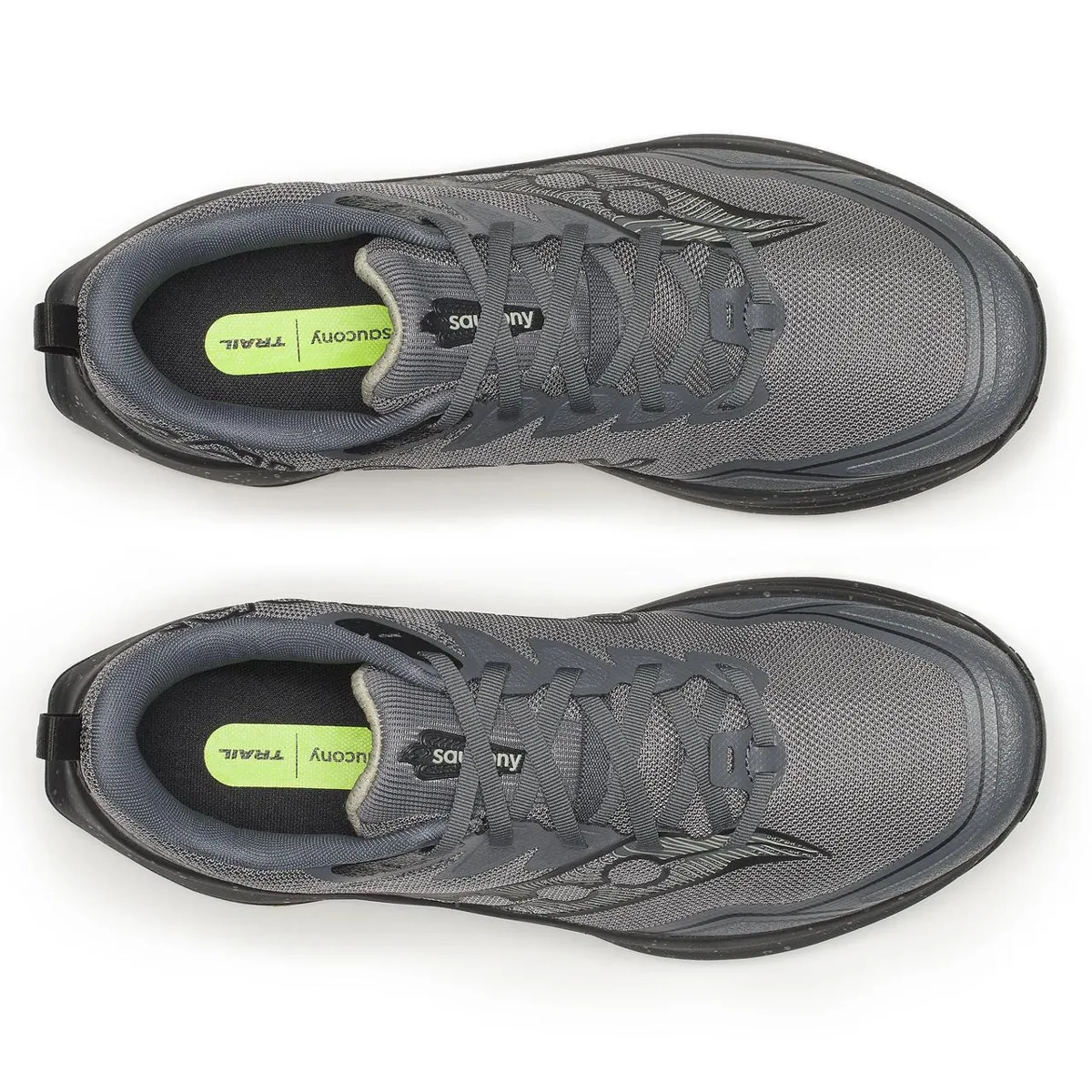
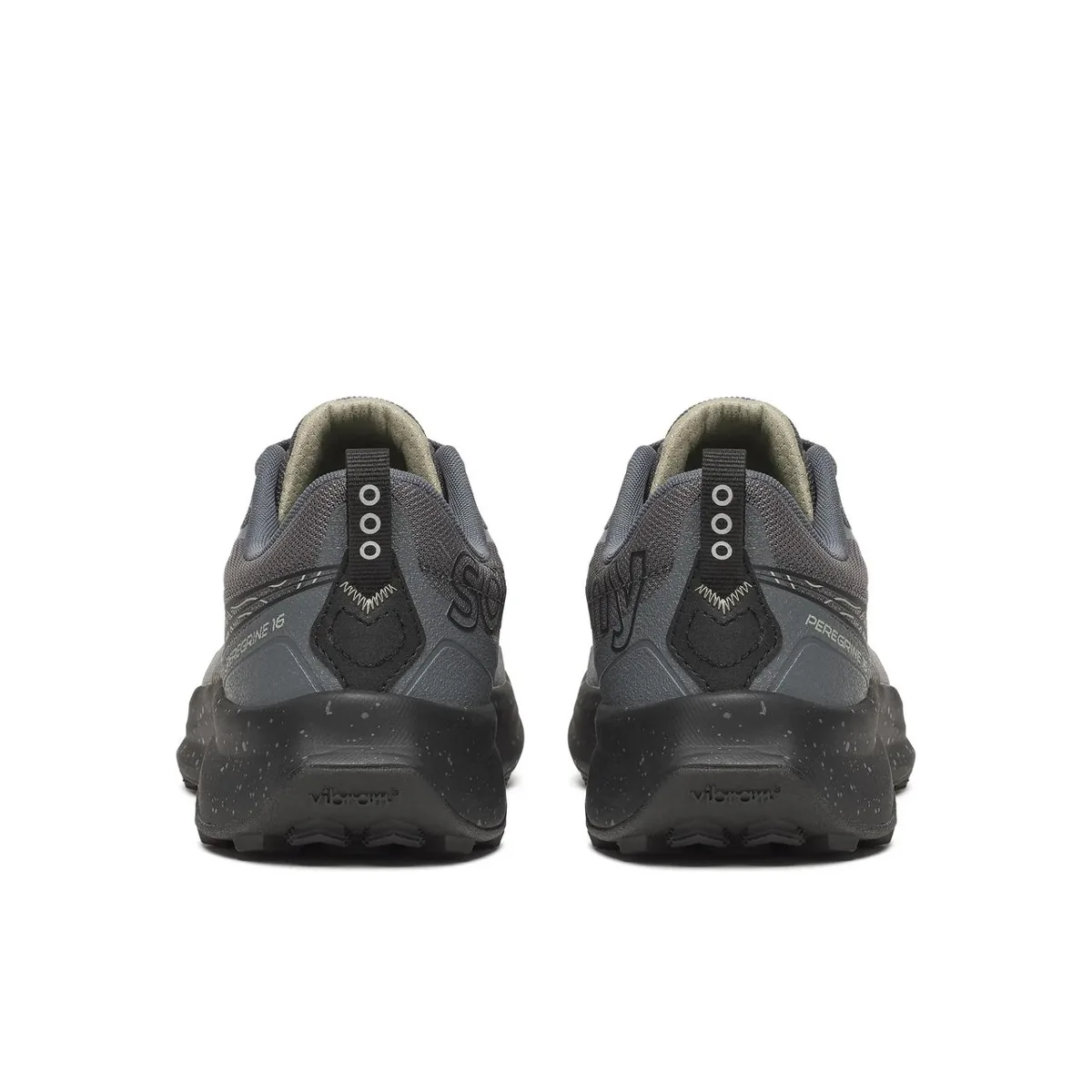
3. Saucony Peregrine 16: Best versatile
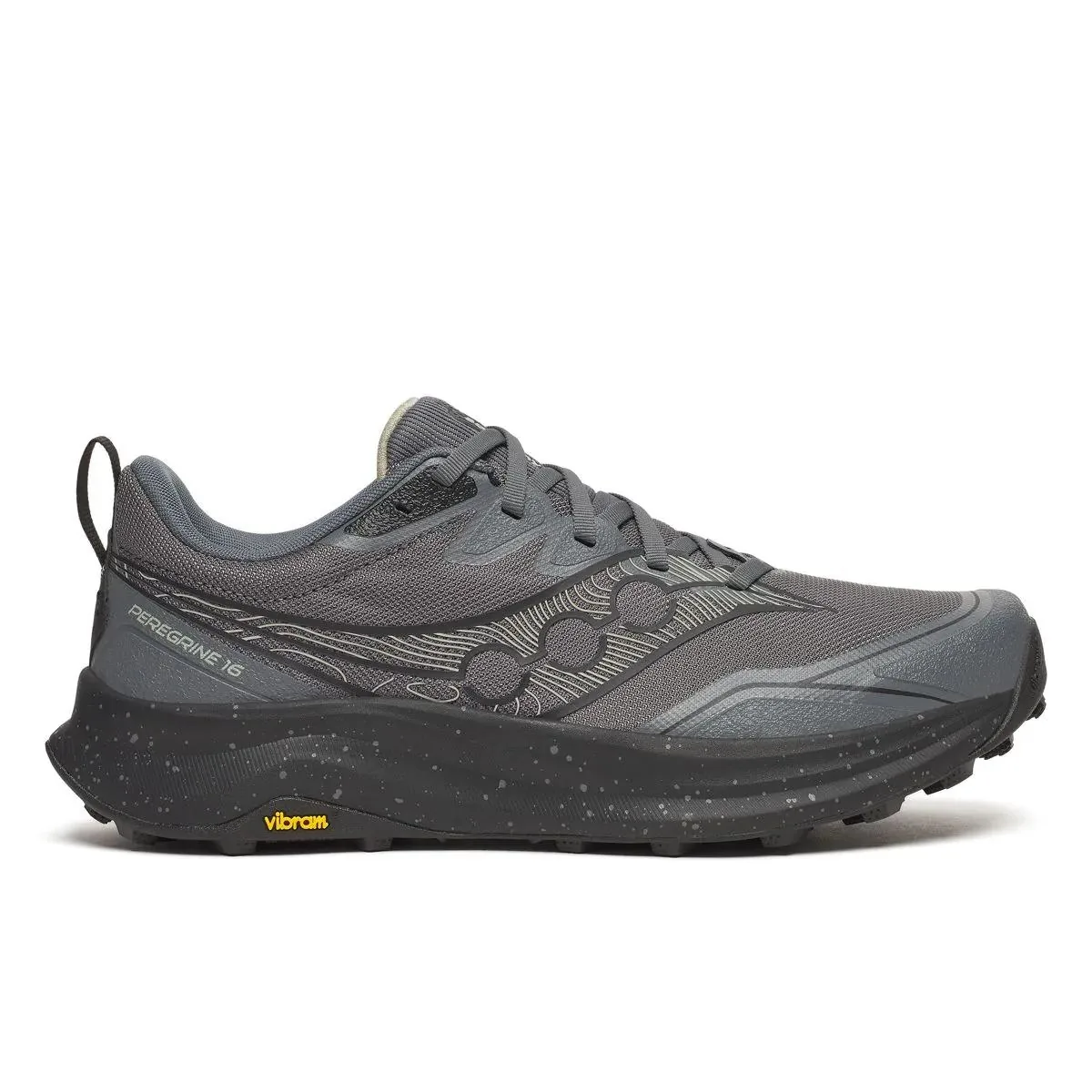
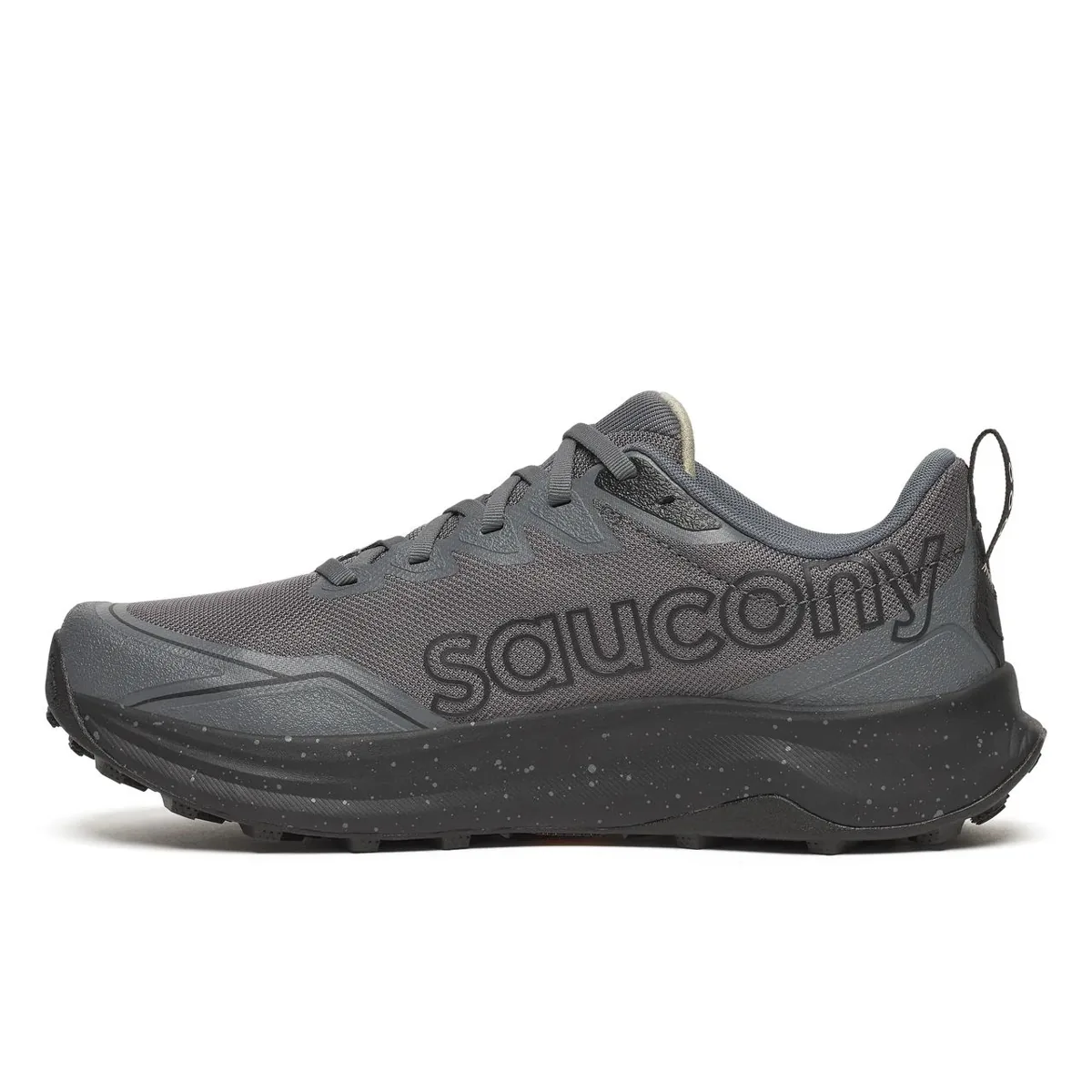
Best versatile: pick the Peregrine 16 if you want one lighter shoe that can handle every common kind of trail.
- Lugs: 3.5 mm lab (RunRepeat)
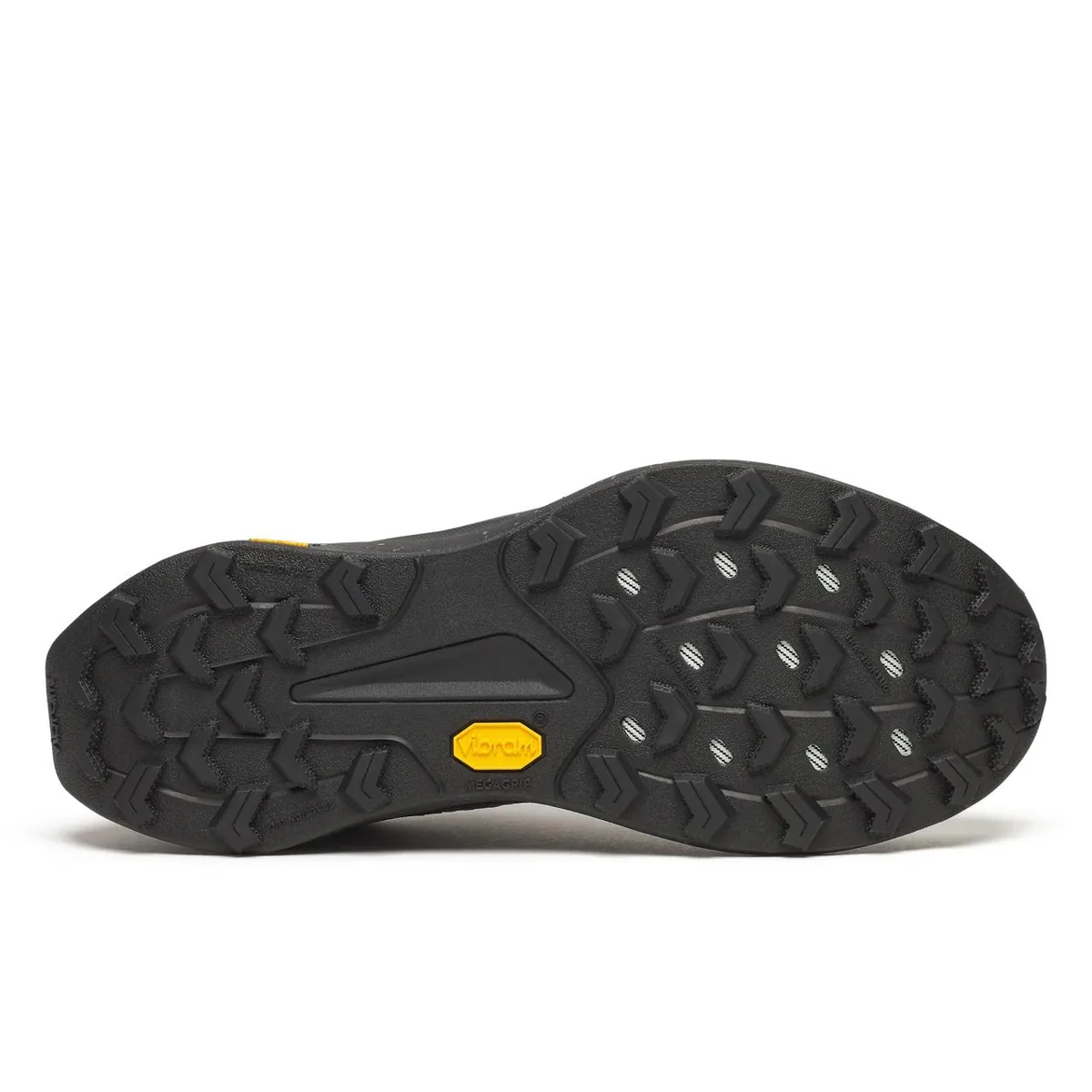
- Outsole: full-coverage Vibram Megagrip (Saucony)
- Rock plate: soft woven forefoot plate, not a hard plate (iRunFar)
- Stack: 32 mm heel / 28 mm forefoot (Saucony via RunRepeat)
- Drop: 4 mm
- Weight: 271 g, men’s
- Source: Saucony Peregrine 16 product page, iRunFar review and RunRepeat lab review
The Peregrine is the trail shoe many runners own first. Version 16 now has a full-coverage Vibram Megagrip outsole, and Saucony says it grips on dry, wet, rocky, and loose ground. PWRRUN foam adds comfort without much extra bulk.
A woven layer sits under the forefoot to blunt sharp rocks. It is softer than a hard rock plate, so the shoe still bends through the stride. With a 4 mm drop and a lower stack, you feel the trail more clearly and can place your feet with care.
Pros
- Full Vibram Megagrip outsole for all surfaces
- Light at 271 g for a lugged trail shoe
- Woven forefoot plate blunts sharp rocks
- Lower 32 / 28 mm stack gives good ground feel
- Handles short races and long runs alike
Cons
- Less cushion than the Speedgoat 7. Pick that shoe for ultras or very long days.
Who it’s for: runners who want one shoe for mixed trails and moderate distances. Skip it if: you want maximum cushioning.
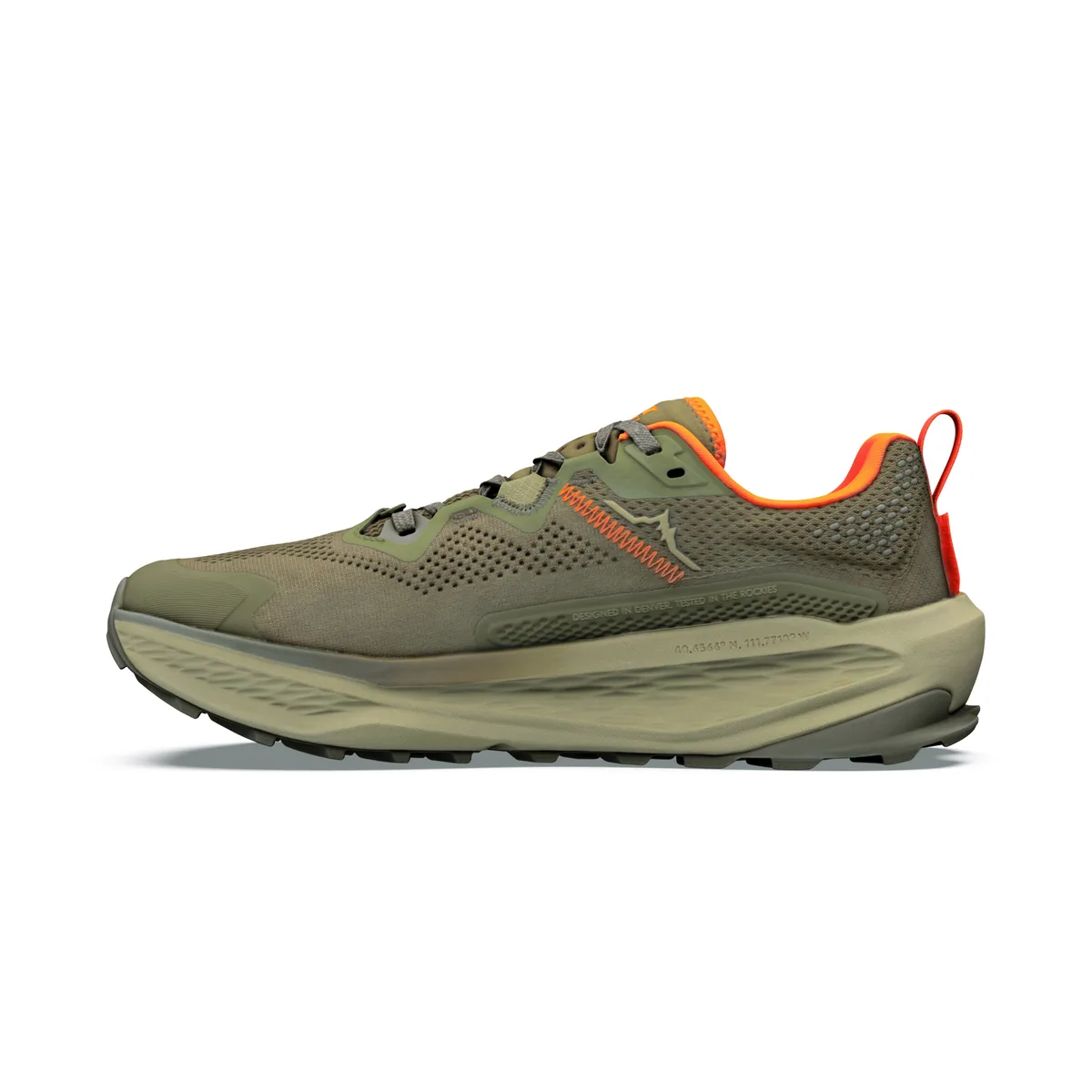
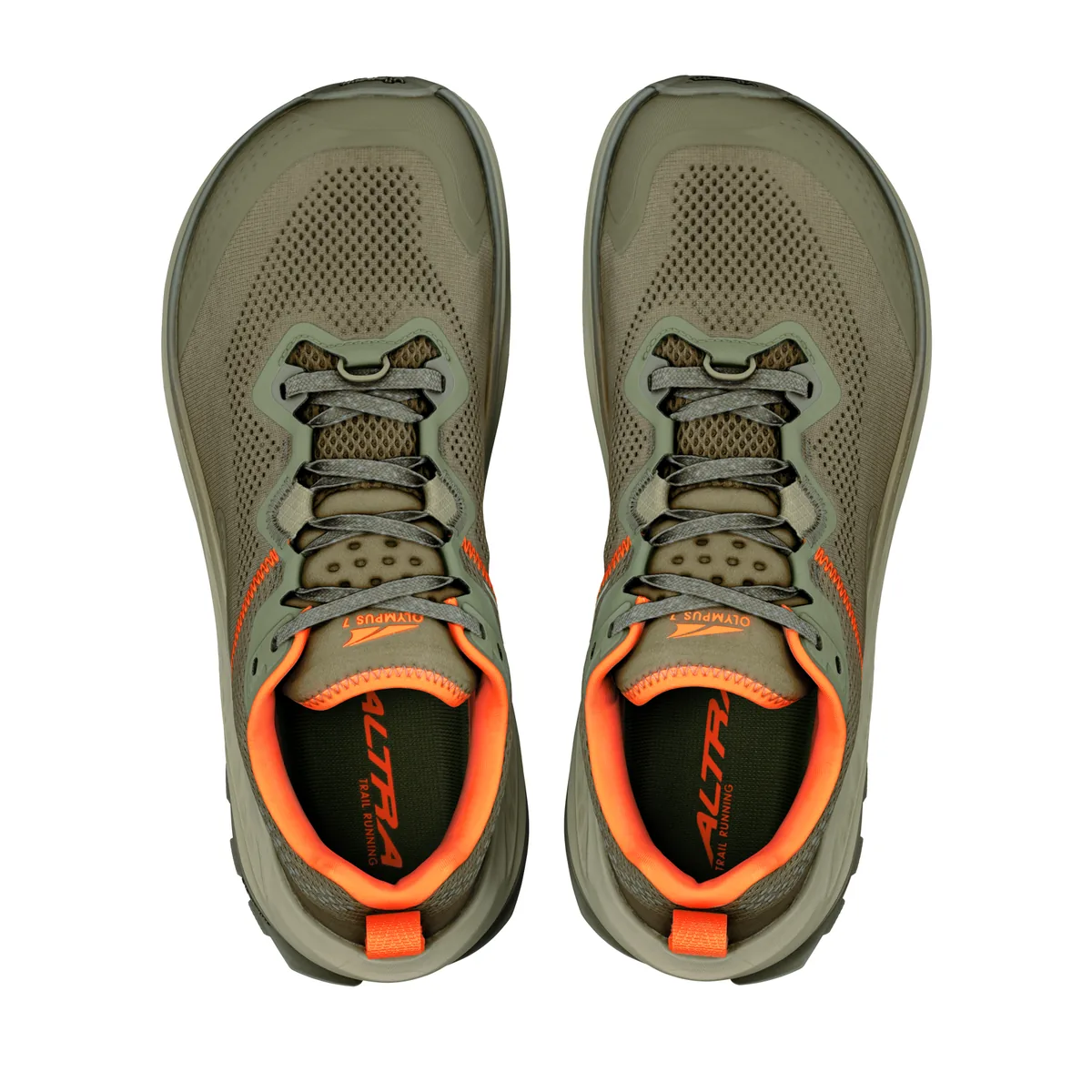
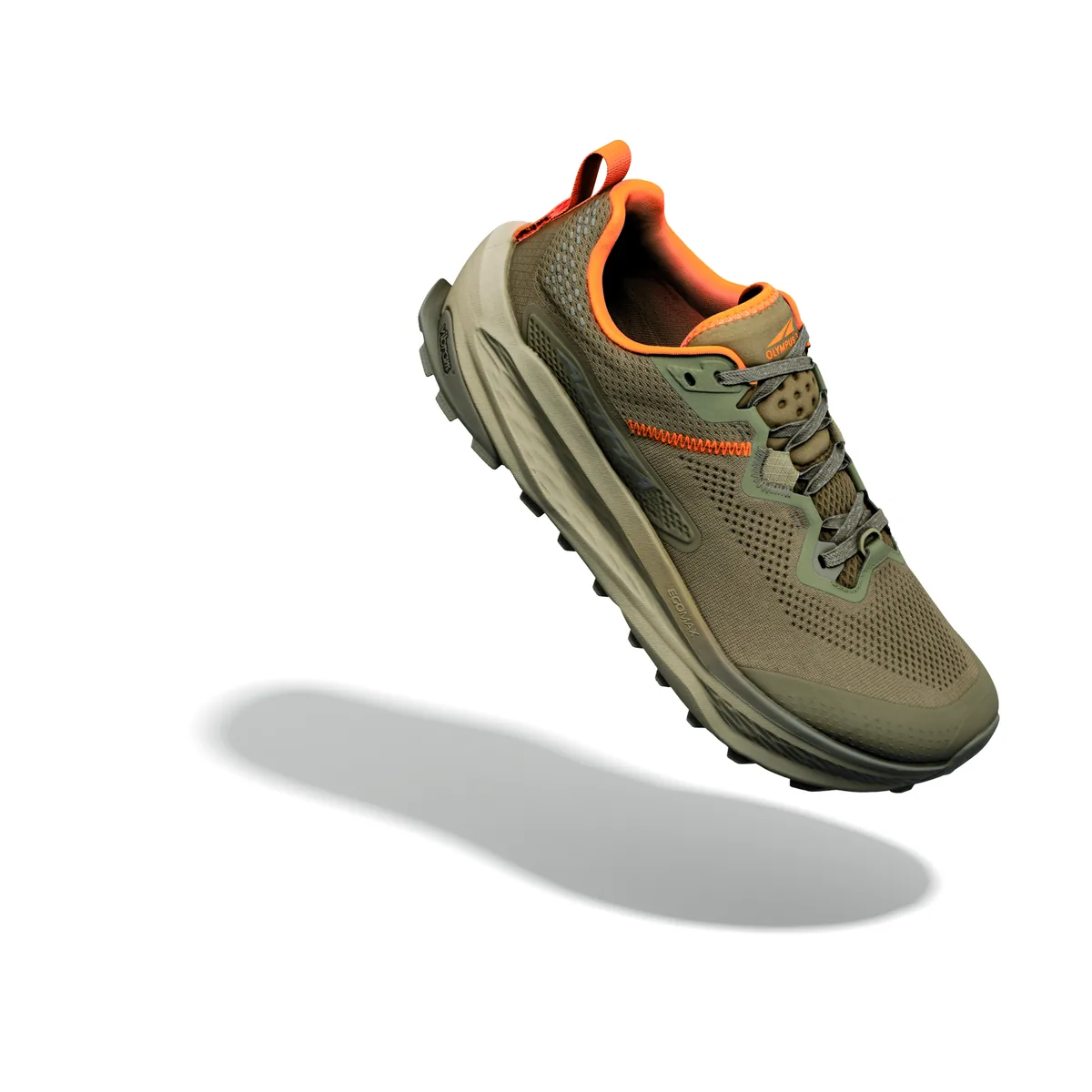
4. Altra Olympus 7: Best wide toe box
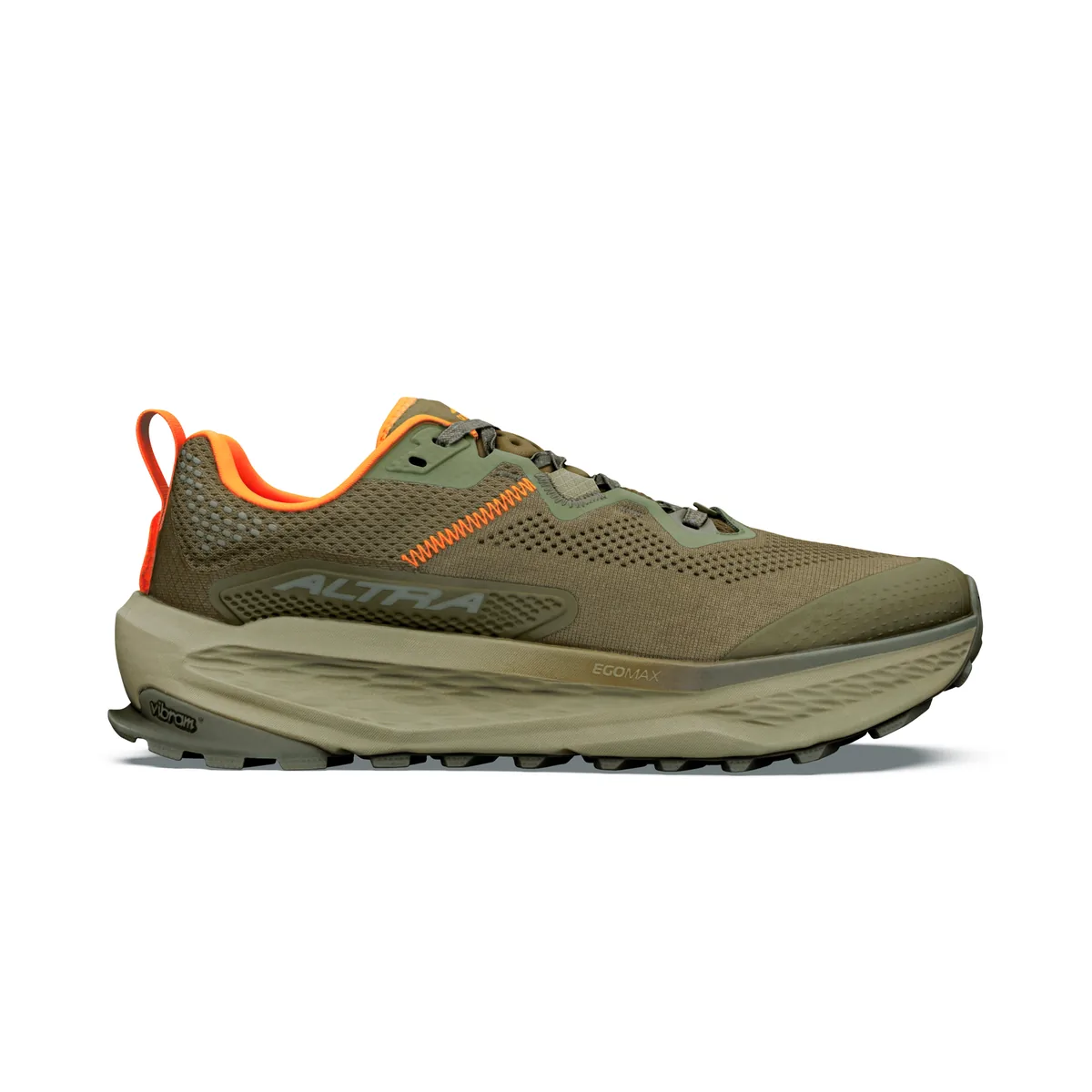
Best wide toe box: pick the Olympus 7 if your toes feel cramped in most conventional trail shoes.
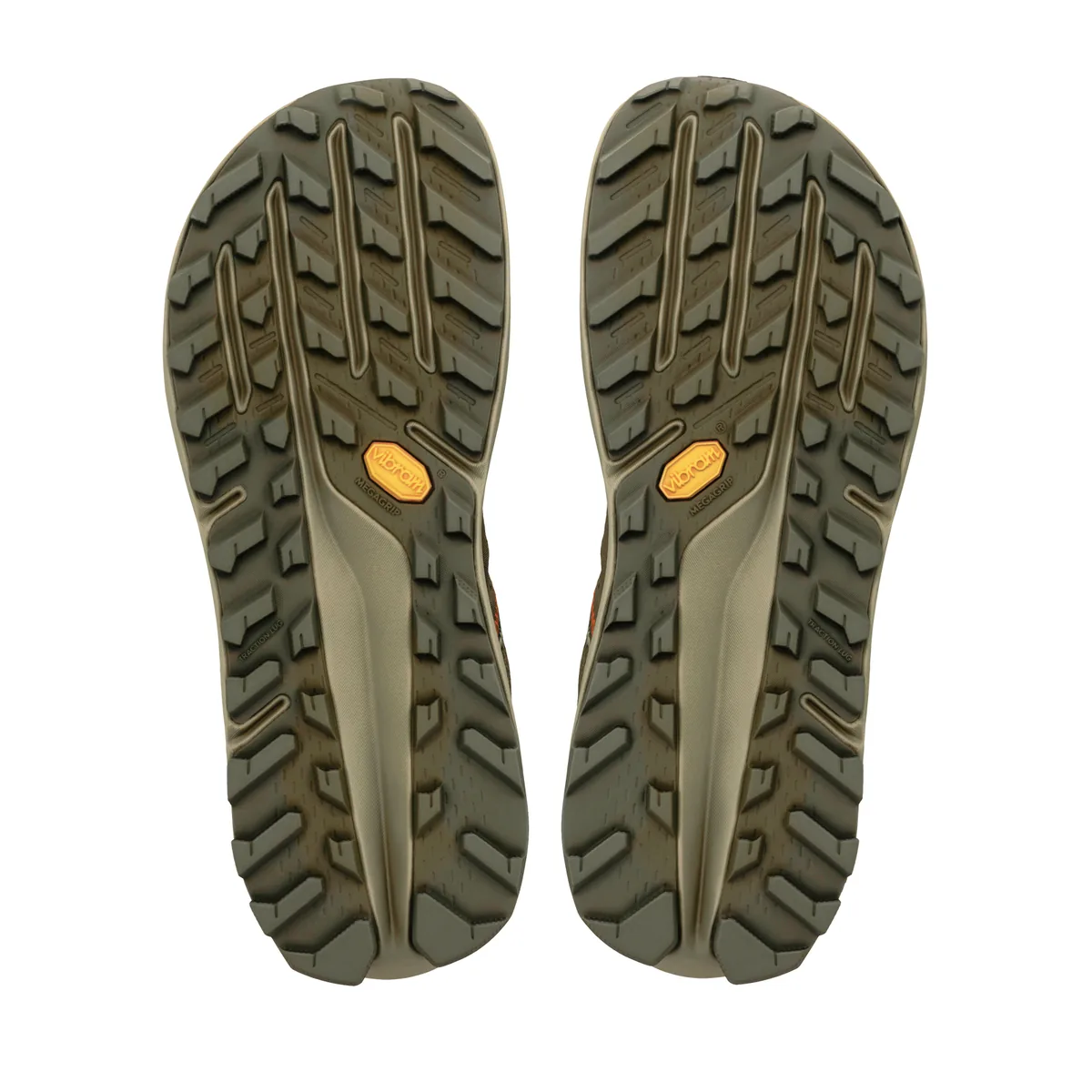
- Outsole: Vibram Megagrip with TractionLug
- Lugs: n/a (no published depth)
- Rock plate: no
- Stack: 33 mm heel and forefoot (Altra)
- Drop: 0 mm
- Weight: 325 g, men’s (Altra)
- Fit: Original FootShape, Altra’s roomiest
- Source: Altra Olympus 7 product page
Which trail running shoes work for wide feet? The Olympus 7 is our first pick. Altra calls its Original FootShape fit “our roomiest toe box,” with space through the midfoot as well. Your toes can spread as you land on uneven ground.
You also get 33 mm of foam and sticky Vibram Megagrip with TractionLug for mixed terrain. Altra says the new EGO MAX foam is 15% lighter and 10% softer than the previous version. A GaiterTrap tab holds a gaiter without straps. For road picks with room, see our list of running shoes with a wide toe box.
Pros
- Altra’s roomiest Original FootShape toe box
- Vibram Megagrip with TractionLug for grip and stability
- 33 mm of cushion under the whole foot
- EGO MAX foam is lighter and softer than v6, per Altra
- GaiterTrap for strapless gaiters
Cons
- Zero drop is a big change from 8-10 mm shoes. Build up over 2-3 weeks of short runs.
Who it’s for: wide feet, bunions, and long days on trail or hiking paths. Skip it if: you currently have tight calves or Achilles pain.
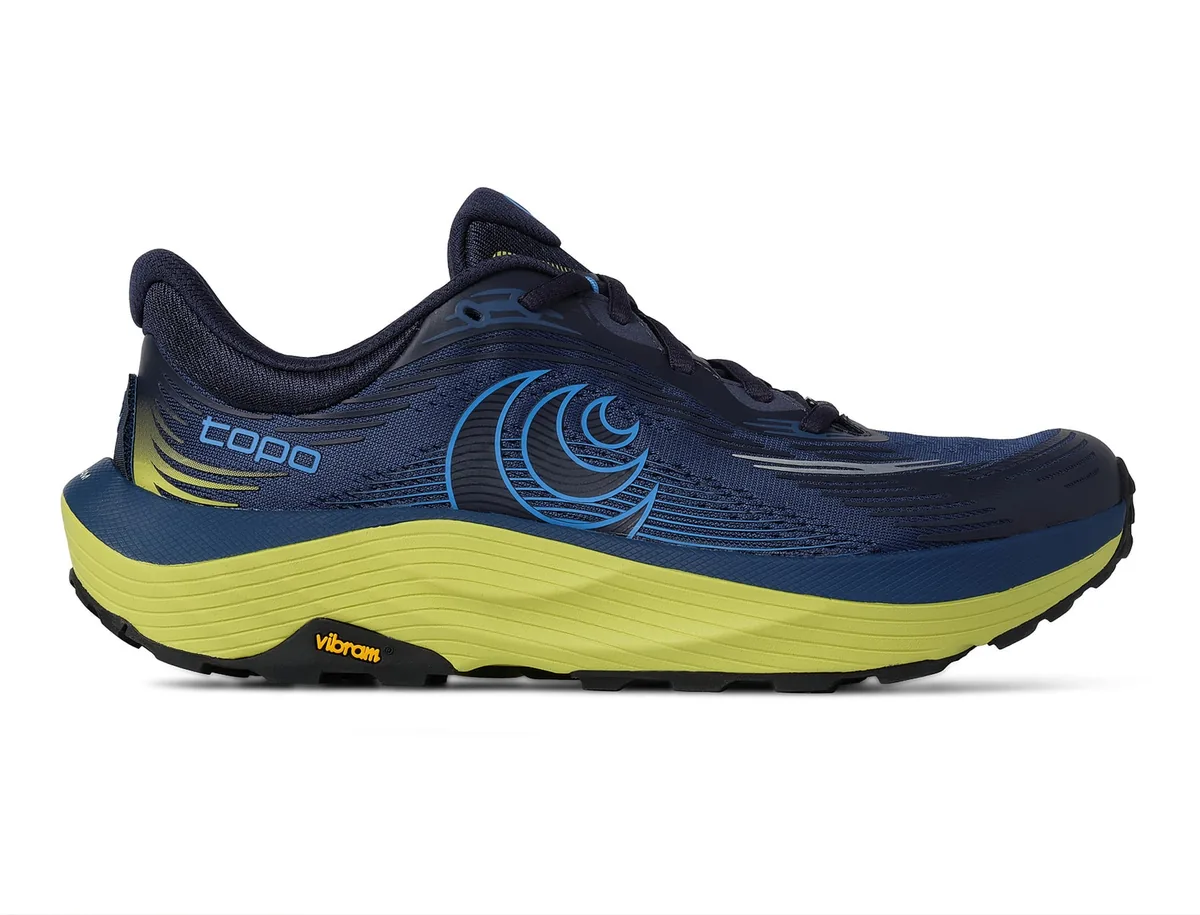
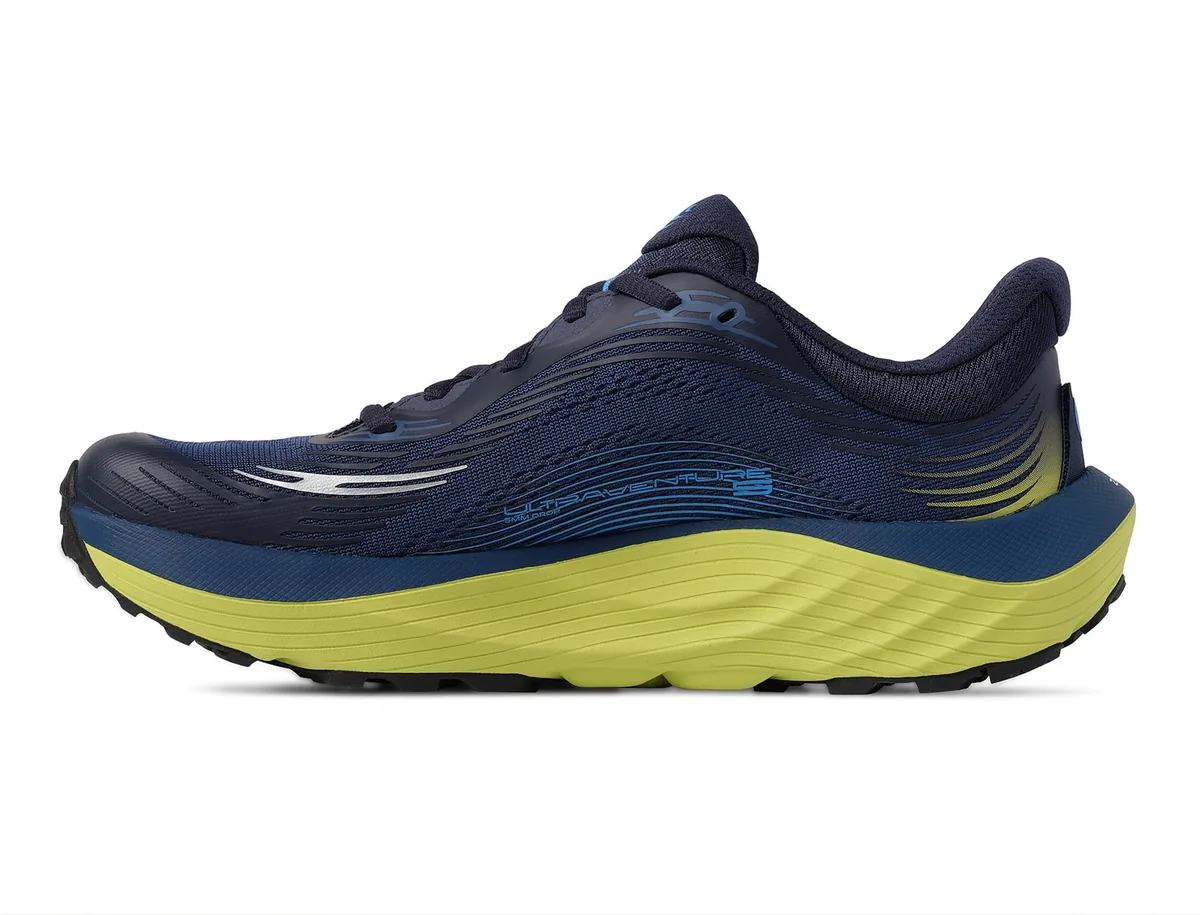
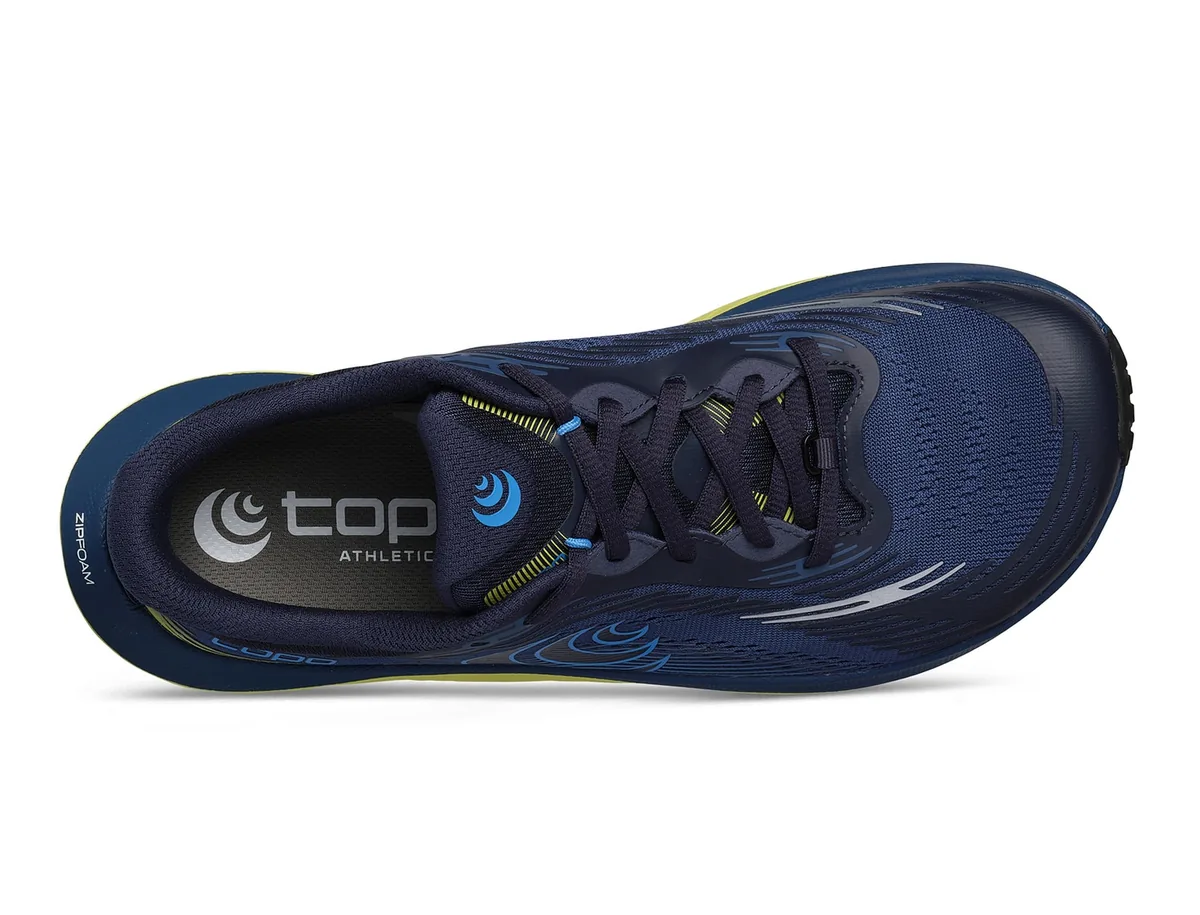
5. Topo Athletic Ultraventure 5: Best cushioned roomy
Best cushioned roomy: pick the Ultraventure 5 if you want soft cushioning and toe room without moving to a zero-drop platform.
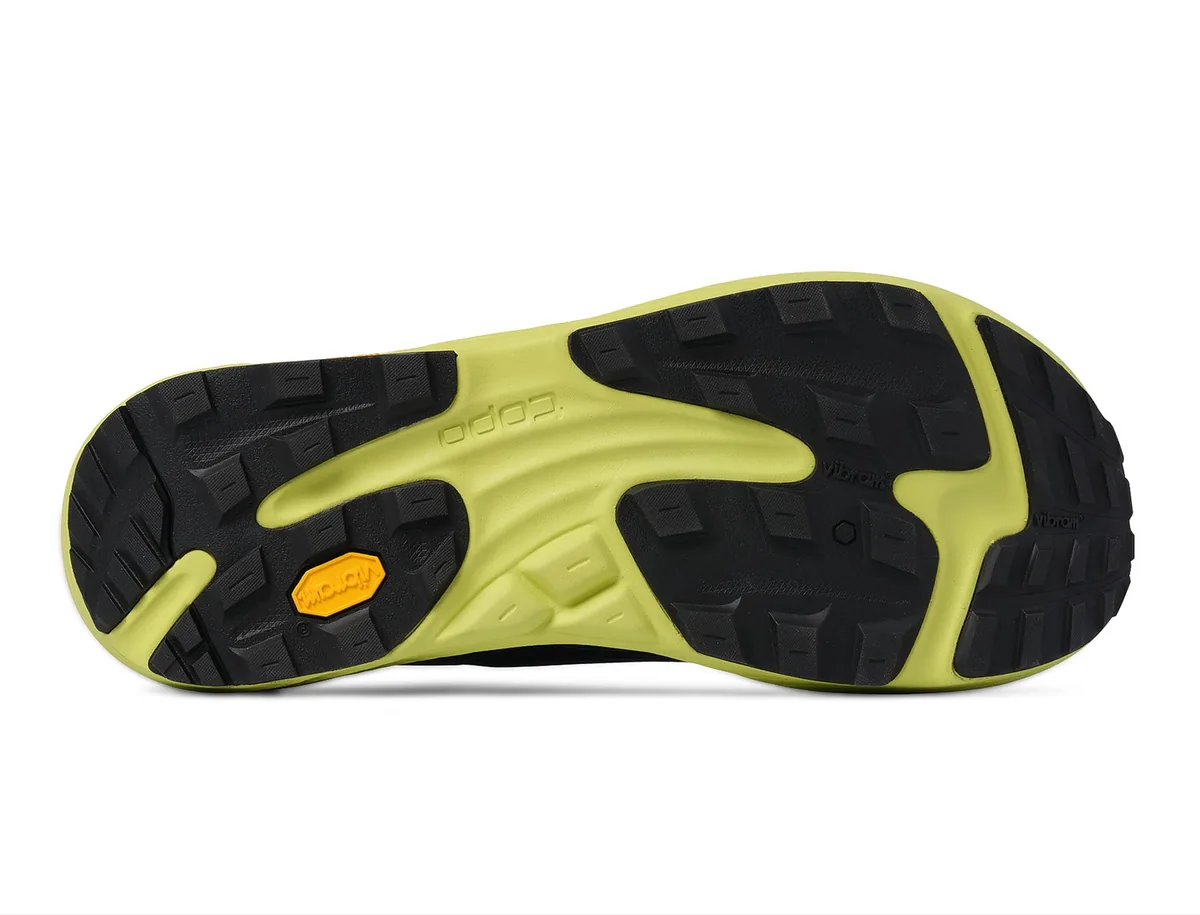
- Outsole: Vibram XS Trek
- Lugs: n/a (no published depth)
- Rock plate: no (Topo)
- Stack: 35 mm heel / 30 mm forefoot (Topo)
- Drop: 5 mm
- Weight: 10.7 oz / 303 g, men’s 9 (Topo)
- Widths: standard and wide
- Source: Topo Athletic Ultraventure 5 product page
The Ultraventure 5 gives you Topo’s foot-shaped toe box with a 5 mm drop. That is an easier switch than zero drop for most runners. Topo kept the 35 mm by 30 mm stack and tuned the ZipFoam for a plush, cushioned ride.
A Vibram XS Trek outsole handles trail, gravel, and road. Topo built in a universal gaiter system, and the shoe comes in a wide size as well. It is a strong pick for long runs, hiking, and runners who want room without a large change in drop.
Pros
- Foot-shaped toe box with a 5 mm drop
- Plush 35 / 30 mm ZipFoam cushion
- Vibram XS Trek outsole for trail, gravel and road
- Built-in gaiter compatibility
- Standard and wide sizes
Cons
- Shallower lugs than mud shoes. Pick the Speedcross 6 for deep mud or snow.
Who it’s for: wide feet, long runs, and mixed trail-to-road routes. Skip it if: your trails are mostly deep mud.
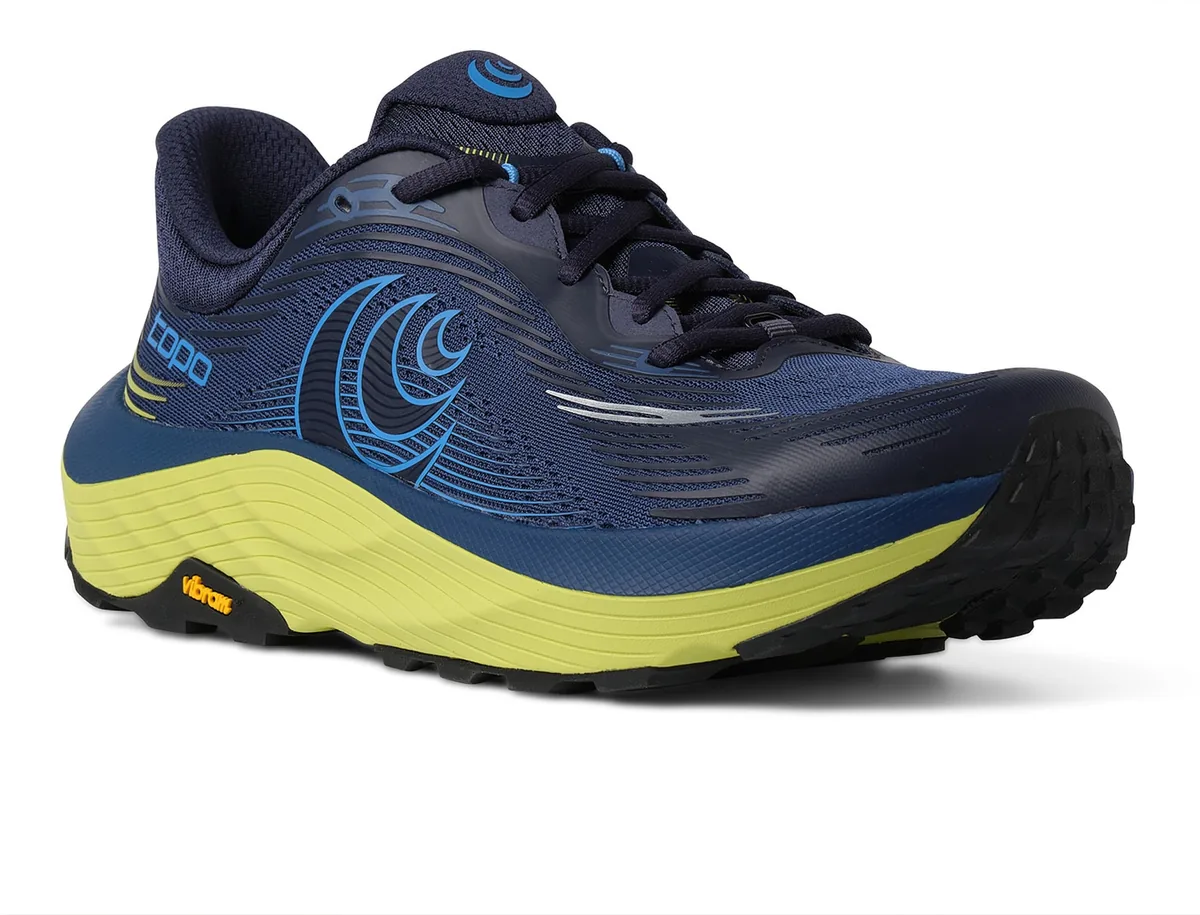
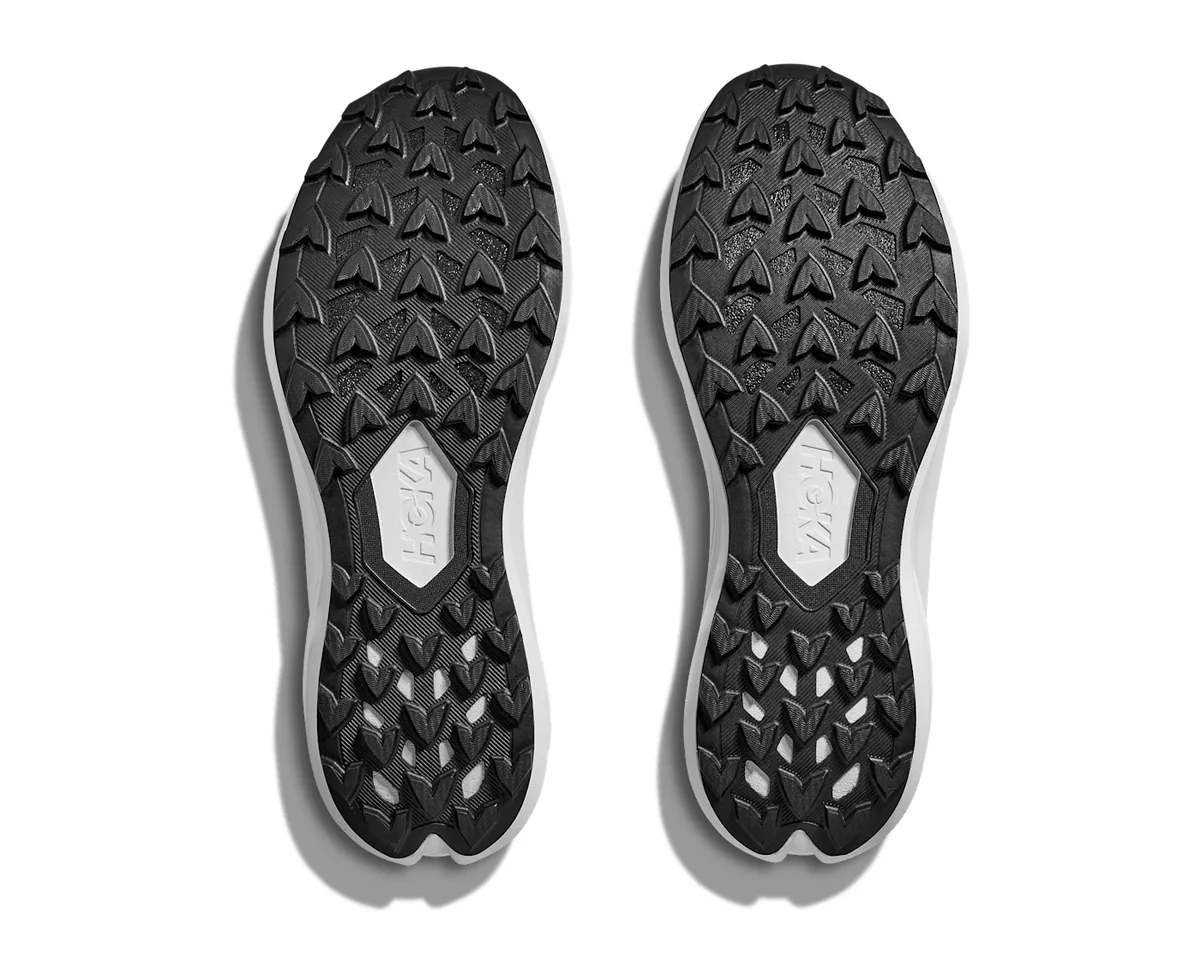
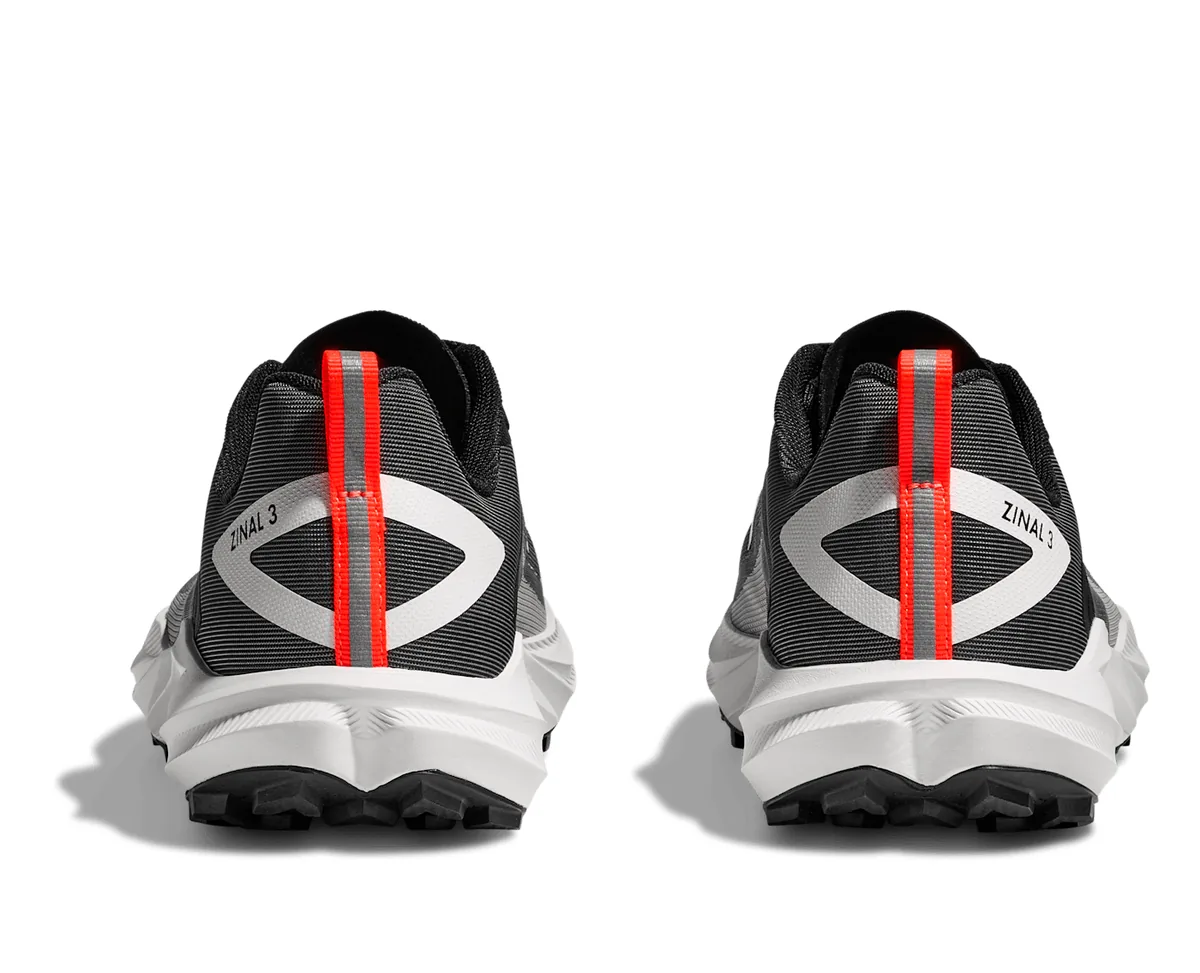
6. HOKA Zinal 3: Best fast and light
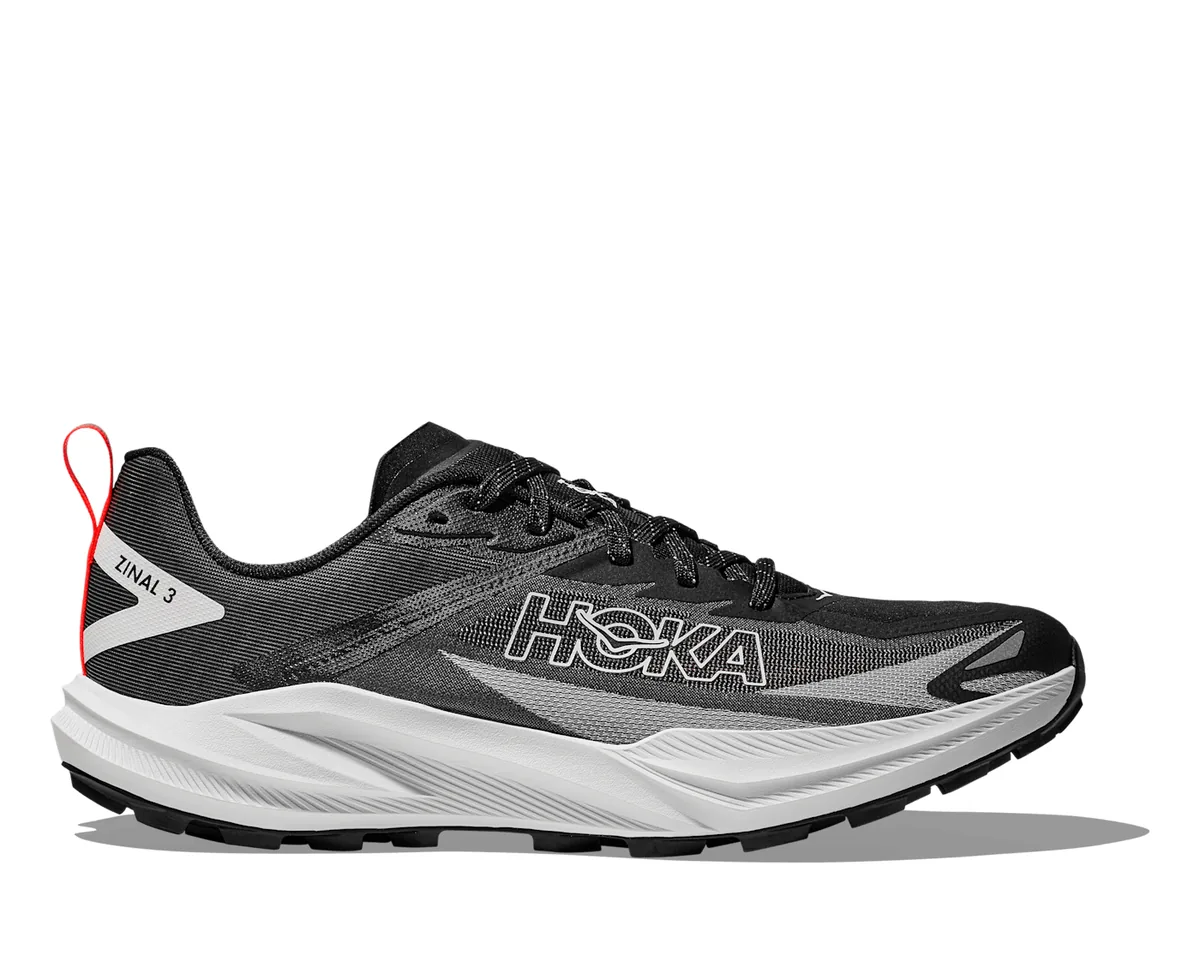
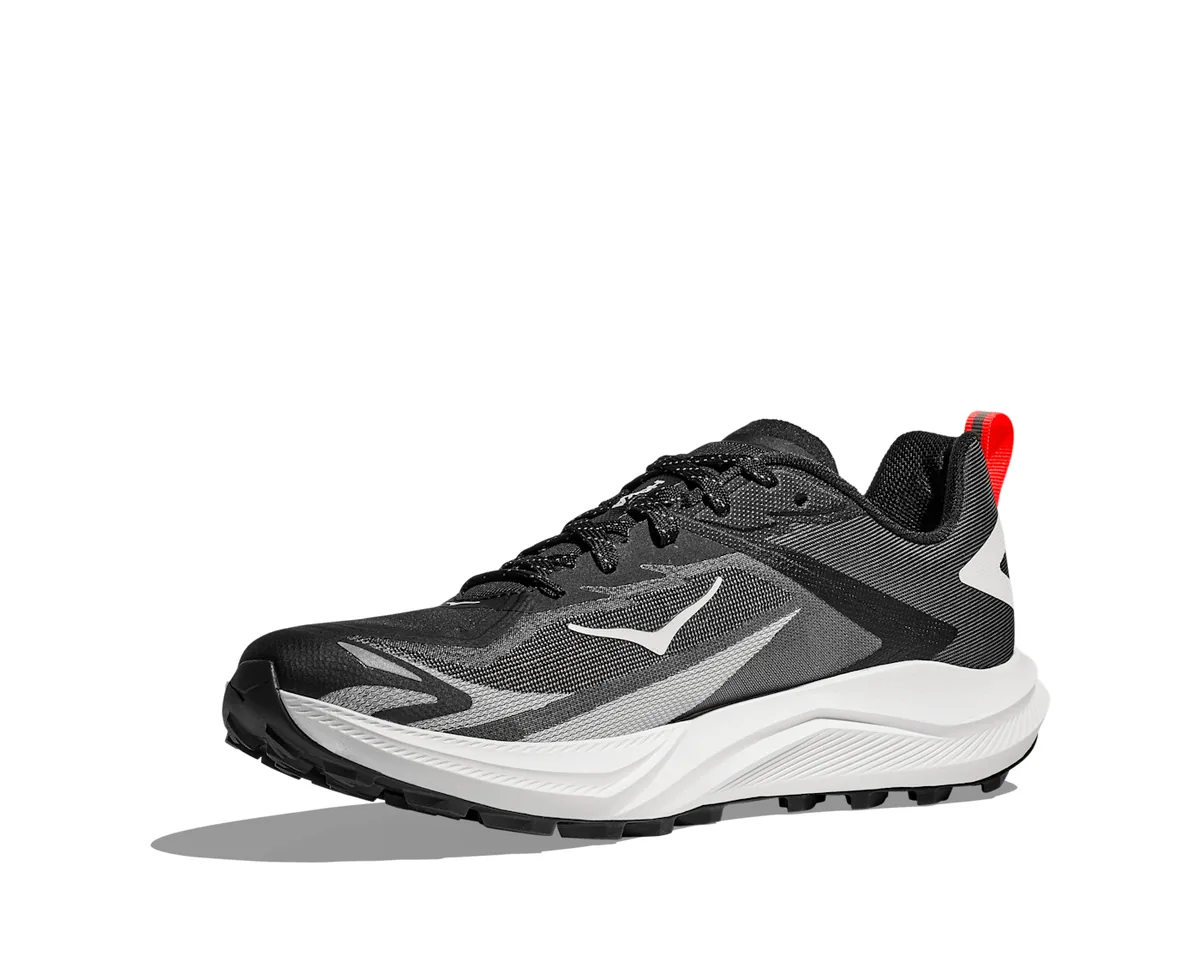
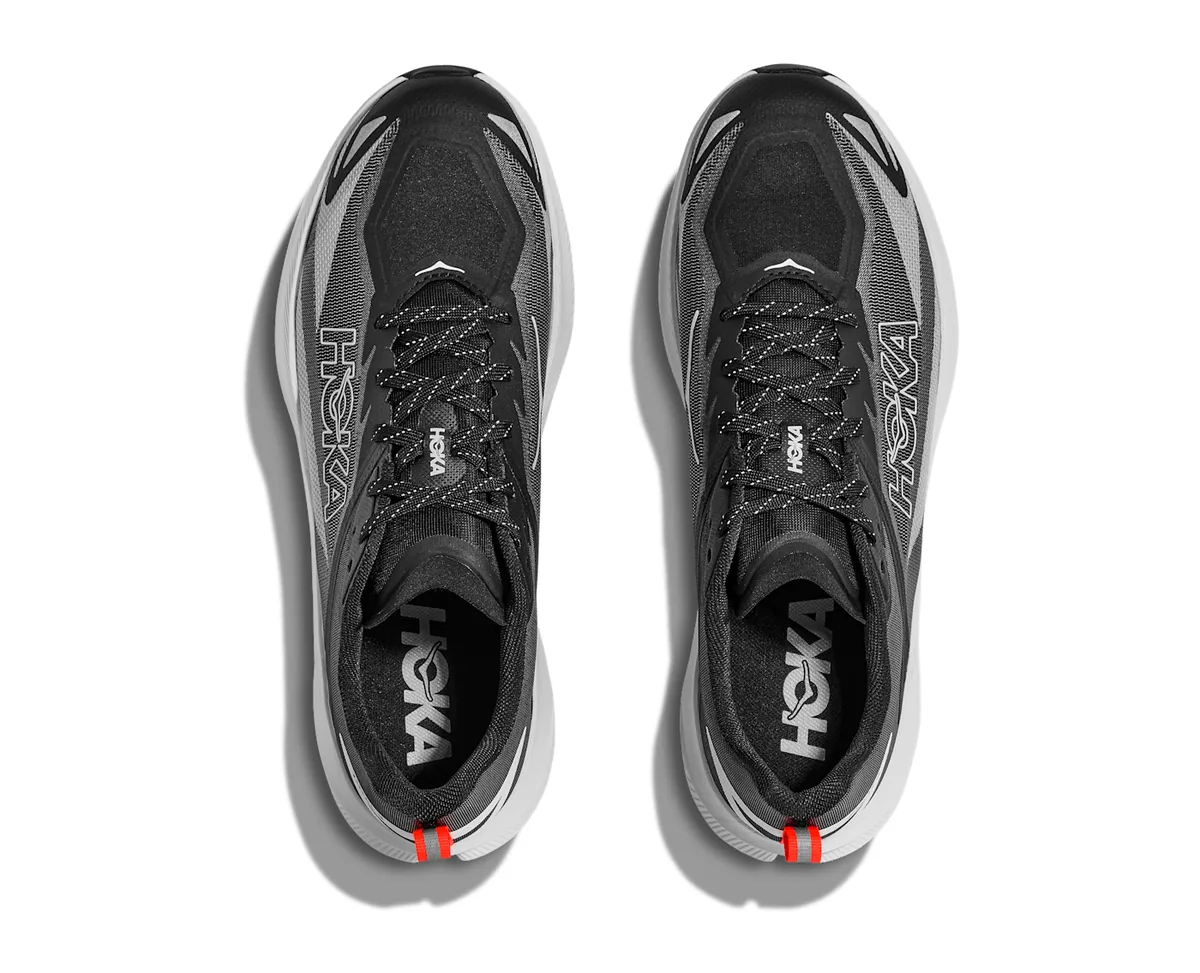
Best fast and light: pick the Zinal 3 for trail races and quicker runs on firm, dry trails.
- Lugs: 3.5-5 mm multidirectional (Road Trail Run)
- Outsole: HOKA sticky rubber
- Rock plate: no
- Stack: 31.8 mm heel / 26.8 mm forefoot (Road Trail Run)
- Drop: 5 mm
- Weight: 253 g, men’s (HOKA)
- Protection: toe cap
- Source: HOKA Zinal 3 product page and Road Trail Run review
The Zinal 3 is HOKA’s light trail racer. It now uses a supercritical EVA midsole, and Road Trail Run found it far more lively than version 2. At 253 g, it is the lightest shoe on this list.
HOKA switched from Vibram to its own sticky rubber with multidirectional lugs. Road Trail Run testers found strong grip on hardpack, gravel, and even road. The lower stack keeps you close to the ground for quick turns.
Pros
- Lightest shoe here at 253 g
- Supercritical EVA foam feels quick and lively
- Low, precise ride for turns and technical bits
- Multidirectional lugs grip hardpack and gravel
- Protective toe cap
Cons
- Not built for deep mud or very wet rock. Pick the Speedcross 6 or Speedgoat 7 for those days.
Who it’s for: trail racers and faster runners on firm, dry ground. Skip it if: you want deep cushioning for ultras.
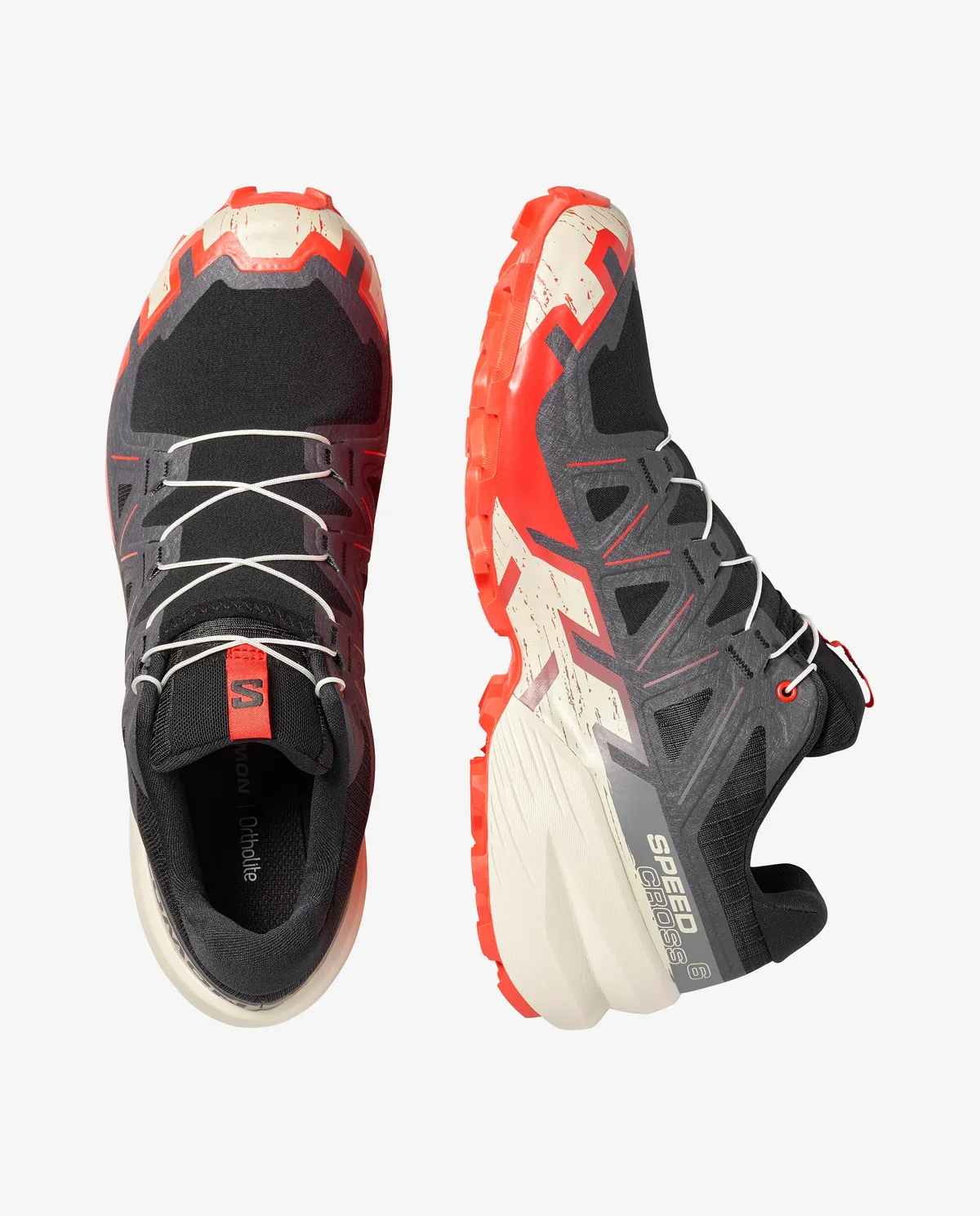
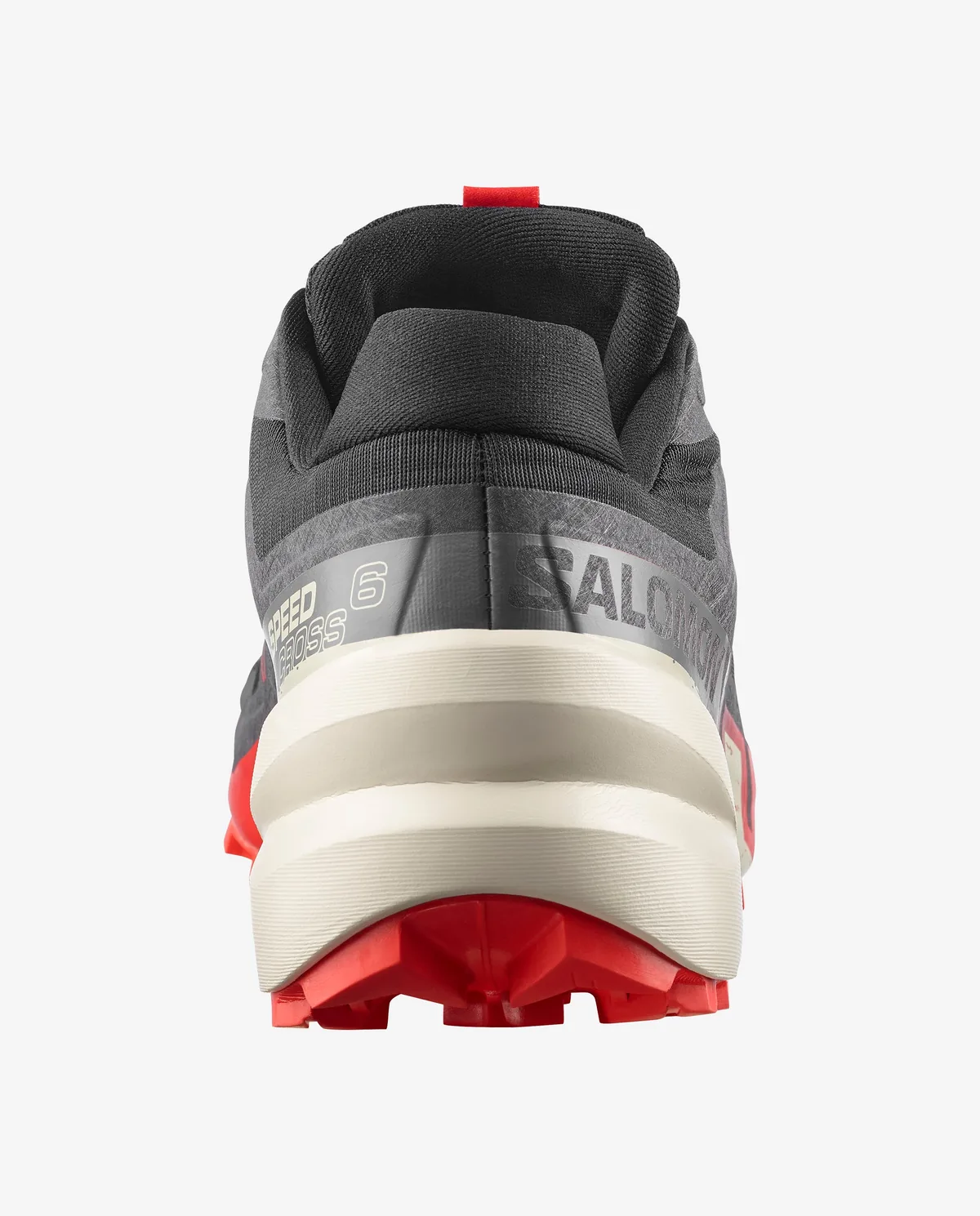
7. Salomon Speedcross 6: Best mud grip
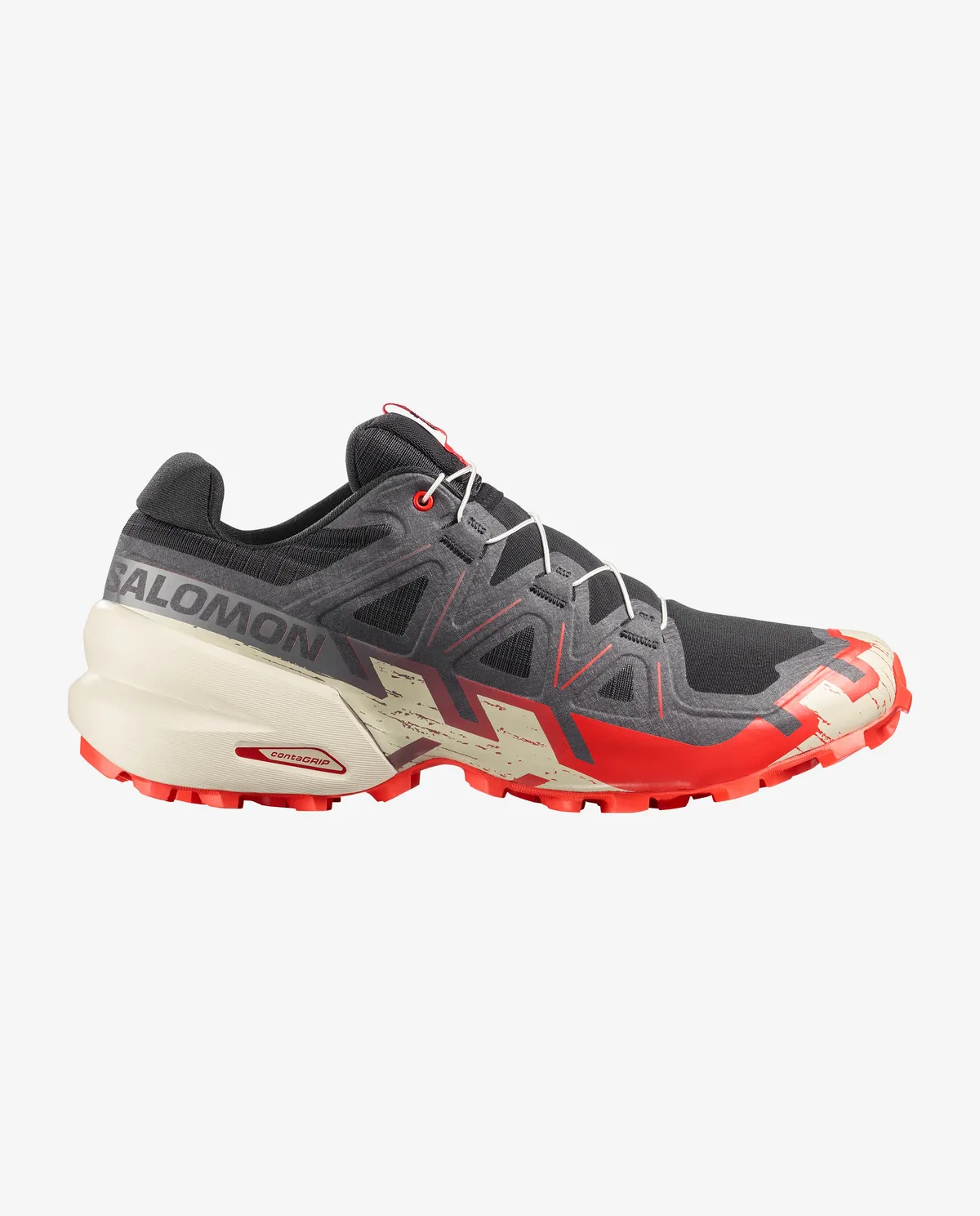
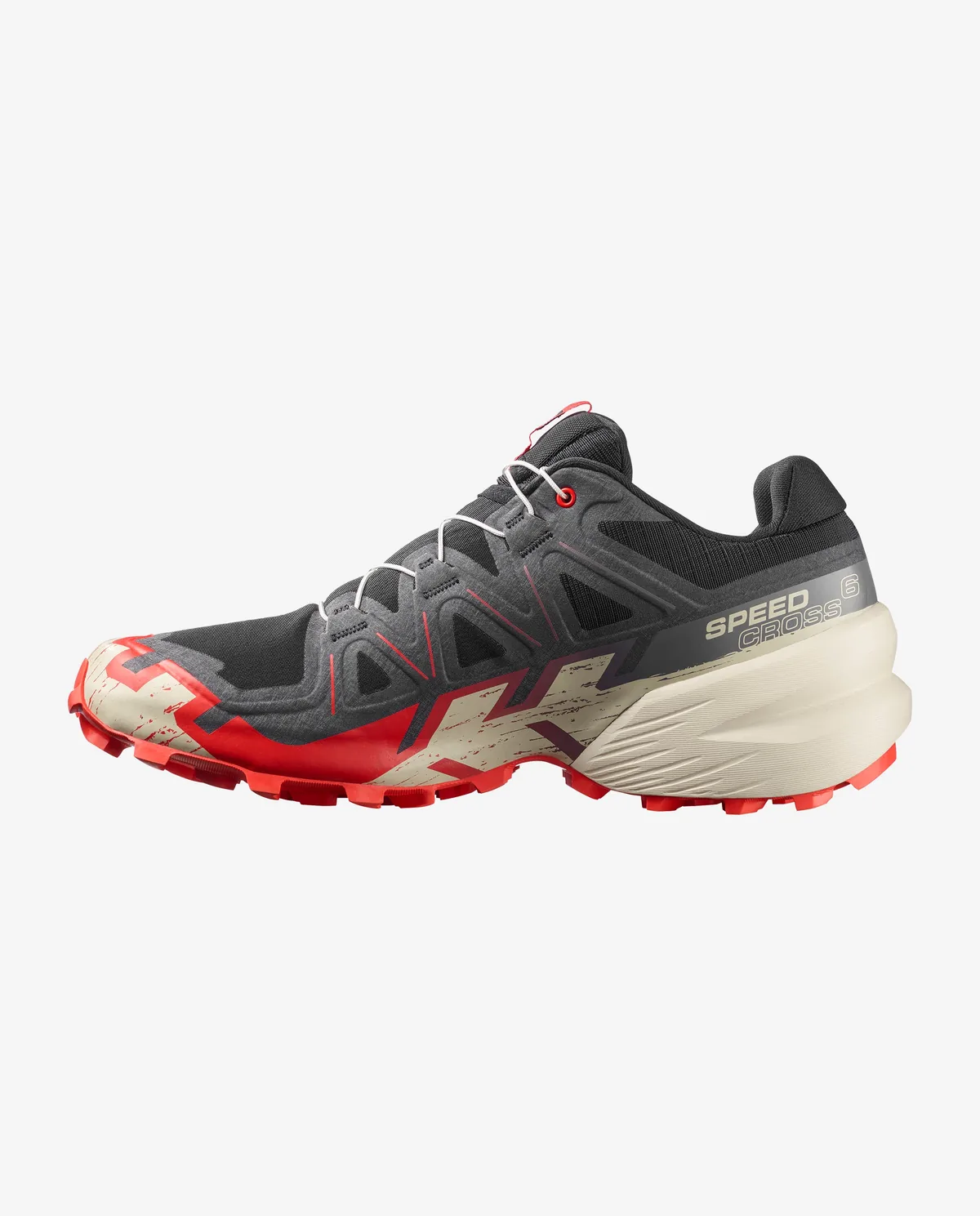
Best mud grip: pick the Speedcross 6 if your trails regularly turn to mud, wet grass, or soft snow.
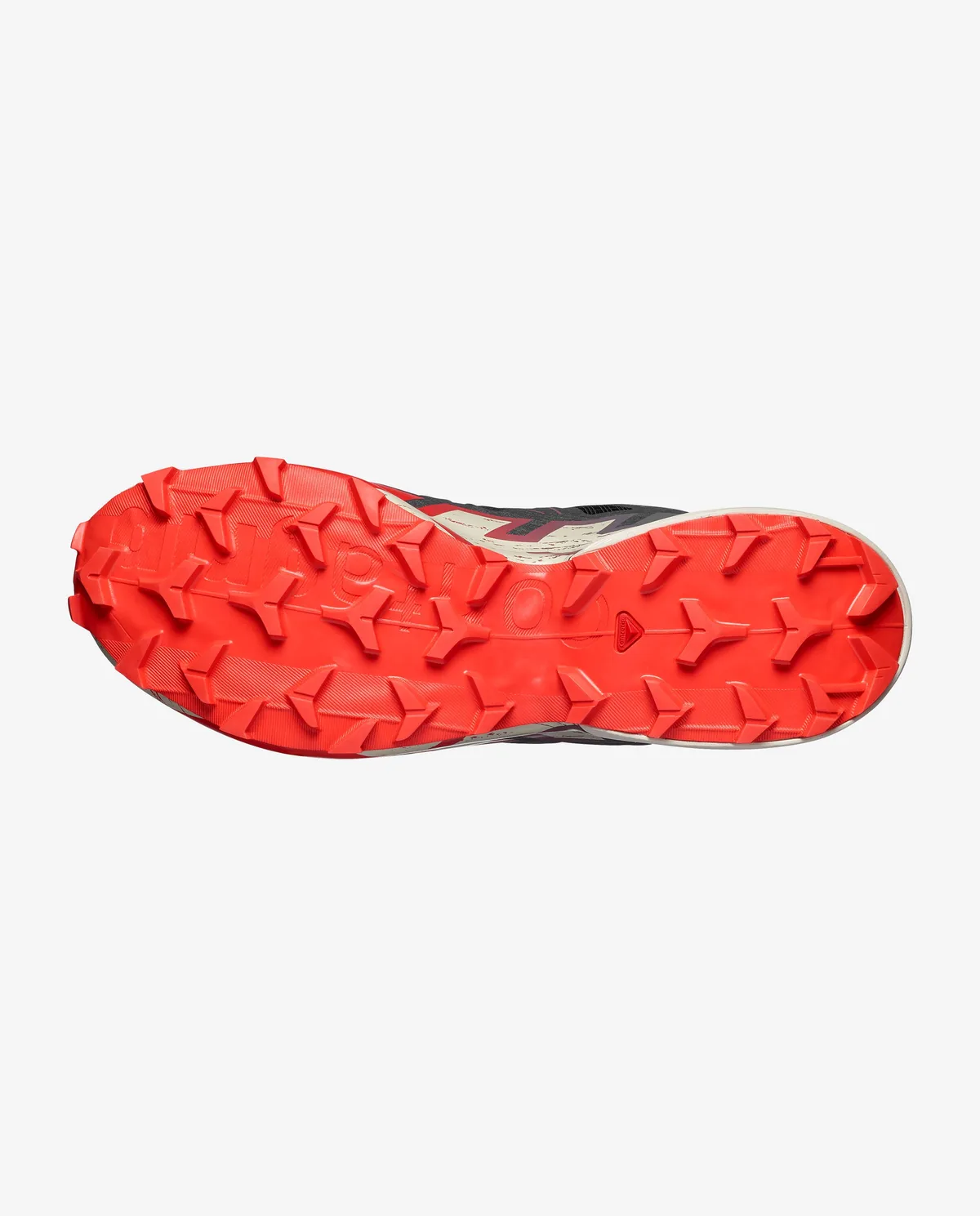
- Lugs: 5 mm chevron lugs (Salomon)
- Outsole: Mud Contagrip
- Rock plate: no
- Stack: 32 mm heel / 22 mm forefoot (Salomon)
- Drop: 10 mm
- Weight: 298 g, men’s (Salomon)
- Laces: Quicklace one-pull system
- Source: Salomon Speedcross 6 product page
Why is the Salomon Speedcross on this list? Few current trail shoes clear mud as effectively. Its 5 mm arrow-shaped lugs dig into soft ground and shed mud as you run. Salomon’s Mud Contagrip rubber is made for exactly that terrain.
The 10 mm drop feels closer to a road shoe, which helps heel strikers, and Quicklace lets you tighten the shoe with one pull. Salomon also sells a Speedcross 6 GORE-TEX version for cold, wet trails.
Pros
- Deep 5 mm chevron lugs for mud and soft ground
- Mud Contagrip rubber sheds muck well
- Quicklace for a fast, even fit
- 10 mm drop feels familiar to road runners
- GORE-TEX version sold for wet weather
Cons
- Soft lugs feel squirmy on pavement and hard rock. Wear it for mud days, not road-to-trail runs.
Who it’s for: runners on muddy, soft, or snowy trails who need aggressive traction. Skip it if: your trails are mostly hardpack or rock.
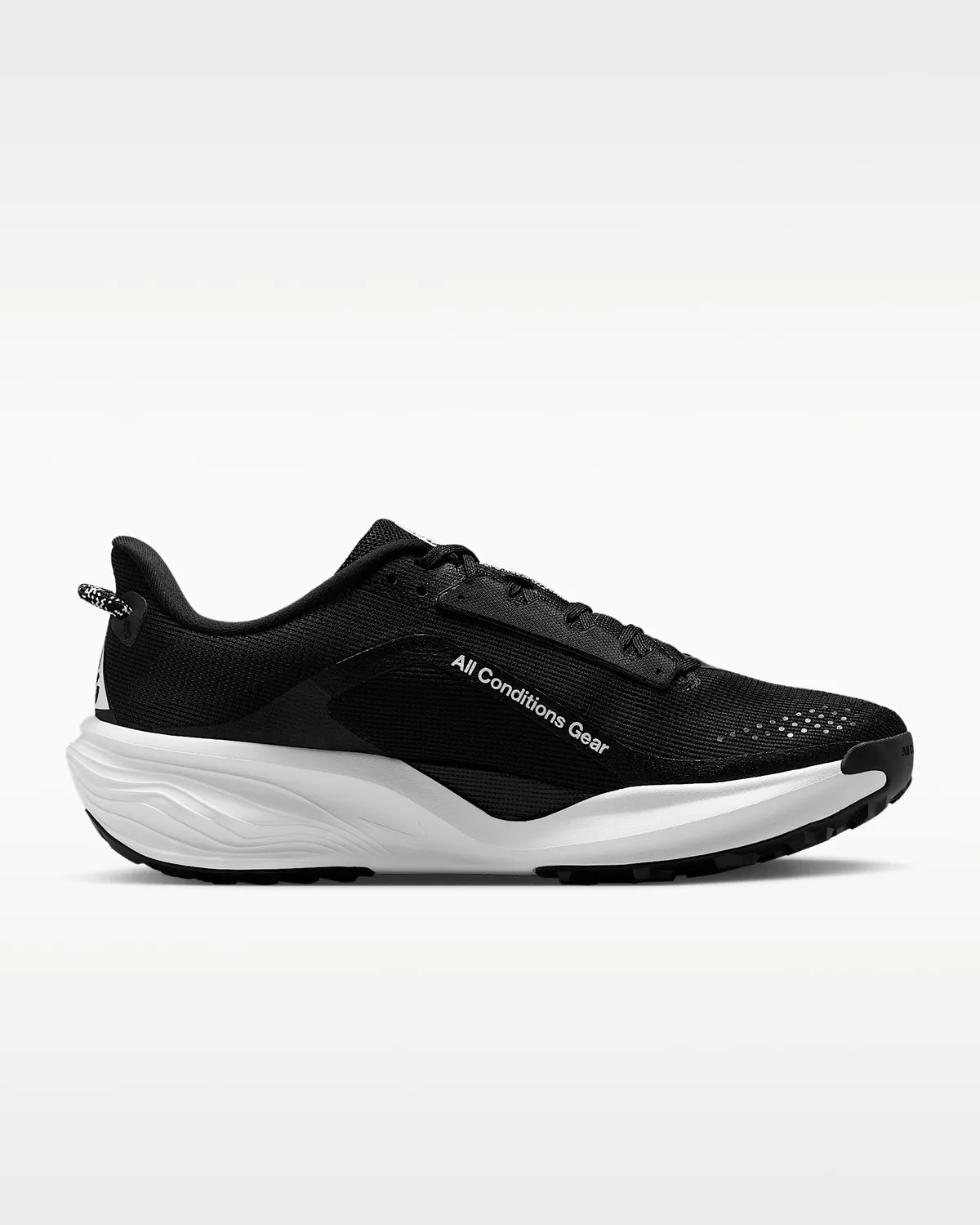
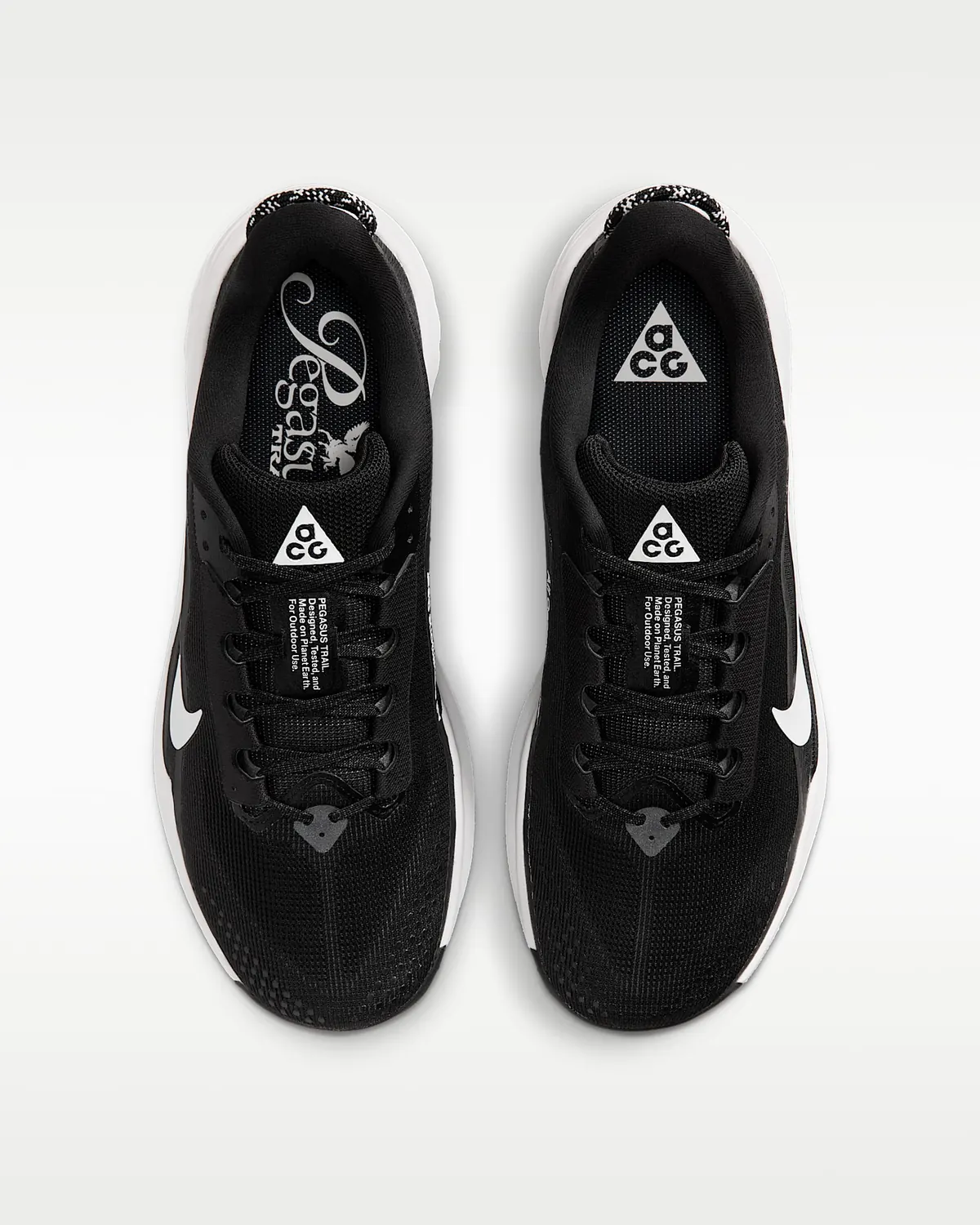
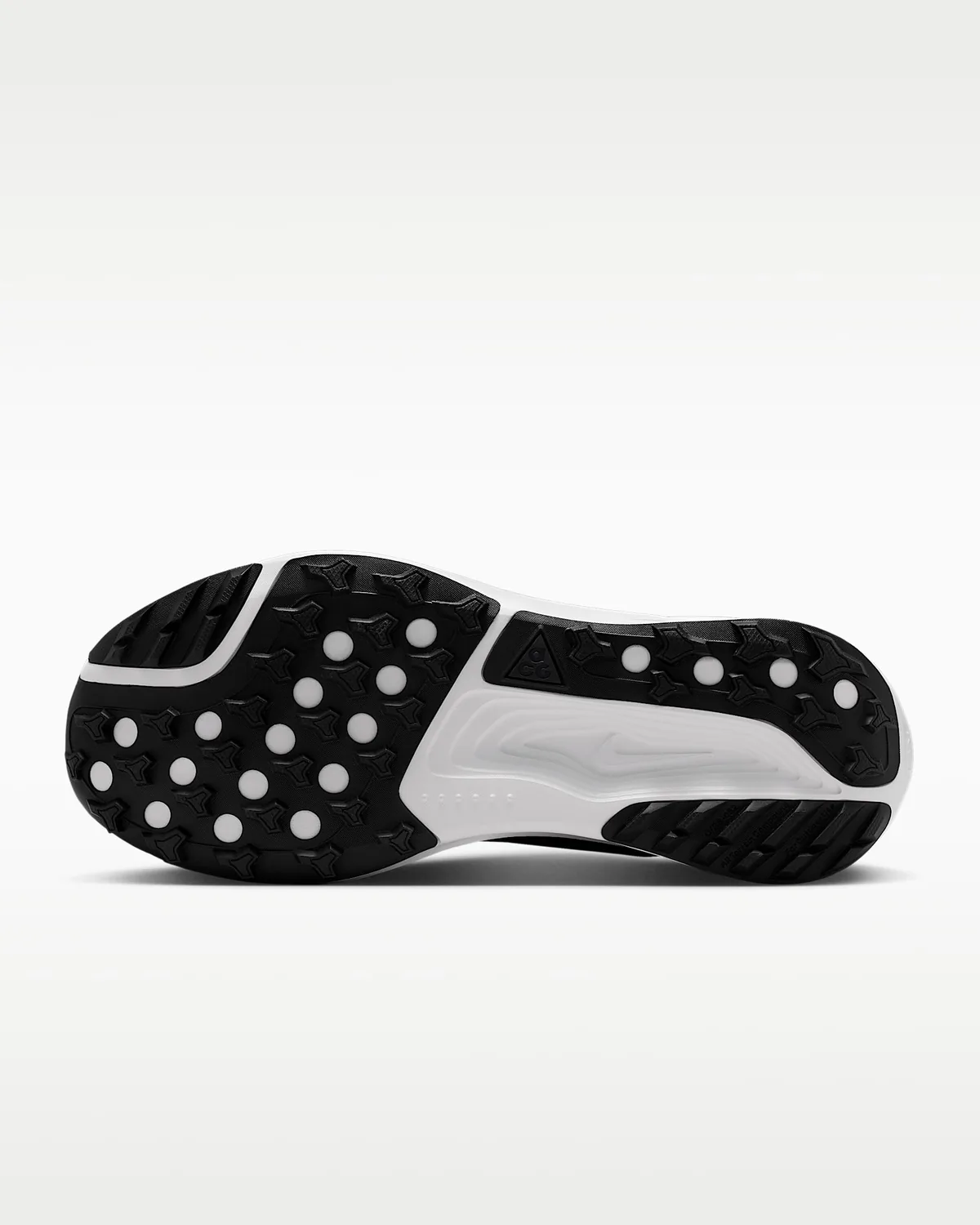
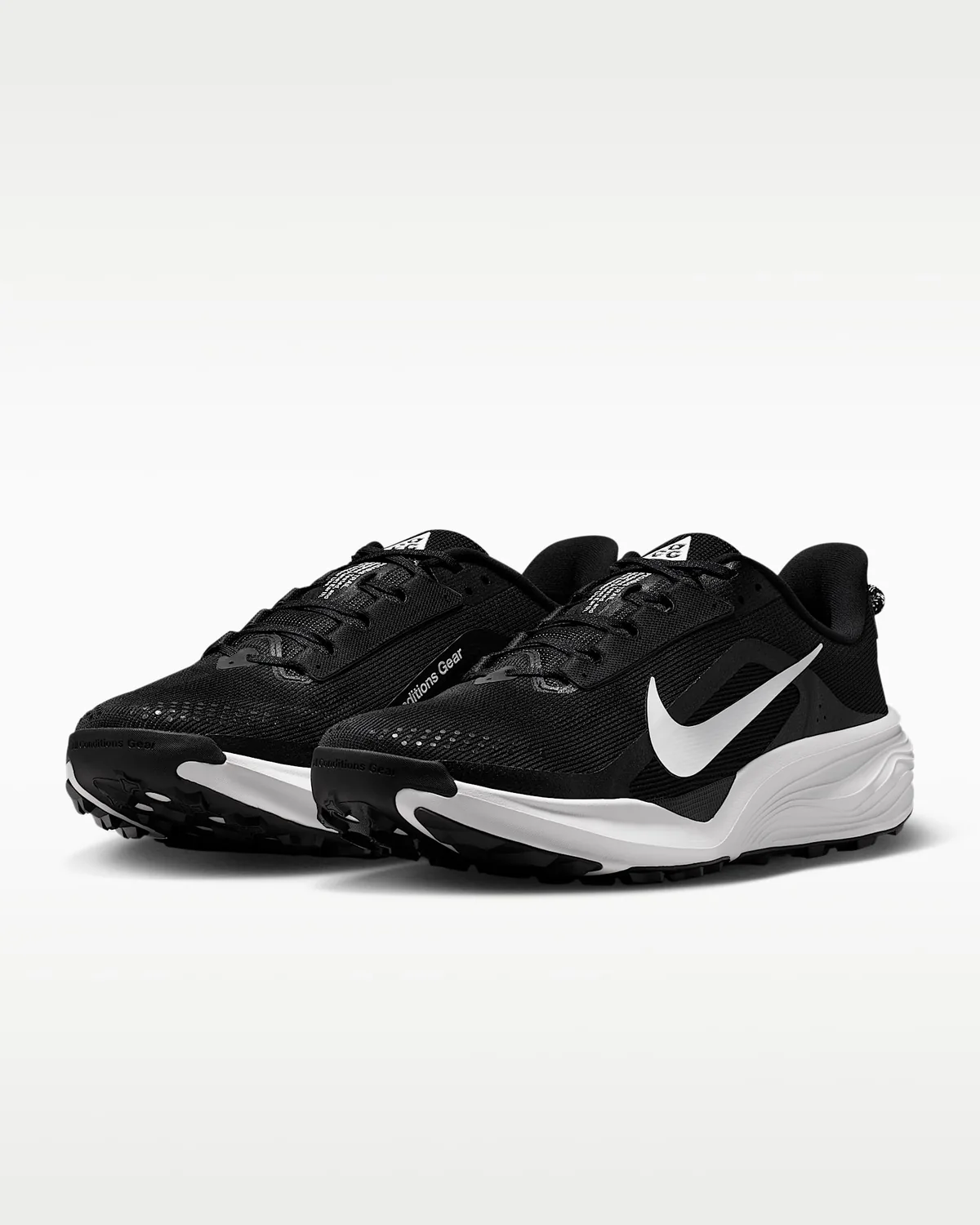
8. Nike ACG Pegasus Trail: Best road-to-trail
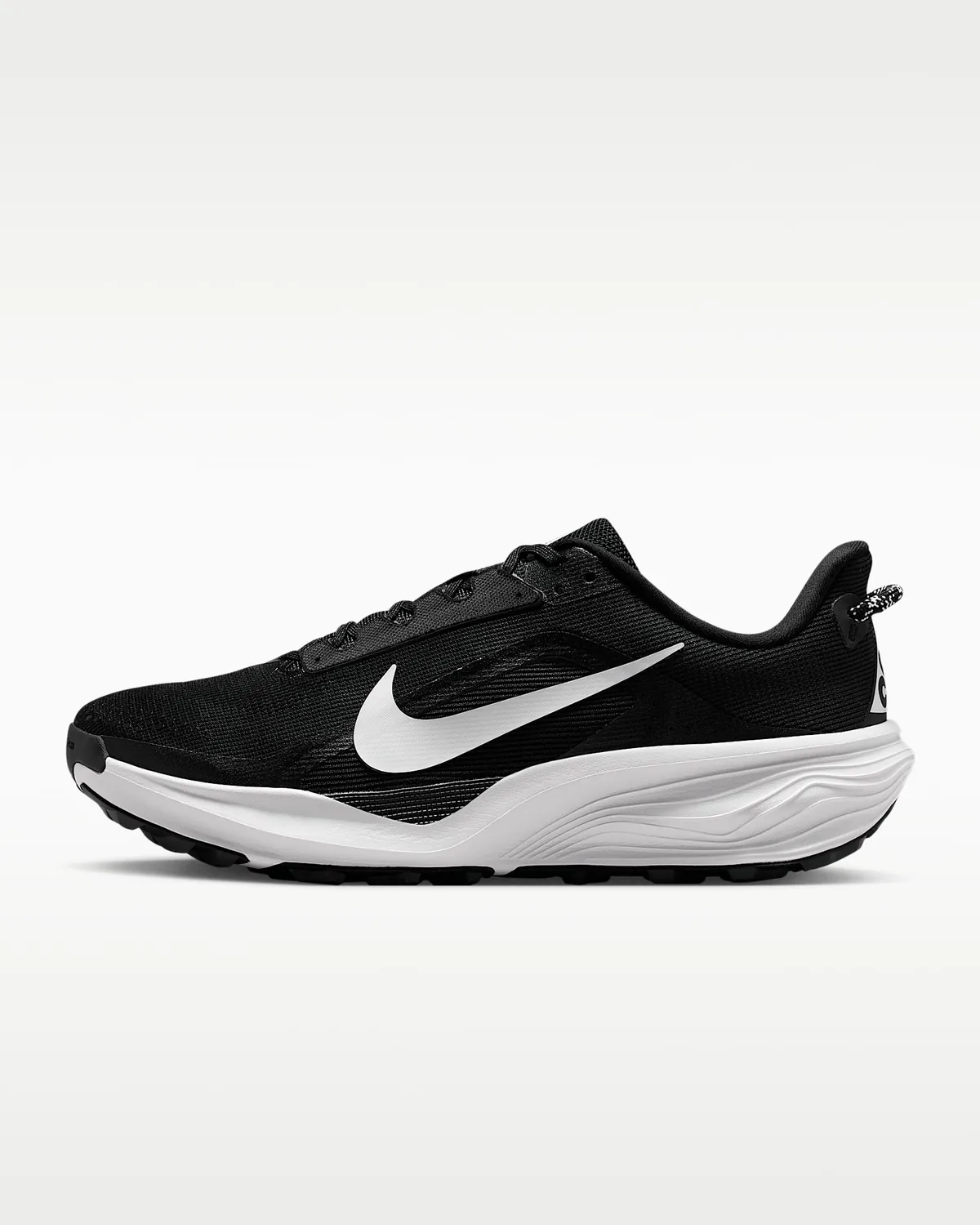
Best road-to-trail: pick the ACG Pegasus Trail if you regularly run on pavement to reach your trails.
- Lugs: 3.1 mm lab (RunRepeat)
- Rock plate: no
- Stack: 35 mm heel / 27 mm forefoot (Nike via RunRepeat)
- Drop: 8 mm
- Weight: 305 g, men’s 10 (Nike via RunRepeat)
- Foam: ReactX
- Toe box (lab): 76.0 mm, roomier than most
- Source: Nike ACG Pegasus Trail product page and RunRepeat lab review
Is the Nike Pegasus Trail the best Nike shoe for trail? For door-to-trail runs, it is the most practical current choice. The model now sits in Nike’s ACG line and feels like a road Pegasus with grippier rubber, so pavement miles stay relatively smooth.
The lugs are short, at 3.1 mm in the laboratory, which suits gravel paths, park trails, and dry singletrack. RunRepeat measured a 76.0 mm toe box, wider than the 73.2 mm laboratory average.
Pros
- Smooth ReactX ride on road and trail
- Roomier 76.0 mm toe box than most trail shoes
- Short lugs stay quiet and smooth on pavement
- 8 mm drop suits heel strikers
- Easy first trail shoe for road runners
Cons
- Short lugs slip in deep mud. Pick the Speedcross 6 or Speedgoat 7 for wet, soft trails.
Who it’s for: road runners trying trails and anyone who regularly mixes pavement with dirt. Skip it if: your trails are steep, wet, or technical.
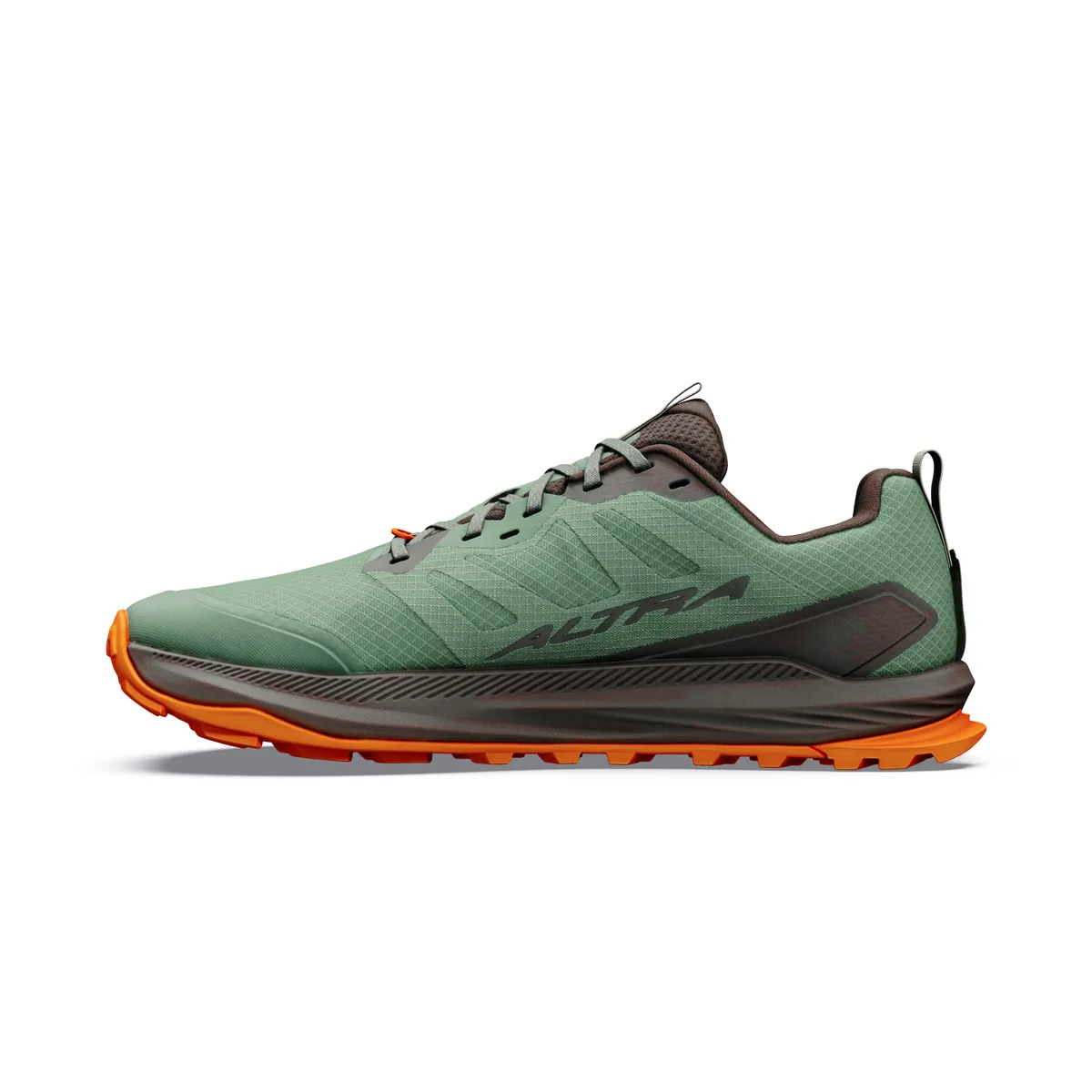
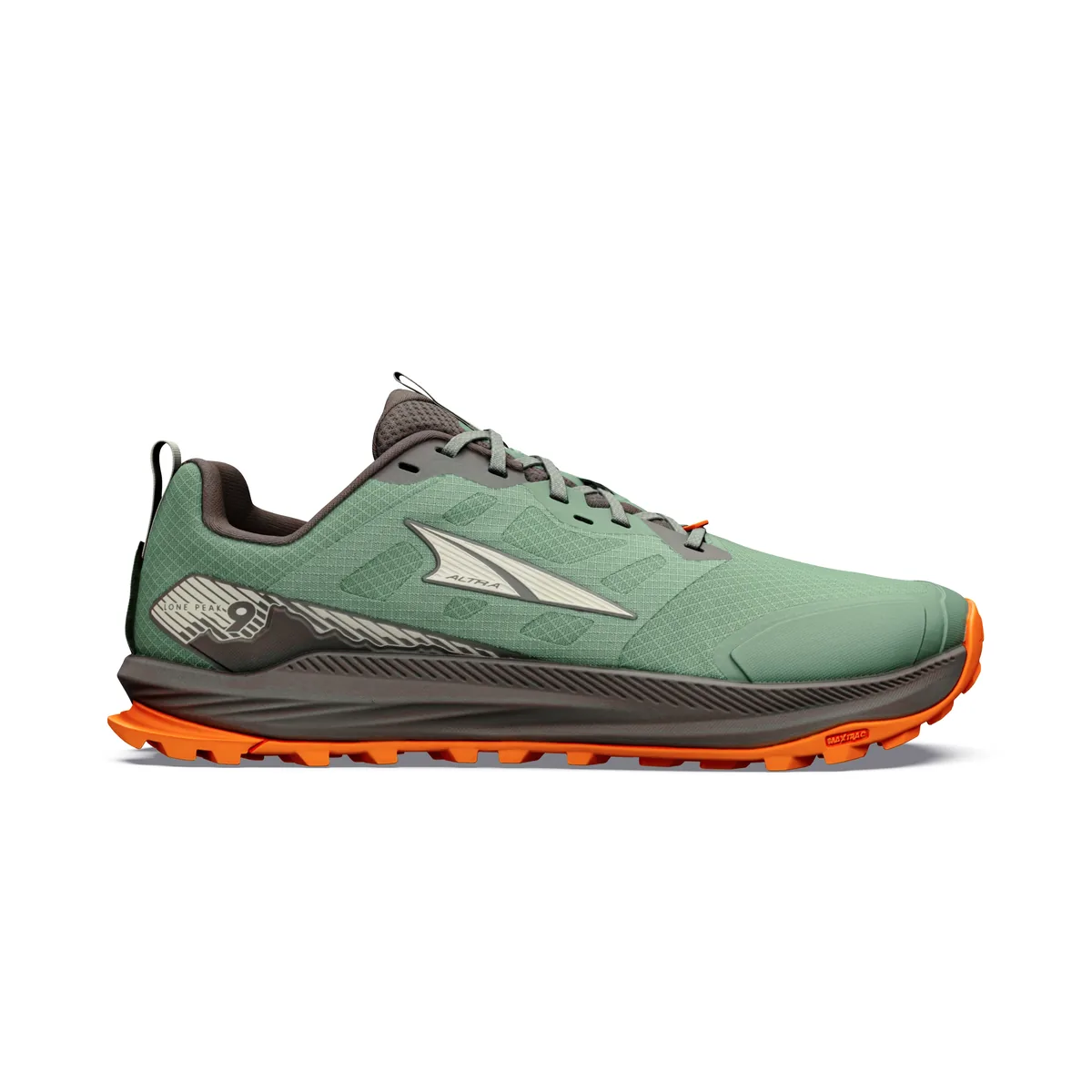
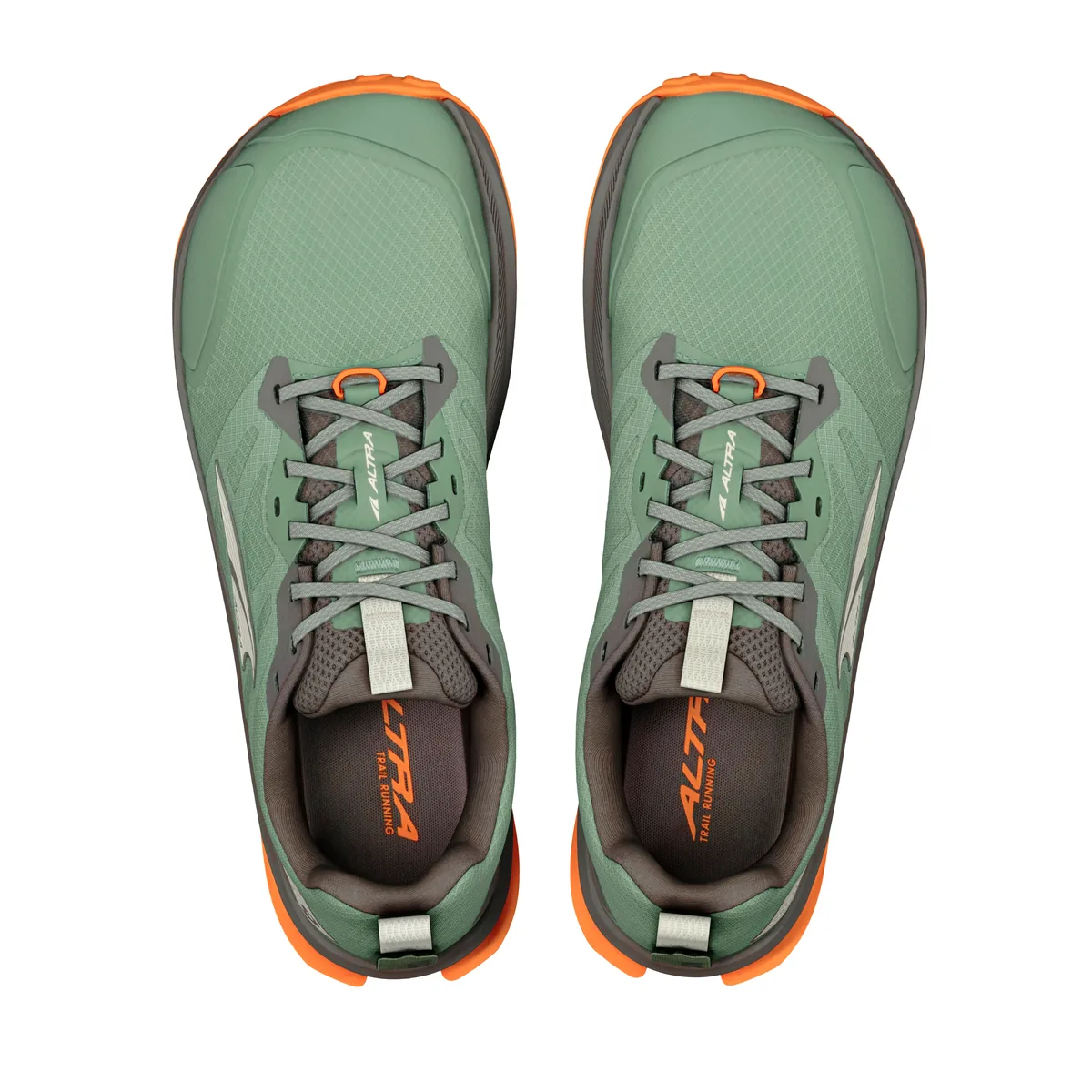
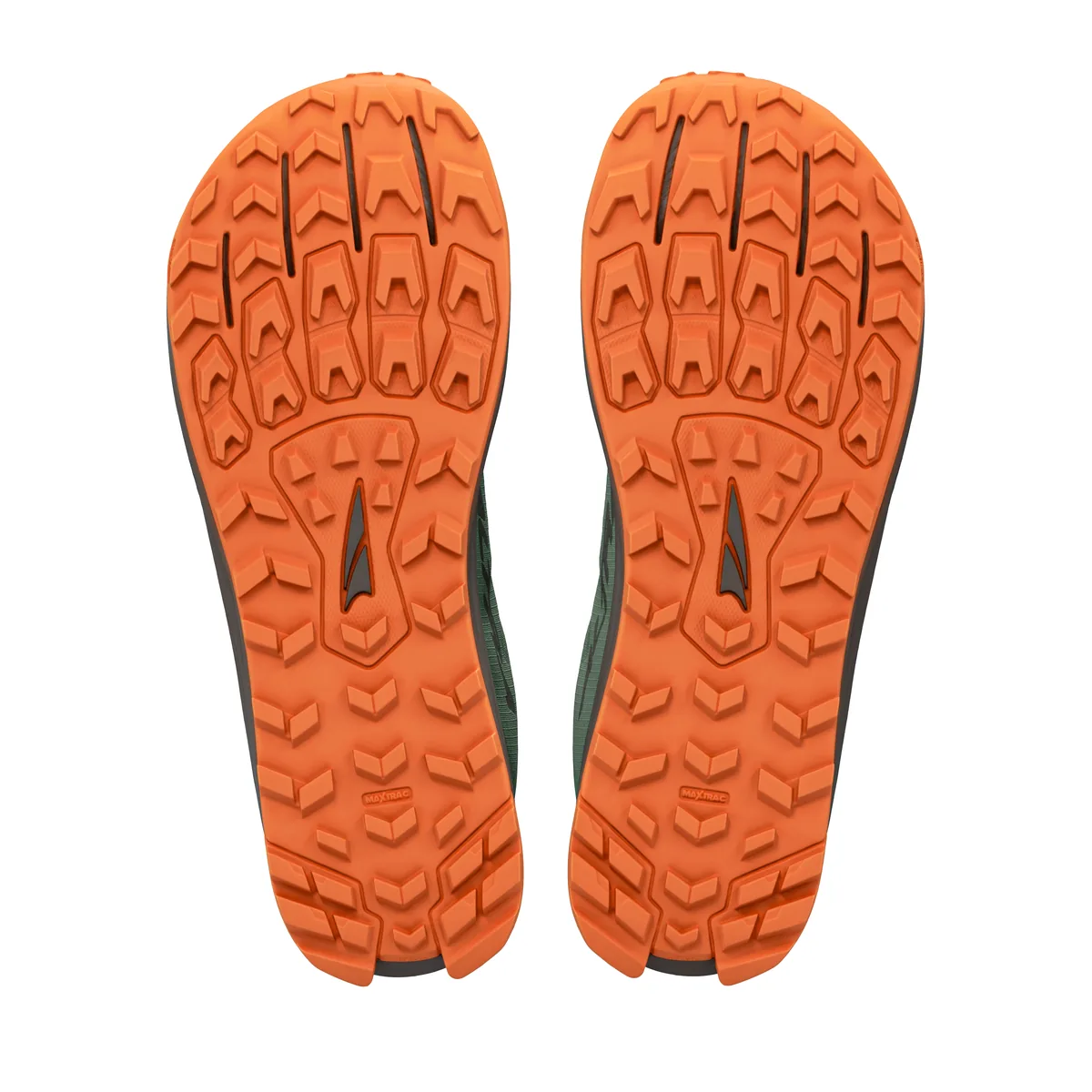
9. Altra Lone Peak 9: Best zero-drop trail shoe
Best zero-drop trail: pick the Lone Peak 9 if you want the roomiest trail toe box and a closer feel to the ground.
- Fit: Original FootShape, Altra’s roomiest last; also sold in wide
- Stack: 25 mm heel and forefoot (Altra)
- Drop: 0 mm
- Weight: 316 g / 11.15 oz, men’s (Altra)
- Outsole: MaxTrac, with a StoneGuard underfoot plate
- Support: neutral
- Source: Altra Lone Peak 9 product page
iRunFar named the Lone Peak 9 its best zero-drop trail shoe, and OutdoorGearLab picked it as the best trail shoe for wide feet. That follows from the Original FootShape last, which leaves space through the toes and midfoot, and Altra also sells a wide version.
The 25 mm zero-drop platform sits lower than the Olympus 7, so you feel the trail more clearly. A StoneGuard layer helps blunt sharp rocks, the MaxTrac outsole is meant to grip mixed terrain, and a GaiterTrap tab accepts a strapless gaiter. The model also has the American Podiatric Medical Association Seal of Acceptance.
Pros
- Original FootShape toe box is Altra’s roomiest trail fit
- Also sold in wide if you need volume through the midfoot
- StoneGuard adds underfoot protection on rock and roots
- MaxTrac outsole and GaiterTrap tab suit mixed trail days
- APMA Seal of Acceptance
Cons
- The 25 mm stack gives less cushion than the Olympus 7 or Speedgoat 7 on very long, rocky days.
- Zero drop can fatigue calves if you change too quickly; build mileage over two to three weeks.
Who it’s for: hikers and trail runners who want maximum toe room and closer ground feel. Skip it if: you want maximum cushioning or you are not ready for a zero-drop platform.
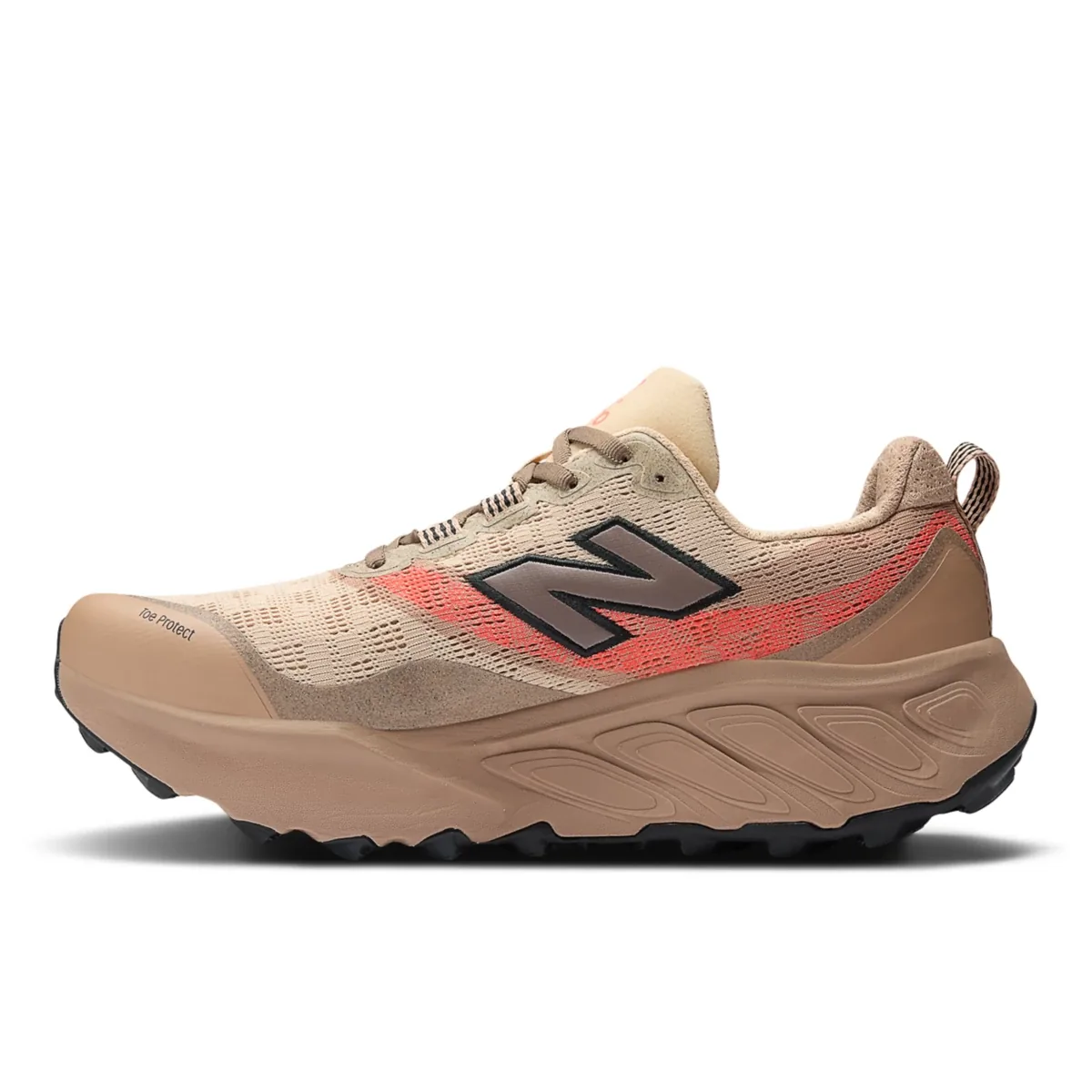
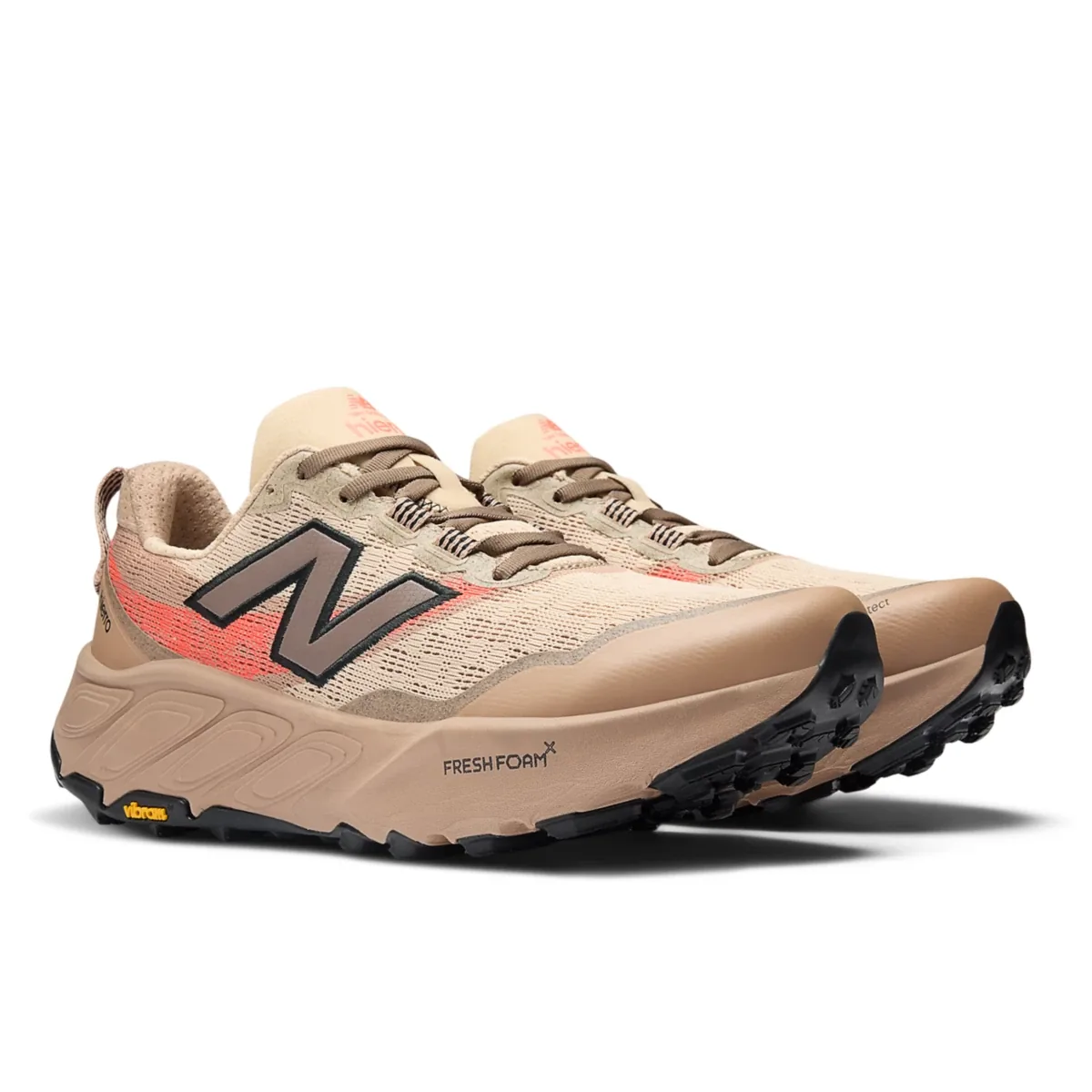
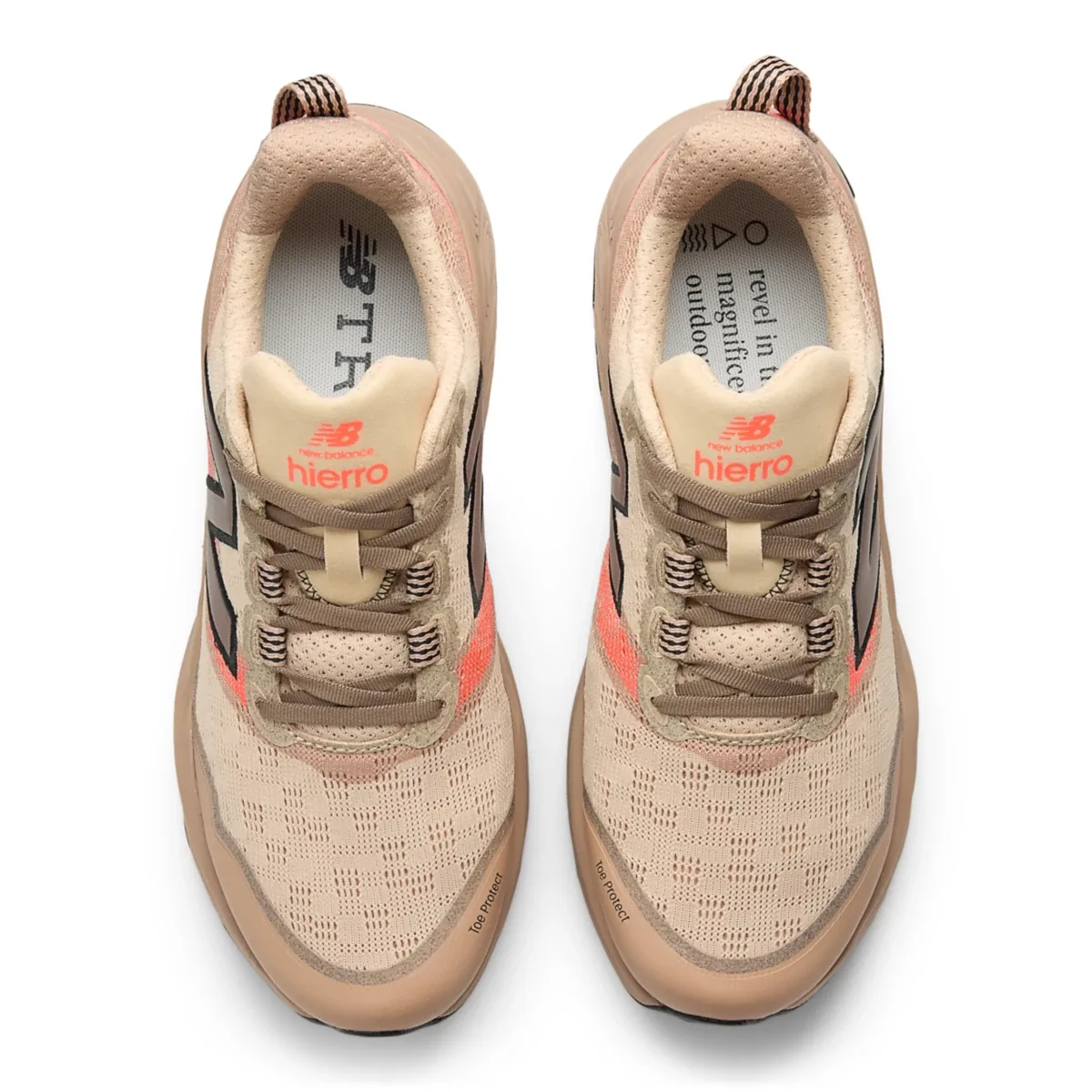
10. New Balance Fresh Foam X Hierro v9: Best cushioned trail in wide widths
Best cushioned trail with wide widths: pick the Hierro v9 if you want deep foam, Vibram traction, and true wide or extra-wide sizing.
- Fit: standard through 2E, 4E (XW) and 6E (XXW)
- Stack: about 42 mm heel / 38 mm forefoot (REI / reviews of current v9)
- Drop: 4 mm
- Weight: about 293"294 g, men’s (published reviews of the current v9)
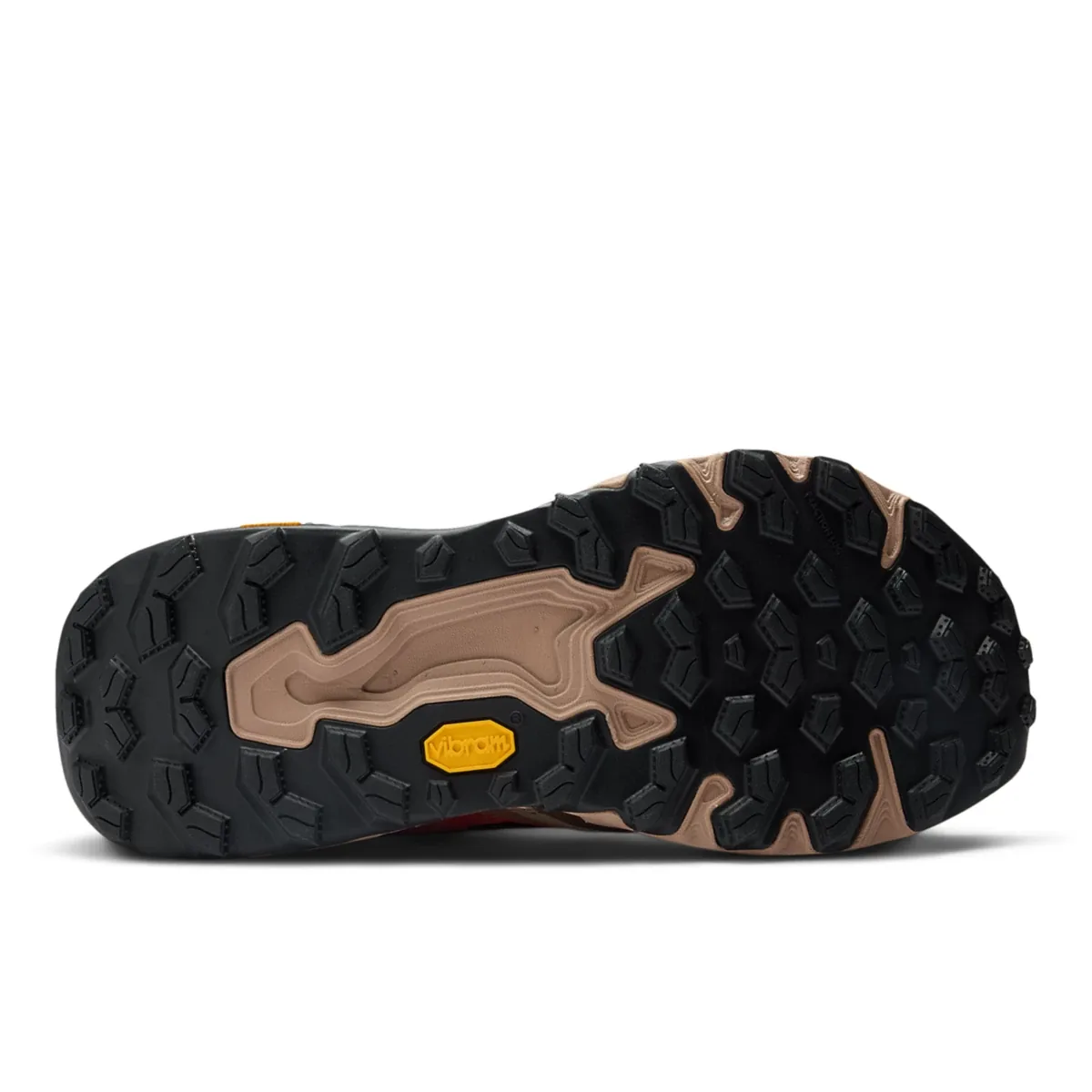
- Outsole: Vibram Megagrip with 6 mm lugs and Traction Lug texture
- Support: neutral, with a firmer lower foam layer
- Source: New Balance Fresh Foam X Hierro v9 product page and REI’s 2026 trail-shoe test
REI gave the Hierro v9 its 2026 Editors’ Choice award after testing current trail shoes. The dual-density Fresh Foam X midsole puts a softer layer under the foot and a firmer layer underneath for a more planted feel. The cushioning stack is among the tallest on this list.
A Vibram Megagrip outsole with 6 mm lugs handles wet and dry ground, and a Toe Protect cap guards against rocks. This is not a foot-shaped shoe like an Altra or Topo. If your toes feel cramped, choose a 2E or 4E width instead of only sizing up.
Pros
- Sold in a wide range of widths, including extra-wide and 6E
- Tall dual-density Fresh Foam X cushion for long trail days
- Vibram Megagrip outsole with 6 mm lugs
- Toe Protect cap shields the front of the shoe on rocky trails
- 4 mm drop is a mild change from most road shoes
Cons
- The standard width is not foot-shaped; runners who only need toe room should start with the Lone Peak 9 or Ultraventure 5, or order a 2E / 4E Hierro.
- Some buyers say it runs a little short, so try a half size up if you are between sizes.
Who it’s for: trail runners who need width through the whole shoe and plenty of cushioning. Skip it if: you want a light, close-to-ground shoe.
Best trail running shoes compared side by side
This comparison table covers lug depth, plates, stack, drop, and weight. Laboratory lug numbers come from RunRepeat, brand numbers are marked, and “n/a” means no source published that figure.
| Model | Lug depth (mm) | Rock plate | Stack (mm) | Drop (mm) | Weight (g) | Best terrain |
|---|---|---|---|---|---|---|
| HOKA Speedgoat 7 | 5 (lab 4.5) | No | 40 / 35 | 5 | 275 | Mixed, mud, long runs |
| Brooks Cascadia 20 | 4 (lab 3.4) | No (toe cap) | 38 / 32 | 6 | 306 | Rocky, rooty |
| Saucony Peregrine 16 | lab 3.5 | Woven forefoot | 32 / 28 | 4 | 271 | All-round |
| Altra Olympus 7 | n/a | No | 33 / 33 | 0 | 325 | Rocky, long days |
| Topo Ultraventure 5 | n/a | No | 35 / 30 | 5 | 303 | Hardpack, gravel, long runs |
| HOKA Zinal 3 | 3.5-5 | No | 31.8 / 26.8 | 5 | 253 | Hardpack, racing |
| Salomon Speedcross 6 | 5 | No | 32 / 22 | 10 | 298 | Mud, soft ground, snow |
| Nike ACG Pegasus Trail | lab 3.1 | No | 35 / 27 | 8 | 305 | Road-to-trail, gravel |
| Altra Lone Peak 9 | n/a | StoneGuard | 25 / 25 | 0 | 316 | Mixed trail, hiking, wide feet |
| New Balance Hierro v9 | 6 | No (toe cap) | 42 / 38 | 4 | 294 | Long runs, rock, wet and dry trail |
Trail shoes by terrain: which lugs do you need?
Match lug depth to the ground you run on most often. Deep lugs win in mud, while shorter lugs feel better on hardpack and road. This matrix maps each pick to four common types of terrain.
| Terrain | Lug depth to look for | Also look for | Picks from this list |
|---|---|---|---|
| Mud, wet grass | 5 mm or more | Wide-spaced lugs that shed mud | Speedcross 6 (5 mm), Speedgoat 7 (5 mm) |
| Rock and roots | 3.5-5 mm | Sticky rubber, toe cap, forefoot plate | Cascadia 20, Peregrine 16, Olympus 7, Lone Peak 9, Hierro v9 |
| Hardpack, gravel | 3-4 mm | Lighter weight, smooth roll | Zinal 3, Ultraventure 5, Peregrine 16, Lone Peak 9 |
| Road-to-trail | 3 mm or less | Road-like foam | ACG Pegasus Trail (lab 3.1 mm) |
| Snow, cold slush | 5 mm | GORE-TEX upper, gaiter | Speedcross 6 GTX version, Speedgoat 7 with a gaiter |
What makes a running shoe good for trail?
A good trail shoe grips loose ground, protects your foot from rocks, and holds your foot steady on uneven terrain. REI describes trail shoes as having bigger lugs, stiffer midsoles, and tougher uppers than road shoes (REI).
Lug depth and outsole rubber
Lugs are the raised studs on the outsole. RunRepeat’s laboratory average is 3.5 mm across trail shoes, and anything over 4.5 mm is deep enough to suit mud. Sticky rubber matters as much as depth. Vibram says Megagrip grips on both wet and dry surfaces (Vibram), and five picks here use Vibram rubber.
Rock plate and protection
A rock plate is a thin layer in the sole that blunts sharp stones. None of these picks uses a hard full-length plate; the Peregrine 16 has a soft woven forefoot layer instead. A toe cap, like the one on the Cascadia 20 and Zinal 3, protects against stubbed toes.
Cushion and stack
Stack is the foam height under your foot. Over 35 mm, like the Speedgoat 7, suits long runs and ultra marathons, while around 30 mm, like the Peregrine 16, gives more ground feel. More foam is not safer by default, as we explain in the research section below.
Fit and toe protection
Your heel should feel locked, with a thumb’s width of room in front of your toes for steep descents. Our guide on how trail running shoes should fit walks through that process step by step. Runners with wide feet should look at the Olympus 7, Ultraventure 5, or Lone Peak 9.
Waterproof (GORE-TEX) or not
A GORE-TEX lining keeps out puddles, snow, and cold rain, but it traps heat and dries slowly once water gets in over the top. Choose GORE-TEX for cold, wet winters, and choose mesh for summer, warm rain, and river crossings.
Which trail running shoes are best for wide feet?
The Altra Olympus 7, Topo Ultraventure 5, and Altra Lone Peak 9 are our top trail picks for wide feet. The first two use foot-shaped toe boxes, and the Ultraventure 5 and Lone Peak 9 also come in a wide size. The Speedgoat 7, Cascadia 20, and Hierro v9 come in wide versions if you like their ride.
Are trail running shoes good for overpronation?
Few trail shoes have a medial post, but a wide, stable base still helps. The Cascadia 20 is the steadiest pick here, and its broad platform keeps your foot centered on rocks and roots. Runners with flat feet often like it too. Pair any trail shoe with your orthotic if your doctor prescribed one, and learn more about stability running shoes.
What research says about trail shoes and injuries
No shoe type has been proven to prevent running injuries. A 2022 Cochrane review found that the evidence that shoe type changes injury rates was very low to low certainty (Relph et al., Cochrane).
Comfort may be the best practical guide. Researchers suggest runners choose the shoe that feels most comfortable, using what they call a “comfort filter” (Nigg et al., BJSM). Training load matters more than gear, and overuse injuries can follow when there is too little rest between hard sessions (Hreljac, MSSE).
Bone stress matters as well. The AAOS notes that worn-out shoes and doing “too much, too soon” both raise stress-fracture risk (AAOS). A study of barefoot runners found forefoot strikers had smaller impact forces than shod heel strikers (Lieberman et al., Nature). That does not prove zero-drop shoes prevent injury, so change drop gradually if you switch.
Can you hike in trail running shoes?
Yes, trail running shoes work well for day hikes and faster hiking with a light pack, and they are lighter and dry faster than boots. The Cascadia 20, Olympus 7, Ultraventure 5, and Lone Peak 9 are the best hikers here. Read more about trail runners for hiking before a longer trip.
Can you run on roads in trail shoes?
Yes, but deep lugs wear faster and feel squirmy on pavement, so short-lug shoes handle mixed routes better. The ACG Pegasus Trail and Ultraventure 5 are made for those days. Keep the Speedcross 6 for mud, since its soft lugs wear down quickly on asphalt.
How we chose these shoes
We built this list from official brand specifications, independent laboratory data, clinical guidance, and a check of current Amazon listings. HealthSOP did not test these shoes hands-on, so we do not assign star ratings.
- Current models only: each shoe is the newest version on sale on November 15, 2026.
- Lab data: lug depth, toe-box width and weights from RunRepeat lab tests where published.
- Brand specs: stack, drop, weight and features from each brand’s product page.
- Clinical guidance: AAOS, a Cochrane review and peer-reviewed studies on PubMed.
- Search check: we read the pages ranking for this topic today, including OutdoorGearLab, Runner’s World and RunRepeat.
- Availability: we opened each men’s Amazon listing and matched the model and version.
Written by Lora Nicolas for HealthSOP. For road picks and every other runner type, see our best running shoes guide.
Best trail running shoes for women and men
All ten picks come in men’s and women’s versions. Women’s models use a women’s last with a narrower heel. Specifications on this page are for men’s sizes, so women’s versions are usually a little lighter. Women with wide feet often do well in the Olympus 7, Ultraventure 5, or Lone Peak 9.
If you are dealing with heel pain, see our best running shoes for plantar fasciitis and our guide to plantar fasciitis from running.
Which trail shoe should you pick?
Pick the HOKA Speedgoat 7 unless one of the rows below sounds more like your usual terrain.
| If you… | Pick | Why |
|---|---|---|
| Want one shoe for most trails | Speedgoat 7 | 5 mm Megagrip lugs, 40 / 35 mm cushion |
| Run rocky trails or weigh more | Cascadia 20 | Wide, stable base, toe cap |
| Want one lighter shoe for everything | Peregrine 16 | Full Megagrip, 271 g |
| Have wide feet or bunions | Olympus 7 | Altra’s roomiest toe box |
| Want roomy and plush with a 5 mm drop | Ultraventure 5 | 35 / 30 mm stack, wide sizes |
| Race or run fast on hardpack | Zinal 3 | 253 g, quick foam |
| Run in mud or snow | Speedcross 6 | 5 mm chevron lugs, GTX option |
| Start your trail runs on pavement | ACG Pegasus Trail | Road-like ride, short lugs |
| Want zero drop and a roomy trail toe box | Lone Peak 9 | Original FootShape fit, StoneGuard protection and wide sizing |
| Need deep cushion and true wide widths | Hierro v9 | Tall Fresh Foam X stack, 6 mm Vibram lugs and 2E to 6E widths |
Want just one starting point? The Speedgoat 7 is where we would begin for most trail runners.
Frequently asked questions
What makes a good trail running shoe?
A good trail running shoe grips loose ground and protects your foot. Look for lugs of 3.5 mm or more, sticky rubber such as Vibram Megagrip, and a toe cap. A secure heel and some room for your toes matter as well, so pick the lug depth that matches your usual terrain.
How should trail running shoes fit?
Trail running shoes should hold your heel firmly and leave a thumb’s width in front of your longest toe. That space stops your toes from hitting the front on downhills, and the midfoot should feel snug rather than tight. Try shoes on late in the day with your usual trail socks.
You can read more detail in our guide on how trail running shoes should fit.
Should trail running shoes be waterproof?
Only if you run in cold, wet weather or snow. GORE-TEX keeps out puddles and slush, but it is warmer and dries slowly once water gets in over the top. For summer runs and stream crossings, mesh uppers drain and dry faster, and many runners own one of each.
How do you clean trail running shoes?
Knock off dried mud, then scrub with warm water, mild soap, and a soft brush. Pull out the insoles and laces and wash them on their own. Stuff the shoes with newspaper and air-dry them away from heaters, and do not use a dryer, since heat can weaken the glue.
You can read more detail in our guide on how to clean running shoes.
How long do trail running shoes last?
Most trail running shoes last about 300 to 500 miles, though rocky trails and road miles wear lugs down faster. Replace them when the lugs are worn flat, the foam feels dead, or the upper tears. Worn-out shoes lose shock absorption, which the AAOS links to stress fractures.
You can read more detail in our guide on how long running shoes last.
Are trail running shoes good for walking?
Yes, trail running shoes make good walking and hiking shoes because they grip well on gravel, grass, and dirt paths and weigh less than boots. Pick a cushioned model like the Ultraventure 5 or Olympus 7 for long walks. Short-lug shoes like the ACG Pegasus Trail feel best on paved paths.
Sources
- Relph et al. 2022, Cochrane Review: Running shoes for preventing lower limb running injuries in adults
- Nigg et al. 2015, Br J Sports Med: Running shoes and running injuries
- AAOS OrthoInfo: Stress Fractures of the Foot and Ankle
- Hreljac 2004, Med Sci Sports Exerc: Impact and overuse injuries in runners
- Lieberman et al. 2010, Nature: Foot strike patterns and collision forces in habitually barefoot versus shod runners
- REI Expert Advice: How to Choose Trail-Running Shoes
- Vibram: Megagrip compound
- RunRepeat: Best trail running shoes (lab data)
- Brand pages: HOKA Speedgoat 7, Brooks Cascadia 20, Saucony Peregrine 16, Altra Olympus 7, Topo Ultraventure 5, HOKA Zinal 3, Salomon Speedcross 6, Nike ACG Pegasus Trail
Disclaimer: this article is for information only and is not medical advice, so see a doctor or physical therapist for pain or injury. Product photos are brand-official and credited on each slider. Last updated: November 15, 2026.