
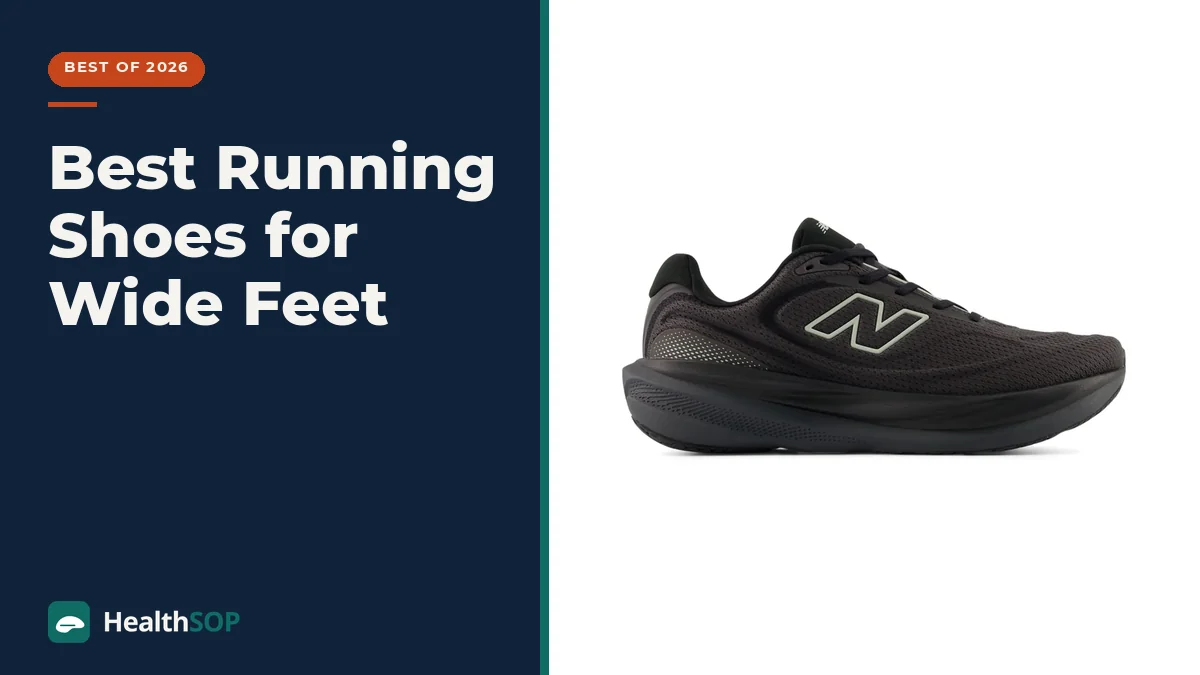
The best running shoe for wide feet is the New Balance Fresh Foam X 1080 v15. It comes in four widths, up to 4E, and it is the softest shoe in this guide. If you need support as well as width, get the ASICS Gel-Kayano 33 instead. Every shoe below is the current generation as of November 2026, every one is on Amazon, and every spec comes from the brand or from an independent lab test — not from a guess.
As an Amazon Associate, we earn from qualifying purchases. Prices change often, so check the current price on Amazon before you buy.
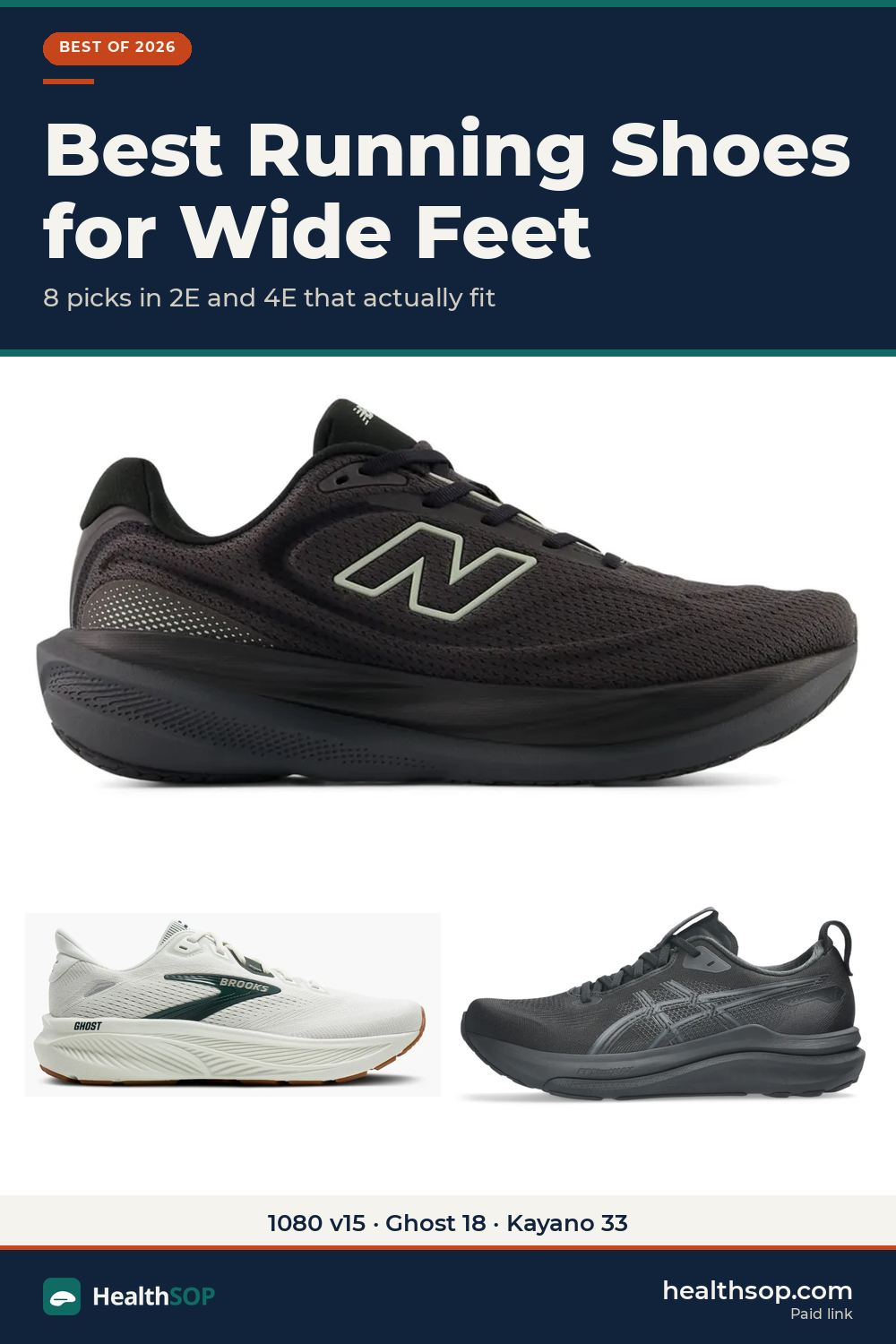
Table of Contents
Quick picks: the best running shoes for wide feet
If you want the full picture first, start with our main running shoe guide. If you want the short answer, here it is: buy the wide version of a good shoe, not a longer size of a narrow one. Every pick below comes in a real wide size.
| Shoe | Best for | Widths | Heel stack (brand) | Drop (brand) | Weight (men’s US 9) |
|---|---|---|---|---|---|
| New Balance Fresh Foam X 1080 v15 | Best overall for wide feet | B, D, 2E, 4E | 40 mm | 6 mm | 261 g |
| Brooks Ghost 18 | Best neutral daily in wide | Narrow, Regular, Wide, X-Wide | 36 mm | 10 mm | 289 g (lab) |
| ASICS Gel-Kayano 33 | Best stability in 2E/4E | D, 2E, 4E | 39 mm | 8 mm | 300 g |
| HOKA Bondi 9 | Best max cushion wide | Narrow, Normal, Wide, X-Wide | 43 mm | 5 mm | 297 g |
| Altra Torin 9 | Best foot-shaped last | Normal, Wide | 28 mm | 0 mm | 269 g |
| Brooks Adrenaline GTS 25 | Best supportive wide | Narrow, Regular, Wide, X-Wide | 37 mm | 10 mm | 290 g |
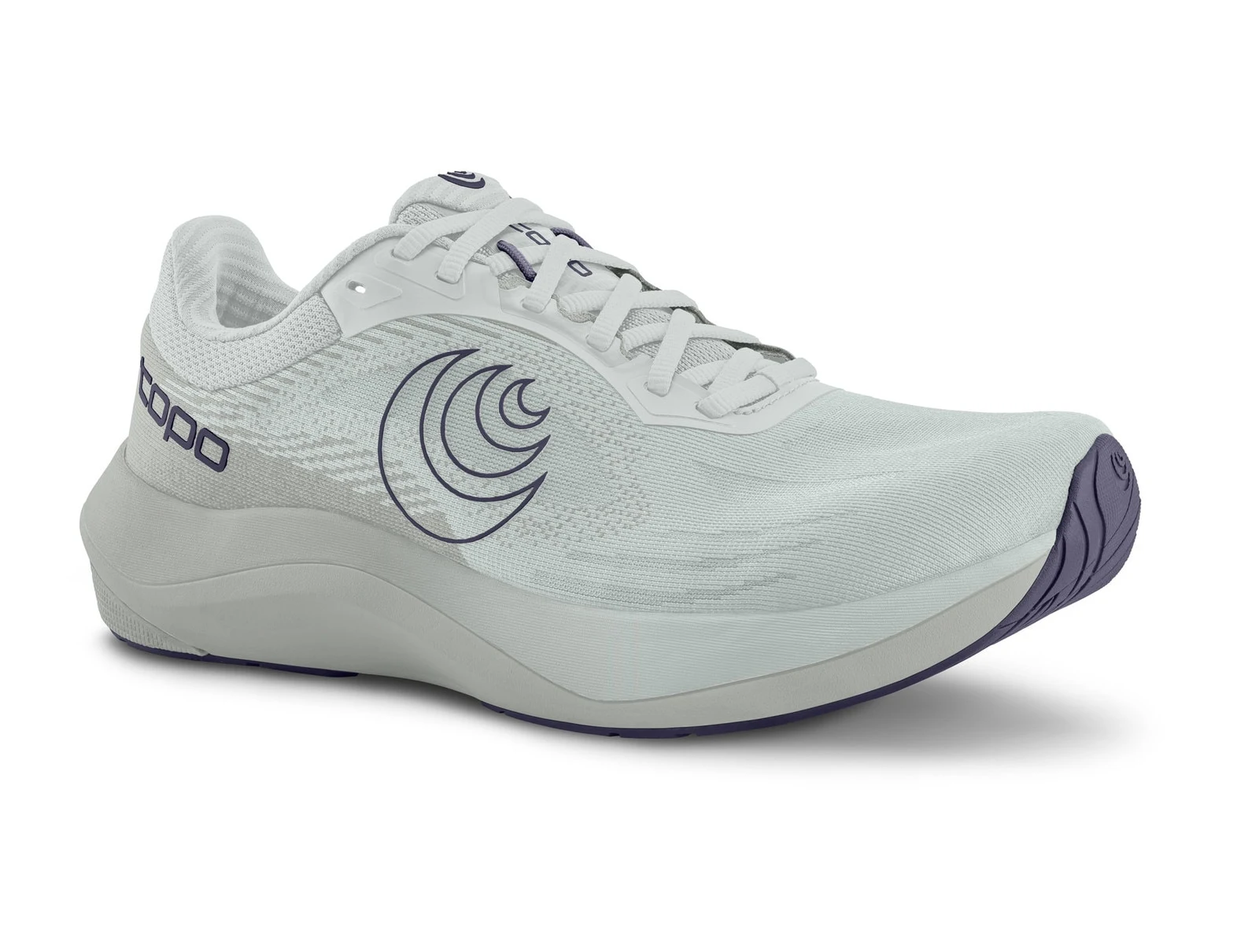
| Topo Athletic Ultrafly 6 | Best roomy stable | Normal, Wide | 32 mm | 5 mm | 272 g |
| New Balance Fresh Foam X 880v15 | Best value wide | B, D, 2E, 4E | 40.5 mm | 6 mm | 299 g |
The 8 best running shoes for wide feet, reviewed
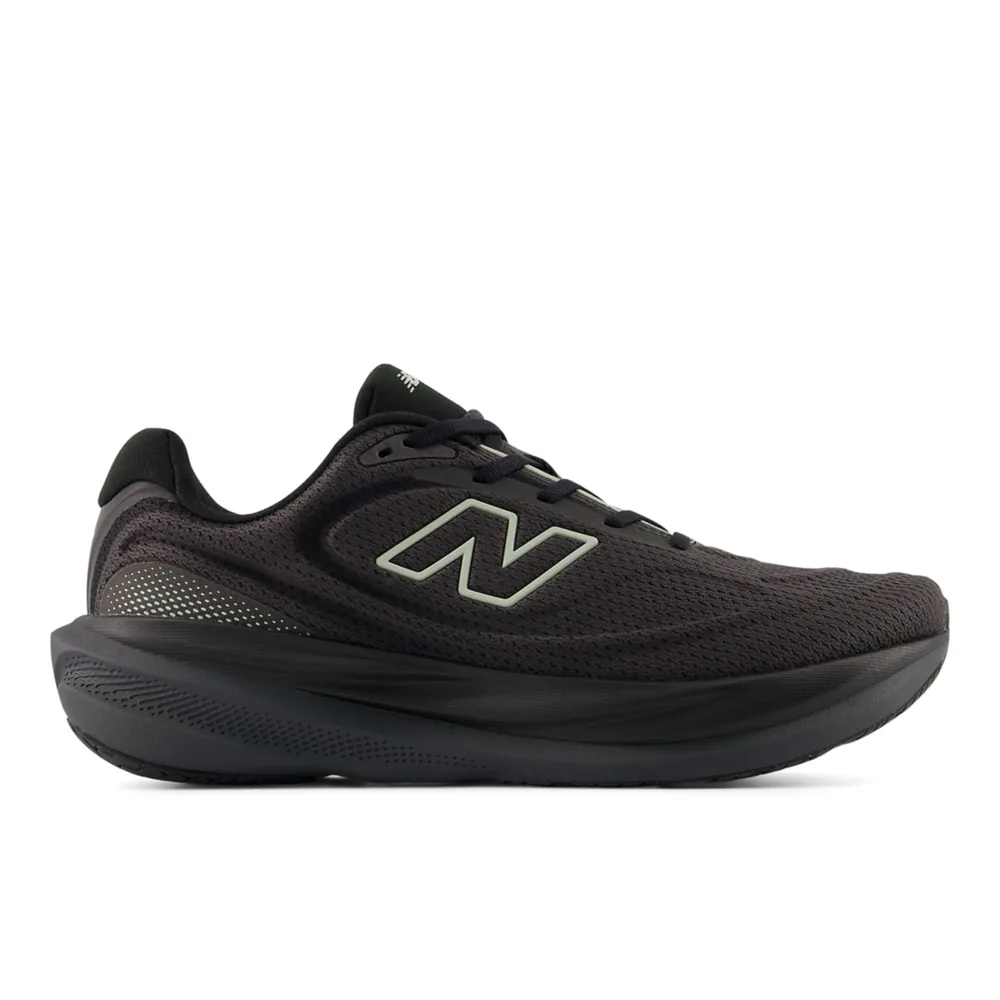
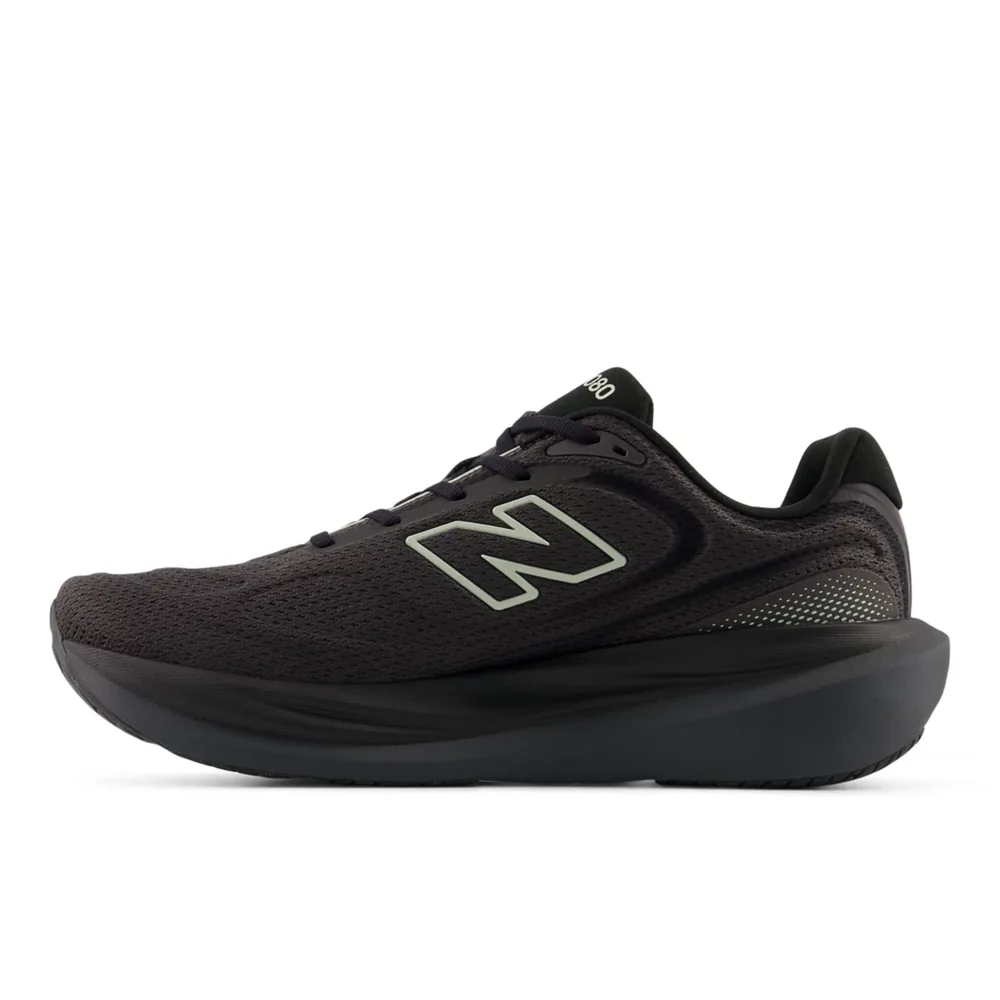
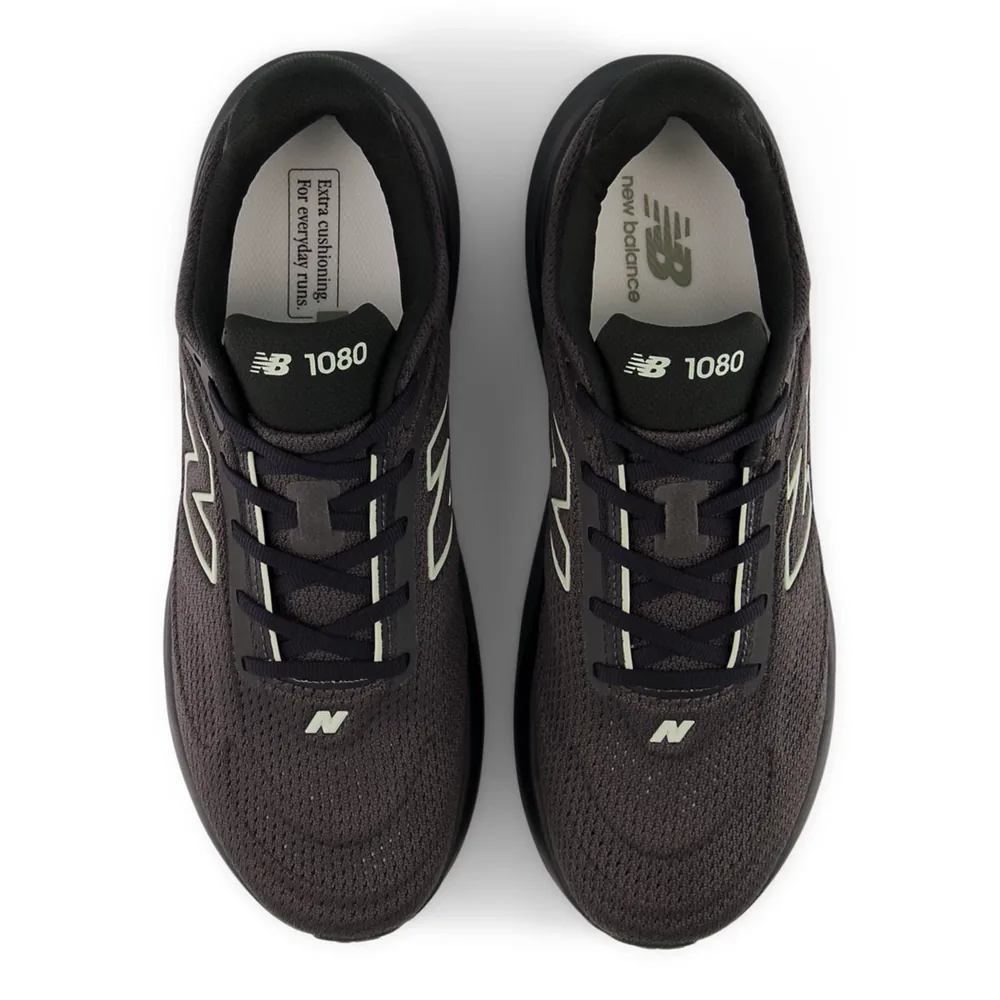
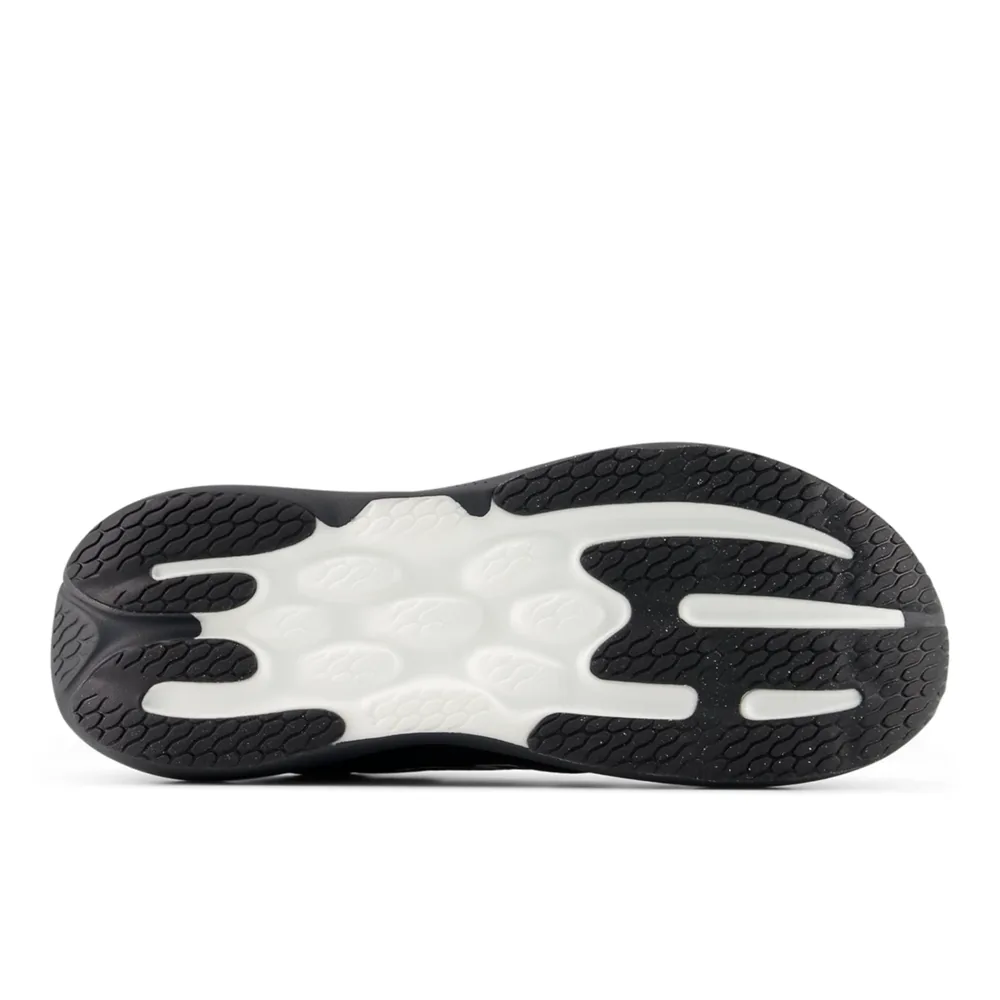
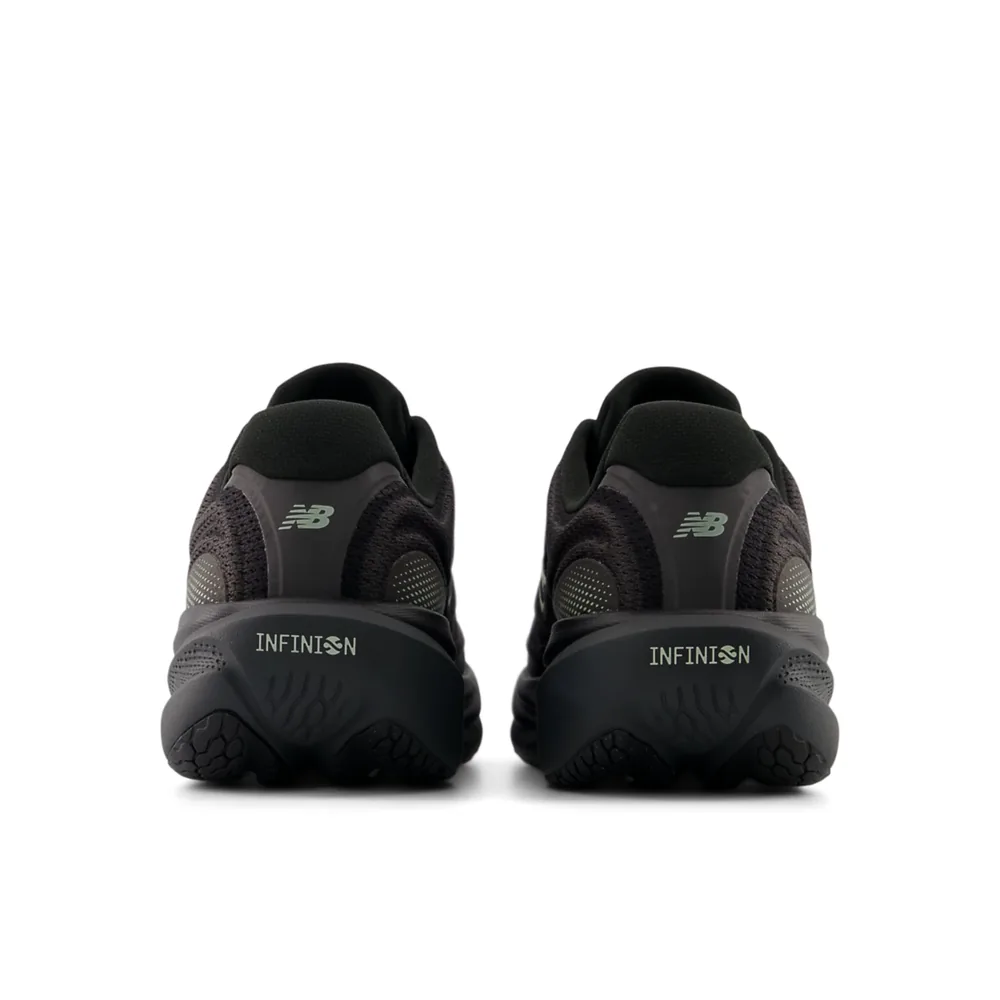
1. New Balance Fresh Foam X 1080 v15 — Best overall for wide feet
Best for: runners who want the softest landing in this guide and the widest size range.
- Heel stack: 40 mm brand / 37.0 mm lab
- Forefoot stack: 34 mm brand / 30.6 mm lab
- Drop: 6 mm brand / 6.4 mm lab
- Weight: 261 g (9.2 oz, men’s US 9, brand) / 255 g (9.0 oz, lab)
- Widths: B, D, 2E, 4E (men’s); B, D, 2E (women’s)
- Midsole: Infinion foam
- Removable insole: yes
The 1080 v15 is the softest shoe in this guide, and it is also the one with the most width options. Most brands stop at 2E. New Balance goes to 4E. That is the whole point of this pick: if your feet are truly wide, you get the same shoe, not a different last. The lab measured 65.9% energy return at the heel and 69.1% at the forefoot, so it feels lively for a shoe this soft. It is also the lightest of the big-cushion shoes here at 255 g in the lab.
One honest note: the 6 mm drop is low, so it loads the Achilles a little more than the Ghost 18 or the GTS 25. If your calves are tight, give it a week before you judge it. And if you overpronate, the soft foam will not guide your foot — the Kayano 33 below is the better pick for that.
Pros:
- Softest ride in this guide
- Four widths, up to 4E — the widest range here
- Light for its stack (255 g in the lab)
- Strong energy return for a soft shoe (69.1% forefoot)
- Roomy toe box in the wide sizes
Cons:
- The 6 mm drop can load tight calves
- Soft foam feels less stable at faster paces
Skip it if: you overpronate heavily. The Kayano 33 or the GTS 25 guides your foot better.


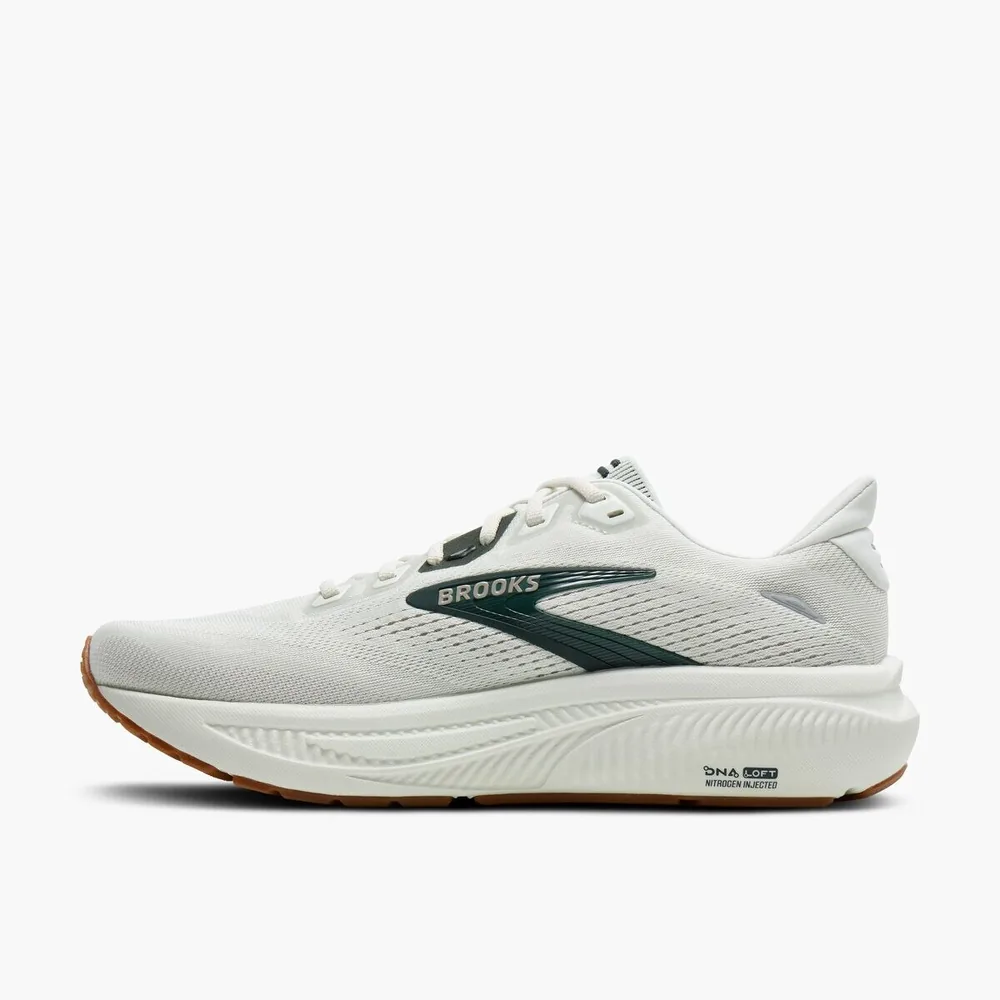
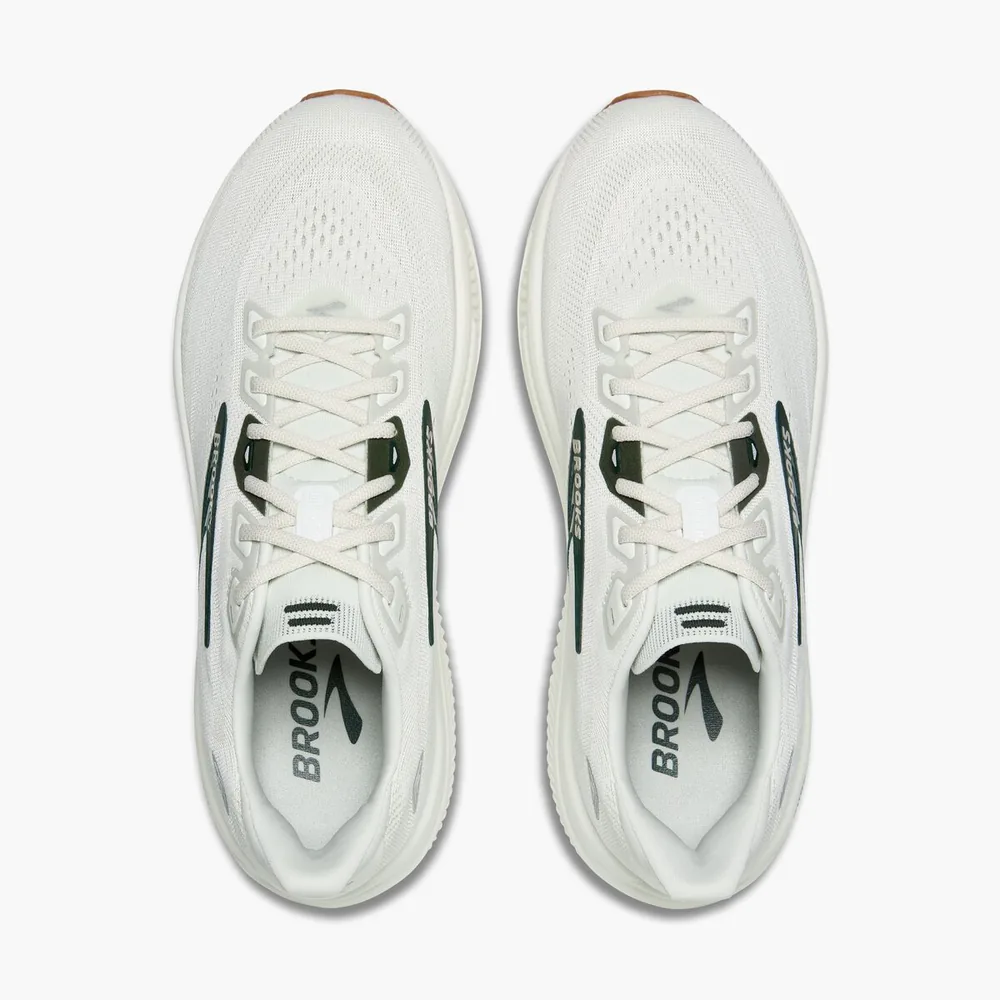
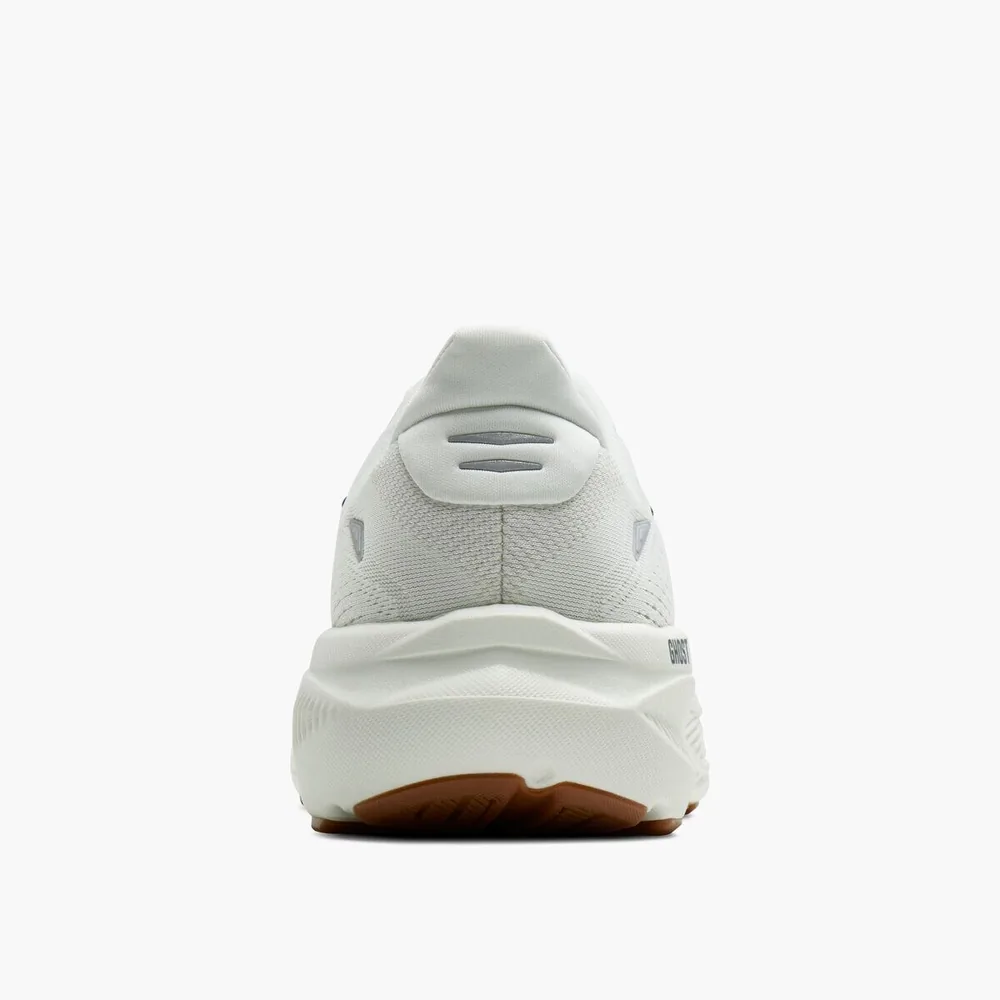
2. Brooks Ghost 18 — Best neutral daily in wide
Best for: one pair that does everything — daily miles, long runs, and walking.
- Heel stack: 36 mm brand / 37.3 mm lab
- Forefoot stack: 26 mm brand / 25.1 mm lab
- Drop: 10 mm brand / 12.2 mm lab
- Weight: 289 g (10.2 oz, men’s US 9, lab)
- Widths: Narrow, Regular, Wide (2E), Extra Wide (4E)
- Midsole: DNA Loft v3 (nitrogen-infused)
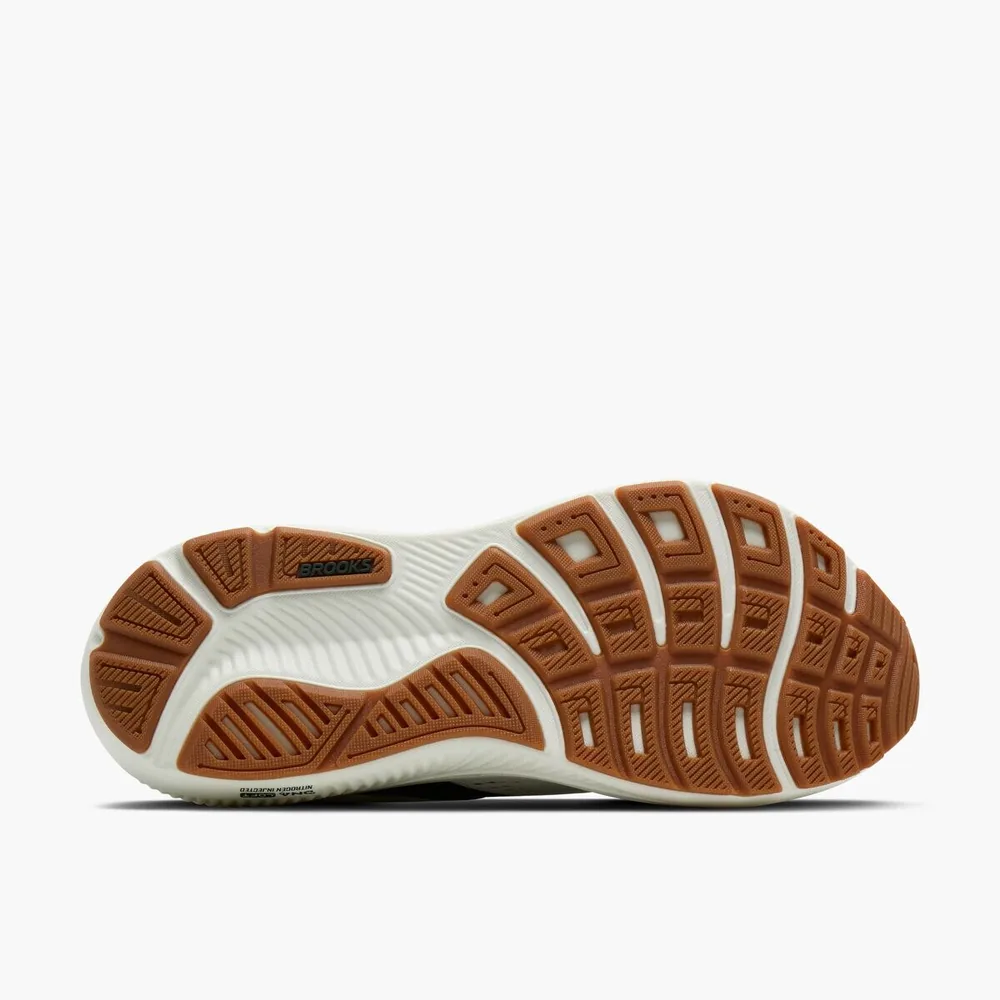
- Outsole: RoadTack rubber
- Removable insole: yes
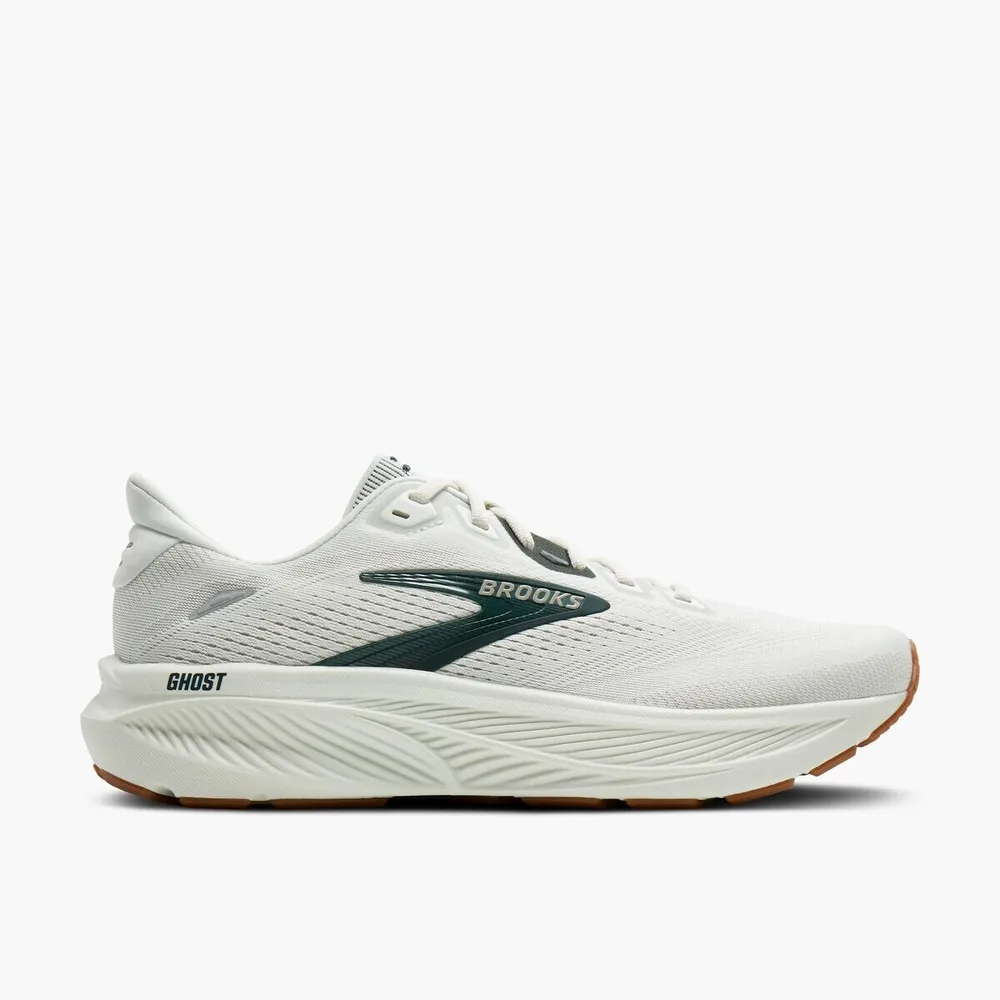
The Ghost 18 is the shoe we recommend when a runner asks for one pair that does everything. It is soft enough for long runs and firm enough for faster days. It comes in four widths — the widest range in this guide alongside the 1080. The nitrogen-infused DNA Loft v3 foam feels smooth from the first step. The shoe disappears on the foot in a way few daily trainers manage. Our full Brooks roundup covers it in more detail — see the best Brooks running shoes. The short version is this: if you buy one shoe from this list and stop reading, buy this one or the 1080 above it.
One honest note: the lab measured a 12.2 mm drop, not the 10 mm Brooks prints on the box. That is a bigger gap than most shoes show, and it matters if you are sensitive to drop. A 12 mm drop shifts more load to the forefoot and feels a touch less heel-heavy than a true 10 mm shoe. Most runners will not notice. If you have Achilles trouble and your physio told you to keep the drop high, this shoe still does that. Just a little more than Brooks says.
Pros:
- Fits almost every foot shape, with four widths
- Smooth, even cushion that works for easy runs and long runs
- Durable RoadTack outsole holds up past 400 miles
- No break-in period — comfortable on day one
- Removable insole fits custom orthotics
Cons:
- The 12.2 mm lab drop is higher than the 10 mm on the box
- Heavier than the Torin 9 and the Ultrafly 6
Skip it if: you want a race-day shoe or a feather-light trainer. The Ghost is a daily trainer, and it is proud of that.
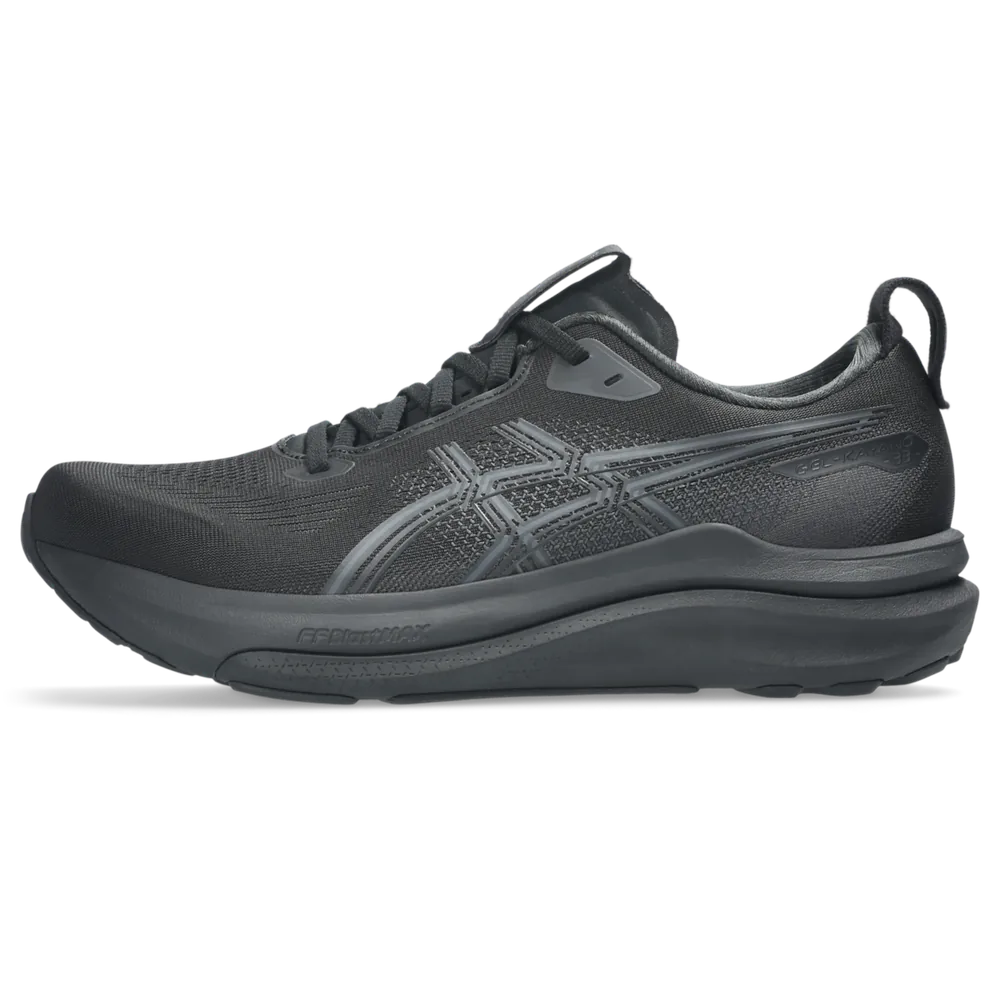
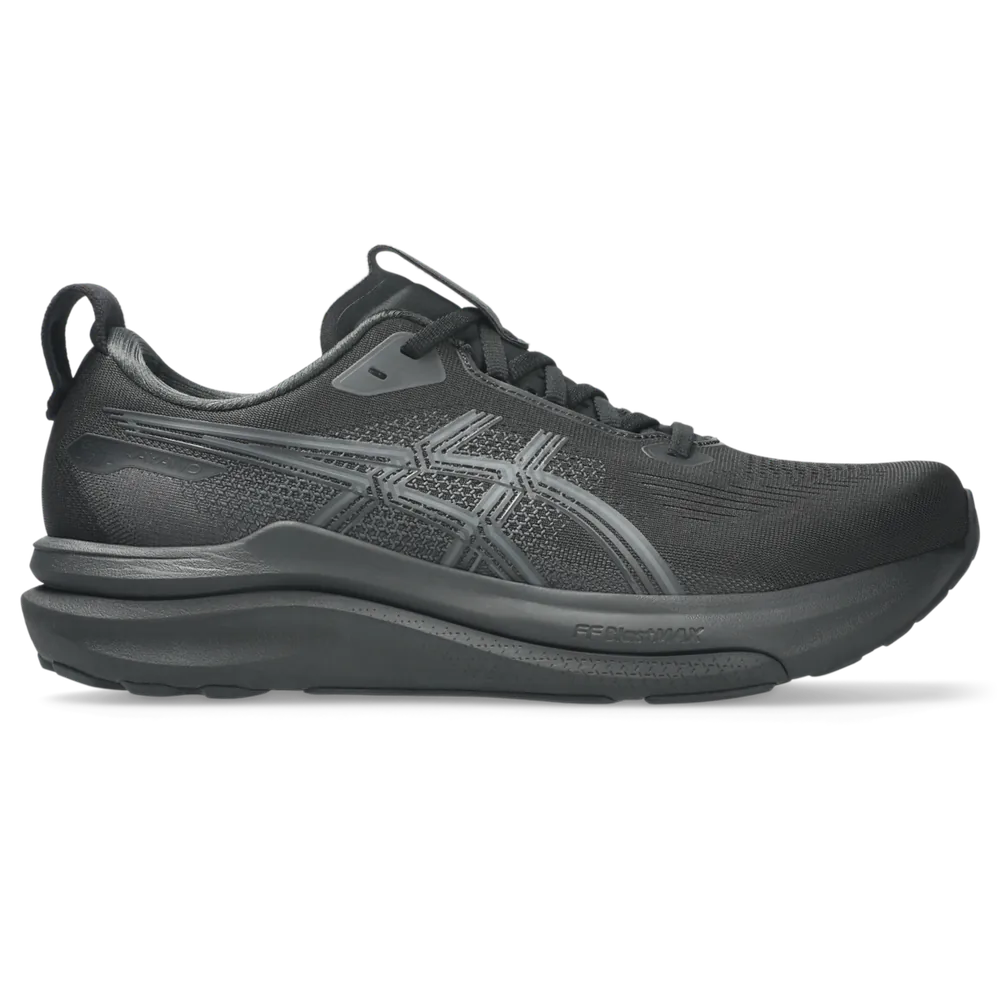
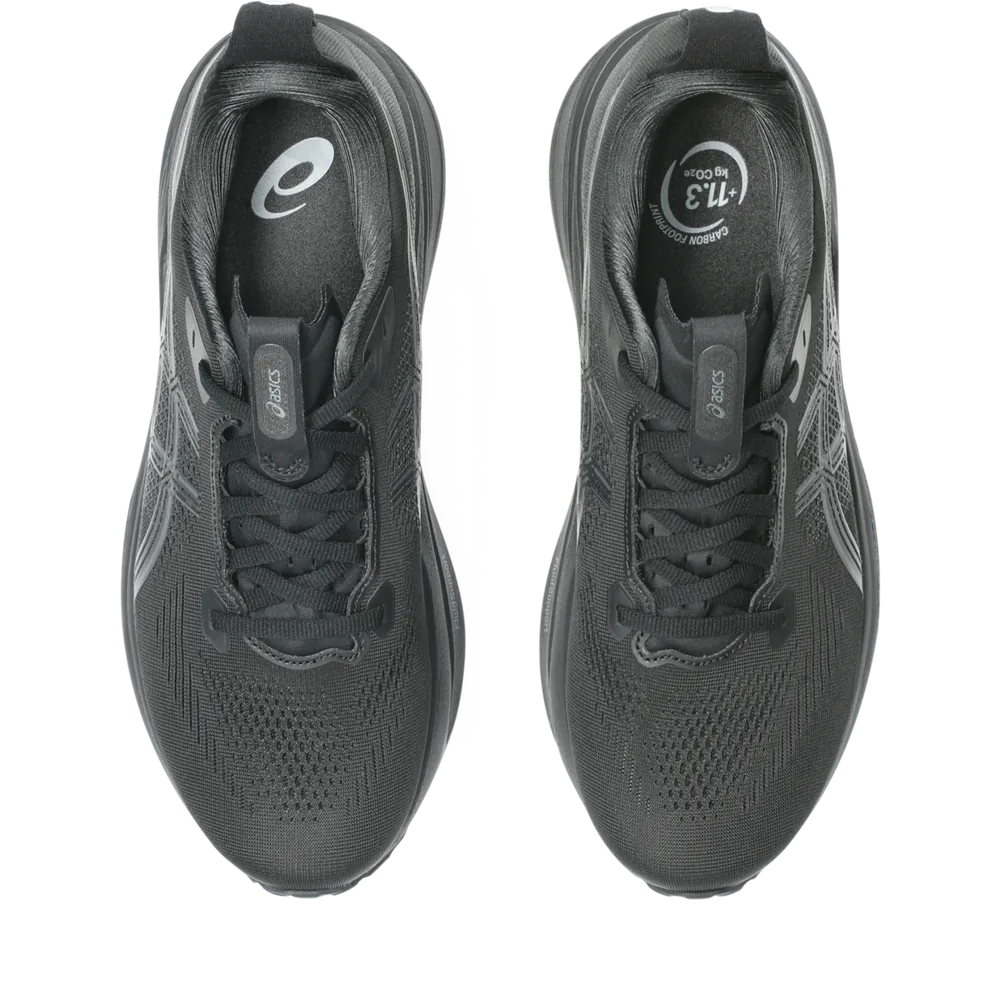
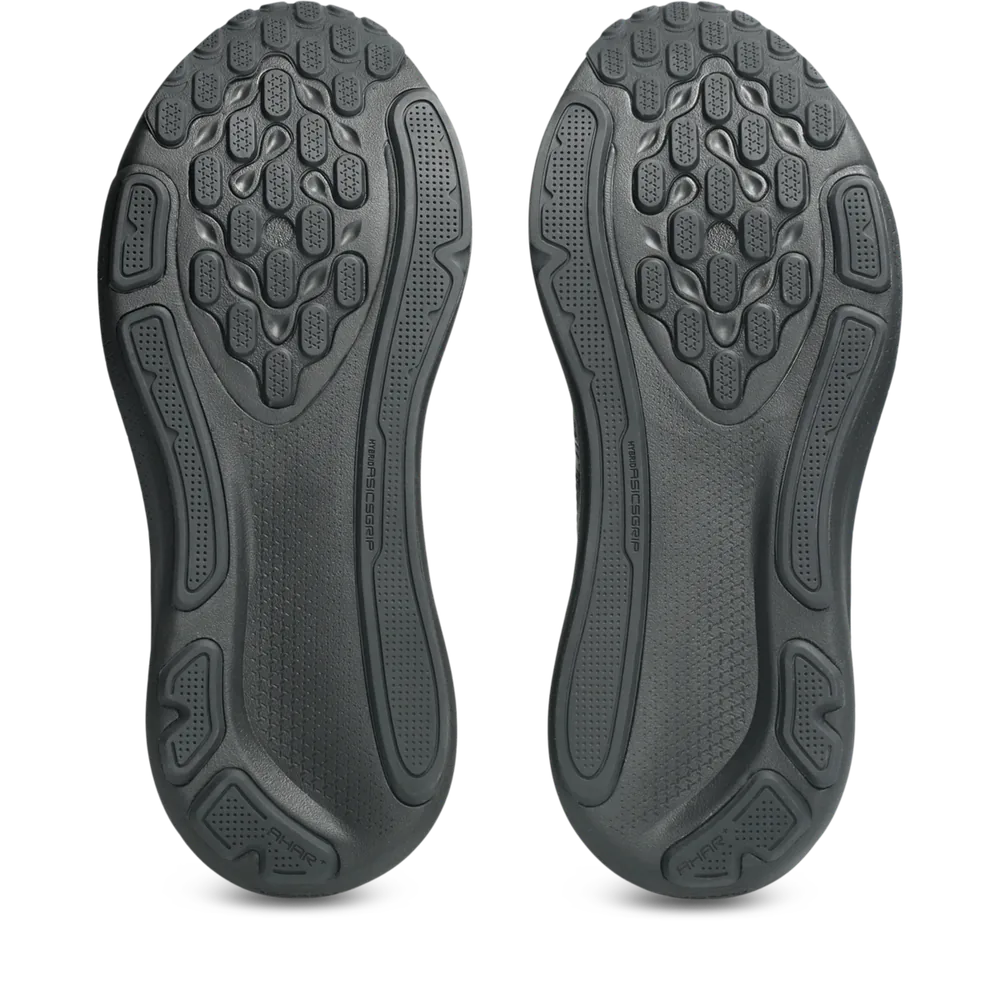
3. ASICS Gel-Kayano 33 — Best stability in 2E/4E
Best for: runners who overpronate and need wide sizes with real guidance.
- Heel stack: 39 mm brand / 36.8 mm lab
- Forefoot stack: 31 mm brand / 28.3 mm lab
- Drop: 8 mm brand / 8.5 mm lab
- Weight: 300 g (10.5 oz, men’s US 9, brand) / 298 g (lab)
- Widths: D, 2E, 4E (men’s); B, D, 2E (women’s)
- Support: FLUIDSUPPORT (firmer foam on the inside edge)
- Removable insole: yes
The Kayano 33 is the stability shoe that does not feel like a stability shoe. The old Kayano used a hard plastic post that pushed your foot straight. The 33 replaces it with FLUIDSUPPORT, a firmer foam on the inside edge that guides the foot without a jolt. The lab measured a torsional rigidity of 20.1 Nm and a forefoot base 120.7 mm wide. Both numbers say “stable” without saying “stiff”. Shock absorption is strong too: 132 SA at the heel and 112 SA at the forefoot, among the best in this guide.
That wide platform matters twice for wide feet. It keeps the shoe planted when your foot rolls in. It gives your forefoot room to sit flat instead of spilling over the edge of the midsole. If flat feet come with your wide feet, read our best running shoes for flat feet as well. The two problems often travel together, and the Kayano is the top pick in both guides.
Pros:
- Best stability in this guide
- Wide platform (120.7 mm forefoot base in the lab)
- Strong shock absorption (132 SA at the heel)
- 2E and 4E available for men
- Durable build that holds its shape for hundreds of miles
Cons:
- Heavier than the neutral picks (298 g in the lab)
- Guidance you do not need if you run neutral
Skip it if: you run neutral. The Ghost 18 is lighter, simpler, and cheaper to run in.
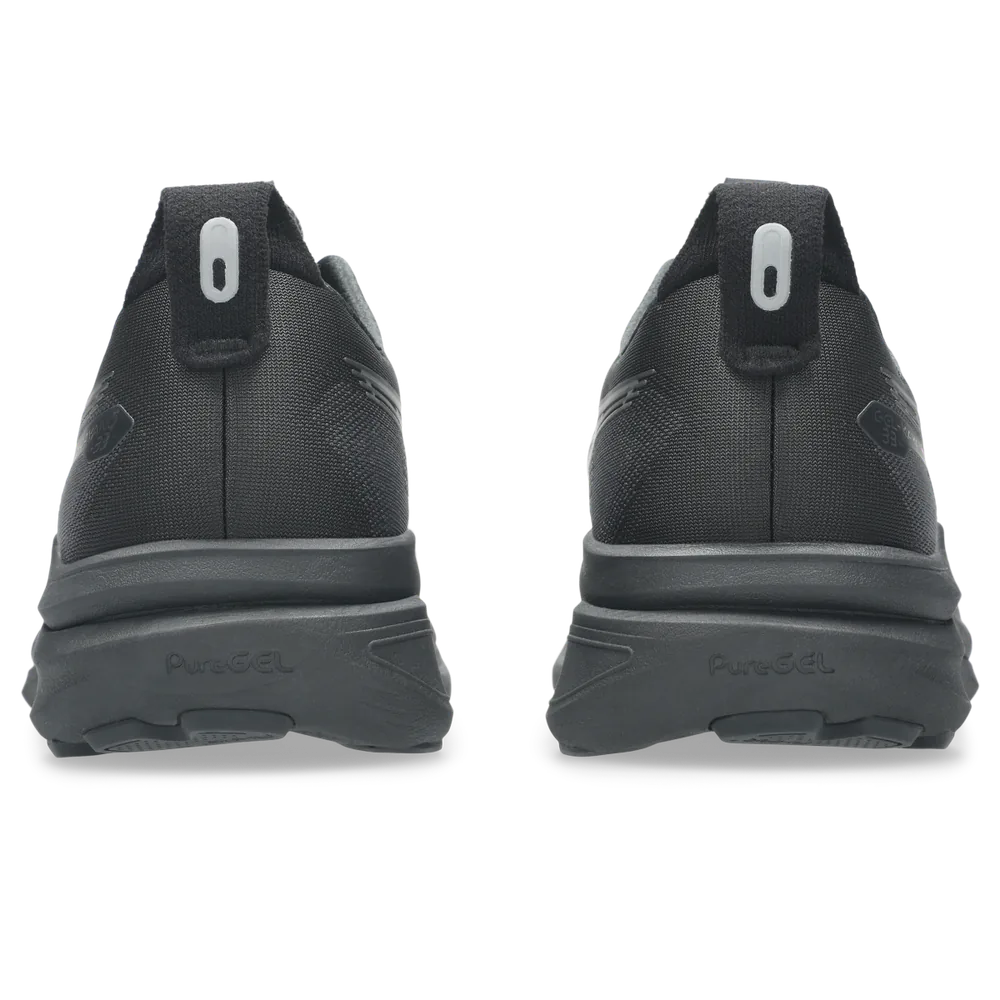
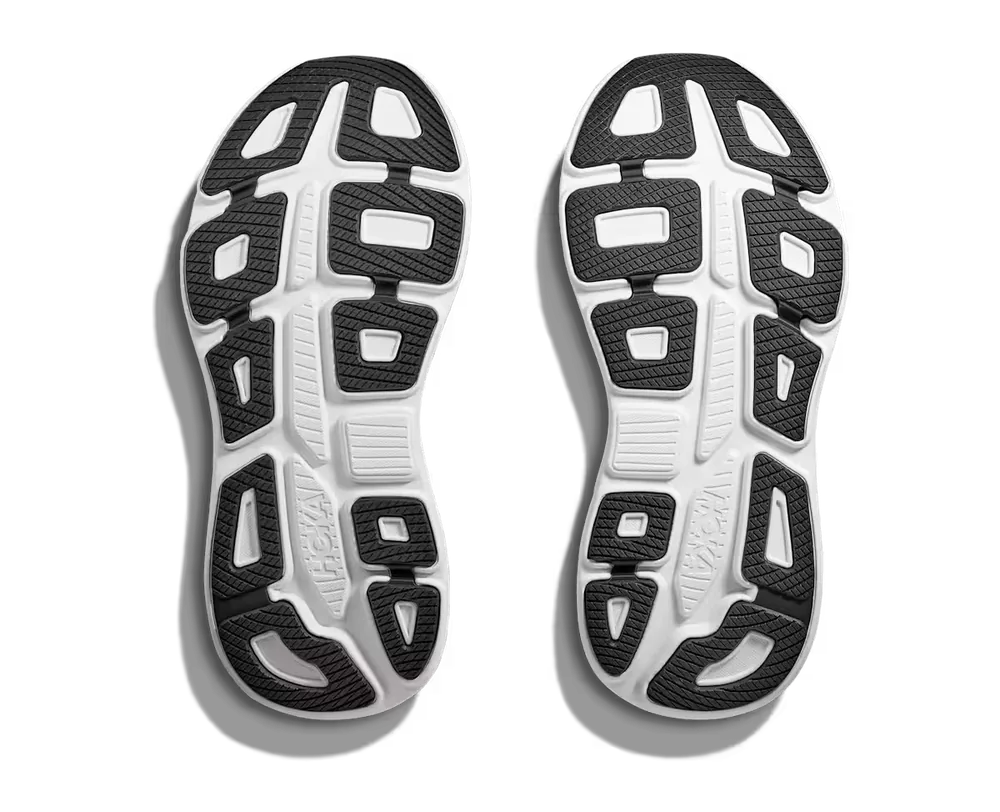
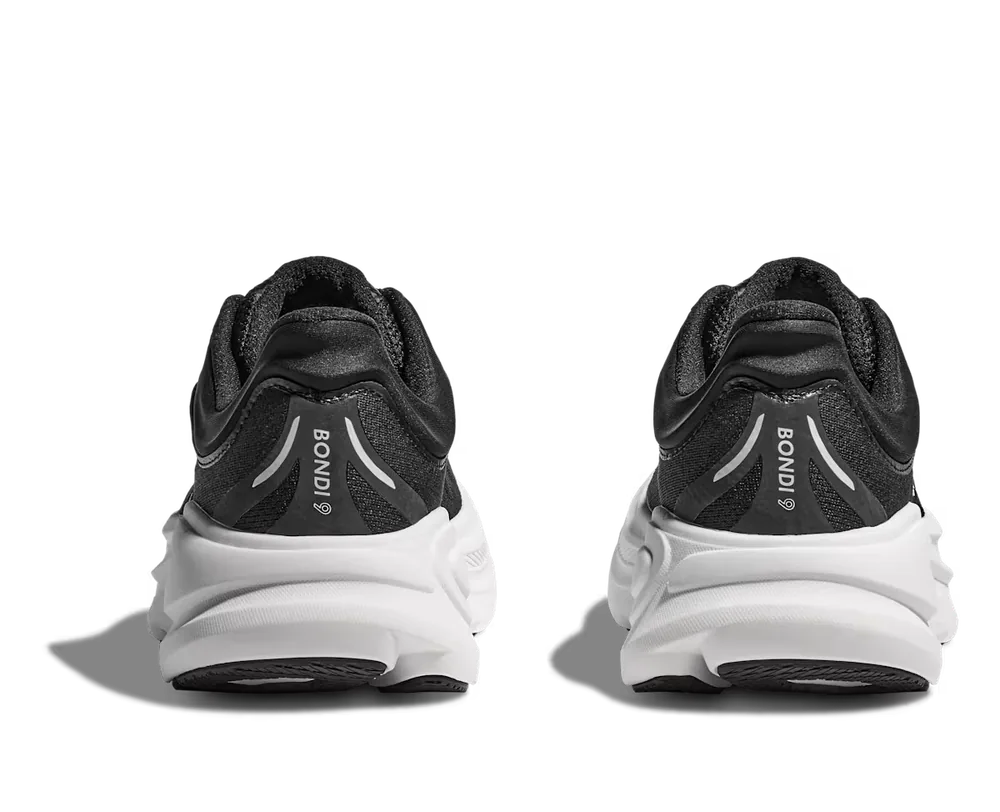
4. HOKA Bondi 9 — Best max cushion wide
Best for: runners who want the most foam underfoot, for slow long miles and walking.
- Heel stack: 43.0 mm brand / 41.3 mm lab
- Forefoot stack: 38.0 mm brand / 32.2 mm lab
- Drop: 5 mm brand / 9.1 mm lab
- Weight: 297 g (10.5 oz, men’s US 9, brand) / 303 g (10.7 oz, lab)
- Widths: Narrow, Normal, Wide (2E), X-Wide (4E)
- Midsole: Supercritical EVA
- Removable insole: yes
The Bondi 9 has the tallest stack in this guide — 41.3 mm under the heel in the lab. It also has the best shock absorption: 146 SA at the heel and 133 SA at the forefoot. The new supercritical EVA foam is a real step up from the Bondi 8. Energy return rose to about 60%, and the shoe lost weight even as the stack grew. The platform is huge as well: 123.2 mm across the forefoot in the lab. That width is why it stays stable for a shoe this tall.
Now the honest part, and it matters more than the stack numbers. In its standard width, the Bondi 9 is not a wide-foot shoe. The lab measured the toe box at 72.5 mm — below average. RunRepeat lists “not for wide feet” as a con for the standard fit. So buy the 2E or 4E version, not the standard width. The wide versions fix the fit, and you keep all the cushion. If your size is sold out in 2E or 4E, do not settle for standard width. Wait, or pick another shoe from this list.
Pros:
- Most cushion in this guide (41.3 mm heel stack, lab)
- Best shock absorption here (146 SA at the heel)
- Stable for its height, thanks to the wide platform
- Durable outsole (0.9 mm wear in the lab)
- Doubles as a great walking shoe
Cons:
- Standard width runs snug — you must buy 2E or 4E
- Heavy (303 g in the lab)
- Firm feel for a max-cushion shoe (43.0 AC in the lab)
Skip it if: you want a light, fast shoe. Or if your size is gone in 2E/4E — do not buy the standard width and hope it stretches.
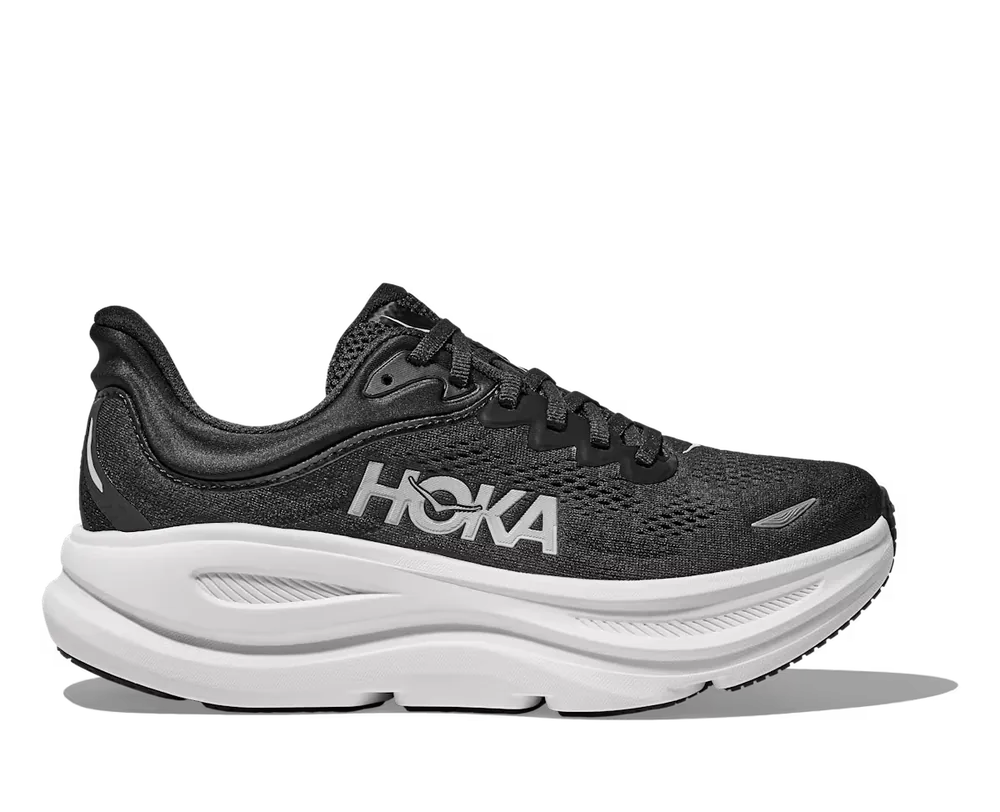
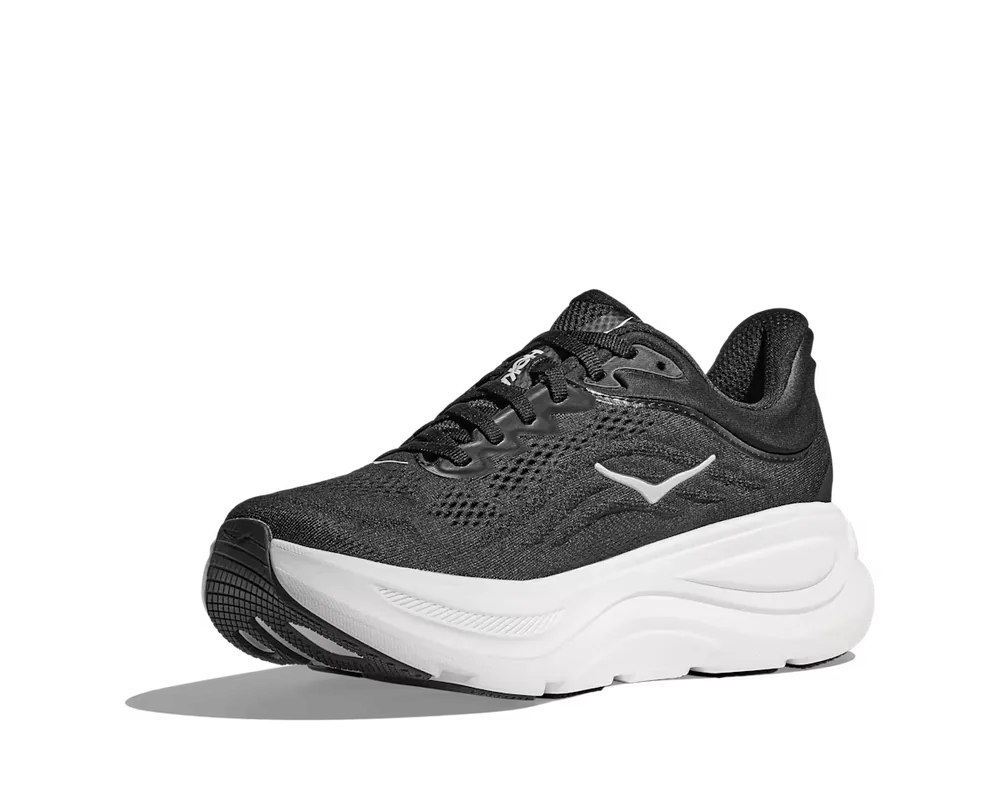
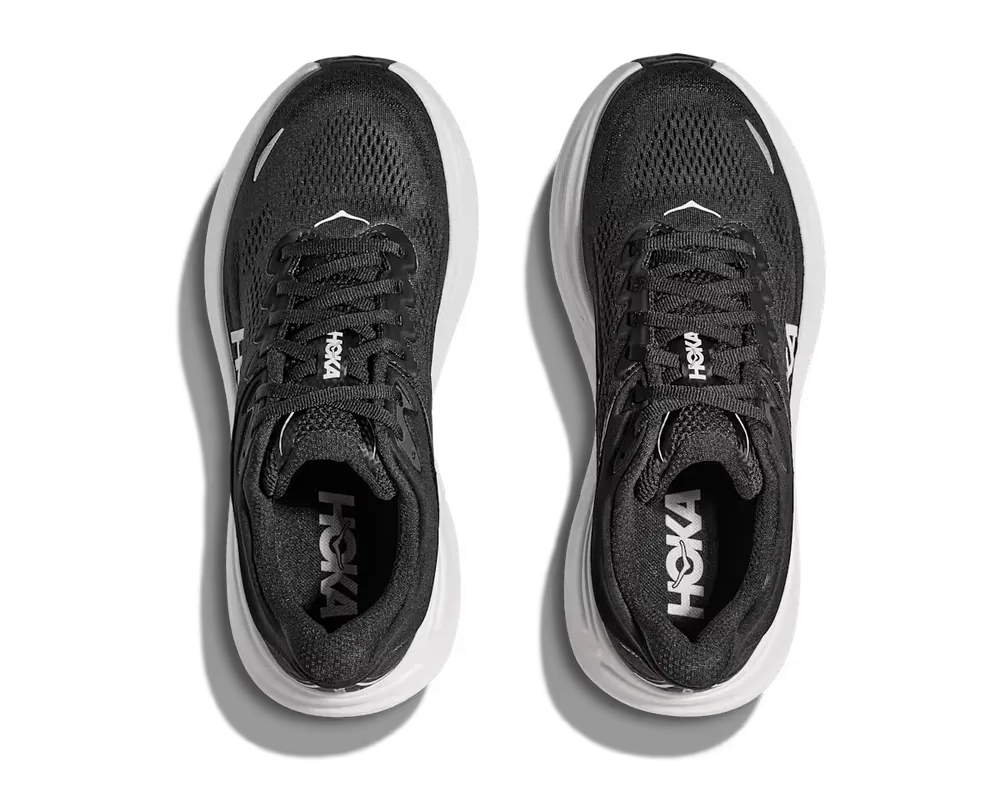
5. Altra Torin 9 — Best foot-shaped last
Best for: runners who want their toes to spread naturally, on a flat zero-drop platform.
- Heel stack: 28.0 mm brand / 25.8 mm lab
- Forefoot stack: 28.0 mm brand / 25.5 mm lab
- Drop: 0 mm brand / 0.3 mm lab
- Weight: 269 g (9.5 oz, men’s US 9, brand) / 264 g (9.3 oz, lab)
- Widths: Normal, Wide
- Midsole: P35X dual-density foam
- Outsole: Vibram XS DURA rubber
- Removable insole: yes
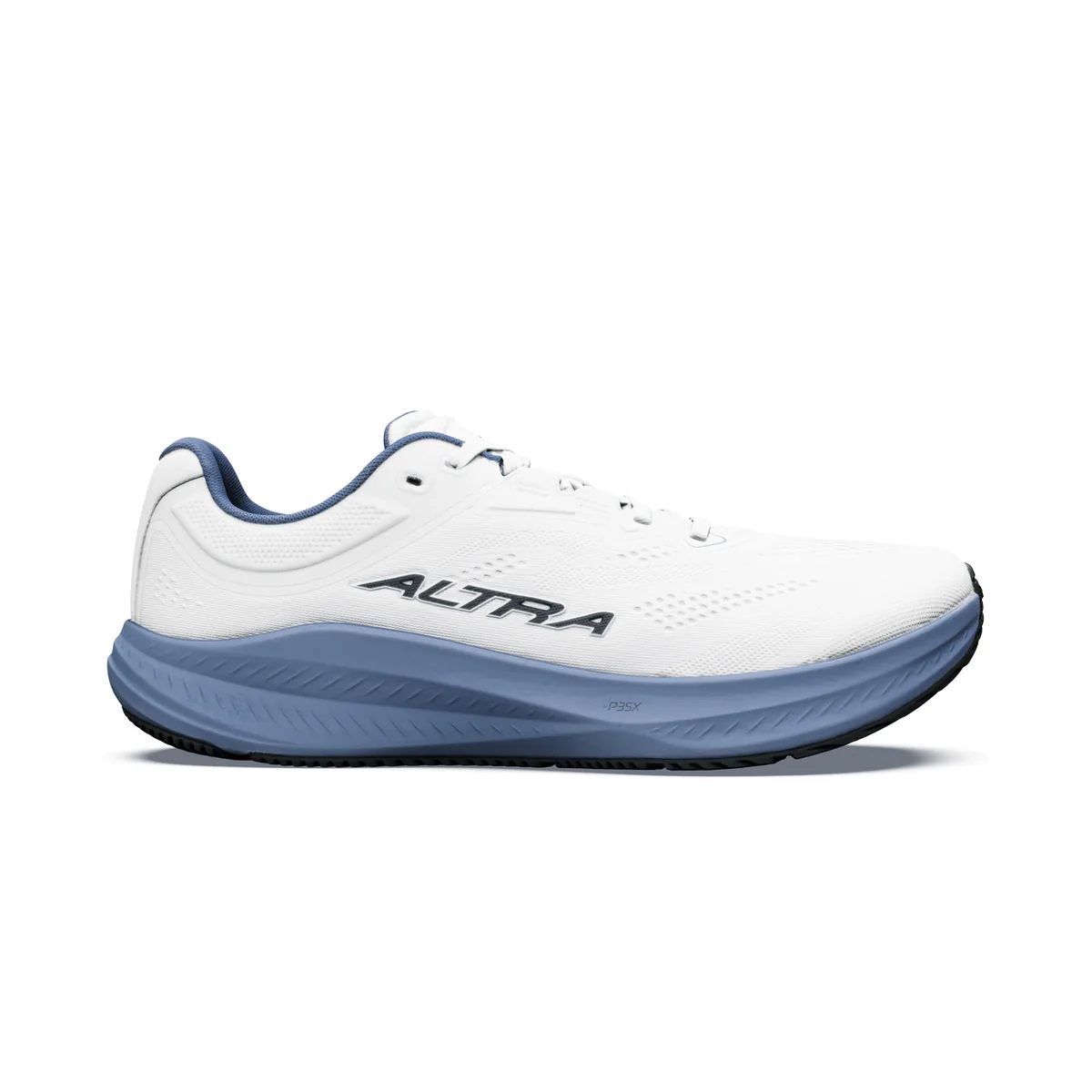
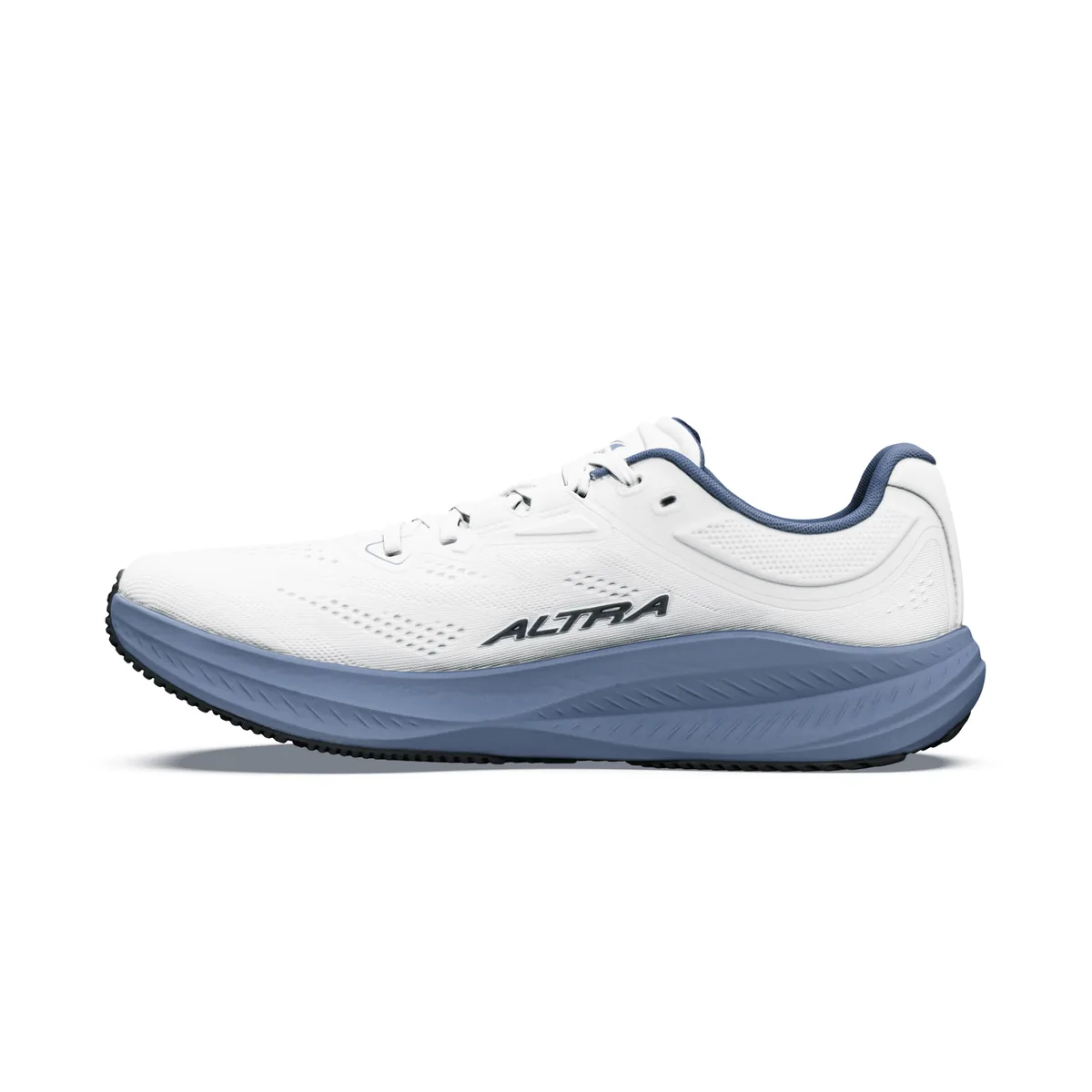
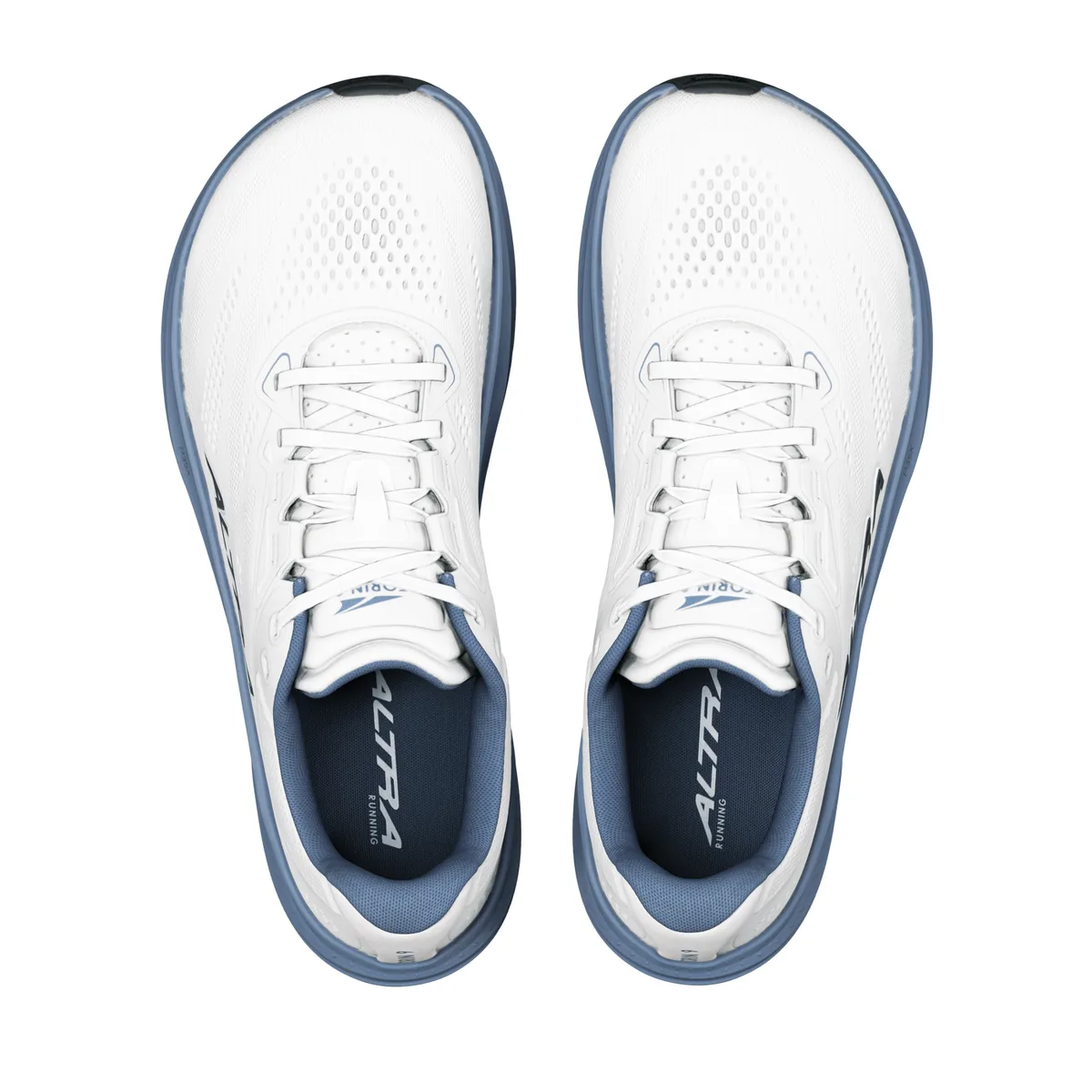
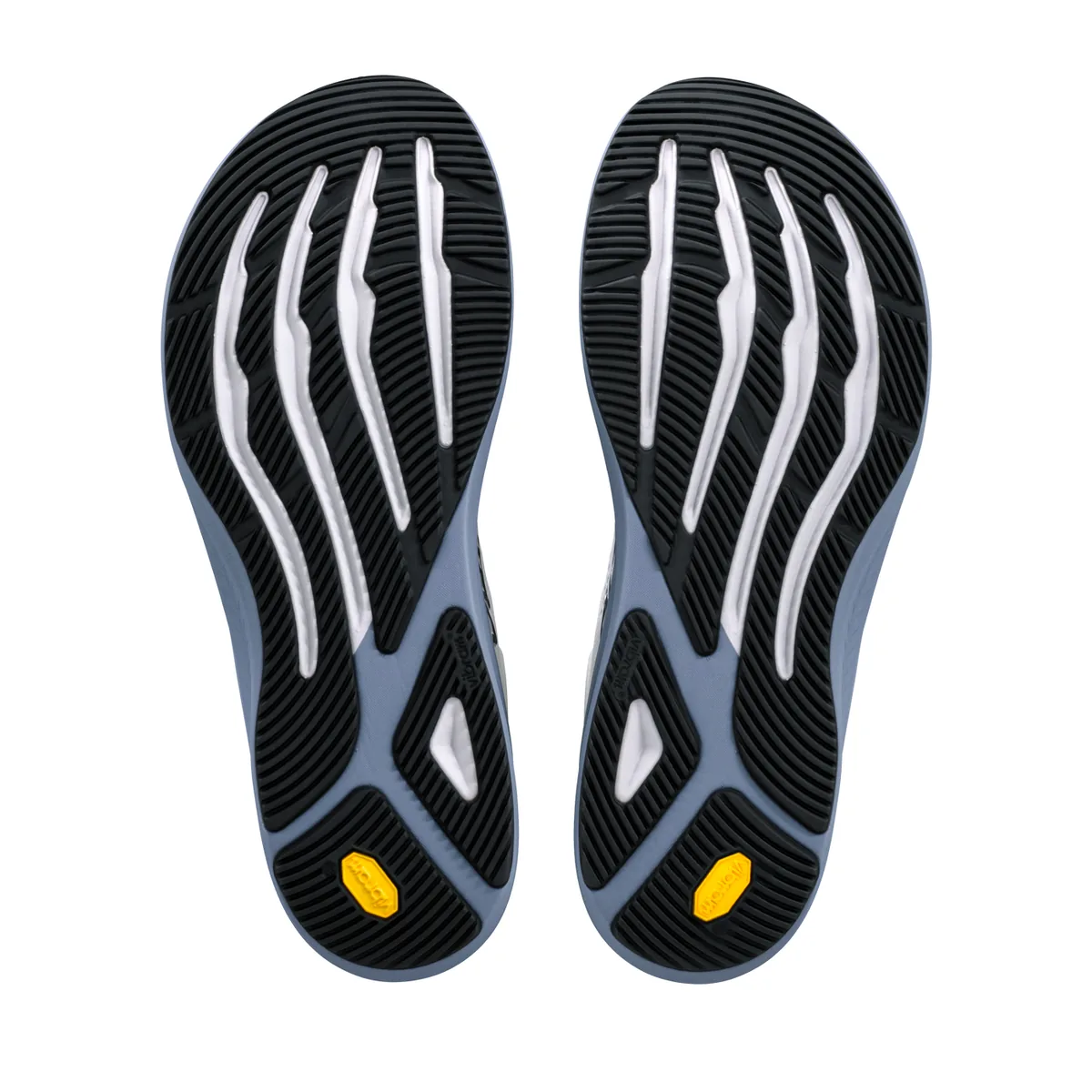
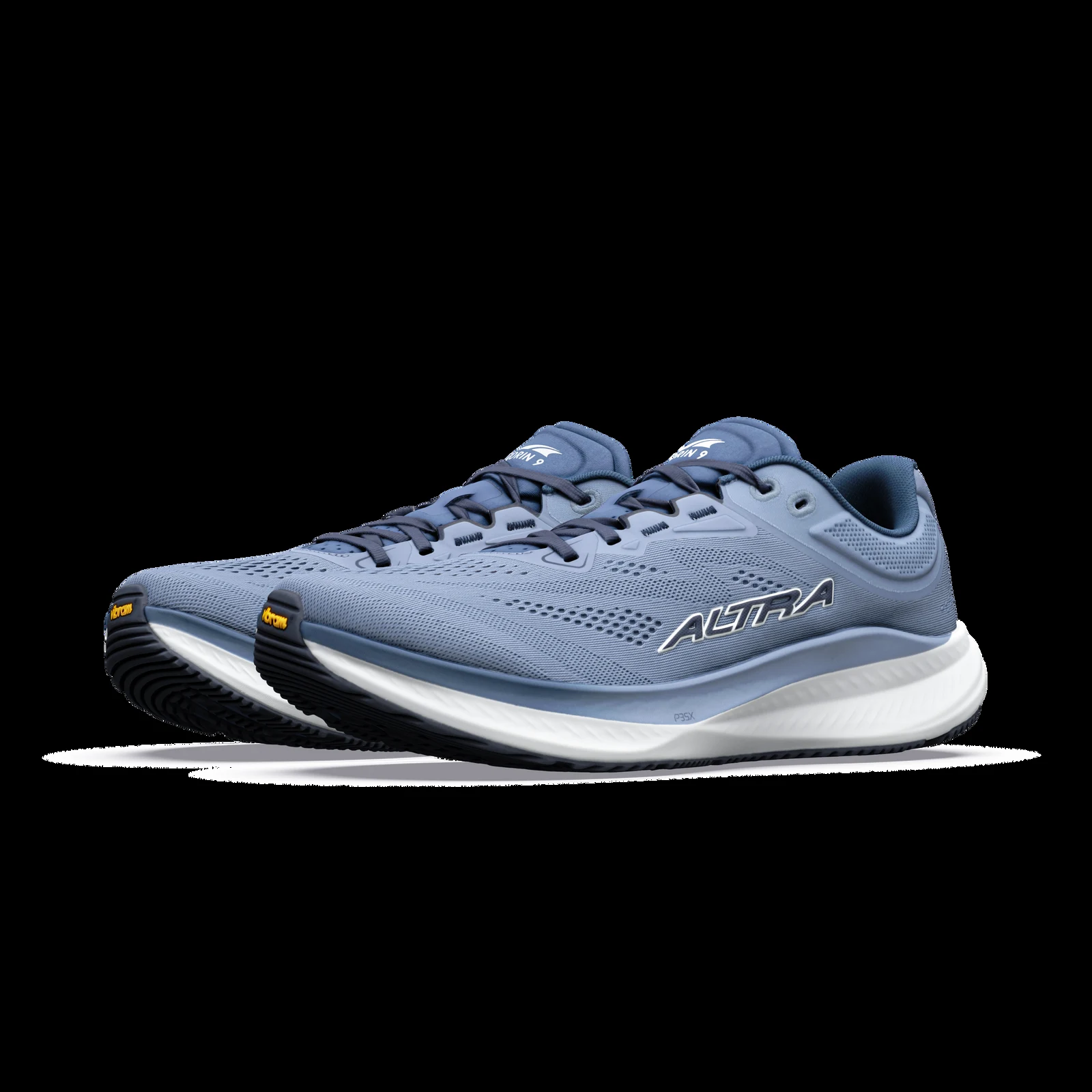
The Torin 9 is the only shoe here that is wide by shape, not just by size. Altra builds it on a foot-shaped last, so the toe box follows the shape of your foot instead of tapering to a point. The lab calls the toe box “wide” and names the Torin 9 a top pick for wide toe boxes. The platform is level: 0 mm drop, 25.8 mm at the heel and 25.5 mm at the forefoot in the lab. Your heel and forefoot sit at the same height.
Two things to know before you buy. First, the foam is the weak point. Energy return is just 54.7% at the forefoot and 48.8% at the heel in the lab, well below average. The ride feels flat rather than bouncy. Second, it runs half a size small in the lab’s fit test. Road Runner Sports says the same — buy half a size up from your normal size. And if you come from a high-drop shoe, go easy for the first two weeks: zero drop loads your calves and Achilles more. The Torin 9 also carries the American Podiatric Medical Association’s Seal of Acceptance.
Pros:
- Widest-feeling toe box here — the last itself is foot-shaped
- True zero drop, level platform
- Vibram outsole grips well on wet roads
- Lighter than the max-cushion picks (264 g in the lab)
- APMA Seal of Acceptance
Cons:
- Low energy return (48.8% at the heel in the lab)
- Modest cushion (25.8 mm heel stack, lab)
- Runs half a size small — order up
Skip it if: you are a heel striker, or you want a soft, bouncy ride. The 1080 v15 is softer and springier.
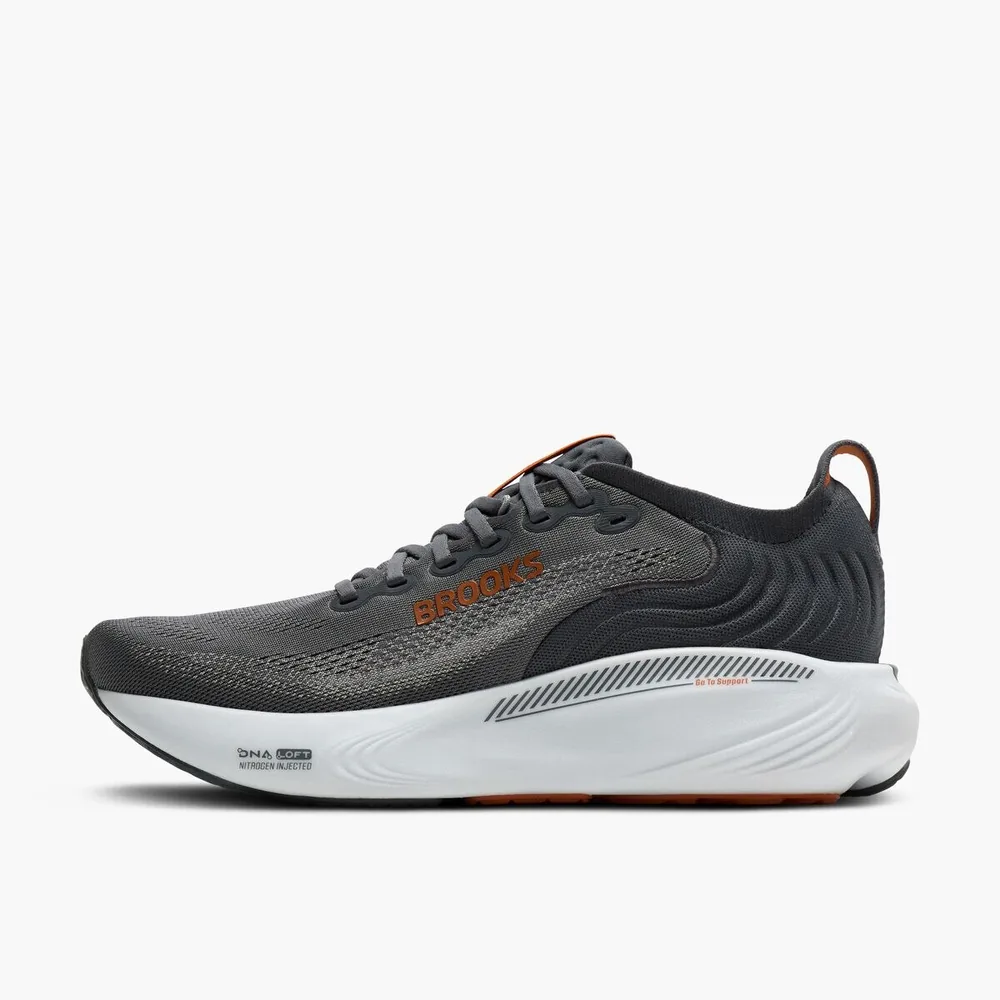
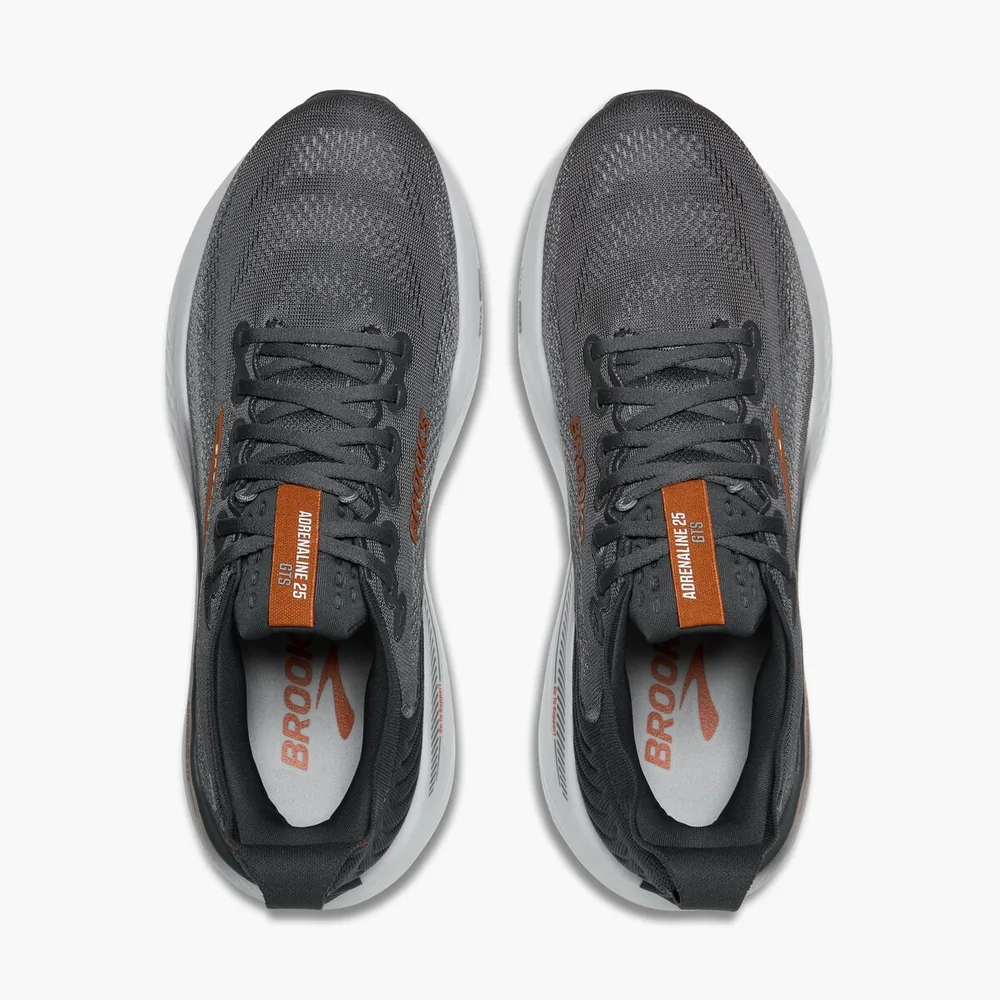
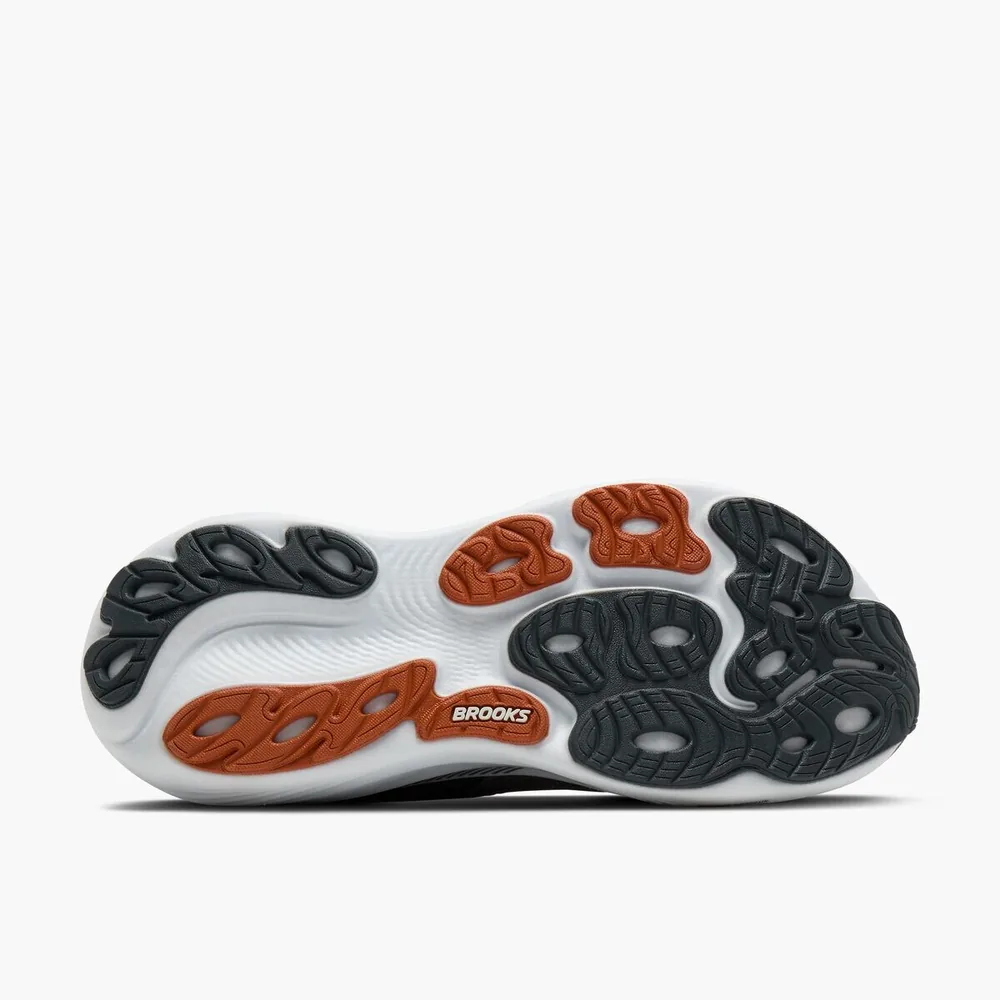
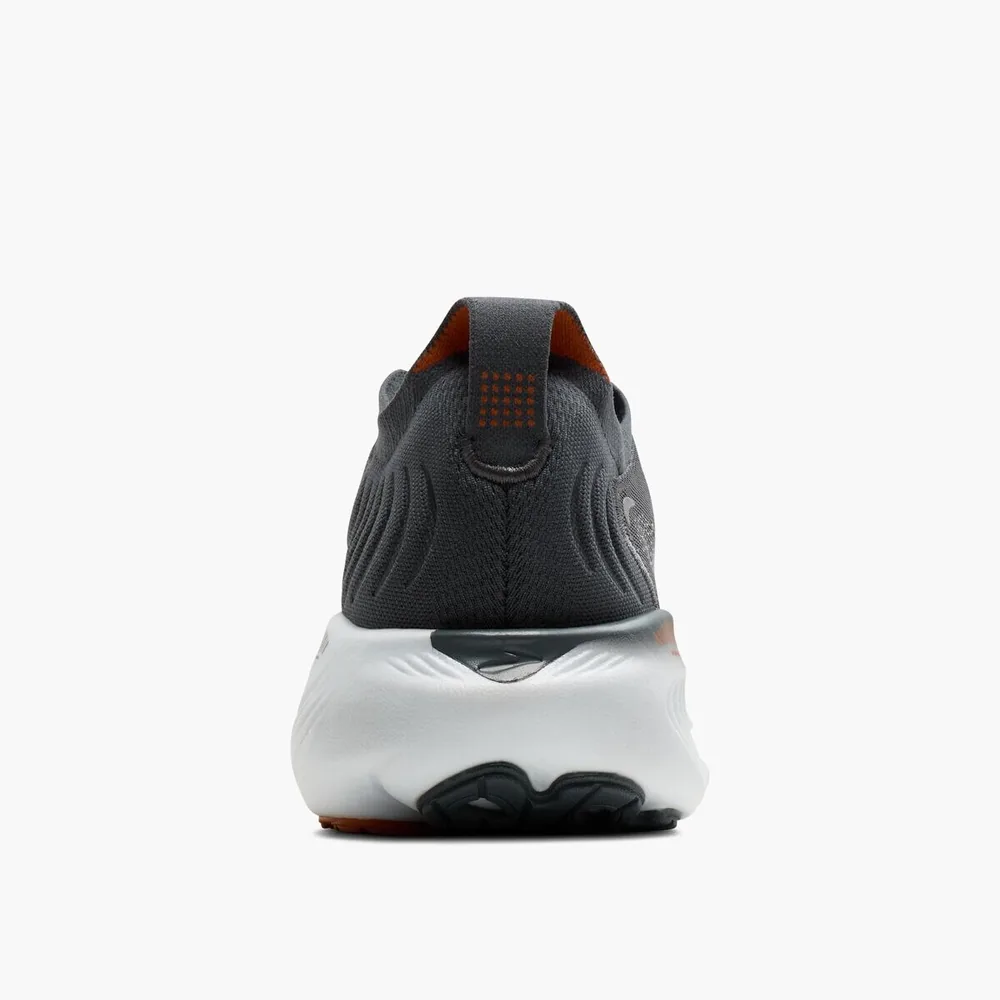
6. Brooks Adrenaline GTS 25 — Best supportive wide
Best for: overpronators with wide feet who want guidance without a stiff post.
- Heel stack: 37 mm brand / 36.1 mm lab
- Forefoot stack: 27 mm brand / 25.9 mm lab
- Drop: 10 mm brand / 10.2 mm lab
- Weight: 290 g (10.2 oz, men’s US 9, brand) / 295 g (10.4 oz, lab)
- Widths: Narrow, Regular, Wide (2E), Extra Wide (4E)
- Support: GuideRails (guides the knee, no hard medial post)
- Midsole: DNA Loft v3 (nitrogen-infused)
- Removable insole: yes
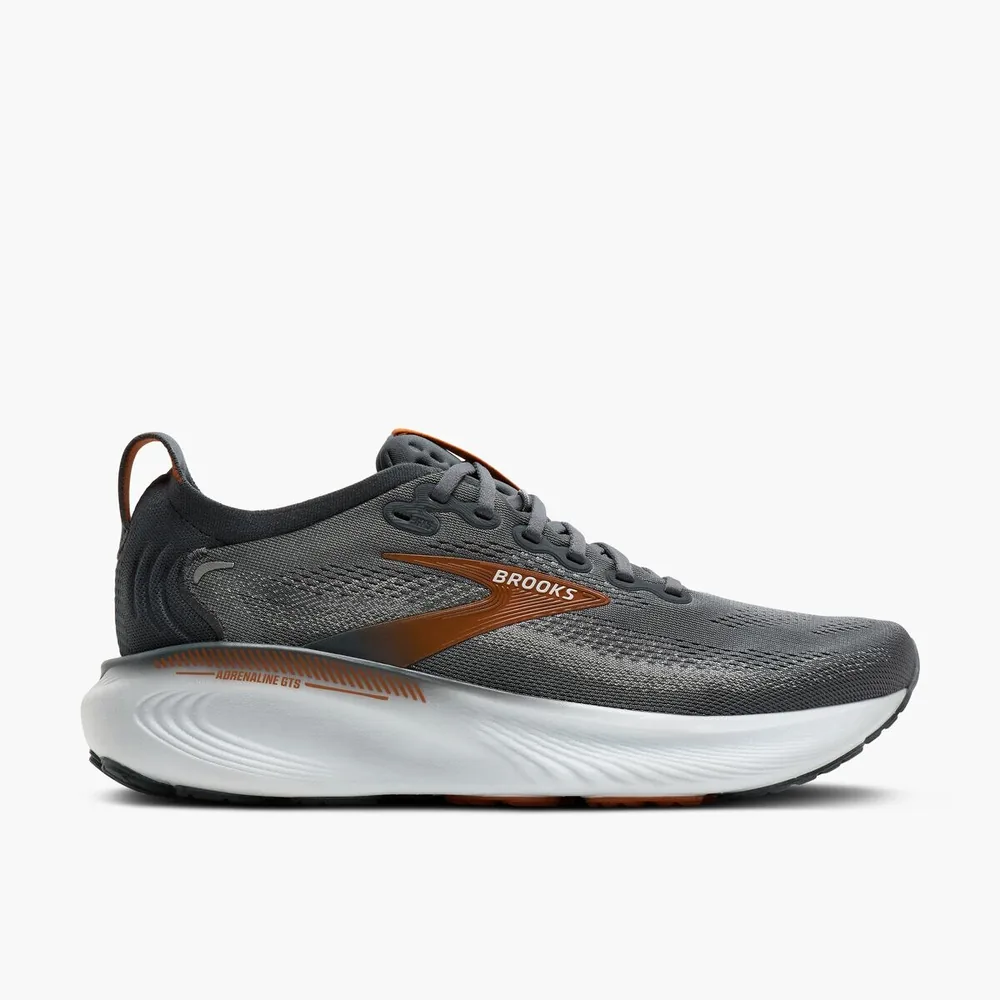
The GTS 25 is the previous model — the GTS 26 launched on 1 November 2026 — and that is exactly why it is here. It is the same supportive shoe, now on sale, and it comes in four widths up to 4E. The GuideRails system keeps your knees tracking straight without a hard plastic post jamming into your arch. That is why so many wide-footed overpronators have run in this line for years. The lab numbers back it up. Shock absorption is 138 SA at the heel and 101 SA at the forefoot. Torsional rigidity is 14.3 Nm.
The foam is the same DNA Loft v3 as the Ghost 18, but tuned firmer for support. Energy return is modest: 52.1% at the heel and 59.2% at the forefoot in the lab. That is fine for daily miles. It is not a shoe for fast days. At 295 g in the lab it is also one of the heavier shoes here. If weight bothers you, the Ghost 18 is the lighter Brooks.
Pros:
- Real stability for wide feet, with four widths up to 4E
- GuideRails support without a hard post
- Previous model, often on sale
- Durable outsole (4.1 mm thick in the lab)
- Smooth heel transition
Cons:
- Heavy (295 g in the lab)
- Muted energy return
- The 10 mm drop feels steep if you like flat shoes
Skip it if: you run neutral. The Ghost 18 gives you the same comfort without the guidance weight.
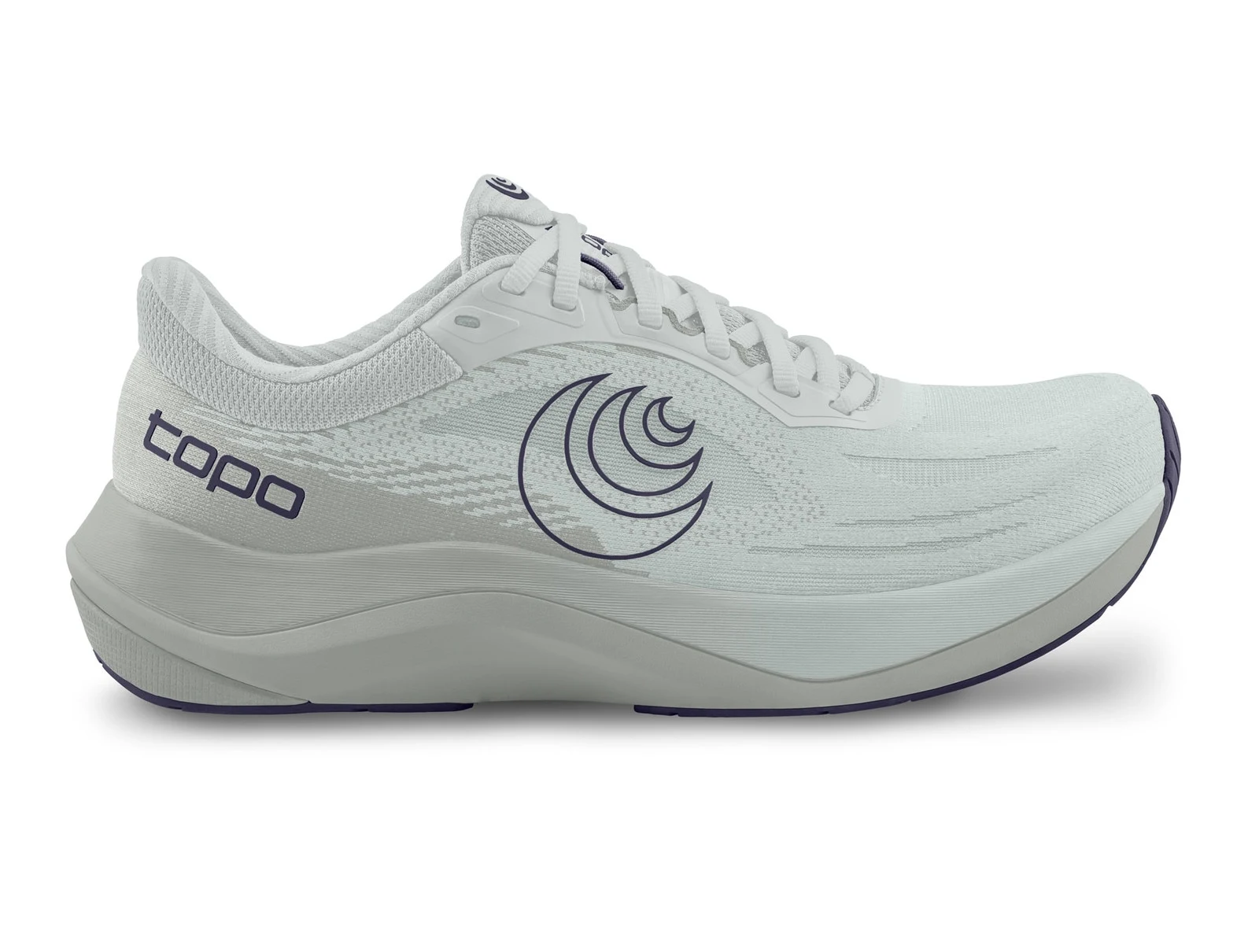
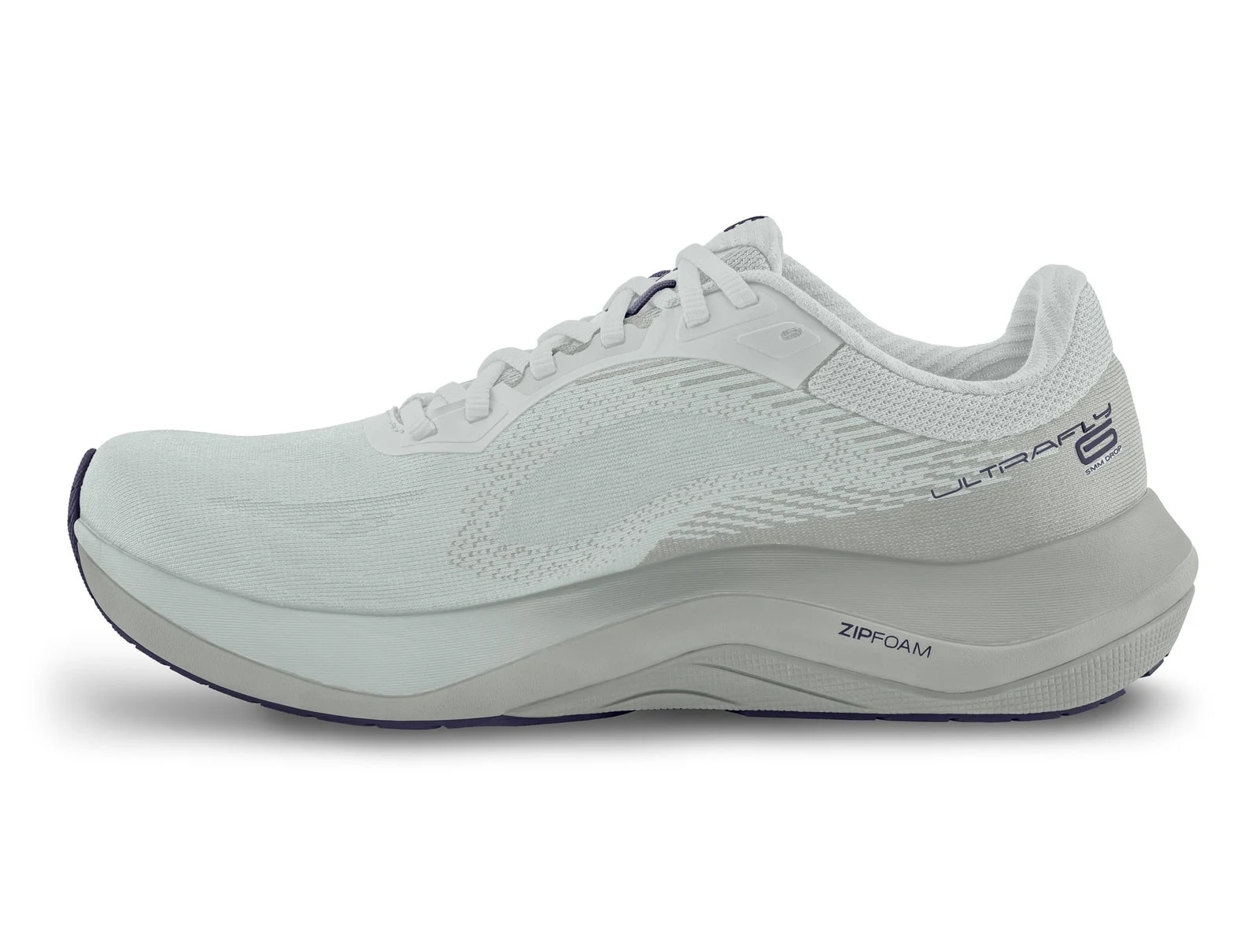
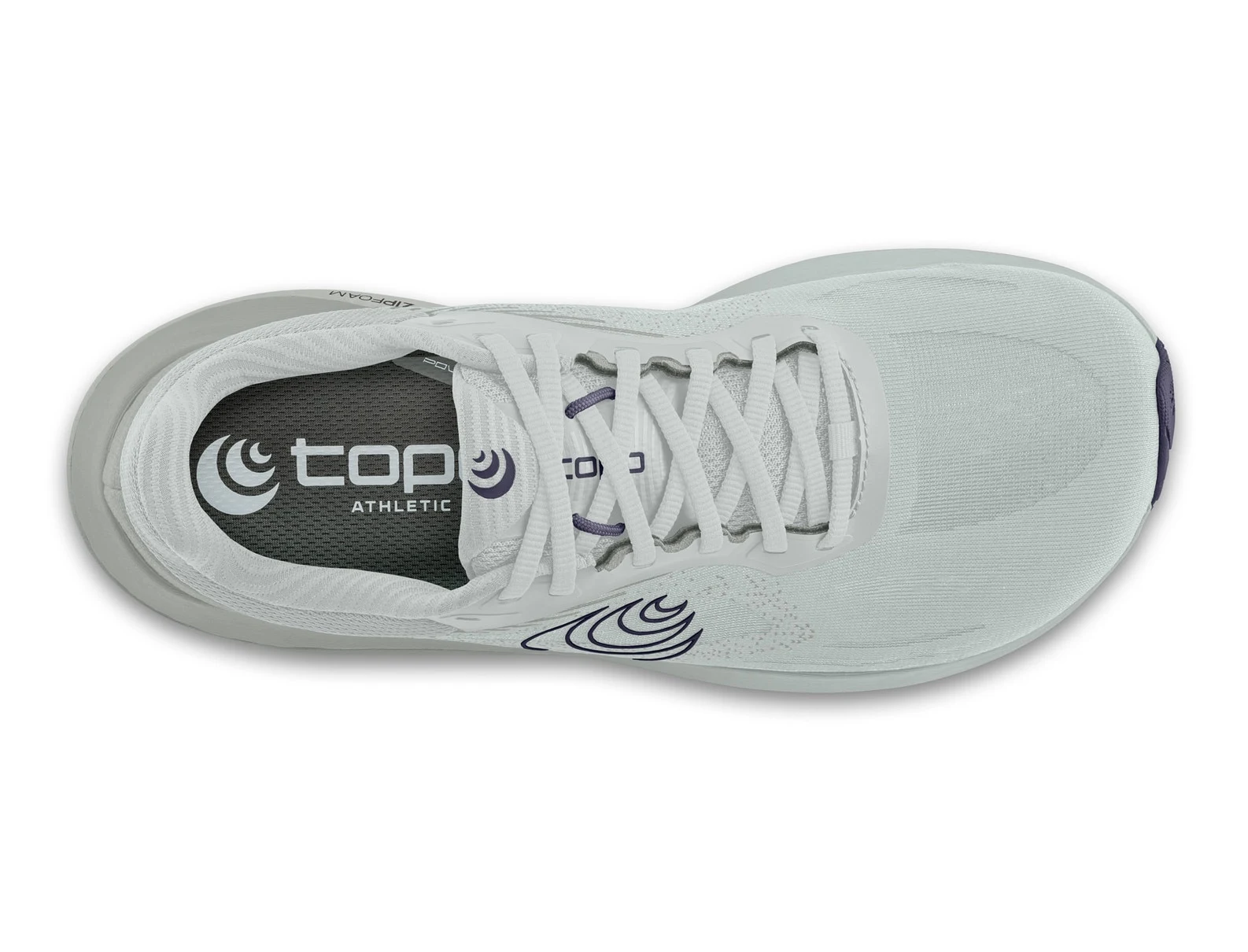
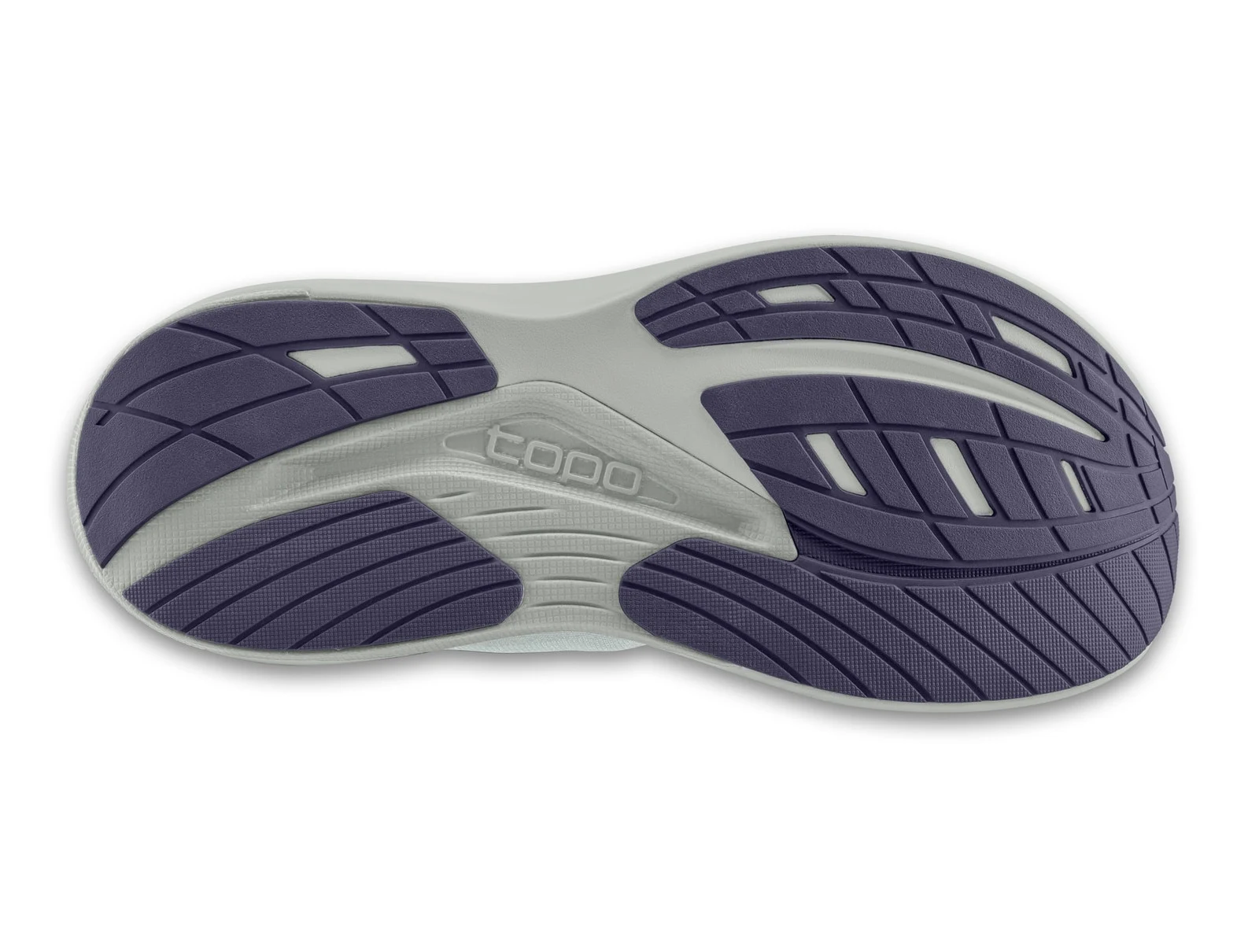
7. Topo Athletic Ultrafly 6 — Best roomy stable
Best for: runners who want a foot-shaped toe box AND stability guidance.
- Heel stack: 32.0 mm brand / 33.0 mm lab
- Forefoot stack: 27.0 mm brand / 26.4 mm lab
- Drop: 5 mm brand / 6.6 mm lab
- Weight: 272 g (9.6 oz, men’s US 9, lab and brand)
- Widths: Normal, Wide
- Midsole: ZipFoam
- Removable insole: yes
The Ultrafly 6 has the roomiest measured toe box in this guide. The lab made a gel mold of the inside of the shoe. It measured 80.3 mm across the big-toe area — 7 mm wider than the average running shoe. That is why RunRepeat names it a top pick for wide toe boxes and for overpronation at the same time. It is the only shoe here that does both jobs. The forefoot is foot-shaped, and the firmer foam on the inside edge guides an overpronating foot.
The lab gave it a stability score of 92 out of 100, the highest in this guide. It weighs just 272 g — light for a support shoe. The trade-off is the foam. ZipFoam is an older EVA compound. The lab numbers show it: 114 SA of shock absorption at the heel and just 48.3% energy return, both below average. The ride is firm and a little dull. If you want bounce, look at the 1080. If you want room plus guidance, this is the shoe.
Pros:
- Roomiest toe box measured here (80.3 mm in the lab)
- Best stability score in this guide (92/100)
- Light for a support shoe (272 g)
- Great for custom orthotics — the insole comes out and the fit is roomy
- Durable outsole
Cons:
- Dull, low-bounce foam (48.3% energy return at the heel)
- Modest shock absorption (114 SA at the heel)
- Firm ride — not a soft shoe
Skip it if: you want soft bounce, or you run trails. This is a road shoe — our best trail running shoes guide covers off-road wide fits.
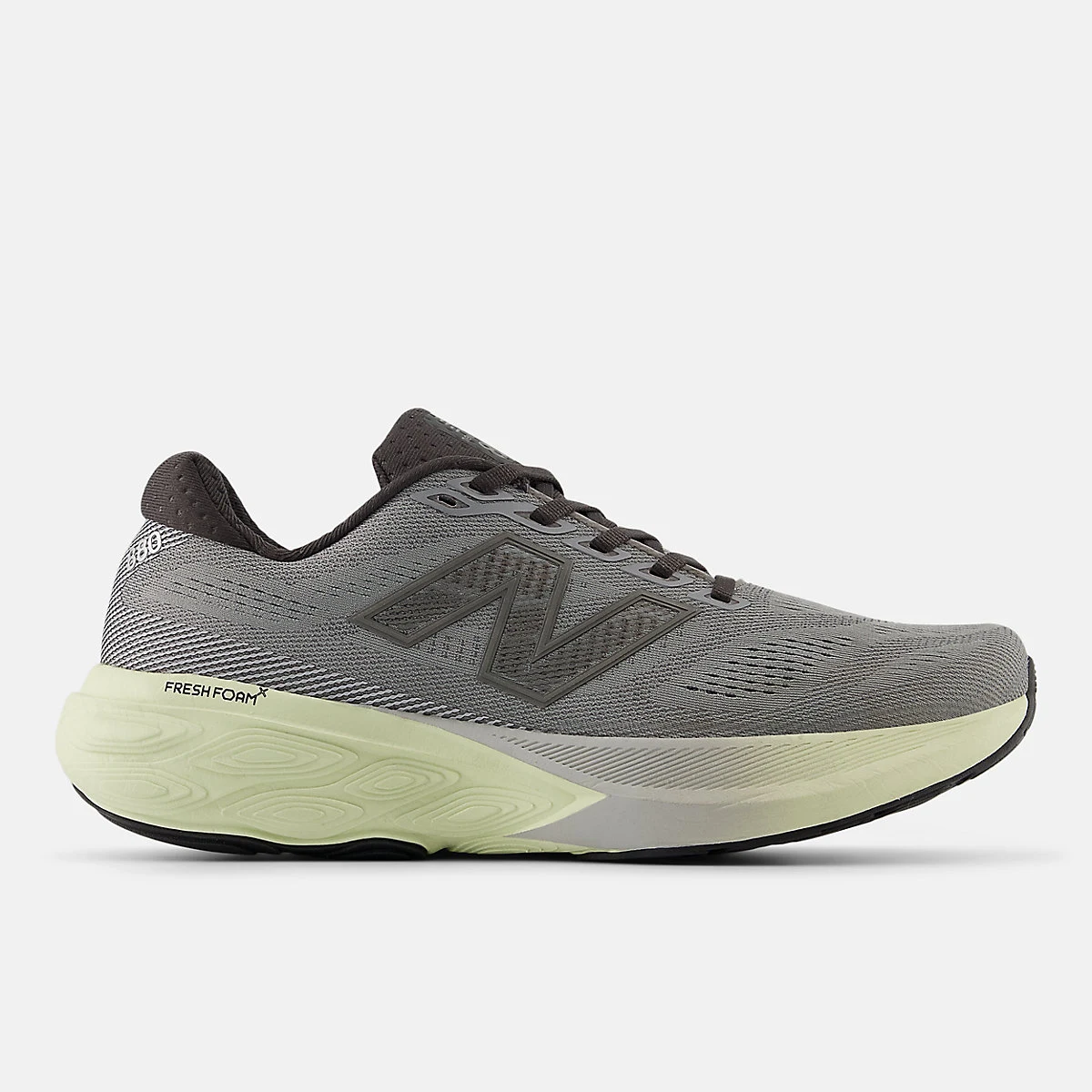
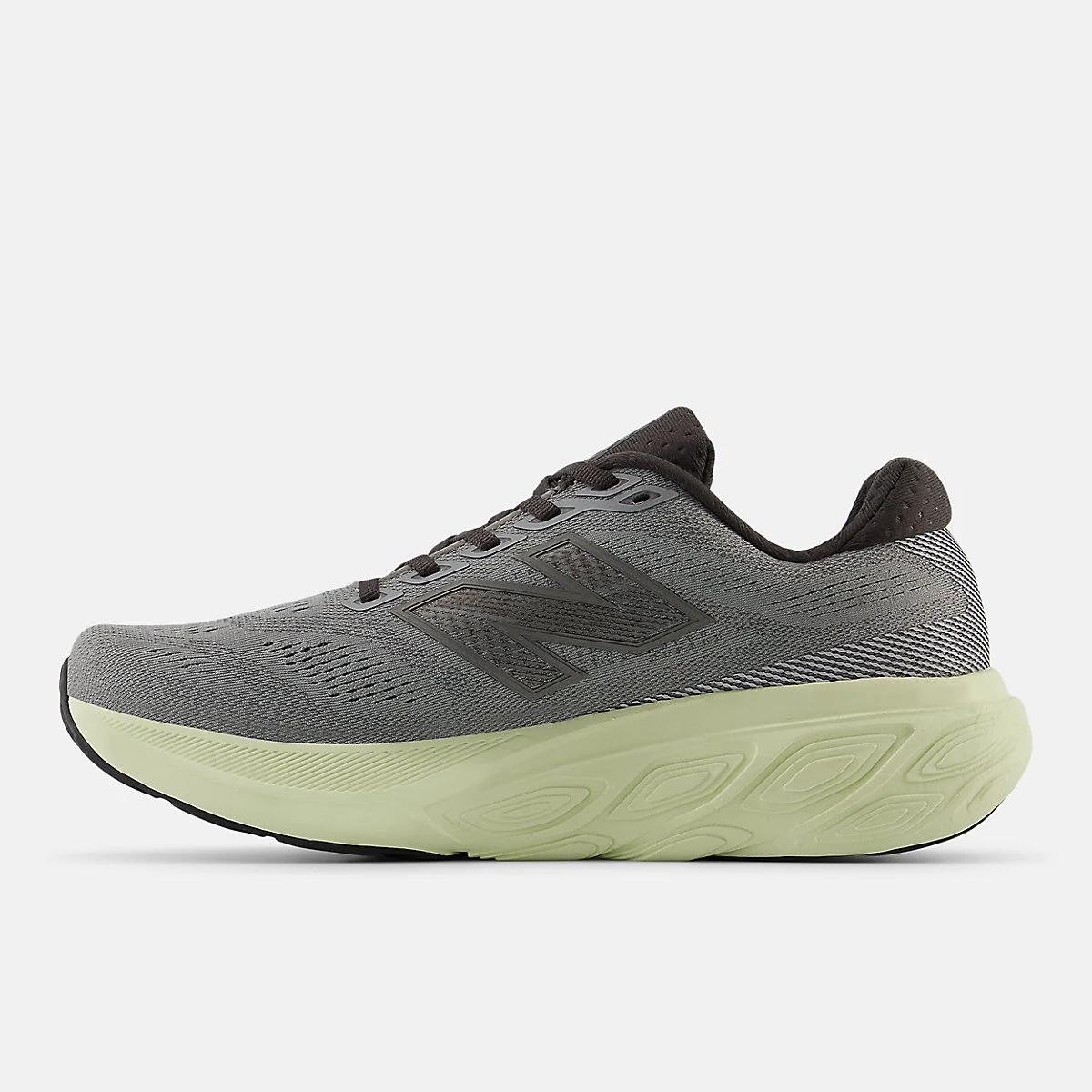
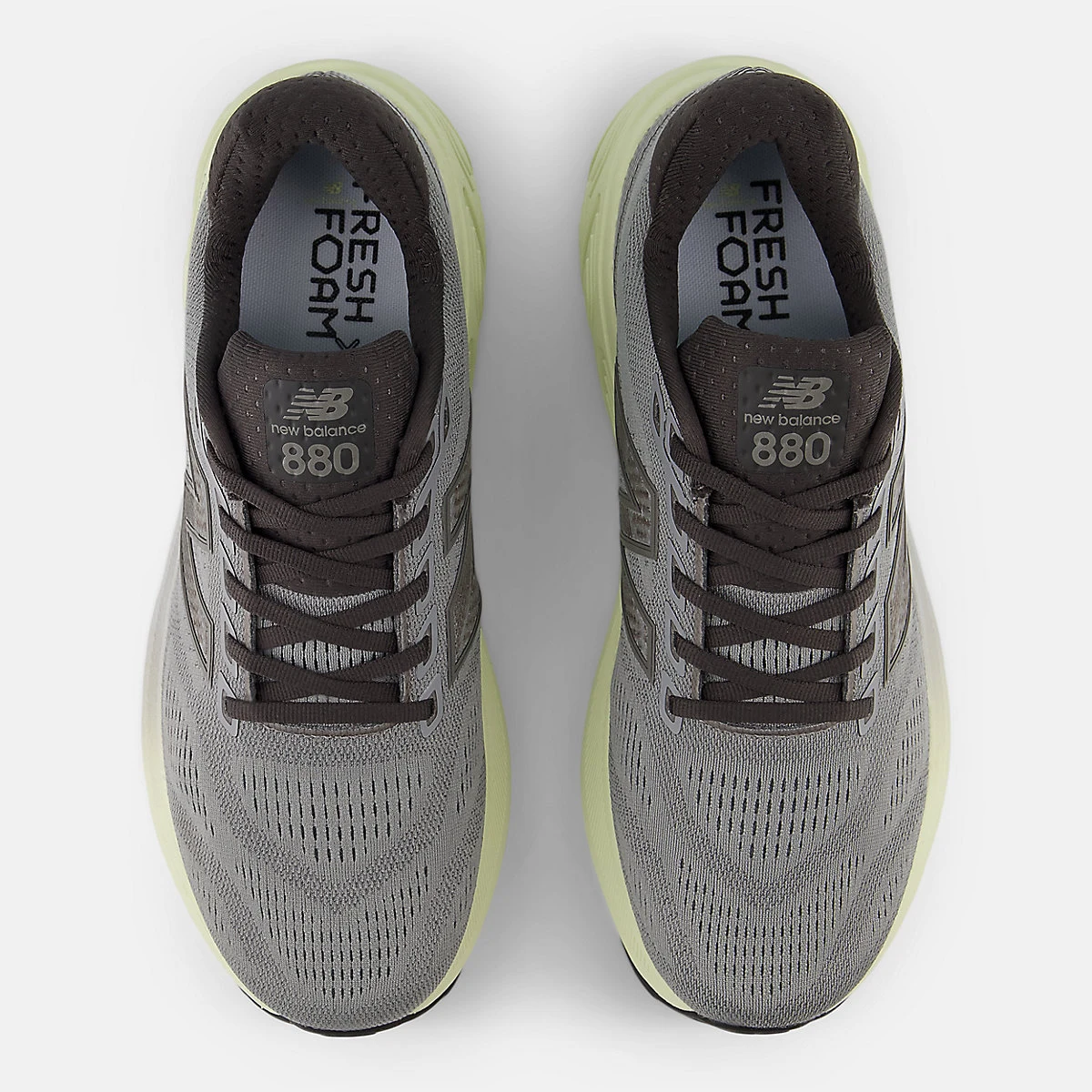
8. New Balance Fresh Foam X 880v15 — Best value wide
Best for: runners who want 2E and 4E width and max-cushion comfort at a lower price tier than the 1080.
- Heel stack: 40.5 mm brand / 39.4 mm lab (RTINGS)
- Forefoot stack: 34.5 mm brand / n/a lab
- Drop: 6 mm brand / 7.3 mm lab (RTINGS)
- Weight: 299 g (10.5 oz, men’s US 9, brand) / 286.6 g (10.11 oz, RTINGS lab)
- Widths: B, D, 2E, 4E (men’s); B, D, 2E (women’s)
- Midsole: Fresh Foam X
- Removable insole: yes
The 880 is New Balance’s everyday workhorse, now in its fifteenth version — and the v15 is the biggest redesign the line has had in years. The stack grew to 40.5 mm at the heel. The drop fell from 8 mm to 6 mm. The platform got about 5 mm wider at the heel and midfoot. RTINGS measured 39.4 mm of heel stack and a 7.3 mm drop in their lab. The shoe now sits firmly in max-cushion territory. It also carries the American Podiatric Medical Association’s Seal of Acceptance, which few running shoes bother to get.
Against the 1080 v15 at the top of this list, the 880 is the value pick. Same four widths, same 6 mm drop. But a firmer foam and a heavier build — 299 g on the brand’s spec against the 1080’s 261 g. If you want the softest ride, buy the 1080. If you want the same widths and a tall, protective stack for less, buy the 880. If you need stability rather than neutral cushion, the Fresh Foam X 860v15 is the guided version of this same shoe.
Pros:
- Four widths up to 4E, same as the 1080
- Tall, protective stack (39.4 mm heel, RTINGS lab)
- APMA Seal of Acceptance
- True to size
- Durable daily trainer built for high mileage
Cons:
- Heavier than the 1080 (299 g brand)
- Firmer than the 1080 — less soft underfoot
- Less lively than the 1080
Skip it if: you want the softest ride. The 1080 v15 is softer and lighter. Or if you need stability — the 860v15 is the guided version of this shoe.
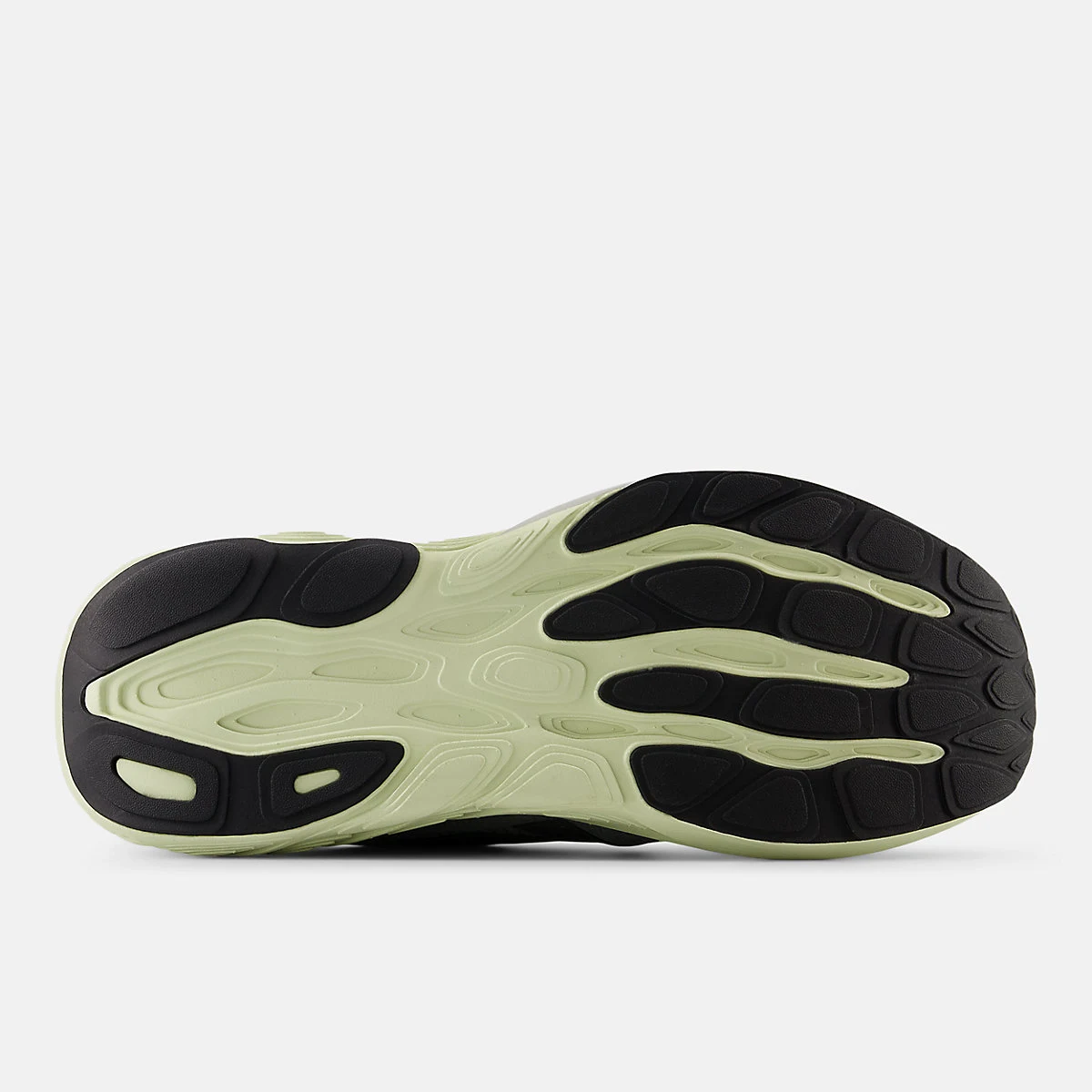
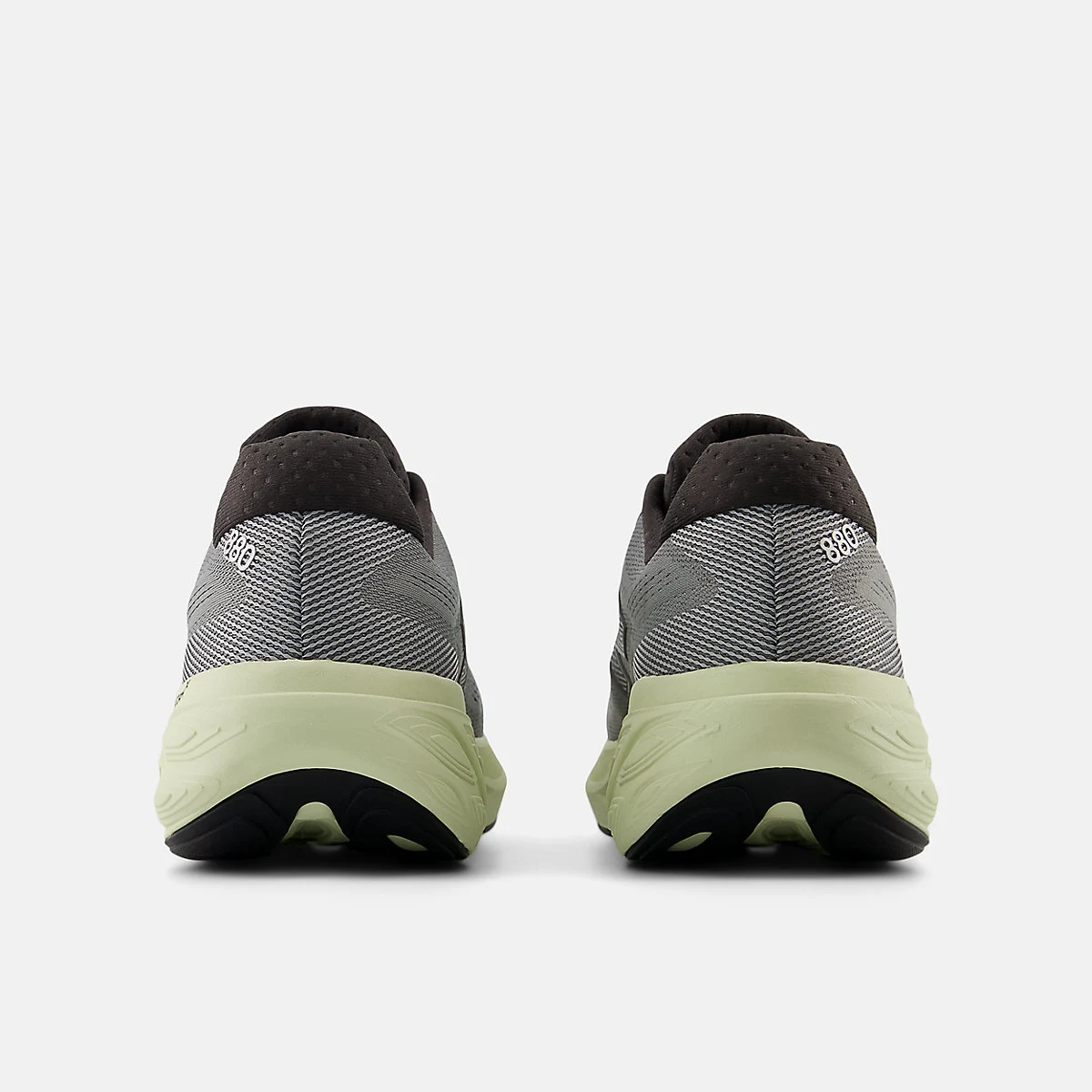
Best running shoes for wide feet compared side by side
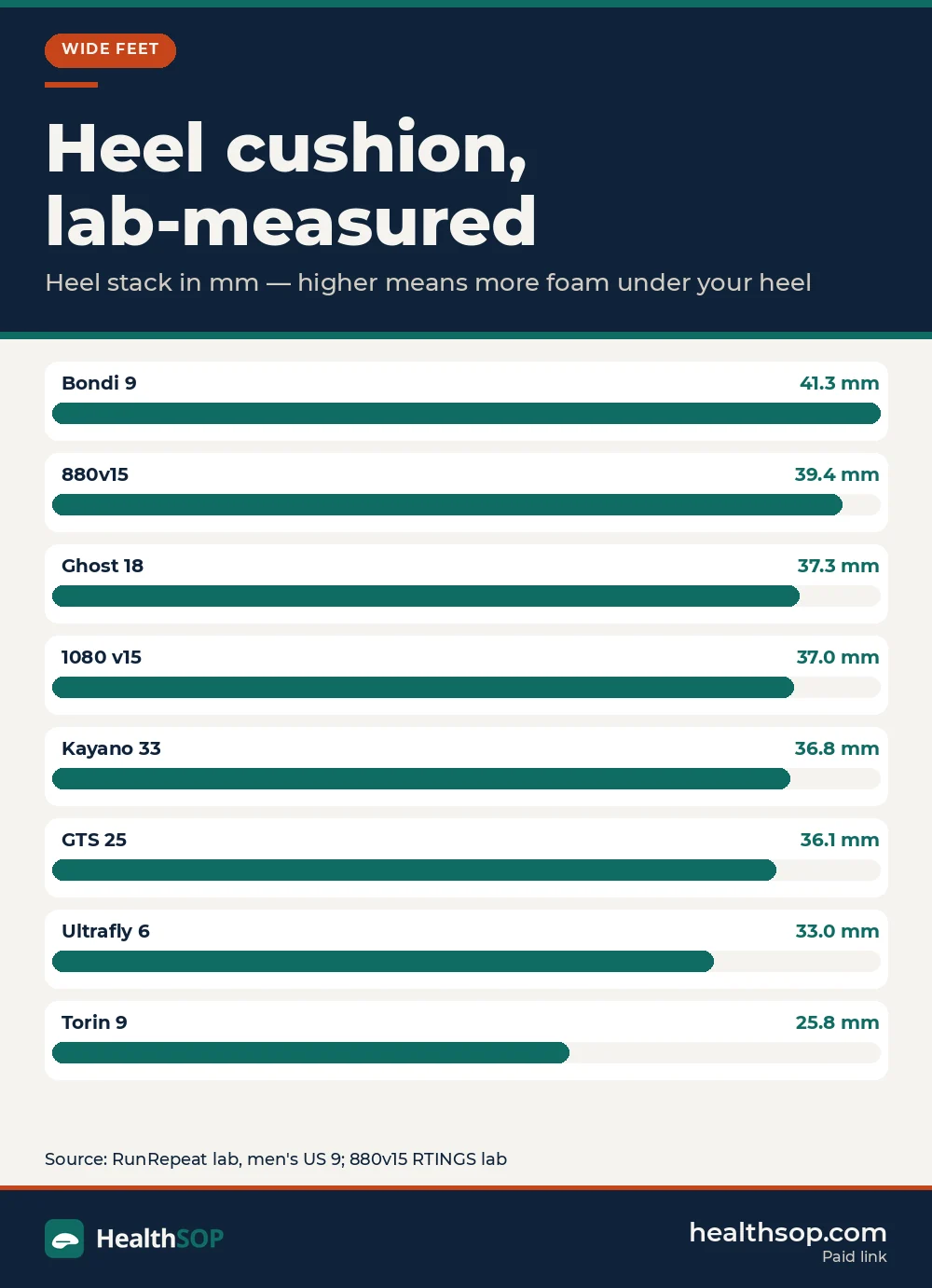
This table uses the brands’ own figures. Lab-measured drops, where they differ: Ghost 18 12.2 mm, Bondi 9 9.1 mm, Torin 9 0.3 mm, Ultrafly 6 6.6 mm. The others: 880v15 7.3 mm (RTINGS), 1080 v15 6.4 mm, Kayano 33 8.5 mm, GTS 25 10.2 mm. Lab heel stacks are in the infographic in the “How we chose” section below.
| Model | Men’s widths | Women’s widths | Toe box | Support | Drop (mm) | Best for |
|---|---|---|---|---|---|---|
| New Balance 1080 v15 | B, D, 2E, 4E | B, D, 2E | Roomy (4E last) | Neutral | 6 | Best overall |
| Brooks Ghost 18 | Narrow, Regular, Wide, X-Wide | Narrow, Regular, Wide | Roomy in 2E/4E | Neutral | 10 | Best neutral daily |
| ASICS Gel-Kayano 33 | D, 2E, 4E | B, D, 2E | Wide in 2E/4E | Stability | 8 | Best stability |
| HOKA Bondi 9 | Narrow, Normal, Wide, X-Wide | Narrow, Regular, Wide | 72.5 mm lab — tight in standard, roomy in 2E/4E | Neutral | 5 | Best max cushion |
| Altra Torin 9 | Normal, Wide | Regular, Wide | Wide (foot-shaped last) | Neutral | 0 | Best foot-shaped last |
| Brooks Adrenaline GTS 25 | Narrow, Regular, Wide, X-Wide | Narrow, Regular, Wide | Wide in 2E/4E | Stability | 10 | Best supportive wide |
| Topo Athletic Ultrafly 6 | Normal, Wide | Normal, Wide | 80.3 mm lab — roomiest here | Stability | 5 | Best roomy stable |
| New Balance 880v15 | B, D, 2E, 4E | B, D, 2E | Wide in 2E/4E | Neutral | 6 | Best value wide |
To keep them in good shape, learn how to wash running shoes. A wide shoe with a stretched, dirty upper loses its fit faster than a clean one.
What makes a running shoe good for wide feet?
A wide shoe is not just a bigger shoe. Four things decide whether it actually fits a wide foot: the width size, the toe box, the midfoot hold, and the platform underneath.
True width sizing (D, 2E, 4E / B, D, 2E)
Width letters are the first thing to check, and they work differently for men and women. For men, D is standard, 2E is wide, and 4E is extra wide. For women, B is standard, D is wide, and 2E is extra wide. Each step up adds room across the forefoot — the same length, a wider fit. Four shoes in this guide go to 4E for men: the 1080 v15, the Ghost 18, the GTS 25, and the 880v15. If your feet are truly wide, start with those four. The Torin 9 and the Ultrafly 6 do not offer 4E. Their foot-shaped lasts make up for it — the shoe is wide by shape, not just by letter.
Toe box volume
The toe box is the front of the shoe, and volume means height as well as width. A wide shoe with a low roof still pinches. The lab numbers tell the story. The Bondi 9 measures just 72.5 mm across the toe box in standard width. That is below average, and it is why the shoe only works for wide feet in 2E or 4E. The Ultrafly 6 measures 80.3 mm, the roomiest in this guide. The Torin 9 does not need a wide size to feel roomy because the last is foot-shaped from the start. If toe room is your main problem, read our guide to running shoes with a wide toe box as well. It covers the same question from the toe-box angle.
Midfoot hold
A wide shoe still has to hold your midfoot, or your foot slides around inside it. Look for laces that pull the upper snug over the middle of the foot, and a heel counter that grips without rubbing. The upper should stretch a little across the forefoot but stay firm at the midfoot. The Torin 9 and the Ultrafly 6 do this best in this guide: roomy up front, locked down in the middle. If a wide shoe feels sloppy, try the runner’s loop — lace through the top eyelet twice — before you give up on it. It pulls the heel in without squeezing the forefoot.
Platform width
The platform is the base of the shoe, and a wider base is more stable. It also stops your foot spilling over the edge of the midsole, which is what makes a narrow shoe feel tippy on a wide foot. The Bondi 9 measures 123.2 mm across the forefoot in the lab, and the Kayano 33 measures 120.7 mm. They are the two widest platforms here. That width is also why both shoes suit heavier runners so well. If body weight is part of your fit problem, our running shoes for heavy men guide covers the same shoes from the weight angle.
How to know if you need wide running shoes
You need wide running shoes if your little toe rubs the side of the shoe. The same goes if your feet go numb after a few miles, or if the upper bulges out over the midsole. Blisters on the outside of your forefoot are another sign. Another sign: your shoes feel fine in length but tight across the ball of your foot. If any of that sounds familiar, do not size up — a longer shoe leaves dead space at the toes and slips at the heel. Go wider instead. The width chart below shows what the letters mean.
One more thing: wide feet and heel pain often travel together, because a squeezed forefoot changes how you land. If heel pain is part of your problem, start with our best running shoes for plantar fasciitis guide as well. And if foot pain keeps coming back, see a clinician — a shoe can help, but it cannot diagnose you.
Running shoe width chart
| Letter | Men’s fit | Women’s fit |
|---|---|---|
| AA / 2A | — | Narrow |
| B | Narrow | Standard |
| D | Standard | Wide |
| 2E | Wide | Extra wide |
| 4E | Extra wide | — |
Men’s and women’s letters do not mean the same width. A women’s D (wide) is close to a men’s D (standard) in width, because women’s shoes are built on a narrower last. So check the letter for your own gender, not the letter you saw on someone else’s shoe.
How we chose these shoes
We picked these eight from brand spec sheets, independent lab data, and podiatric guidance. This was not a wear test, and we do not claim we ran in them. RunRepeat’s lab measured stack, drop, weight, shock absorption, and energy return for seven of the eight (men’s US 9, methodology 2.3). RTINGS measured the 880v15 in their lab. Where the lab and the brand disagree, we say so in the spec bullets above. The biggest gap is the Ghost 18: 12.2 mm lab drop against Brooks’ 10 mm. The second is the Bondi 9: 9.1 mm lab drop against HOKA’s 5 mm. Clinical guidance comes from the American Academy of Orthopaedic Surgeons and the peer-reviewed papers in the Sources section. Every pick was checked for Amazon availability before drafting. Seven came from saved Amazon pages and verification records. The 880v15 came from an explicit amazon.com listing that was re-checked at publish time.
The video above walks through the best wide-feet running shoes of 2026 by category, including width sizes explained. It features the Ghost 18 and the 1080 v15 from this guide.
Which shoe should you pick?
| If you are… | Buy this | Why |
|---|---|---|
| A wide-footed runner who wants one best shoe | New Balance 1080 v15 | Softest ride, four widths to 4E |
| After one pair for everything | Brooks Ghost 18 | Four widths, smooth, durable |
| An overpronator with wide feet | ASICS Gel-Kayano 33 | Best stability, wide platform |
| An overpronator on a budget | Brooks Adrenaline GTS 25 | Previous model, four widths, real guidance |
| After room plus stability | Topo Athletic Ultrafly 6 | Roomiest toe box measured, stability 92/100 |
| After maximum cushion | HOKA Bondi 9 | Tallest stack, best shock absorption — buy 2E/4E |
| After a flat, foot-shaped fit | Altra Torin 9 | Zero drop, foot-shaped last |
| After the best value | New Balance 880v15 | Same widths as the 1080, lower tier |
Which running shoes for wide feet also suit overpronation?
The Kayano 33 is the first pick — it has the strongest guidance and the widest platform in this guide. The GTS 25 is the value version of the same idea. The Ultrafly 6 is the pick if you also want a foot-shaped toe box. All three come in wide sizes. Our running shoes for overpronation guide covers this question in full.
Which running shoes for wide feet are best for long distance?
Long distance means 15 miles and up, week after week. The 1080 v15 is the best long-distance wide shoe here — the softest foam, the lightest of the big-cushion picks, and the best energy return. The Bondi 9 is the second pick if you run slow and want maximum protection underfoot. The Torin 9 is not a long-distance pick: its low stack and low energy return leave your legs working harder late in a run.
Which running shoes for wide feet are best with arch support?
Arch support in a running shoe means guidance, not an insole. The Kayano 33 and the GTS 25 both guide the foot, and both come in 2E and 4E. The Ultrafly 6 is the third option, with a firmer inside edge and a roomy fit. If you use custom orthotics, all eight shoes in this guide have removable insoles — take the factory insole out and your orthotic goes in. The Ultrafly 6 and the Torin 9 have the most room for a thick orthotic.
Which running shoes for wide feet are best for women?
All eight shoes in this guide come in women’s sizes. The best women’s pick is the same as the men’s: the New Balance 1080 v15, which comes in B, D, and 2E for women. The Ghost 18 and the Bondi 9 also come in wide for women, and the Kayano 33 comes in 2E. Remember that women’s widths use different letters. B is standard, D is wide, and 2E is extra wide. So a women’s D is roughly a men’s D in width. Do not buy a men’s shoe in your women’s size and expect the same fit. The heel is narrower on a men’s last, and the length runs longer. If you run with a partner and share shoes, compare the width chart above first. For the men’s side of the same question, see our best running shoes for men guide.
Frequently asked questions
What brand of running shoe is best for wide feet?
New Balance, Brooks, ASICS, and Altra. New Balance has the widest range — B to 4E for men — and the 1080 v15 and 880v15 both go to 4E. Brooks matches it with the Ghost 18 and the GTS 25. ASICS covers 2E and 4E with the Kayano 33. Altra does not use width letters the same way, but the Torin 9’s foot-shaped last fits wide feet by shape.
Should I size up for wide feet?
No — go wider, not longer. A longer shoe leaves dead space at the toes, slips at the heel, and can cause blisters at the front. A wider shoe in your normal length keeps the heel locked and gives your forefoot room. If your normal length feels tight across the ball of your foot, order the same length in 2E. If 2E still pinches, try 4E before you try a longer size.
Are HOKA good for wide feet?
Yes, in the wide versions. The Bondi 9 comes in Wide (2E) and X-Wide (4E), and those versions work well for wide feet. The standard width does not. The lab measured the toe box at 72.5 mm, below average. RunRepeat lists “not for wide feet” as a con for the standard fit. So buy the 2E or 4E, and do not settle for standard width if your size is sold out.
What does 2E mean?
2E means wide, for men. Men’s widths run B (narrow), D (standard), 2E (wide), and 4E (extra wide). For women the letters shift: B is standard, D is wide, and 2E is extra wide. The letter describes the width across the forefoot at the same length. A 2E is the same length as a D, just wider where your toes sit.
Can wide feet cause foot pain when running?
Yes, if the shoe is too narrow. A narrow shoe squeezes the forefoot, and that can cause blisters, numbness, black toenails, and bunions over time. The AAOS notes that tight, narrow shoes are a common cause of bunion pain. A wide shoe removes the squeeze, but it does not treat an existing foot problem. If pain keeps coming back, see a clinician for a diagnosis.
How to lace running shoes for wide feet?
Loosen the forefoot and lock the heel. Skip one eyelet over the widest part of your foot, or lace the forefoot in parallel bars instead of criss-cross. Both give the front of the shoe more room. Then use the runner’s loop at the top eyelet to pull the heel in tight. That combination keeps your foot from sliding forward without squeezing your toes.
How to stretch running shoes for wide feet?
A shoe stretcher, worn overnight with the stretching spray, gains a few millimetres across the forefoot. Thick socks and a hair dryer on the tight spot can help a little, and a cobbler can stretch a shoe professionally. But stretching is a small fix for a small problem. If the shoe pinches across the whole forefoot, no amount of stretching makes it a wide shoe — buy the wide version instead.
Are running shoes good for wide feet?
Yes, if you buy the wide version. A standard-width running shoe is not made for wide feet, and it will squeeze your forefoot no matter how good the foam is. The wide version of the same shoe is made for you: same length, same drop, same cushion, more room where your toes sit. All eight shoes in this guide come in a real wide size, and four of them go to 4E.
Sources
- AAOS OrthoInfo — Athletic Shoes (fitting guidance). https://www.orthoinfo.org/bodypart/foot-ankle/athletic-shoes/
- Bajraszewski et al. 2025, J Foot Ankle Res — Toe-box shape and forefoot pressure in hallux valgus. https://pubmed.ncbi.nlm.nih.gov/40220280/
- AAOS OrthoInfo — Bunions. https://www.orthoinfo.org/bodypart/foot-ankle/bunions/
- NHS — Bunions. https://www.nhs.uk/conditions/bunions/
- Nigg et al. 2015, Br J Sports Med — Running shoes and running injuries: mythbusting (“comfort filter”, “preferred movement path”). https://pubmed.ncbi.nlm.nih.gov/26221015/
- RunRepeat lab reviews (2026): New Balance 1080 v15, Brooks Ghost 18, ASICS Gel-Kayano 33, HOKA Bondi 9, Altra Torin 9, Brooks Adrenaline GTS 25, Topo Athletic Ultrafly 6 — lab-measured stack, drop, weight, shock absorption, and energy return (men’s US 9, methodology 2.3).
- RTINGS.com — New Balance Fresh Foam X 880v15 review (lab: 286.6 g, 39.4 mm heel stack, 7.3 mm drop; updated 16 Nov 2026). https://www.rtings.com/running-shoes/reviews/new-balance/fresh-foam-x-880v15-white
- RunRepeat — 7 Best Running Shoes for Wide Feet in 2026 (guide). https://runrepeat.com/guides/best-wide-running-shoes
- RunRepeat — 7 Best Running Shoes With A Wide Toebox in 2026 (guide; Ultrafly 6 toe-box 80.3 mm, Bondi 9 toe-box 72.5 mm). https://runrepeat.com/guides/best-wide-toebox-running-shoes
Last updated: 20 November 2026. Medical note: this article is general information, not medical advice. If you have foot pain, a bunion, or another foot condition, talk to a clinician before you change shoes.