
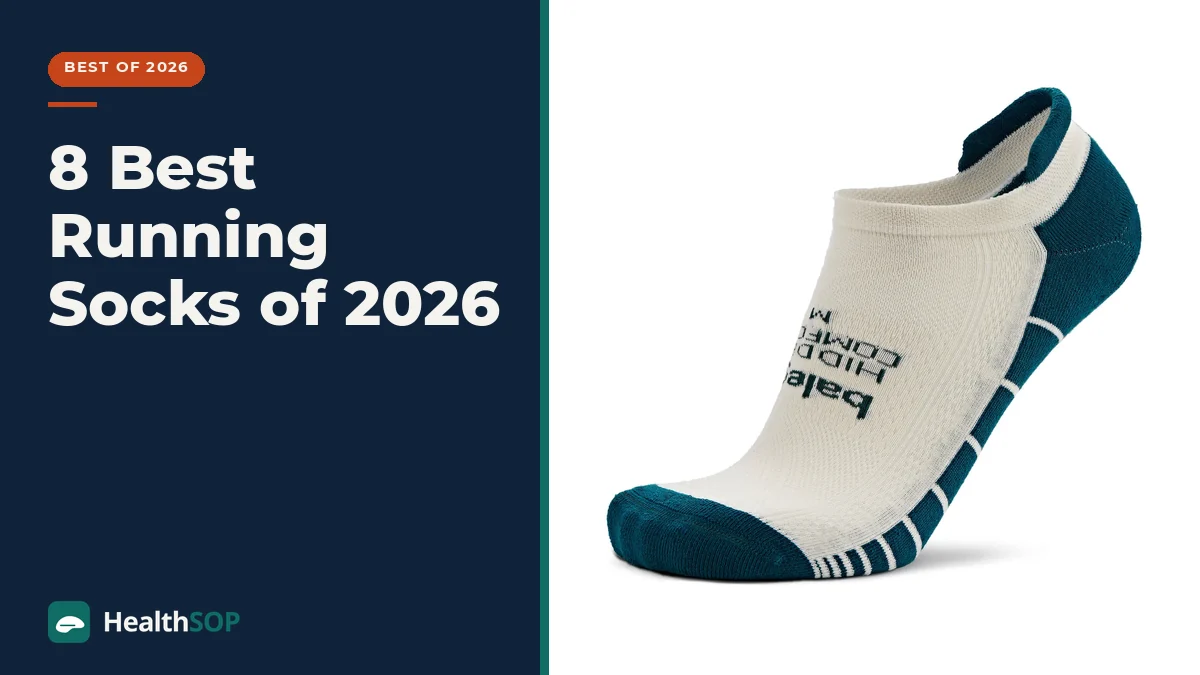
If you want one pair that just works, buy the Balega Hidden Comfort No-Show. It cushions the whole foot, it stays put, and it suits most runners on most days. If your feet sweat a lot, get the Drymax Run Lite-Mesh Mini Crew. If blisters form between your toes, get the Injinji Run Lightweight No-Show. The other seven picks below cover compression, merino wool, toe socks, thin race-day fits and moisture control. Match the sock to your feet, not the other way round.
HealthSOP is reader-supported. As an Amazon Associate, we earn from qualifying purchases made through links on this page — at no extra cost to you.
Table of Contents
Quick picks
| Pick | Best for | Cushion | Height |
|---|---|---|---|
| Balega Hidden Comfort No-Show | Best overall cushioned | Full, plush | No-show tab |
| Feetures Elite Light Cushion No Show Tab | Best targeted compression | Light | No-show tab |
| Darn Tough Run No Show Tab Ultra-Lightweight | Best durable merino | Ultra-light, no cushion | No-show tab |
| Injinji Run Lightweight No-Show | Best toe socks for blisters | Lightweight, minimal | No-show |
| Smartwool Run Zero Cushion Low Ankle | Best thin merino | Zero | Low ankle |
| Swiftwick Aspire Zero | Best thin and fast | Thin, light | Zero (no-show) |
| Drymax Run Lite-Mesh Mini Crew | Best moisture control | Low-density padding | Mini crew |
| CEP The Run No Show Socks 4.0 | Best compression no-show | Padded zones | No-show |
Socks are cheap next to shoes, but they decide whether a run ends in blisters. A good sock wicks sweat, holds its shape, and puts no seam where your toes rub. The eight below all do that. They differ in fibre, cushion, height and fit — that is what the table above is for.
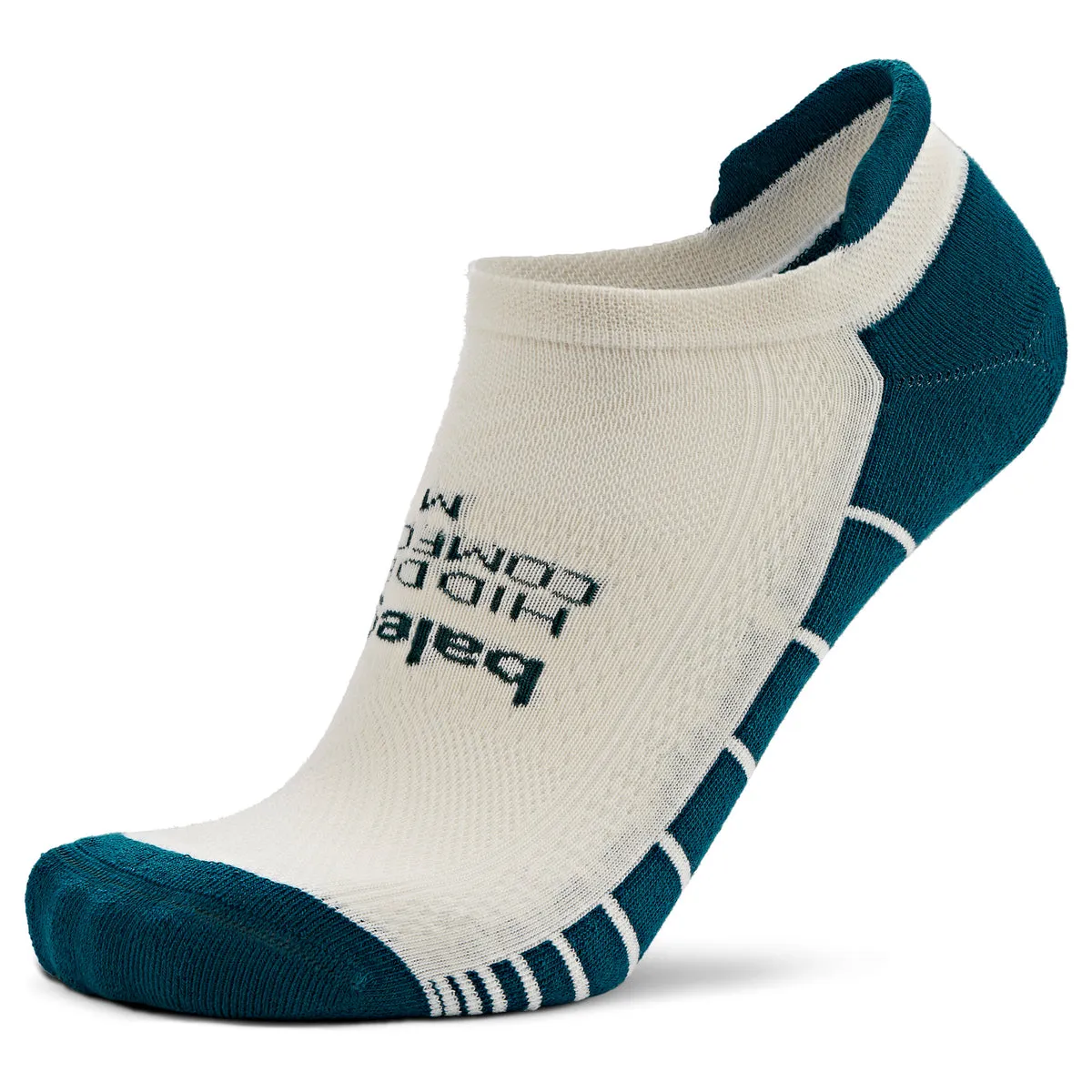
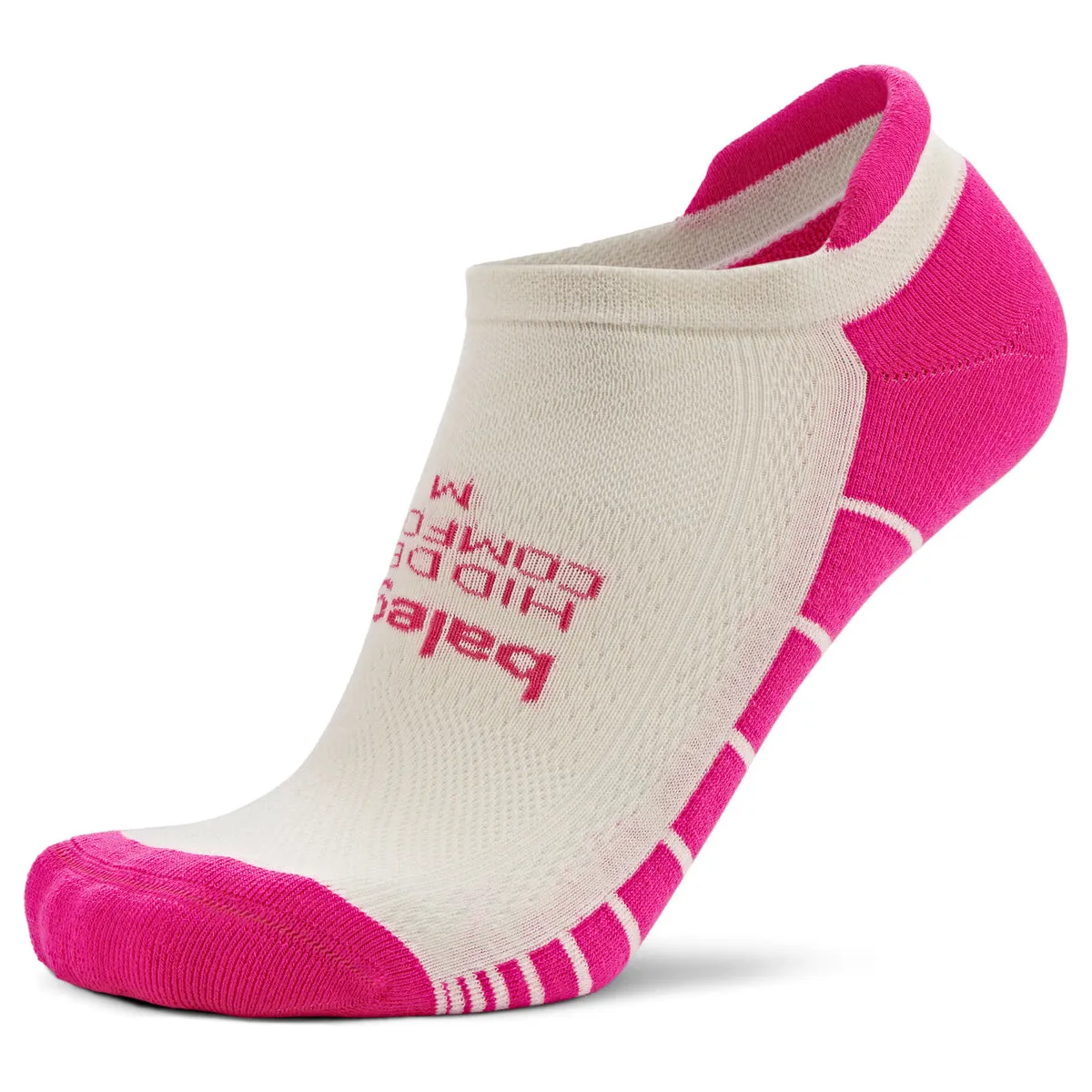
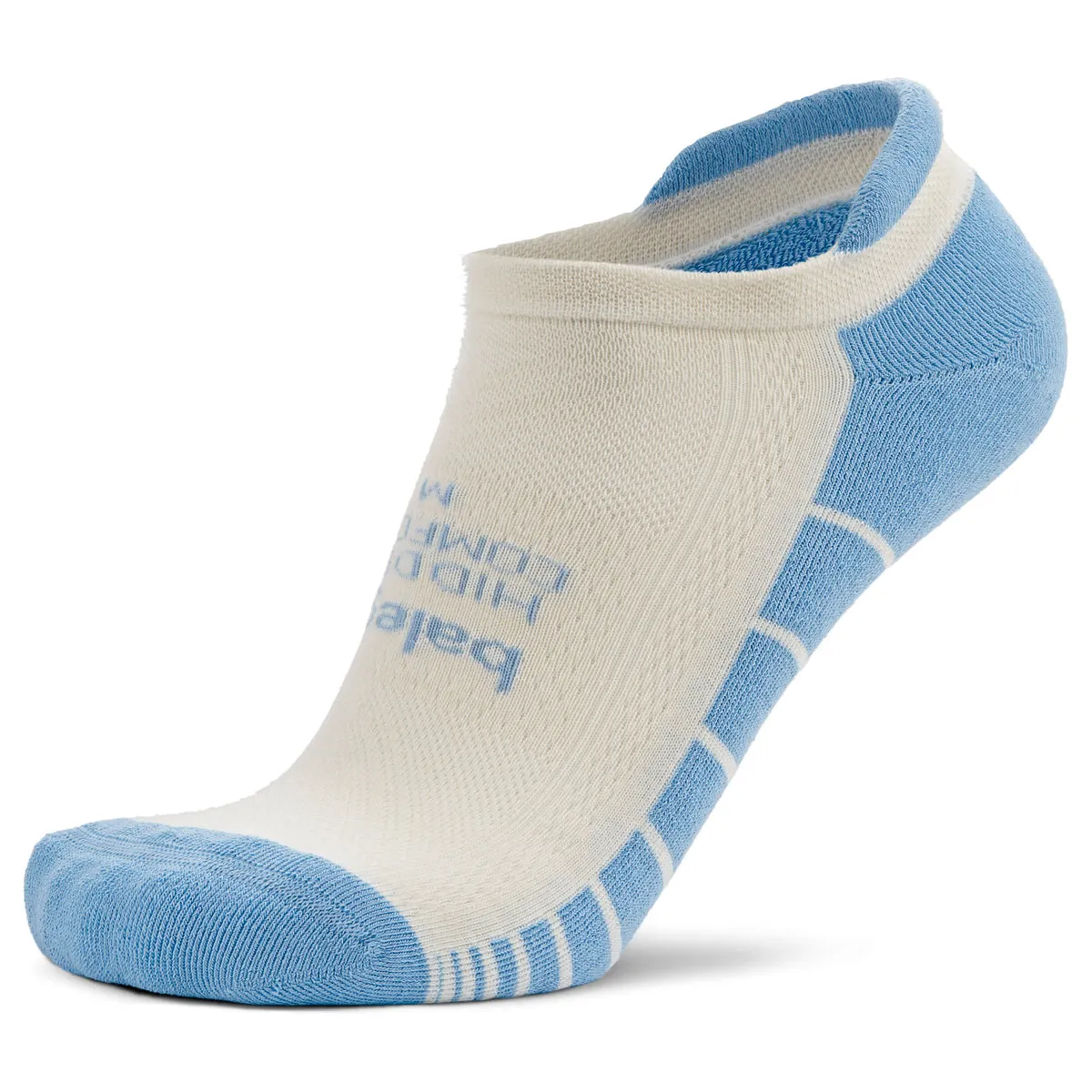
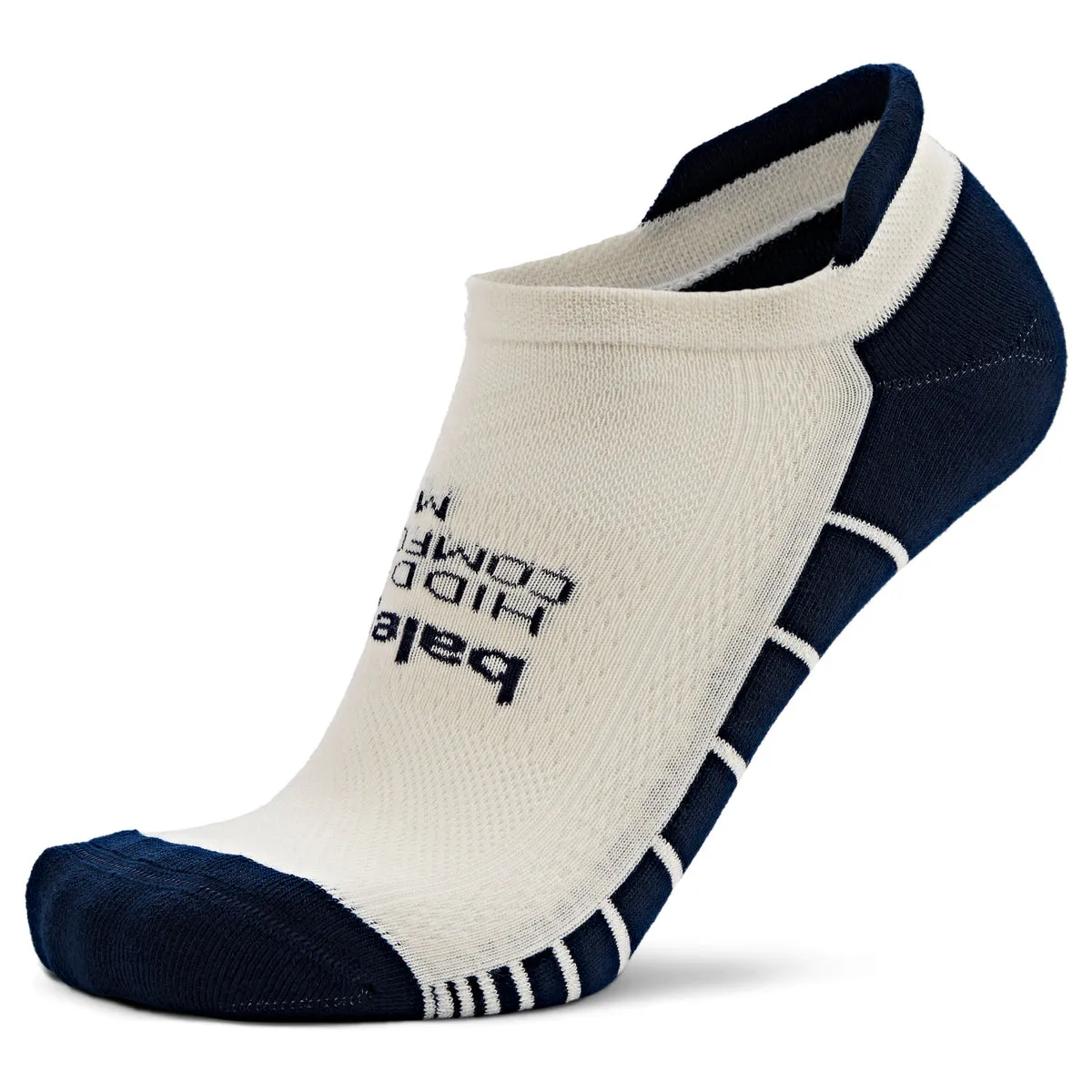
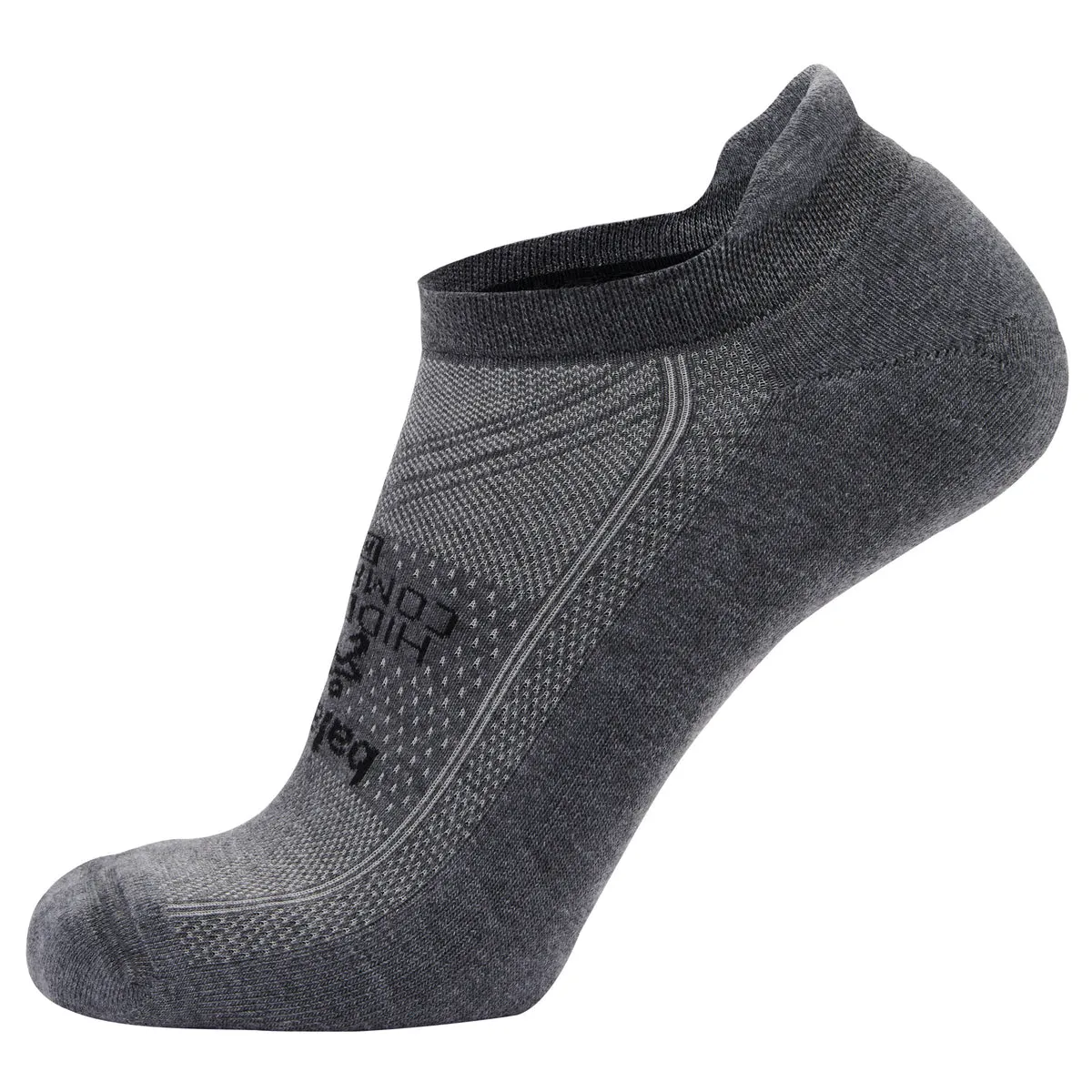
1. Balega Hidden Comfort No-Show — Best overall cushioned
- Fibre: 84% Drynamix recycled polyester, 14% nylon, 2% elastane (listed blend)
- Cushion: Full-length, plush — the most cushioned pick in this list
- Height: No-show with heel tab
- Seamless toe: Yes, hand-linked
- Arch support: Elastic arch band
- Sizes: S to XL, unisex by shoe size
- Source: Balega
The Hidden Comfort is the sock to buy if you only buy one pair. It cushions the whole foot, heel to toe, with a soft terry loop underfoot. The Drynamix yarn pulls sweat off the skin fast, so feet stay dry on long runs. The heel tab sits above the shoe line and stops the sock sliding down. Nothing about it is flashy. It just works, run after run.
Fit is easy. The sock is unisex and sized by shoe size, so most runners find their size on the first try. The elastic arch band holds the sock in place without squeezing. The seamless toe means no ridge rubs the front of your toes. If your shoes have a roomy toe box, this is the most forgiving sock here.
Pros:
- Full cushion under the whole foot — the most padded pick in this list
- Heel tab stops the sock slipping into the shoe
- Seamless toe with no ridge to rub
- Drynamix yarn wicks sweat fast and dries fast
- Unisex sizing by shoe size fits most feet
Cons:
- Thicker than race socks — snug shoes may feel tight with it on
- The plush cushion holds a little warmth on very hot days
Skip it if: you race and want the thinnest sock, or your shoes already fit tight. Look at the Swiftwick Aspire Zero or the Smartwool Run Zero Cushion instead.

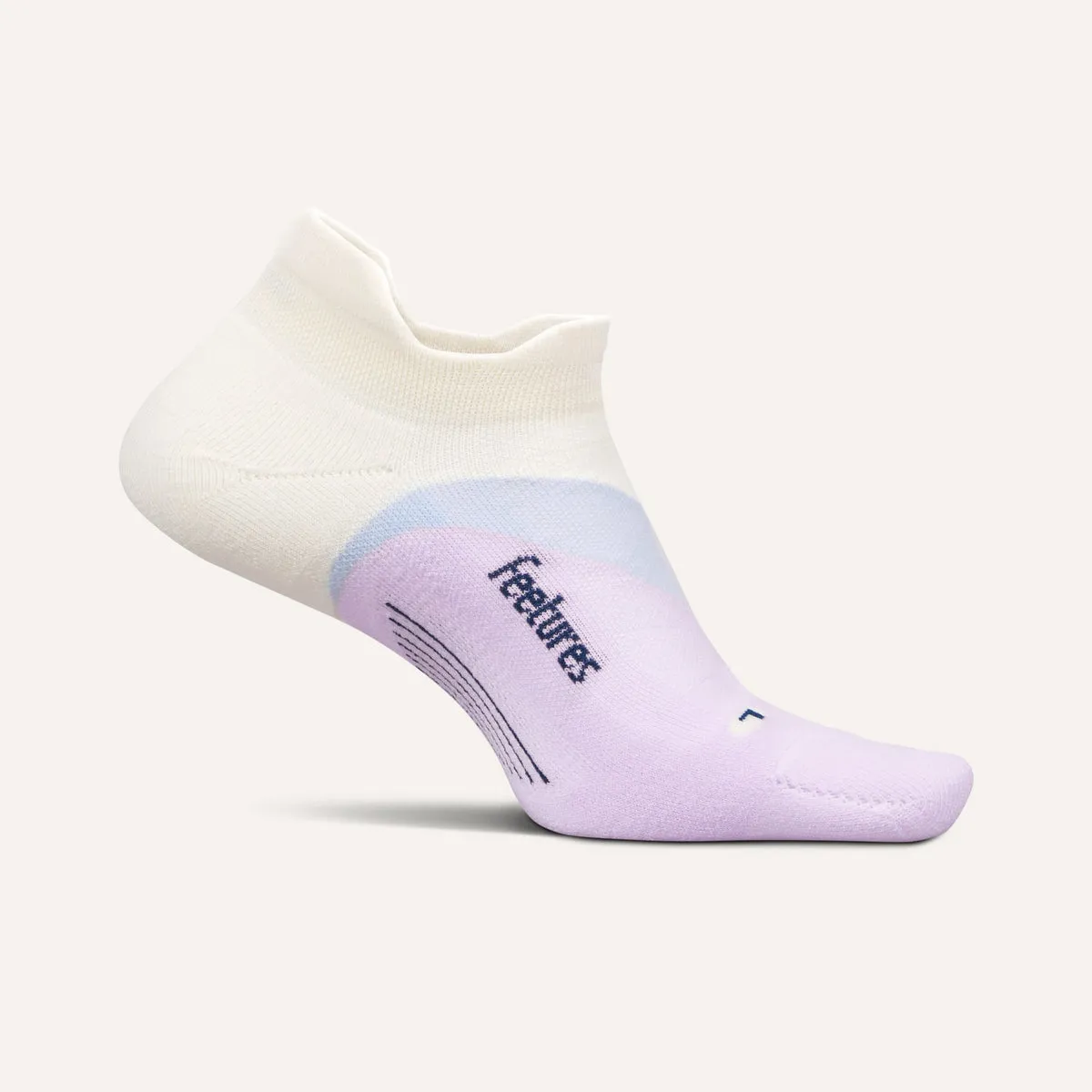
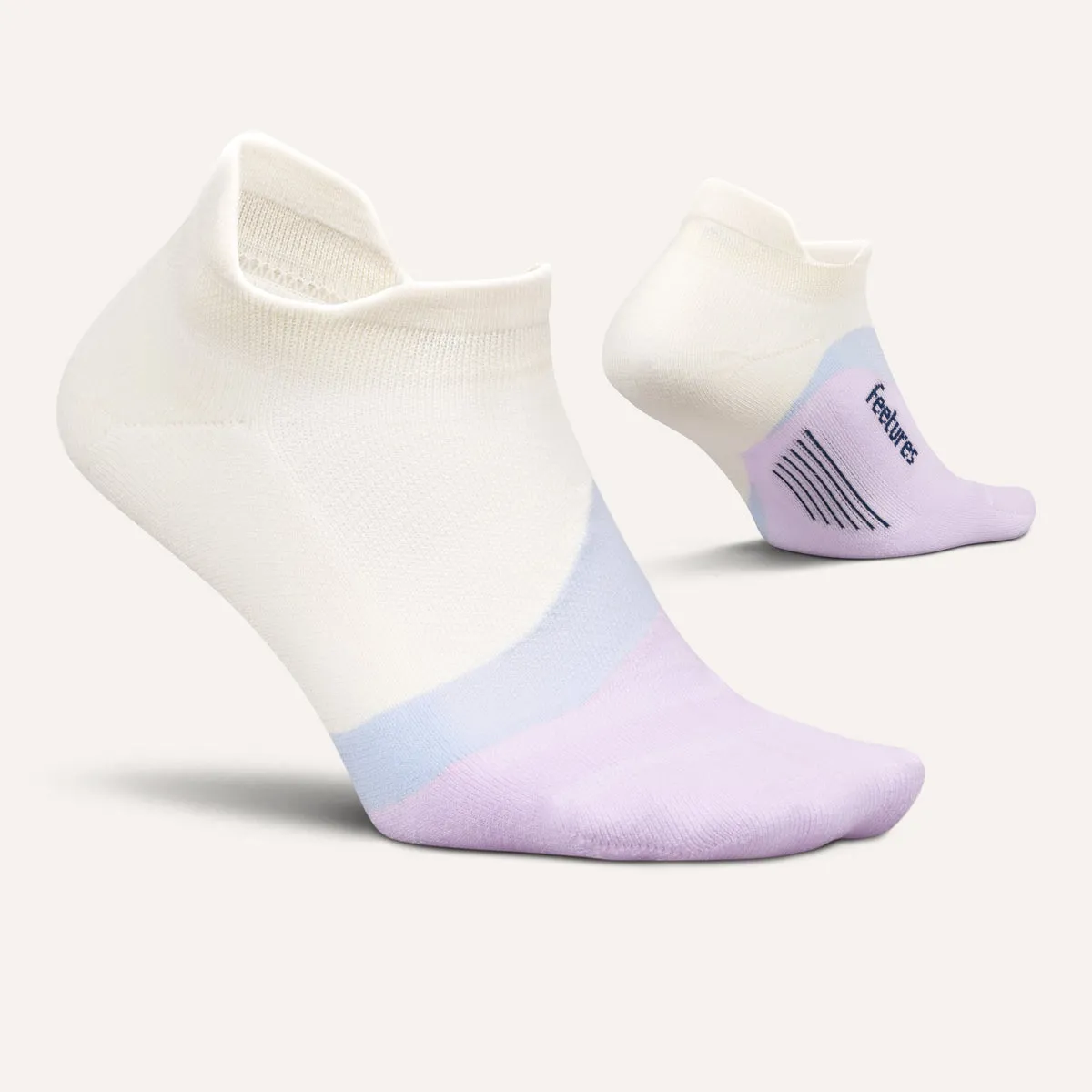
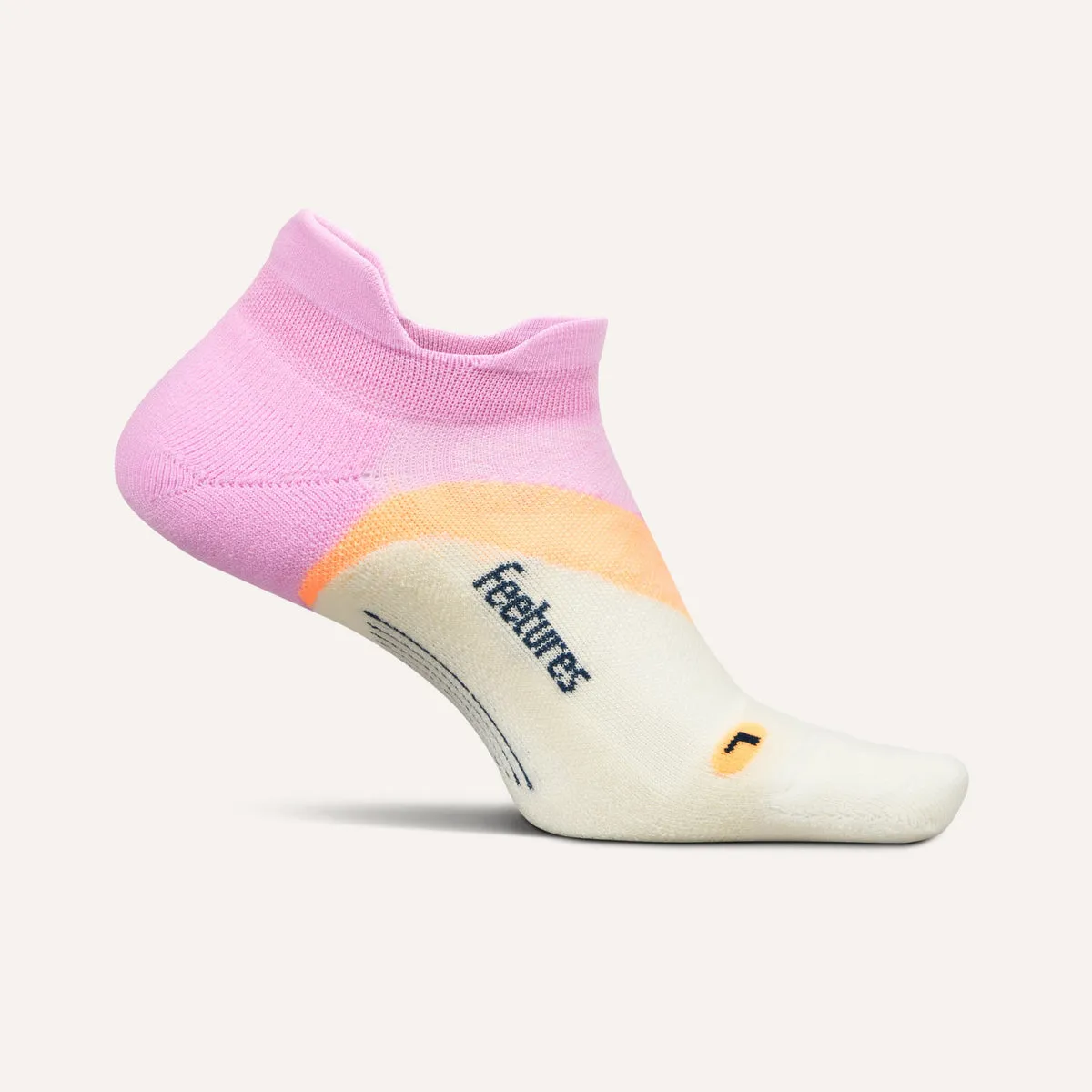
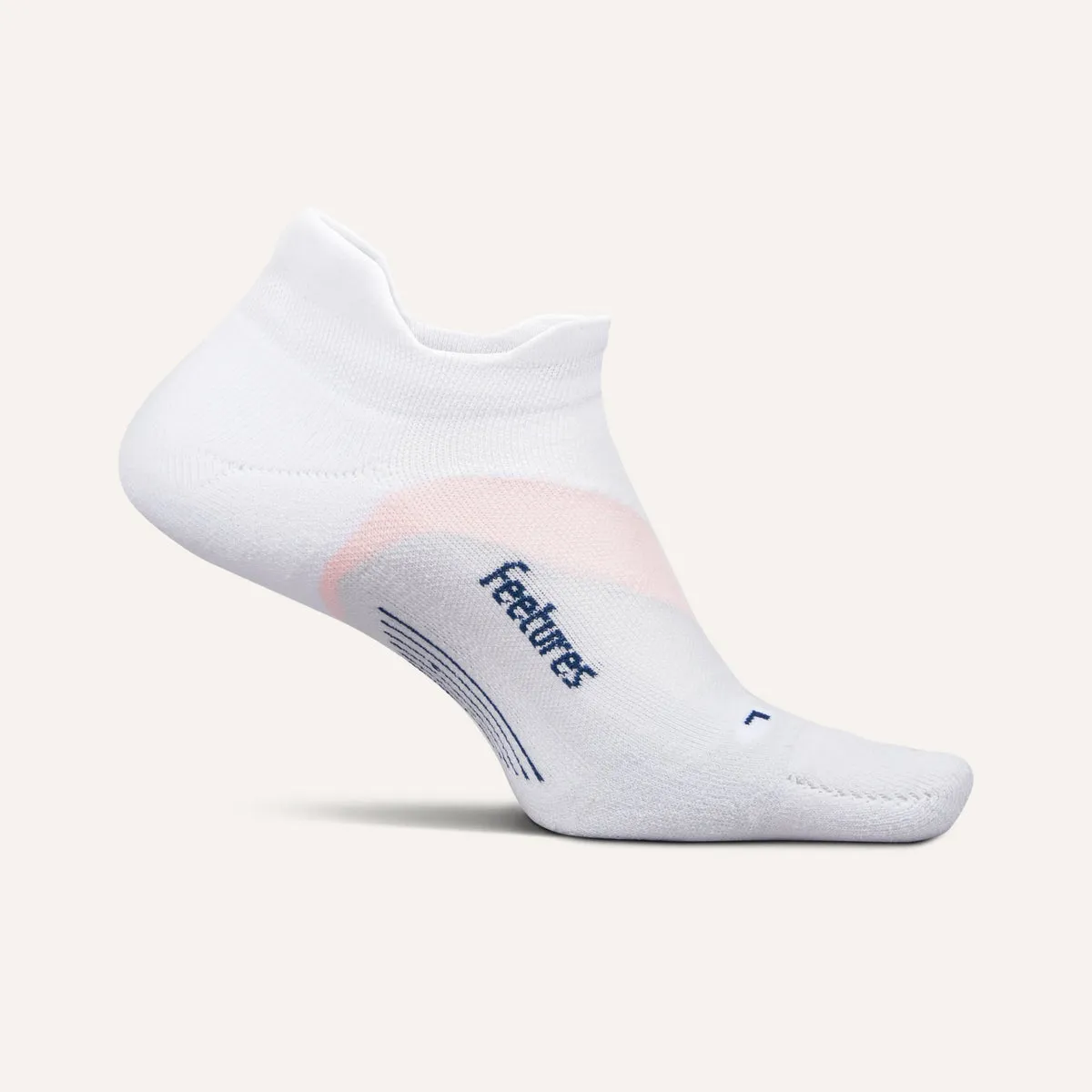
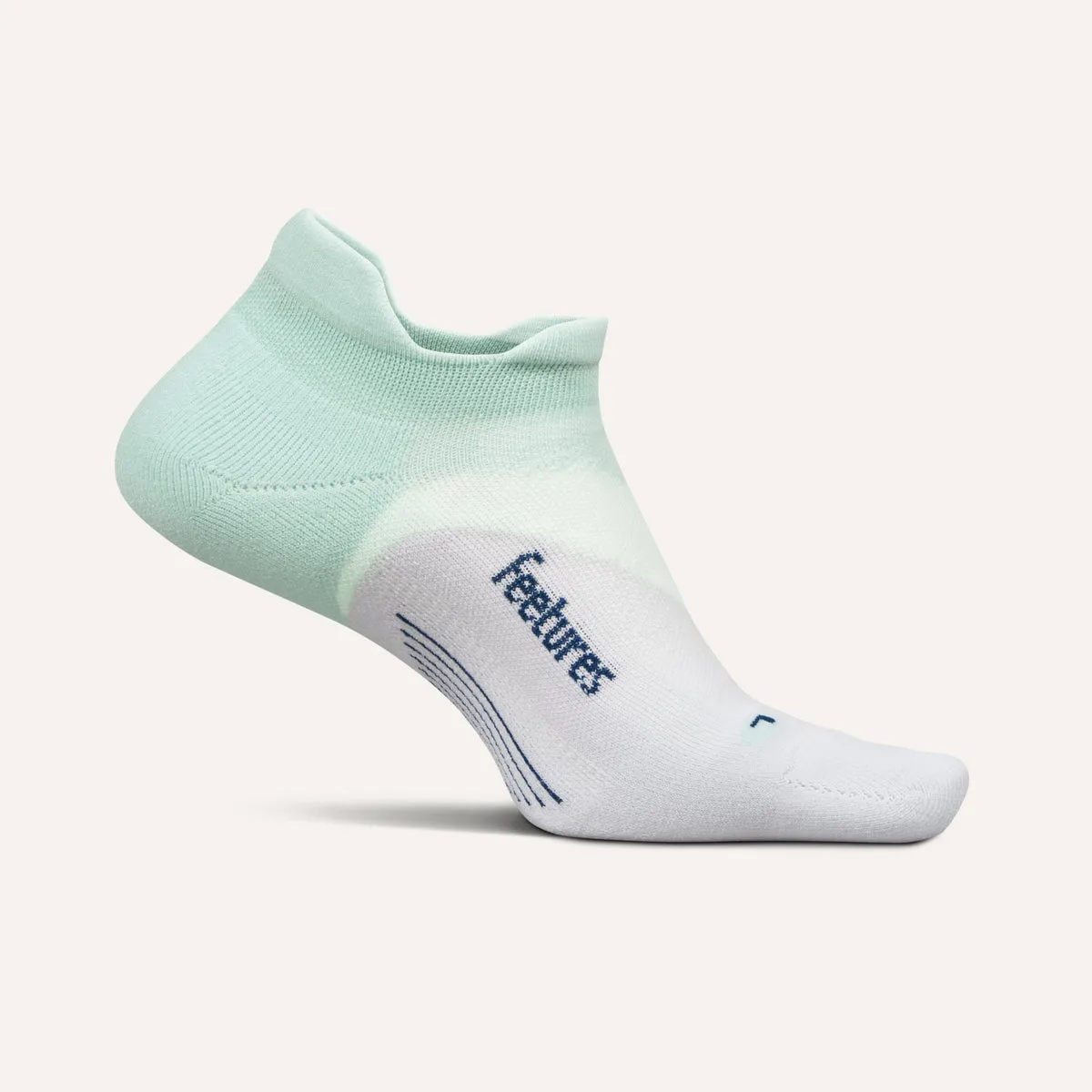
2. Feetures Elite Light Cushion No Show Tab — Best targeted compression
- Fibre: 96% nylon, 4% spandex (iWick yarn)
- Cushion: Light — just enough, no bulk
- Height: No-show tab
- Seamless toe: Yes
- Arch support: Targeted Compression band
- Fit: Anatomical — shaped for the left and right foot
- Sizes: S to XL
- Guarantee: Lifetime guarantee
- Source: Feetures
Feetures builds each sock for one foot. The left sock is shaped for the left foot and the right for the right foot. That sounds small, but it cuts the bunching that causes hot spots. The Targeted Compression band wraps the arch and holds the sock still through a whole run. The light cushion adds a little protection without bulk, so the sock fits snug shoes.
The iWick yarn is 96% nylon. It moves sweat off the skin and dries fast. The sock is dryer-safe on low heat, which matters — many running socks are not. Feetures backs every pair with a lifetime guarantee. If a hole appears, they replace the pair. That is the strongest promise on this list alongside Darn Tough.
Pros:
- Left and right fit cuts bunching and hot spots
- Arch compression band holds the sock in place all run
- Light cushion with no bulk — fits snug shoes
- Lifetime guarantee covers holes and wear
- Dryer-safe on low heat
Cons:
- A premium pick, not a budget pick — you pay for the fit and the guarantee
- The snug fit can feel tight at first if you size down
Skip it if: you want thick cushion or merino wool. Look at the Balega Hidden Comfort for cushion, or the Darn Tough Run for merino.
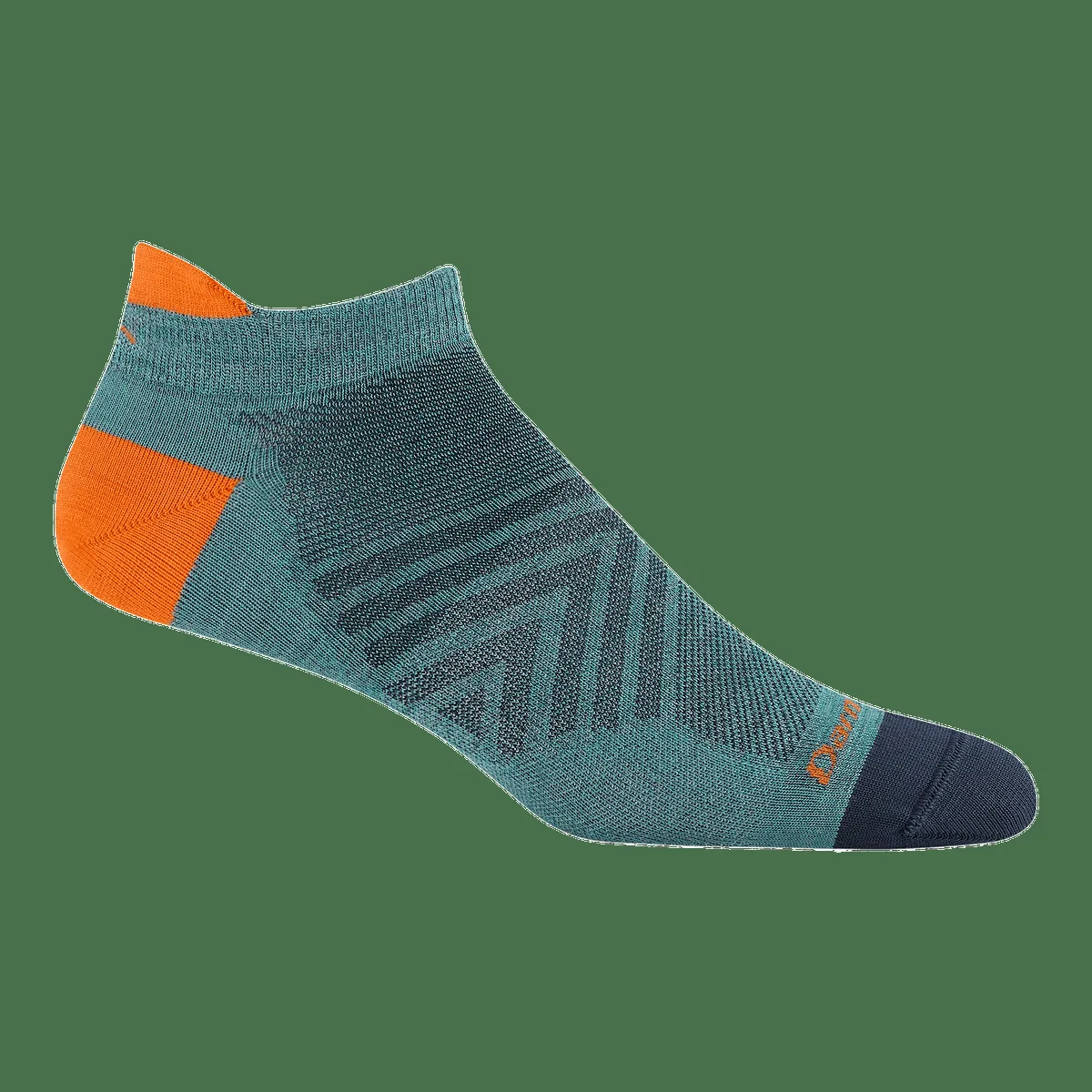
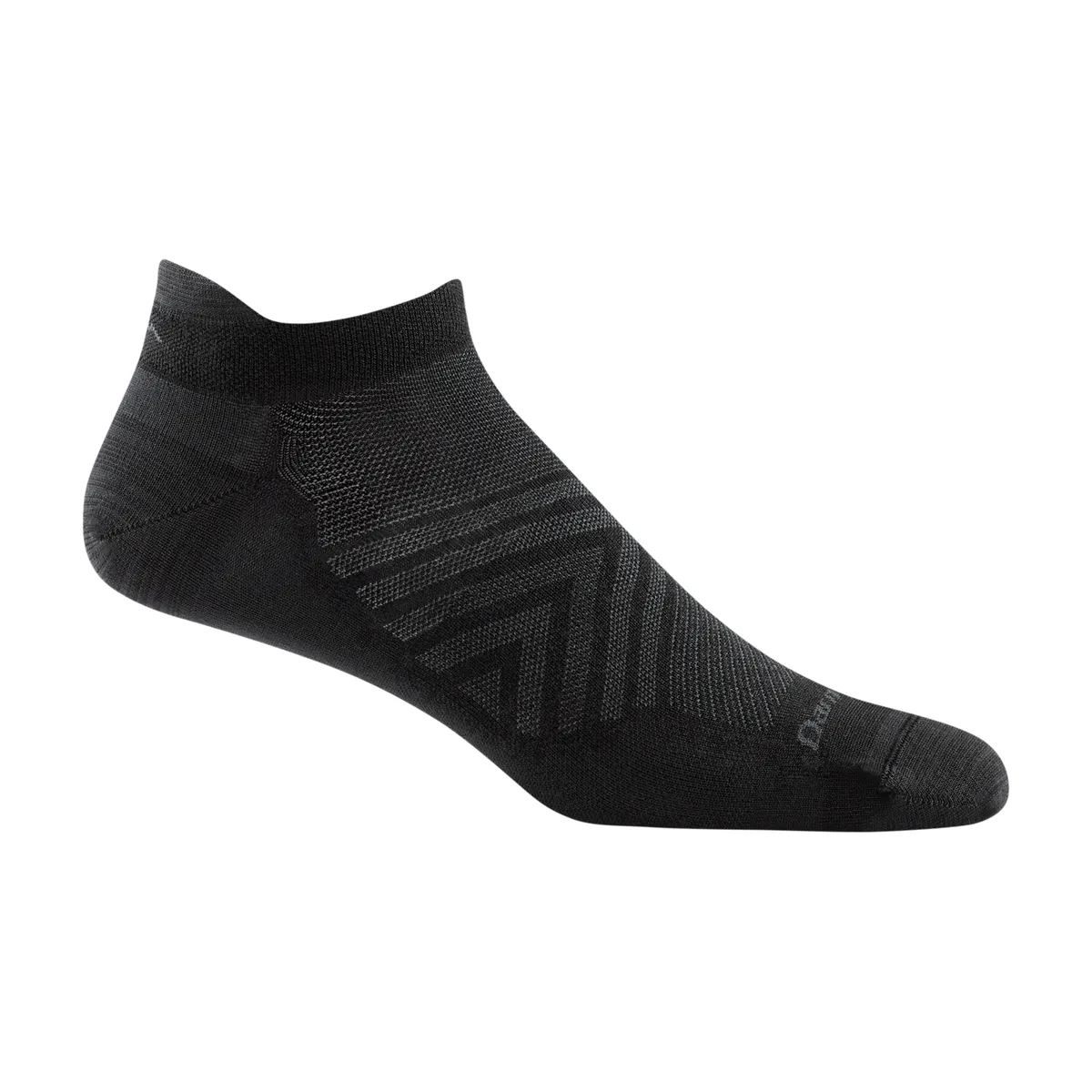
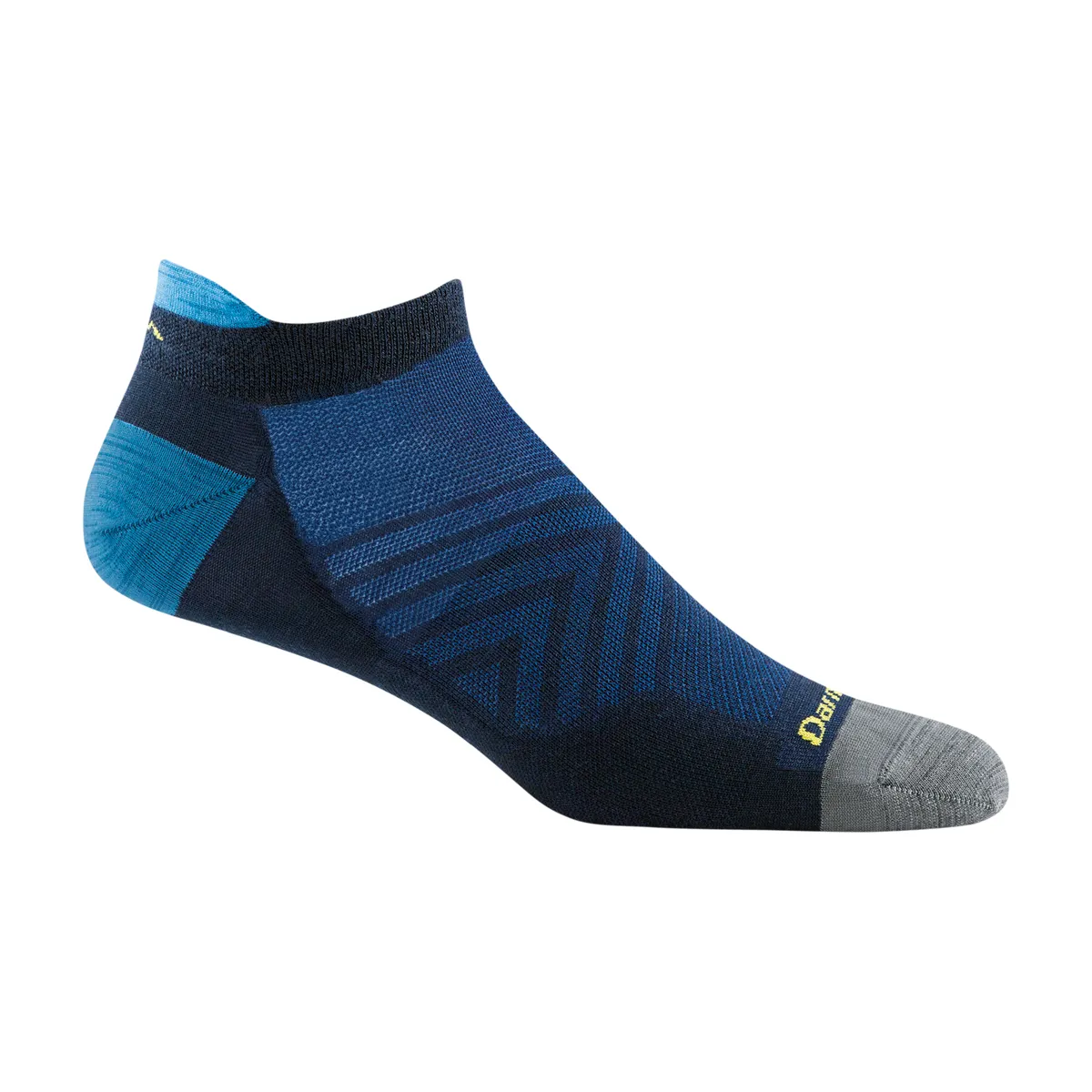
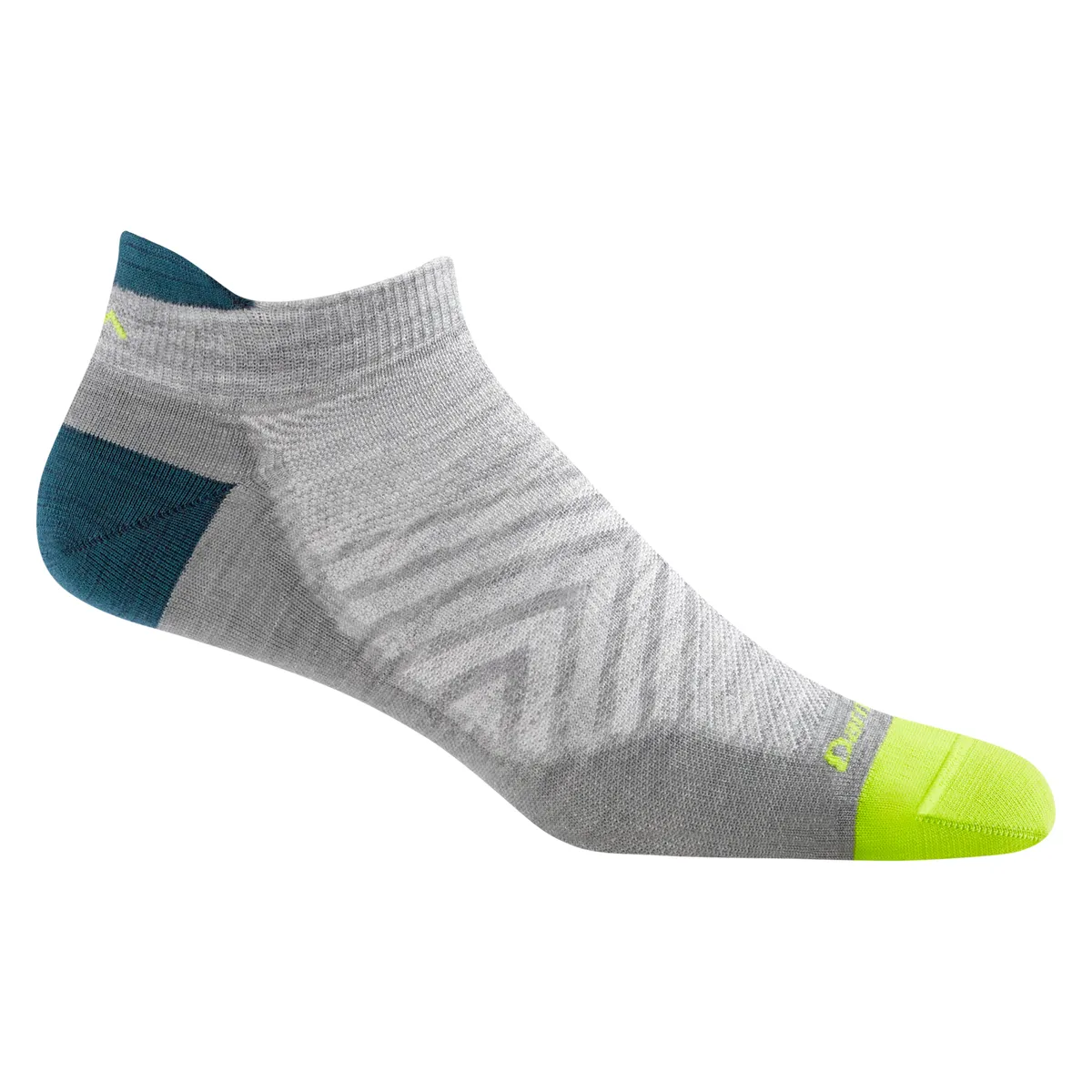
3. Darn Tough Run No Show Tab Ultra-Lightweight — Best durable merino
- Fibre: Merino wool blend — 49% merino wool, 47% nylon, 4% Lycra Spandex (brand’s published blend; mix varies slightly by colour)
- Cushion: Ultra-light, no cushion
- Height: No-show tab
- Seamless toe: Yes — True Seamless
- Arch support: Performance fit with arch support
- Sizes: Men’s style 1033 / women’s style 1043, S to XL
- Guarantee: Unconditional lifetime guarantee
- Made in: USA
- Source: Darn Tough
Merino wool is the reason to buy this sock. It breathes in heat, holds warmth in cold, and resists odour better than pure synthetics. Darn Tough knits it dense — more stitches per inch than most socks — so the sock keeps its shape for years. The ultra-light build feels like almost nothing in the shoe, which suits race day and snug shoes.
The guarantee is the other reason. Darn Tough replaces the sock for life if it wears out. No other claim on this list is that plain. The trade-off is cushion: there is none. If you want padding underfoot, this is the wrong pick. If you want a thin merino sock that lasts, this is the one.
Pros:
- Merino wool breathes well and resists odour
- Lifetime guarantee — the strongest durability promise here
- Thin feel suits race day and snug shoes
- True Seamless toe with no ridge
- Made in the USA
Cons:
- No cushion at all — no padding underfoot
- The snug performance fit can feel tight to pull on
Skip it if: you want cushion underfoot. Look at the Balega Hidden Comfort for plush cushion, or the Feetures Elite Light Cushion for light padding.
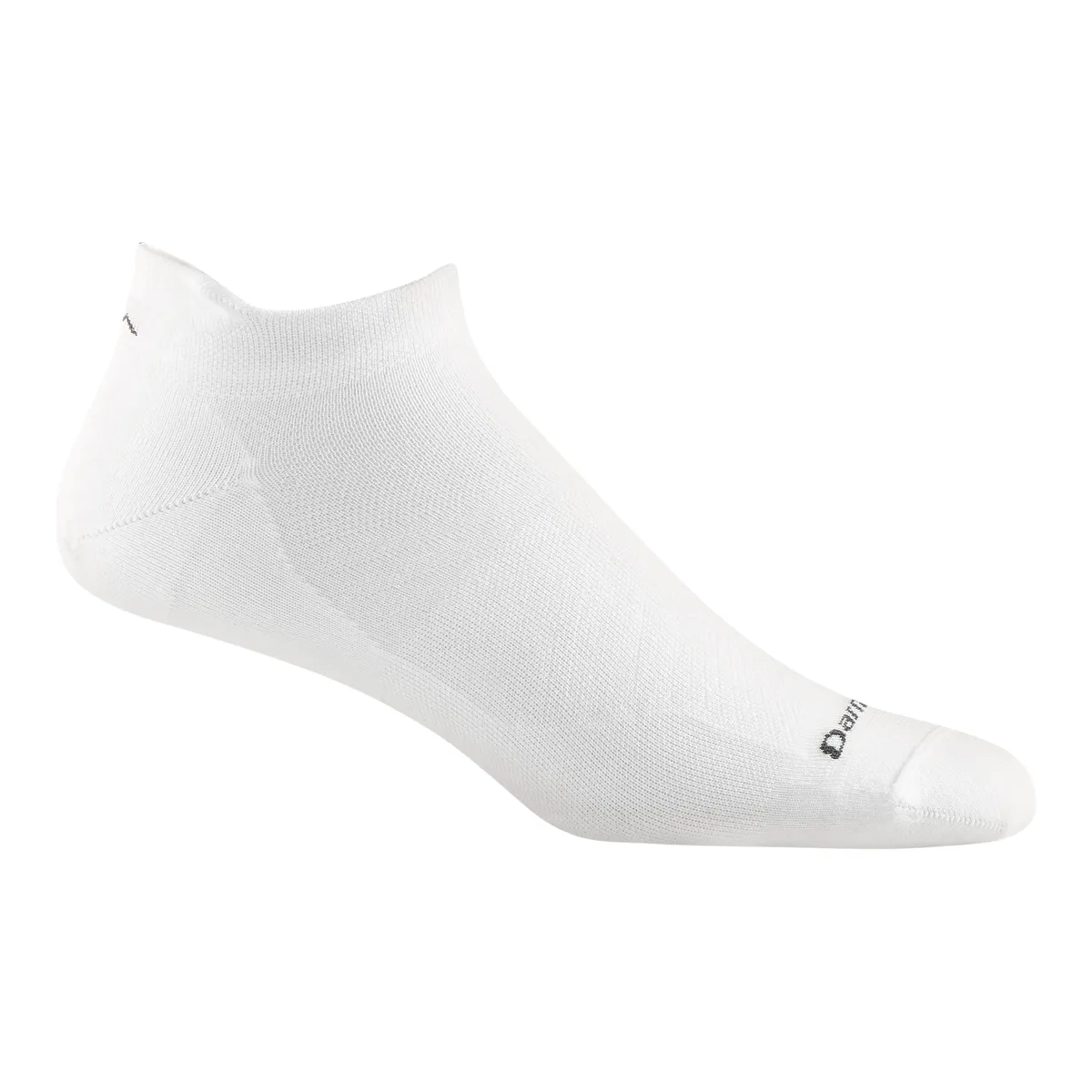
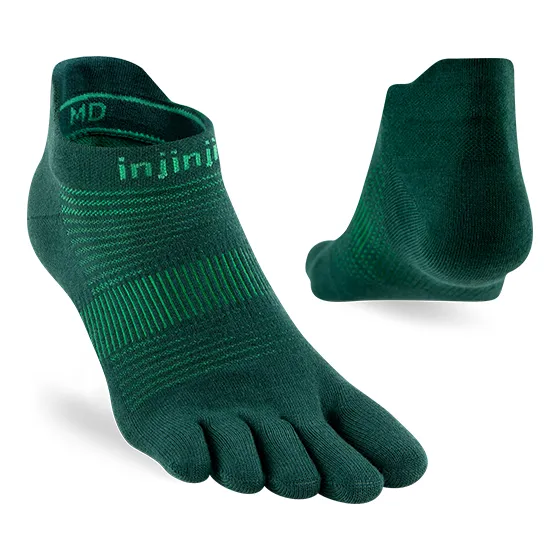
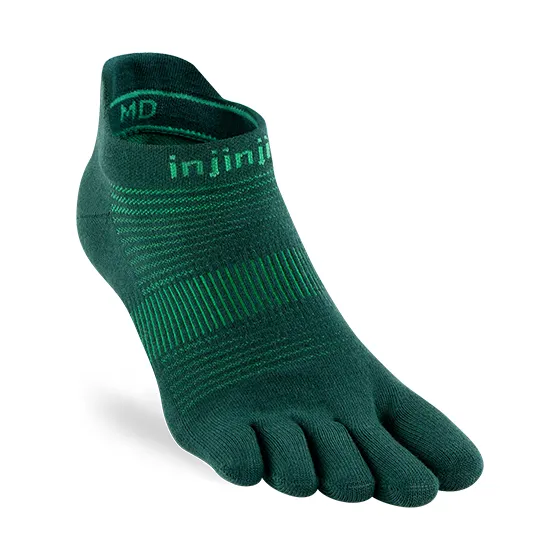
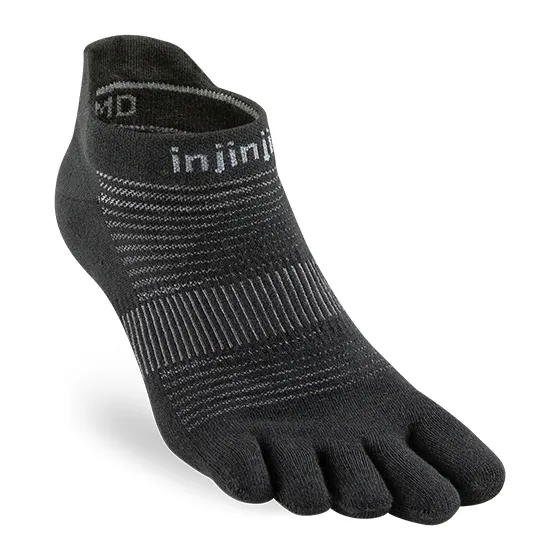
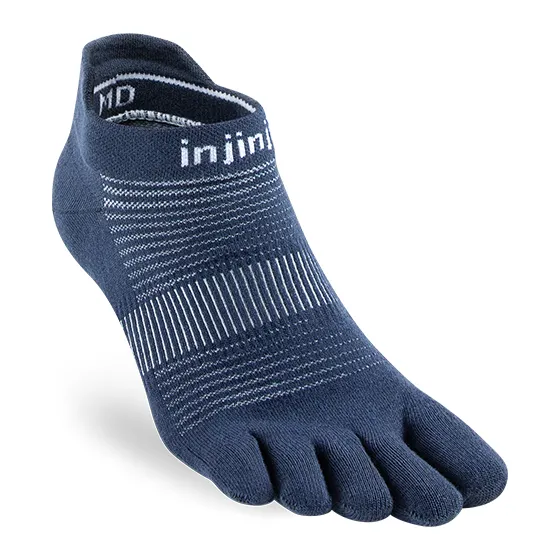
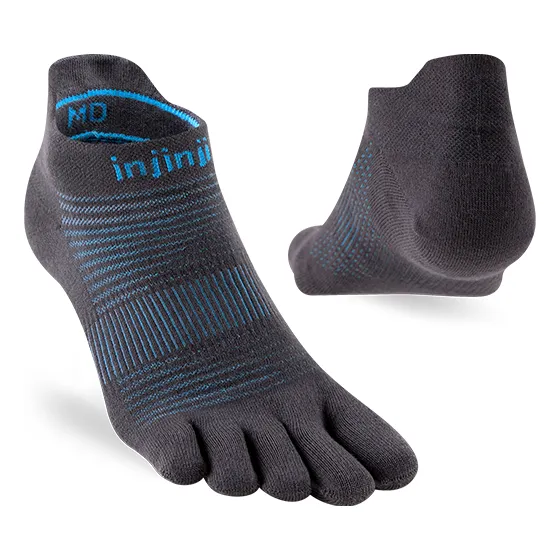
4. Injinji Run Lightweight No-Show — Best toe socks for blisters
- Fibre: CoolMax polyester blend with nylon and Lycra
- Cushion: Lightweight, minimal
- Height: No-show with heel tab
- Seamless toe: Five-toe sleeves — each toe sits in its own sleeve
- Arch support: Arch band
- Sizes: XS/S to M/L, men’s and women’s versions
- Source: Injinji
Injinji splits the sock into five toe sleeves. Each toe gets its own pocket, so toes cannot rub each other. That matters because skin-on-skin friction between toes is a common blister spot on long runs. No cream or tape does the same job. The mesh top breathes, and the heel tab keeps the sock from sliding down.
The feel takes a few runs to get used to. Putting them on is slower than a normal sock, and the sleeves feel odd at first. Most runners who stick with them for a week do not go back. If your blisters sit between your toes, this is the most direct fix on this list.
Pros:
- Toe sleeves stop toe-on-toe rubbing — the main cause of between-toe blisters
- Blister protection without creams, tape or powder
- Mesh top breathes well on warm runs
- Heel tab stops the sock slipping into the shoe
- Built for long runs — the design holds up over distance
Cons:
- Slower to put on than a normal sock
- The toe sleeves feel strange for the first few runs
Skip it if: your blisters sit on the heel or the ball of the foot, not between your toes — or you dislike the toe-sleeve feel. Look at the Drymax Lite-Mesh instead.
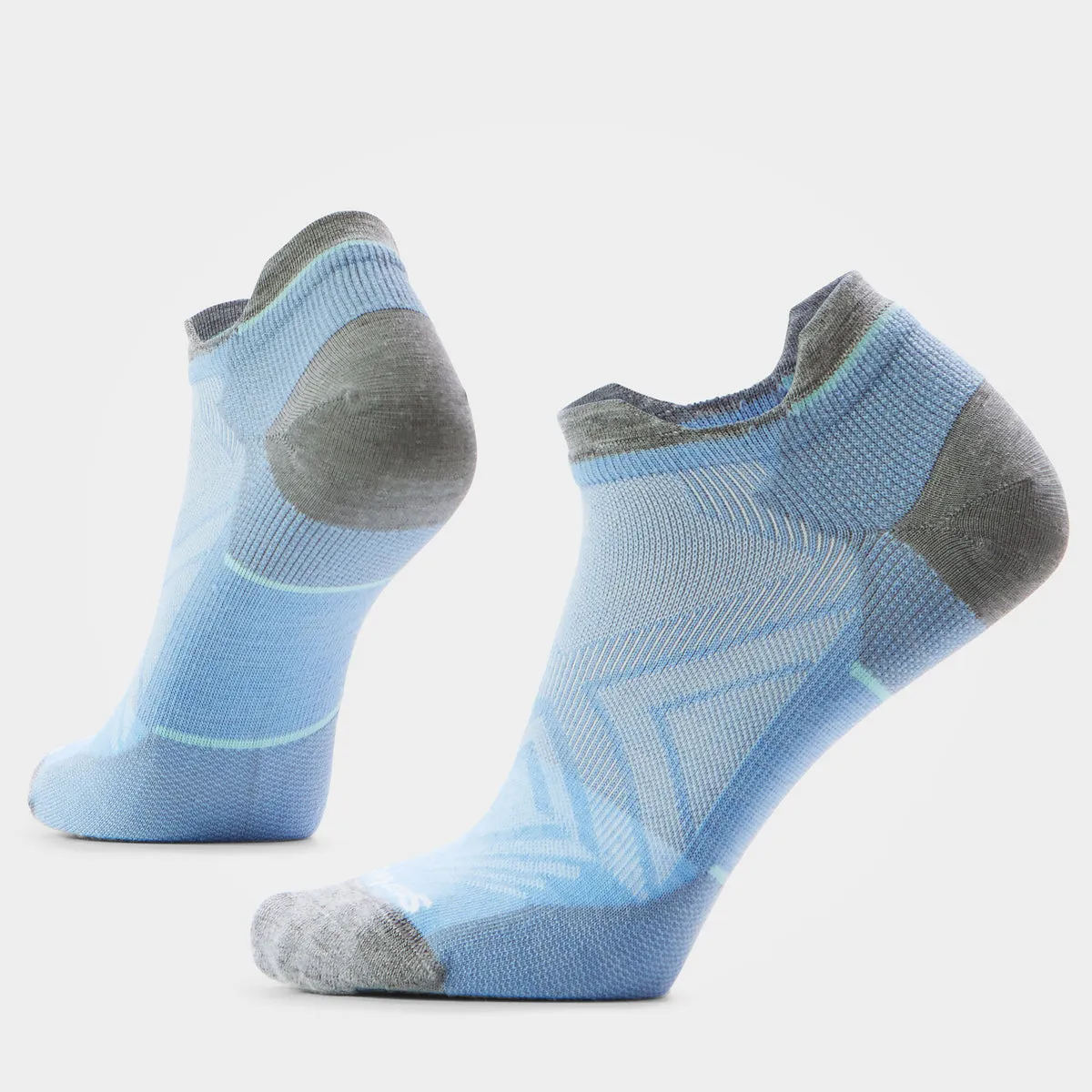
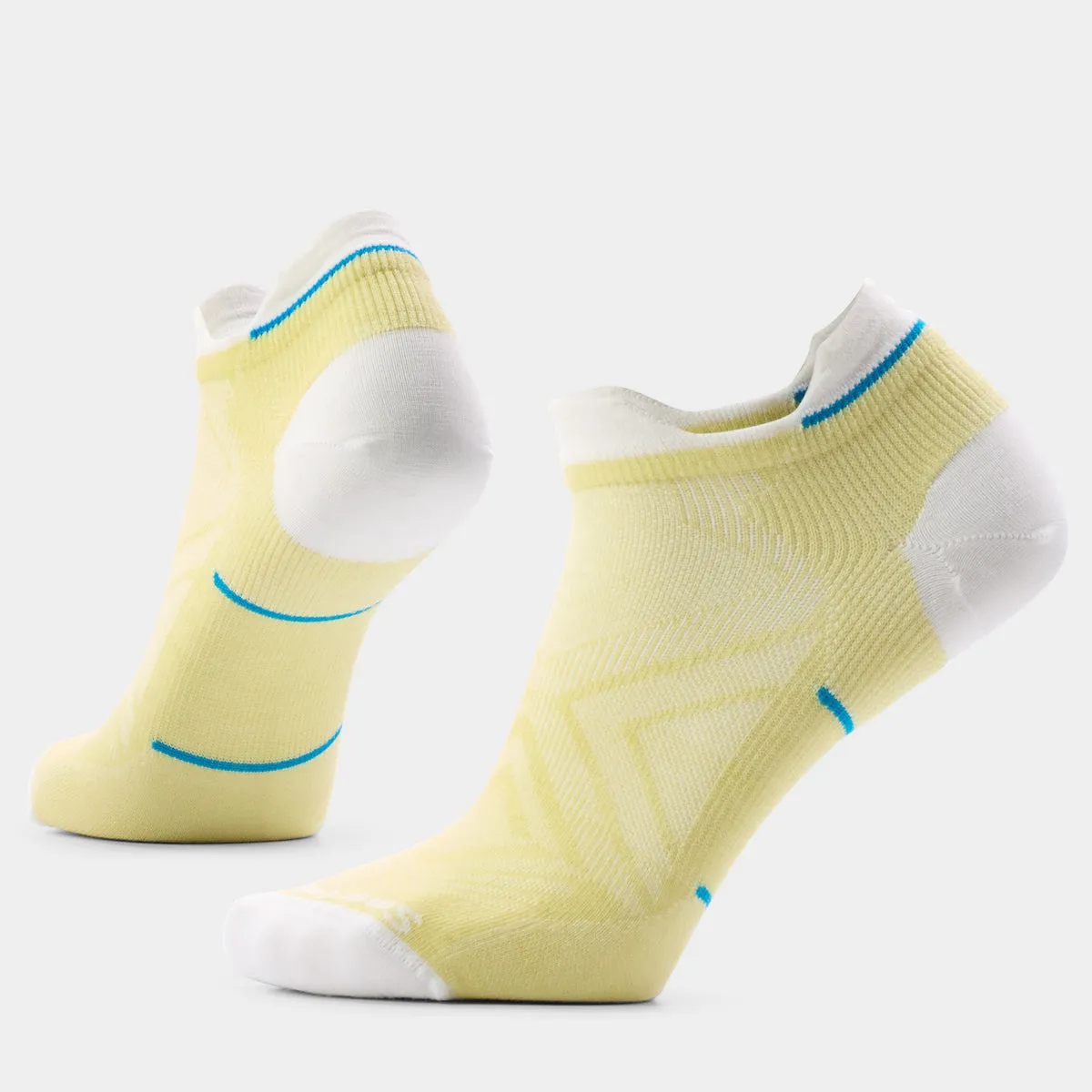
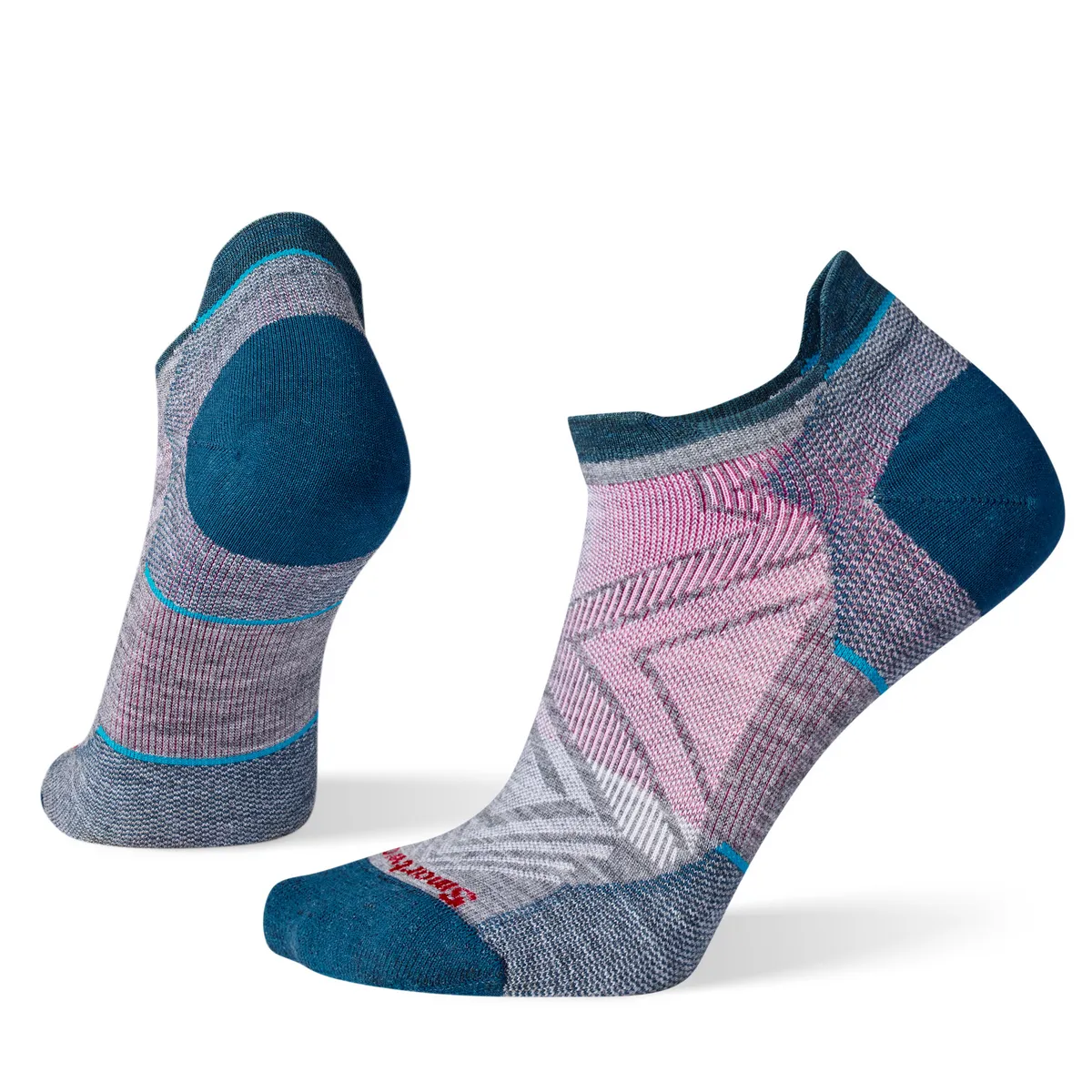
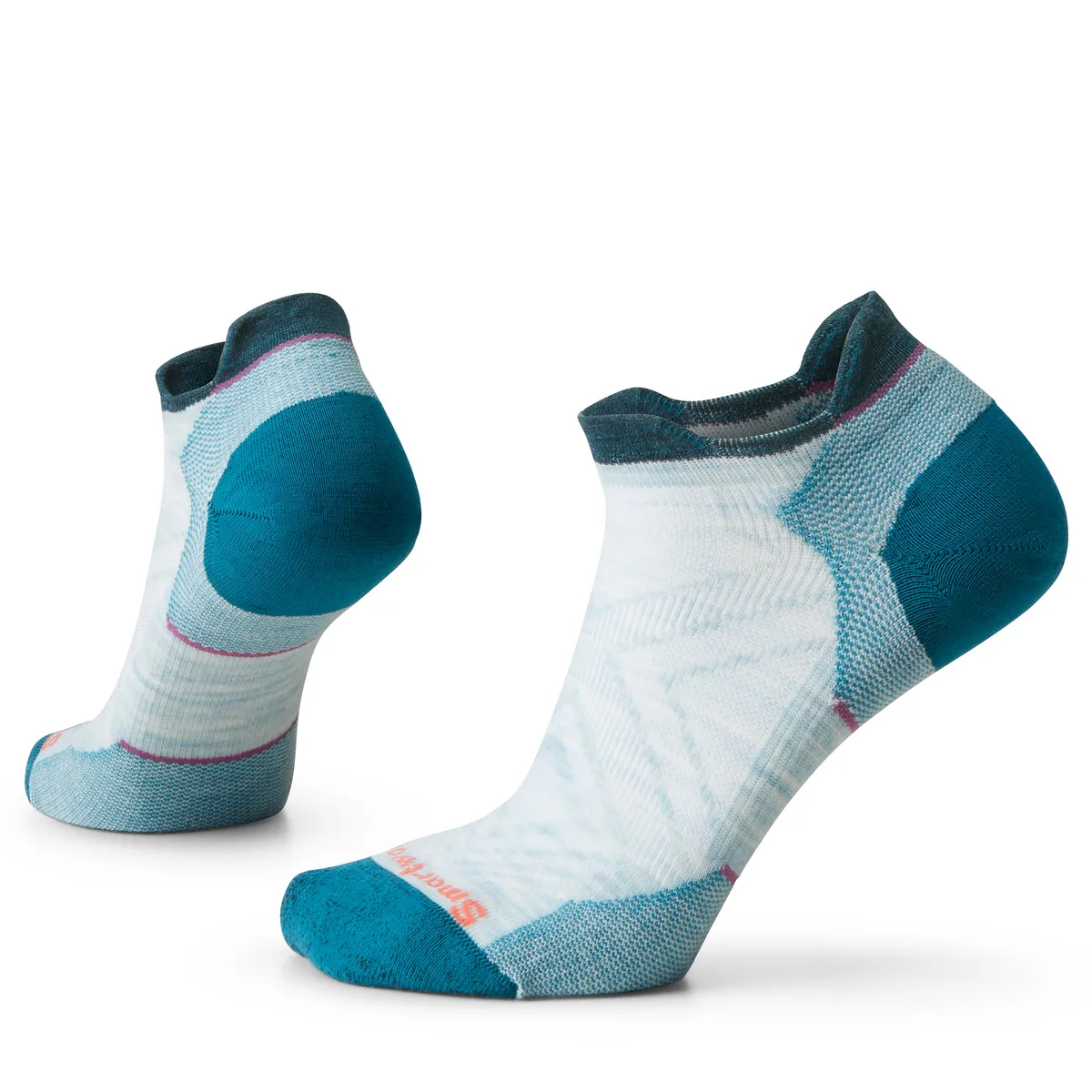
5. Smartwool Run Zero Cushion Low Ankle — Best thin merino
- Fibre: 46% merino wool, 29% nylon, 22% recycled nylon, 3% elastane
- Cushion: Zero
- Height: Low ankle
- Seamless toe: Yes — virtually seamless toe
- Arch support: Arch brace
- Sizes: Men’s SW001651 / women’s SW001668, S to XL
- Source: Smartwool
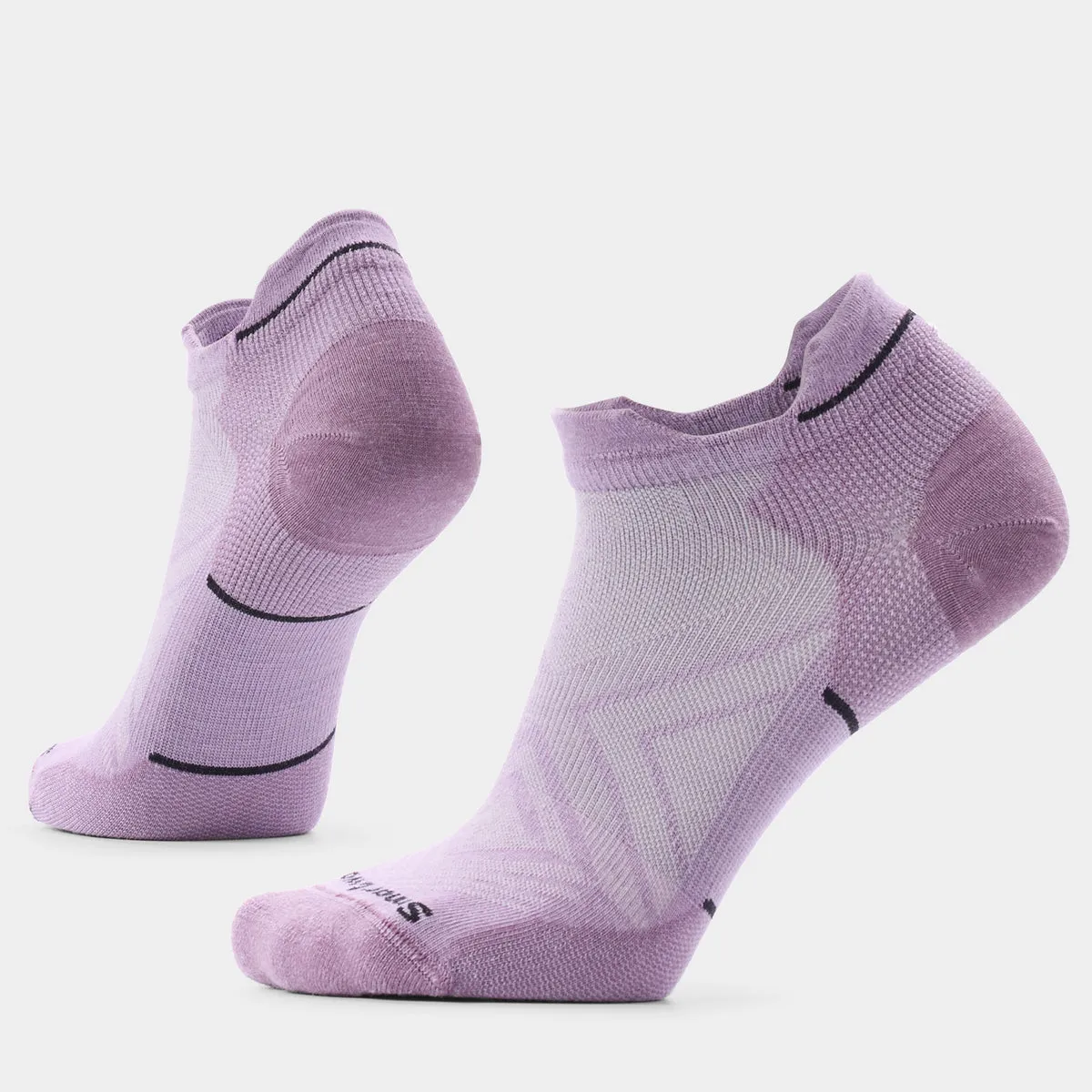
Zero cushion means you feel the shoe, not the sock. That is the point. The Run Zero Cushion sits right against the foot with a thin merino layer and nothing else. Merino wool handles temperature well — it breathes in heat and holds warmth in cold — and it resists odour better than synthetics. Mesh zones on top add airflow.
The low ankle cut sits at the ankle line, so it suits low-cut shoes and warm days. The arch brace holds the sock in place. If you like a close, barefoot feel and you run in snug shoes, this is the thinnest merino pick in this list.
Pros:
- Thinnest merino pick here — the closest feel to the shoe itself
- Merino wool regulates temperature and resists odour
- Low ankle height suits low-cut shoes
- Virtually seamless toe with no ridge
- Mesh ventilation zones keep feet cool
Cons:
- No cushion — hard surfaces feel harder underfoot
- Thin merino wears faster than a thick synthetic sock
Skip it if: you want any padding at all. Look at the Balega Hidden Comfort for plush cushion, or the Feetures Elite Light Cushion for light padding.
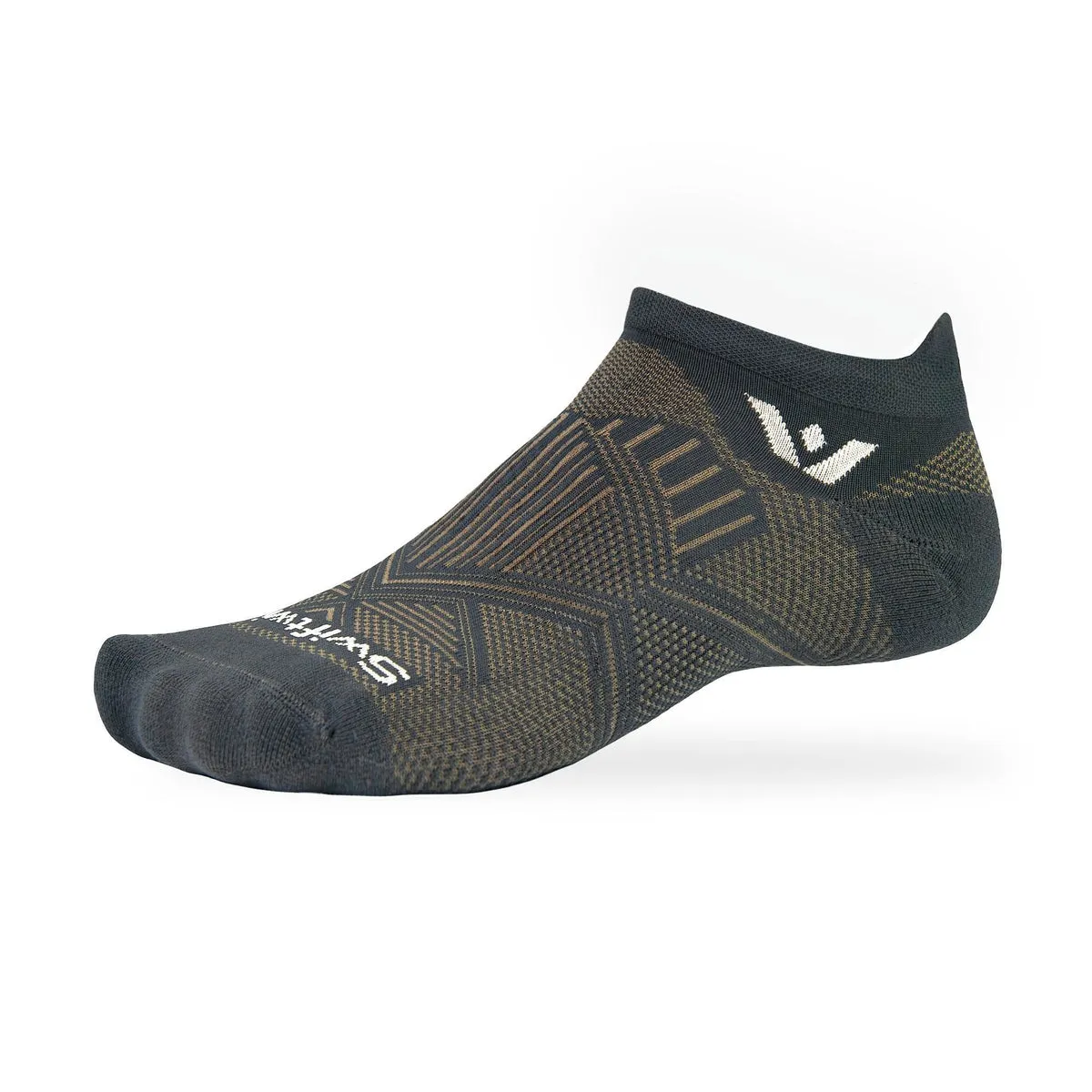
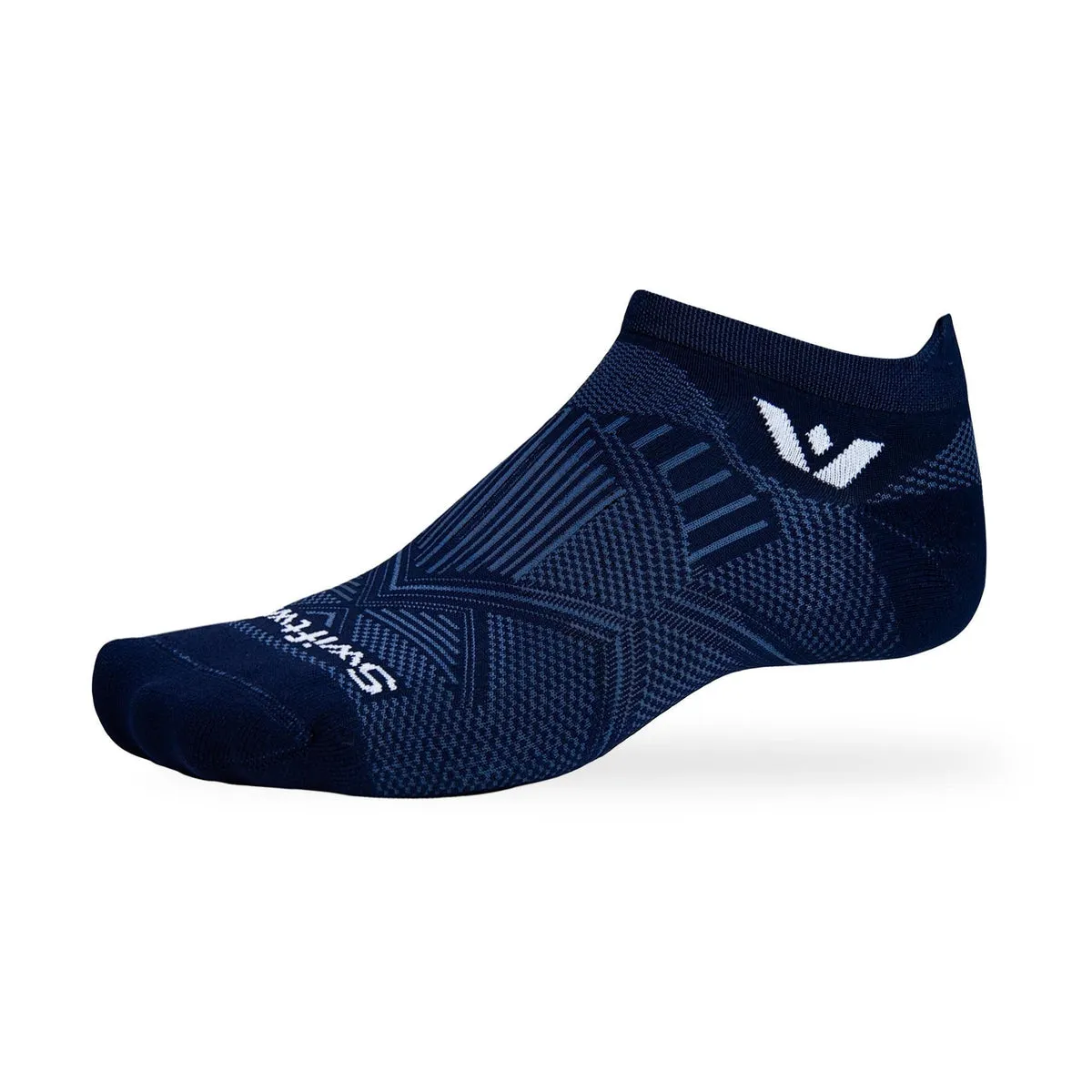
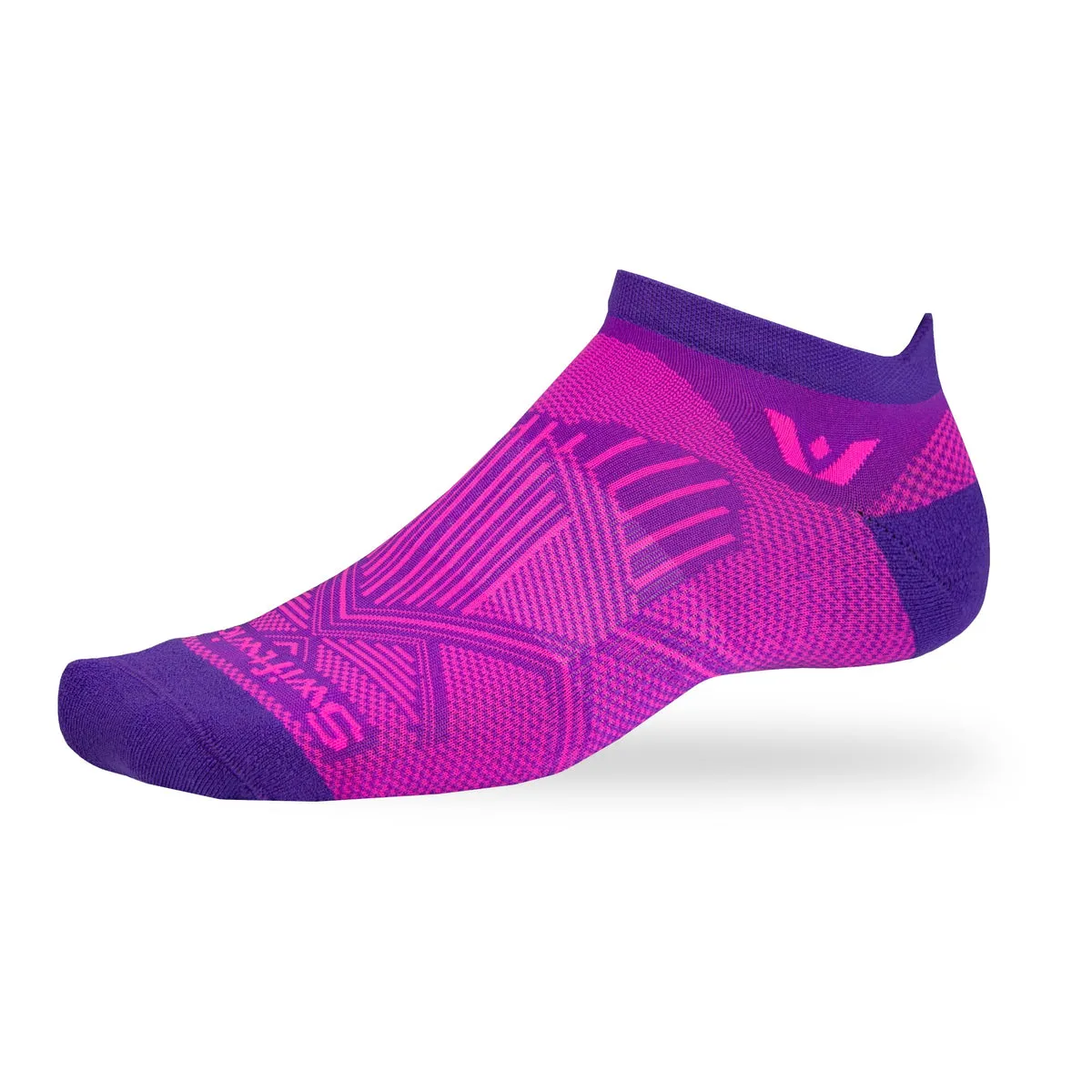
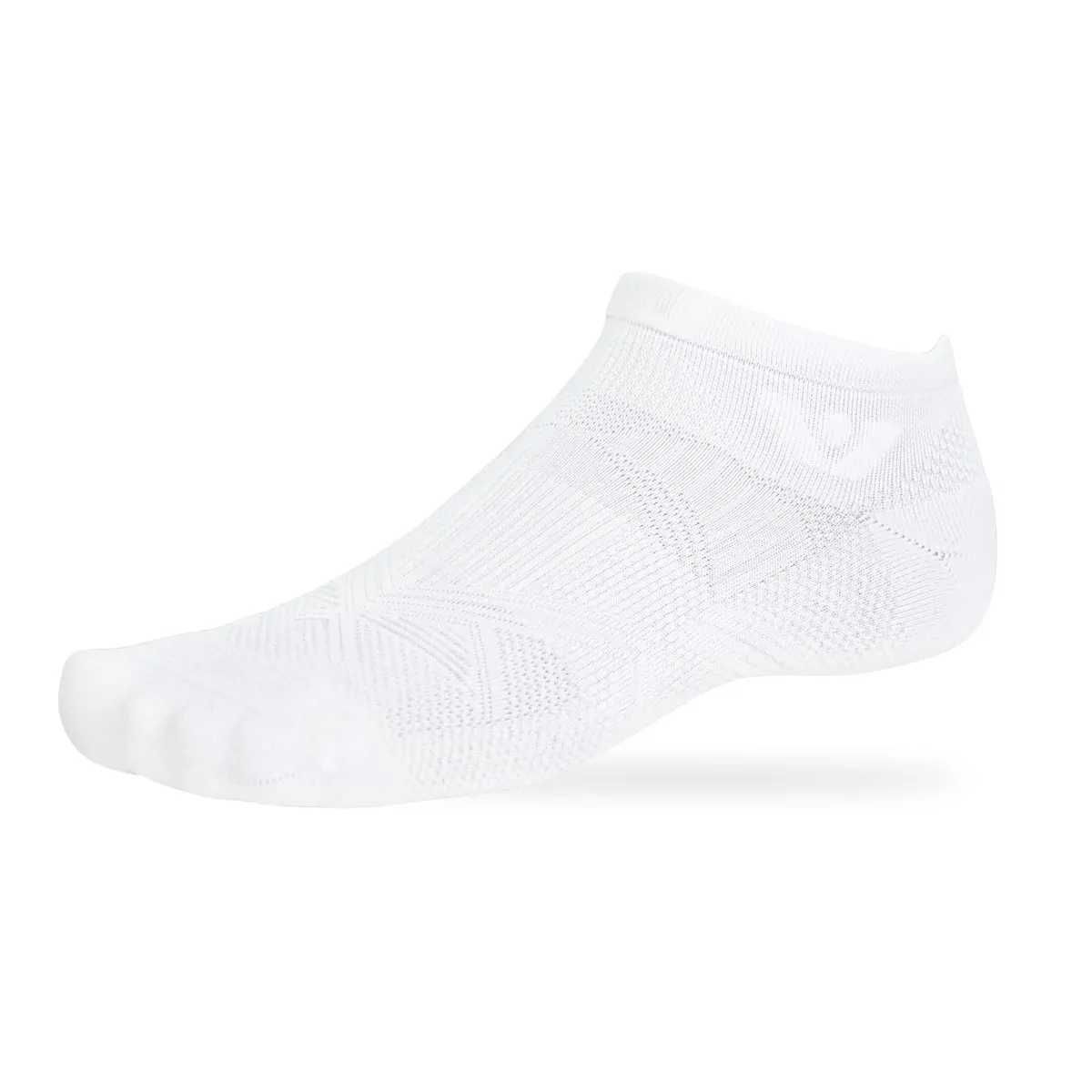
6. Swiftwick Aspire Zero — Best thin and fast
- Fibre: 55% nylon, 40% Olefin, 5% spandex
- Cushion: Thin, light
- Height: Zero (no-show)
- Seamless toe: n/a — not stated by the brand
- Arch support: Firm compression arch band — the firmest in Swiftwick’s own line
- Fit: Y-shaped heel for a snug, no-slip fit
- Sizes: S to XL
- Source: Swiftwick
The Aspire Zero is built for speed. It is thin, light and tight. The Olefin fibre moves sweat off the skin and dries fast. Olefin holds almost no water, so the sock stays light even when you sweat hard. The channeled upper and mesh footbed vent heat. The Y-shaped heel locks the sock in place, so it does not bunch or slip at pace.
The compression is firm. Swiftwick calls the Aspire its highest-compression sock, and you feel it. That support suits runners who like a locked-in feel. If you dislike tight socks, this is not your pick. If you race, or you run fast in warm weather, it is one of the thinnest and driest socks here.
Pros:
- Firm compression supports the arch through the whole run
- Olefin fibre dries fast and stays light when wet
- Thin and breathable — built for speed and warm weather
- Y-shaped heel stops slipping and bunching
- Channeled upper vents heat
Cons:
- Firm compression is not for everyone — it feels tight if you prefer a loose sock
- Almost no cushion underfoot
Skip it if: you dislike tight compression or you want padding. Look at the Feetures Elite Light Cushion for gentler compression, or the Balega Hidden Comfort for cushion.
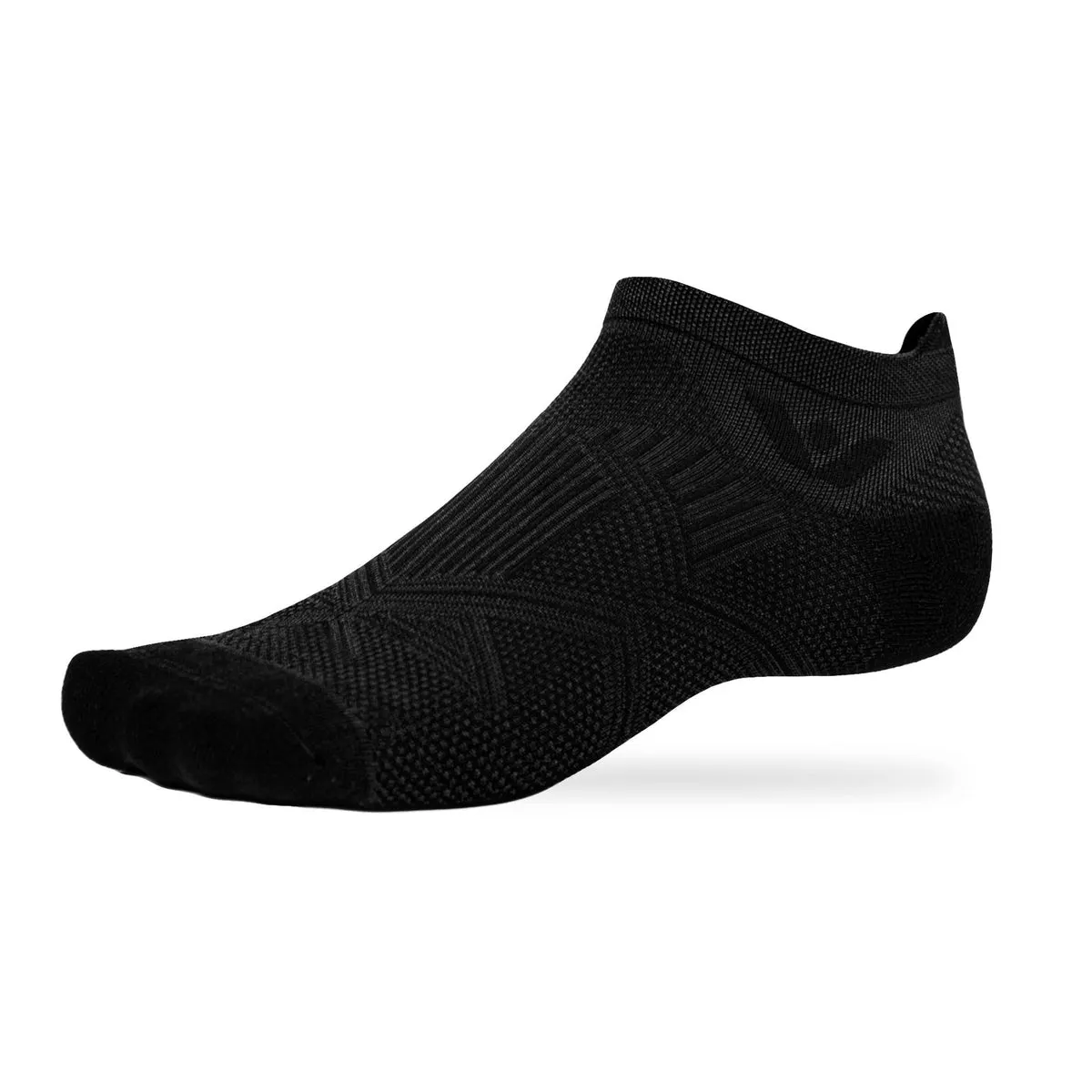
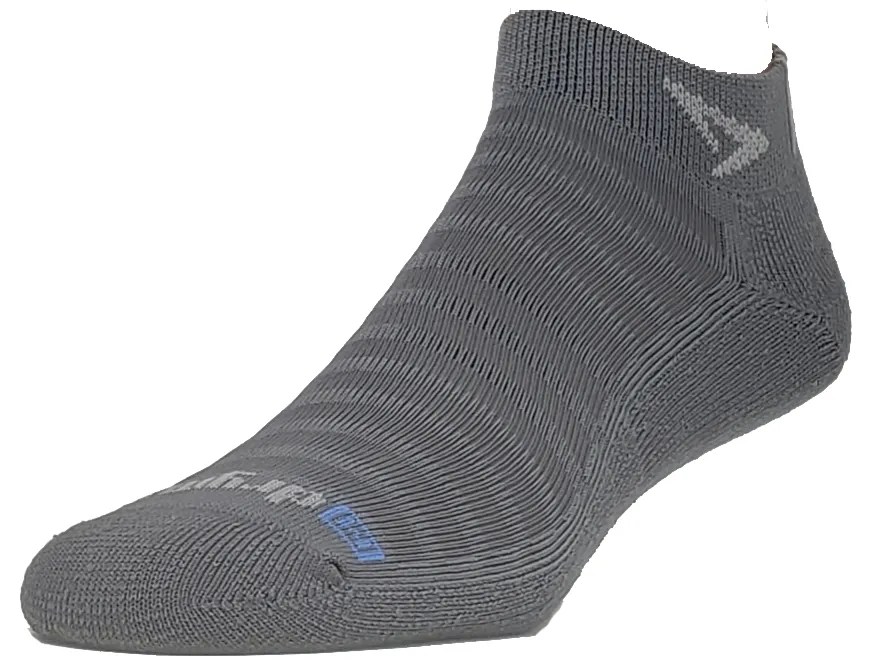
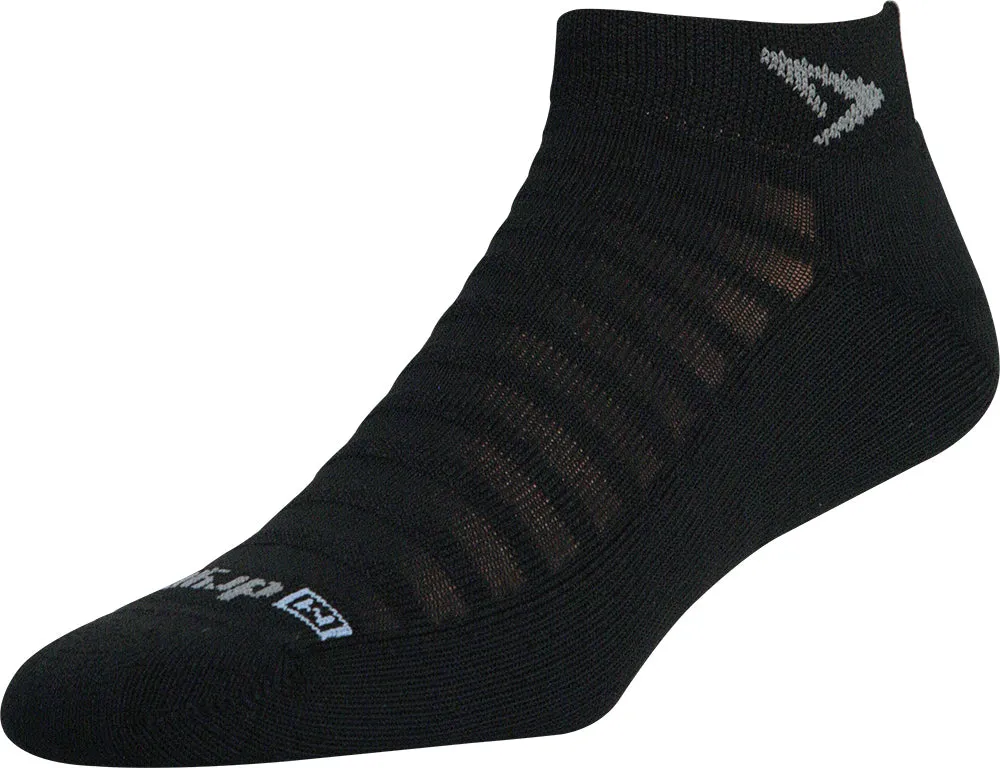
7. Drymax Run Lite-Mesh Mini Crew — Best moisture control
- Fibre: Dual-layer olefin-based blend (Drymax Dual Layer Moisture Removal System; exact mix not published)
- Cushion: Low-density protective padding
- Height: Mini crew
- Seamless toe: n/a — not stated by the brand
- Arch support: 3D advanced fit
- Sizes: S to XXL, by shoe size
- Guarantee: Anti-blister design
- Made in: USA
- Source: Drymax
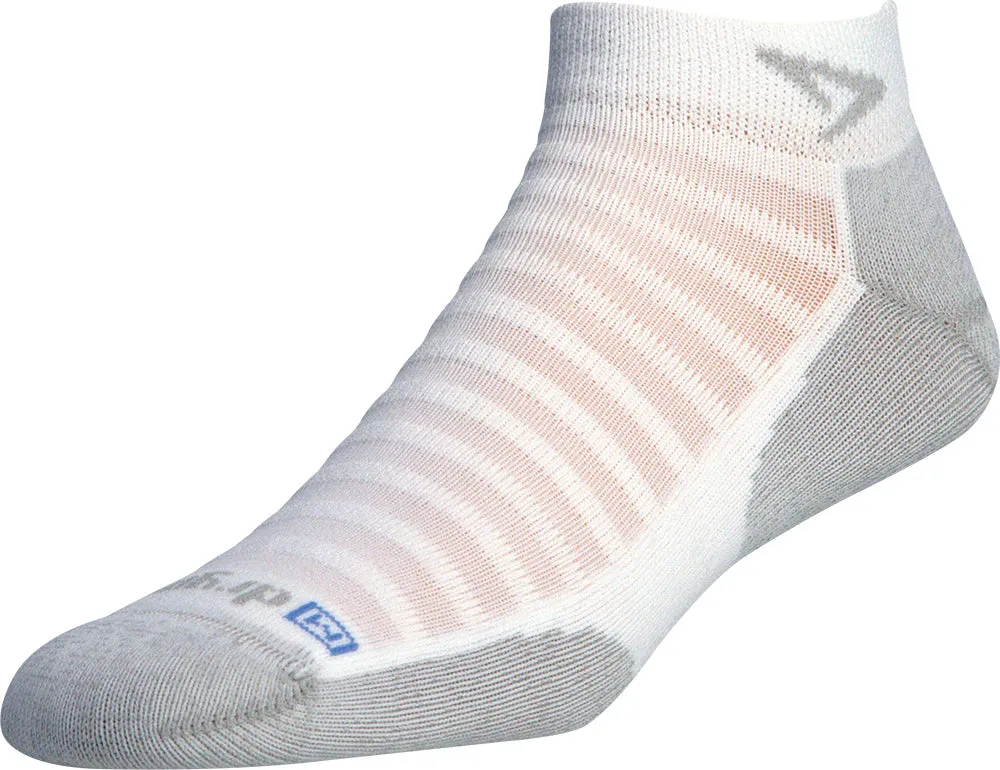
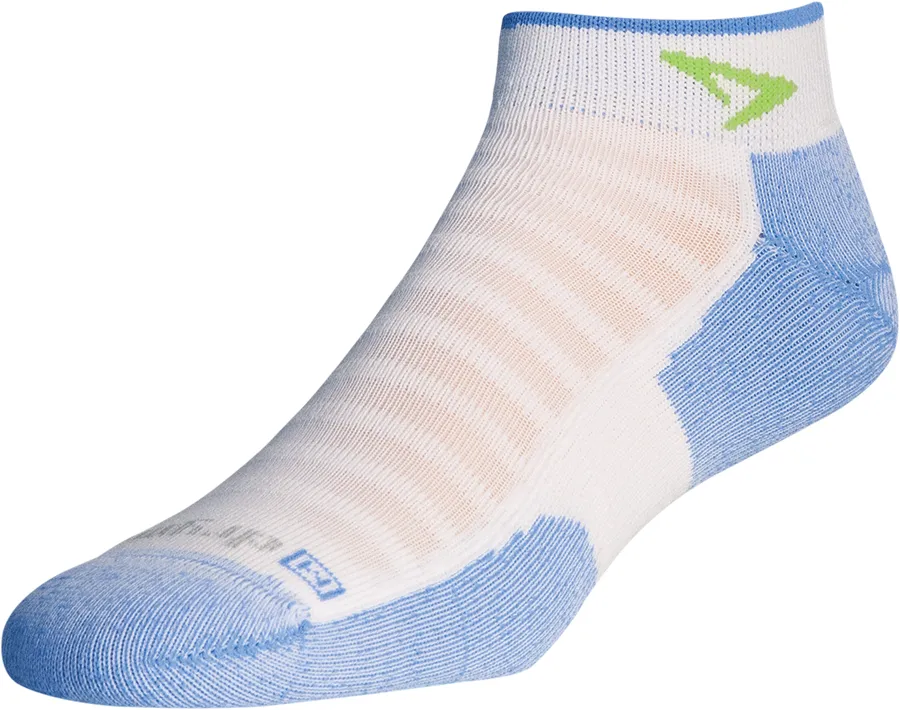
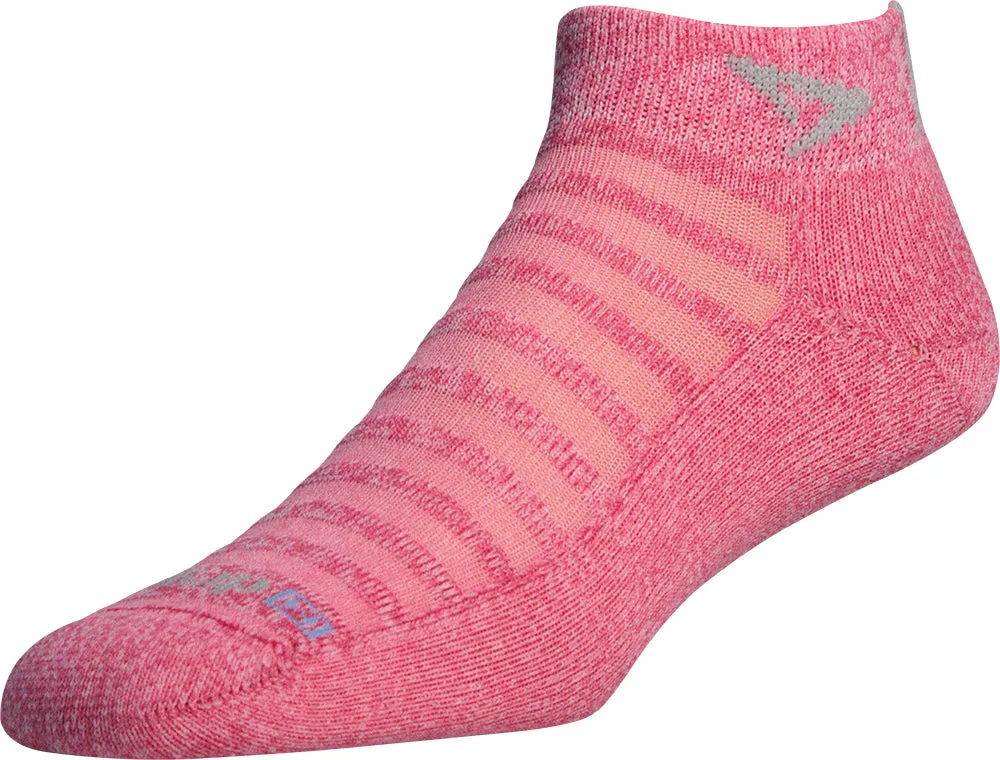
Drymax built this sock for wet feet. The Dual Layer Moisture Removal System has two layers. The inner layer pulls sweat off the skin and passes it to the outer layer almost at once. The outer layer then holds the moisture away from your foot. That is why sweaty feet stay drier in this sock than in a single-layer sock. The Lite-Mesh knit breathes, and the low-density padding protects the foot without bulk.
This is the Mini Crew height. It sits above the ankle, so it shows above low-cut shoes. If you want the same tech in a hidden cut, Drymax makes a No Show Tab version too. For runners whose feet sweat through a normal sock by mile five, this is the pick that solves it.
Pros:
- Dual-layer system moves sweat off the skin fast
- Built for sweaty feet — the driest-feeling pick here
- Low-density padding protects without bulk
- Anti-blister and anti-microbial design
- Made in the USA
Cons:
- Mini crew height shows above low-cut shoes
- The mesh feel is firmer than a soft merino sock
Skip it if: you want a hidden no-show height or a soft merino feel. Look at the Drymax No Show Tab version for the same tech in a lower cut, or the Darn Tough Run for merino.
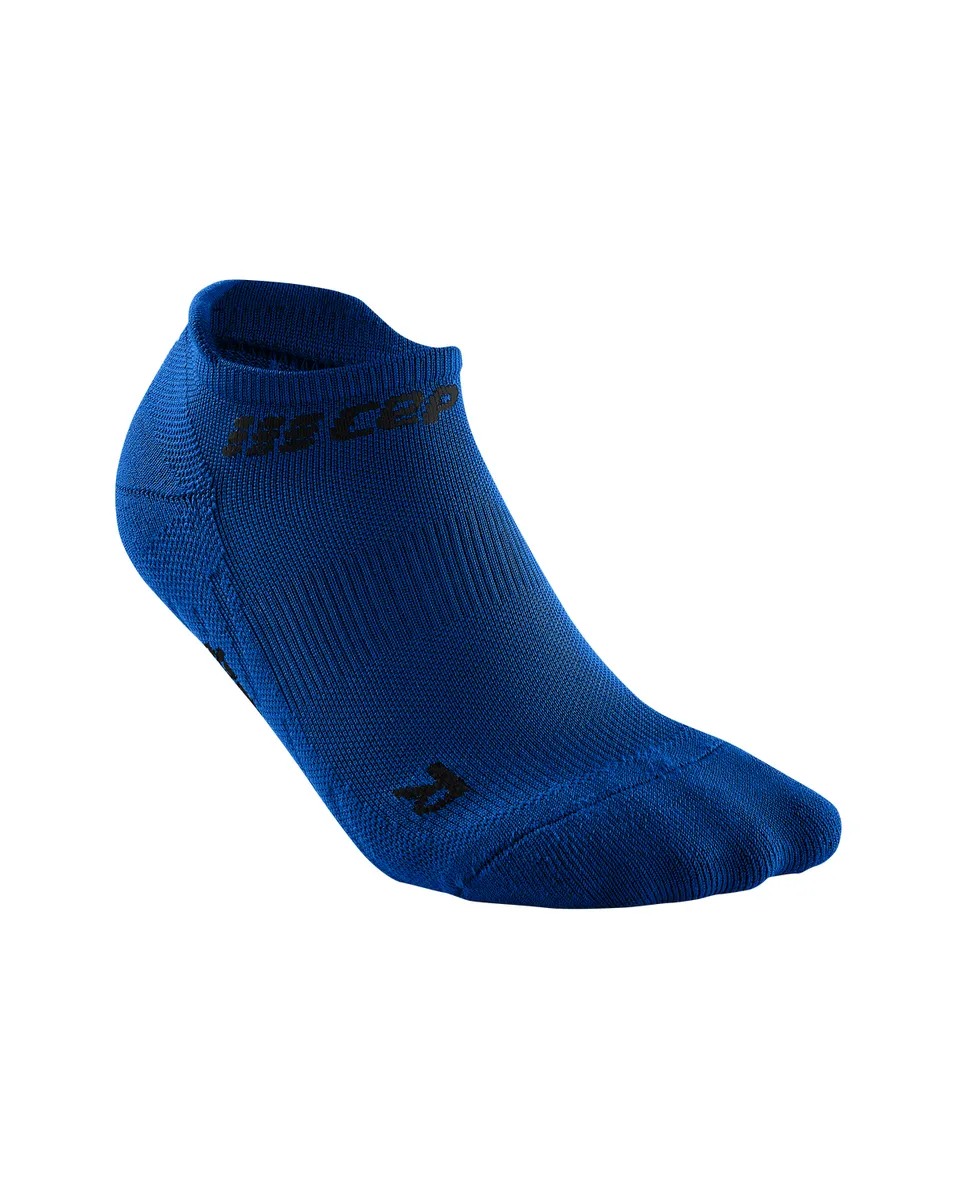
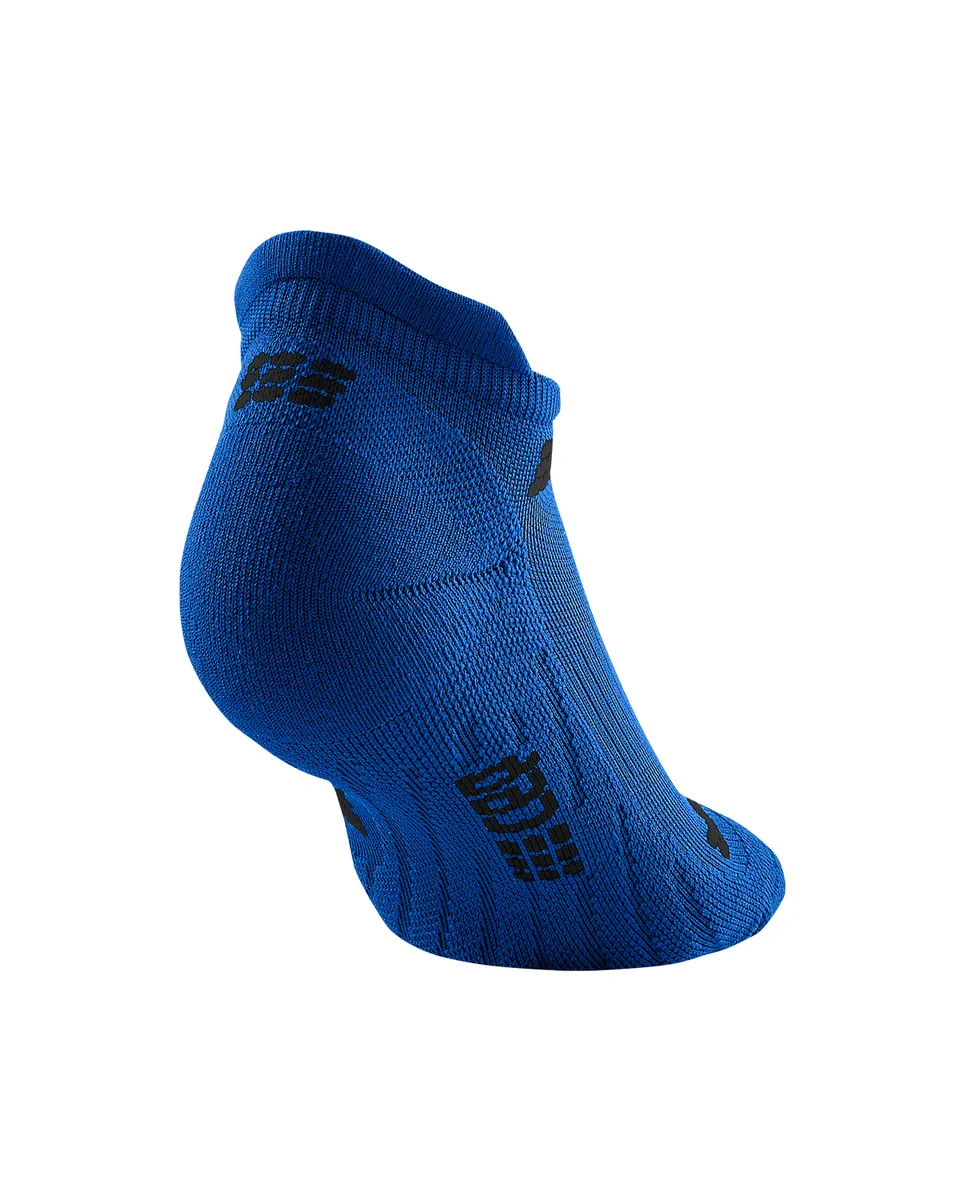
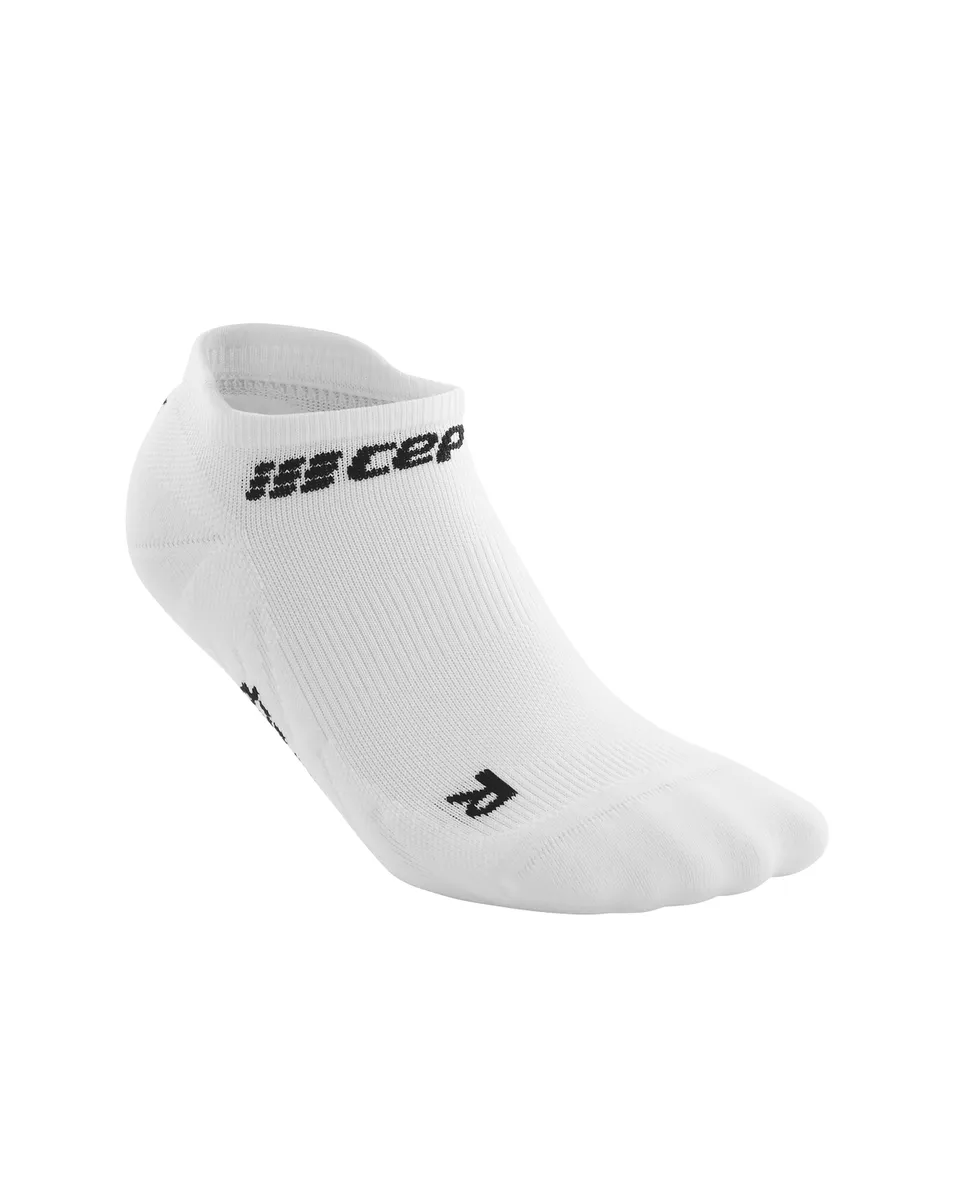
8. CEP The Run No Show Socks 4.0 — Best compression no-show
- Fibre: 89% polyamide, 11% elastane
- Cushion: Padded zones in the foot
- Height: No-show with heel tab
- Seamless toe: Yes — seamless elastic toe-box
- Arch support: Targeted compression in the arch (CEP does not publish a mmHg figure for the no-show cut)
- Sizes: II to V, by foot size (women’s WP26R / men’s MP26R)
- Guarantee: Blister-free guarantee
- Source: CEP
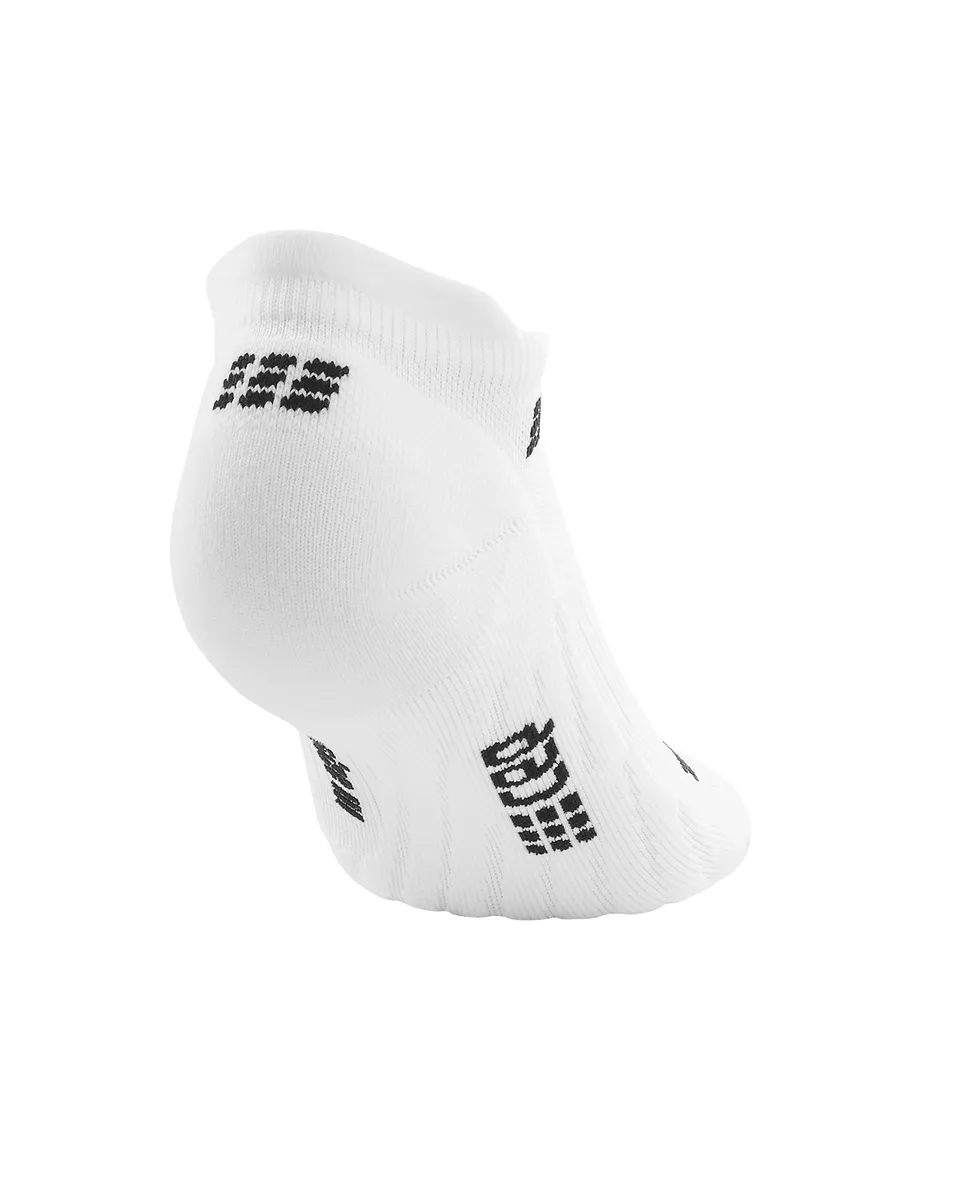
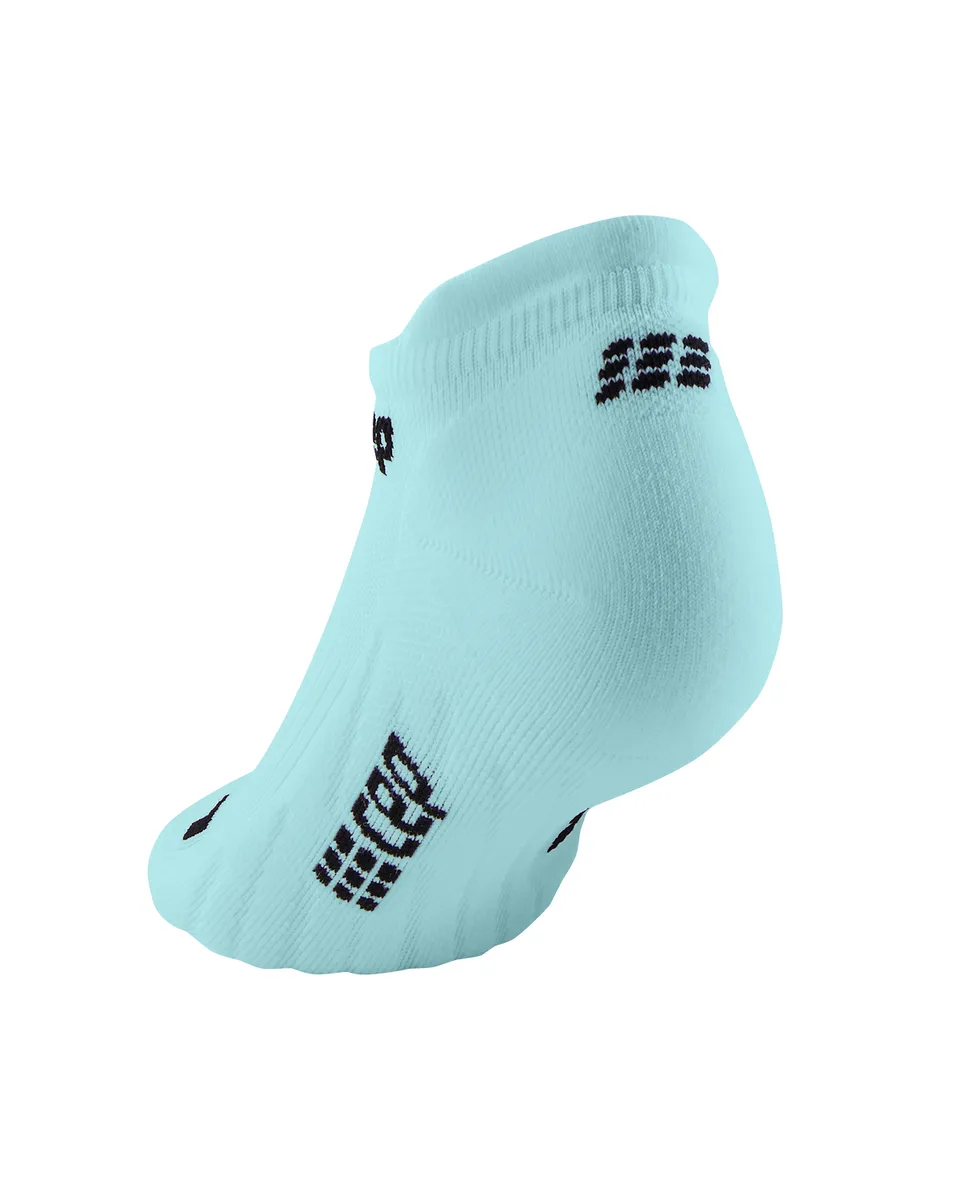
CEP comes from medical compression. The Run No Show 4.0 brings that background to a running sock. It has targeted compression in the arch, an anatomical shape, and a heel tab that stops slipping. The padded zones sit where the foot strikes, so the sock protects without adding bulk all over. The fabric is treated to cut odour.
Sizing works differently here. CEP sizes by foot size (II to V), not just shoe size, so check the size chart before you order. The fit is snug by design — that is how the compression works. If you want support for long runs or tired feet, this is the compression pick in this list.
Pros:
- Targeted arch compression supports the foot on long runs
- Anatomical fit with a heel tab stops slipping
- Padded zones protect the foot without bulk all over
- Blister-free guarantee
- Odour-reducing treatment in the fabric
Cons:
- Sized by foot measurement — check the size chart, do not guess
- The compression feel is snugger than a normal sock
Skip it if: you dislike compression or you want a simple sock with no sizing fuss. Look at the Feetures Elite Light Cushion for gentler compression, or the Balega Hidden Comfort for no compression at all.
Best running socks compared side by side
| Sock | Fibre | Cushion | Height | Seamless toe | Best for |
|---|---|---|---|---|---|
| Balega Hidden Comfort No-Show | 84% Drynamix recycled polyester, 14% nylon, 2% elastane | Full, plush | No-show tab | Yes | Best overall cushioned |
| Feetures Elite Light Cushion No Show Tab | 96% nylon, 4% spandex | Light | No-show tab | Yes | Best targeted compression |
| Darn Tough Run No Show Tab Ultra-Lightweight | Merino blend (49% merino, 47% nylon, 4% Lycra) | Ultra-light, none | No-show tab | Yes | Best durable merino |
| Injinji Run Lightweight No-Show | CoolMax polyester blend | Lightweight, minimal | No-show | Five-toe sleeves | Best toe socks for blisters |
| Smartwool Run Zero Cushion Low Ankle | 46% merino, 29% nylon, 22% recycled nylon, 3% elastane | Zero | Low ankle | Yes | Best thin merino |
| Swiftwick Aspire Zero | 55% nylon, 40% Olefin, 5% spandex | Thin, light | Zero (no-show) | n/a | Best thin and fast |
| Drymax Run Lite-Mesh Mini Crew | Dual-layer olefin blend | Low-density padding | Mini crew | n/a | Best moisture control |
| CEP The Run No Show Socks 4.0 | 89% polyamide, 11% elastane | Padded zones | No-show | Yes | Best compression no-show |
Fibre figures are the brands’ published blends. “n/a” means the brand does not state it. No lab data exists for socks. There is no RunRepeat equivalent for socks, so every value above comes from a brand spec sheet, not a lab test. No numbers are invented here.
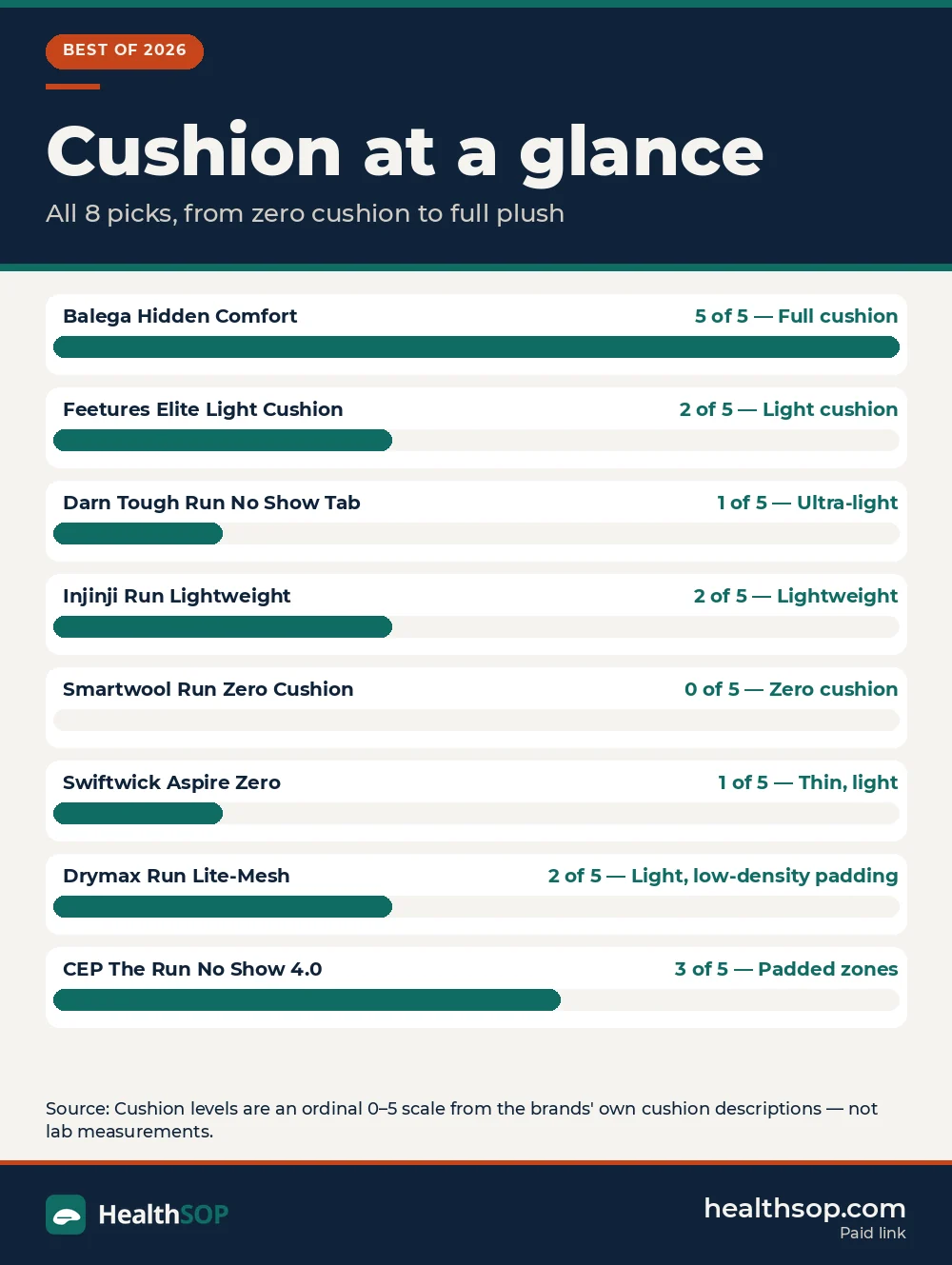
Infographic: cushion level for each pick on a 0–5 scale from the brands’ own cushion descriptions — not lab measurements. HealthSOP.
What to look for in running socks
Fibre (merino vs synthetic)
Fibre decides how the sock handles sweat. A good running sock is moisture-wicking: it pulls sweat off the skin so the foot stays dry. Merino wool breathes, holds warmth in cold weather, and resists odour. Darn Tough and Smartwool use it. The trade-off is dry time: merino dries slower than synthetics, and thin merino wears faster. Synthetics — nylon, polyester, Olefin — dry fast and last long. Balega, Feetures, Swiftwick and Drymax use them. One fibre to avoid is cotton. Cotton holds sweat against the skin, and wet skin blisters fast. No pick on this list uses cotton as its main fibre.
Cushion level
Cushion is padding underfoot. Zero cushion (Smartwool, Darn Tough UL) gives the closest feel to the shoe. Thin or light cushion (Swiftwick, Injinji) adds a little protection without bulk. Padded zones (CEP) protect the strike points only. Low-density padding (Drymax) protects without bulk. Full cushion (Balega) pads the whole foot. More cushion takes more room in the shoe — see the thickness table below. If your shoes fit tight, go thin. If you want the most comfort on long runs, go cushioned. Our most comfortable running shoes guide covers the shoe side of the same question.
Height (no-show, quarter, crew)
Height is how far the sock rises. No-show sits below the ankle and hides in the shoe — most picks here. Low ankle sits at the ankle line. Quarter rises above the ankle and protects the ankle bone. Mini crew rises higher still. A heel tab matters at any height: it stops the sock sliding down into the shoe. If your shoe collar rubs your heel, a quarter or mini crew helps. If you want the sock hidden, pick a no-show with a heel tab.
Seamless toe and blister prevention
A toe seam is a ridge across the front of your toes. It rubs with every step, and rubbing plus sweat plus heat is how blisters form. A seamless toe removes that ridge. Balega, Feetures, Darn Tough, Smartwool and CEP all use one. Injinji removes the problem another way: each toe sits in its own sleeve, so toes cannot rub each other. Fit matters as much as the sock. A shoe that is too big lets the foot slide; a shoe that is too small squeezes toes together. Both cause blisters. The AAOS fitting guide in Sources explains how a running shoe should fit. If blisters keep coming back, read our best running shoes for plantar fasciitis guide for foot-health context.
Compression and arch band
Compression is a snug band that holds the arch. It supports the foot and stops the sock moving. Swiftwick Aspire Zero has the firmest compression in this list — firm enough to feel. CEP targets compression at the arch. Feetures uses a gentler Targeted Compression band. None of these is a medical compression sock. They support the foot on long runs; they do not treat a medical condition. If you have a circulation problem, ask a doctor before you buy compression socks.
Sock thickness and shoe fit
A thick sock takes volume inside the shoe. A thin sock adds almost none. Match the sock to how your shoes fit.
| Sock thickness | Picks | Shoe fit note |
|---|---|---|
| Ultra-thin / zero cushion | Darn Tough UL, Smartwool Zero, Swiftwick Aspire | Fits snug shoes; adds almost no volume |
| Light / thin cushion | Feetures Elite Light, Injinji Lightweight | Fits most shoes; the safe middle |
| Padded zones / low-density | CEP No Show, Drymax Lite-Mesh | Needs a little room; check the toe box |
| Full cushion | Balega Hidden Comfort | Needs the most room; if your shoes fit tight, go thin or size up |
If your shoes already feel tight, a thick sock makes it worse. If your shoes feel roomy, a cushioned sock fills the space and stops sliding. For fit help, see our best running shoes for wide feet guide.
How we chose these socks
We started from the brands’ own spec sheets: fibre, cushion, height, toe seam, arch support, sizes. We checked the shortlist against independent reviews. Outdoor Gear Lab, Run to the Finish and Runner’s World all rank Balega, Feetures, Darn Tough, Injinji and Smartwool at the top for running socks. We used clinical guidance for the fit and blister claims (AAOS fitting guidance and the Cochrane review on running shoes and injury, both in Sources). We did not run in every sock, and we do not claim lab numbers. No lab tests socks the way RunRepeat tests shoes, so there are no lab figures in this guide. Every pick has an Amazon listing that the publish step gates before the buy button goes live. If a listing fails the gate, the pick drops out and the guide ships without it.
We also considered the Brooks Ghost Crew Socks. They passed the Amazon gate, but they did not make the final 8. The Balega Hidden Comfort and the Feetures Elite already cover the cushioned and compression roles.
Which one should you pick?
| You want | Pick |
|---|---|
| One pair for everything | Balega Hidden Comfort No-Show |
| Arch compression and a sock that stays put | Feetures Elite Light Cushion No Show Tab |
| Merino that lasts for years | Darn Tough Run No Show Tab Ultra-Lightweight |
| No blisters between toes | Injinji Run Lightweight No-Show |
| The thinnest merino feel | Smartwool Run Zero Cushion Low Ankle |
| Race day, thin and fast | Swiftwick Aspire Zero |
| Feet that sweat through normal socks | Drymax Run Lite-Mesh Mini Crew |
| Compression for long runs | CEP The Run No Show Socks 4.0 |
If you only buy one pair, buy the Balega Hidden Comfort. It fits the most feet and the most runs. Then add a specialist pair for your weak spot — Injinji for toe blisters, Drymax for sweat, Darn Tough for merino that lasts.
Running socks for specific needs
Best running socks to prevent blisters
The best blister sock depends on where blisters form. Blisters between toes come from toes rubbing each other — the Injinji Run Lightweight stops that with toe sleeves. Blisters on the heel or the ball come from the foot sliding in the shoe. A snug sock with an arch band, like the Feetures Elite Light Cushion, holds the foot steady and stops the sliding. Blisters on wet feet come from sweat softening the skin — the Drymax Lite-Mesh moves sweat off the skin fastest. Whichever you pick, fit matters: a shoe that slides causes blisters no sock can fix. If foot pain keeps coming back, read our best running shoes for plantar fasciitis guide.
Best running socks for sweaty feet
Sweaty feet need a sock that moves moisture and dries fast. The Drymax Run Lite-Mesh Mini Crew leads here — its dual-layer system pulls sweat off the skin to the outer layer. The Swiftwick Aspire Zero is next — Olefin fibre holds almost no water, so the sock stays light when wet. The Balega Hidden Comfort follows — Drynamix yarn wicks fast and the mesh top breathes. Avoid cotton: it holds sweat against the skin. On wet trails, a wet sock is worse than a wet shoe — our best trail running shoes guide covers shoes that drain and dry fast.
Best running socks for hot weather
Hot weather needs a thin, fast-drying sock. The Swiftwick Aspire Zero is the pick here — Olefin fibre holds almost no water, so the sock stays light when wet. The Drymax Run Lite-Mesh Mini Crew is next — its mesh moves sweat off the skin fast. Cold weather is the opposite job: merino holds warmth, so the Darn Tough Run and the Smartwool Run Zero are the cold-weather picks.
Best running socks for triathlon
Triathlon needs a sock that goes on fast after the swim and dries fast on the bike. A quick-drying no-show sock works best — the Swiftwick Aspire Zero or the Drymax Run Lite-Mesh Mini Crew. Both dry fast and stay light when wet, so the transition stays quick.
Do these socks fit men and women?
Most picks here are unisex and sized by shoe size: Balega, Feetures, Injinji, Swiftwick and Drymax. You pick your shoe size and the sock fits. Three brands split men’s and women’s versions. Darn Tough has men’s style 1033 and women’s 1043. Smartwool has men’s SW001651 and women’s SW001668. CEP has men’s MP26R and women’s WP26R. The tech is the same in both versions — only the cut and the size range differ. For the shoe side, see our best running shoes for men and best running shoes for women guides.
The video above is from Fleet Feet. It covers sock fabrics, fit, toe socks, compression and plantar fasciitis. Those are the same topics as this guide. It names three of our picks: CEP, Balega and Feetures.
Frequently asked questions
How did you choose these picks?
We started from the brands’ spec sheets — fibre, cushion, height, toe seam and arch support. We checked the shortlist against independent reviews from Outdoor Gear Lab, Run to the Finish and Runner’s World. We used clinical guidance for the fit and blister claims. Every pick has an Amazon listing that we gate before the buy button goes live.
How long do running socks last?
A pair of running socks lasts about a season of regular training — roughly six to twelve months. The heel or toe thins first, and that is the sign to replace them. Darn Tough and Feetures back their socks with a lifetime guarantee, so a hole means a free replacement. Wash cold and skip fabric softener.
Do running socks fit every running shoe?
No — thickness is the issue. A thin sock adds almost no volume, so it fits snug shoes. A full-cushion sock takes real room, so it needs a shoe with space in the toe box. Check the thickness table above and match the sock to your shoe. If your shoes already feel tight, go thin or size up.
What running socks should I buy?
Start with the Balega Hidden Comfort No-Show. It fits most feet, cushions the whole foot and stays put. If blisters form between your toes, get the Injinji Run Lightweight instead. If your feet sweat through normal socks, get the Drymax Run Lite-Mesh. One pair for everything, then a specialist pair for your weak spot.
What running socks are best?
For most runners, the Balega Hidden Comfort No-Show. It has the most cushion here, a seamless toe, a heel tab that stops slipping, and a fibre blend that wicks sweat fast. It suits easy runs, long runs and daily wear. If you want compression or merino instead, the Feetures Elite and the Darn Tough Run are the next best picks.
What running socks prevent blisters?
It depends on where blisters form. Blisters between toes need the Injinji Run Lightweight — its toe sleeves stop toes rubbing each other. Blisters on the heel or ball need a snug sock with an arch band — the Feetures Elite Light Cushion holds the foot steady. Blisters on wet feet need the Drymax Lite-Mesh, which moves sweat off the skin fastest.
What running socks are good?
A good running sock wicks sweat, fits snugly without bunching, and has no toe seam to rub. It holds its shape run after run and dries fast. Every pick on this list does that — they differ in fibre, cushion, height and fit. Start with the Balega Hidden Comfort, then match the rest to your feet.
How do compression socks work?
Compression socks fit snugly and squeeze gently, hardest at the foot and lighter higher up. That pressure supports the arch, helps blood flow back up the leg, and cuts swelling on long runs. The CEP Run No Show, Swiftwick Aspire Zero and Feetures Elite use targeted compression. They support tired feet — they do not treat a medical condition.
Are running socks worth it?
Yes, if you run more than a couple of times a week. A running sock wicks sweat, has no toe seam to rub, and fits snugly so it does not bunch or slide. Cotton socks do none of that — they hold sweat, and wet skin blisters fast.
Do running socks make a difference?
Yes — mostly in blisters and comfort. A running sock keeps the foot dry, stops the toe seam rubbing, and holds the foot steady in the shoe. Runners who switch from cotton socks usually notice it on a long run: fewer hot spots, drier feet, and a sock that stays put.
Sources
- Relph et al. 2022, Cochrane Review – Running shoes for preventing lower-limb running injuries in adults. PubMed 35993829
- Nigg et al. 2015, Br J Sports Med – Running shoes and running injuries: mythbusting (“comfort filter”, “preferred movement path”). PubMed 26221015
- AAOS OrthoInfo – Athletic Shoes (fitting guidance). orthoinfo.org
Last updated: 26 November 2026.