
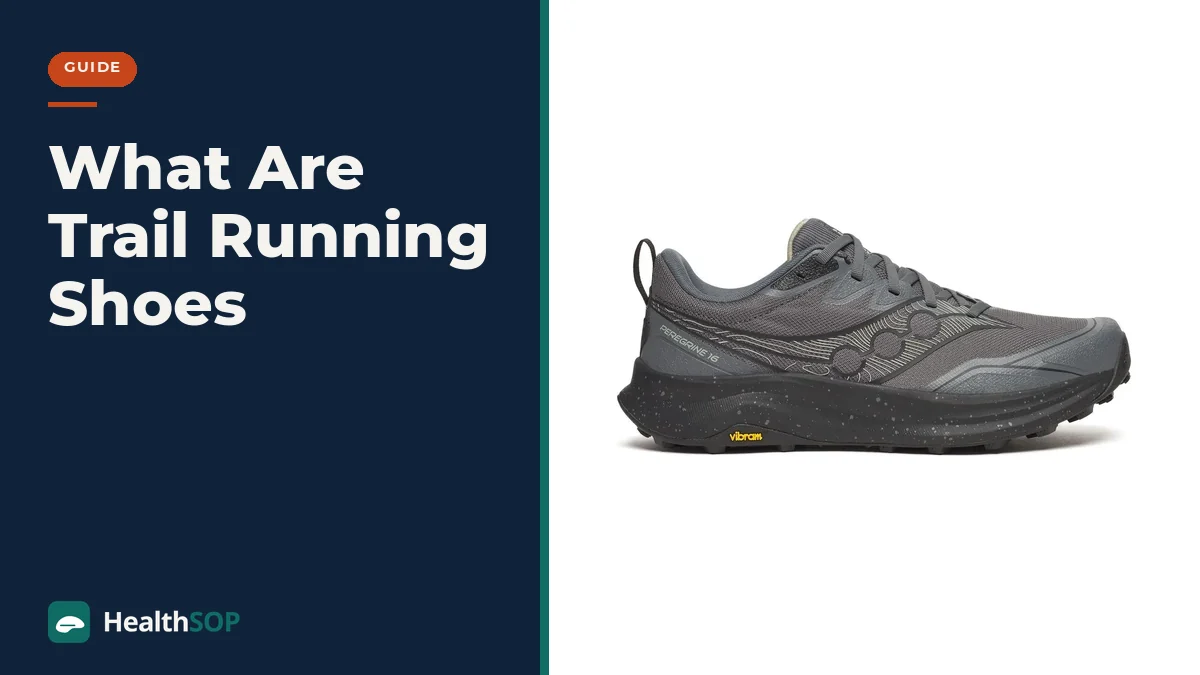
Trail running shoes are running shoes built for dirt, rock, mud and roots, with lugged rubber outsoles for grip, tougher uppers and toe caps for protection, and firmer midsoles that stay stable on uneven ground. They matter most once your runs leave the pavement. On a smooth path, your road shoes still work fine. Below you’ll find a trail vs road table, each feature explained, a terrain chart and three current examples.
Some people call them trail running sneakers. The name doesn’t matter much. What matters is the grip, the protection and how the shoe fits your foot on rough ground.
Last updated: November 15, 2026. Disclosure: HealthSOP earns a commission from qualifying Amazon purchases, at no extra cost to you. It never changes which shoes we name.
Table of Contents
What are trail running shoes?
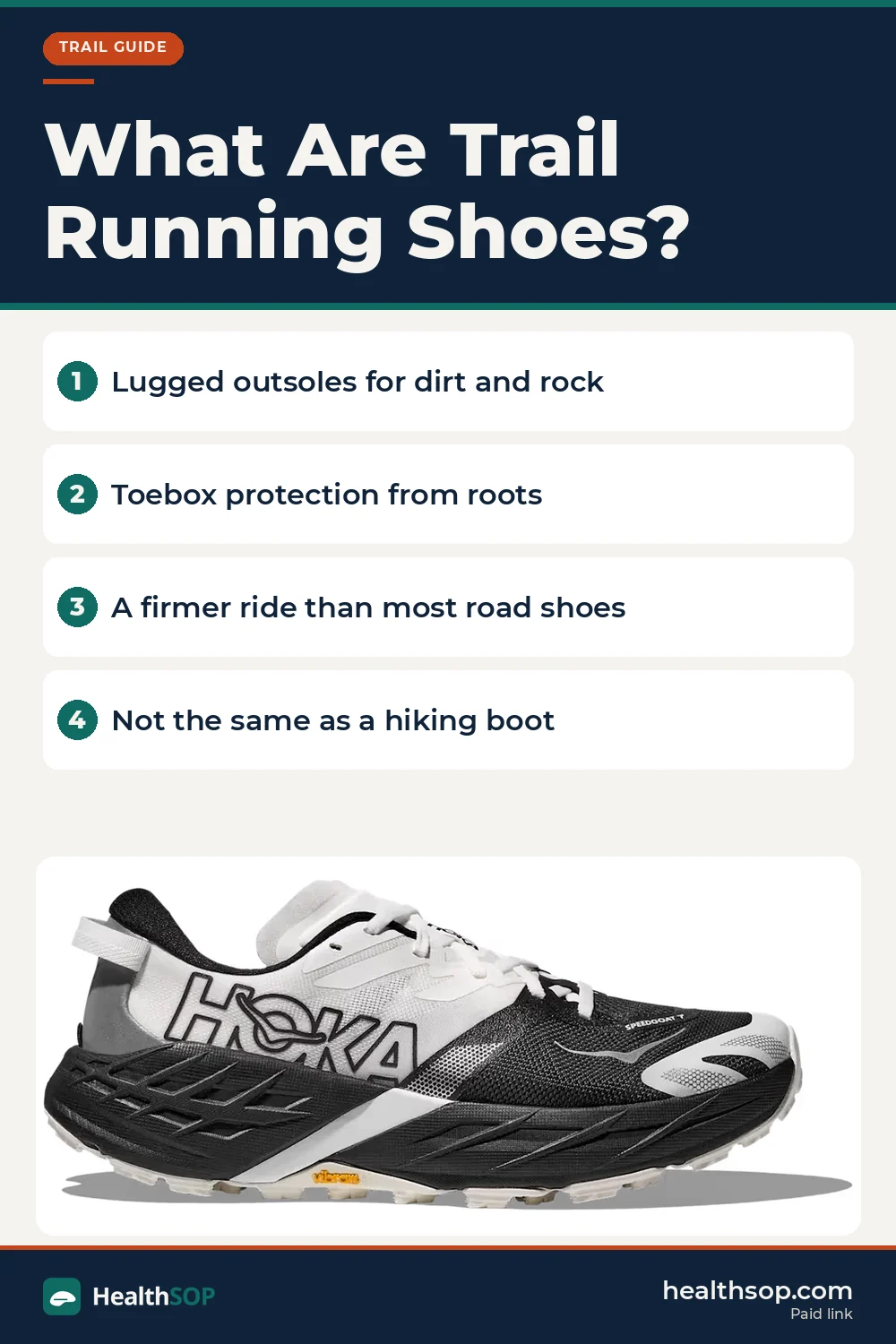
Trail running shoes are a type of running shoe made for unpaved ground. Compared with road shoes, they have bigger, softer lugs on the outsole, stiffer midsoles and reinforced uppers, according to REI. Many also add a rock plate, a toe bumper or a waterproof GORE-TEX lining.
Think of them as a road running shoe with hiking boot traits mixed in. They still bend and cushion like a running shoe. But the bottom grips like a tire tread, and the top shrugs off rocks and sticks.
Trail shoes sit inside the bigger family of running shoes. Our guide to the types of running shoes shows how they compare with neutral, stability and racing shoes.
What are trail running shoes used for?
Trail running shoes are used for running on dirt paths, gravel roads, forest single track, rocky mountain trails, mud and snow. People also wear them for fast hiking, long ultramarathon races, obstacle races and muddy dog walks. Their main job is to keep you upright and protected where a road shoe would slip.
What is the difference between trail running shoes and regular running shoes?
The difference between trail running shoes and regular running shoes comes down to grip, protection and stiffness. Trail shoes use deeper lugs and stickier rubber, a firmer midsole and a tougher upper. Road shoes have flatter, harder-wearing outsoles, softer foam and lighter, more breathable mesh (REI).
| Feature | Trail running shoes | Road running shoes |
|---|---|---|
| Outsole | Raised lugs, usually about 3 to 5 mm deep | Flat or lightly textured rubber |
| Rubber | Softer and stickier, grips wet rock | Harder, lasts longer on pavement |
| Midsole | Firmer and stiffer for a stable base | Softer foam for impact on hard ground |
| Underfoot protection | Some have a rock plate | None |
| Upper | Reinforced mesh, overlays, toe cap | Light, airy mesh |
| Extras | Gaiter hooks, lace pockets, GORE-TEX options | Rarely |
| Heel-to-toe drop | Most fall in the 5 to 8 mm range | Varies widely by model |
| Stability parts | Wide base, no pronation-control posts | Some have medial posts or guide rails |
| Best surface | Dirt, gravel, rock, mud, snow | Asphalt, concrete, track, treadmill |
| On the other surface | Lugs wear fast on pavement | Slips on mud, wet rock, loose dirt |
Weight is closer than most people think. A modern trail shoe like the Saucony Peregrine 16 weighs about 270 g in a men’s size 9 (iRunFar). That’s lighter than some cushioned road shoes. RunRepeat weighed the HOKA Bondi 9 road shoe at 303 g.
What is the difference between a trail running shoe and a running shoe on your foot?
On your foot, a trail running shoe feels firmer, more locked in and a bit more planted than a road shoe. The heel and midfoot hug tighter so your foot doesn’t slide on side slopes. You’ll feel the lugs on smooth floors, and some people notice a slightly clunky roll on pavement. That’s normal.
Key features of trail running shoes
The key features of trail running shoes are the lugged outsole, the rock plate, the protective upper with a toe bumper, and an optional waterproof membrane. Cushion height and drop matter too. Here’s what each part does and when you need it.
Lugs and outsole
Lugs are the raised rubber knobs on the bottom of a trail shoe. They dig into loose ground the way tire tread does. Shallow, tight lugs suit dry hardpack and gravel. Deep, widely spaced lugs suit mud and loose dirt, because the gaps shed mud instead of packing up (REI).
- About 3 to 4 mm: door-to-trail runs, gravel and dry forest paths.
- About 5 mm or more: mud, soft ground and steep mountain trails.
- Rubber matters as much as depth: a sticky compound grips wet rock and roots better.
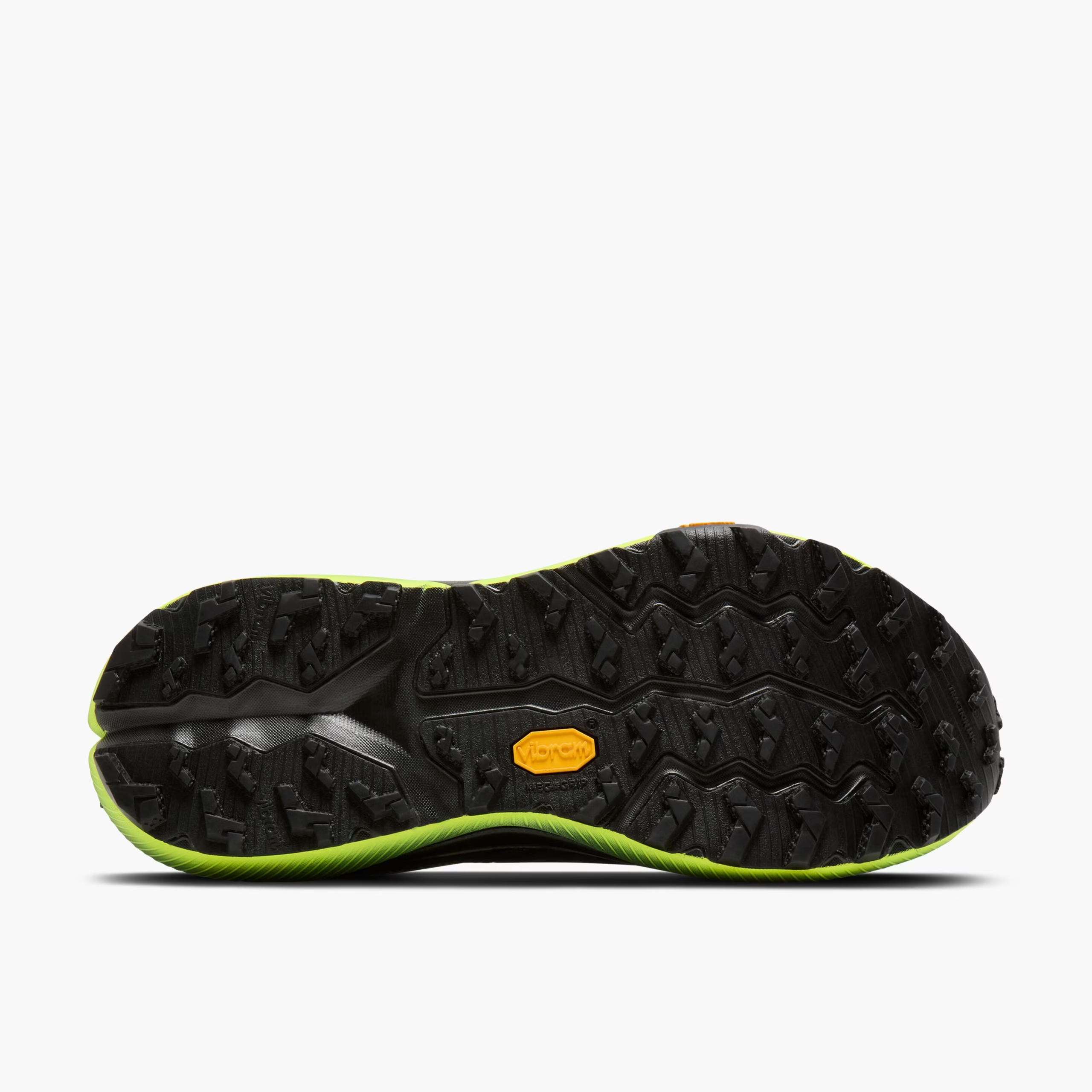
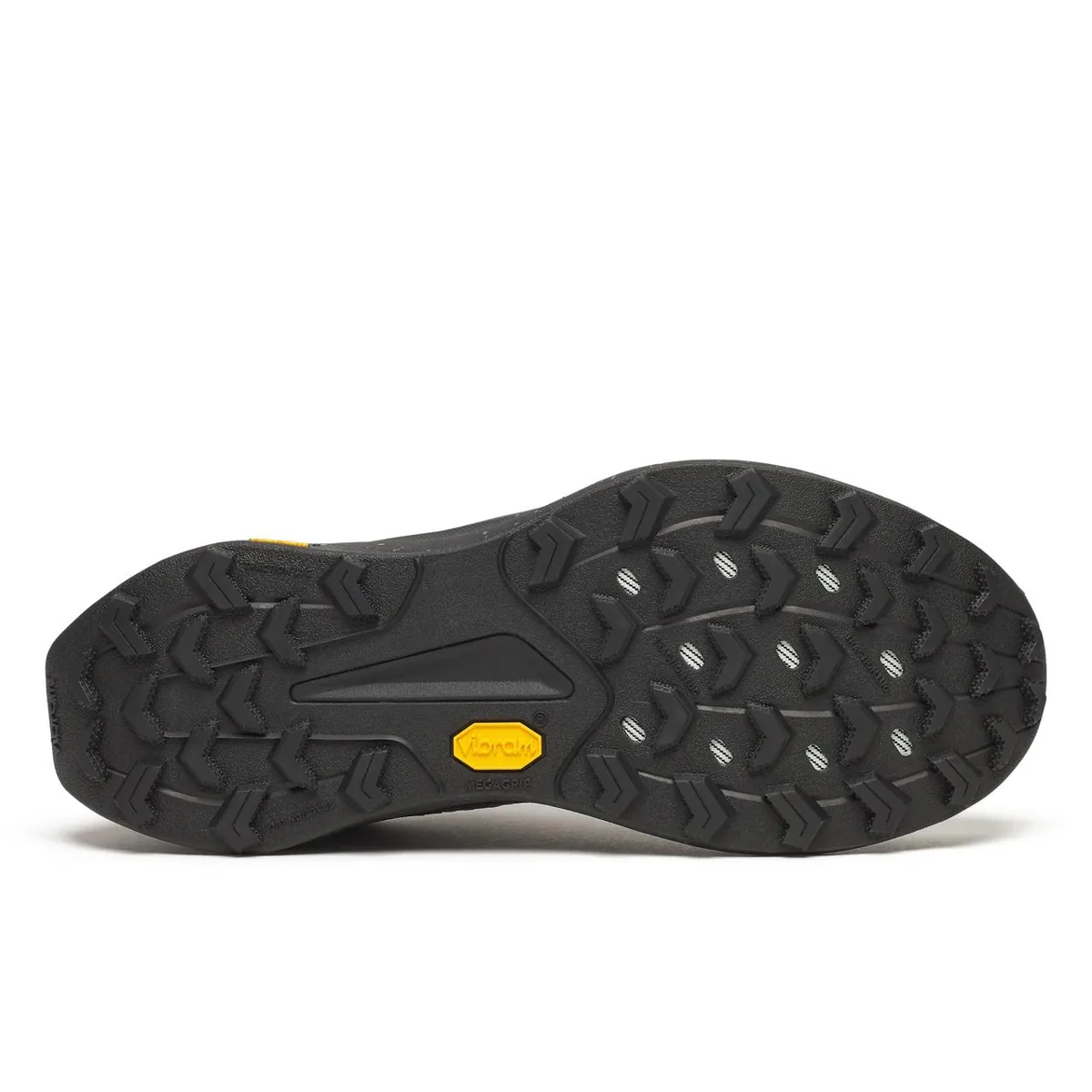
Vibram Megagrip is the best-known sticky trail rubber. Vibram says it grips on both dry and wet ground and is made to last on long distances (Vibram). All three shoes we name below now use it. Brooks and Saucony both switched to Megagrip on these latest versions.
Lab numbers keep brands honest. RunRepeat measured an average lug depth of 3.5 mm across 178 trail shoes (RunRepeat). Lugs are also often a little shallower than the brand claims. The Cascadia 20 is listed at 4 mm but measured 3.4 mm.
Rock plates
A rock plate is a thin, stiff layer between the midsole and outsole that blunts sharp rocks and roots. REI says plates are usually thin plastic or carbon fiber. Some run the full length of the shoe, while others sit only under the forefoot (REI).
Full-length plates also add torsional stiffness. That means the shoe resists twisting when you land on a slanted rock. Plastic plates are cheaper and more common. Carbon plates are lighter and stiffer, and they show up mostly on pricey race shoes.
Not every trail shoe has one. Thick foam can do part of the same job. The Saucony Peregrine 16 uses a flexible woven plate under the forefoot only (iRunFar).
Uppers and toe protection
Trail shoe uppers are reinforced with overlays and a rubber toe bumper to protect your foot from rocks, roots and sticks. Light trail shoes may have only a small rubber tip. Rugged shoes wrap the toe cap further around the front and sides (REI).
- Toe bumper or toe cap: saves your toes when you kick a rock. You will kick a rock.
- Gusseted tongue: the tongue is sewn to the sides, so grit and pebbles stay out.
- Gaiter attachment: a hook or tab for short gaiters that block dirt, snow and scree.
- Lace pocket: a small sleeve on the tongue to tuck laces away from branches.
Waterproof membranes (GORE-TEX)
A waterproof trail shoe has a GORE-TEX or similar membrane that keeps water out while letting some sweat escape as vapor. It works well for cold rain, wet grass, slush and snow. The tradeoff is heat. REI notes that waterproof shoes keep heat in as well as water out (REI).
There’s a second catch. If water gets in over the collar, it can’t drain out as easily as it does from mesh (REI). So for summer runs or creek crossings, many runners pick a non-waterproof shoe that drains and dries fast. Brands often sell both versions, with GTX added to the name.
Cushion, stack height and drop
Trail shoes come in three cushion levels: minimal, moderate and maximum. REI puts moderate shoes at up to about 30 mm of stack, and max cushion shoes at 34 mm to over 40 mm (REI). More foam helps on long runs and ultramarathons. Less foam gives better ground feel and less wobble.
Drop is the height difference between heel and forefoot. Most trail shoes sit between 5 and 8 mm. They tend to run lower than road shoes because trail strides change so often. If you’re new to the term, read our short guide to heel-to-toe drop. Move to a low-drop shoe slowly, since it can load your Achilles more.
What types of trail running shoes are there?
There are four main types of trail running shoes. You’ll find light hybrid shoes, rugged all-mountain shoes, max cushion shoes and fast racing shoes. Waterproof GTX versions exist in most of these groups. Pick the type by your most common terrain, then by distance.
| Type | Built for | Typical traits | Example (2026) |
|---|---|---|---|
| Hybrid / light trail | Gravel, fire roads, park paths, short road links | Shallow lugs, light upper, moderate cushion | Saucony Peregrine 16 |
| All-mountain / rugged | Rocky, rooty, steep or muddy trails | Deeper lugs, toe cap, firmer base, often a plate | Brooks Cascadia 20 |
| Max cushion | Long runs, ultramarathons, rocky descents | 34 to 40+ mm stack, wide base | HOKA Speedgoat 7 |
| Light and fast / racing | Races and fast workouts on runnable trail | Low weight, firm foam, some with carbon plates | Nike ACG Ultrafly |
Barefoot and zero-drop trail shoes are a fifth, smaller group. They give the most ground feel and the least protection. REI says the switch to them takes time and patience if you’re used to a regular shoe.
Which trail shoe features match your terrain?
Match the shoe to the ground you run on most. Think shallow lugs for hardpack, deep lugs for mud, sticky rubber and a plate for rock, and a waterproof upper for snow. This chart pulls it together. Use it before you shop, so you don’t pay for features you won’t use.
| Terrain | Lugs | Rubber and protection | Upper | Best type |
|---|---|---|---|---|
| Hardpack dirt and gravel | Shallow, close together (3 to 4 mm) | Durable rubber; plate optional | Breathable mesh | Hybrid / light trail |
| Mud and wet grass | Deep, widely spaced (5 mm or more) | Sticky rubber | Mesh that drains, or GTX in cold | All-mountain |
| Rock and technical terrain | Medium, many edges | Sticky rubber (e.g. Vibram Megagrip), rock plate, toe cap | Reinforced overlays | All-mountain or max cushion |
| Wet rock and roots | Medium | Softest, stickiest rubber you can find | Any | All-mountain |
| Snow and slush | Deep | Sticky rubber; gaiter hook helps | Waterproof GTX | All-mountain GTX |
| Mixed road and trail | Shallow | Harder-wearing rubber | Light mesh | Hybrid / light trail |
| Long ultramarathon | Medium, all-round | Thick foam; plate optional | Roomy for swelling feet | Max cushion |
Do trail running shoes make a difference?
Yes, trail running shoes make a real difference on loose, wet, muddy or rocky ground. Their lugs, sticky rubber and toe protection help you stay upright and save your feet from bruises. On smooth, dry paths the gap is small. A road shoe often handles those fine.
Be careful with injury claims, though. A 2022 Cochrane review looked at 12 trials of different running shoe types (Relph et al. 2022). Most of the evidence showed no drop in injuries between types, and its certainty was low. No trial looked at trail shoes as a category.
So the honest answer is this. Trail shoes help with grip and protection. They aren’t proven to prevent injuries. Researchers have suggested that comfort is a sensible filter when you choose a shoe (Nigg et al. 2015). If two shoes suit your terrain, buy the one that feels better.
Do you need trail running shoes?
You need trail running shoes if you run on rocky, rooty, muddy, steep or snowy trails more than now and then. If your trails are flat, dry gravel or packed dirt, your road shoes will likely do. REI says road trainers can handle a less technical trail every now and then (REI).
Use these quick steps to decide:
- Count your trail runs. Our rule of thumb: if about one run a week or more is off-road, a trail pair earns its place.
- Check the surface. Mud, loose rock, wet roots or snow? Get trail shoes. Smooth, dry gravel? Road shoes are fine.
- Notice slips and bruises. If you slide on descents or feel sharp rocks through the sole, your shoes are under-built.
- Look at how far you go. Long trail runs and ultramarathons call for more cushion and protection.
- Think about the drive. If you run on the road to reach the trail, pick a hybrid shoe with shallower lugs.
Ready to shop? Our step-by-step guide on how to buy trail running shoes covers sizing, try-on tips and what to check in the store.
Can trail running shoes be used on the road?
Yes, trail running shoes can be used on the road, and short stretches of pavement won’t hurt them or you. But the softer rubber and lugs wear down faster on asphalt, and the firmer ride can feel clunky. Save them mainly for dirt, and use road shoes for most pavement miles (REI).
Do trail running shoes work for road running?
Trail running shoes work for road running in a pinch, but they’re not the best tool for it. Hybrid shoes with shallow lugs, like the Saucony Peregrine 16, handle road links better than deep-lugged mud shoes. If half your run is on pavement, a hybrid trail shoe or a road shoe makes more sense than an aggressive mountain shoe.
One upside: the extra grip feels great on wet, leafy sidewalks in fall. One downside: every road mile shaves the lugs a little shorter.
Trail running shoes for hiking (and hiking shoes for running)
Yes, trail running shoes are good for hiking on most day trails. They’re lighter than hiking boots, need little break-in and grip well. They give less ankle support and wear out sooner than boots, especially under a heavy pack. REI says some hikers use them to save weight but should expect to replace them often (REI).
For long hikes, REI suggests the toughest rugged-trail models, since they offer more durability and support than light trail shoes. We go deeper on pack weight, ankle support and when boots still win in our guide to trail running shoes for hiking.
The reverse doesn’t work as well. Hiking shoes are heavier and stiffer, so running in them feels slow and clumsy. Our article on whether hiking shoes are good for running explains when they can pass for a short jog.
Popular trail running shoes in 2026
Three popular trail running shoes in 2026 show the main types well. The HOKA Speedgoat 7 is the cushion pick, the Brooks Cascadia 20 the stable pick and the Saucony Peregrine 16 the all-rounder. All three use Vibram Megagrip rubber. We haven’t run in them ourselves, so specs below come from the brands and lab tests.
For a ranked list with more models, see our guide to the best trail running shoes. Amazon buttons open the men’s version; women’s versions are sold too.
HOKA Speedgoat 7: max cushion pick
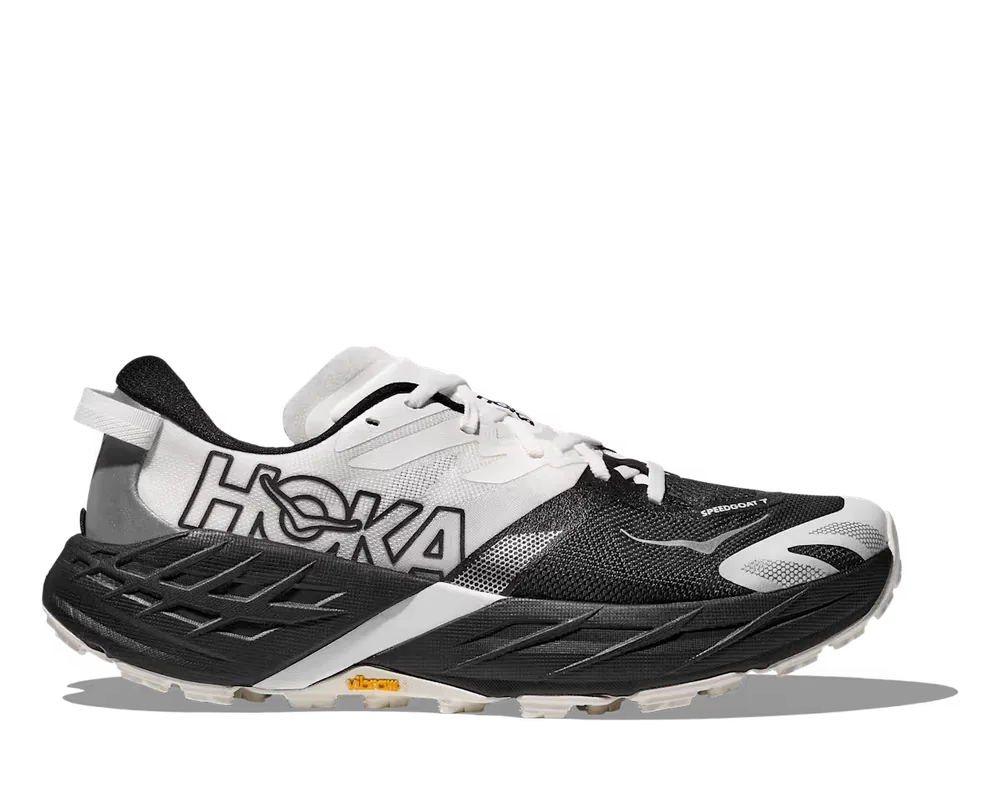
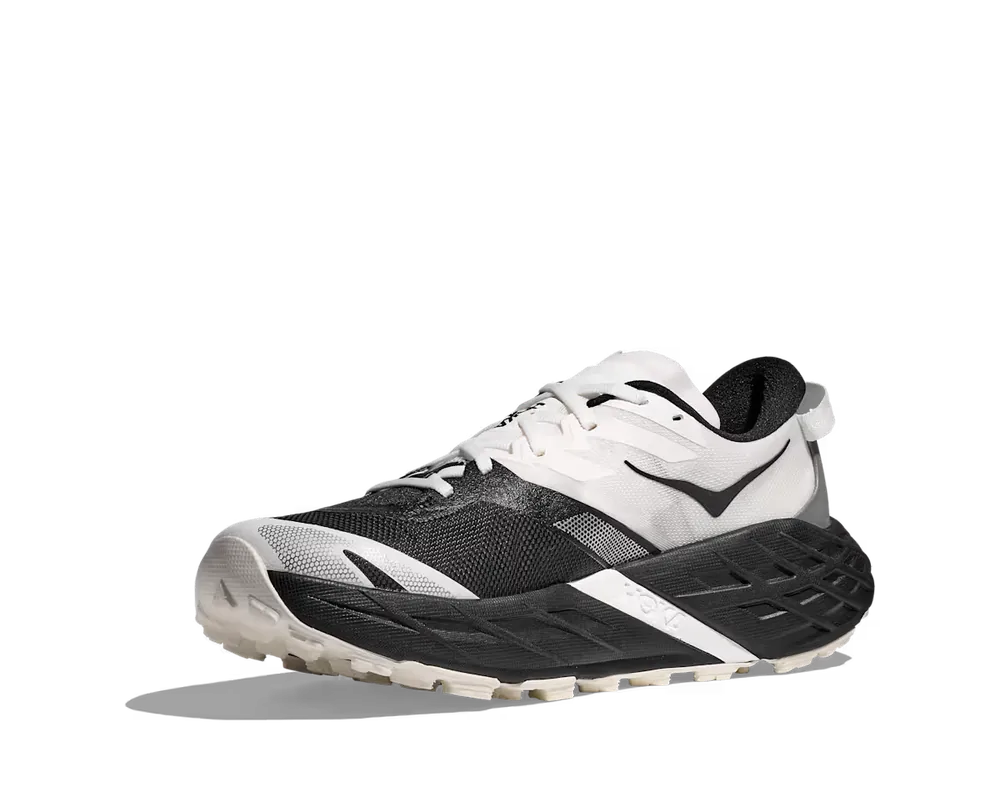
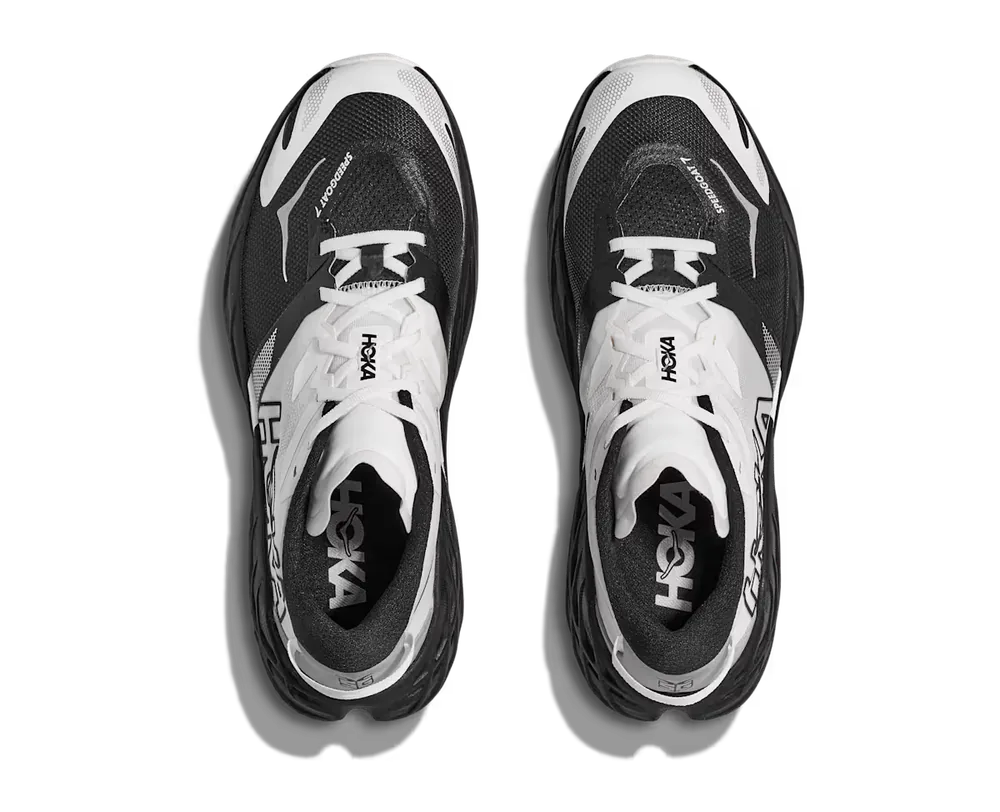
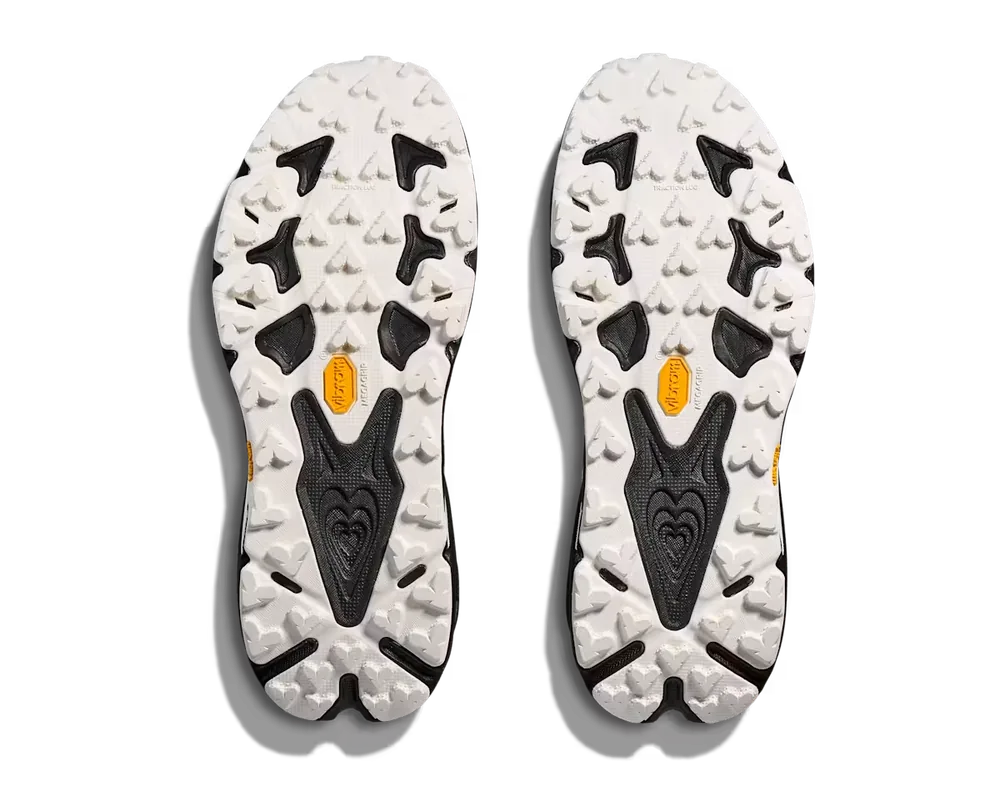
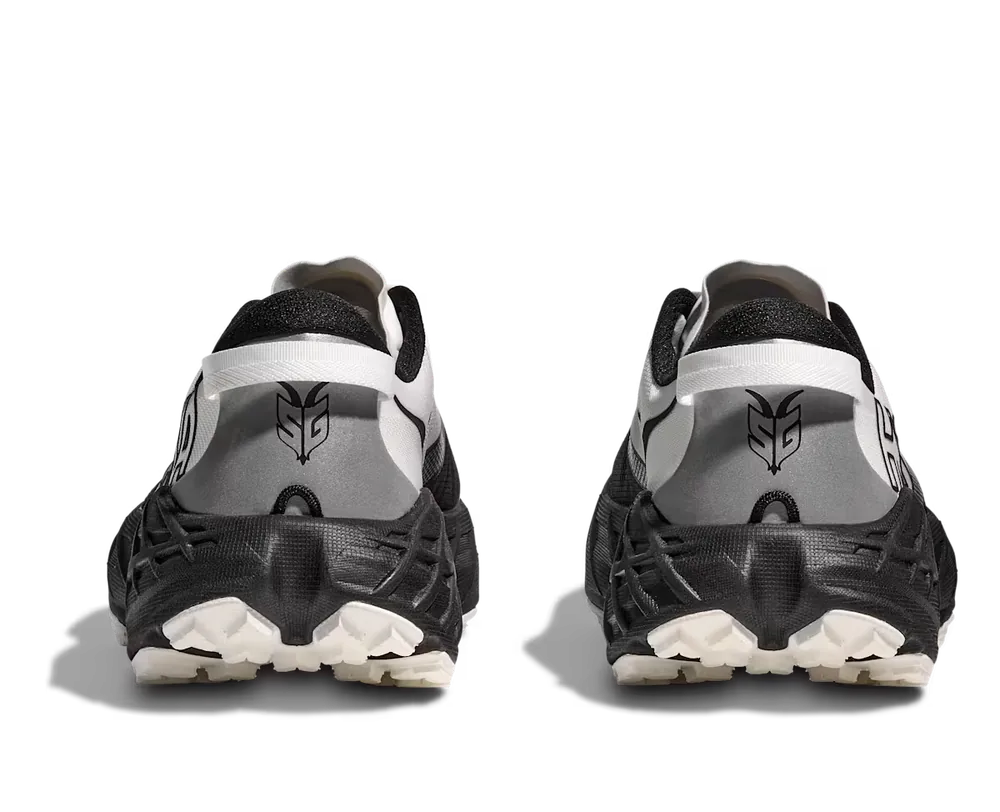
The Speedgoat 7 is HOKA’s go-anywhere trail shoe, now with a supercritical EVA midsole and 5 mm Vibram Megagrip lugs. HOKA lists a 40 mm heel and 35 mm forefoot stack for a men’s 10 (HOKA). That size weighs 275 g.
- Best for: long trail runs, ultramarathons, mixed and muddy terrain
- Lugs: 5 mm brand, 4.5 mm lab
- Stack: 40 mm heel / 35 mm forefoot (men’s 10, brand)
- Widths: regular and 2E wide
- Source: HOKA launch specs and RunRepeat lab data
Pros
- 5 mm Vibram Megagrip lugs with Traction Lug texture for mud and wet rock
- Thick supercritical foam that RunRepeat rates for long distances and ultras
- Secure lockdown and a stable feel in RunRepeat’s testing
- Good toebox and outsole durability in the lab
- Integrated gaiter attachment for keeping out debris
Cons
- Tapered toebox (RunRepeat): wide-foot runners should order the 2E wide version


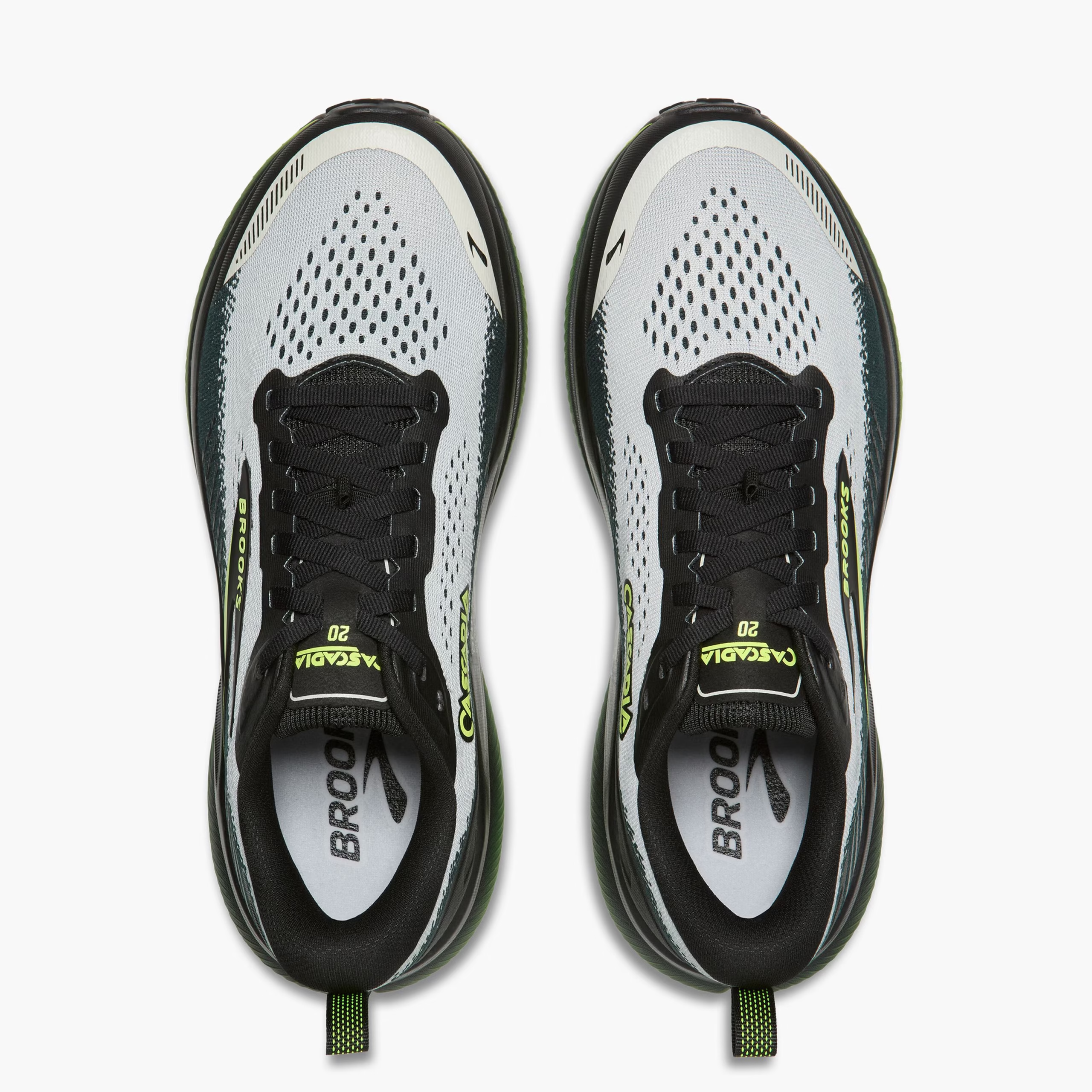
Brooks Cascadia 20: stable all-mountain pick
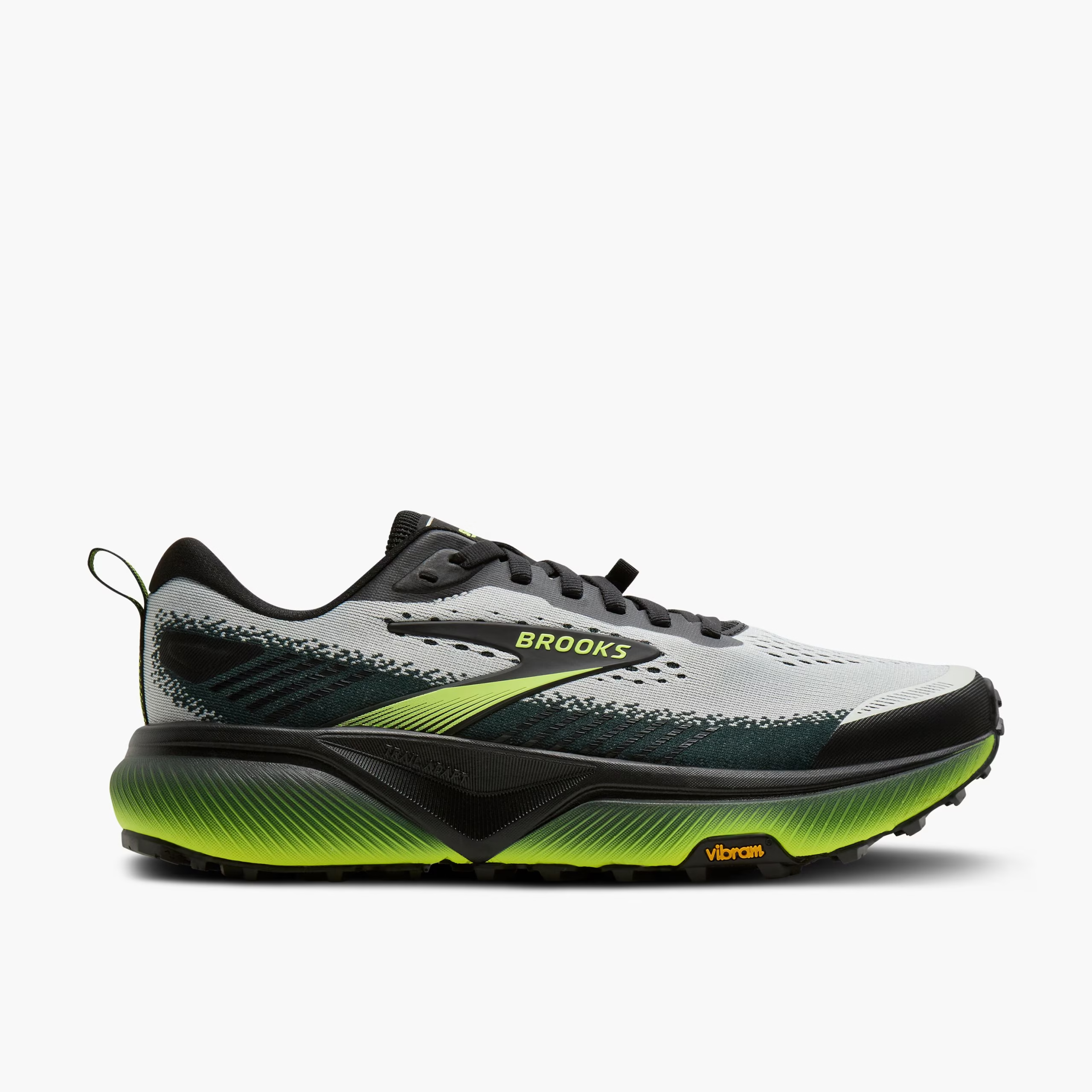
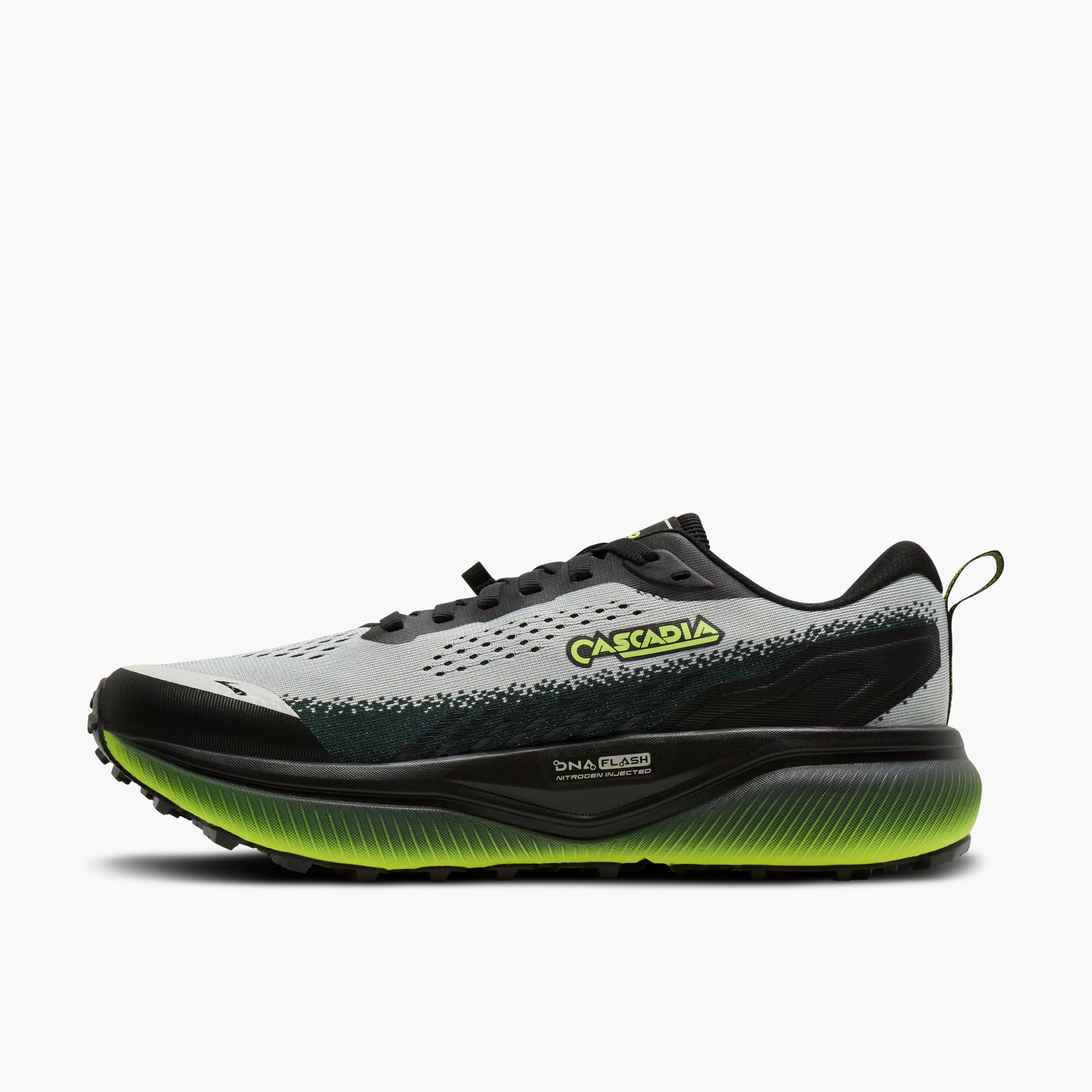
The Cascadia 20 is Brooks’ all-terrain trail shoe, and it now has Vibram Megagrip with 4 mm lugs instead of Brooks’ own rubber. Brooks lists a 6 mm drop and 306 g for the men’s shoe, plus a toe cap and mudguard (Brooks).
- Best for: rocky and rooty trails, hiking, heel strikers
- Lugs: 4 mm brand, 3.4 mm lab
- Stack and drop: 38 mm heel / 32 mm forefoot, 6 mm drop (brand); 8.8 mm drop in the lab
- Widths: regular and 2E wide
- Source: Brooks specs and RunRepeat lab data
Pros
- Vibram Megagrip outsole grips on wet and dry ground
- TrailAdapt base flexes over rocks and feels very stable
- Toe cap and mudguard protect the front of the foot
- Works for both hiking and running, per RunRepeat
- Removable insole fits an orthotic
Cons
- Snug fit (RunRepeat): wide feet should pick the 2E wide version
- Heavier than the other two at 306 g: fine for long easy days; choose the Peregrine 16 for a lighter feel
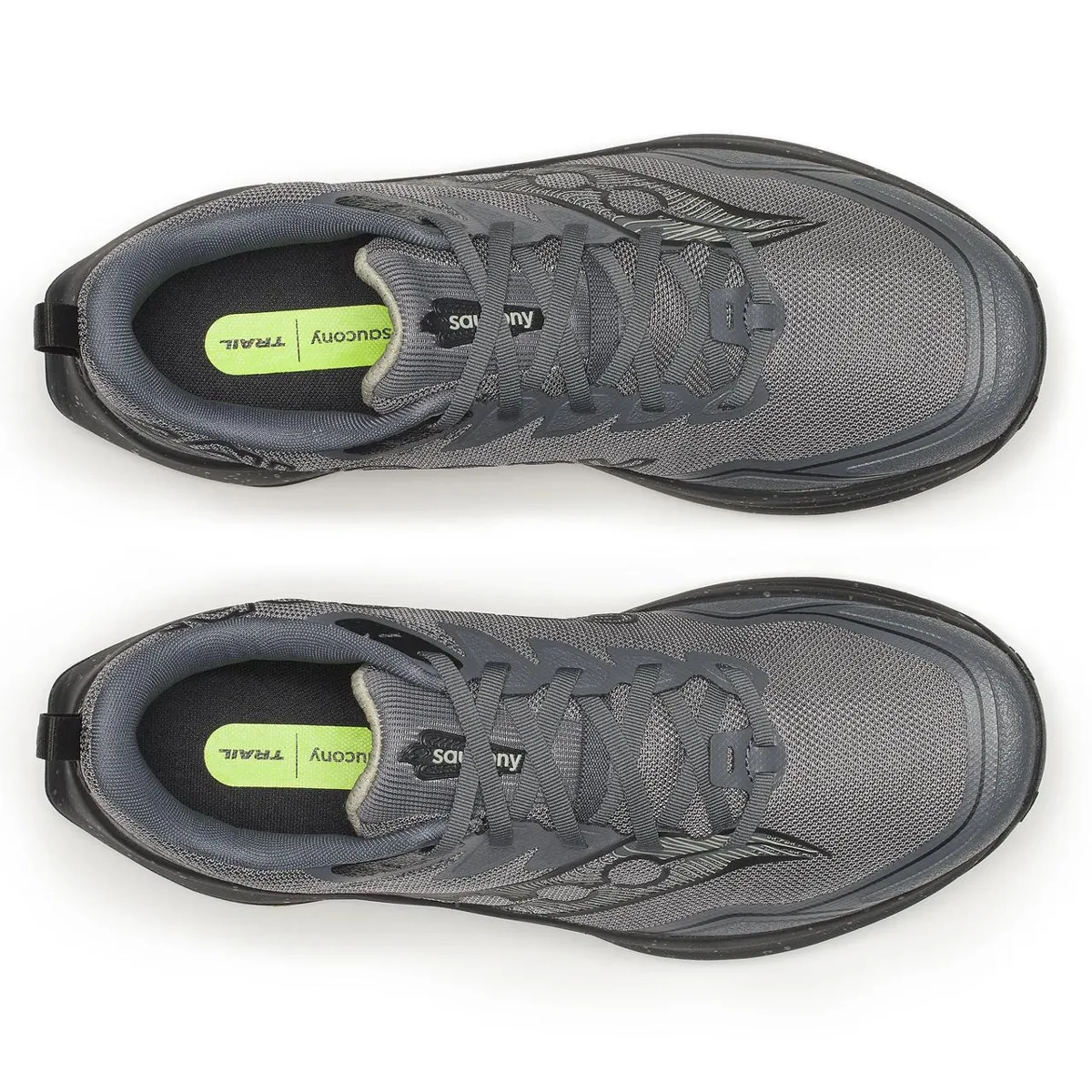
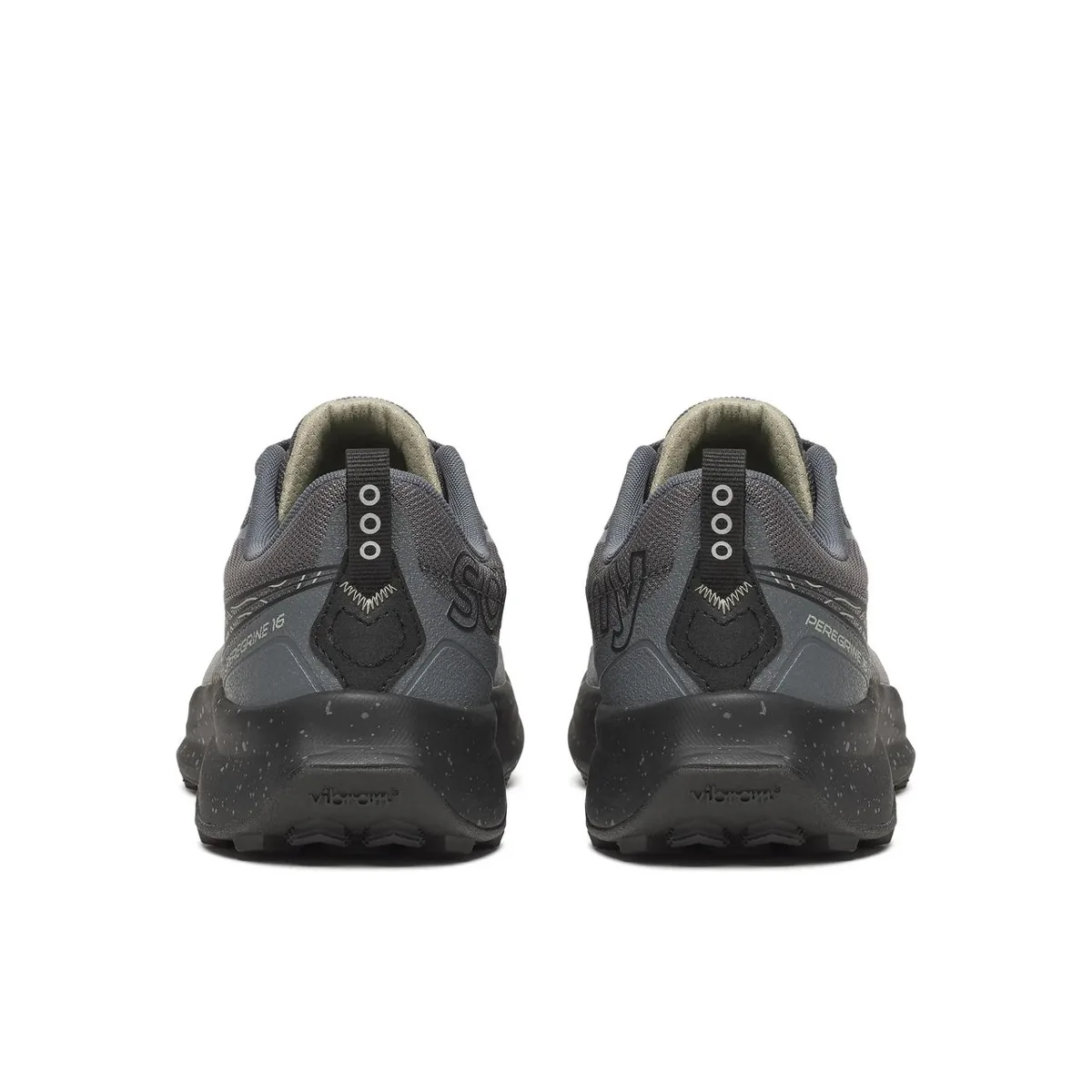
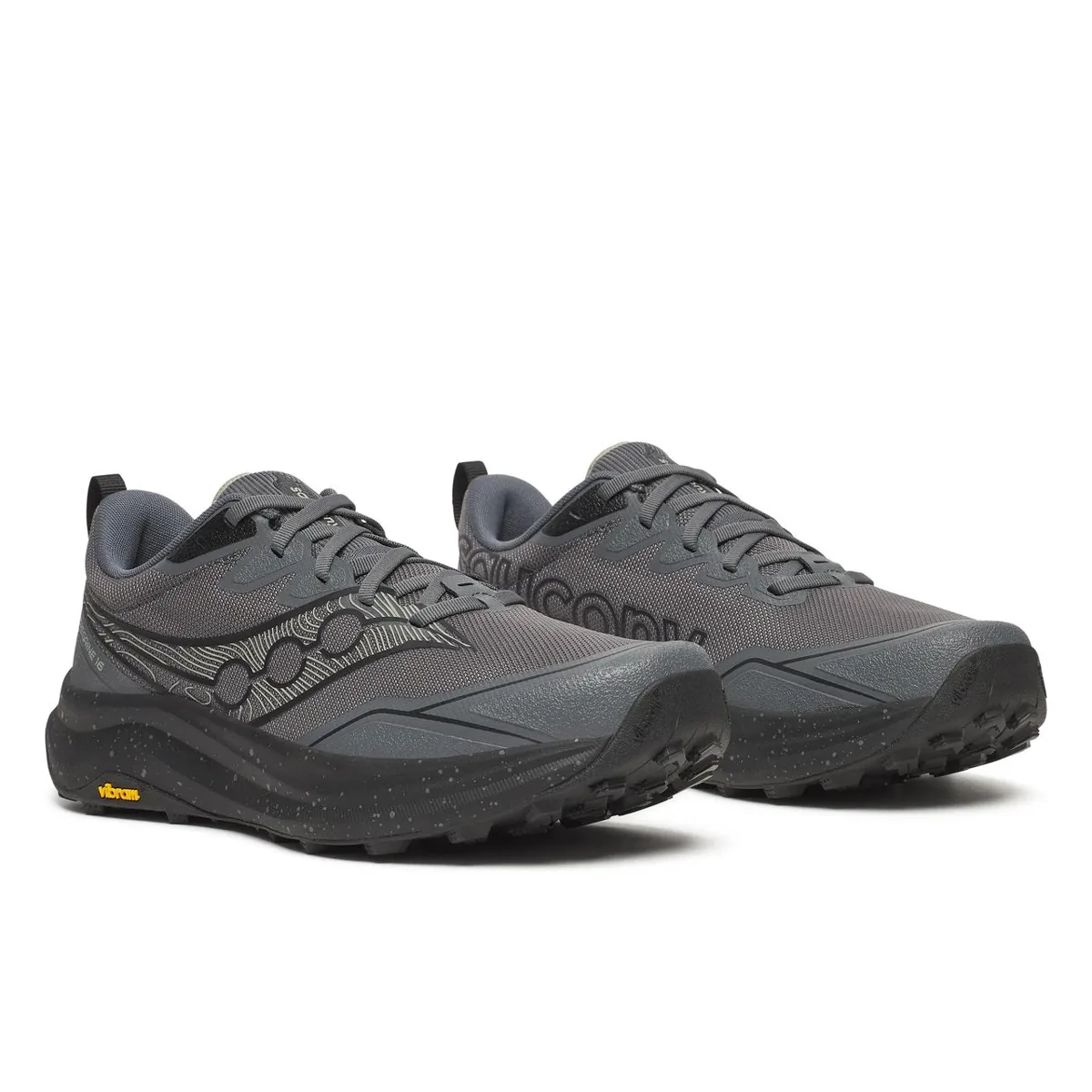
Saucony Peregrine 16: versatile road-to-trail pick
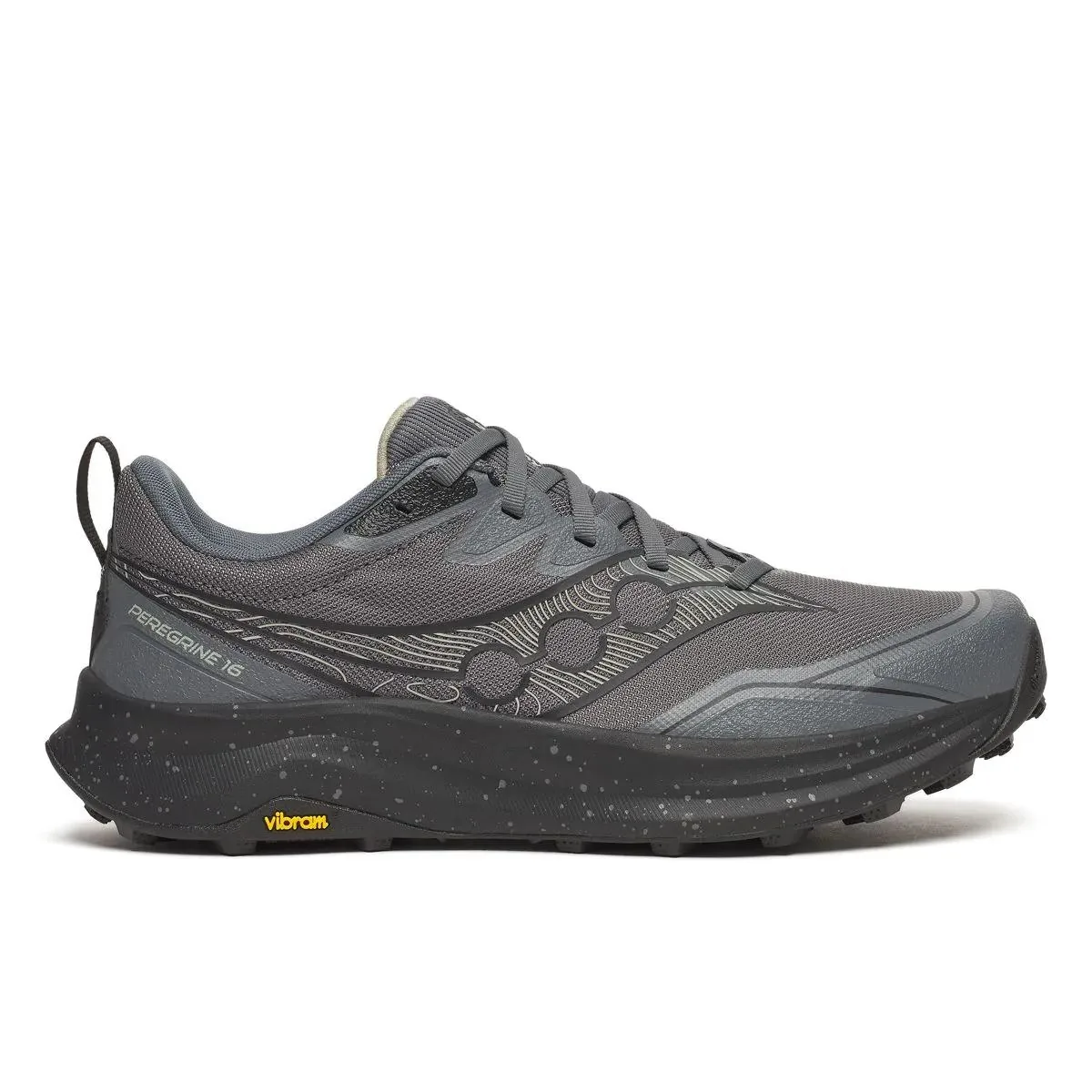
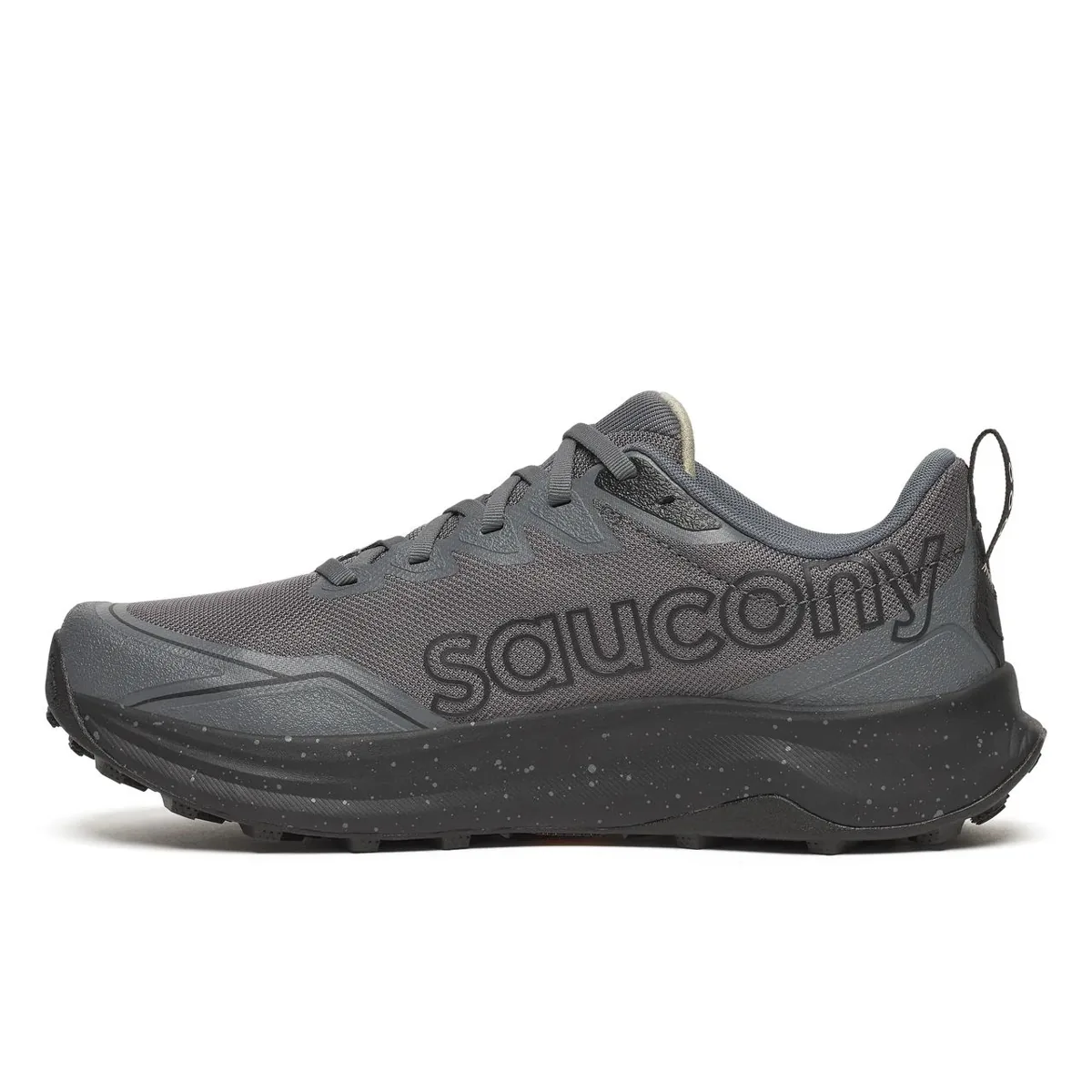
The Peregrine 16 is Saucony’s do-it-all trail shoe, now with a full-coverage Vibram Megagrip outsole and 4 mm more PWRRUN foam. It has a 32 mm heel, a 28 mm forefoot and a 4 mm drop (iRunFar). The claimed weight is 269 g for a men’s 9.
- Best for: gravel, mixed road and trail, everyday trail training
- Lugs: 4 mm brand, 3.5 mm lab
- Stack and drop: 32 mm heel / 28 mm forefoot, 4 mm drop (brand)
- Widths: regular and wide
- Source: Saucony, iRunFar and RunRepeat lab data
Pros
- Full-coverage Vibram Megagrip for dry, wet, rocky and loose ground
- Forefoot rock plate adds protection without much stiffness
- Toe protection and gaiter compatibility from Saucony
- RunRepeat’s top pick for gravel running shoes
- Premium PWRRUN+ insole that holds its shape
Cons
- Tapered toebox (RunRepeat): wide-foot runners should try the Peregrine 16 Wide
Next step: fit matters more than any feature. Learn how much toe room to leave and how snug the heel should be in our trail shoe fit guide.
How long do trail running shoes last?
Trail running shoes usually last about 300 to 500 miles, the same range REI gives for running shoes in general (REI). Rocky trails, lots of road miles and a heavier body weight push you toward the low end. Soft, sticky rubber trades some lifespan for grip.
Retire a pair when the lugs are worn flat, the upper tears near the toes, or new aches show up after runs. Our guide on how long running shoes last shows the wear signs to check.
How we researched this guide
This guide was written by Lora Nicolas for HealthSOP and rewritten on November 15, 2026. We did not wear-test these shoes. Instead, we checked every spec against the brand’s own page, then compared lab numbers from RunRepeat and long-term reviews from iRunFar.
- Feature explanations come from REI’s expert trail and road shoe guides and Vibram’s Megagrip page.
- Injury statements come from a Cochrane review and a peer-reviewed sports medicine paper.
- We checked that each named shoe is the current model and listed on Amazon US on the day of the update.
- We compared the top Google results for this question and added what they lacked: a terrain chart and a type table.
If a fact could not be checked against a solid source, we left it out. If you spot an error, tell us and we’ll fix it.
Save this guide to Pinterest
Frequently asked questions
Are trail running shoes good for walking?
Yes, trail running shoes are good for walking, especially on dirt paths, gravel and wet grass. They grip better than sneakers and protect your toes. On city sidewalks they work too, but the lugs wear faster on concrete. For mostly paved walking, a road or walking shoe is the better buy.
Should trail running shoes be waterproof?
Only if you run in cold rain, slush or snow most of the time. A waterproof GORE-TEX shoe keeps puddle water out but also keeps heat in. If water pours in over the top, it dries slowly. For summer and creek crossings, a mesh shoe that drains is usually the better choice.
Should trail running shoes be tight or a size bigger?
Trail running shoes should feel snug at the heel and midfoot. Leave about a thumb’s width of space in front of your longest toe. That space stops your toes from hitting the front on downhills. Saucony suggests a size up from your casual shoes. See how trail running shoes should fit.
How much are trail running shoes?
Most well-known trail running shoes from HOKA, Brooks and Saucony list at about $145 to $165 at full price. Premium race and waterproof models can cost more. Last year’s versions and seasonal sales often cost less, so check current prices before you buy.
Are trail running shoes good on a treadmill?
They’re fine on a treadmill, but they don’t add anything there. The belt is smooth and flat, so the lugs and rock plate aren’t needed. Their firmer midsole also gives less cushion than a road shoe. If you run on a treadmill often, a road shoe is a better match.
Do trail running shoes need to be broken in?
No, a good trail running shoe should feel right out of the box. REI says the most important step is finding a pair that fits well with no break-in period needed. Still, do one or two short runs in a new pair before a long race or big mountain day.
Do trail running shoes have carbon plates?
Most don’t. A few trail racing shoes do, such as the Nike ACG Ultrafly. Many rugged shoes use a thin plastic rock plate instead, which protects the foot rather than adding spring. Our guide to carbon plate running shoes explains how plated shoes work.
Do trail running shoes last longer than road shoes?
Not by default. REI gives the same 300 to 500 mile range for running shoes in general. Trail shoes have tougher uppers that resist tears. But their softer rubber wears faster than road rubber when you run on pavement. Keep them on dirt and they hold up well.
Are trail running shoes good for everyday use?
They can be, if your days include parks, gravel or wet grass. They’re comfortable and tough. But daily wear on pavement shortens their life, and REI notes that casual miles count toward a shoe’s total. Keep a separate pair for errands if you want your trail shoes to last.
Sources
- REI Expert Advice: Trail-Running Shoes Buying Guide (updated October 15, 2026)
- REI Expert Advice: What’s the Difference Between Road and Trail-Running Shoes?
- REI Expert Advice: When to Replace Your Running Shoes
- Vibram: Megagrip rubber compound
- Relph et al. 2022, Cochrane Database of Systematic Reviews: Running shoes for preventing lower limb running injuries in adults
- Nigg et al. 2015, British Journal of Sports Medicine: Running shoes and running injuries, ‘preferred movement path’ and ‘comfort filter’
Product specs: HOKA Speedgoat 7 launch (Deckers, February 2026), Brooks Cascadia 20, Saucony Peregrine 16, with lab data from RunRepeat and review notes from iRunFar.
Note: this article is general information about running gear, not medical advice. If you have foot pain or an injury, see a doctor, physical therapist or podiatrist. Product photos are brand-official and credited on each slider. Last updated: November 15, 2026.
3 thoughts on “What Are Trail Running Shoes?”