
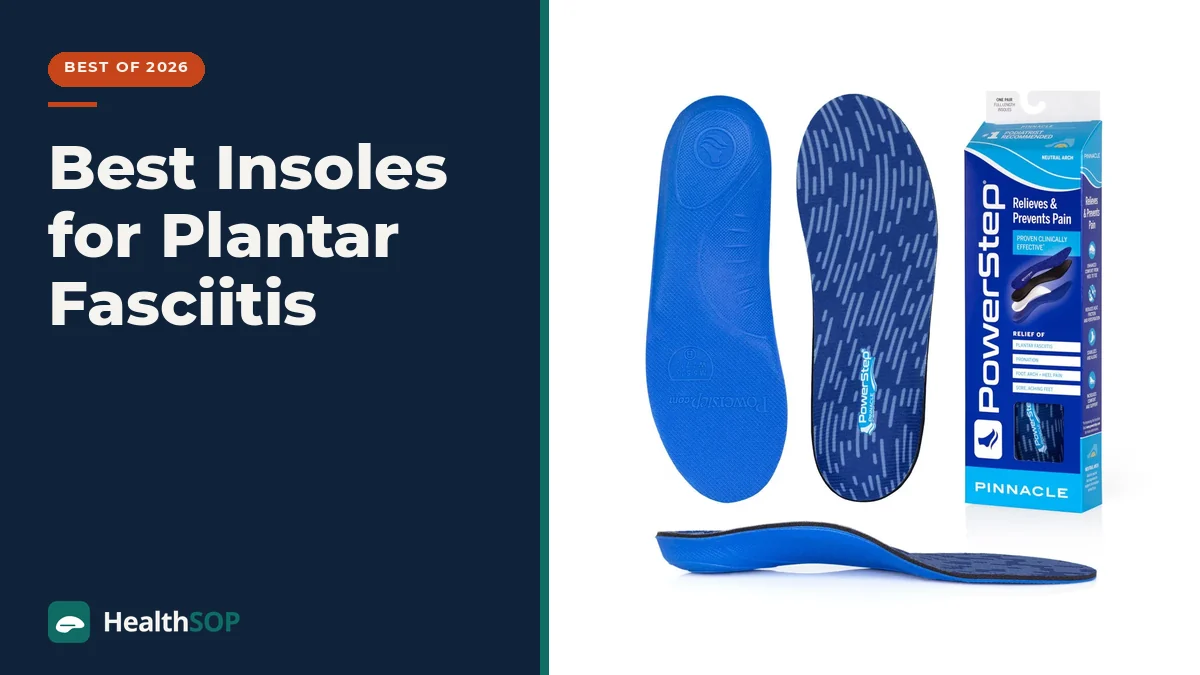
If your heel hurts with the first steps of the morning, start with the PowerStep Pinnacle. It pairs a firm, shaped arch with soft dual-layer cushioning, and it fits most running shoes without trimming. If you want firmer control, get the Superfeet Green. If you run most days, get the CURREX RunPro in a medium arch. The other eight picks below cover overpronation, max cushion, tight budgets, thin shoes, medical-grade support, 3/4 length and a custom mold at home. Match the insole to your arch and your shoe, not to the box.
HealthSOP is reader-supported. As an Amazon Associate, we earn from qualifying purchases made through links on this page — at no extra cost to you.
Save this guide to Pinterest
Table of Contents
Quick picks
| Pick | Best for | Arch | Standout |
|---|---|---|---|
| PowerStep Pinnacle | Best overall | Neutral | Dual-layer cushion, firm shaped arch |
| Superfeet Green | Best rigid support | High | Rigid stabilizer cap, deep heel cup |
| PowerStep Pinnacle Maxx | Best for overpronation + PF | Neutral | 2° angled heel post |
| CURREX RunPro (Medium) | Best for running | Low / Medium / High | 4 mm thick, 3 arch profiles |
| Spenco Total Support Max | Best cushioned support | High | Rigid support, metatarsal pad |
| Dr. Scholl’s Plantar Fasciitis | Best budget | Medium | ShockGuard heel cup, sized to fit |
| Superfeet Run Pain Relief | Best Superfeet for PF pain on runs | High | EVOLyte carbon fiber cap |
| PowerStep ProTech Full Length | Best medical-grade | Neutral | Semi-rigid shell, ShockAbsorb heel pad |
| Spenco Polysorb Cross Trainer | Best value cushion | Neutral | Spencore shock layer |
| Sof Sole Plantar Fascia 3/4 | Best 3/4 length | n/a | Plantar Relief Bridge, gel heel |
| SOLE Active Medium | Best heat-moldable | Any arch | Heat-moldable cork base, metatarsal pad |
Thickness marked “n/a” means the brand does not publish it. We never guess a number. Arch “n/a” means the same.
1. PowerStep Pinnacle — Best overall
- Arch: Neutral
- Stiffness: Firm yet flexible
- Heel cup: Deep cradle
- Thickness: Standard (brand)
- Fit: Sized by shoe size, no trimming
- Lifespan: n/a (brand does not publish it)
- Source: PowerStep
The Pinnacle is the safe first buy. Its podiatrist-designed arch cradles the arch and heel, and two layers of cushioning soften each step without letting the arch collapse. It targets plantar fasciitis, heel spurs and Achilles tendonitis, and it works in athletic shoes, walking shoes and work boots. You pull out the factory insole, drop the Pinnacle in, and run. No trimming, no break-in ritual.
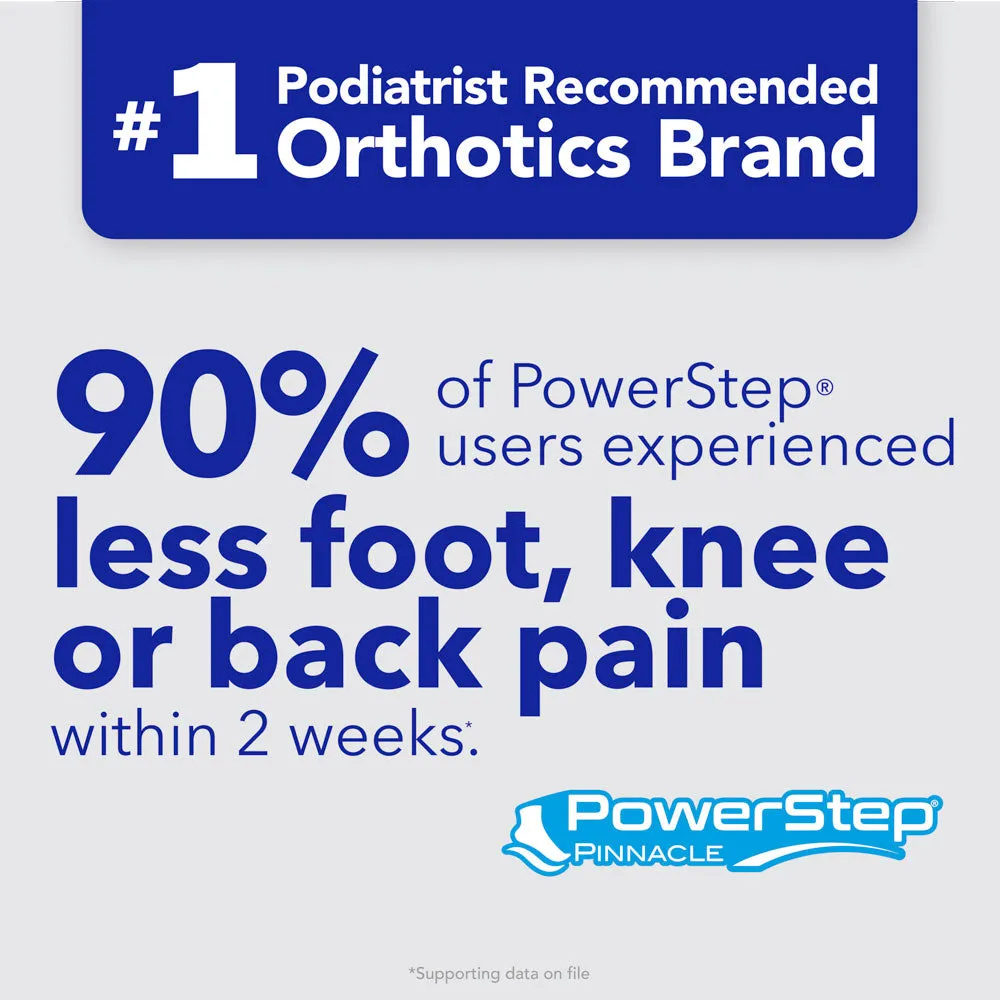
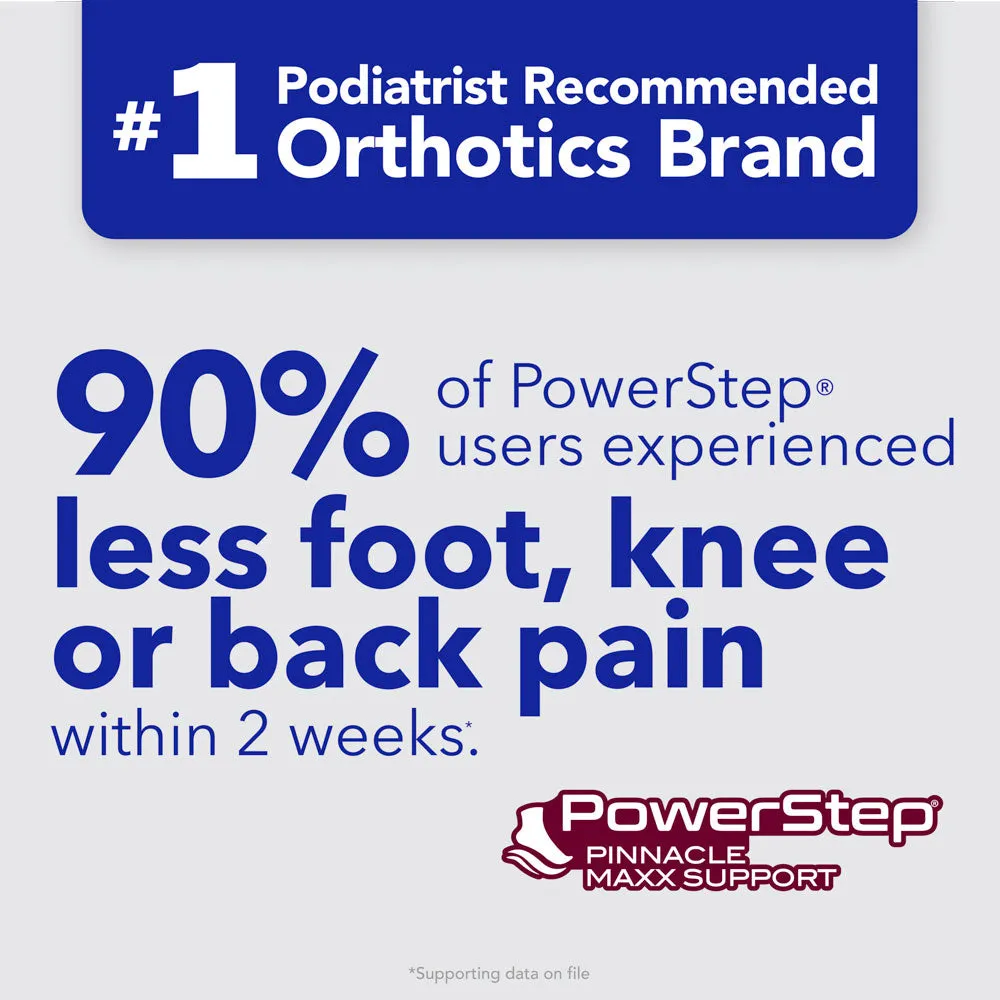
PowerStep calls itself the #1 podiatrist-recommended brand of orthotic insoles in the US. The Pinnacle also carries the American Podiatric Medical Association seal of acceptance. The brand backs it with a 60-day guarantee and a lifetime warranty on the plastic arch shell. For most runners with heel pain, this is where to start. If it feels too soft under a heavy load, step up to the Pinnacle Maxx below.
Pros:
- Firm, shaped arch support that holds up under daily miles
- Dual-layer cushioning softens heel strike without feeling vague
- No trimming — order by shoe size and drop it in
- Fits most running shoes, walking shoes and work boots
- 60-day guarantee plus lifetime warranty on the arch shell
Cons:
- Neutral arch only — high arches may want the Pinnacle High instead
- Standard thickness needs a shoe with a removable insole
Skip it if: you have high arches and supinate, or your feet roll in hard. Try the Superfeet Green for high arches, or the Pinnacle Maxx for heavy overpronation.
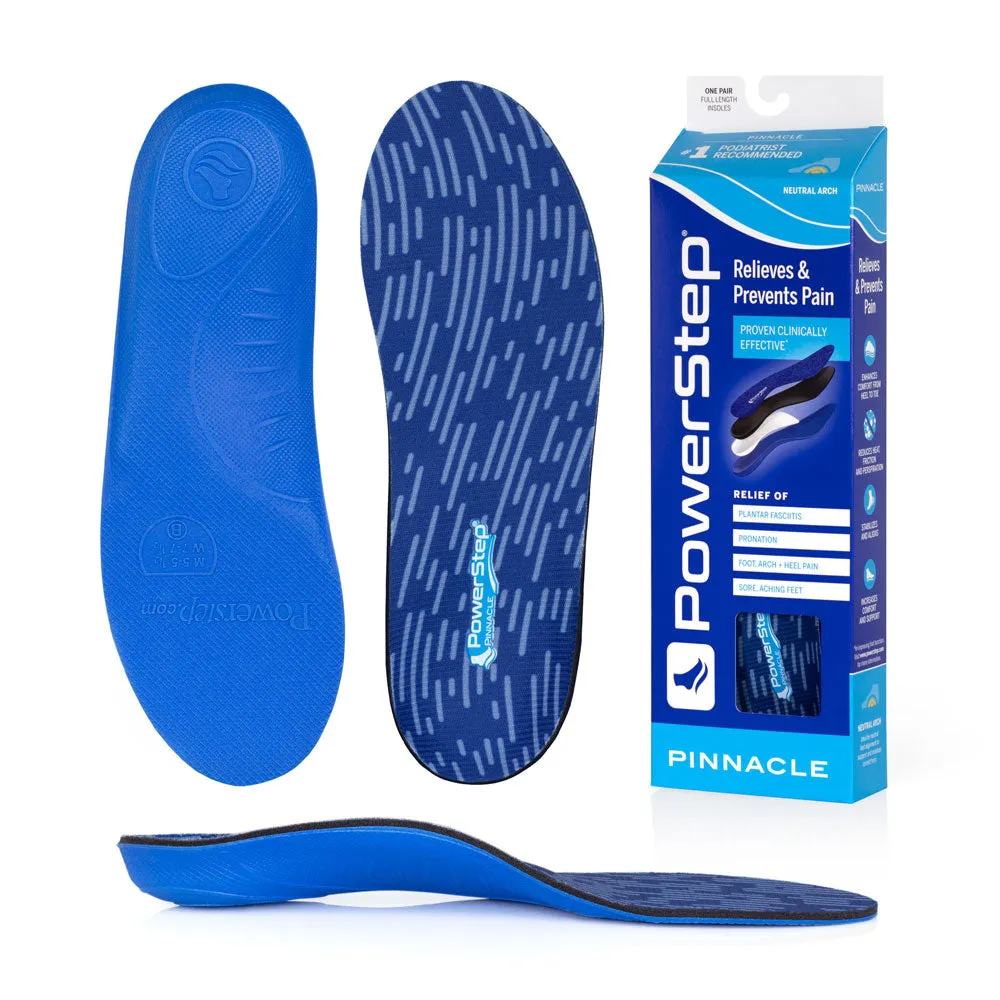
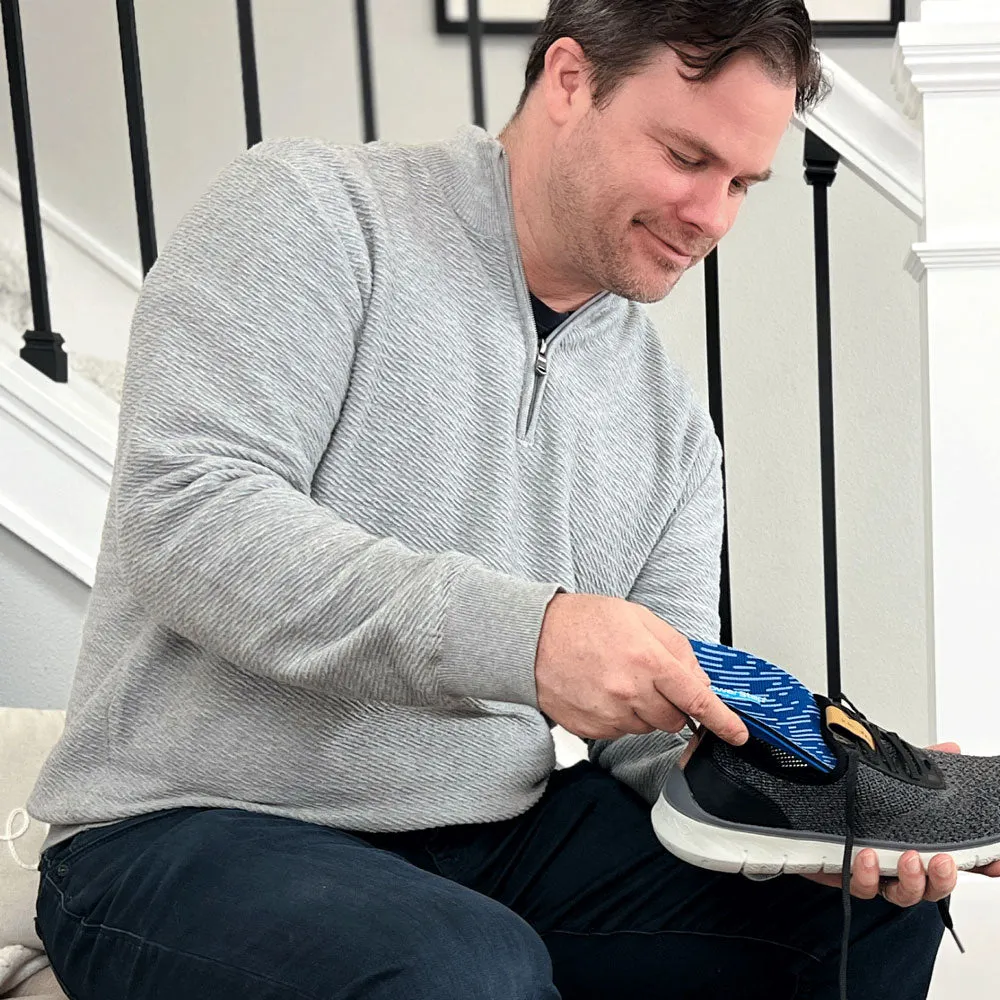
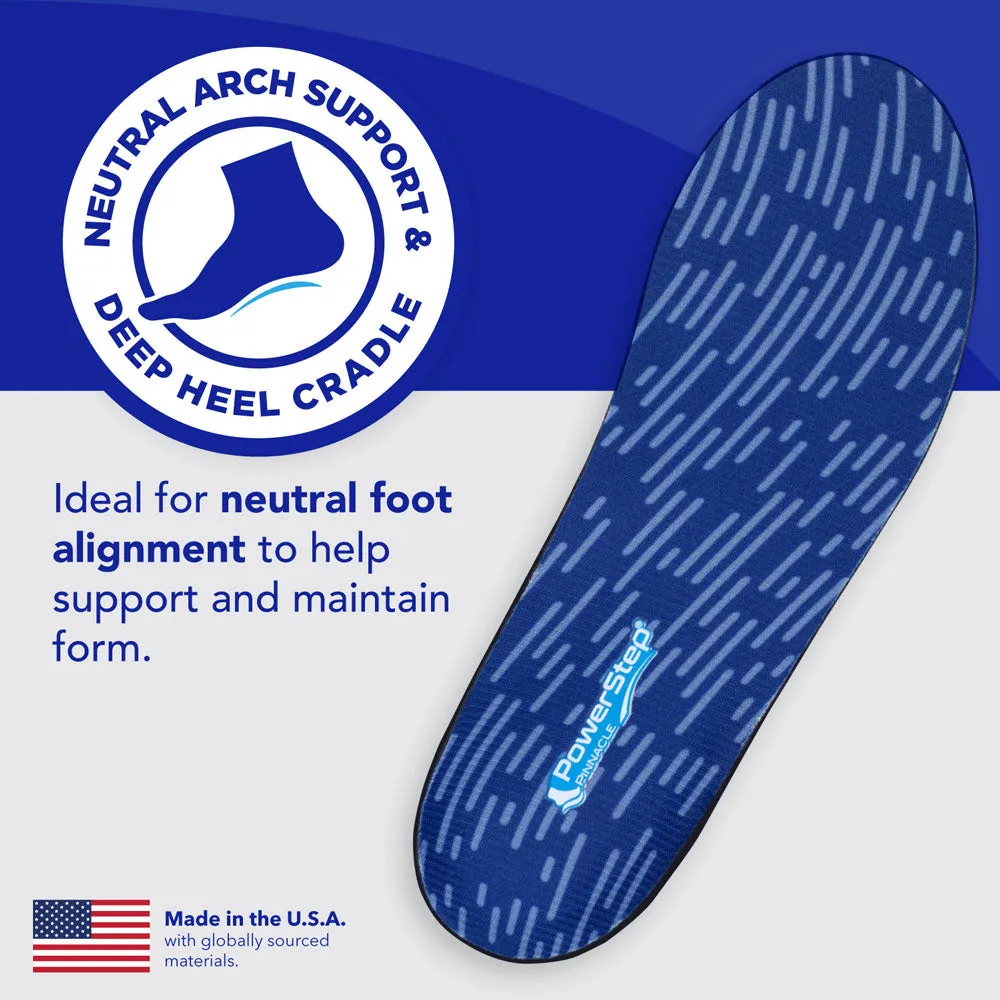
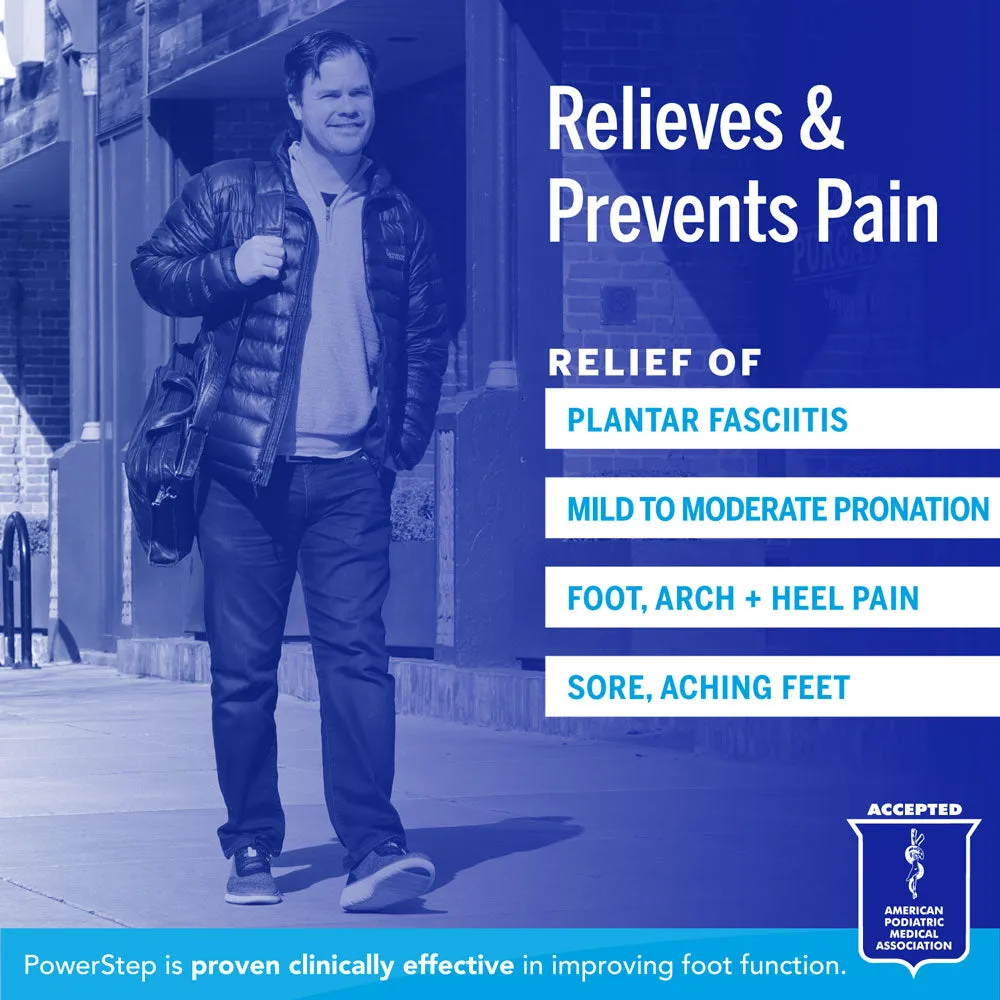
Images: PowerStep official product photos


2. Superfeet Green — Best rigid support
- Arch: High
- Stiffness: Firm (rigid stabilizer cap)
- Heel cup: Deep
- Thickness: n/a (brand does not publish it)
- Fit: Trim to fit — size up if you are between sizes, then trim
- Lifespan: 12 months or 500 miles (brand)
- Source: Superfeet
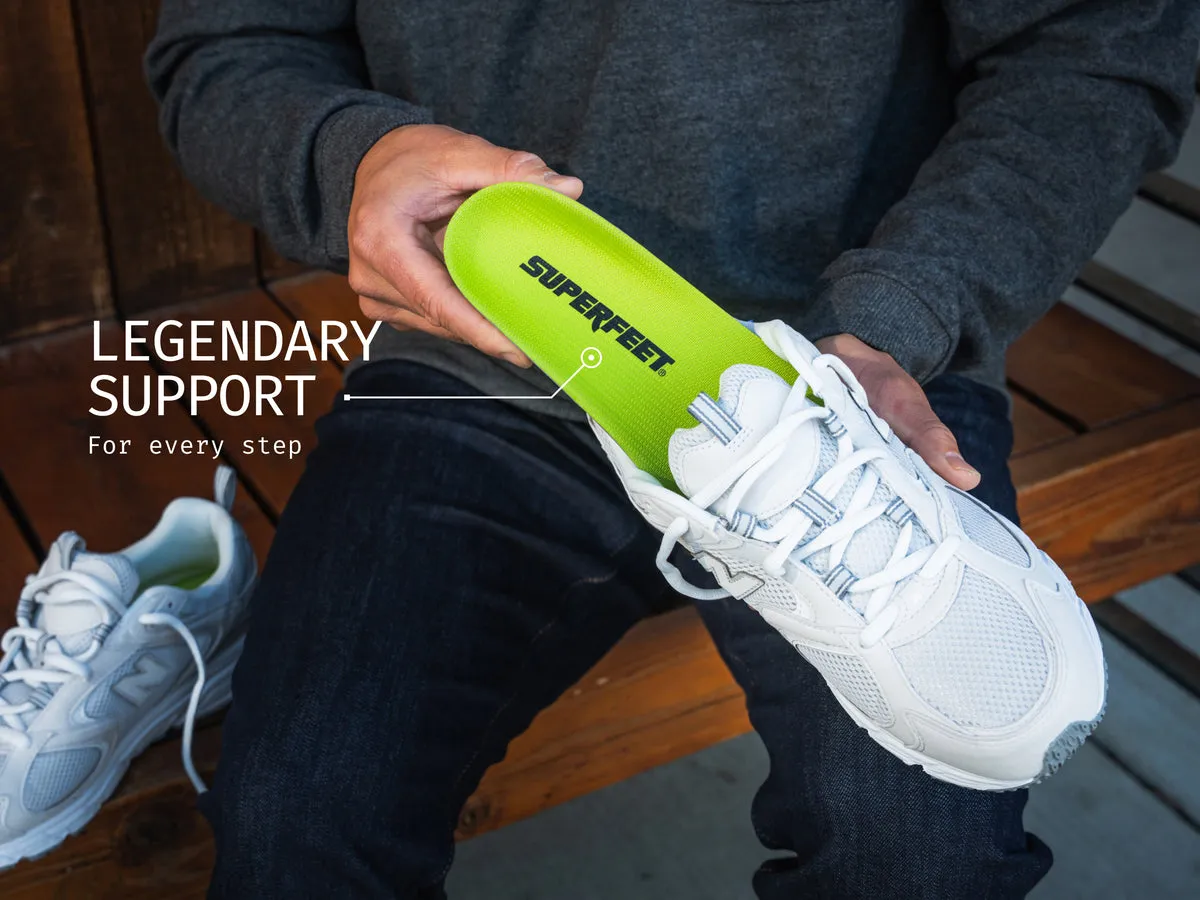
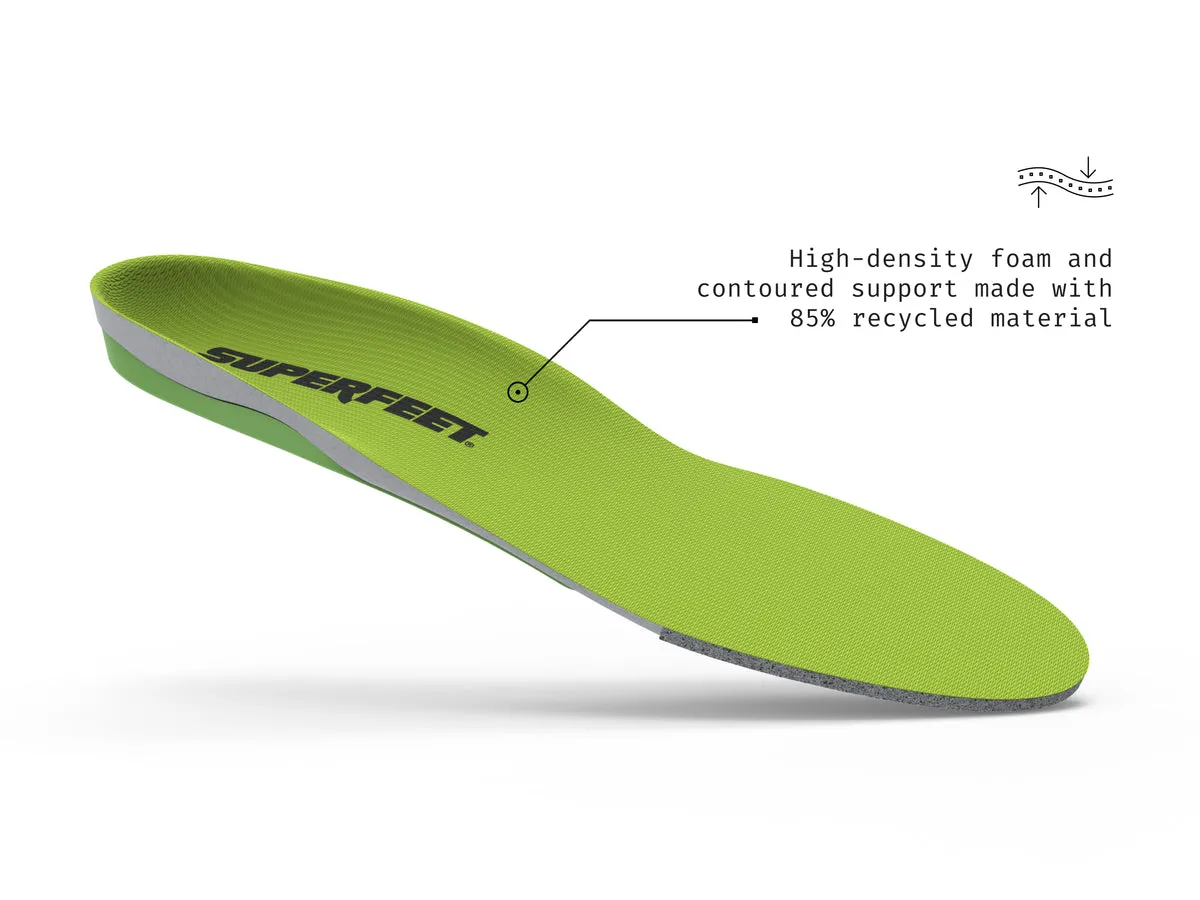
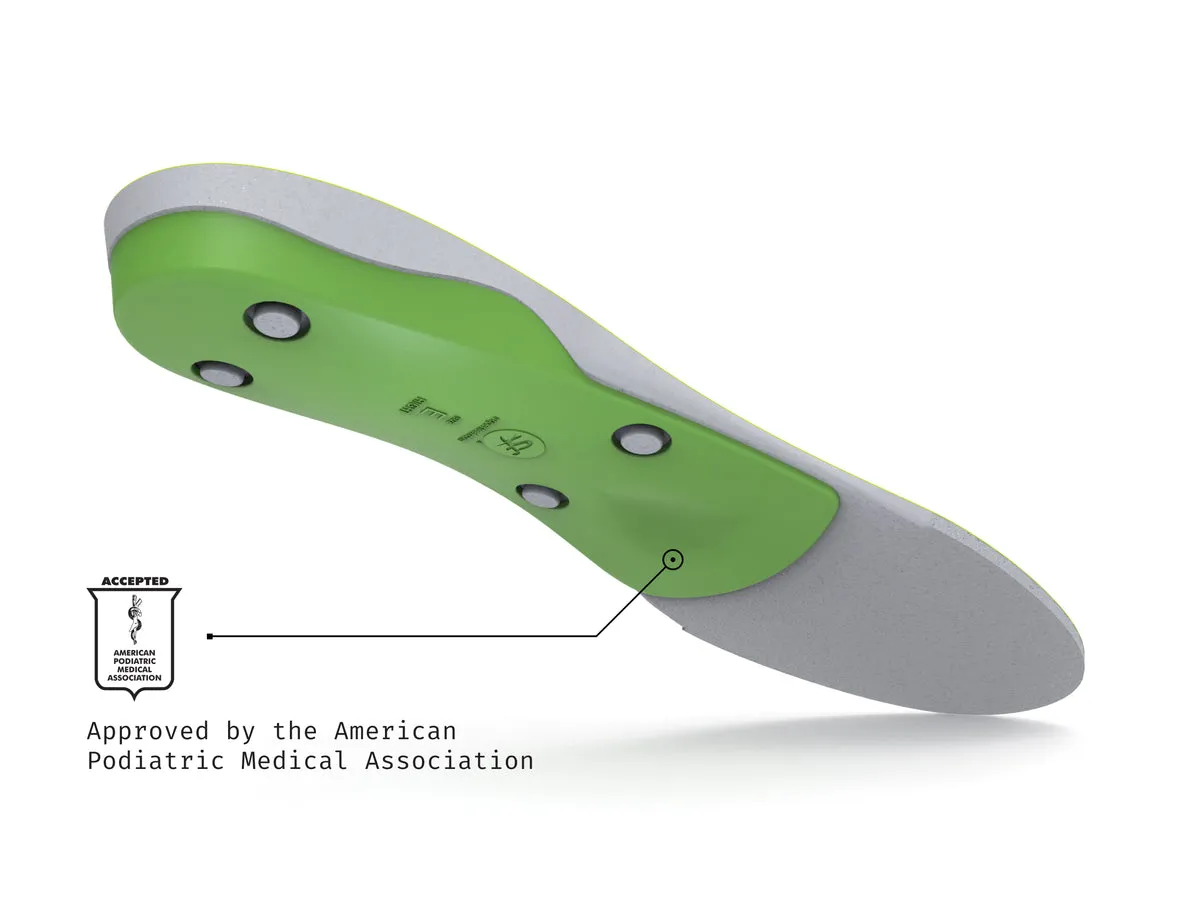
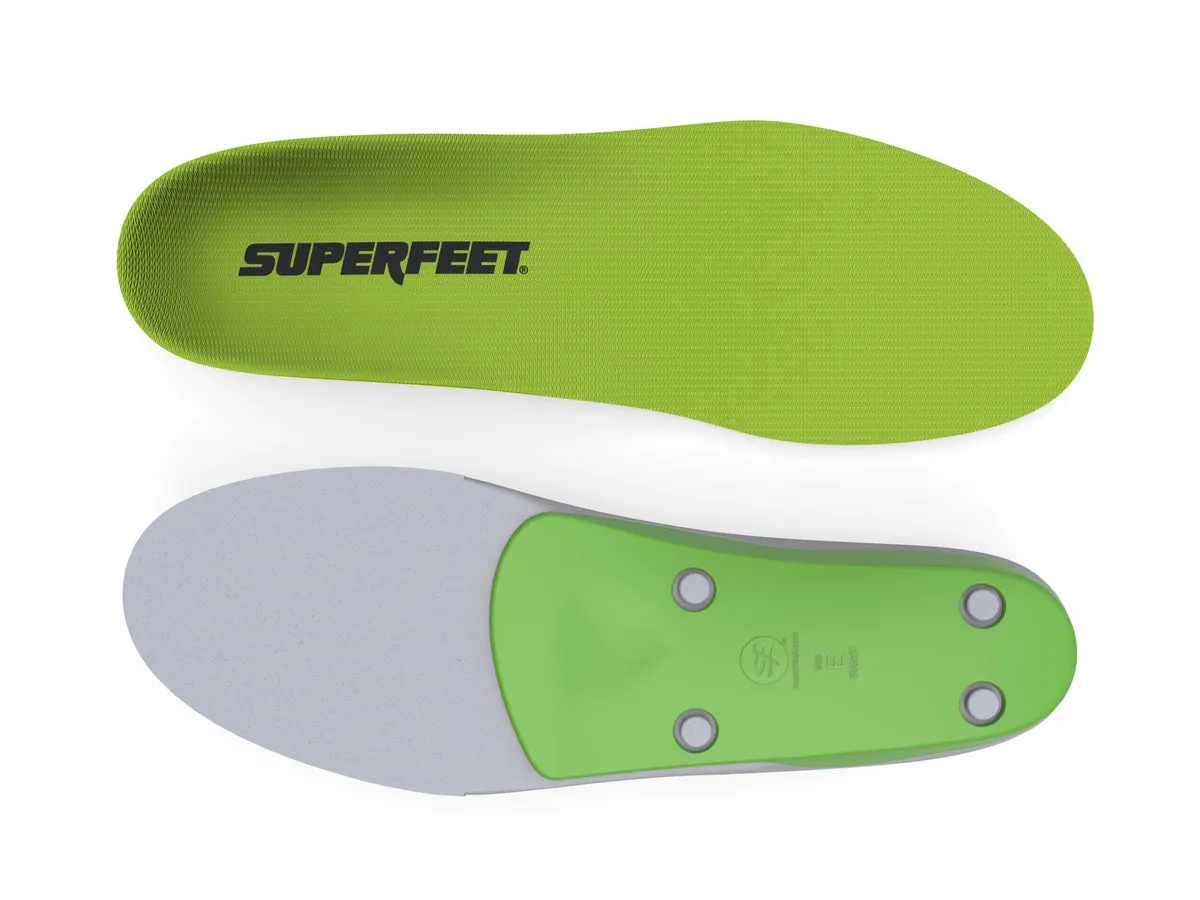
The Green is the firm one. A rigid stabilizer cap holds the arch in a fixed shape, and a deep heel cup locks the heel in place. It does not soften or flatten with wear. That is the point. If your arch collapses under load, a soft insole will not fix it. The Green will hold the line.
Superfeet sells it as the All-Purpose Support High Arch insole now — same green insole, new name. It suits high arches best, and it needs roomy shoes. The shape is tall, so tight shoes will feel tighter. Trim it to your shoe with the guide printed on the insole, and give it a few runs. It feels hard at first. Most runners who stick with it stop noticing it by the second week.
Pros:
- Rigid cap keeps its shape for the full 12 months or 500 miles
- Deep heel cup steadies the heel on every step
- High arch support that soft insoles cannot match
- Durable closed-cell foam resists flattening
- Works in running shoes, boots and work shoes
Cons:
- Feels hard during a painful flare — break it in on short runs first
- Needs roomy shoes; tight shoes will pinch
Skip it if: your feet are flat, or you want soft cushioning. The Pinnacle suits flat-to-neutral feet better, and the Total Support Max adds more cushion.
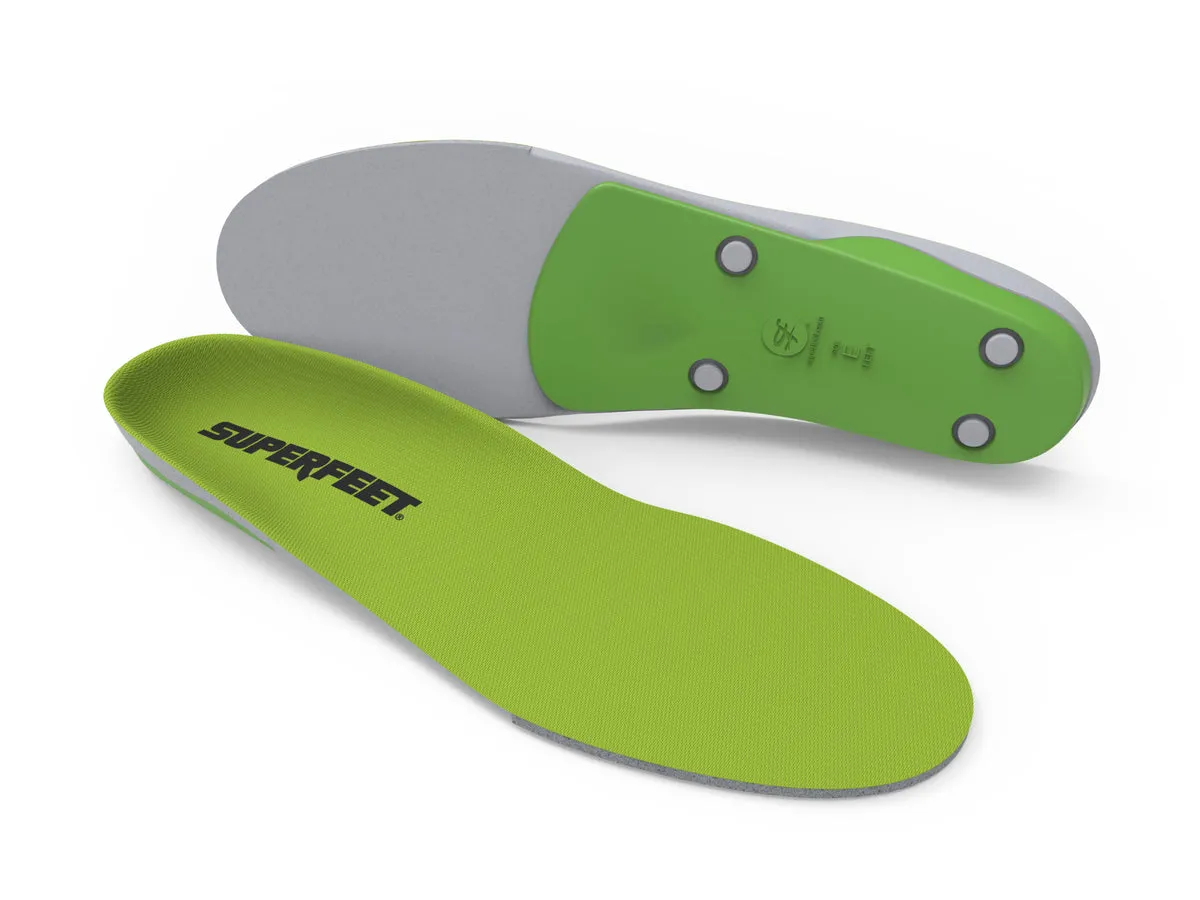
Images: Superfeet official product photos
3. PowerStep Pinnacle Maxx — Best for overpronation + PF
- Arch: Neutral
- Stiffness: Firm yet flexible
- Heel cup: Deep cradle
- Thickness: Thickest Pinnacle model (brand)
- Fit: Sized by shoe size, no trimming; needs shoes with removable insoles
- Lifespan: n/a (brand does not publish it)
- Source: PowerStep
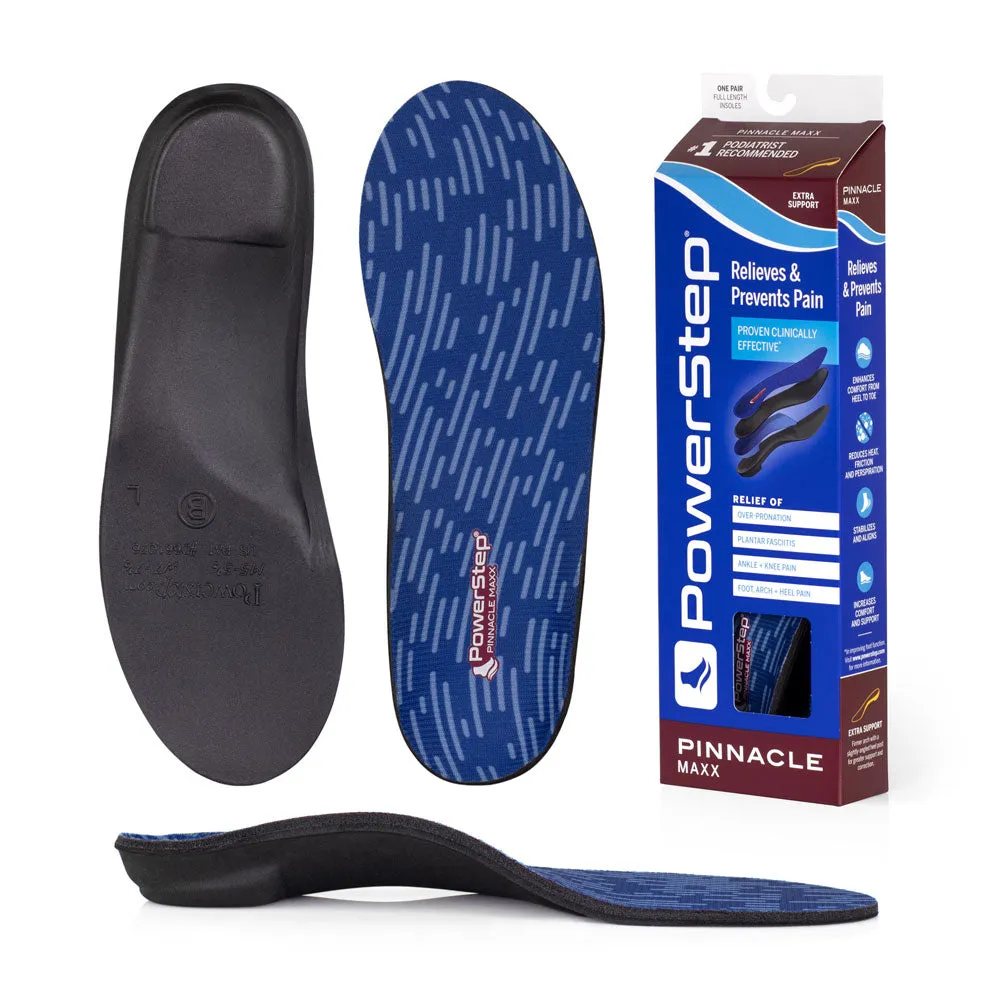
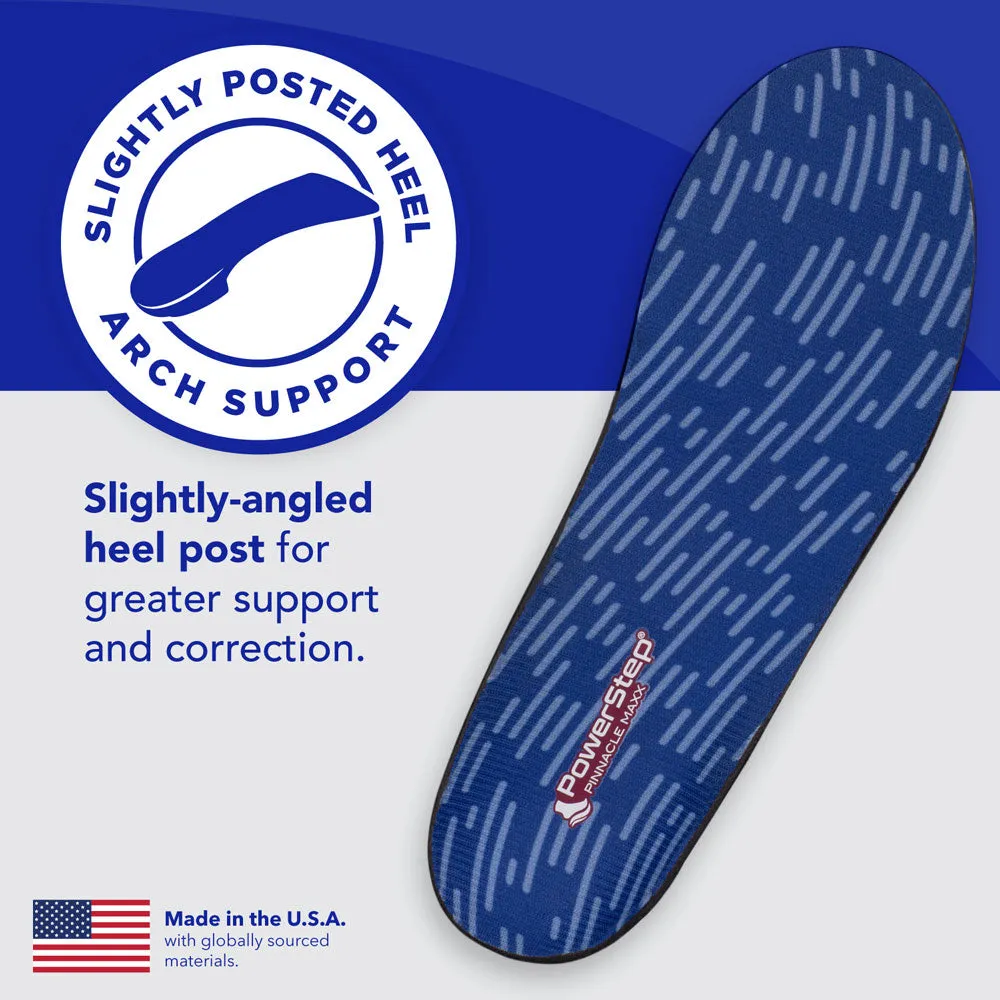
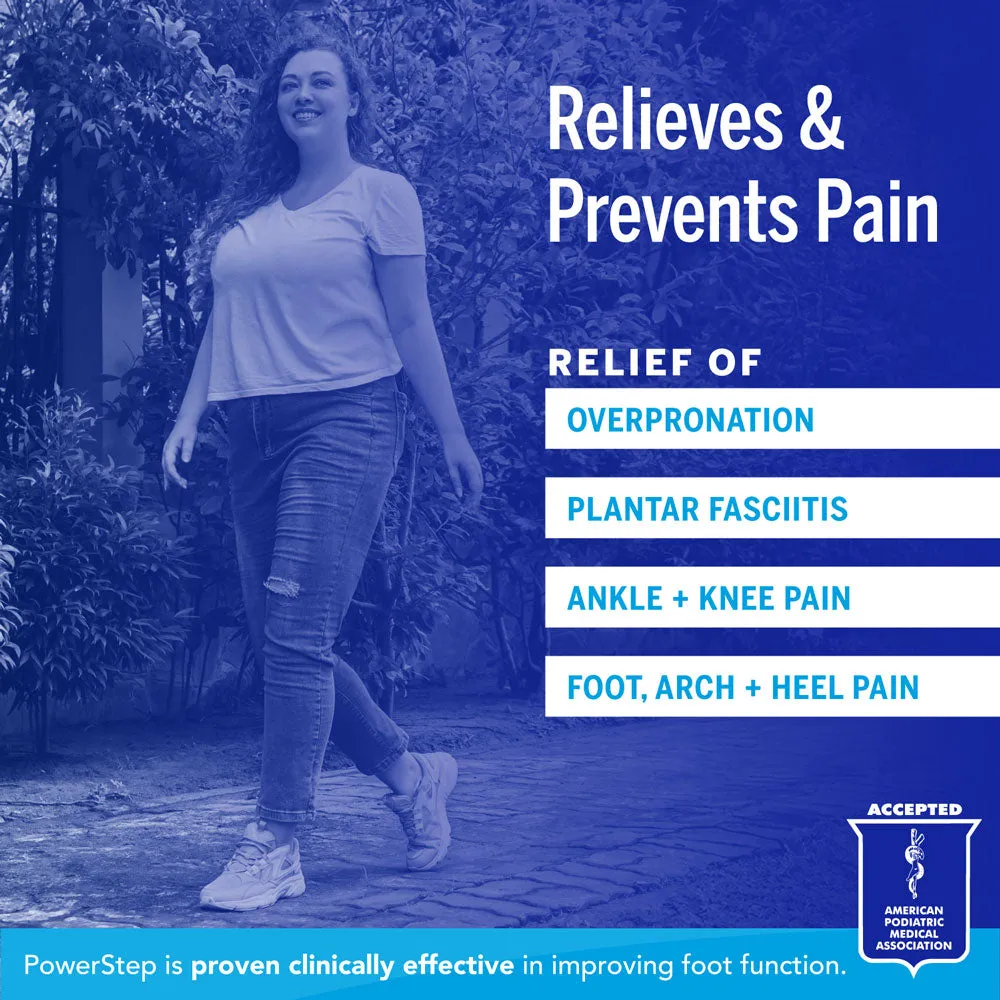
The Maxx is the Pinnacle with more control. A 2° angled heel post guides the foot against rolling in, and a firmer shell adds motion control. The dual-layer cushioning stays, and an odor-control top fabric keeps feet cooler. If your feet roll in a lot, or you have flat feet with heel pain, this is the Pinnacle to buy.
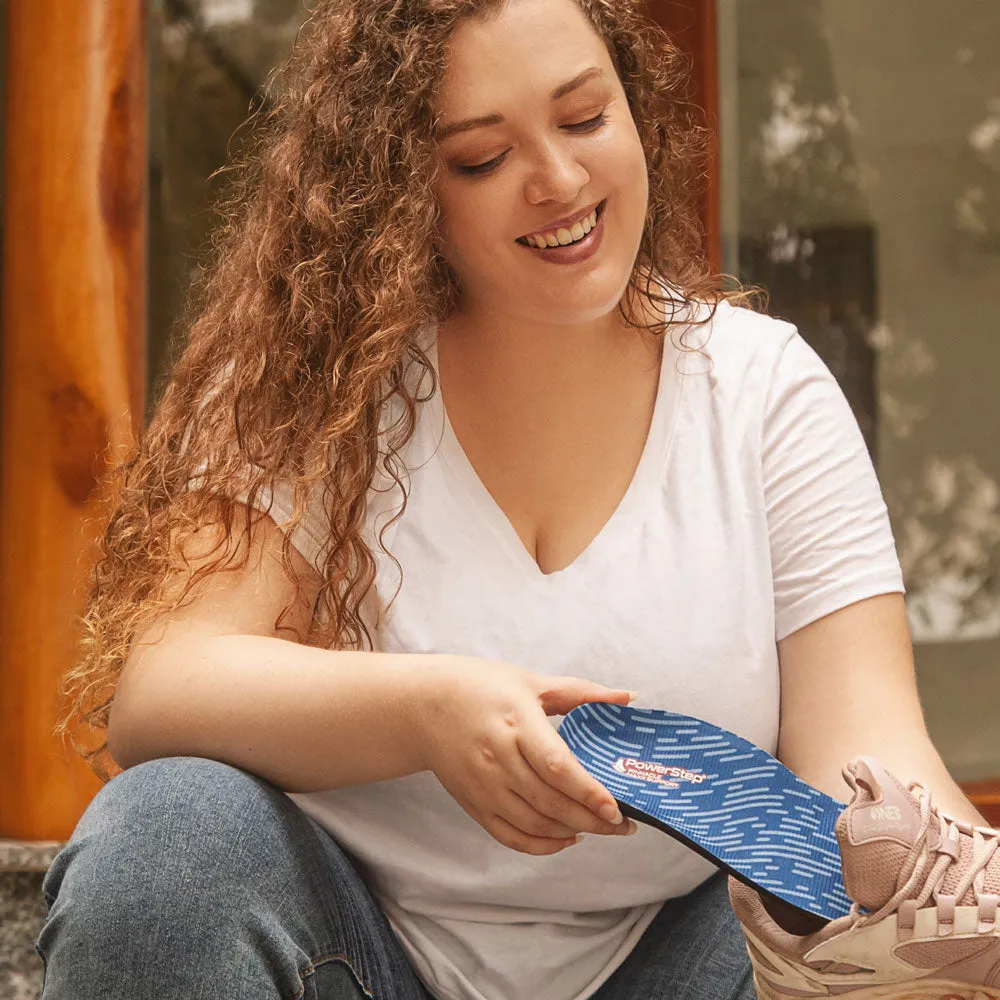
It is the thickest Pinnacle model. That matters for fit. It needs a shoe with a removable factory insole and enough depth to take the extra volume. Tight racing shoes will not work. Roomy daily trainers and work boots will. Pair it with a stable shoe and the combination is strong. See our best running shoes for overpronation guide for shoe picks that match. See our best running shoes for flat feet guide if flat feet are the root cause.
Pros:
- 2° heel post corrects overpronation step after step
- Firmer shell adds motion control over the standard Pinnacle
- Deep heel cradle keeps the heel centered
- Dual-layer cushioning stays comfortable all day
- No trimming — order by shoe size
Cons:
- Thick build needs roomy shoes with removable insoles
- Firmer feel takes a few runs to get used to
Skip it if: your shoes are tight, or you do not overpronate. The standard Pinnacle is slimmer and suits neutral feet better.
Images: PowerStep official product photos
4. CURREX RunPro — Best for running
- Arch: Low, Medium or High (three profiles; this pick is Medium)
- Stiffness: Flexible arch
- Heel cup: Deep, decoupled
- Thickness: 4 mm
- Fit: Trim to fit, sizes XS to 2XL
- Lifespan: 500+ miles or 12 months (brand)
- Source: CURREX
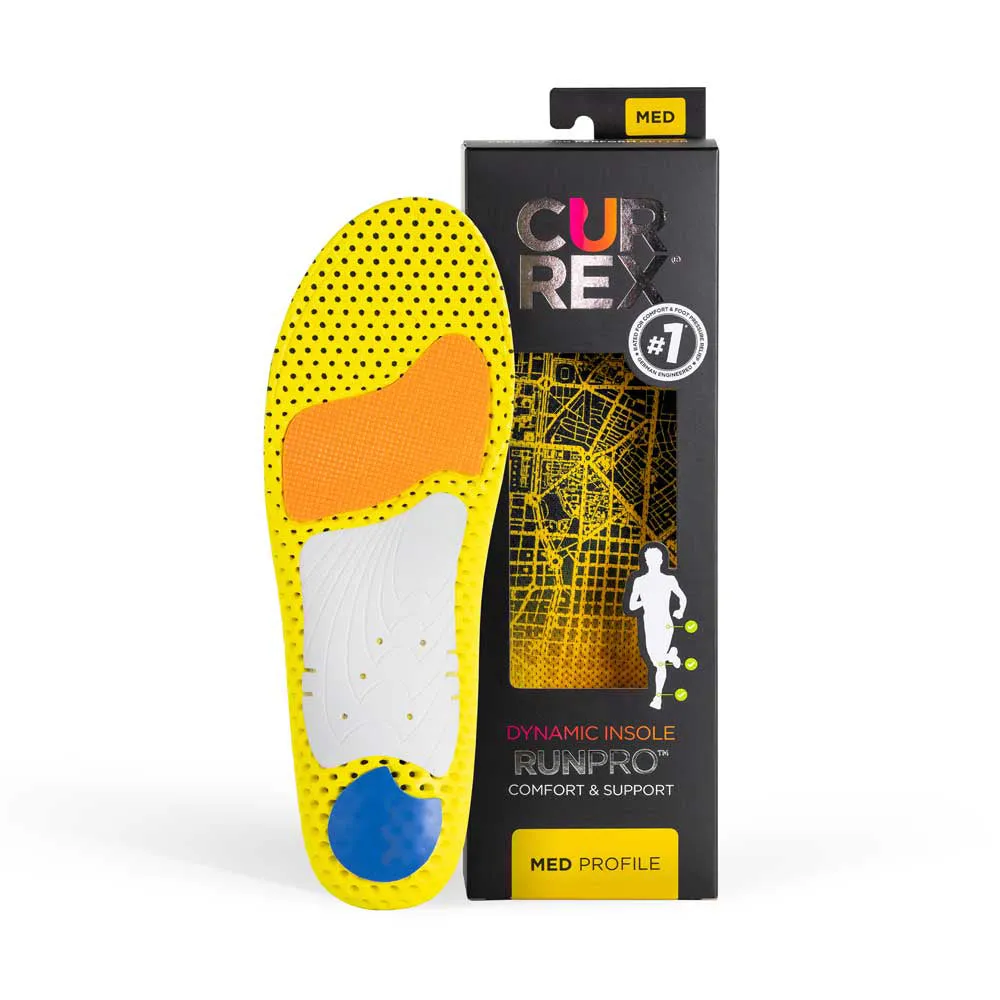
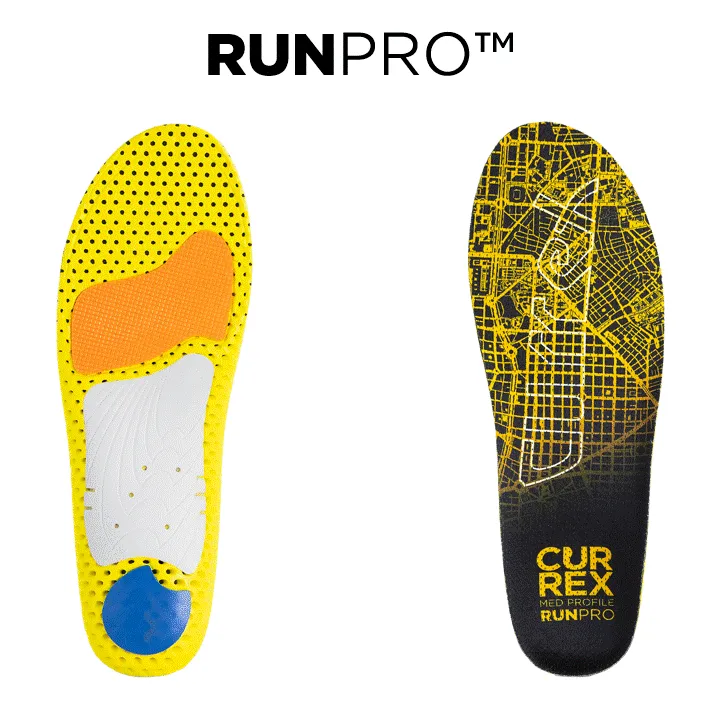
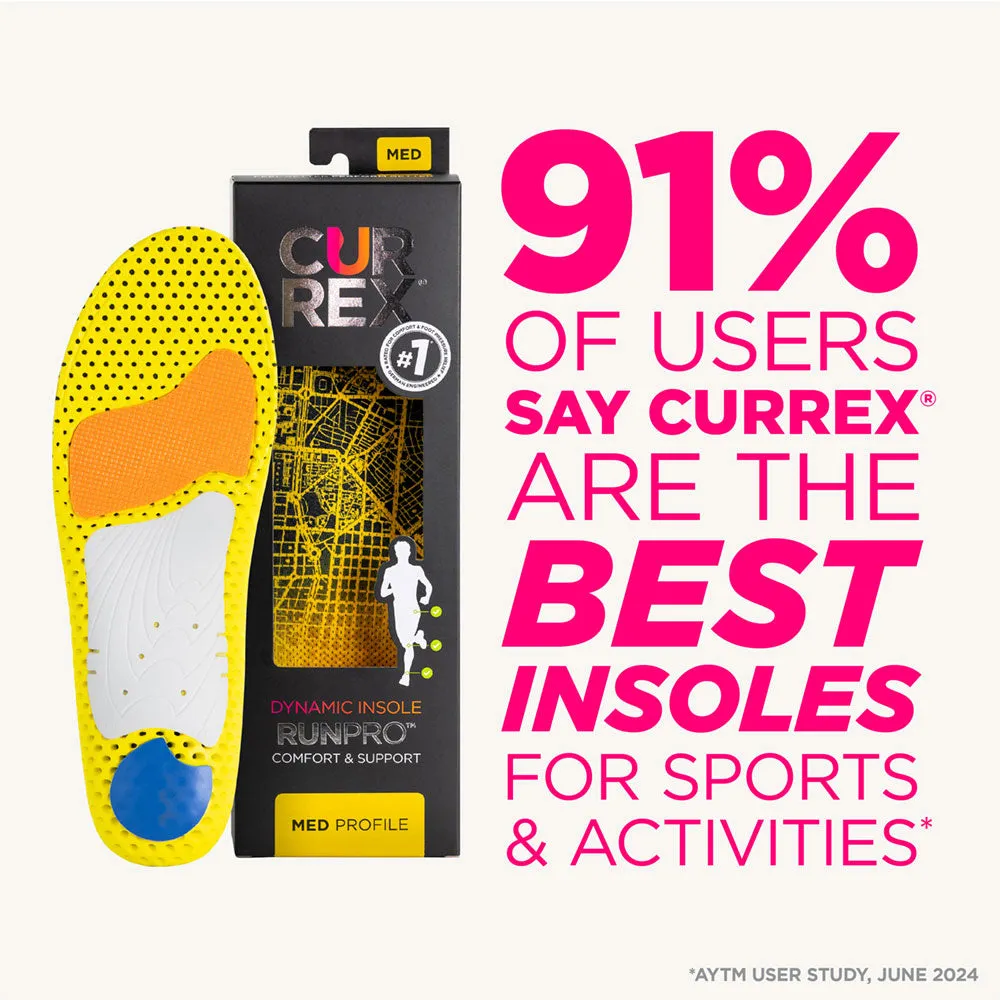
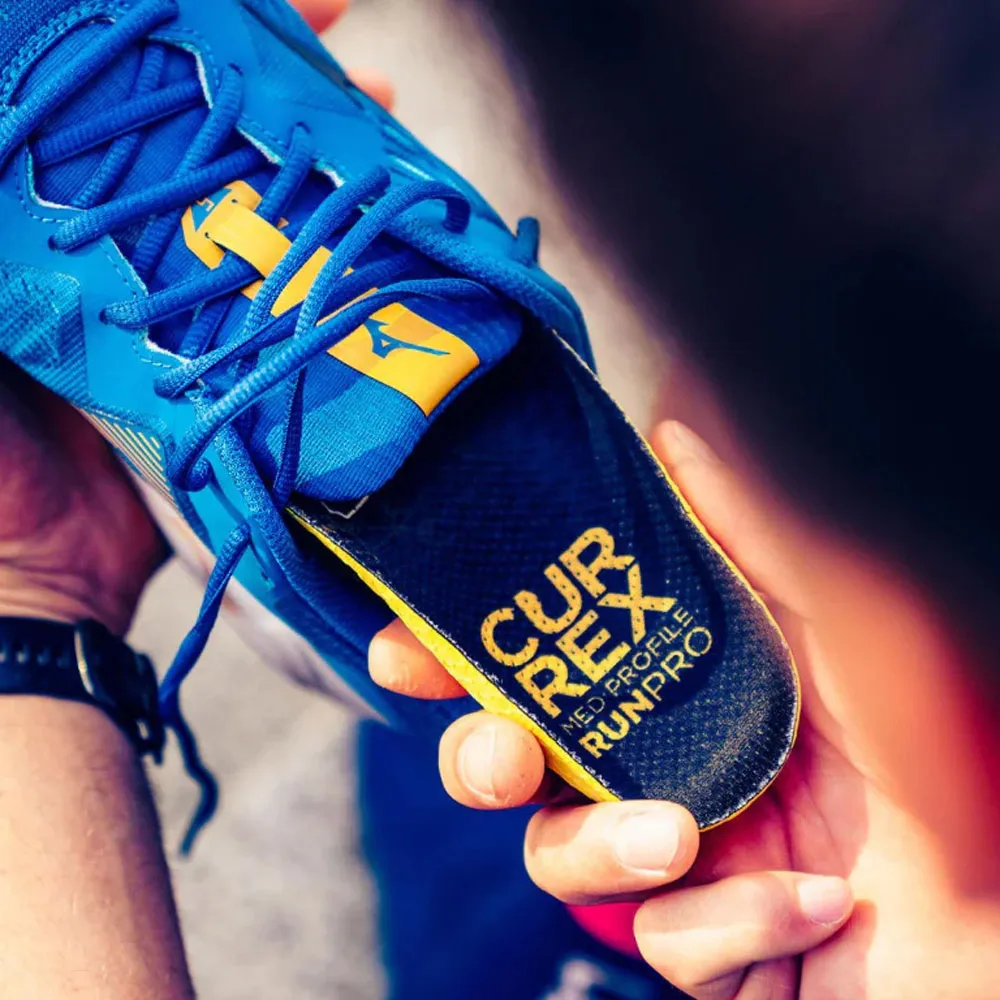
The RunPro is the only insole here built for running first. It is 4 mm thick with zero heel drop, so it fits tight racing shoes and low-volume trainers that reject thicker insoles. A flexible arch shell moves with your stride instead of locking the foot in place. The deep heel cup wraps the heel, and a PORON foam top layer adds cushioning and wicks moisture.
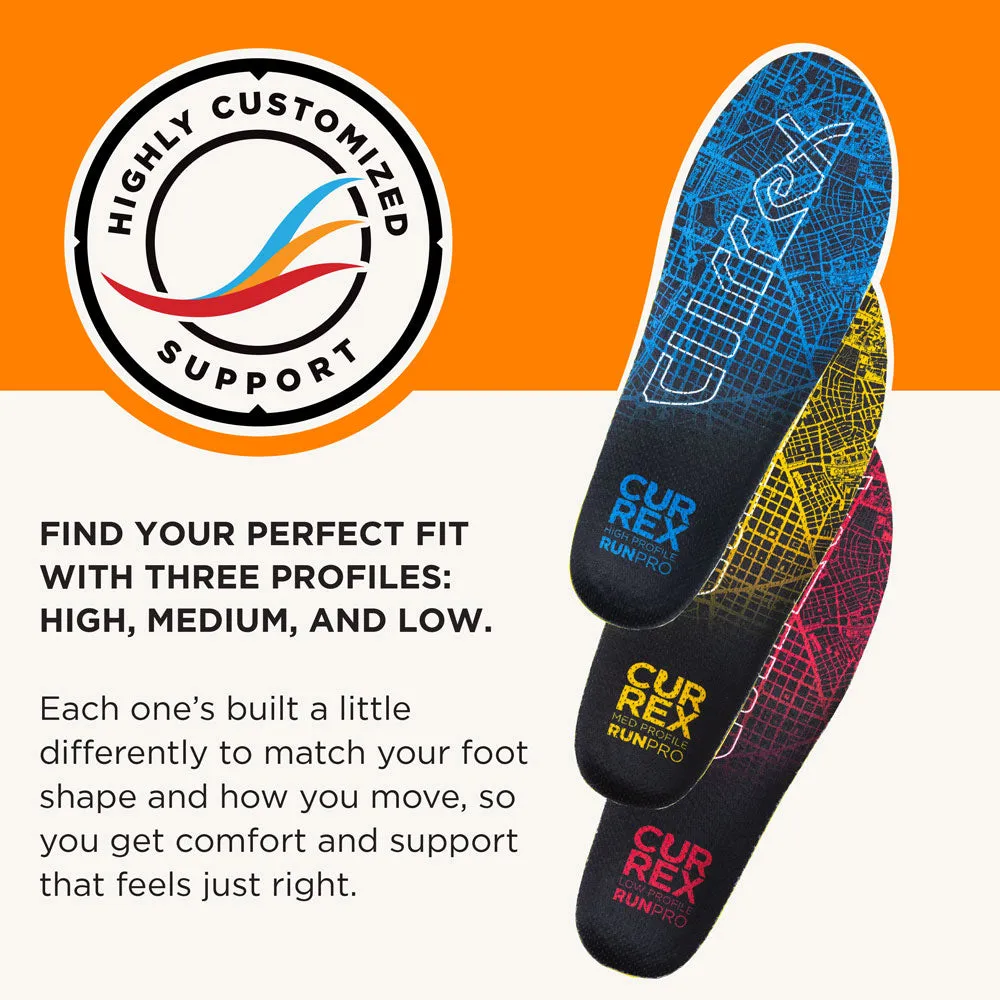
CURREX sells it in three arch profiles — low (red), medium (yellow) and high (blue). Pick your profile with the brand’s at-home fit test before you order. The medium profile suits the most runners. One honest note: the maker says RunPro is designed for performance, not medical correction. If you need rigid correction for severe overpronation, the Maxx above is the better tool. For runners who want support that moves with them, this is the pick.
Pros:
- Slim 4 mm profile fits tight running shoes
- Three arch profiles — match it to your foot, not the average foot
- Flexible arch moves with your stride
- Deep heel cup steadies the heel without bulk
- PORON foam top layer manages moisture
Cons:
- Not a medical-correction insole — severe overpronation needs a firmer shell
- Trim-to-fit takes care and a steady hand
Skip it if: you need rigid motion control, or you want max cushion. Try the Maxx for control, or the Total Support Max for cushion. For shoe picks that pair well, see our best running shoes for plantar fasciitis guide and our best trail running shoes guide.
Images: CURREX official product photos
5. Spenco Total Support Max — Best cushioned support
- Arch: High
- Stiffness: Rigid
- Heel cup: Deep
- Thickness: n/a (brand does not publish it)
- Fit: Trace and trim to fit
- Lifespan: n/a (brand does not publish it)
- Source: Spenco
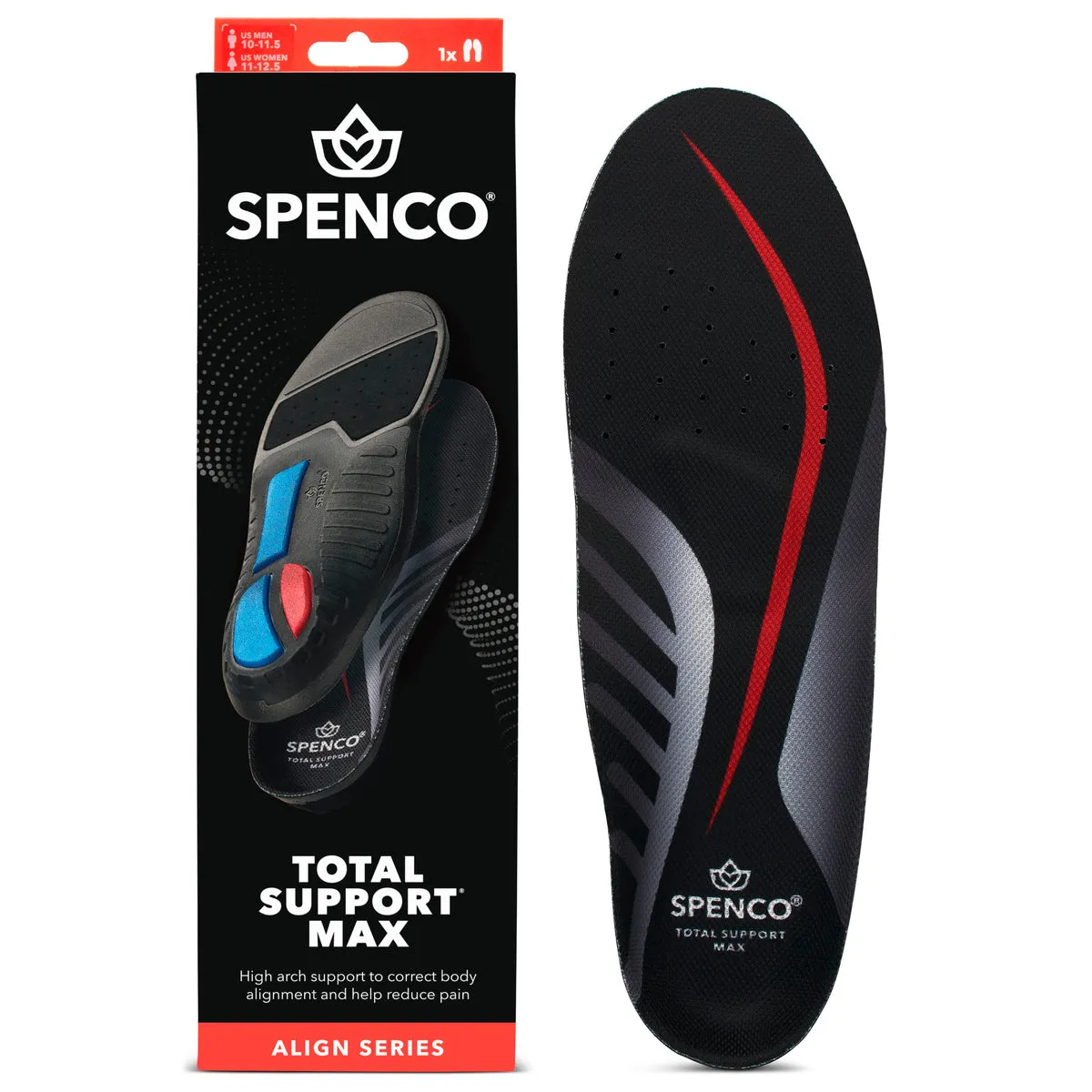
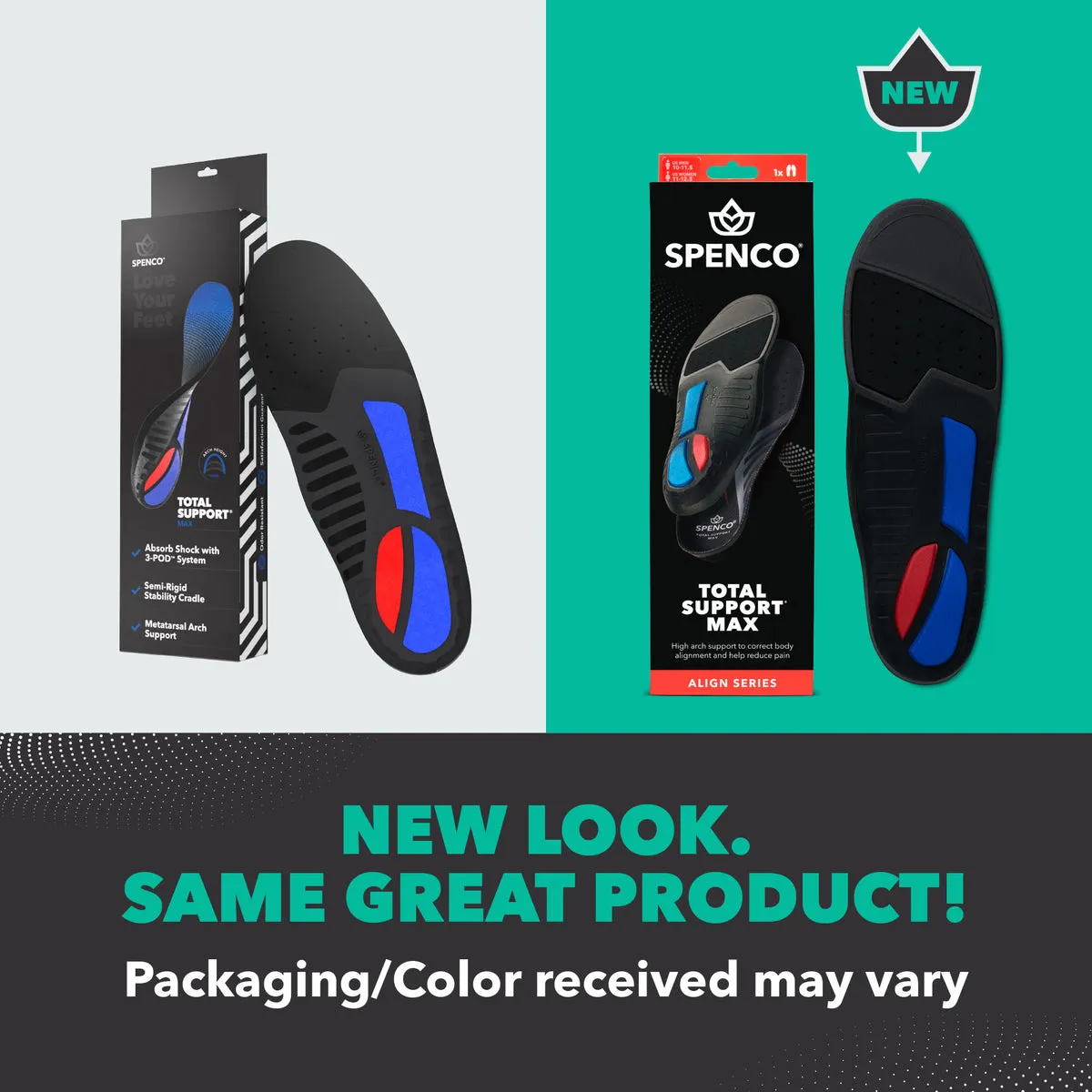
The Total Support Max pairs rigid support with real cushion. A firm arch and deep heel cup hold the foot in place, while an EVA layer under the forefoot absorbs shock. A metatarsal pad spreads pressure across the forefoot, which helps if the ball of your foot aches too. It carries the APMA Seal of Acceptance, and it is FSA and HSA eligible.
It is a firm insole by design. The first days can feel stiff, and sensitive feet may need a short break-in. Trace your factory insole on it and trim to match. Once it settles, it is one of the most supportive cushioned insoles in this guide. If you want a soft feel with support, this is the pick. See also our most comfortable running shoes guide for shoes that match its cushioned feel.
Pros:
- Rigid arch support with genuine cushioning underneath
- Metatarsal pad spreads forefoot pressure
- Deep heel cup steadies the heel
- APMA Seal of Acceptance
- FSA and HSA eligible
Cons:
- Firm feel needs a short break-in
- Trim-to-fit takes time and care
Skip it if: you want a soft, flexible insole, or your shoes are tight. The RunPro is slimmer and more flexible.
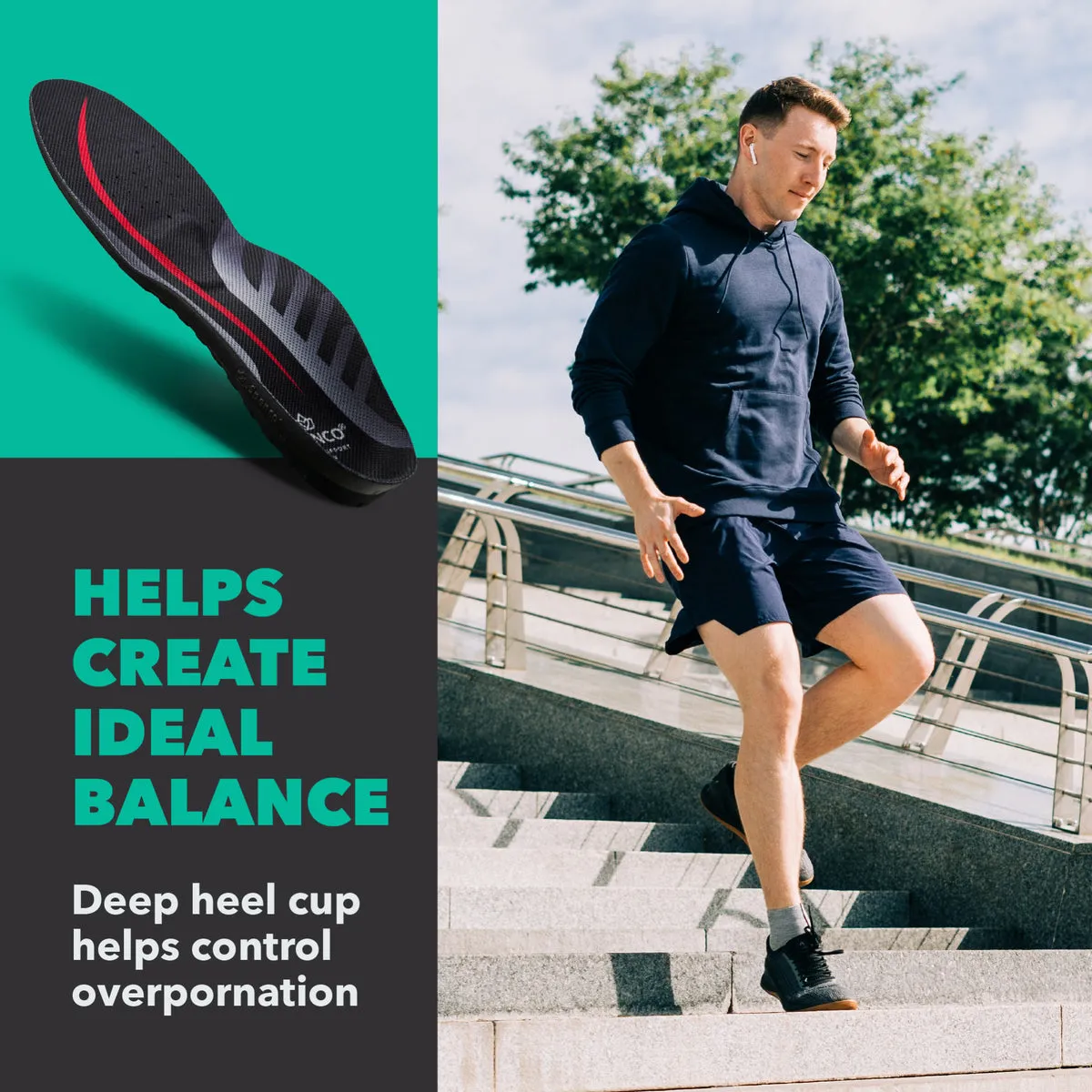
Images: Spenco official product photos
6. Dr. Scholl’s Plantar Fasciitis Pain Relief — Best budget
- Arch: Medium
- Stiffness: Medium, cushioned
- Heel cup: Contoured, shock-absorbing (ShockGuard)
- Thickness: n/a (brand does not publish it)
- Fit: Sized to fit, no trimming
- Lifespan: 12 months (brand directions)
- Source: Dr. Scholl’s
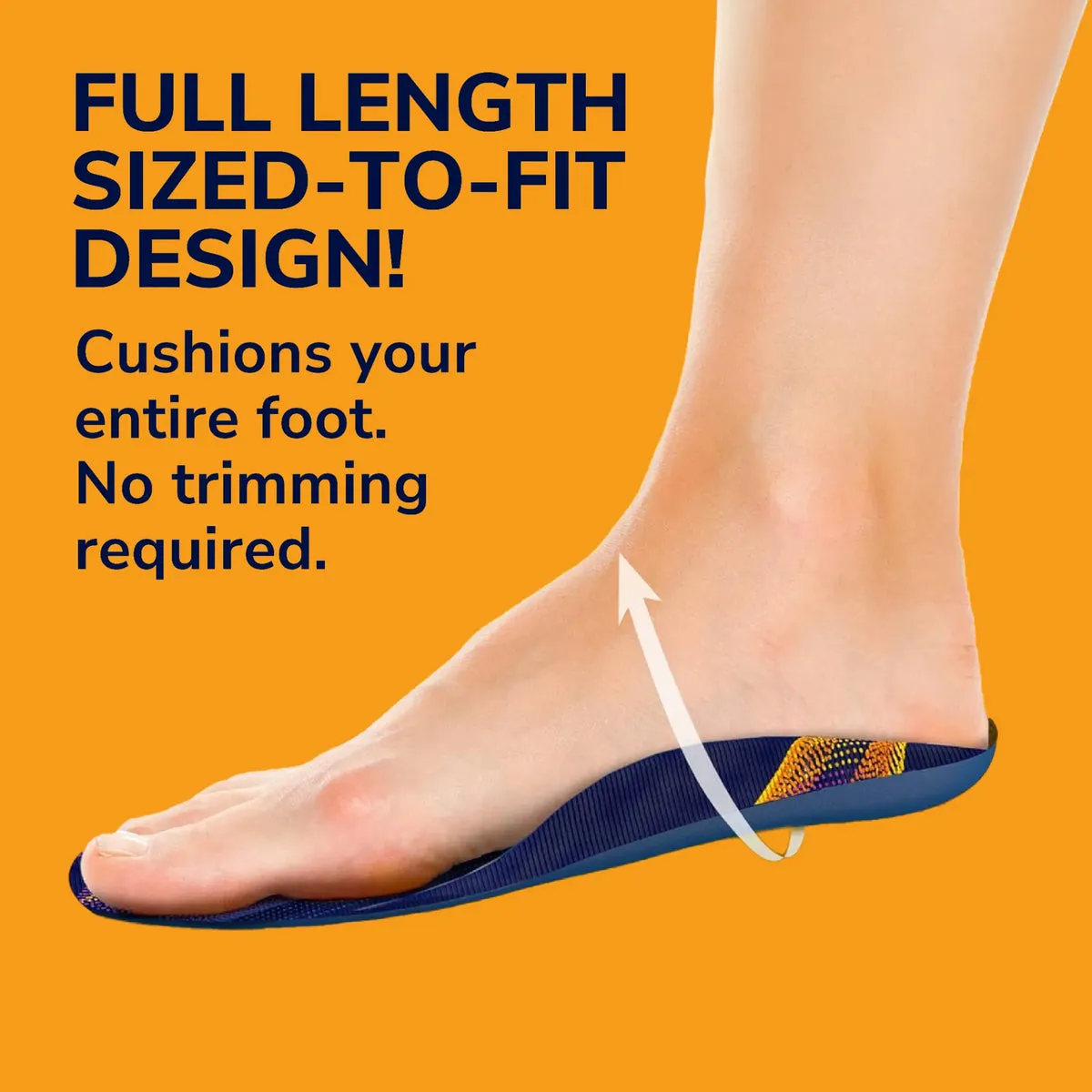
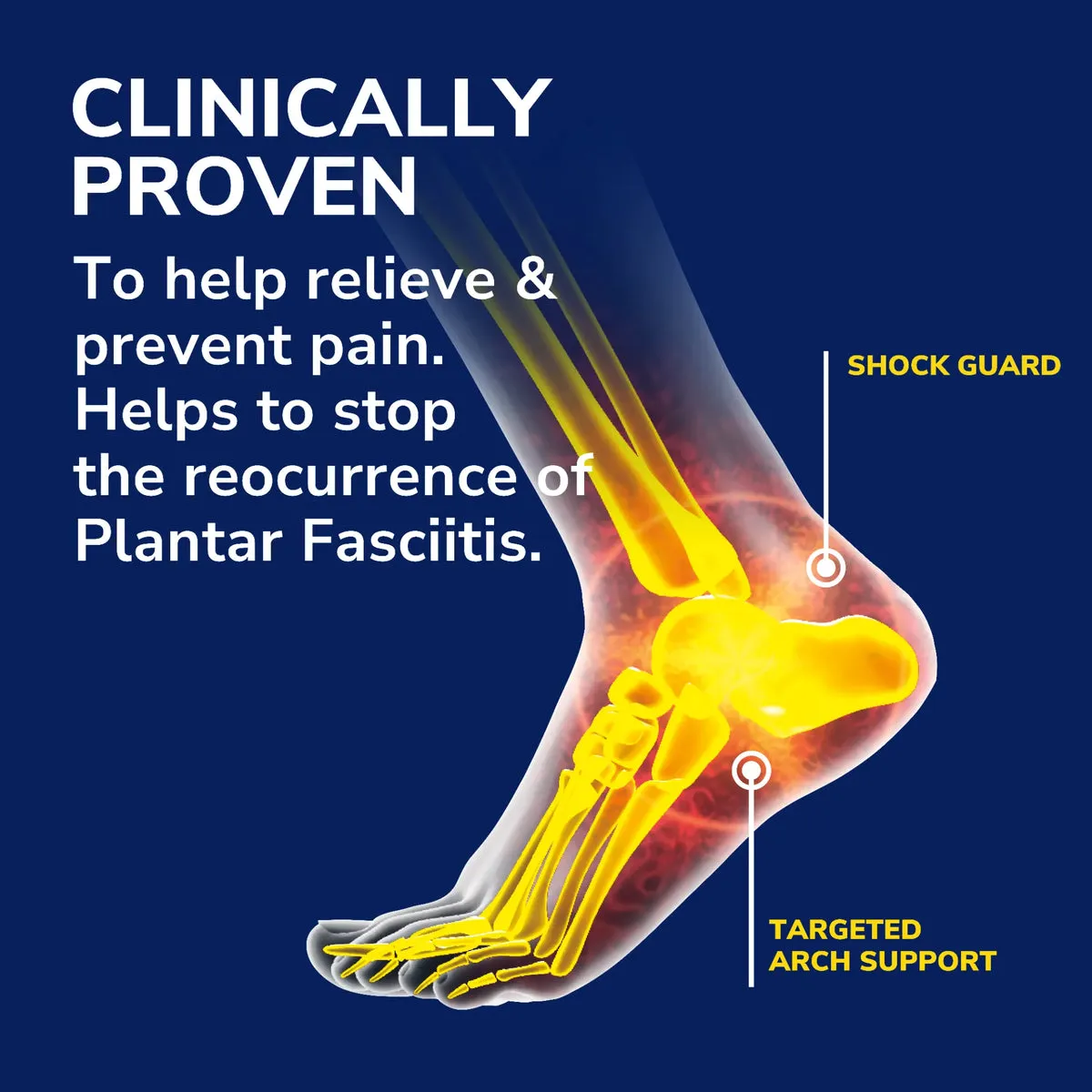
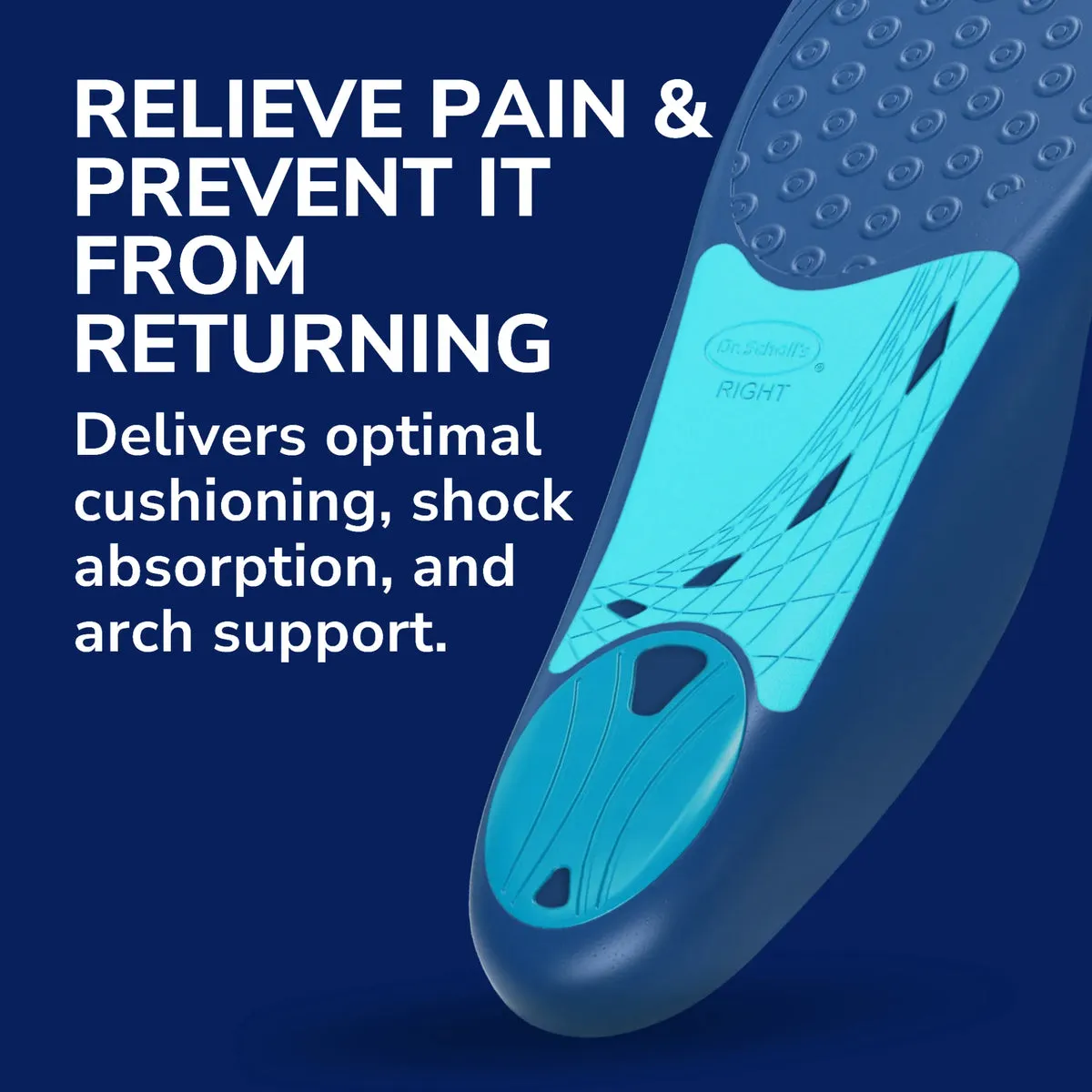
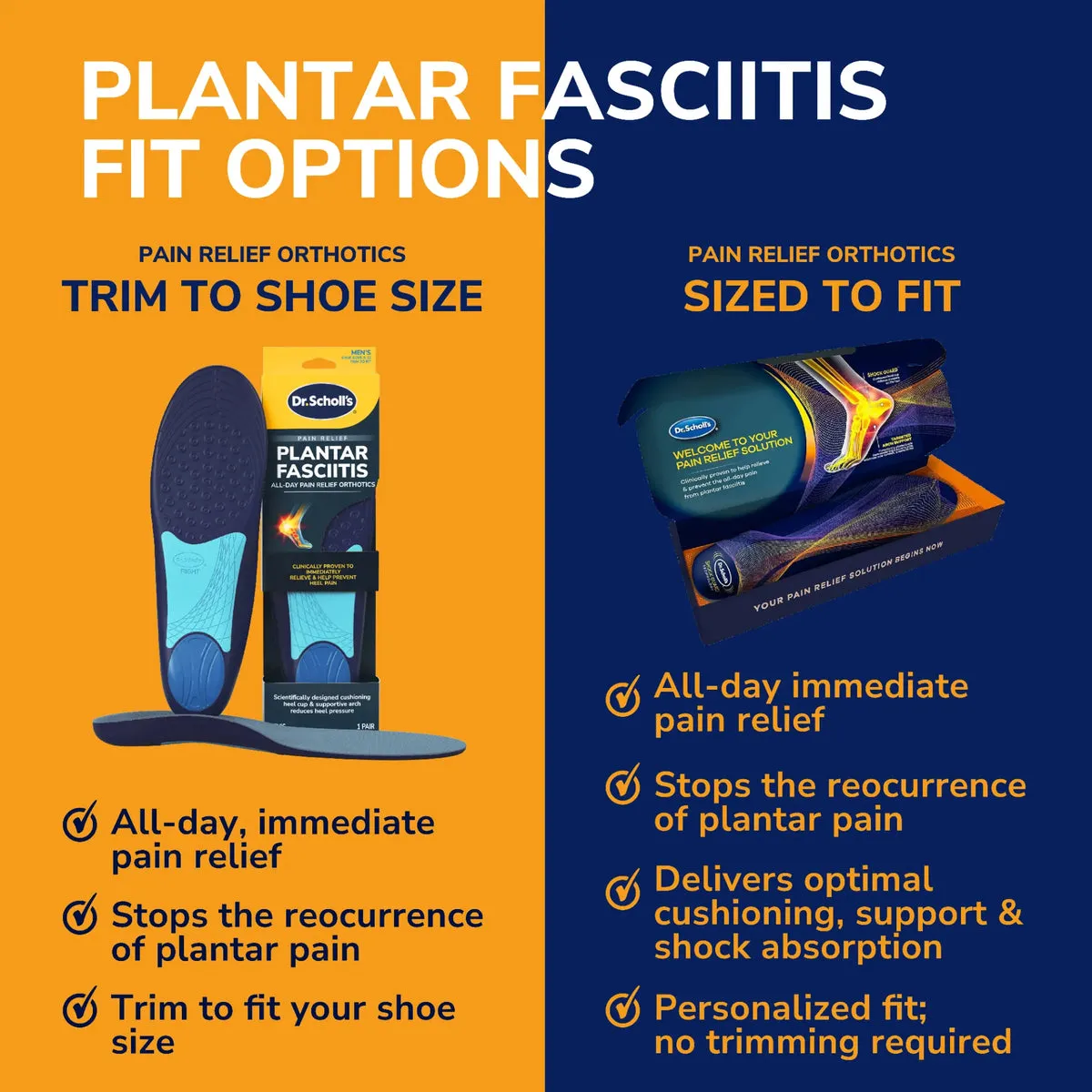
This is the cheapest way into real arch support. A 3D targeted arch support keeps the plantar fascia from stretching too far, and a contoured ShockGuard heel cup absorbs shock at heel strike. RELYx365 foam cushions the whole foot. The full-length design is sized to fit, so there is no trimming — pick your size and drop it in.
It is a budget insole, and it feels like one next to the Pinnacle. The support is medium, not firm, and the foam will pack down faster than a rigid shell. But for the money, it is the best first test of whether an insole helps your heel at all. If it helps and you want more, step up to the Pinnacle. Replace it every 12 months, or sooner if it flattens.
Pros:
- Lowest-cost pick here that still gives real arch support
- ShockGuard heel cup targets heel pain at the source
- Sized to fit — no trimming, no guesswork
- Full-length cushion from heel to toe
- Sold by Amazon with wide size coverage
Cons:
- Medium support only — heavy overpronation needs more
- Foam packs down faster than a rigid shell
Skip it if: you need firm motion control, or you run high miles. The Pinnacle or the Maxx will last longer under load.
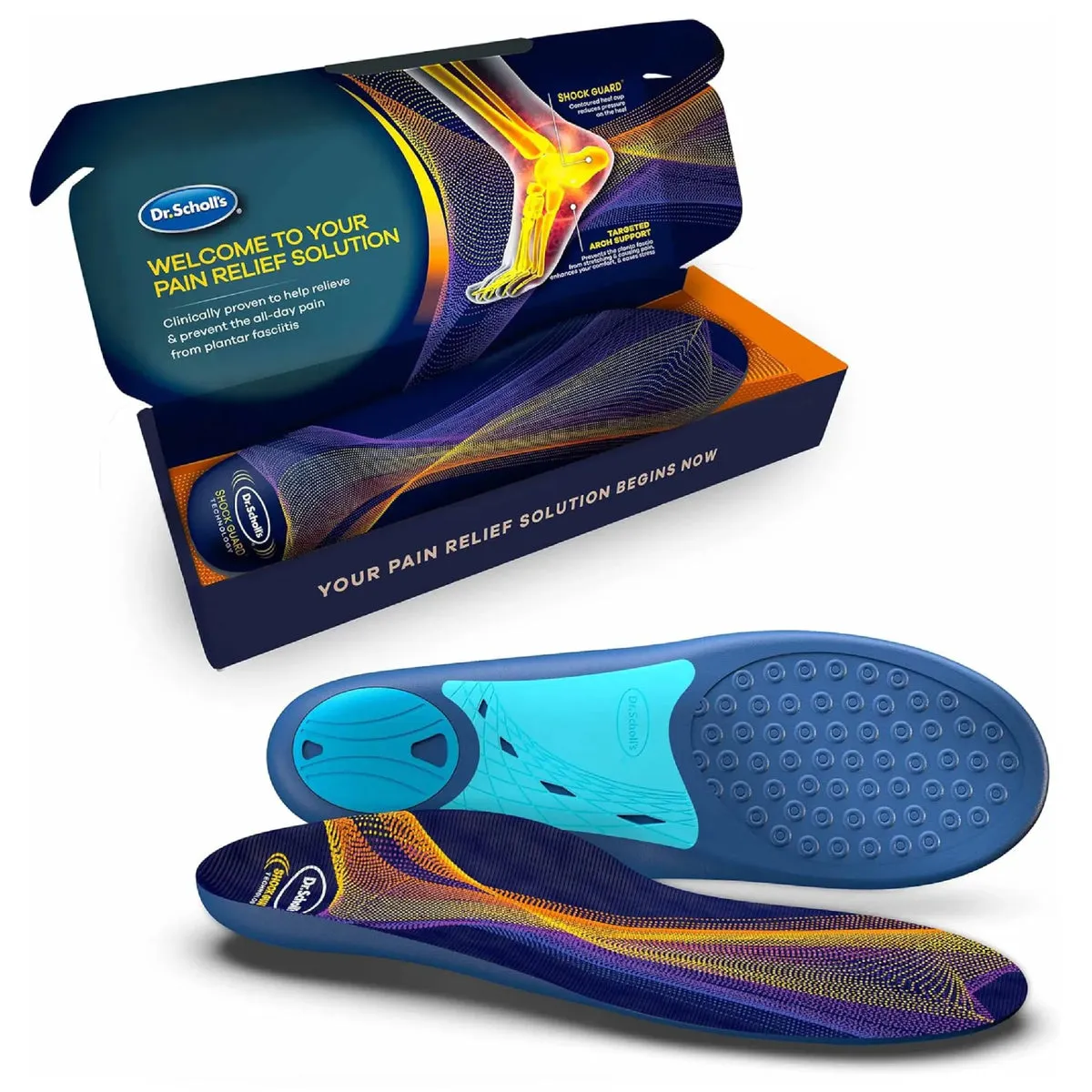
Images: Dr. Scholl’s official product photos
7. Superfeet Run Pain Relief — Best Superfeet for PF pain on runs
- Arch: High
- Stiffness: Firm (EVOLyte carbon fiber cap)
- Heel cup: Deep
- Thickness: n/a (brand does not publish it)
- Fit: Trim to fit — size up if you are between sizes, then trim
- Lifespan: 12 months or 500 miles (brand)
- Source: Superfeet
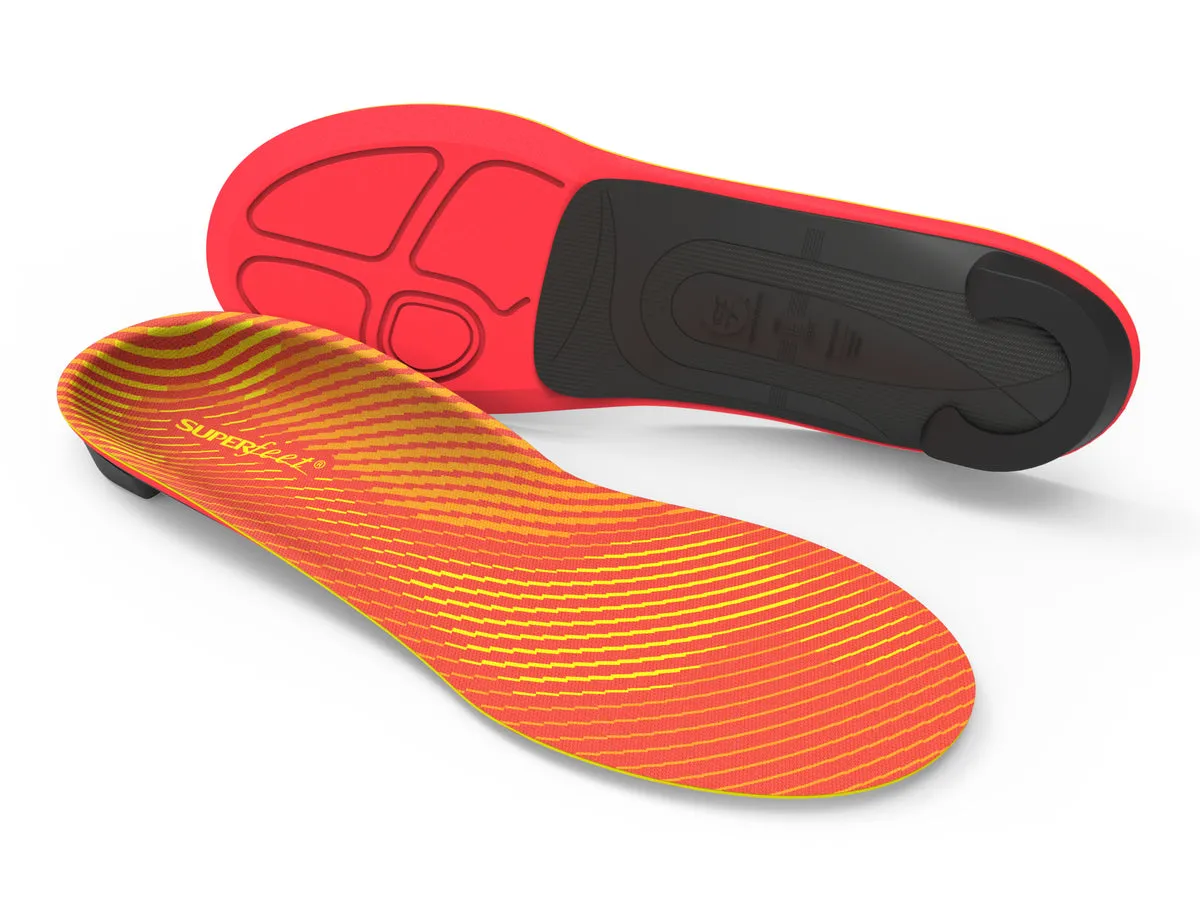
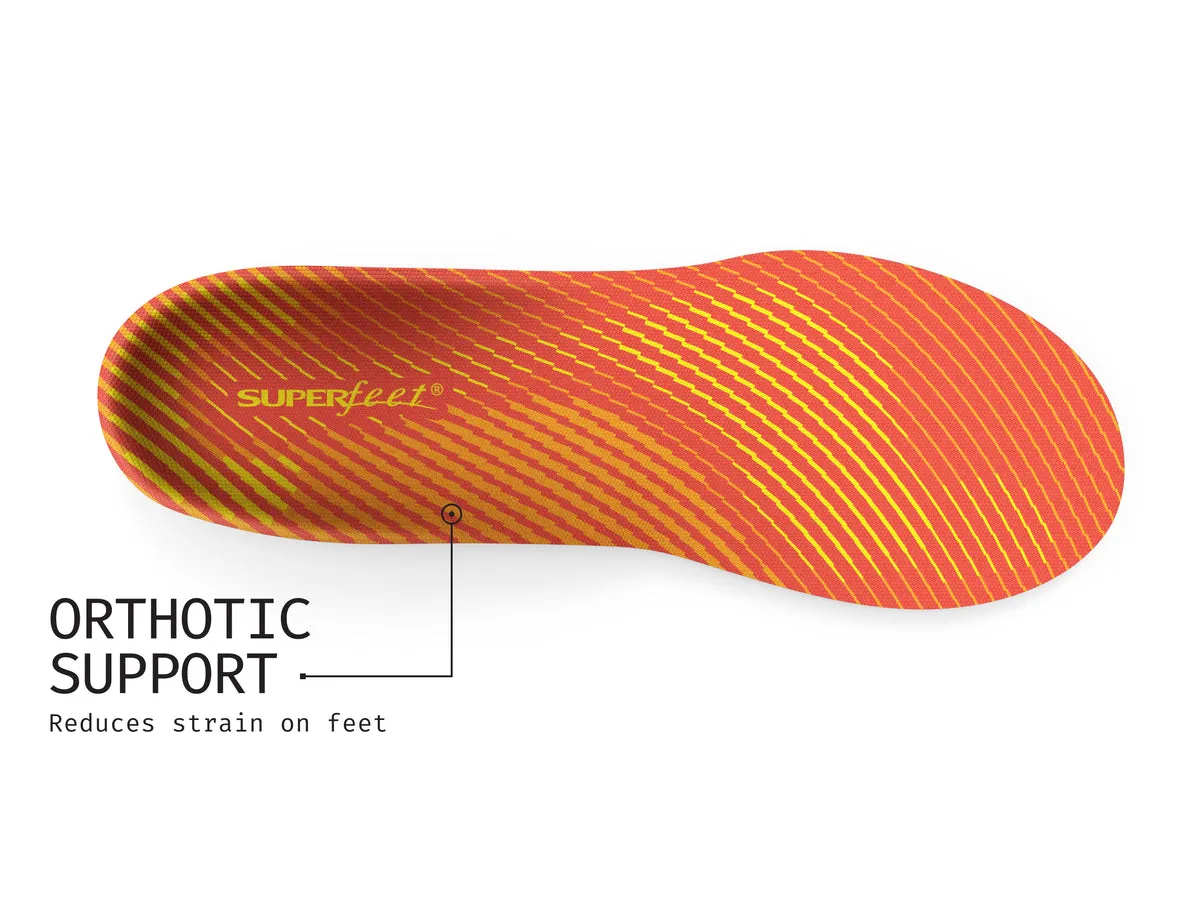
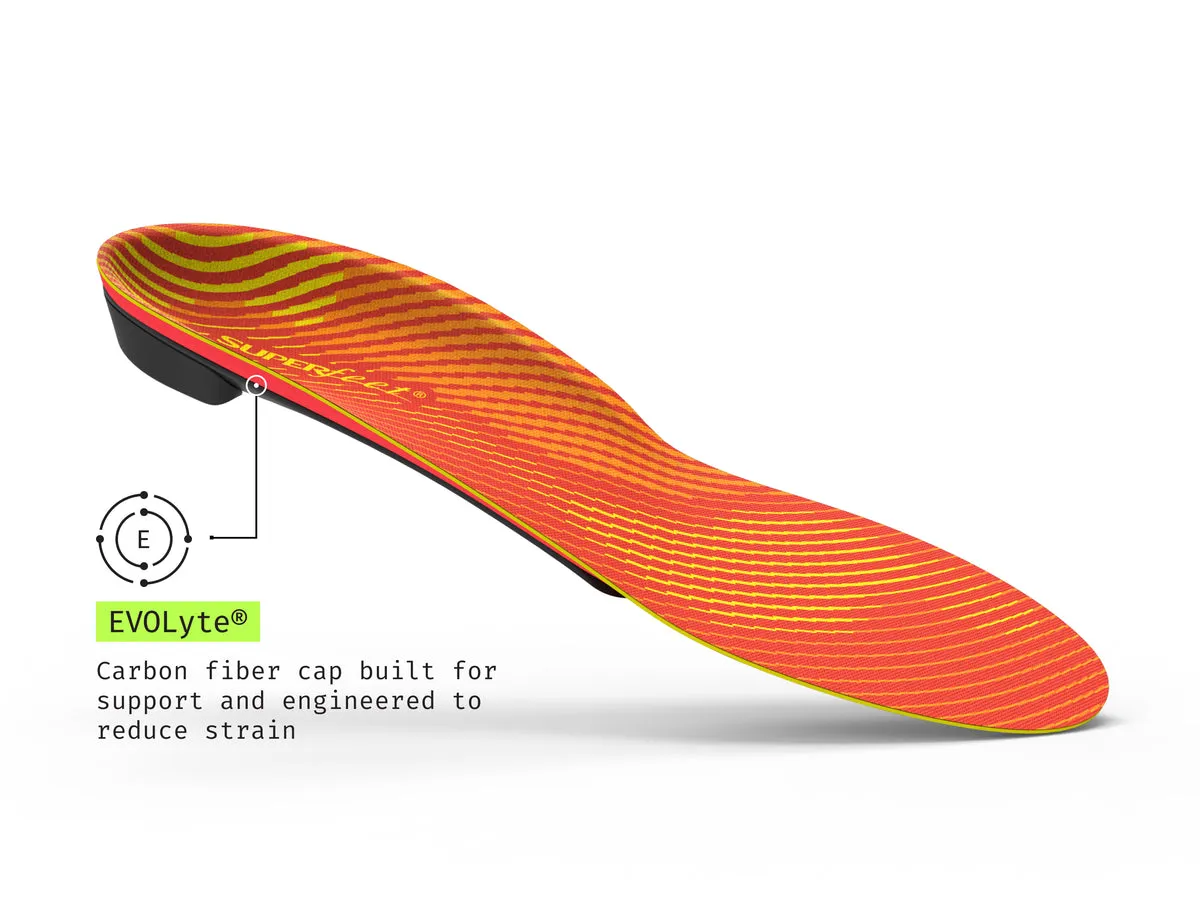
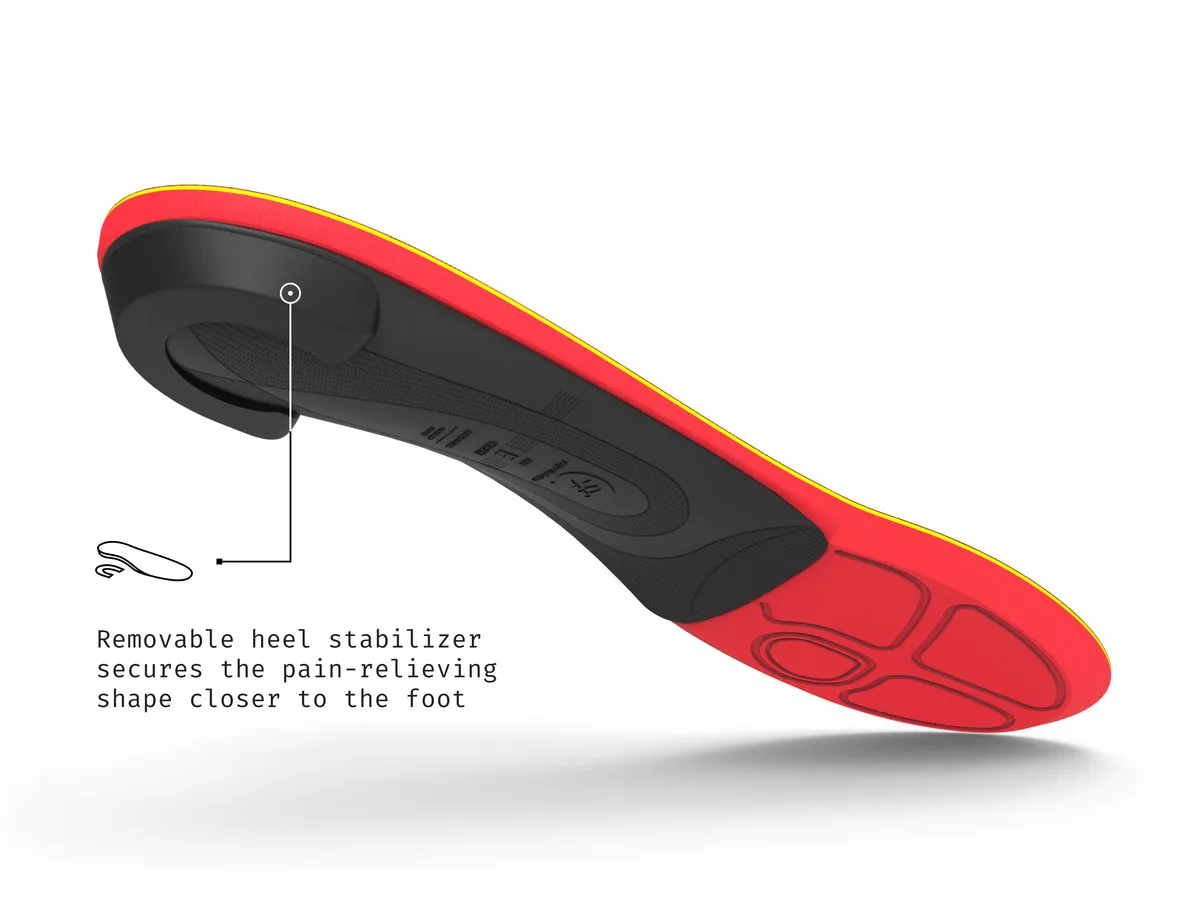
This is the Superfeet built for runners with heel pain. An EVOLyte carbon fiber cap gives it a firm, responsive backbone, and AEROSPRING dual-comfort foam softens the landing. The high arch and deep heel cup target plantar fasciitis directly — the Amazon listing names the condition in its title. It fits all arch heights, but the support profile is high, so it suits runners who want firm control on the run.
It is firmer than the Run Cushion line and thinner in feel than the Green. Trim it to your shoe and give it two or three runs before you judge it. Carbon fiber does not break in the way foam does — the fit either works or it does not. If it works, it holds its shape for the full 500 miles.
Pros:
- Carbon fiber cap keeps support firm for 500 miles
- AEROSPRING foam cushions heel strike
- High arch and deep heel cup target PF pain
- Trim-to-fit works in most running shoes
- Moisture-wicking top cover fights odor
Cons:
- Firm feel — not the pick for runners who want soft cushion
- Carbon fiber does not soften with wear
Skip it if: you want a soft ride, or your arches are low. The RunPro is more flexible, and the Pinnacle suits low-to-neutral arches better.
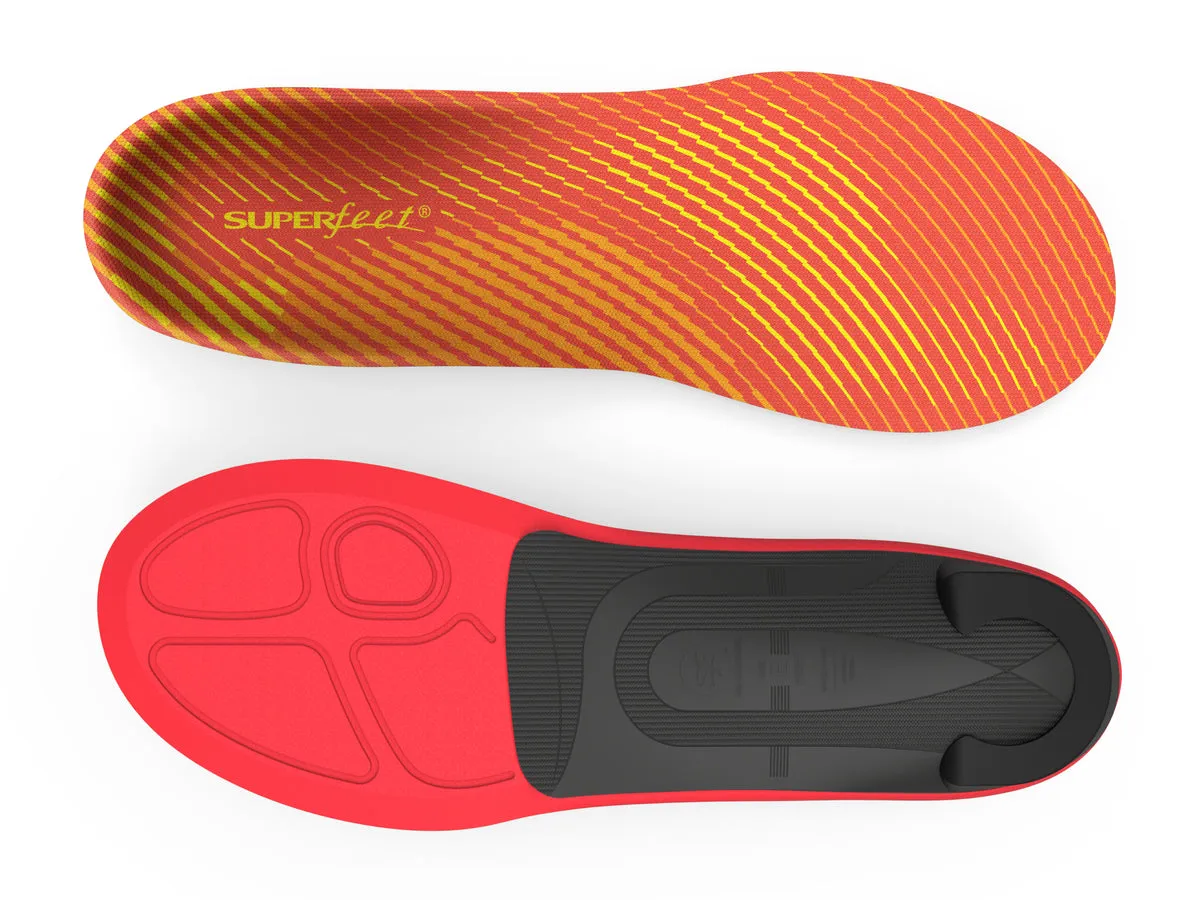
Images: Superfeet official product photos
8. PowerStep ProTech Full Length — Best medical-grade
- Arch: Neutral
- Stiffness: Semi-rigid shell
- Heel cup: Deep cradle
- Thickness: n/a (brand does not publish it)
- Fit: Sized by shoe size; trim if needed
- Lifespan: 6 months or longer (brand)
- Source: PowerStep
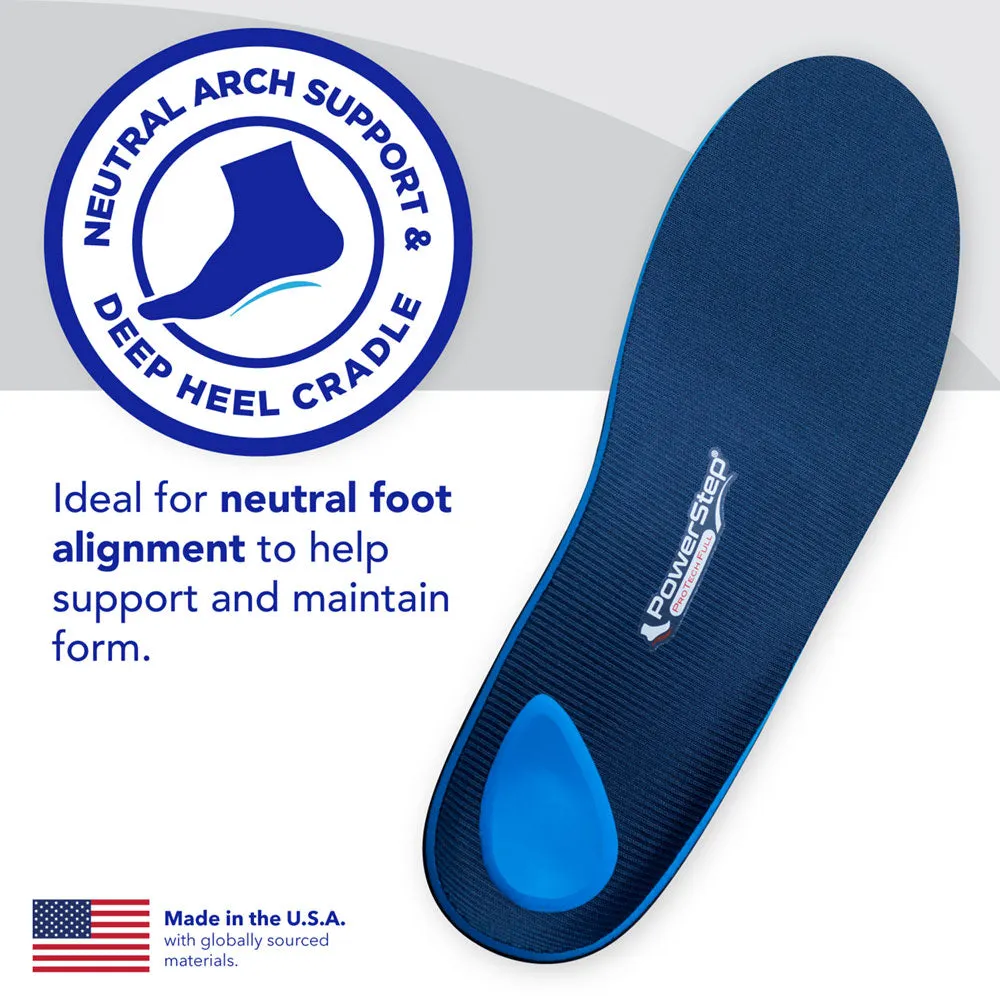
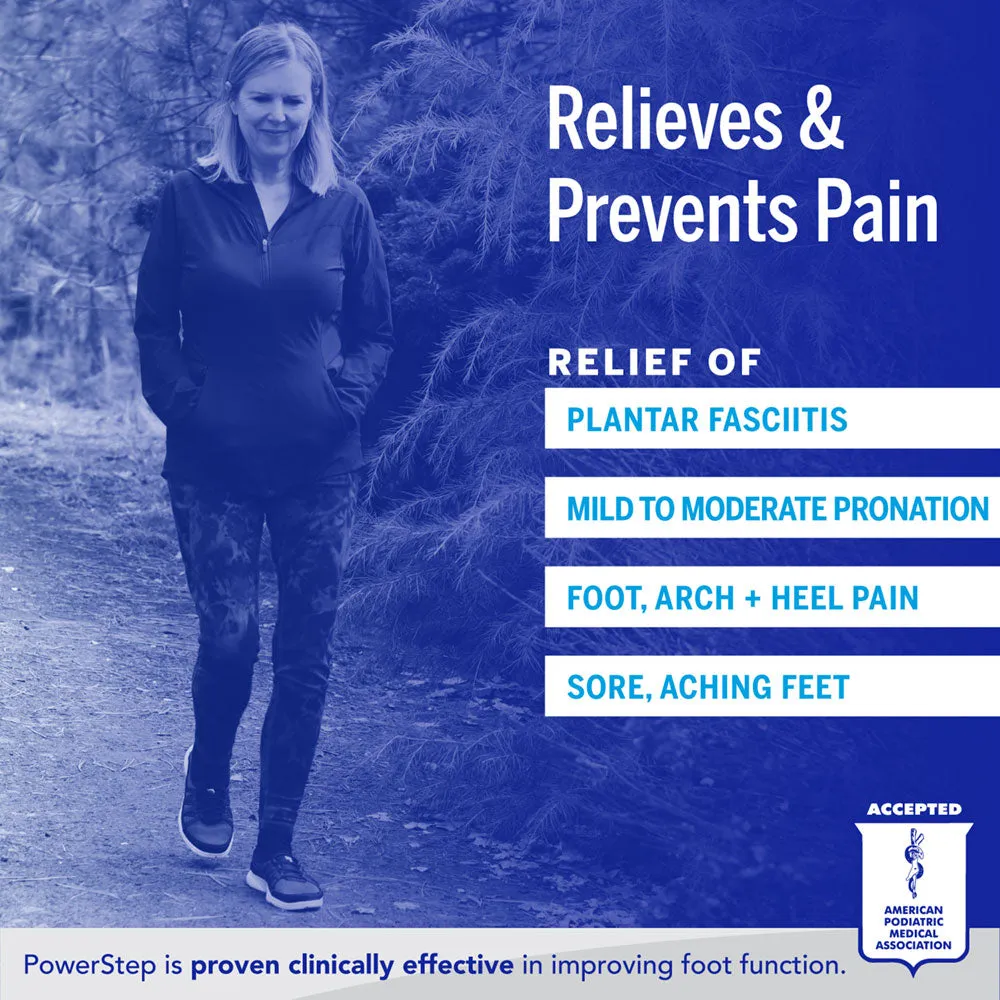
The ProTech is the medical-grade PowerStep. A semi-rigid polypropylene shell holds the arch, and a ShockAbsorb premium foam pad cushions the heel at strike. Dual-layer cushioning runs the full length, and an odor-control top fabric keeps feet dry. The brand built it for plantar fasciitis, heel pain, arch pain, overpronation and flat feet — the widest condition list in this guide.
It comes in 11 sizes, from men’s 4 to 16+, so the fit is closer than most trim-to-fit insoles. It is firmer than the Pinnacle and less cushioned than the Total Support Max. Think of it as the clinical pick: less comfort-first, more correction-first. If a podiatrist told you to wear an orthotic and you want an over-the-counter version, start here.
Pros:
- Semi-rigid shell gives medical-grade support
- ShockAbsorb heel pad cushions heel strike
- 11 sizes for a closer fit with less trimming
- Odor-control top fabric
- 60-day guarantee plus lifetime warranty on the arch shell
Cons:
- Firmer and less cushioned than the Pinnacle
- Needs shoes with removable insoles
Skip it if: you want soft cushioning, or you run in tight shoes. The Pinnacle is softer, and the RunPro is slimmer.
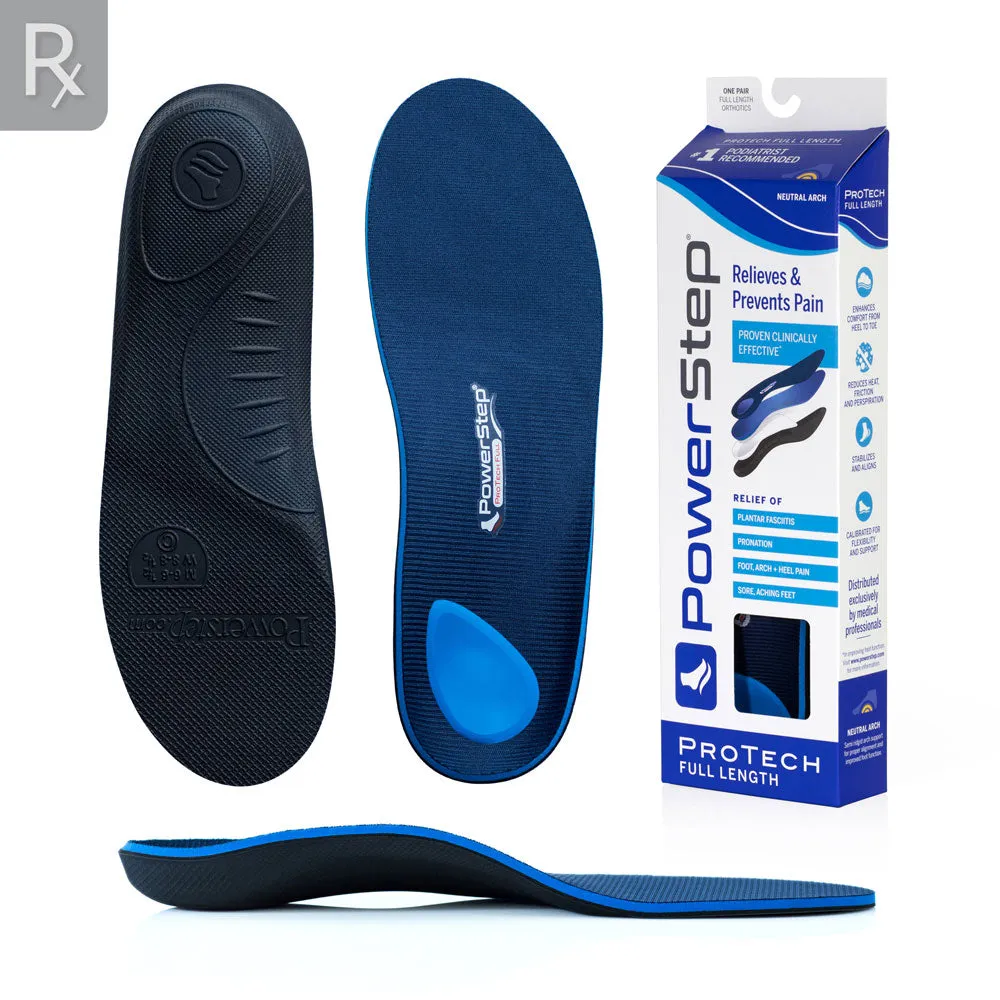
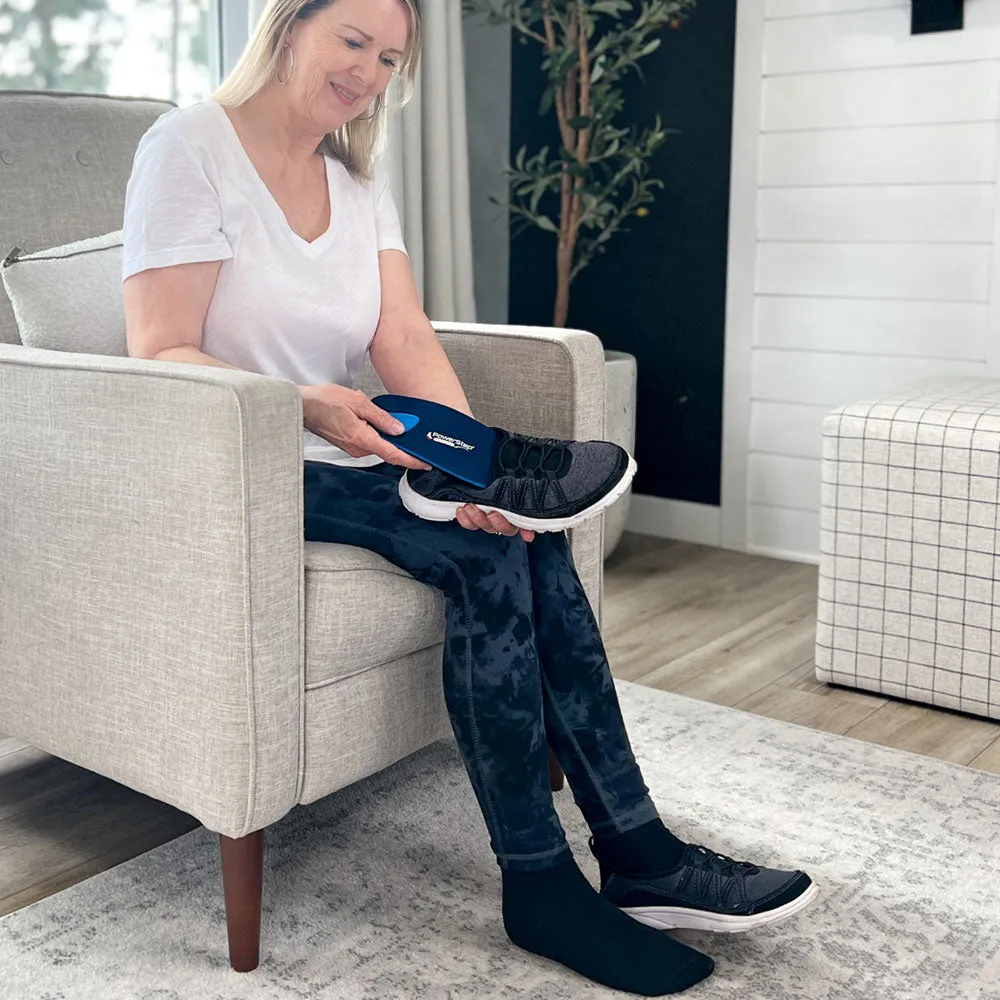
Images: PowerStep official product photos
9. Spenco Polysorb Cross Trainer — Best value cushion
- Arch: Neutral
- Stiffness: Medium, cushioned
- Heel cup: Stabilizing
- Thickness: n/a (brand does not publish it; Spencore layer is 5/32 in, about 4 mm)
- Fit: Trim to fit
- Lifespan: n/a (brand does not publish it)
- Source: Spenco
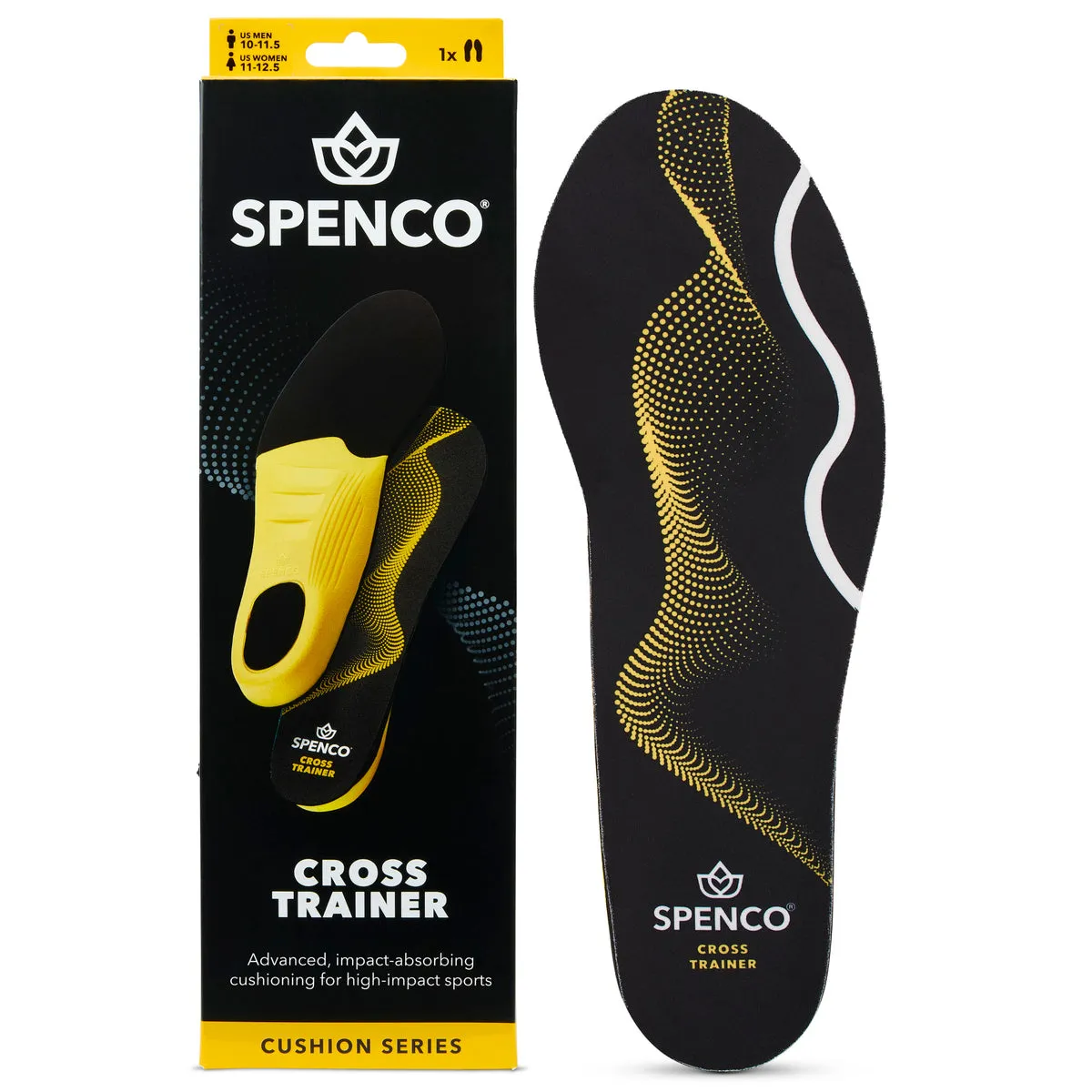
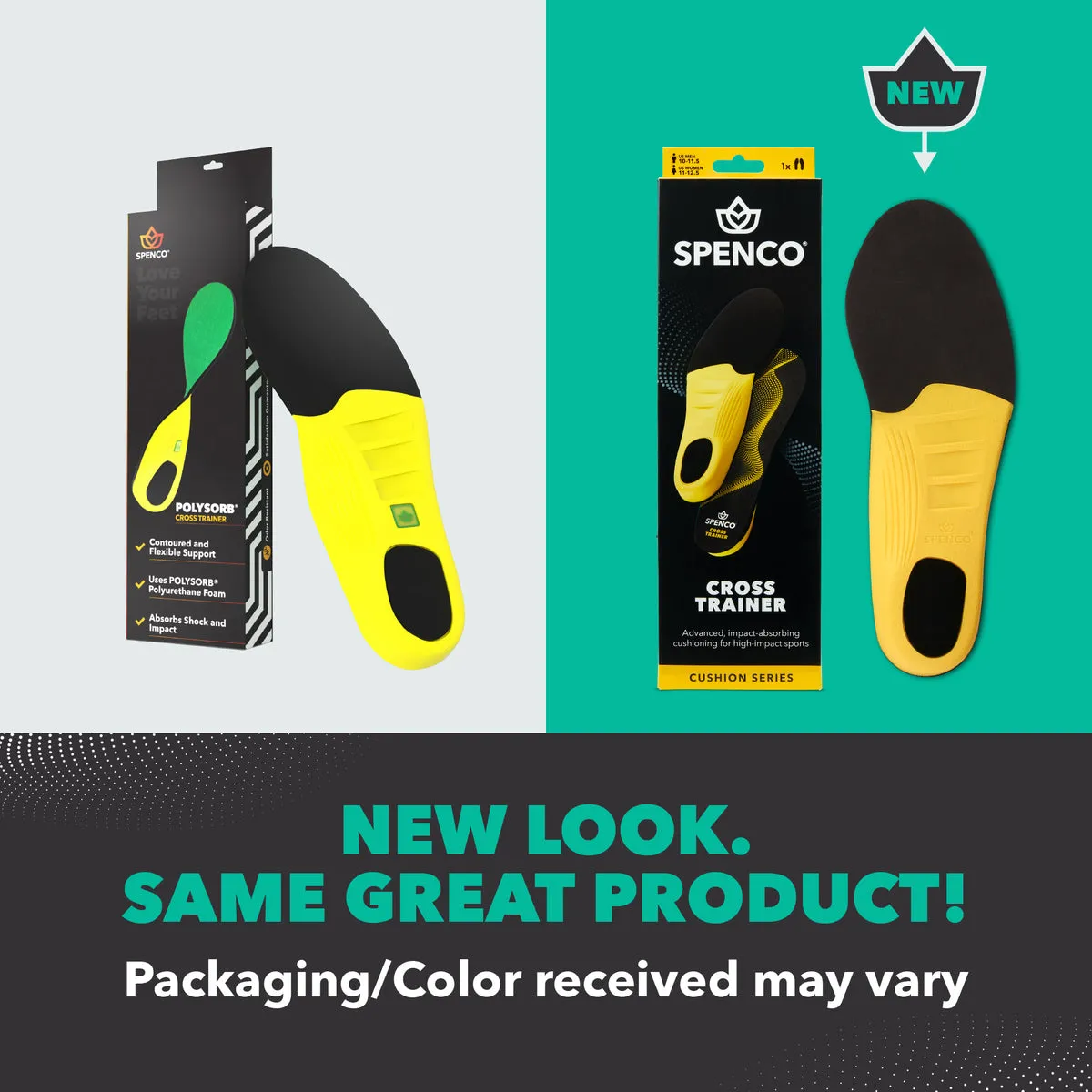
The Polysorb is the budget cushion pick. A Spencore layer absorbs shock and impact, an EVA forefoot pad adds bounce, and a 4-way stretch top fabric fights blisters and odor. It is light, soft and easy to live with. It will not correct overpronation the way a rigid shell does. For neutral feet that want cushion and shock absorption, it is hard to beat at this tier.
It suits running, walking and training. The neutral arch means it will not push against a high arch or collapse under a flat one. Trim it to your shoe and go. If your heel pain comes with a flat foot that rolls in, spend more and get the Maxx. If your feet are neutral and you just want softer miles, this is the pick.
Pros:
- Soft, responsive cushion at a value tier
- Spencore layer absorbs shock well
- Light and flexible — fits most shoes
- 4-way stretch fabric helps prevent blisters
- Good for running, walking and training
Cons:
- Neutral arch only — no real correction for overpronation
- Softer build packs down faster than a rigid shell
Skip it if: you overpronate, or you need firm arch support. The Maxx or the Total Support Max will hold your foot better.
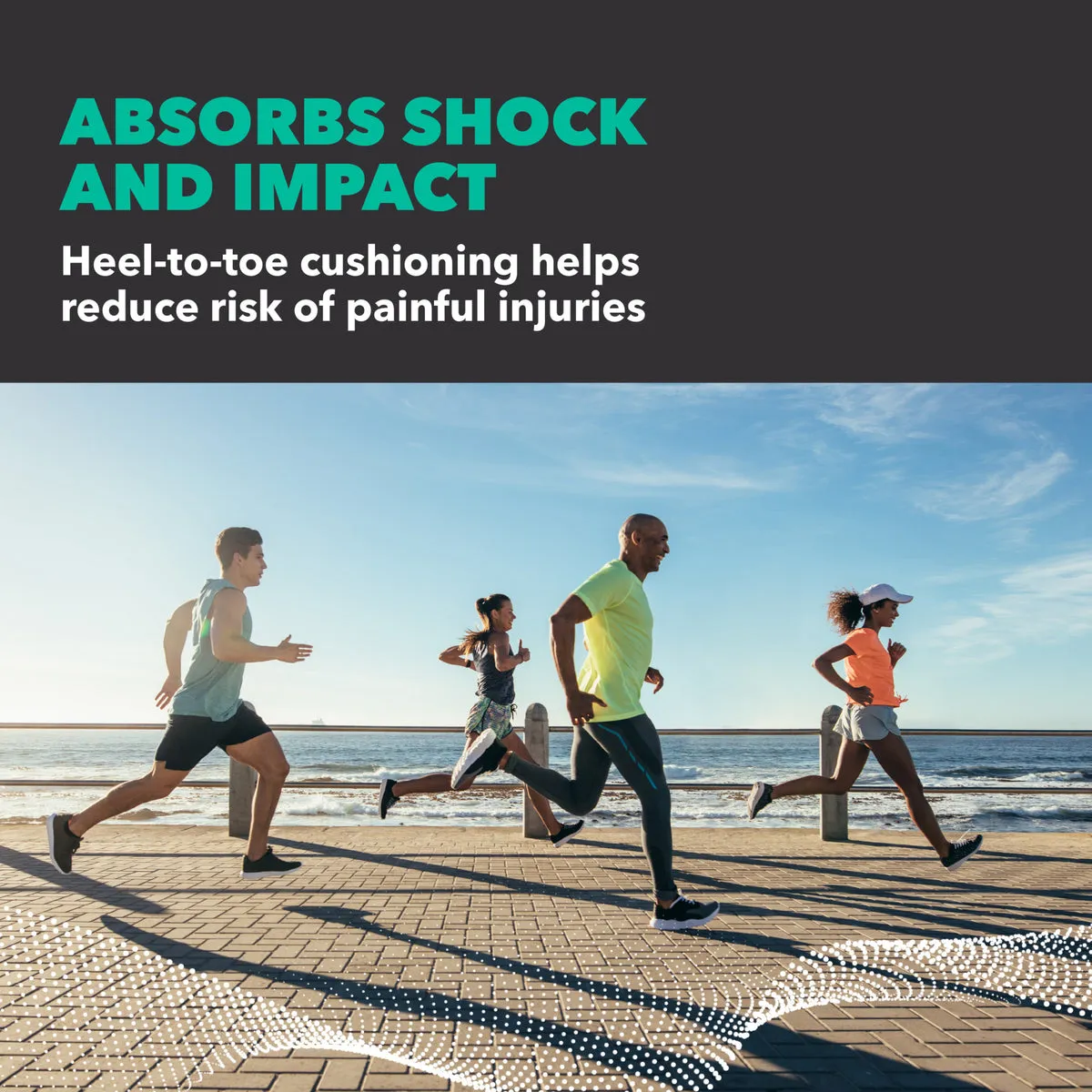
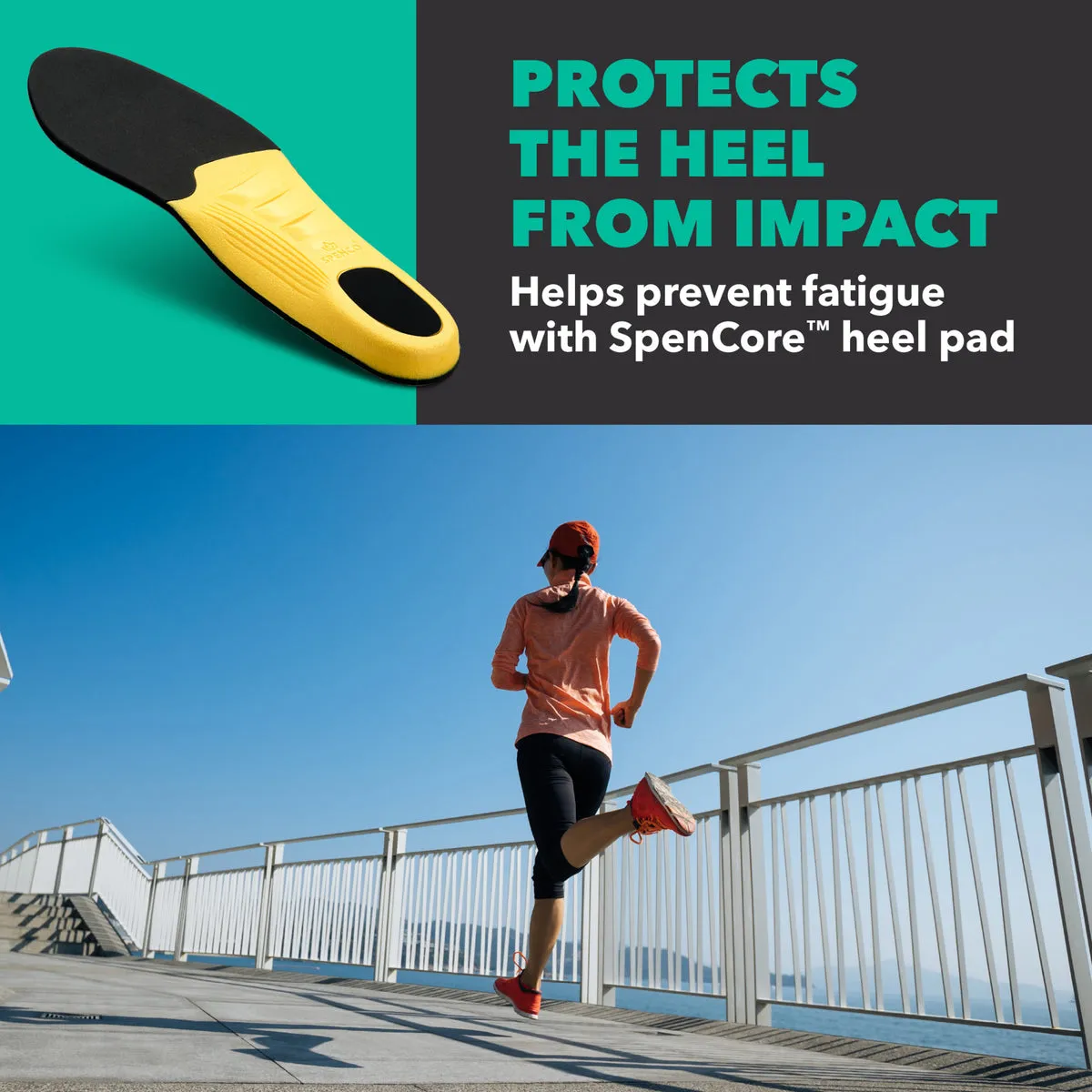
Images: Spenco official product photos
10. Sof Sole Plantar Fascia Support 3/4 — Best 3/4 length
- Arch: n/a (brand does not publish an arch height; the bridge supports the arch)
- Stiffness: Medium (gel + Plantar Relief Bridge)
- Heel cup: Gel heel cup
- Thickness: n/a (brand does not publish it)
- Fit: 3/4 length — fits most footwear without crowding the toes
- Lifespan: n/a (brand does not publish it)
- Source: Sof Sole
The Sof Sole is the pick for tight shoes. At 3/4 length it stops short of the toes, so it fits shoes where a full-length insole crowds the forefoot. A Plantar Relief Bridge supports the arch, and gel in the heel disperses shock at heel strike. It is clinically designed for plantar fasciitis relief, and it works in athletic and casual shoes alike.
The trade-off is coverage. A 3/4 insole supports the arch and heel, not the forefoot. If your forefoot aches too, a full-length pick like the Pinnacle covers more ground. But if your running shoes are snug and a full insole makes them tighter, this is the shape that works.
Pros:
- 3/4 length fits tight shoes without crowding toes
- Plantar Relief Bridge supports the arch directly
- Gel heel disperses shock at heel strike
- Works in athletic and casual shoes
- Easy to move between pairs
Cons:
- No forefoot support — ball-of-foot pain needs a full-length pick
- Medium support only — severe overpronation needs more
Skip it if: you need full-length support, or your forefoot hurts too. The Pinnacle covers heel to toe.
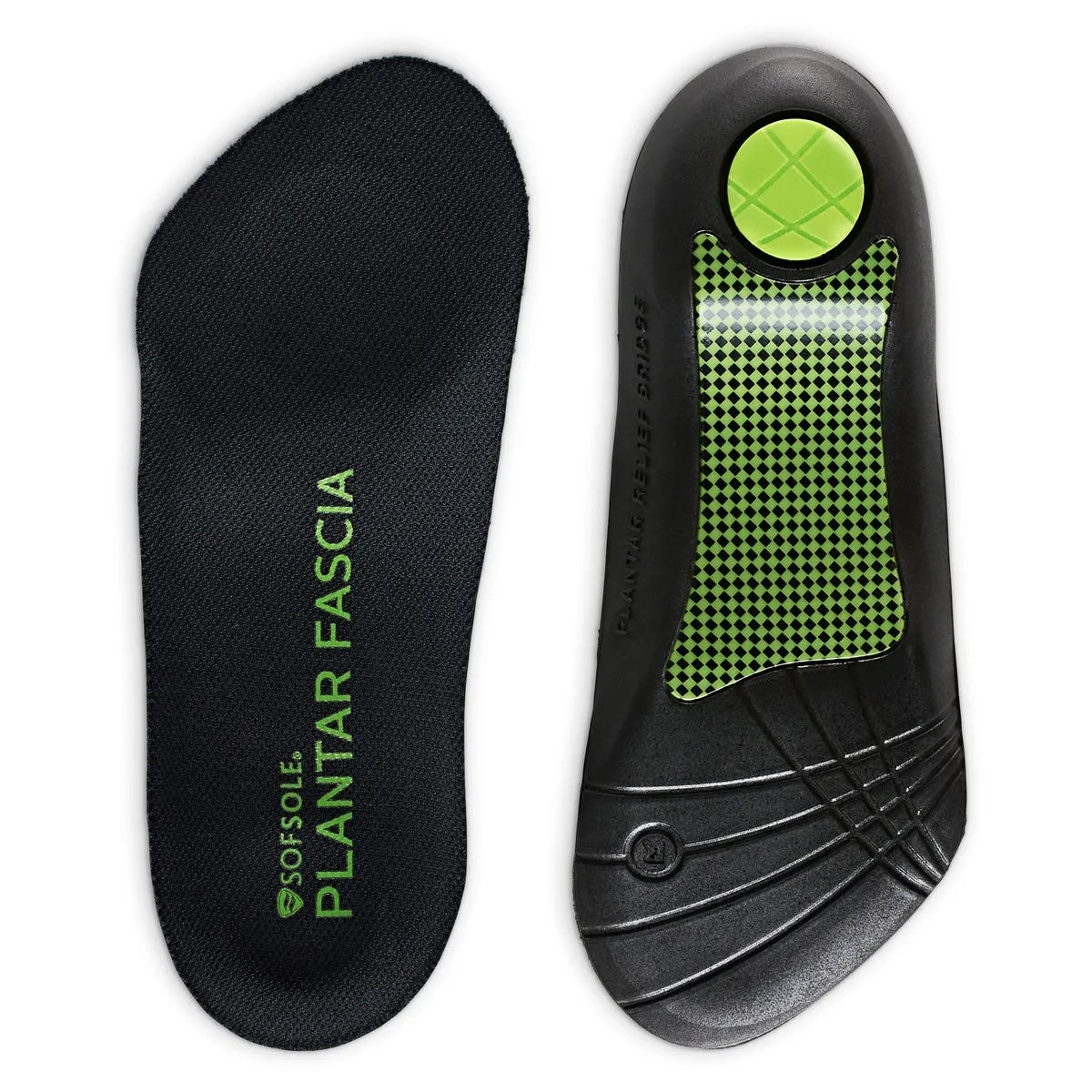
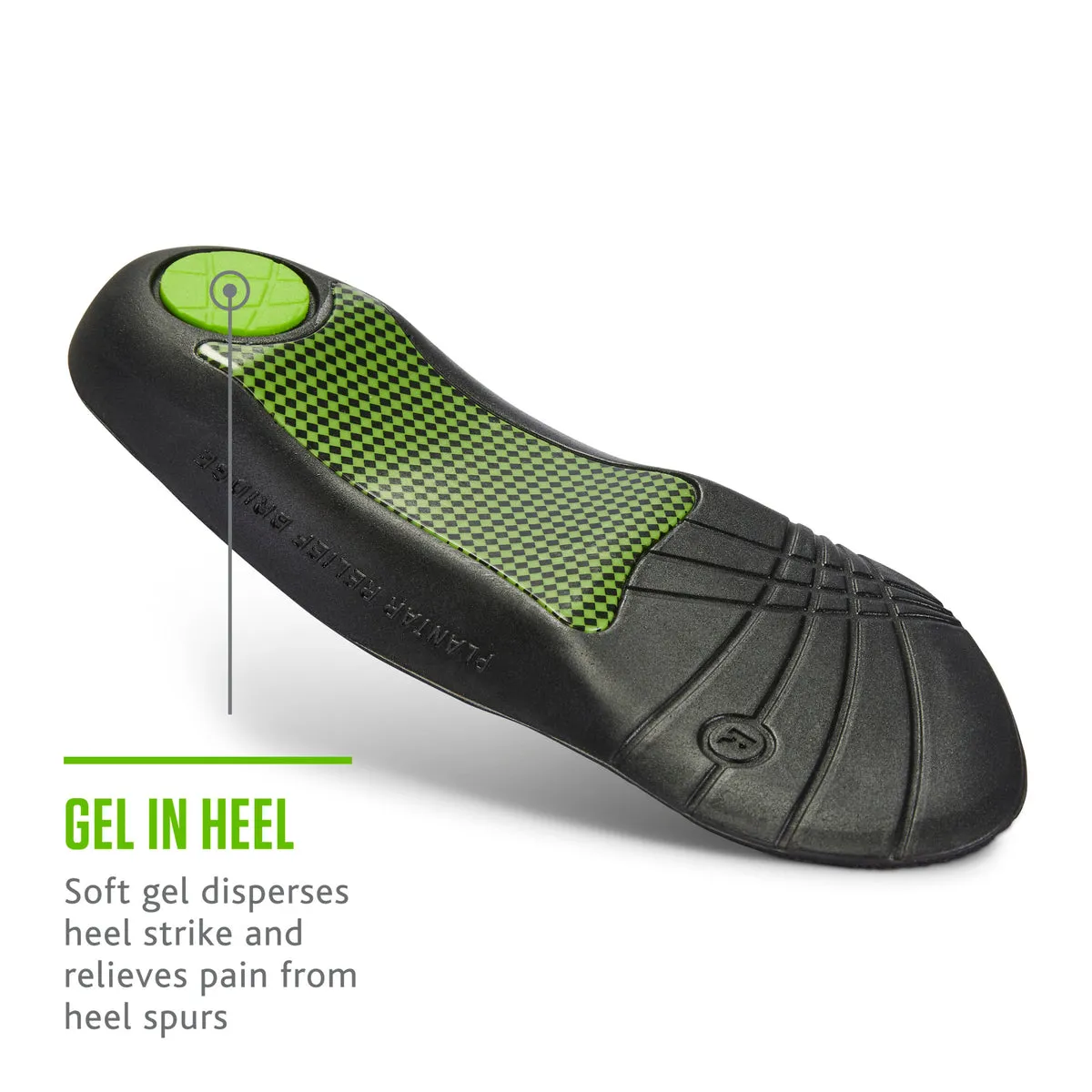
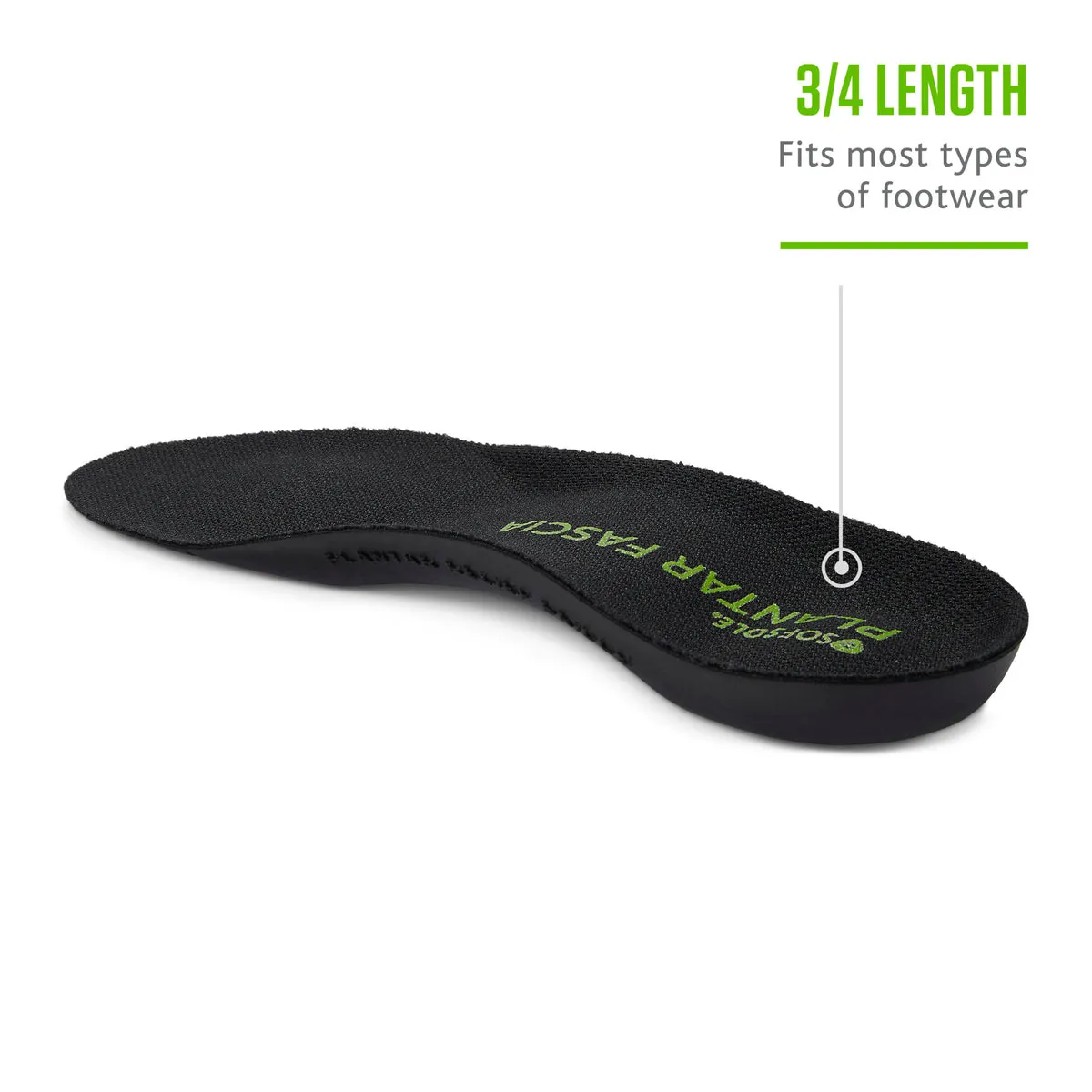
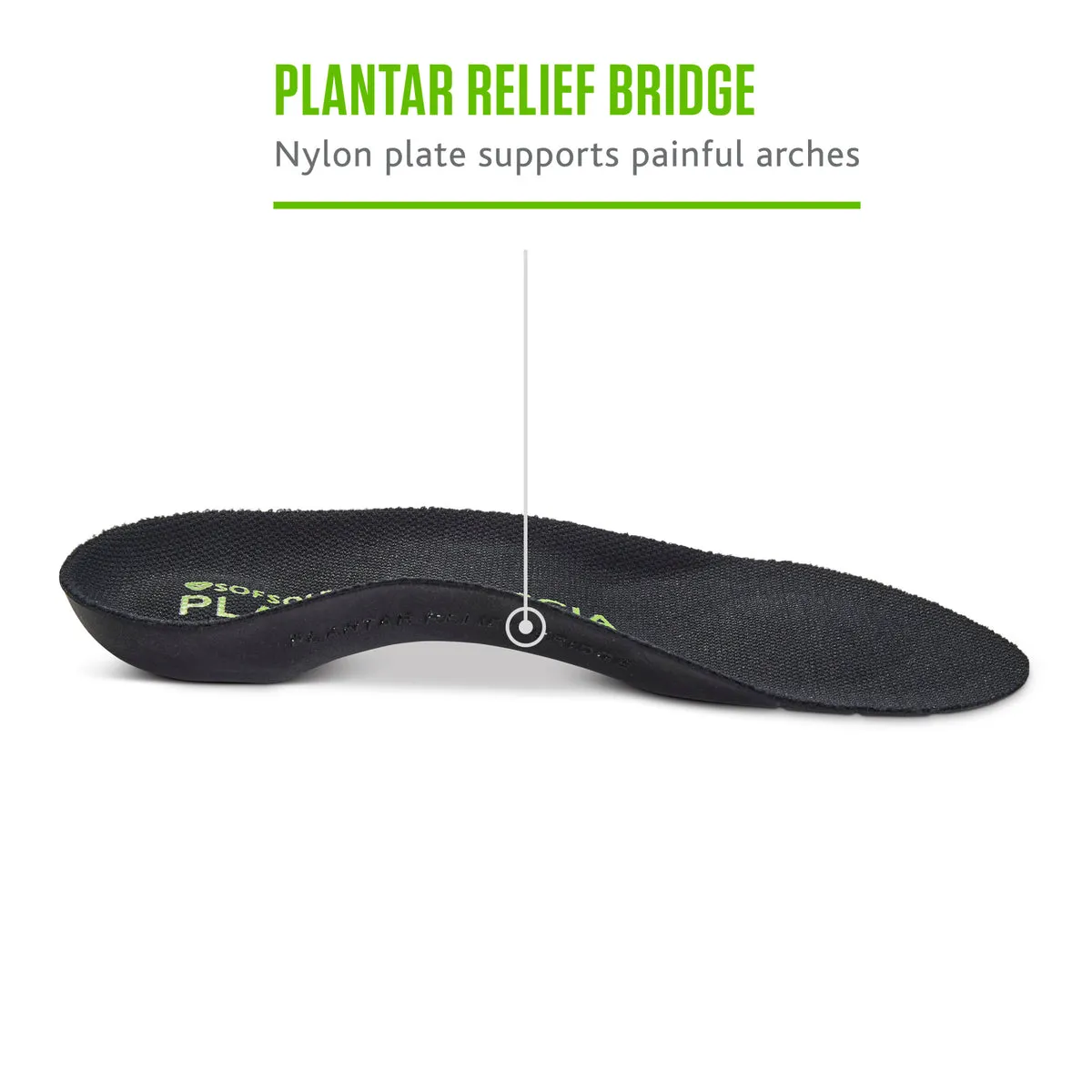
Images: Sof Sole official product photos
11. SOLE Active Medium — Best heat-moldable
- Arch: Any arch height (fits low, medium and high)
- Stiffness: Medium (cork base)
- Heel cup: Deep
- Thickness: n/a (brand does not publish it)
- Fit: Heat-moldable at home (oven 200°F for 2 minutes, then stand in them for 2 minutes); also wear-molds over time
- Lifespan: n/a (brand does not publish it)
- Source: SOLE
The SOLE is the custom-fit pick without the custom price. Heat it in the oven at 200°F for 2 minutes, drop it in your shoe, lace up and stand still for 2 minutes. The cork and EVA base molds to your arch. A metatarsal pad spreads forefoot pressure, and a deep heel cup steadies the heel. It fits any arch height, which is rare in this guide.
The molding step is the whole point — and the whole risk. Follow the brand’s steps exactly. If you skip the oven step, it still molds slowly as you wear it, but the fit will not be as close. The red top with the white SOLE mark is easy to spot in a shoe, and the medium volume fits average-volume running shoes best.
Pros:
- Heat-molds to your foot at home — closest to custom at this tier
- Fits any arch height
- Cork base holds its shape well
- Metatarsal pad helps forefoot comfort
- Deep heel cup steadies the heel
Cons:
- Molding takes care — rush it and the fit suffers
- Medium volume only — very tight or very roomy shoes may not suit it
Skip it if: you want a ready-to-wear insole with no setup. The Pinnacle needs no molding at all.
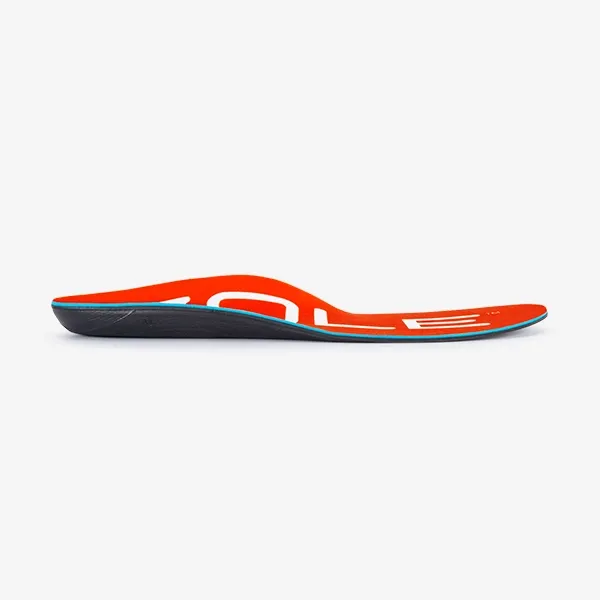
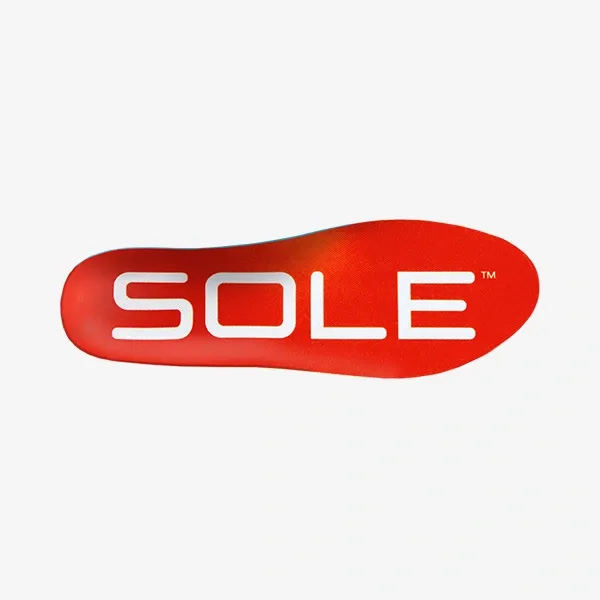
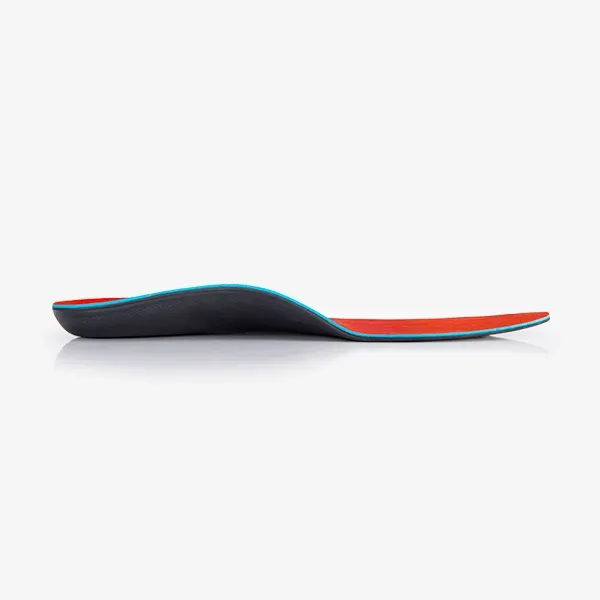
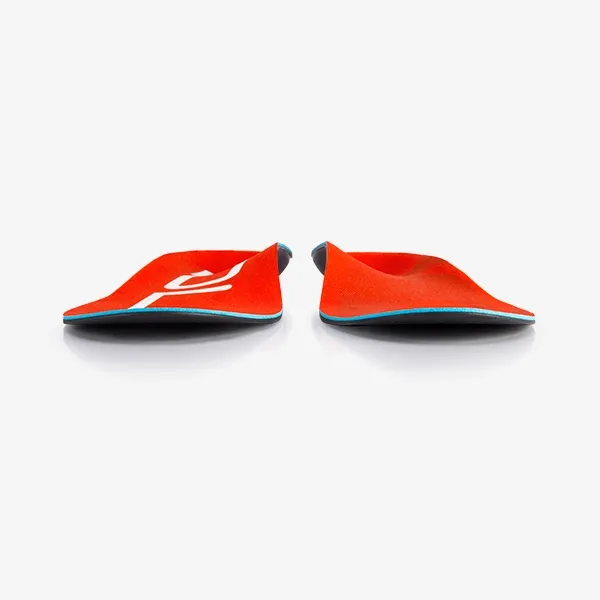
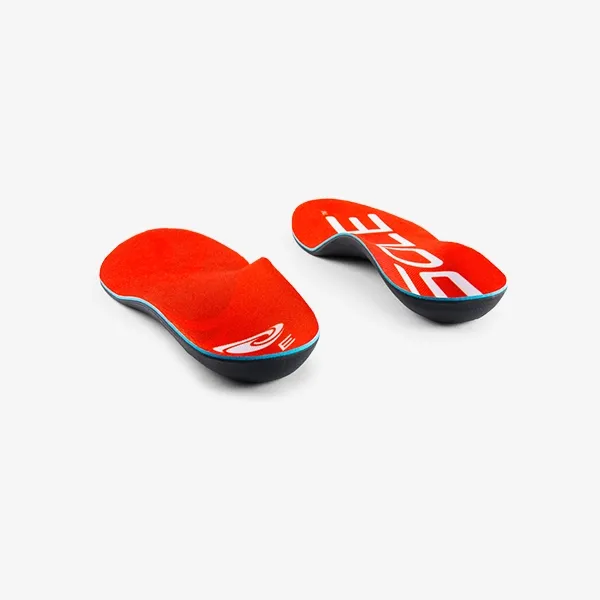
Images: SOLE official product photos
Best insoles for plantar fasciitis compared side by side
| Insole | Arch | Stiffness | Heel cup | Thickness | Best for |
|---|---|---|---|---|---|
| PowerStep Pinnacle | Neutral | Firm yet flexible | Deep cradle | Standard | Best overall |
| Superfeet Green | High | Firm | Deep | n/a | Best rigid support |
| PowerStep Pinnacle Maxx | Neutral | Firm yet flexible | Deep cradle | Thickest Pinnacle | Best for overpronation + PF |
| CURREX RunPro | Low / Medium / High | Flexible | Deep, decoupled | 4 mm | Best for running |
| Spenco Total Support Max | High | Rigid | Deep | n/a | Best cushioned support |
| Dr. Scholl’s Plantar Fasciitis | Medium | Medium, cushioned | Contoured | n/a | Best budget |
| Superfeet Run Pain Relief | High | Firm | Deep | n/a | Best Superfeet for PF pain on runs |
| PowerStep ProTech Full Length | Neutral | Semi-rigid | Deep cradle | n/a | Best medical-grade |
| Spenco Polysorb Cross Trainer | Neutral | Medium, cushioned | Stabilizing | n/a | Best value cushion |
| Sof Sole Plantar Fascia 3/4 | n/a | Medium, gel | Gel heel cup | n/a | Best 3/4 length |
| SOLE Active Medium | Any arch | Medium, cork | Deep | n/a | Best heat-moldable |
Thickness is the weak spot in this market. Only CURREX publishes a number (4 mm). The rest leave it blank, so we leave it blank too. Judge thickness by fit: if the insole crowds your toes, the shoe needs more volume or the insole needs to be thinner.
What to look for in insoles for plantar fasciitis
Arch support stiffness
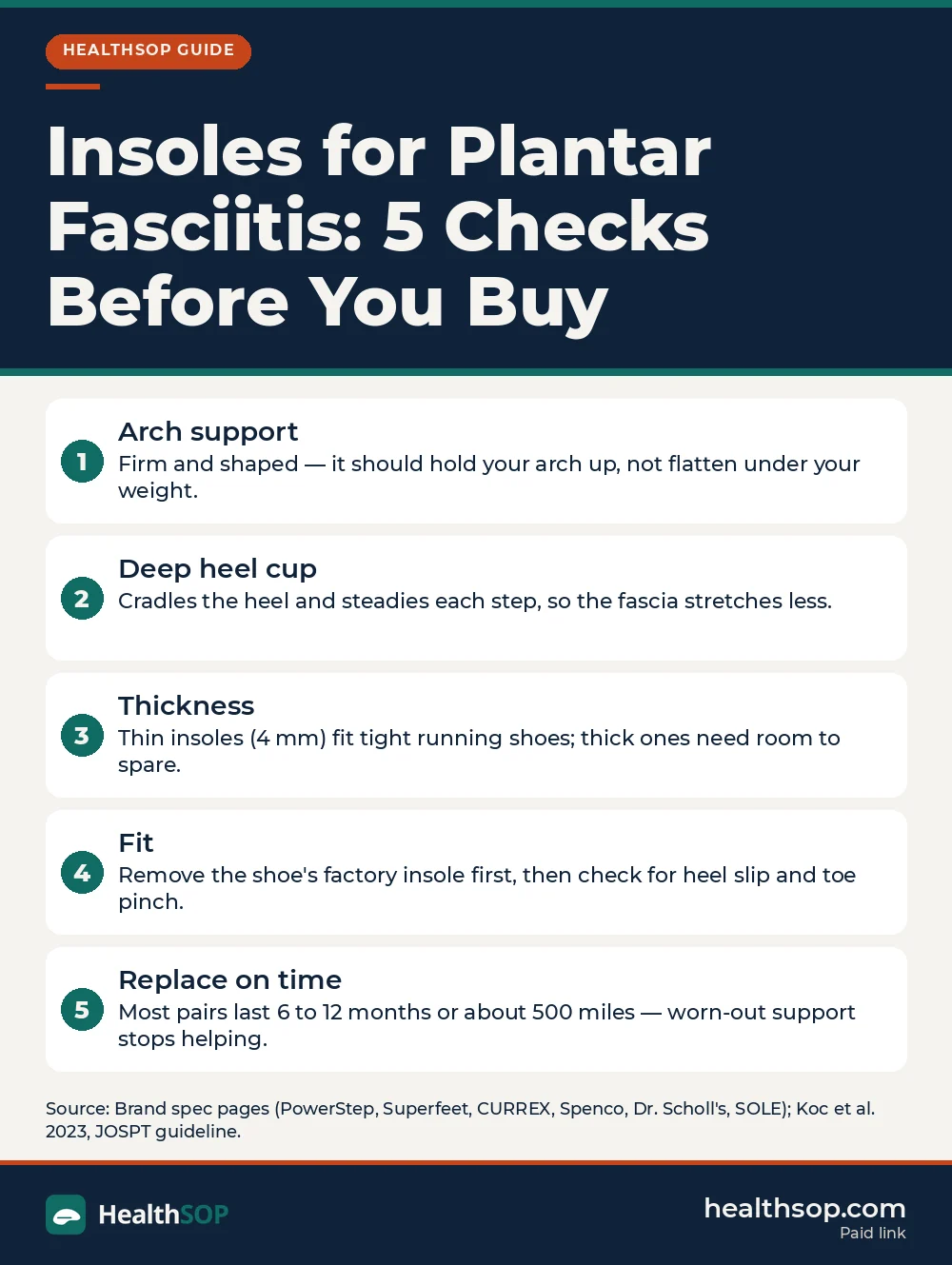
Stiffness is the first choice. A firm insole holds the arch up and limits how far the plantar fascia stretches with each step. A soft insole feels nice for a week, then flattens. If your heel pain is sharp in the morning, you need firm support. The Green, the Total Support Max and the ProTech are the firm picks here. The Pinnacle and the Maxx sit in the middle — firm yet flexible. The Polysorb and the Dr. Scholl’s are the soft picks. Match stiffness to pain: sharper pain, firmer insole.
Deep heel cup
A deep heel cup cradles the heel and centers the heel fat pad under the bone. That matters because the plantar fascia attaches at the heel, and most of the pain lives there. Every pick in this guide has a deep or contoured cup except the Polysorb, which uses a stabilizing cup instead. Check the cup with your thumb. If it holds its shape when you press it, it will hold your heel. If it folds flat, it will not help.
Cushioned heel
Support without cushion hurts. The heel needs a pad that absorbs shock at strike. The Pinnacle uses dual-layer cushioning. The ProTech uses a ShockAbsorb foam pad. The Dr. Scholl’s uses its ShockGuard cup. The Sof Sole uses gel. Foam and gel wear out faster than a rigid shell, so check the heel pad every few months. If it feels flat or cracked, replace the insole.
Fit in running shoes
Fit decides everything. Pull the factory insole out first — the new insole replaces it, it does not sit on top of it. Then check three things: the heel sits in the cup without slipping, the arch lines up under your arch, and your toes have room. Thin insoles like the RunPro (4 mm) fit tight shoes. Thick ones like the Maxx need roomy shoes. Wide feet need a wide shoe first — see our best running shoes for wide feet guide — then add the insole. If the shoe pinches with the insole in, the shoe is the problem, not the insole.
What the guideline says about orthoses
The 2023 JOSPT guideline for heel pain and plantar fasciitis lists prefabricated and custom foot orthoses among its recommended treatments. Prefabricated pairs — every pick in this guide — cost less and are ready the same day. Custom pairs are molded to your foot, cost far more, and take weeks to make. For most runners, a prefabricated insole is the right first step. If it does not help after a few weeks of steady wear, a clinician can judge whether a custom pair is worth it.
When shoes are not enough
Insoles help, but they do not fix everything. See a clinician if the pain lasts more than a few weeks. Go sooner if the heel is swollen or bruised, if you cannot put weight on it, or if the pain shoots up the leg. Numbness, tingling or pain at rest are also red flags. A podiatrist can check for a tear, a stress fracture or nerve pain that an insole will not touch.
Shoes matter as much as insoles. A worn-out shoe with a collapsed heel counter will undo what the insole does. If your shoes are past their life, start with the shoe. Our best running shoes guide covers the field. Our plantar fasciitis from running guide explains the injury, the stretches and the recovery steps that go with the insole.
This guide is for information only. It is not medical advice. If heel pain persists, see a podiatrist or your doctor.
How we chose these products
We started from the brief’s six picks and the page-1 round-ups for this query. We kept only insoles with a live Amazon listing we could name by ASIN. We added five more so the guide covers 11 picks. The page-1 ceiling is 9, so 11 beats it. Each pick’s specs come from the brand’s own page. Where the brand publishes no number — thickness for most picks, lifespan for several — we mark it “n/a” instead of guessing. We did not test these insoles hands-on, so there are no wear-test claims and no star ratings. The clinical framing follows the 2023 JOSPT guideline and the AAOS and NHS pages on heel pain. A podiatrist’s guide (Michigan Foot Doctors, Dr. Tom Biernacki) independently names the PowerStep Pinnacle as its most-recommended over-the-counter insole for plantar fasciitis, which matches our top pick.
Which one should you pick?
| Your situation | Pick |
|---|---|
| First insole for heel pain, most runners | PowerStep Pinnacle |
| High arches, want firm control | Superfeet Green |
| Flat feet, feet roll in a lot | PowerStep Pinnacle Maxx |
| Run most days, want a thin insole | CURREX RunPro (Medium) |
| Want max cushion with support | Spenco Total Support Max |
| Tight budget, first test | Dr. Scholl’s Plantar Fasciitis |
| Run with heel pain, want carbon support | Superfeet Run Pain Relief |
| Want a medical-grade build | PowerStep ProTech Full Length |
| Want cheap cushion for daily miles | Spenco Polysorb Cross Trainer |
| Tight shoes, need a 3/4 insole | Sof Sole Plantar Fascia 3/4 |
| Want a custom fit at home | SOLE Active Medium |
| On your feet all day (work + runs) | Pinnacle Maxx or Total Support Max |
| Heel pain plus forefoot ache | Total Support Max (metatarsal pad) |
| Achilles tendonitis with heel pain | PowerStep Pinnacle (the brand lists it) |
| Heavier runner, need durable support | Pinnacle Maxx or ProTech Full Length |
| New runner, just starting out | Pinnacle, then read our best running shoes for beginners guide |
Is it right for women?
Yes. Every pick here is unisex and sold in men’s and women’s sizes. Order by your shoe size and follow the brand’s fit notes. Superfeet and CURREX ask you to trim to fit. PowerStep and Dr. Scholl’s size by shoe with no trimming. If you run in women’s shoes, see our best running shoes for women guide for shoes that pair well with these insoles.
Is it right for men?
Yes. Same answer. Every pick is unisex. Heavier men who stand all day should look at the Maxx or the ProTech first — both are built for load and motion control. See our best running shoes for men guide for shoe picks. See our best running shoes for heavy men guide if weight is part of the problem.
If you are still unsure, buy the Pinnacle. It is the pick most podiatrists reach for first, and it is the easiest to live with.
Frequently asked questions
How did you choose these picks?
We started from the brief’s six picks and the page-1 round-ups. Then we kept only insoles with a live Amazon listing we could name by ASIN. Each pick’s specs come from the brand’s own page, and the clinical framing follows the 2023 JOSPT guideline. We did not test these insoles hands-on, so there are no wear-test claims here.
How long do they last?
Most pairs last 6 to 12 months or about 500 miles, whichever comes first. Superfeet rates its insoles for 12 months or 500 miles, Dr. Scholl’s says 12 months, and PowerStep says 6 months or longer. Replace them at the first signs of wear — a flattened arch or cracked heel pad stops helping.
Do they fit every running shoe?
No. Pull the factory insole out first, then check heel fit, arch alignment and toe room. Thin insoles like the 4 mm RunPro fit tight shoes. Thick ones like the Maxx need roomy shoes with removable insoles. If the shoe pinches with the insole in, the shoe is the problem.
What inserts for plantar fasciitis?
Firm, prefabricated orthotic inserts with a shaped arch and a deep heel cup. The arch holds the plantar fascia from overstretching, and the heel cup cushions the spot where the pain lives. The PowerStep Pinnacle is the standard first pick for most runners.
What insoles work for plantar fasciitis?
Insoles with firm arch support, a deep heel cup and a cushioned heel. The 11 picks in this guide all meet that bar, with different stiffness and thickness for different feet. Avoid flat, soft insoles — they feel nice for a week and then flatten under load.
What’s the best insoles for plantar fasciitis?
For most runners, the PowerStep Pinnacle. It pairs a firm, shaped arch with dual-layer cushioning, fits most running shoes without trimming, and carries the APMA seal of acceptance. If your feet roll in hard, get the Pinnacle Maxx instead.
What insoles are good for plantar fasciitis?
Any firm, shaped insole with a deep heel cup. The Pinnacle, Superfeet Green, Pinnacle Maxx, Total Support Max and ProTech are the firm picks in this guide. The RunPro suits runners who want a thin, flexible insole, and the SOLE Active Medium suits runners who want a heat-molded fit.
What type of insoles for plantar fasciitis?
Full-length prefabricated orthoses are the standard type. They support the whole foot from heel to toe. A 3/4 length insole like the Sof Sole suits tight shoes. A heat-moldable pair like the SOLE Active Medium suits runners who want a custom fit at home.
Sources
- Koc, E., et al. (2023). Heel Pain–Plantar Fasciitis: Revision 2023. Journal of Orthopaedic & Sports Physical Therapy (JOSPT Clinical Practice Guideline). PubMed ID 38037331. — Prefabricated and custom foot orthoses among recommended treatments for heel pain.
- American Academy of Orthopaedic Surgeons — OrthoInfo. Plantar Fasciitis and Bone Spurs. — What plantar fasciitis is and how it is treated.
- NHS (UK). Heel pain. — Self-care for heel pain, including rest, stretching and supportive footwear.
- Relph, N., Greaves, H., Armstrong, R., et al. (2022). Running shoes for preventing lower-limb running injuries in adults. Cochrane Database of Systematic Reviews, 2022(8). — Shoes help modestly with injury prevention; no shoe prevents injury alone.
- Nigg, B. M., Baltich, J., Hoerzer, S., & Enders, H. (2015). Running shoes and running injuries: mythbusting. British Journal of Sports Medicine, 49(20), 1290–1294. — Comfort is the best guide to a good running shoe.
- Brand spec pages: PowerStep Pinnacle, Pinnacle Maxx, ProTech Full Length (powerstep.com); Superfeet All-Purpose Support High Arch (Green), Run Pain Relief (superfeet.com); CURREX RunPro (currex.com); Spenco Total Support Max, Polysorb Cross Trainer (spenco.com); Dr. Scholl’s Plantar Fasciitis Pain Relief Sized to Fit (drscholls.com); Sof Sole Plantar Fascia (sofsole.com); SOLE Active Medium (yoursole.com). — Arch, stiffness, heel cup, thickness, fit and lifespan figures used in this guide.
- Dr. Tom Biernacki (Michigan Foot Doctors). Orthotics for plantar fasciitis, explained. YouTube, video ID 77pP7lPH0es. — Podiatrist explainer on how orthotics help plantar fasciitis.
- Michigan Foot Doctors. Best Insoles for Plantar Fasciitis 2026 — Podiatrist Guide (medically reviewed by Dr. Tom Biernacki, DPM). — Independently names the PowerStep Pinnacle as its most-recommended over-the-counter insole.