
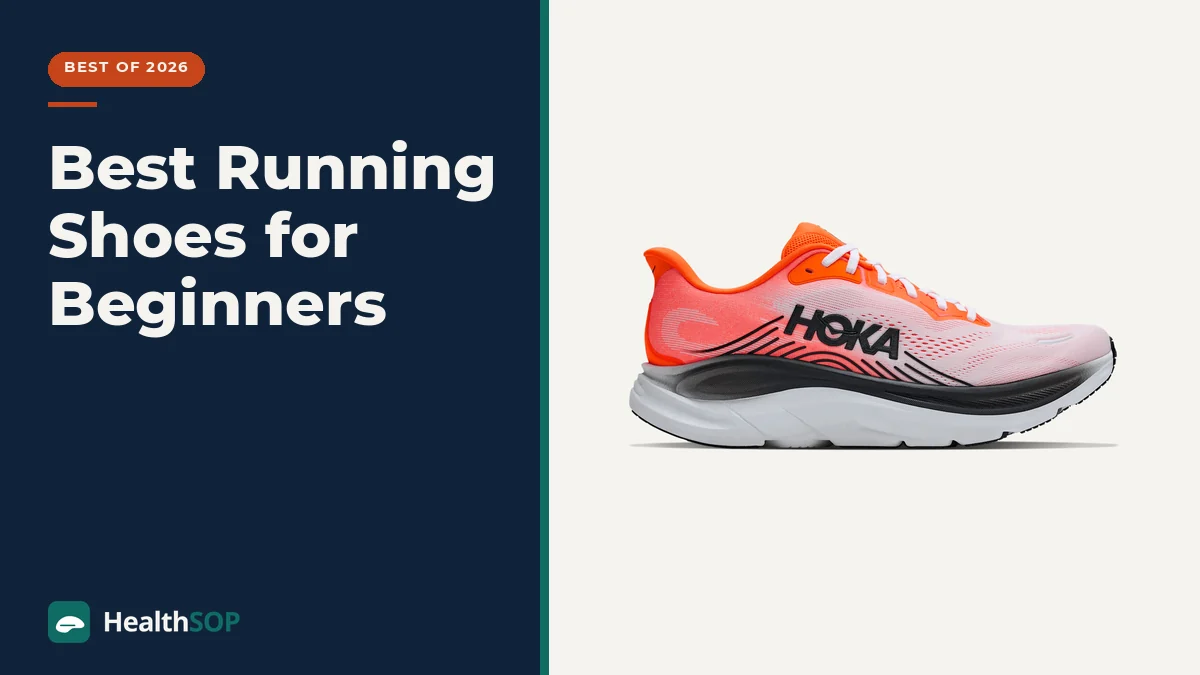
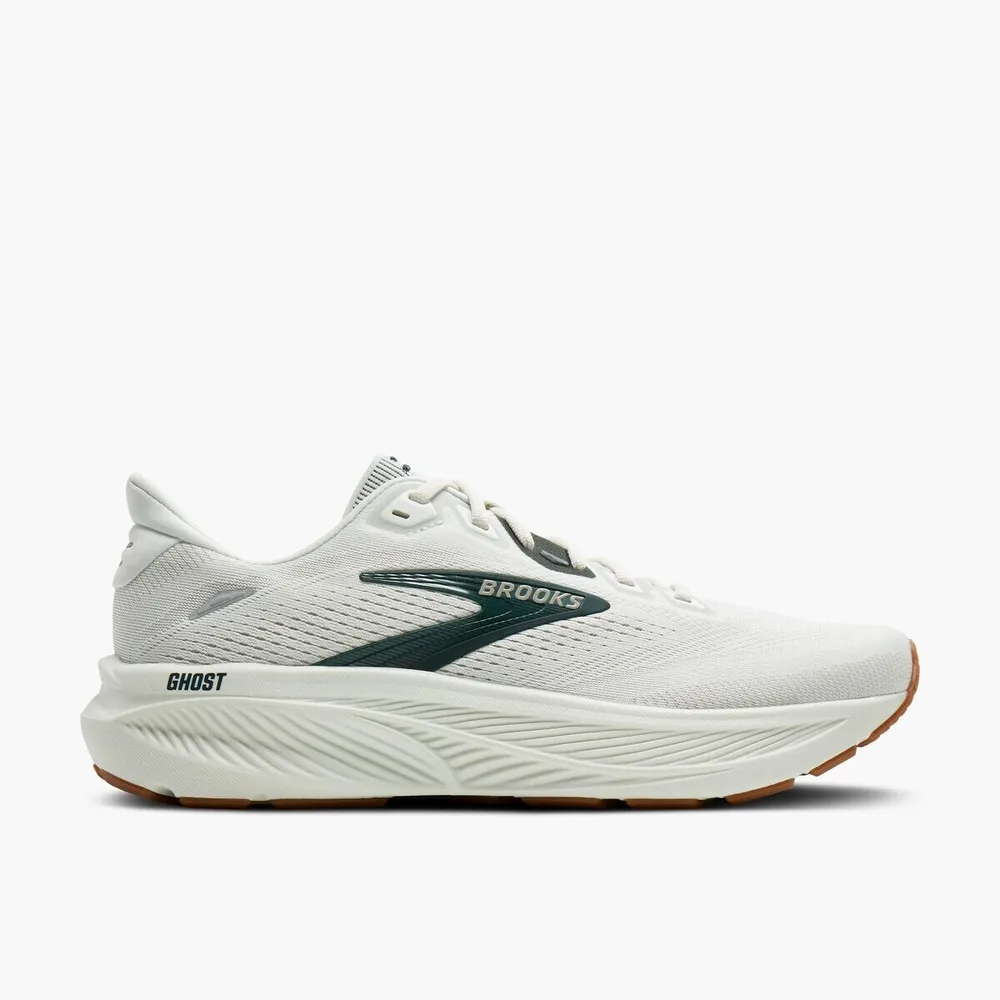
The Brooks Ghost 18 is the best running shoe for beginners for most people. It has a soft but steady ride, a classic 10 mm drop, and four widths. Want more bounce for less weight? Choose the ASICS Novablast 6. We picked all 12 shoes using brand specs, independent lab and tester data, and clinical shoe-fit advice.
Short answer: Buy the Brooks Ghost 18 for $150. It fits most new runners. Leave a thumb’s width of room at your toes. If it pinches at the sides, order the wide (2E) size, not a longer shoe.
As an Amazon Associate I earn from qualifying purchases. HealthSOP may earn a commission if you buy through links on this page, at no extra cost to you. Prices and stock are set by Amazon and can change.
By Lora Nicolas. Last updated: November 28, 2026. Medical note: this page is general information, not medical advice. If you have an injury or foot pain, see a doctor or podiatrist first.
Table of Contents
Quick picks: the best running shoes for beginners
Short on time? Start here. Every shoe below is a current model, built for easy daily miles, with no carbon plate.
| Award | Model | Why it made the list | Price | Shop |
|---|---|---|---|---|
| Best overall | Brooks Ghost 18 | Soft, steady ride with a 10 mm drop and four widths | $150 | Check price on Amazon |
| Best bouncy cushion | ASICS Novablast 6 | High stack and lively foam at just 253 g | $155 | Check price on Amazon |
| Best for walk-run and Couch to 5K | HOKA Clifton 11 | 42 mm of soft foam and a rocker for slow, easy miles | $155 | Check price on Amazon |
| Best stability | Brooks Adrenaline GTS 25 | GuideRails support for runners whose ankles roll in | $155 ($109.95 sale) | Check price on Amazon |
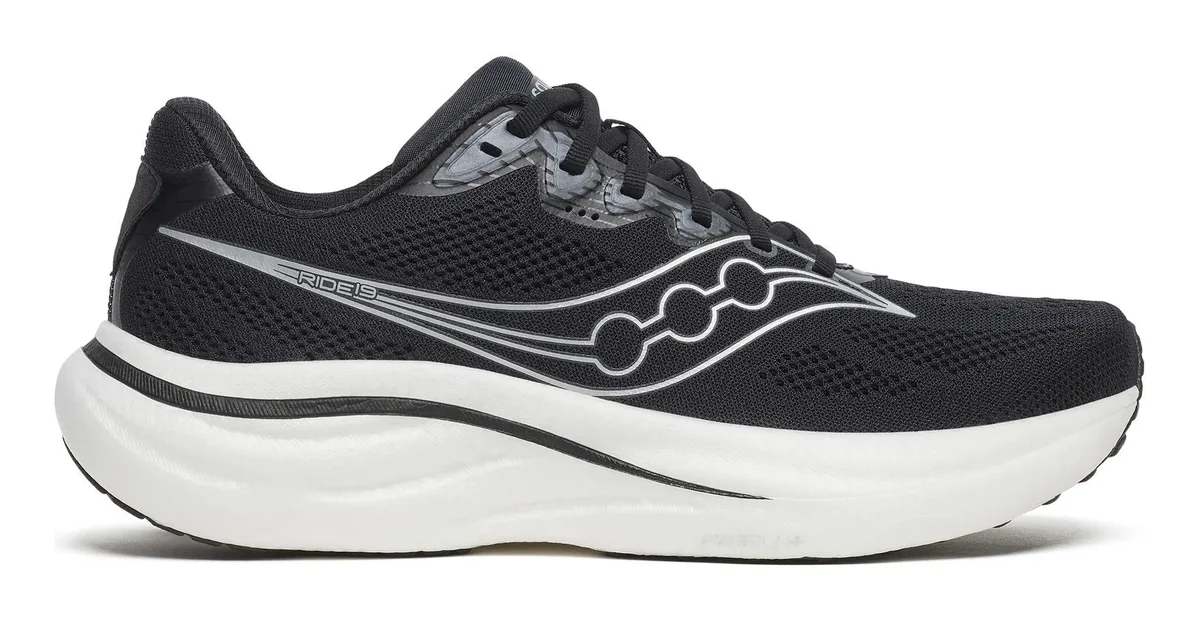
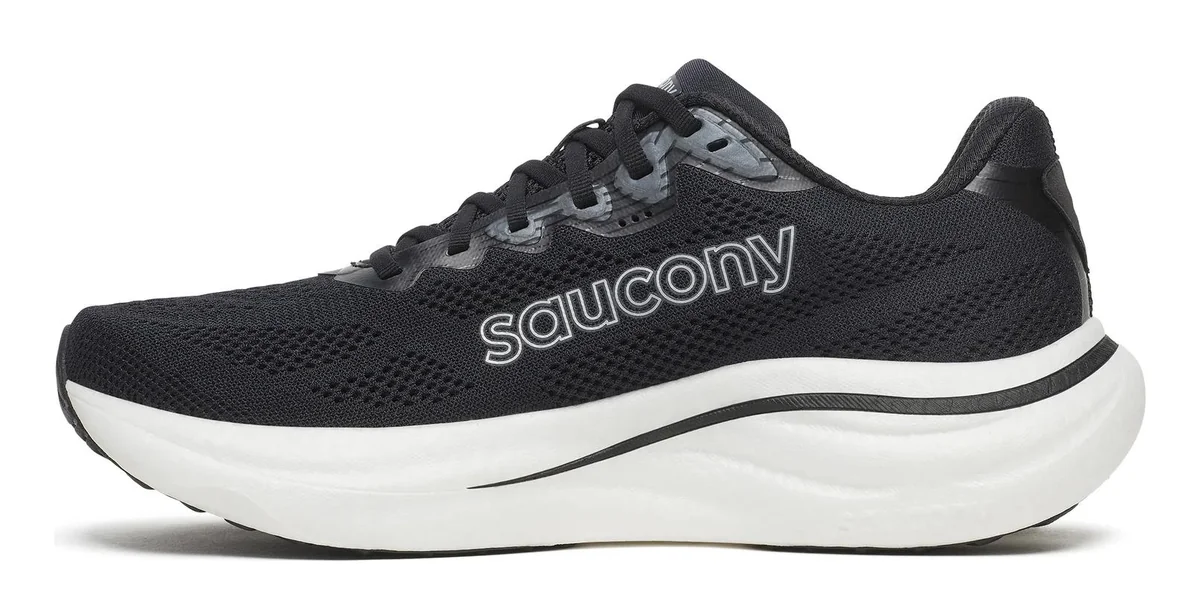
| Best balanced daily trainer | Saucony Ride 19 | Light, mid-height cushion that suits most paces | $145 | Check price on Amazon |
| Best for running and walking | ASICS Gel-Cumulus 28 | Soft FF BLAST MAX foam that also works for long walks | $145 ($109.95 sale) | Check price on Amazon |
| Best Nike for beginners | Nike Pegasus 42 | Full-length Air Zoom unit in a classic daily trainer | $145 | Check price on Amazon |
| Best for wide feet | New Balance 1080 v15 | Soft Infinion foam in narrow, standard, 2E and 4E | $169.99 | Check price on Amazon |
| Best plush cushion | Brooks Glycerin 23 | Brooks’ plushest daily trainer with a roomy fit | $175 | Check price on Amazon |
| Best lightweight stability | ASICS GT-2000 15 | Stability shoe at 252 g with a 38 mm heel | $150 | Check price on Amazon |
| Best comfort-first cruiser | Mizuno Wave Rider 30 | Thick, comfortable foam with an easy 8 mm drop | $150 | Check price on Amazon |
| Best zero-drop with a roomy toe box | Altra Torin 9 | Zero drop and a foot-shaped toe box for toe room | $160 | Check price on Amazon |
How do you pick your first running shoe in 3 questions?
Answer three questions and you’ll land on one or two shoes. This is the quickest way to narrow the list.
- 1. Do your ankles roll in a lot, or do soft shoes feel wobbly? Yes: Adrenaline GTS 25 or GT-2000 15. No: go to question 2.
- 2. Do regular shoes squeeze your feet or toes? Yes: 1080 v15 in 2E/4E, or the Torin 9 for toe room. No: go to question 3.
- 3. Will you walk part of each run? Yes: Clifton 11 or Gel-Cumulus 28. No: Ghost 18 for a steady ride, or Novablast 6 for bounce.
What a beginner needs
- A neutral, cushioned daily trainer with no carbon plate.
- At least 30 mm of foam under the heel. The Torin 9 is the one exception here, at 28 mm.
- A fit with a thumb’s width at the toes and no pinch at the sides.
- A drop of 8-10 mm, which feels like normal sneakers.
- Widths that fit your feet. Ask for 2E or 4E if regular shoes squeeze.
What a beginner does NOT need
- A carbon plate. Plated shoes are made for racing, not easy miles.
- A race-day shoe. They cost more and feel less stable at slow paces.
- Fashion sneakers. They look like running shoes but lack the foam and grip.
- The most expensive shoe on the shelf. Price does not buy comfort.
- A shoe picked only by looks or brand name.
Sizing and try-on checklist
- Try shoes in the evening, when your feet are largest.
- Wear your running socks.
- Leave a thumb’s width past your longest toe.
- Your toes should wiggle. Your heel should not slip.
- Walk, then jog a few steps in the store. Use the store treadmill if it has one.
- If the sides pinch, ask for 2E or 4E instead of a longer size.
- Try both shoes on. Feet are rarely the same size.
This REI video shows how to pick a road running shoe. Watch it before you buy.
Still stuck? Try your top two in a store, or order both and return the one that feels worse. Comfort is the tie-breaker.
What makes a running shoe good for beginners?
A good beginner shoe is a comfortable, cushioned daily trainer that fits well. You don’t need race shoes, carbon plates, or special tech. Here’s what matters most.
Comfort first (the comfort filter)
Pick the shoe that feels best on your feet. In a 2015 review in the British Journal of Sports Medicine, Benno Nigg and colleagues proposed this “comfort filter.” They argued that the most comfortable shoe is likely the right choice for your body.
A 2022 Cochrane review of 12 trials found little proof that any one shoe type prevents injuries. So don’t overthink the tech. Fit and comfort come first.
Moderate to high cushioning
Choose a shoe with at least 30 mm of foam under the heel. RunRepeat uses that cutoff for beginner shoes, because thin shoes make your feet and legs work harder. Every pick here clears it except the Torin 9, which has 28 mm.
Neutral vs stability
Most beginners do fine in a neutral running shoe. A study of 927 novice runners in neutral shoes found that moderate pronation did not raise injury risk over a year. Choose stability only if your ankles roll in a lot, or neutral shoes feel unsteady.
Fit: a thumb’s width and the right width
Leave about half an inch, or a thumb’s width, between your longest toe and the shoe tip. The AAOS also says your toes should wiggle freely. Shop in the evening, when feet are largest, and wear your running socks.
Your heel shouldn’t slip. If the sides pinch, ask for a wide (2E) or extra wide (4E) size instead of going up in length. Our guide on how to get fitted for running shoes walks through each step.
Heel drop
Drop is the height difference between the heel and forefoot. Most beginners do well with 8-10 mm, which feels like normal sneakers. RunRepeat suggests 8 mm or more for new runners. Low and zero-drop shoes need a slow build-up.
Durability and value
A good daily trainer should last a few hundred miles. The AAOS says foam loses about 45% of its shock absorption by 500 miles. See our guide on how long running shoes last for signs it’s time for a new pair.
Best running shoes for beginners compared side by side
This table puts the key numbers in one place. Weights are men’s brand figures; women’s versions run lighter.
| Model | Support | Cushion level | Drop (mm) | Weight (g) | Widths | Price | RunRepeat score | Best for |
|---|---|---|---|---|---|---|---|---|
| Brooks Ghost 18 | Neutral | Medium-soft | 10 | 289 | N, M, 2E, 4E | $150 | 86 | Most new runners |
| ASICS Novablast 6 | Neutral | High, bouncy | 8 | 253 | Standard, wide | $155 | 93 | Fun, light cushion |
| HOKA Clifton 11 | Neutral | High, soft | 8 | 283 | Regular, wide, X-wide | $155 | 85 | Walk-run plans |
| Brooks Adrenaline GTS 25 | Stability | Medium | 10 | 300.5 | N, M, 2E, 4E | $155 ($109.95 sale) | 86 | Overpronation |
| Saucony Ride 19 | Neutral | Medium | 8 | 255 | Standard; wide in some colors | $145 | 88 | All-round use |
| ASICS Gel-Cumulus 28 | Neutral | High, soft | 8 | 259 | Standard (D), Wide (2E), Extra Wide (4E) | $145 ($109.95 sale) | 86 | Running plus walking |
| Nike Pegasus 42 | Neutral | Medium, springy | 10 | ~300 | Regular, wide | $145 | 80 | Nike fans |
| New Balance 1080 v15 | Neutral | High, soft | 6 | 261 | N, standard, 2E, 4E | $169.99 | 91 | Wide feet |
| Brooks Glycerin 23 | Neutral | High, plush | 8 | 300.5 | Medium (1D), Wide (2E), Extra Wide (4E) | $175 | 85 | Plush easy miles |
| ASICS GT-2000 15 | Stability | Medium-firm | 8 | 252 | Standard, wide, X-wide | $150 | 91 | Light support |
| Mizuno Wave Rider 30 | Neutral | High, soft | 8 | 266 | Standard, 2E | $150 | 83 | Comfort first |
| Altra Torin 9 | Neutral | Medium | 0 | 269 | Regular, wide | $160 | 81 | Toe room, zero drop |
Lab scores: RunRepeat and RTINGS
Two labs test every shoe here. RunRepeat cuts the shoe in half and measures it. RTINGS runs it on a test bench. Here is what both labs say.
| Model | RunRepeat score (/100) | RTINGS cushioning (/10) | RTINGS daily training (/10) |
|---|---|---|---|
| Brooks Ghost 18 | 86 | 6.6 | 7.4 |
| ASICS Novablast 6 | 93 | 8.5 | 7.9 |
| HOKA Clifton 11 | 85 | 8.0 | 7.7 |
| Brooks Adrenaline GTS 25 | 86 | 6.2 | 7.1 |
| Saucony Ride 19 | 88 | 7.7 | 8.0 |
| ASICS Gel-Cumulus 28 | 86 | 6.9 | 7.8 |
| Nike Pegasus 42 | 80 | 6.0 | 7.2 |
| New Balance 1080 v15 | 91 | 7.9 | 7.9 |
| Brooks Glycerin 23 | 85 | 7.4 | Not published |
| ASICS GT-2000 15 | 91 | 7.5 | 7.9 |
| Mizuno Wave Rider 30 | 83 | 7.8 | 6.7 |
| Altra Torin 9 | 81 | 4.8 | 7.0 |
Prices and specs checked 28 Nov 2026. Sale prices can end without notice. Check the brand page before you buy.
Best beginner running shoes on a budget
No. A mid-priced daily trainer gives a beginner everything they need. Flagship shoes add lighter foams and fancier uppers, but they won’t make your first 5K easier.
The cheapest way to get a great shoe is last year’s model on sale. Brands cut the price when the new version lands. You get the same fit and foam for 30-40% less. Check that the fit did not change between versions.
The clearest case right now is the Brooks Ghost 17, the previous Ghost. It costs about $95-$100, down from $150. That is 33-36% off. It has the same 10 mm drop, DNA LOFT v3 foam, and four widths as the Ghost 18. Sizes are limited because it is a clearance shoe. The Amazon link for the Ghost 17 goes live with this update, once we confirm the listing.
Cheapest right now: the adidas Questar 4 is $32 on adidas.com (was $80). The sale ends 28 Nov 2026. We could not confirm its specs on the US page, so we do not list them here. We also found no Amazon listing for it, so we give no Amazon link.
Value pick: the Nike Winflo 12 costs $110 on nike.com. Nike lists it at $79.97 on its Black Friday page. Some deal sites list $59.98 with a code, but we could not confirm that code on nike.com. It is a solid cheap daily trainer if the Ghost 17 sizes run out.
| Model | List price | On sale now |
|---|---|---|
| Brooks Ghost 18 | $150 | — |
| ASICS Novablast 6 | $155 | — |
| HOKA Clifton 11 | $155 | — |
| Brooks Adrenaline GTS 25 | $155 | $109.95 |
| Saucony Ride 19 | $145 | — |
| ASICS Gel-Cumulus 28 | $145 | $109.95 |
| Nike Pegasus 42 | $145 | — |
| New Balance 1080 v15 | $169.99 | — |
| Brooks Glycerin 23 | $175 | — |
| ASICS GT-2000 15 | $150 | — |
| Mizuno Wave Rider 30 | $150 | — |
| Altra Torin 9 | $160 | — |
Prices and specs checked 28 Nov 2026. Sale prices can end without notice. Check the brand page before you buy.
The 12 best running shoes for beginners, reviewed
Each pick below lists its key specs, why it helps a new runner, honest pros and cons, and who should skip it. Specs come from the brand unless we say otherwise.
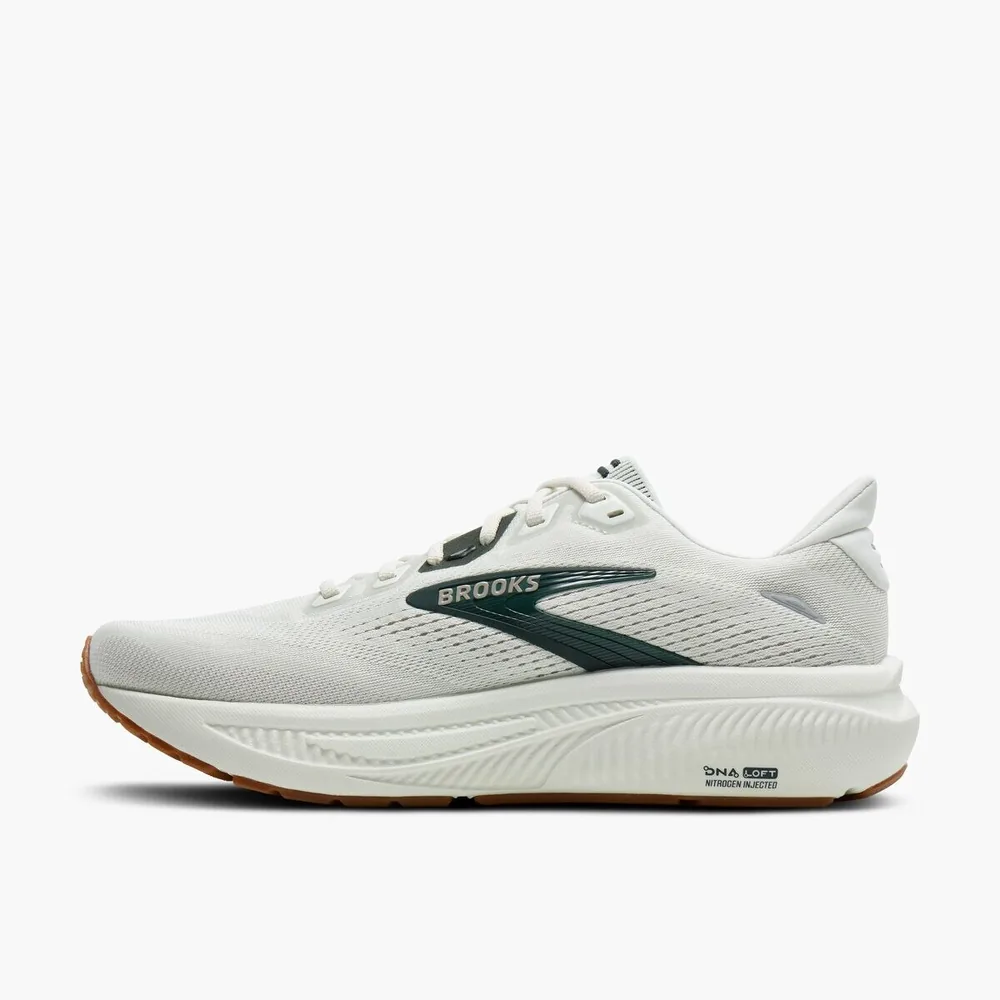
1. Brooks Ghost 18: Best overall for beginners
Best overall: pick the Ghost 18 if you want one simple shoe that feels good from your first run.
- Support: neutral
- Cushion: DNA LOFT v3 foam, medium-soft
- Stack: 36 mm heel / 26 mm forefoot
- Drop: 10 mm
- Weight: 289 g (10.2 oz), men’s
- Lab scores: RunRepeat 86/100; RTINGS cushioning 6.6/10, daily training 7.4/10
- Widths: narrow, medium, wide (2E), extra wide (4E)
- Source: Brooks Ghost 18 product page and RunRepeat lab review
The Ghost is the shoe most running stores hand to new runners, and the 18 keeps that role. Runner’s World calls its cushioning “Goldilocks”: not too soft, not too firm. That balance matters when your legs are still getting used to impact.
The 10 mm drop feels like the sneakers most people grew up in. That makes the switch to running easier on your calves. Four widths mean most feet can find a good fit without sizing up.
Pros
- Four widths, from narrow to extra wide (4E)
- Classic 10 mm drop feels familiar for heel strikers
- Balanced cushion that is neither mushy nor hard
- Durable outsole, per RunRepeat’s lab
- Comfortable enough for walking days too
Cons
- Some Runner’s World testers said it felt a little stiff for the first week. Give it a few easy runs, or pick the softer Clifton 11.
Who it’s for: new runners who want a safe, simple first shoe for easy miles. Skip it if: you want a bouncier, lighter shoe; the Novablast 6 is livelier.
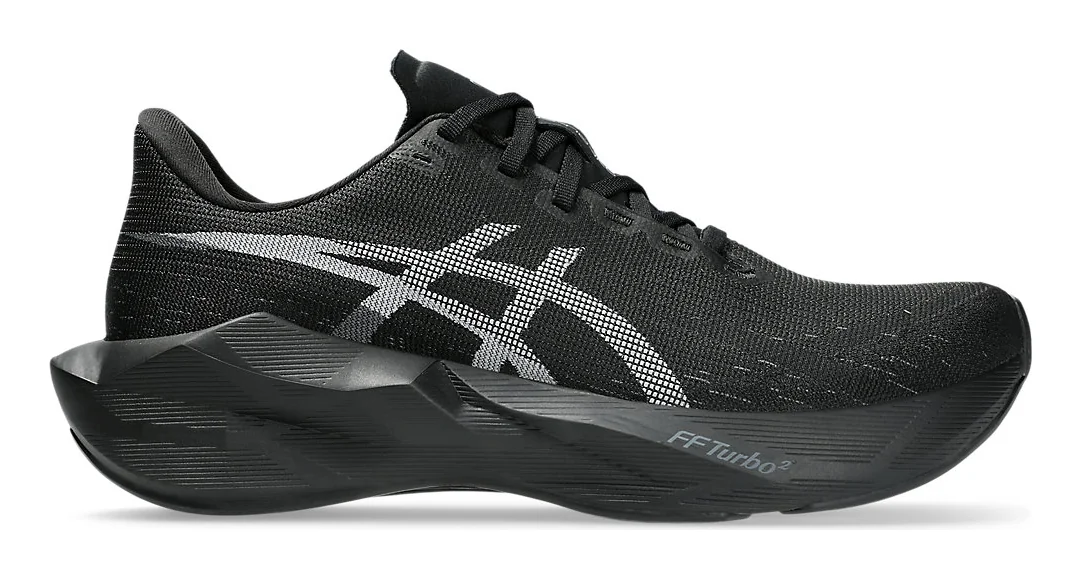
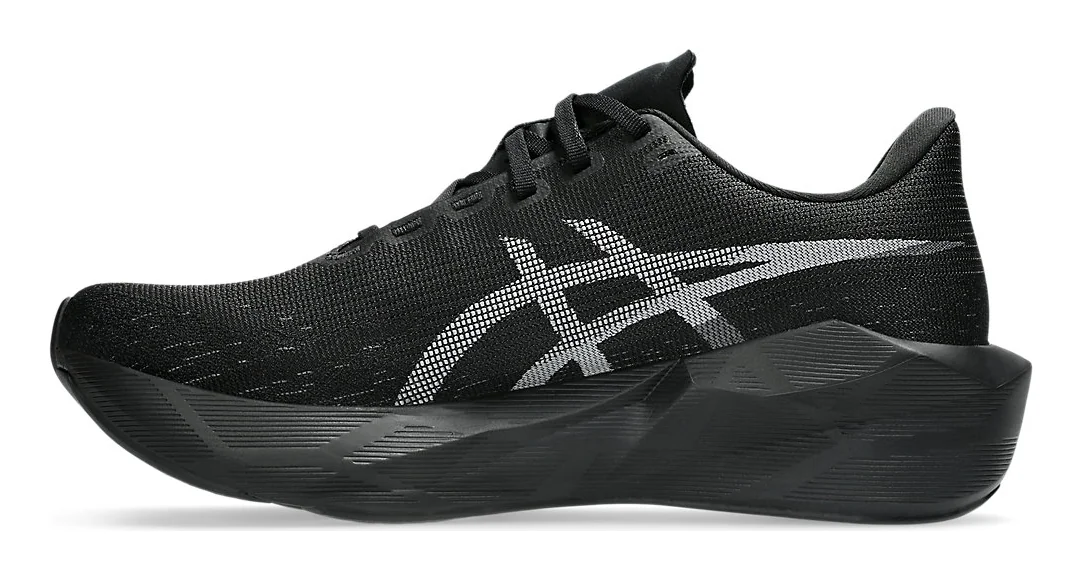
2. ASICS Novablast 6: Best bouncy cushion
Best bouncy cushion: pick the Novablast 6 if you want lots of foam that still feels light and fun.
- Support: neutral
- Cushion: FF BLAST MAX foam with an FF TURBO SQUARED forefoot pod
- Stack: 41.5 mm heel / 33.5 mm forefoot (ASICS spec via RoadTrailRun)
- Drop: 8 mm
- Weight: 253 g (8.9 oz), men’s size 9
- Lab scores: RunRepeat 93/100; RTINGS cushioning 8.5/10, daily training 7.9/10
- Widths: standard and wide
- Source: ASICS Novablast 6 product page and RoadTrailRun review
RTINGS names the Novablast 6 its top beginner shoe. Their lab scored its cushioning 8.5 out of 10. They say it can carry you from your first mile to your first 10K.
The new forefoot pod gives a springy push-off. ASICSGRIP rubber up front adds traction on wet roads. At 253 g, it’s one of the lighter shoes here, even with a 41.5 mm heel.
Pros
- Light for its stack at 253 g
- RTINGS’ top pick for new runners
- Bouncy forefoot pod makes easy runs feel fun
- ASICSGRIP rubber in the forefoot for grip
- Comes in a wide version
Cons
- A RoadTrailRun tester felt the foam was less lively at very slow paces. If you run-walk most days, the Clifton 11 suits that pace better.
Who it’s for: new runners who want one shoe that grows with them into 5K and 10K training. Skip it if: you want a firm, close-to-the-ground feel; try the Ride 19.
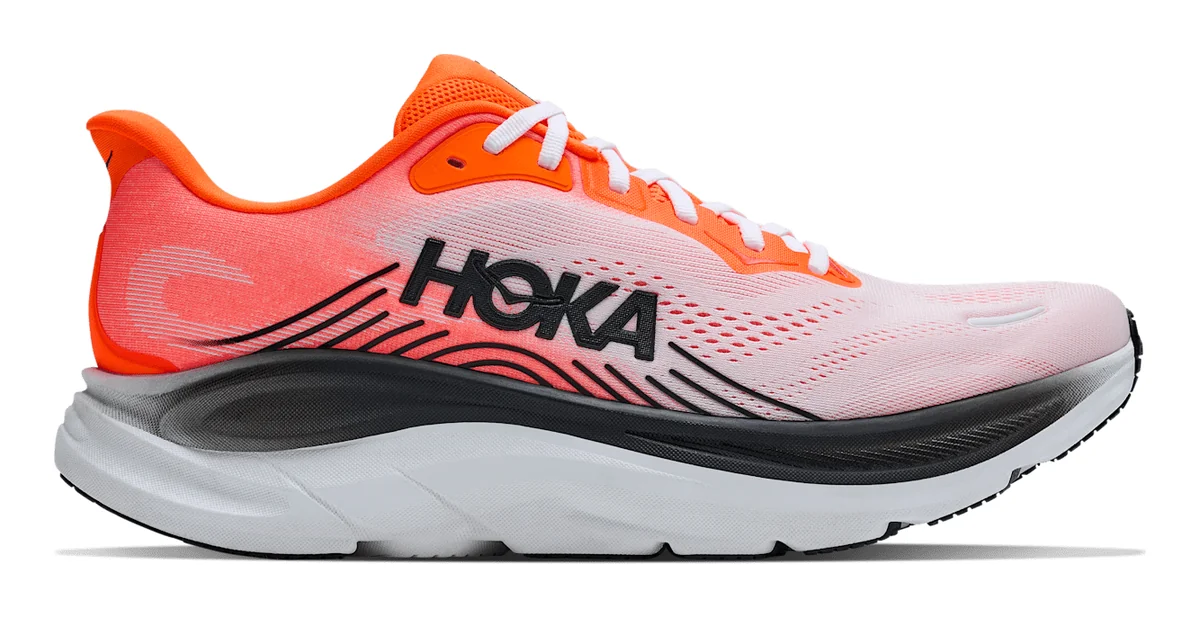
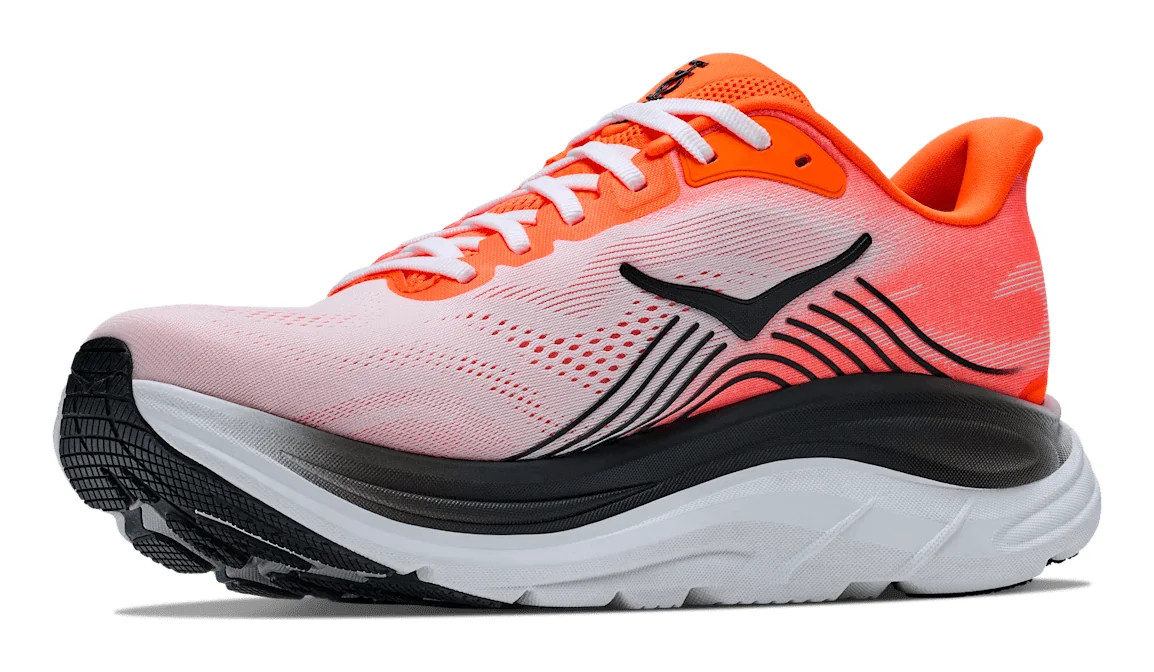
3. HOKA Clifton 11: Best for walk-run and Couch to 5K
Best for walk-run plans: pick the Clifton 11 if your plan mixes walking and running.
- Support: neutral
- Cushion: compression-molded EVA, soft
- Stack: 42 mm heel / 34 mm forefoot
- Drop: 8 mm
- Weight: 283 g (10 oz), men’s
- Lab scores: RunRepeat 85/100; RTINGS cushioning 8.0/10, daily training 7.7/10
- Widths: regular, wide, extra wide
- Source: HOKA Clifton 11 product page (UK; US page lists the same weight, drop and widths) and RTINGS beginner guide
RTINGS chose the Clifton 11 as its best shoe for run-walk plans. It softens each landing and feels steady at slow speeds. HOKA’s MetaRocker sole helps your foot roll forward when you’re walking between runs.
The 11 changed only the upper from the Clifton 10. You get a softer sockliner and a new mesh. The ride that made the Clifton popular stays the same.
Pros
- 42 mm of soft foam under the heel
- Rocker sole rolls you forward at slow paces
- Three widths, up to extra wide
- RTINGS’ best pick for run-walk plans
- Durable rubber in high-wear zones
Cons
- RTINGS found it gives back less energy than the Novablast 6, so faster runs take more effort. Fine for easy pace; add a livelier shoe later if you start chasing times.
Who it’s for: Couch to 5K runners, heavier beginners, and anyone who walks part of each run. Skip it if: you want a fast, firm shoe for workouts.
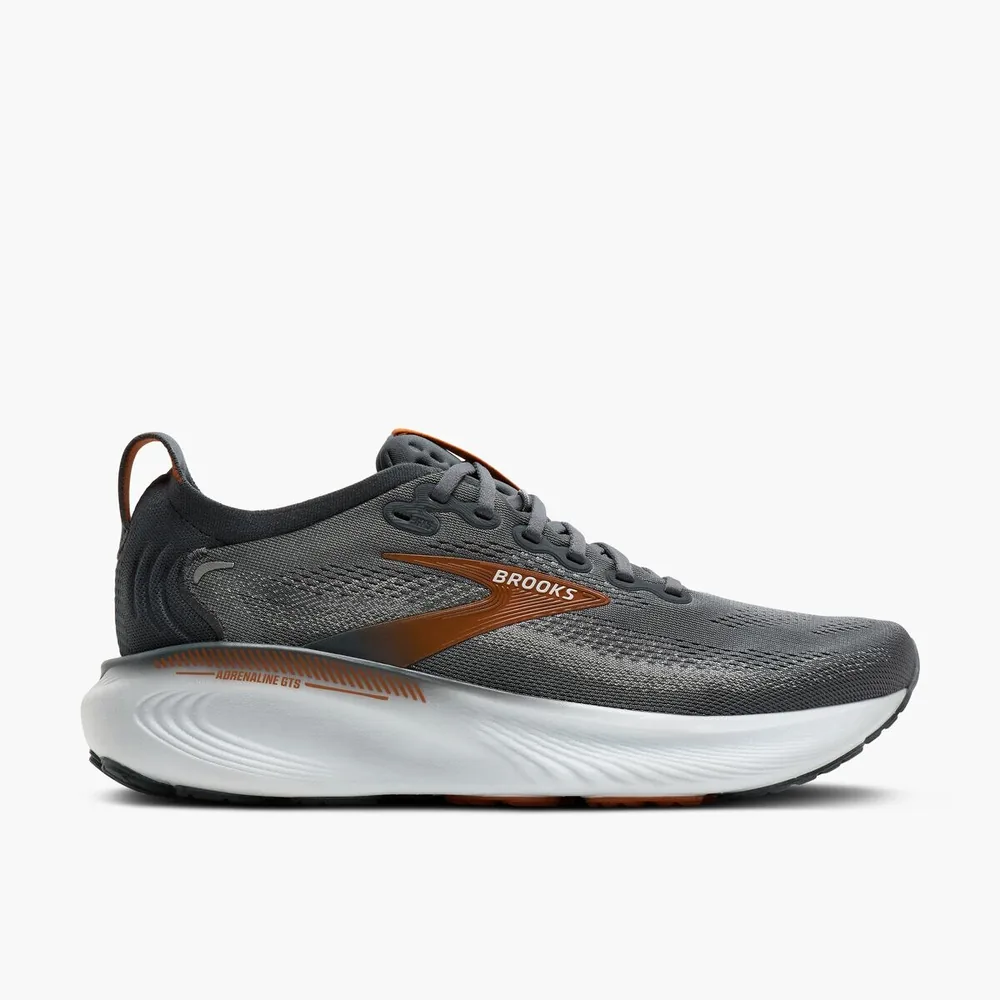
4. Brooks Adrenaline GTS 25: Best stability for new runners
Best stability: pick the Adrenaline GTS 25 if your ankles roll in a lot, or a neutral shoe feels wobbly.
- Support: stability (GuideRails)
- Cushion: nitrogen-infused DNA LOFT v3
- Stack: 36 mm heel / 26 mm forefoot
- Drop: 10 mm
- Weight: 300.5 g (10.6 oz), men’s
- Lab scores: RunRepeat 86/100; RTINGS cushioning 6.2/10, daily training 7.1/10
- Widths: narrow, medium, wide (2E), extra wide (4E)
- Source: Brooks Adrenaline GTS 25 product page
GuideRails are firm walls of foam on each side of the heel. They only step in when your foot or knee drifts too far. On a normal stride, the shoe rides much like the Ghost.
Runner’s World named it the best stability shoe for beginners. Their testers said it “guides without pinching.” It also carries the American Podiatric Medical Association (APMA) Seal of Acceptance. Not sure you need support? Read our guide on what a stability running shoe does.
Pros
- GuideRails support that stays out of the way on a normal stride
- APMA Seal of Acceptance
- Four widths, up to extra wide (4E)
- Familiar 10 mm drop
- Runner’s World testers found it cushioned, not sluggish
Cons
- At 300.5 g it’s one of the heavier shoes here and not built for speed work. That’s fine at beginner pace; add a lighter shoe later if you want one for faster days.
Who it’s for: beginners who overpronate a lot, have flat feet, or feel unsteady in soft neutral shoes. Skip it if: your stride feels fine in neutral shoes; most beginners do, and the Ghost 18 rides softer.
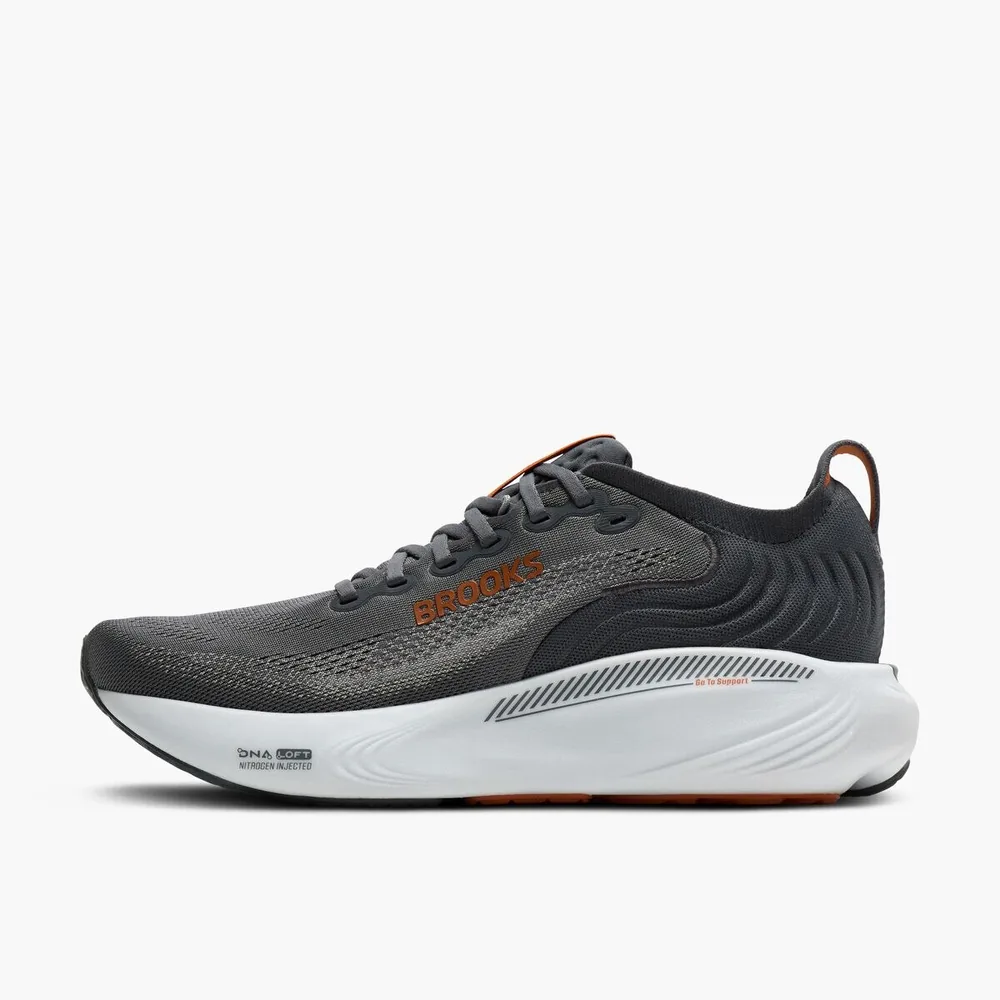
5. Saucony Ride 19: Best balanced daily trainer
Best balanced trainer: pick the Ride 19 if you want a light, middle-of-the-road shoe that does a bit of everything.
- Support: neutral
- Cushion: reformulated PWRRUN+ midsole and PWRRUN+ sockliner
- Stack: 36 mm heel / 28 mm forefoot
- Drop: 8 mm
- Weight: 255 g (8.9 oz), men’s
- Lab scores: RunRepeat 88/100; RTINGS cushioning 7.7/10, daily training 8.0/10
- Widths: standard; wide in some colors
- Source: Saucony Ride 19 product page and Doctors of Running review
The Ride 19 sits lower than most shoes on this list. That gives you more feel for the ground and a steady ride. Doctors of Running says the new, wider base makes it more stable and a bit softer than before.
Saucony added flex grooves for smooth walk-to-run transitions. At 255 g, it’s light enough to pick up the pace once you’re fitter.
Pros
- Light at 255 g
- Mid-height 36 mm stack feels stable and connected
- Wider base than the Ride 18, per Doctors of Running
- Flex grooves for smooth walk-to-run changes
- Softer, reformulated PWRRUN+ foam
Cons
- RunToTheFinish notes wide sizes come in only a few colors. If you need a 2E, check the color list first or choose the Ghost 18.
Who it’s for: beginners who dislike tall, mushy shoes and want one trainer for most runs. Skip it if: you want max cushion; the Glycerin 23 or Clifton 11 has more foam.
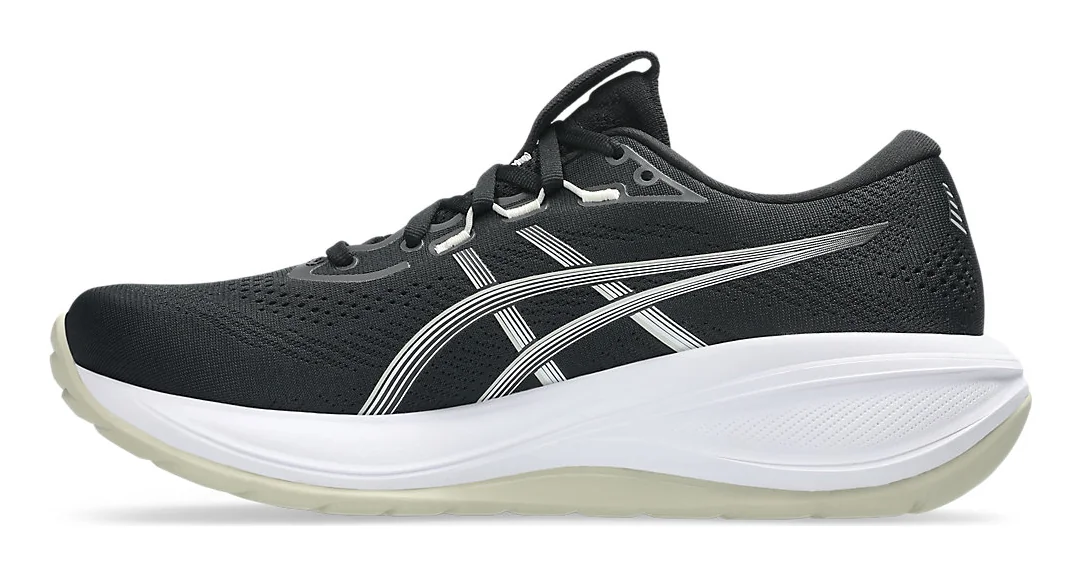
6. ASICS Gel-Cumulus 28: Best for running and walking
Best two-in-one: pick the Gel-Cumulus 28 if you want one shoe for easy runs and long walks.
- Support: neutral
- Cushion: FF BLAST MAX foam
- Stack: 38.5 mm heel / 30.5 mm forefoot (Runner’s World)
- Drop: 8 mm
- Weight: 259 g (9.1 oz), men’s
- Lab scores: RunRepeat 86/100; RTINGS cushioning 6.9/10, daily training 7.8/10
- Widths: standard (D), wide (2E), extra wide (4E)
- Source: ASICS Gel-Cumulus 28 product page and Runner’s World review
The Cumulus 28 swapped its old foam for FF BLAST MAX, the same type used in the Novablast. Runner’s World says that makes it lighter and bouncier than the Cumulus 27.
Their reviewer walked up to 25,000 steps a day in it and loved the comfort. The smooth heel bevel rolls you forward, which helps on walk breaks.
Pros
- Light at 259 g
- FF BLAST MAX foam feels soft and bouncy
- Works as both a running and an all-day walking shoe
- AHAR LO rubber in the heel where wear is highest
- Breathable, softer mesh upper
Cons
- Runner’s World found the laces a bit short. A longer pair of laces fixes it in minutes.
Who it’s for: new runners who also walk a lot and want one comfortable pair. Skip it if: you need extra support; look at the GT-2000 15.
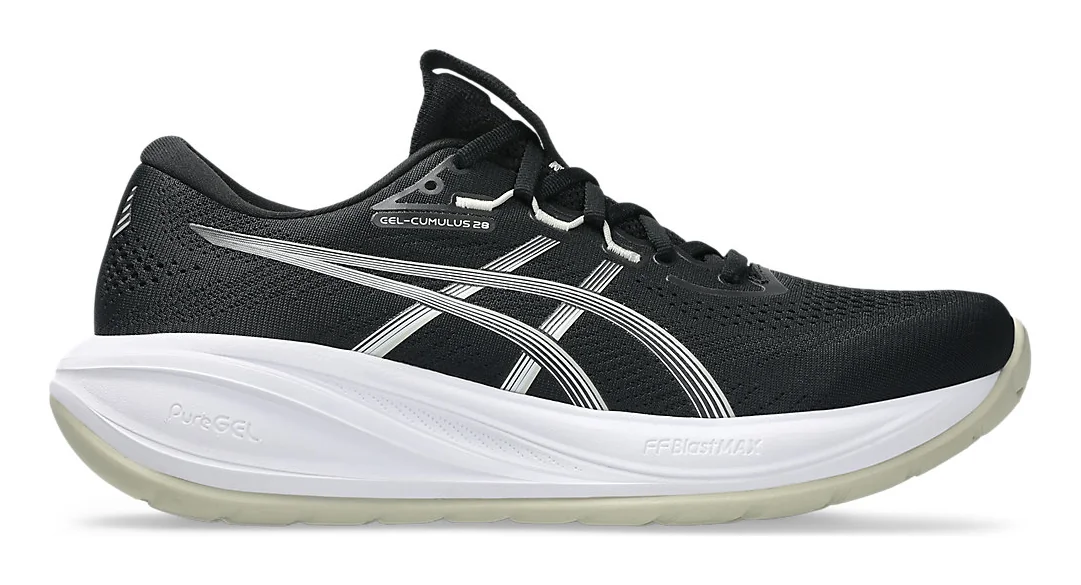
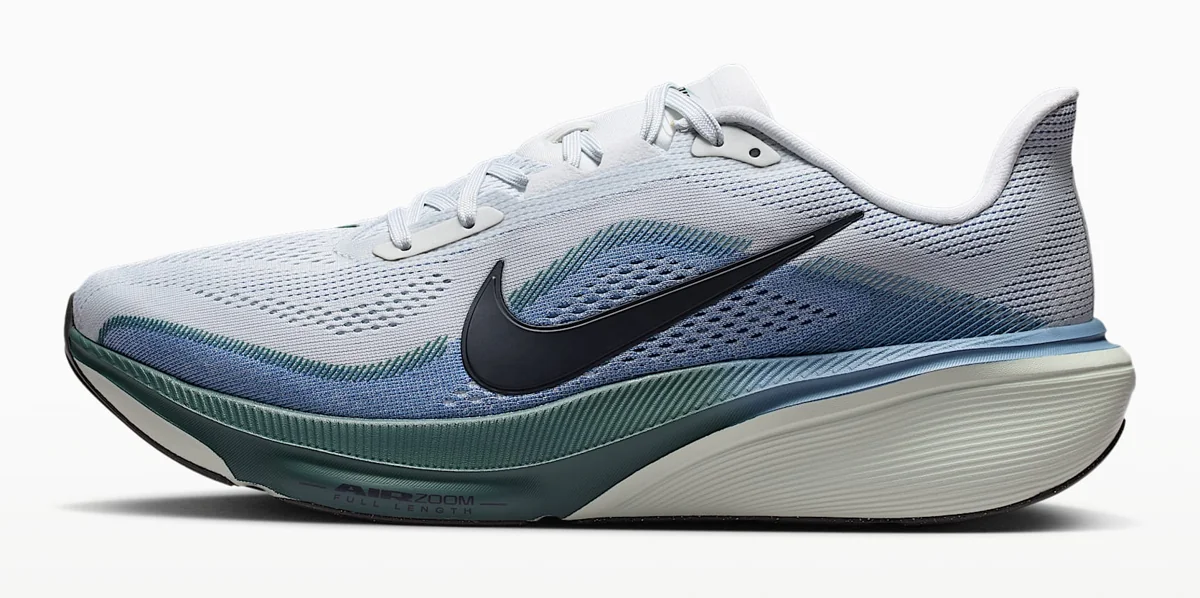
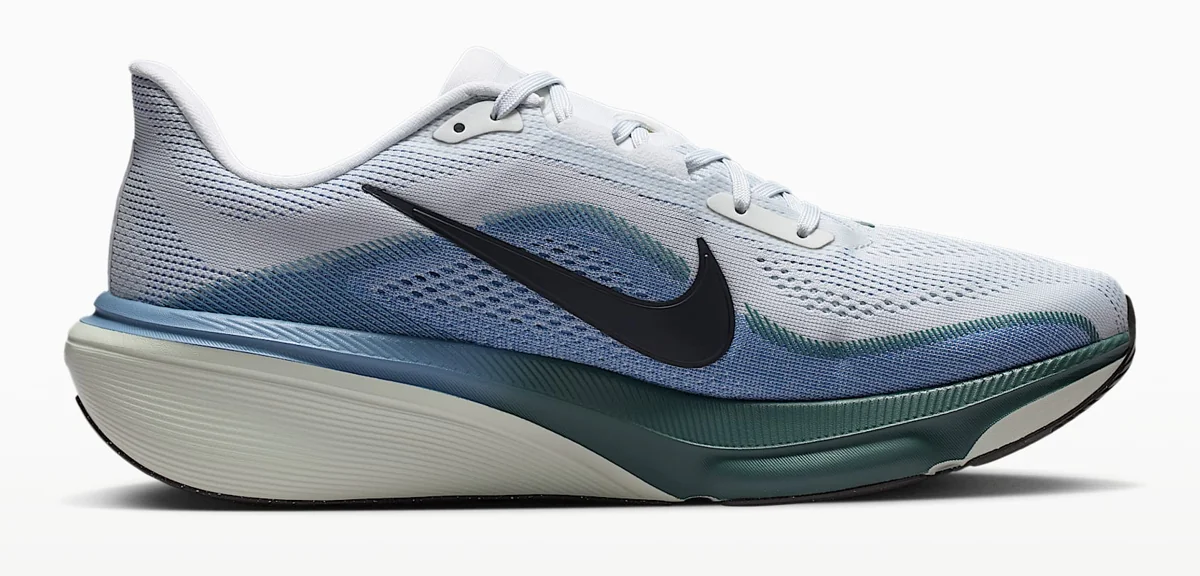
7. Nike Pegasus 42: Best Nike running shoe for beginners
Best Nike: pick the Pegasus 42 if you like Nike and want a springy, do-it-all trainer.
- Support: neutral
- Cushion: ReactX foam with a full-length Air Zoom unit
- Stack: 37 mm heel / 27 mm forefoot (Nike claim; RunRepeat lab 36.0 / 22.0 mm)
- Drop: 10 mm
- Weight: about 300 g (10.59 oz), men’s size 10
- Lab scores: RunRepeat 80/100; RTINGS cushioning 6.0/10, daily training 7.2/10
- Widths: regular and wide
- Source: Nike Pegasus 42 product page and RunToTheFinish review
The Pegasus is Nike’s classic daily trainer. The 42 adds a full-length Air Zoom unit for a springier toe-off. Nike says its ReactX foam is 13% more responsive than the old React foam.
RunToTheFinish calls it its best all-around shoe for beginning runners. They also say it “feels lighter than it is” and holds up well.
Pros
- Full-length Air Zoom unit for a springy push-off
- ReactX foam is 13% more responsive than React, per Nike
- 10 mm drop suits heel strikers
- Comes in a wide version
- RunToTheFinish found it durable and good value
Cons
- RunToTheFinish found the toe box shallow and the fit a bit short. Try a half size up, or order the wide version.
Who it’s for: Nike fans who want one trainer for easy runs and the odd faster day. Skip it if: you want max softness; the Clifton 11 or Glycerin 23 feels plusher.
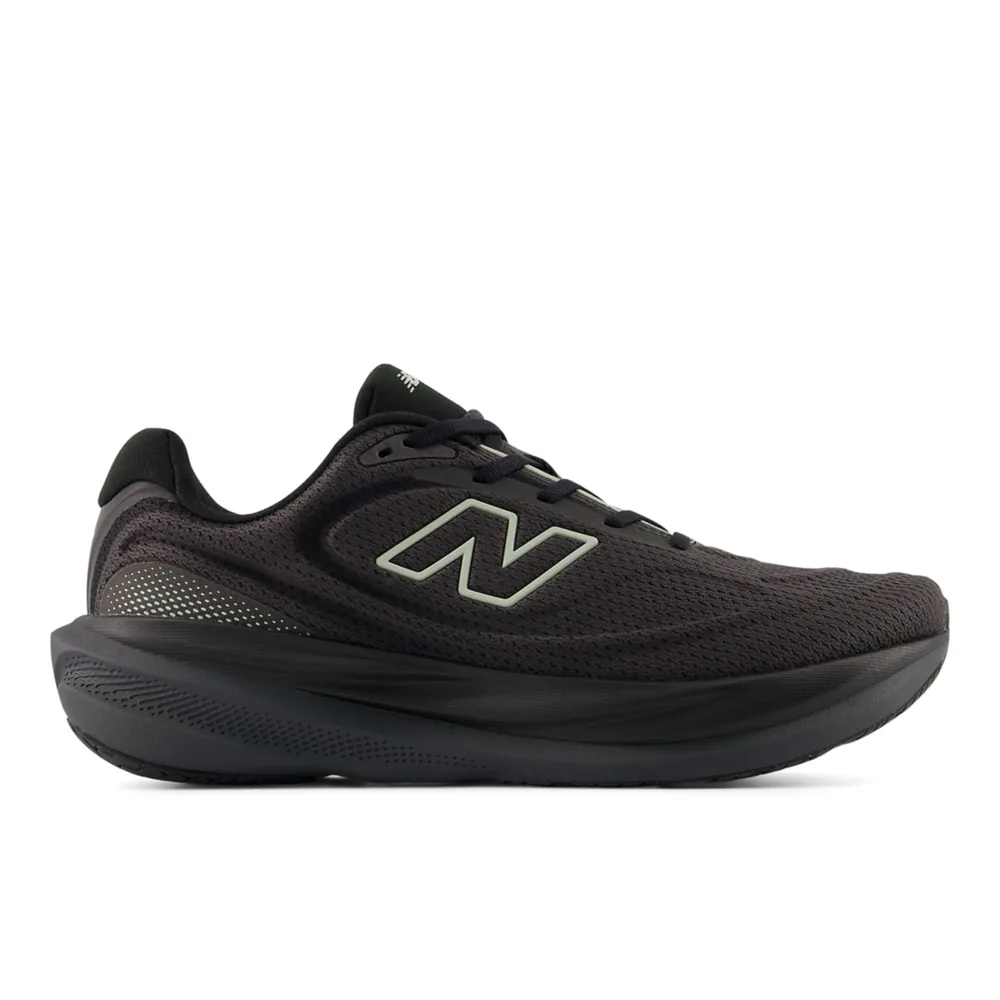
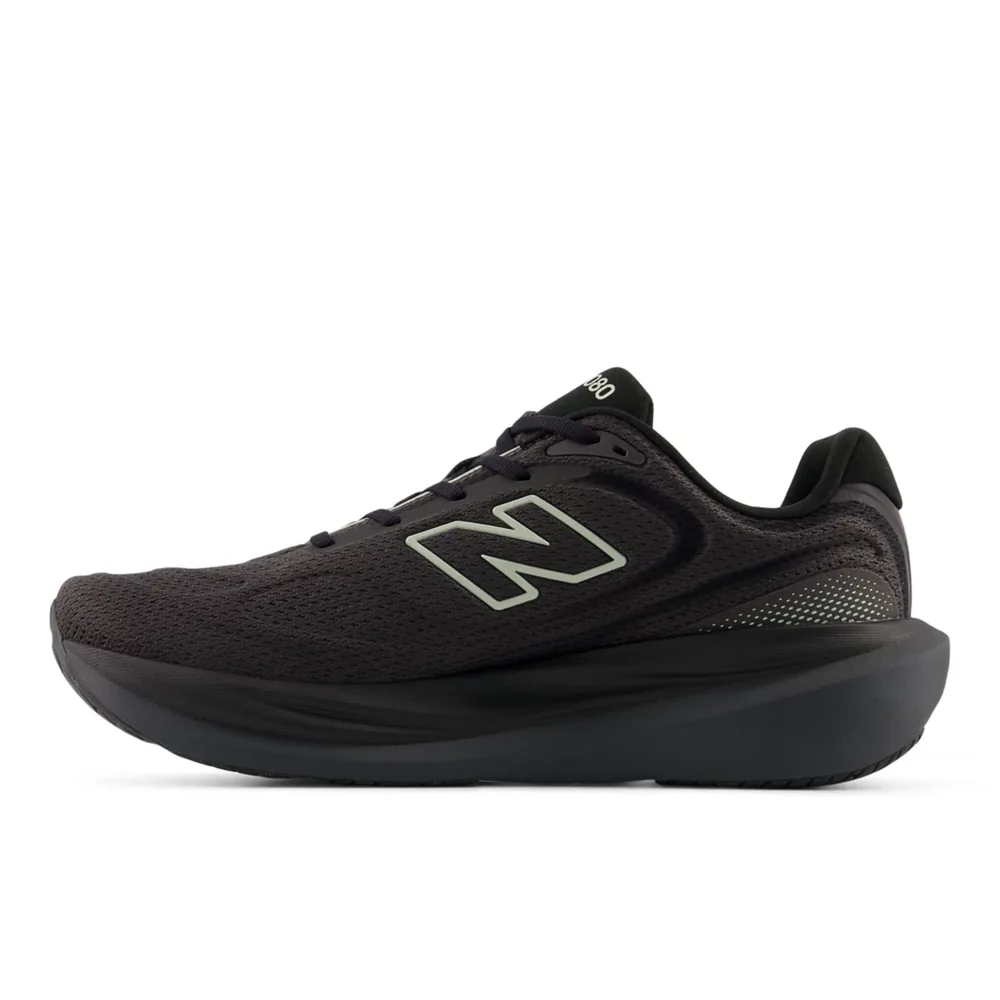
8. New Balance 1080 v15: Best for wide feet
Best for wide feet: pick the 1080 v15 if regular shoes squeeze the sides of your feet.
- Support: neutral
- Cushion: Infinion foam, soft
- Stack: 40 mm heel / 34 mm forefoot (retailer/launch figure; RunRepeat lab 37.0 / 30.6 mm)
- Drop: 6 mm
- Weight: 261 g, men’s
- Lab scores: RunRepeat 91/100; RTINGS cushioning 7.9/10, daily training 7.9/10
- Widths: narrow, standard, wide (2E), extra wide (4E)
- Source: New Balance 1080 v15 product page and RunRepeat lab review
Few cushioned shoes come in four widths. The 1080 v15 does, from narrow to extra wide. That makes it a strong pick if you’ve always had trouble finding shoes that fit.
RunToTheFinish calls the cushion “not too squishy” and found plenty of room through the midfoot. The 6 mm drop is lower than most shoes here. For more toe room, see our best running shoes with a wide toe box.
Pros
- Four widths, including 2E and 4E
- 40 mm of soft Infinion foam
- Roomy midfoot, per RunToTheFinish
- Slightly wider base adds stability
- Light for a max-cushion shoe at 261 g
Cons
- RunToTheFinish found the upper a little stiff at first. It eases after a few runs; if not, the Ghost 18 has a softer upper.
Who it’s for: beginners with broad feet, bunions, or swelling on longer runs. Skip it if: you prefer a 10 mm drop; the Ghost 18 also comes in 4E.
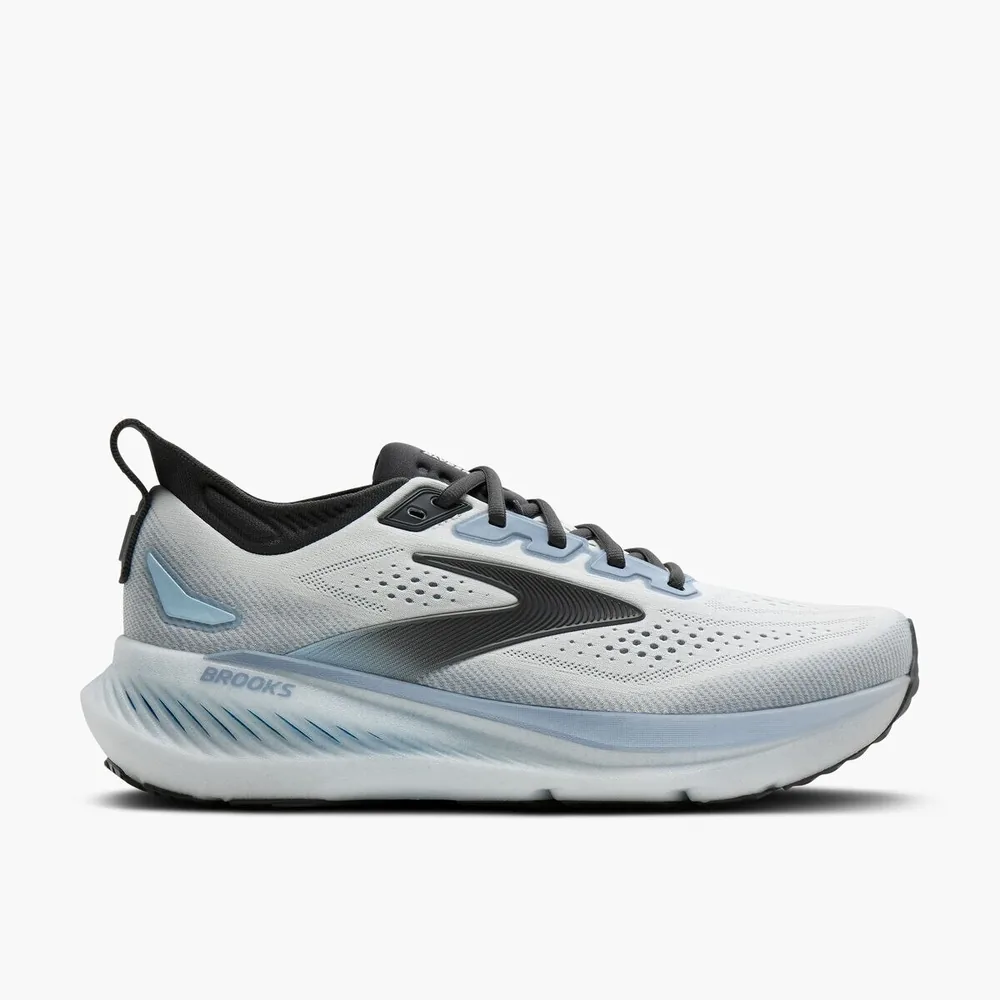
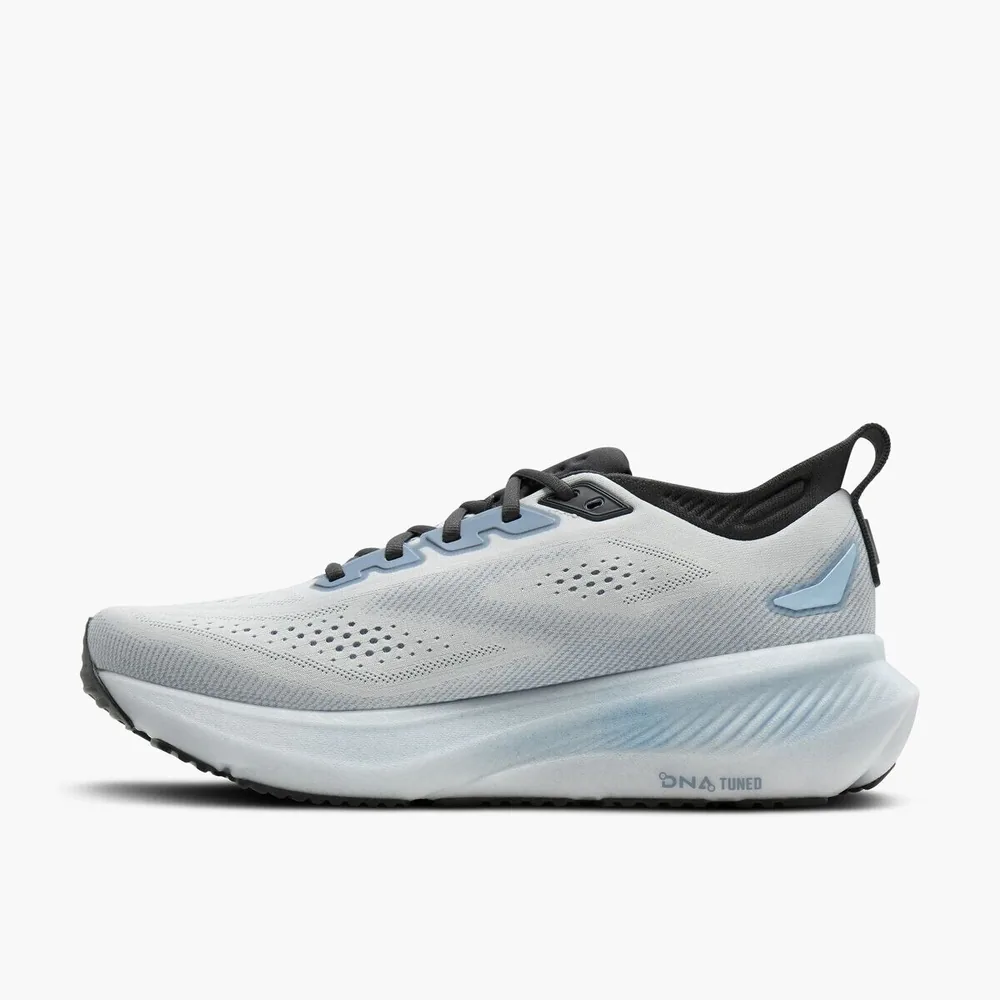
9. Brooks Glycerin 23: Best plush cushion for beginners
Best plush cushion: pick the Glycerin 23 if you want the softest Brooks ride for easy miles.
- Support: neutral
- Cushion: nitrogen-infused DNA TUNED foam (larger cells in the heel, smaller in the forefoot)
- Stack: 38 mm heel / 30 mm forefoot
- Drop: 8 mm
- Weight: 300.5 g (10.6 oz), men’s
- Lab scores: RunRepeat 85/100; RTINGS cushioning 7.4/10 (daily training score not published)
- Widths: medium (1D), wide (2E), extra wide (4E)
- Source: Brooks Glycerin 23 product page and Runner’s World beginner guide
DNA TUNED uses big foam cells under the heel for soft landings and smaller cells up front for a quicker toe-off. Runner’s World testers called the ride soft, comfy, and responsive.
Runner’s World suggests the Glycerin 23 for new runners who worry about their knees. Its testers also praised the roomy fit for wide feet. Bigger runners may also like our best running shoes for heavy men.
Pros
- Brooks’ plushest daily-trainer foam
- Roomy fit that suits wider feet, per Runner’s World
- 8 mm drop sits between classic and low
- Durable enough for daily training
- Smooth, soft ride for long, slow runs
Cons
- At 300.5 g it feels bulky, and some testers found the forefoot a bit stiff. Keep it for easy days, or pick the lighter Ride 19.
Who it’s for: heavier beginners and anyone who wants a soft, padded ride. Skip it if: you want a light, quick shoe.
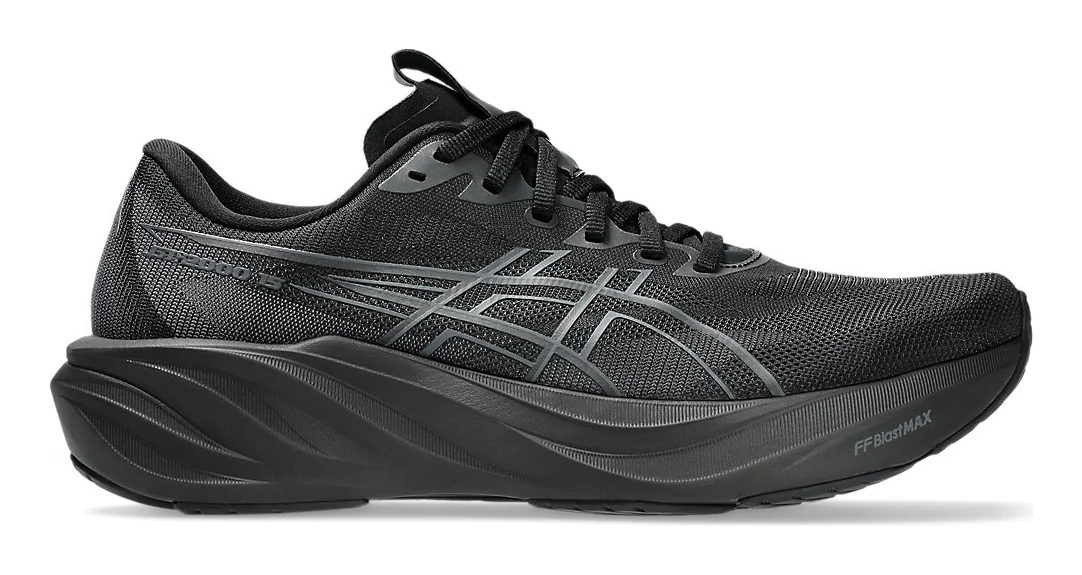
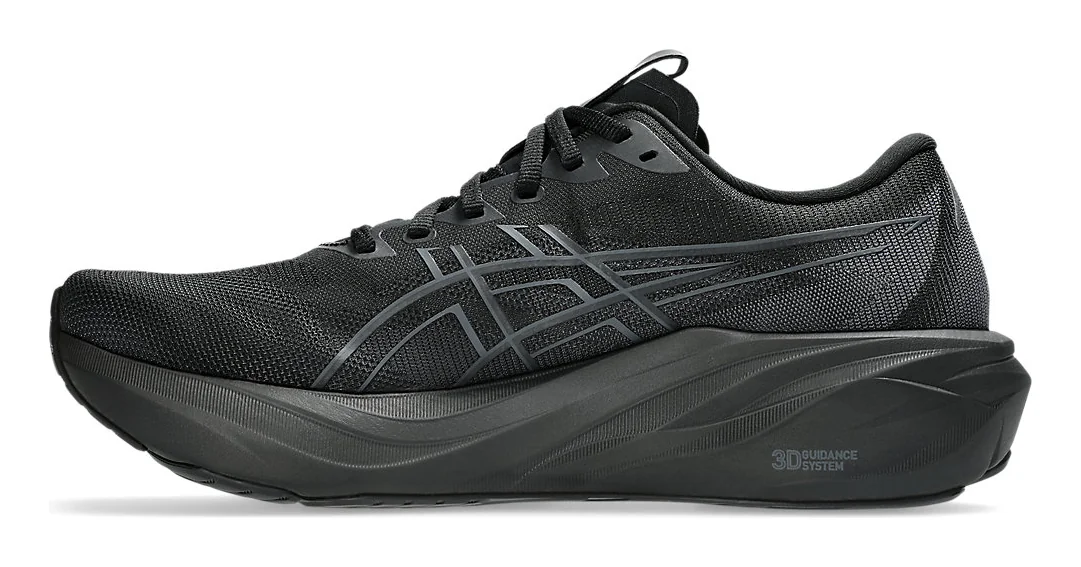
10. ASICS GT-2000 15: Best lightweight stability
Best lightweight stability: pick the GT-2000 15 if you want support without a heavy shoe.
- Support: stability (3D GUIDANCE SYSTEM)
- Cushion: FF BLAST MAX foam with PureGEL in the heel
- Stack: 38 mm heel / 30 mm forefoot
- Drop: 8 mm
- Weight: 252 g, men’s size 9
- Lab scores: RunRepeat 91/100; RTINGS cushioning 7.5/10, daily training 7.9/10
- Widths: standard, wide, extra wide
- Source: ASICS GT-2000 15 spec page and RTINGS beginner guide
The 3D GUIDANCE SYSTEM uses the shape of the sole, not a hard post, to guide your foot forward. RTINGS picked it as its best stability shoe for beginners and scored its stability 8.3 out of 10.
At 252 g, it’s about 48 g lighter than the Adrenaline GTS 25. ASICS says the 15 is lighter and has more stack than the GT-2000 14.
Pros
- Light for a stability shoe at 252 g
- Support comes from sole shape, not a stiff post
- RTINGS’ best stability pick for beginners
- Wide and extra-wide sizes
- PureGEL in the heel for softer landings
Cons
- RTINGS found it firmer, with less shock absorption than the Novablast 6. If you want a softer stability shoe, the Adrenaline GTS 25 rides plusher.
Who it’s for: beginners who want light support and a quicker feel. Skip it if: you don’t overpronate; a neutral shoe is fine for most people.
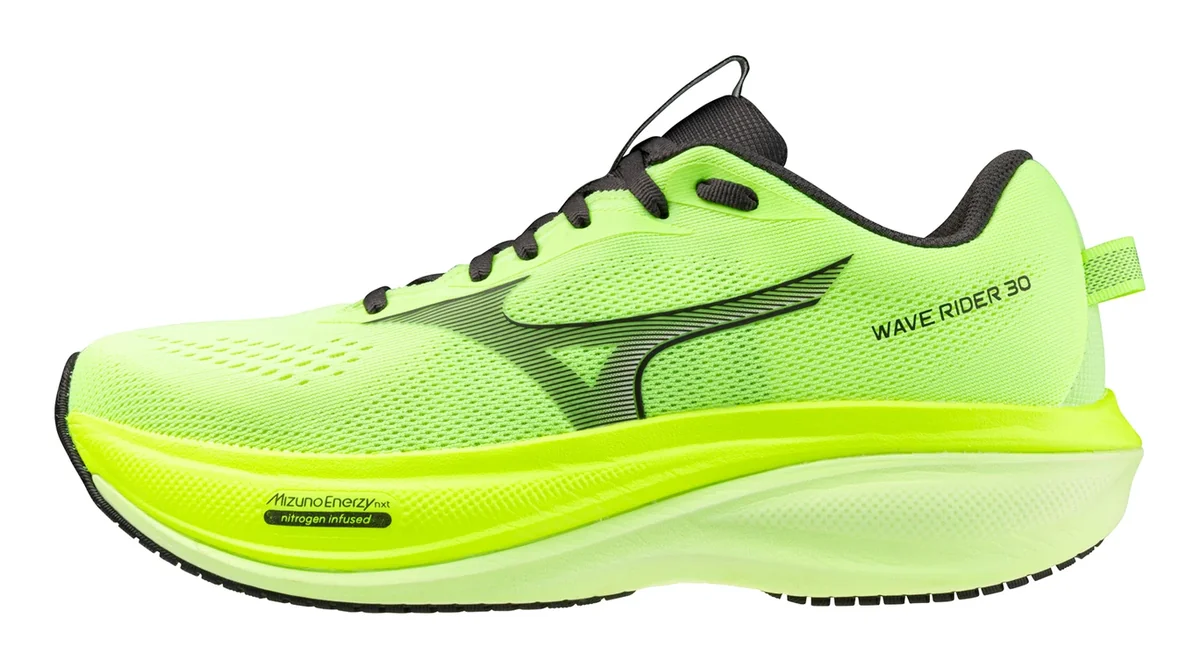
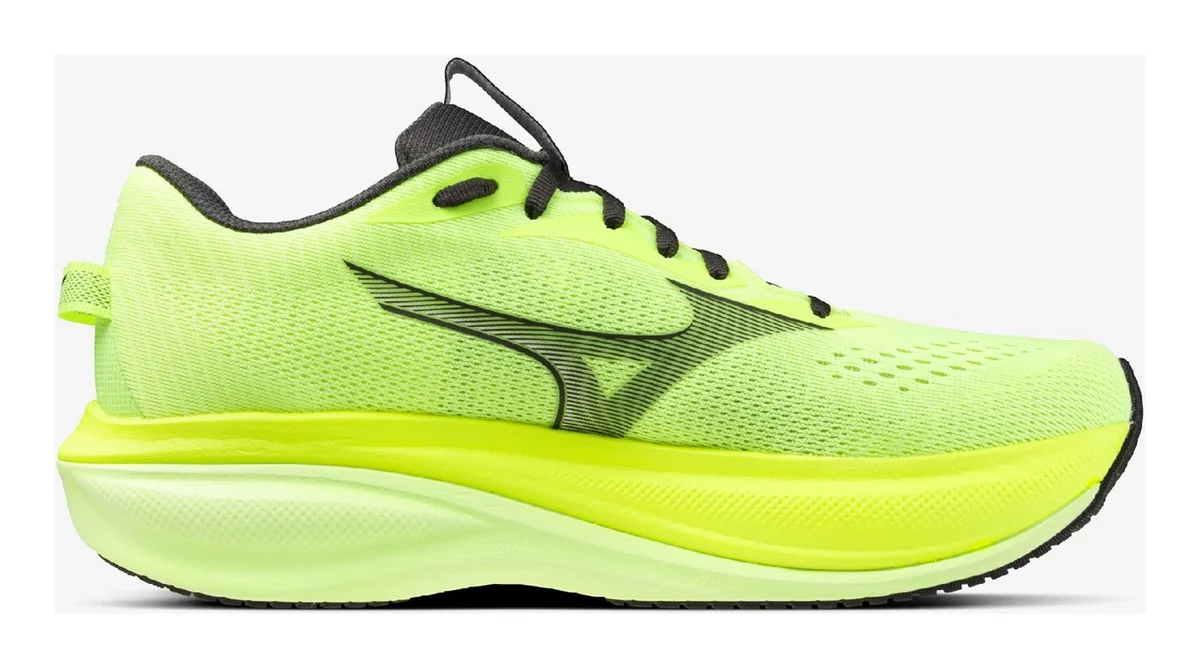
11. Mizuno Wave Rider 30: Best comfort-first cruiser
Best comfort-first cruiser: pick the Wave Rider 30 if comfort matters more to you than speed.
- Support: neutral
- Cushion: dual-layer ENERZY NXT foam with a Wave Plate
- Stack: 42.5 mm heel / 34.5 mm forefoot
- Drop: 8 mm
- Weight: 9.4 oz (266 g), men’s size 9
- Lab scores: RunRepeat 83/100; RTINGS cushioning 7.8/10, daily training 6.7/10
- Widths: standard and wide (2E)
- Source: Mizuno Wave Rider 30 product page and Believe in the Run beginner guide
Mizuno puts a soft, nitrogen-infused ENERZY NXT layer on top of a firmer base for stability. Believe in the Run says the Wave Rider 30 “puts comfort over everything.”
Older Wave Riders had a 10 mm or 12 mm drop and a firm plate. The 30 has an 8 mm drop and a much softer feel. The padded upper is cozy on cool mornings.
Pros
- 42.5 mm of soft, dual-layer foam
- 8 mm drop, lower than older Wave Riders
- Firmer base layer adds stability
- Comes in a 2E wide version
- Well-padded upper for comfort
Cons
- Believe in the Run found the padded upper a bit warm in summer. Thin socks help, and it shines in cooler months.
Who it’s for: beginners who want a soft, stable, high-stack ride for easy runs. Skip it if: you run in hot weather most of the year.
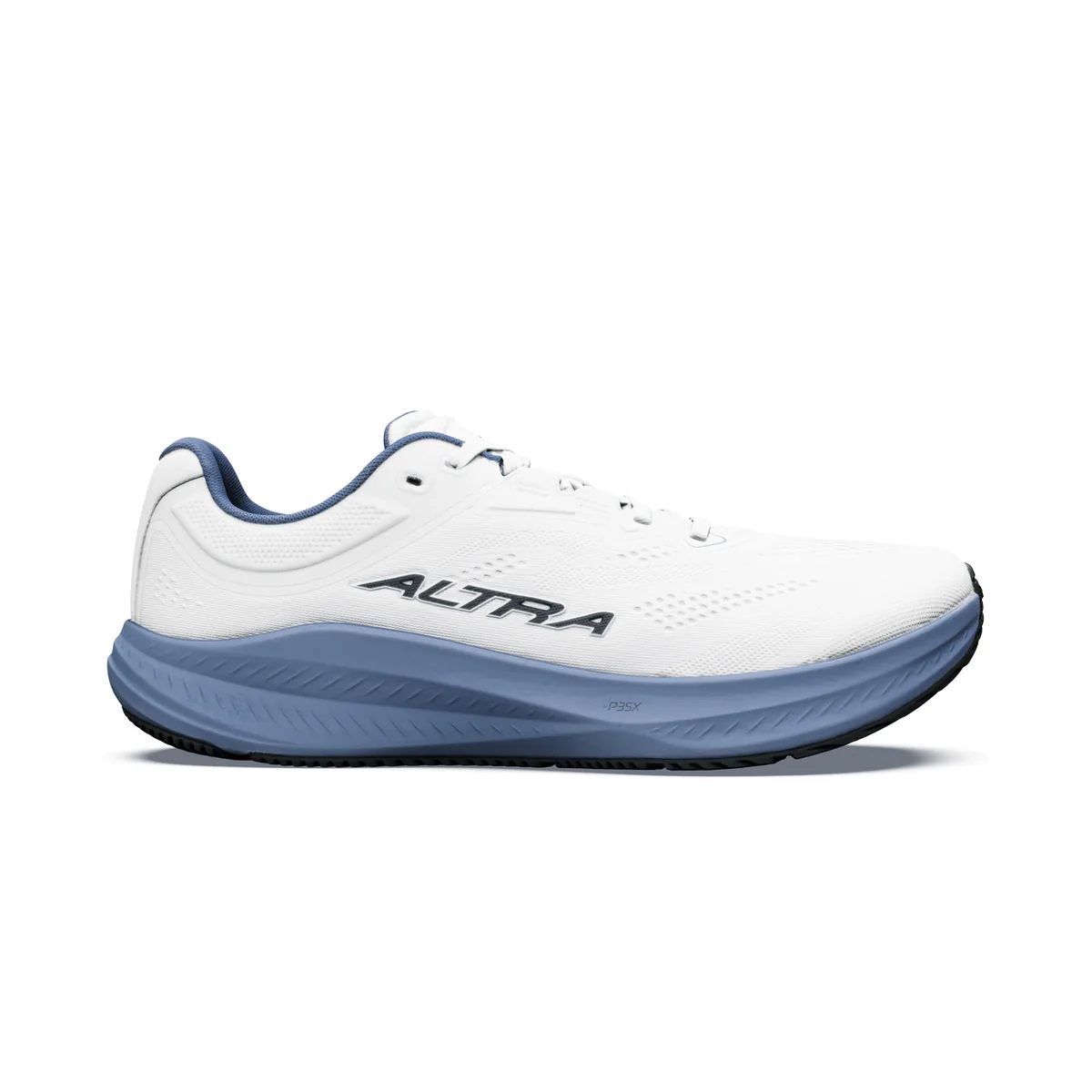
12. Altra Torin 9: Best zero-drop shoe with a roomy toe box
Best zero-drop: pick the Torin 9 if your toes feel cramped in most shoes and you want a flat, natural feel.
- Support: neutral
- Cushion: dual-density P35X foam
- Stack: 28 mm heel / 28 mm forefoot
- Drop: 0 mm
- Weight: 269 g, men’s
- Lab scores: RunRepeat 81/100; RTINGS cushioning 4.8/10, daily training 7.0/10
- Widths: regular and wide
- Source: Altra Torin 9 product page and RunRepeat lab review
Runner’s World picked the Torin 9 as its best zero-drop trainer for beginners. Its foot-shaped toe box measured 82.2 mm wide in RunRepeat’s lab. That’s about 9 mm more than the lab average.
Zero drop means your heel and forefoot sit at the same height. That puts more work on your calves and Achilles. Learn more in our guide to heel drop in running shoes.
Pros
- 82.2 mm lab-measured toe box lets toes spread
- Vibram outsole grips well on wet roads, per Runner’s World
- 28 mm of foam still gives real cushion
- Comes in a wide version
- Runner’s World’s best zero-drop pick for beginners
Cons
- Zero drop loads your calves more. Start with short runs and build up over a few weeks.
- Runner’s World notes the standard fit may feel tight for wide feet. Order the wide version.
Who it’s for: beginners with wide forefeet or bunions who are willing to ease in slowly. Skip it if: you have tight calves or Achilles pain; choose a shoe with an 8-10 mm drop.
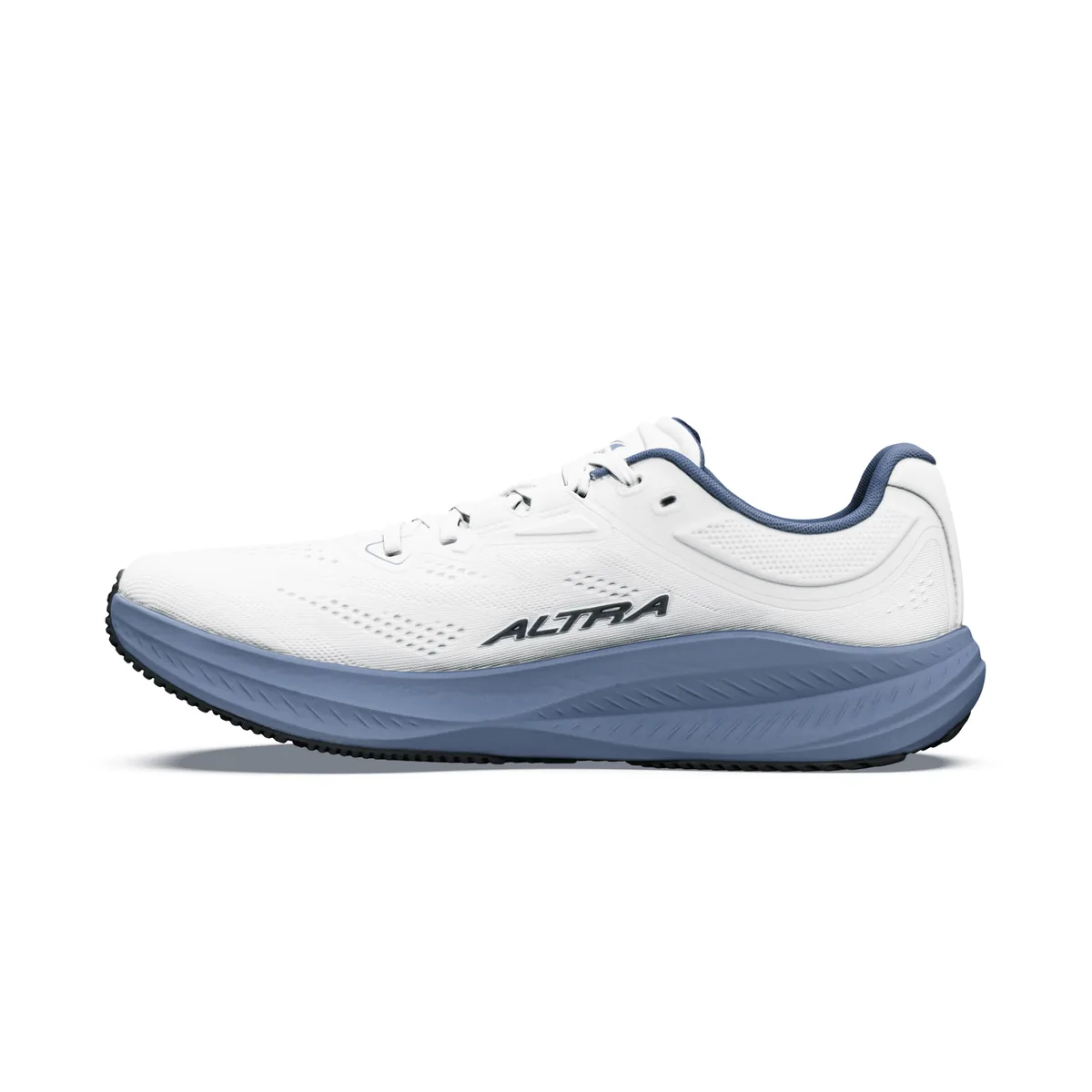
Which running shoes for beginners are best for women and men?
Every shoe on this list comes in men’s and women’s versions. Women’s models are built on a women’s last, with a narrower heel and lighter weight. The ride and foam are the same.
| Model | Women’s weight (brand or tester figure) |
|---|---|
| Brooks Ghost 18 | 9.2 oz (Runner’s World, W8) |
| ASICS Novablast 6 | 215 g (RoadTrailRun) |
| HOKA Clifton 11 | 236 g (HOKA, via NextPair) |
| Saucony Ride 19 | 218 g, W8 (Doctors of Running) |
| ASICS Gel-Cumulus 28 | 7.9 oz (Runner’s World) |
| ASICS GT-2000 15 | 221 g, W8 (ASICS) |
| Mizuno Wave Rider 30 | 8.1 oz, W7 (Believe in the Run) |
Women who want a light, lively shoe often like the Novablast 6 or Ride 19. Men with broad feet should look at the 1080 v15, Ghost 18, or Adrenaline GTS 25 in 2E or 4E.
Which beginner running shoes suit wide feet, flat feet, or bad knees?
A few of these shoes also cover common needs. For anything painful, see a clinician first.
Which running shoes for beginners also suit wide feet?
The 1080 v15, Ghost 18, and Adrenaline GTS 25 come in 4E. The Clifton 11 and GT-2000 15 come in extra wide. For toe room, try the Torin 9 or our wide toe box running shoes.
Which running shoes for beginners also suit flat feet?
Flat feet alone don’t mean you need stability. Try a neutral shoe first. If your ankles roll in a lot or your arches ache, try the Adrenaline GTS 25 or GT-2000 15.
Which running shoes for beginners also suit knee pain?
No shoe fixes knee pain, and the Cochrane review found no clear injury benefit from soft shoes. Many runners still find thick foam more comfortable. Runner’s World points worried new runners to the Glycerin 23. Heel pain? See our running shoes for plantar fasciitis.
Which running shoes for beginners are best on a budget?
See our budget section for the cheapest pick, the full price table, and the last-year’s-model trick.
Is the Nike Pegasus 42 the best Nike shoe for beginners?
For most new runners, yes. It’s Nike’s classic daily trainer, comes in wide, and has a familiar 10 mm drop. Size up half a size if your toes feel cramped.
Can beginners run on trails or paths in these shoes?
None of the 12 shoes here is a trail shoe. They are road shoes. They work on roads, pavements, and smooth paths. They do not grip mud, loose gravel, or wet rock.
If you run on smooth, hard-packed gravel, the Nike Pegasus 42 copes best of the 12. Its waffle outsole holds on firm paths. RTINGS lab work calls it poor on gravel and a bad choice for loose paths. Do not take it on loose or muddy trails.
For real trails, buy a trail shoe instead. The Brooks Cascadia 18 costs $140. It has an 8 mm drop, a 33 mm stack, and a nylon plate for rocks. It is the trail match for the Ghost. Do not buy the HOKA Stinson 7. It is a 2023 model and sold out on hoka.com.
Which shoe grows with you to your first 10K?
Start with the Ghost 18. When your runs reach 5K and you want more bounce, the ASICS Novablast 6 is the step up. RTINGS names it the best beginner shoe in its 27 Nov 2026 guide. It says the Novablast 6 can cover your regular runs and a first 5K or 10K. Its cushioning scores 8.5 out of 10 in the RTINGS lab. It weighs 247.7 g in the lab. Its heel stack is 41.9 mm.
You do not need a second shoe for a first 10K. One good daily trainer covers it. Buy a second pair only when you run five or more days a week.
Where to buy your first running shoes
Try them on first if you can. A running store fits you better than a guess online.
Specialty store: Fleet Feet gives a free fit id 3D foot scan and gait check. Staff watch you walk and run. They match a shoe to your feet.
Online: Amazon, the brand sites, and Road Runner Sports all sell these shoes. Order two sizes if you are unsure. Return the one that fits worse.
Returns: Fleet Feet takes returns for 30 days. Holiday buys from 1 Nov to 31 Dec get 60 days. Road Runner Sports gives VIP members 90 days, even on worn shoes. Without VIP, you get 60 days on new, unworn shoes. Amazon gives 30 days on new, unworn shoes, with free returns on most pairs.
Try-on tip: test the shoes in the store. Jog a few steps, or use the store treadmill. Try them in the evening, when your feet are largest. Wear your running socks.
The worst shoes for beginners
Some shoes hurt more than they help when you start. Skip these three types.
- Carbon-plated race shoes. They are built for fast racing. They cost more, feel less stable at slow paces, and have narrow bases. Wait until you train for a race.
- Fashion sneakers. They look like running shoes but lack the foam and grip. They are made for looks, not for miles.
- Old, worn-out shoes. Foam loses about 45% of its shock absorption by 500 miles, per the AAOS. A dead shoe gives you no cushion and no support.
When in doubt, pick the shoe that feels best on a slow jog. Comfort beats tech for your first months.
Your first 8 weeks: how shoes fit into a beginner plan
Your shoes matter less than how fast you build up. The NHS Couch to 5K plan takes 9 weeks, with three runs a week and rest days between. It starts with short runs mixed with walking.
- Weeks 1-2: walk-run three times a week. Wear the shoes only for runs at first, so your feet adjust.
- Weeks 3-5: run segments get longer. Note any rubbing or hot spots and fix the lacing or socks.
- Weeks 6-8: you’re running most of the time. If one shoe feels great, stick with it. A second pair can come later.
Sore for more than a few days, or pain that changes how you run? Rest and see a clinician. Don’t try to fix it with a new shoe alone.
Mistakes beginners make when buying running shoes
- Buying fashion sneakers. They look like running shoes but lack the foam and grip. Read how running shoes differ from walking shoes.
- Buying too small. Your feet swell on runs. Keep a thumb’s width at the toe. Here’s whether running shoes are supposed to be tight.
- Starting in race shoes. Carbon plates and narrow bases are made for speed, not easy miles.
- Ignoring width. If the sides pinch, ask for 2E or 4E instead of a bigger size.
- Using them for everything. Gym sessions and daily wear break down the foam faster.
How we chose these shoes
We built this list from brand specs, independent lab and tester data, clinical advice, and a check of current Amazon listings. HealthSOP did not test these shoes hands-on, so we don’t give star ratings.
- Current models only: each shoe was the newest version on sale on November 28, 2026.
- Search check: we read the pages that rank for this topic today, including Runner’s World, RTINGS and RunRepeat. Their lists run from 5 to 10 shoes, so we covered 12.
- Brand specs: stack, drop, weight and widths come from each brand’s product page or store. Every width in this guide is now confirmed. Prices are brand list prices, checked 28 Nov 2026.
- Medical facts: from the AAOS, the NHS, and peer-reviewed research on PubMed.
- Lab scores: we show the RunRepeat overall score and the RTINGS cushioning and daily-training scores for each shoe. Both labs were checked 28 Nov 2026. Where the labs and the brand disagree, we say so.
- Availability: we opened each men’s Amazon listing and matched the model name and version.
This page replaces our 2023 list, which named shoes that are no longer sold new. Written by Lora Nicolas for HealthSOP. For every runner type, see our main guide to the best running shoes, or learn how to choose running shoes step by step.
Which shoe should you pick?
Pick the Brooks Ghost 18 unless one of the rows below sounds more like you.
| If you… | Pick | Why |
|---|---|---|
| Want one safe shoe for most runs | Ghost 18 | Steady cushion, 10 mm drop, four widths |
| Want a light, bouncy ride | Novablast 6 | 41.5 mm heel at 253 g |
| Follow a walk-run plan | Clifton 11 | Soft 42 mm heel and a rocker sole |
| Overpronate a lot | Adrenaline GTS 25 | GuideRails support, widths to 4E |
| Want a lower, steady trainer | Ride 19 | 36 mm stack, 255 g |
| Walk a lot too | Gel-Cumulus 28 | Soft foam that works for walking |
| Love Nike | Pegasus 42 | Full-length Air Zoom, wide option |
| Have wide feet | 1080 v15 | Widths up to 4E |
| Want max softness | Glycerin 23 | Plush DNA TUNED foam |
| Need light support | GT-2000 15 | Stability at 252 g |
| Put comfort first | Wave Rider 30 | 42.5 mm of dual-layer foam |
| Need toe room | Torin 9 | 82.2 mm toe box, zero drop |
Want just one starting point? The Brooks Ghost 18 is where we’d begin for most new runners.
Frequently asked questions
What type of running shoe is best for beginners?
A neutral, well-cushioned daily trainer is best for most beginners. Look for at least 30 mm of foam under the heel, an 8-10 mm drop, and no carbon plate. The Brooks Ghost 18 and ASICS Novablast 6 fit that profile. Choose the one that feels most comfortable when you jog in it.
Should beginners get stability shoes?
Only if you need them. A study of 927 novice runners in neutral shoes found moderate pronation did not raise injury risk. Try a neutral shoe first. If your ankles roll in a lot, or soft shoes feel wobbly, a stability shoe like the Adrenaline GTS 25 can help.
Can I start running in walking shoes or sneakers?
You can for a few short runs, but a running shoe is better once you run more than twice a week. The AAOS says to buy a sport-specific shoe if you do one sport that often. Running shoes have more cushion and a design built for repeated landings.
How do I know if running shoes fit?
A good fit leaves about half an inch, or a thumb’s width, past your longest toe. Your toes should wiggle, and your heel shouldn’t slip. Try shoes late in the day with your running socks. If the sides pinch, ask for a wide size instead of a longer one.
How many miles do beginner running shoes last?
Most running shoes last about 300 to 500 miles. The AAOS says foam loses about 45% of its shock absorption by 500 miles. Its rule of thumb is 75,000 divided by your body weight in pounds. A 150-pound runner would replace shoes around 500 miles.
Is HOKA or Brooks better for beginners?
Neither brand is better for everyone. HOKA’s Clifton 11 is softer, with a rocker that helps walk-run plans. Brooks’ Ghost 18 feels steadier and has a more classic 10 mm drop. Both come in wide sizes. Try each one, and buy the pair that feels better on your run.
What heel drop is best for beginner runners?
An 8-10 mm drop suits most beginners, because it feels like everyday sneakers. RunRepeat recommends 8 mm or more for new runners. Low or zero-drop shoes, like the Altra Torin 9, put more load on your calves. If you choose one, build up slowly over several weeks.
Should beginners buy carbon-plated running shoes?
No. Carbon-plated shoes are made for racing and fast running. They often have narrow, less stable bases and cost more. A cushioned daily trainer is safer and more comfortable for easy miles. Wait until you’re training for races before you add a plated shoe.
Sources
- Nigg et al. 2015, Br J Sports Med: Running shoes and running injuries: mythbusting and the “comfort filter”
- Nielsen et al. 2014, Br J Sports Med: Foot pronation is not associated with increased injury risk in novice runners wearing a neutral shoe
- Relph et al. 2022, Cochrane Database Syst Rev: Running shoes for preventing lower limb running injuries in adults
- AAOS OrthoInfo: Athletic Shoes
- NHS Better Health: Couch to 5K
- RTINGS: Best running shoes for beginners (lab scores) and RunRepeat: Best running shoes for beginners (lab data)
- Brand pages: Brooks Ghost 18, ASICS Novablast 6, HOKA Clifton 11, Brooks Adrenaline GTS 25, Saucony Ride 19, ASICS Gel-Cumulus 28, Nike Pegasus 42, New Balance 1080 v15, Brooks Glycerin 23, ASICS GT-2000 15, Mizuno Wave Rider 30, Altra Torin 9
- Fleet Feet returns: 30 days, 60 days for holiday purchases (1 Nov–31 Dec)
- Road Runner Sports VIP program: 90-day exchange on worn shoes for VIP members; 60 days on new, unworn shoes without VIP.
- REI: How to Choose Road Running Shoes (REI Co-op Studios)
- RTINGS: Best running shoes for beginners (27 Nov 2026 guide; Novablast 6 named best beginner shoe)
- RunRepeat: Brooks Cascadia 18 ($140 list) and Runsletter: Cascadia 18, 8 mm drop, 33 mm stack, nylon plate
- ASICS extended widths (Gel-Cumulus 28 Wide listing)
- Brooks store: Glycerin 23 widths (Medium 1D, Wide 2E, Extra Wide 4E)
- HOKA Clifton 11 (Hoka UK: 42/34 mm stack, 283 g, 8 mm drop)
- RunRepeat overall scores and RTINGS cushioning and daily-training scores for all 12 shoes, checked 28 Nov 2026. See the per-shoe RunRepeat and RTINGS pages linked in each spec card.
Medical disclaimer: this article is for information only and is not a substitute for advice from a doctor, podiatrist, or physical therapist. Product photos are brand-official and credited on each slider. Last updated: November 28, 2026.
2 thoughts on “Best Running Shoes for Beginners (2026)”